Joe Skibinski/Penske Entertainment
IndyCar’s Boles sees early-season schedule experiments paying off
March of 2026 will be remembered as a month of exploration for IndyCar. The results of the experiment have been positive so far, and on their current path, the concepts being trialed are worth carrying over into the future. The series’ first significant change was to reconfigure the calendar and front-load the schedule with three races in succession and four in five weekends.
For more than a decade, IndyCar’s practice was to hold an early race in March at St. Petersburg – and possibly one towards the end of the month – before stacking April with a heavy sequence of events leading into its marquee month of May. Depending on the year, there were seasons where March offered a single race before IndyCar disappeared for nearly a month and fans decried the strange structure which treated March like an afterthought as the series played hide-and-seek with its audience before ramping up interest and momentum in April as a springboard to support May’s Indianapolis 500.
Under the new calendar’s construction, the inverse is being tried with March receiving the full push to build momentum with the four-in-five event model.
“Certainly the momentum, with our partnership with FOX, was a big part of how we approached this year thinking about, ‘How do we start the season with three races in a row, versus having a race and then having a mini-offseason before you have your next race?’” IndyCar President Doug Boles told RACER.
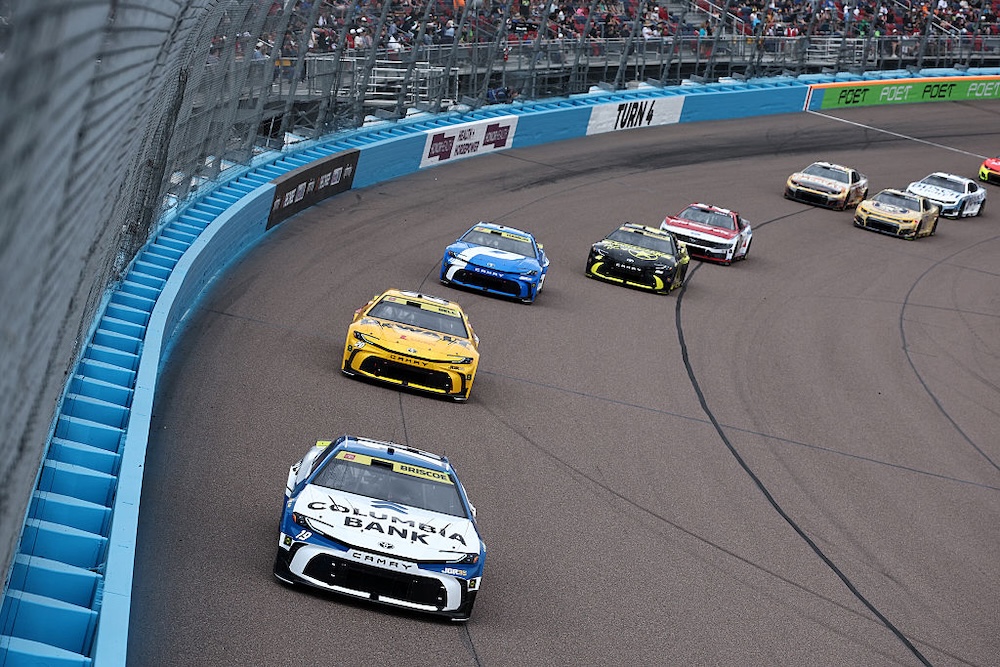
Within the series’ aggressive start to this year’s season, there’s the return of a pre-Indy oval to the schedule, this time as the second race of the year, and at a beloved short oval to boot with Phoenix Raceway. And it was part of a first-ever shared oval event with NASCAR where IndyCar accepted being the opening act to race on Saturday afternoon, which carried a significant risk of looking small, but was greeted by a large and enthusiastic crowd that exceeded the loftiest of expectations.
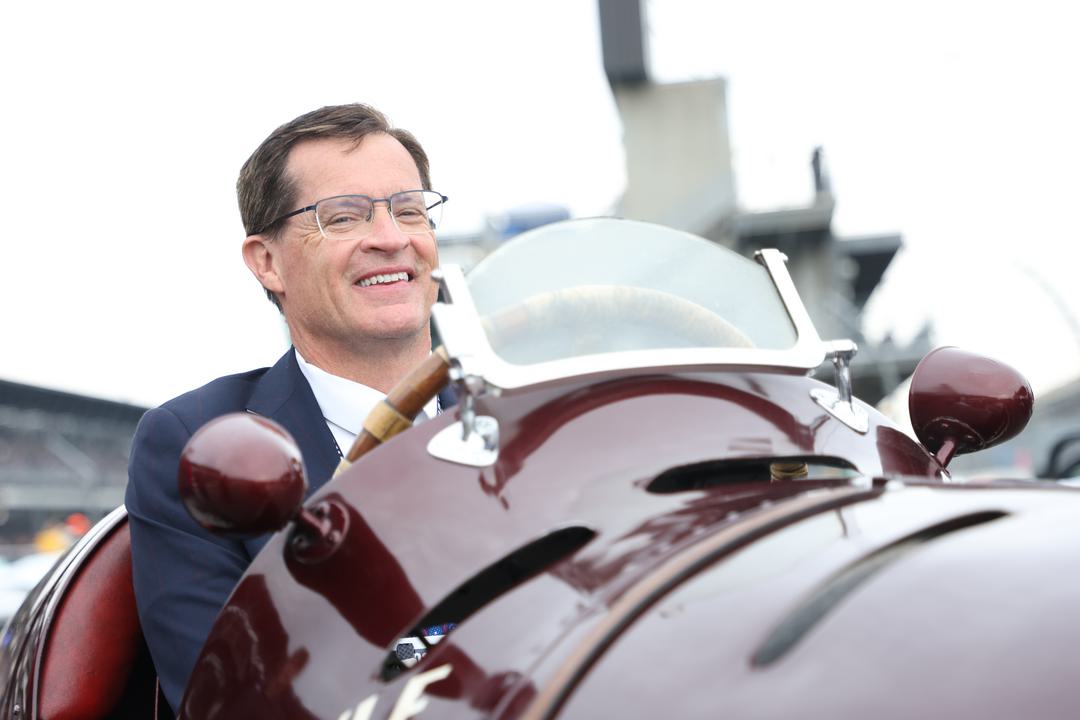
Indy and its traditions sell themselves, but Boles is delighted to the series building a more significant lead-in to the Month of May. Matt Fraver/IMS
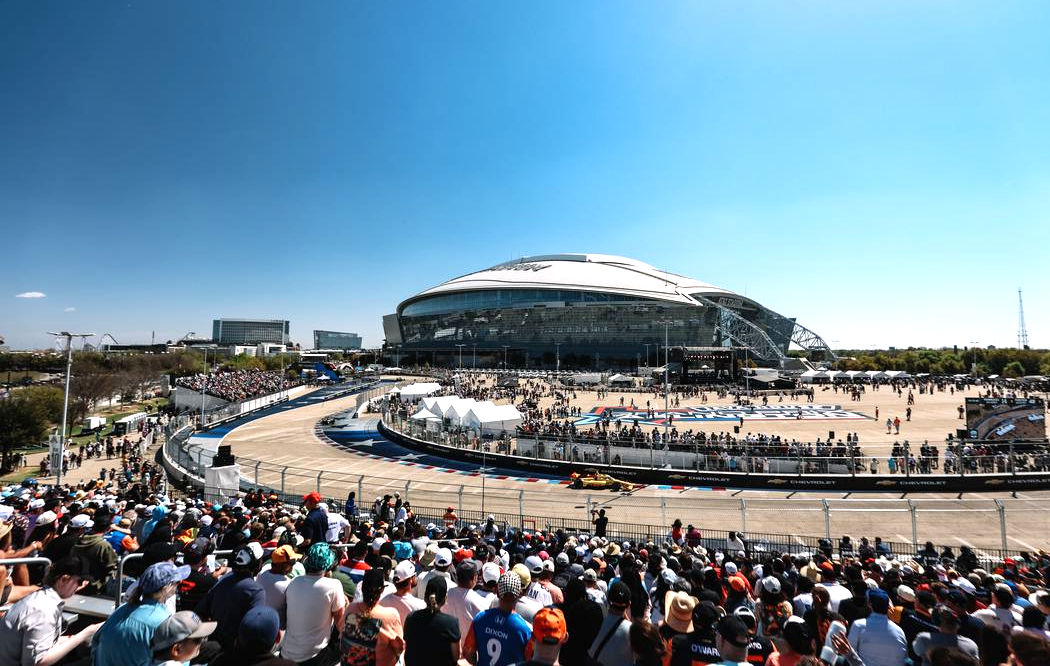
The experiment continued days later at the inaugural Arlington Grand Prix, giving IndyCar a new street course to complement the curtain raiser at St. Petersburg where both venues enjoyed massive turnouts. All totaled, IndyCar’s 2026 has been a frenetic run starting with a street race, a short oval, another street race, a weekend off to breathe, and now it’s back to business with the first road course race of the season due on Sunday.
“That is certainly one of the big things that's helped,” Boles said. “St. Pete's always a great way to kick off a season. Phoenix, it's an IndyCar track, the history of that place, and the race that the drivers put on was outstanding; and then to come to this new venue at Arlington and the electricity that came from it. Barber now, which is a beautiful, very unique racetrack, and then Long Beach. With the exception of the Indy 500, Long Beach has historically been the race that everybody in the IndyCar Series wants to win.
“So having all these events early like this, I think, is really helpful. That's important as we look at the schedule as a whole.”
The momentum established in March has been remarkable, but after leaving this weekend’s race at Barber in Alabama, the slowdown starts as a break of two full weekends intercedes prior to the April 17-19 visit to Long Beach. Then it’s another extended break until the May 8-9 Indianapolis road course race.
The four-in-five is followed by two-in-six, which will likely have fans restless for a return of the action that launched the season. There’s the two-day Indianapolis Open Test to close April that will provide a welcome distraction, but after the wave of activity on the docket in March, an undeniable dip in energy awaits the series until Indy takes center stage.
“Three races kicking things off are really strong, and then having a week off and rolling into Barber is really big, and we have two weeks off coming up,” Boles said. “One of them is Easter, though, so you're not going to race on Easter. And it's spring break for a lot of folks, so as we looked at it, it was like, ‘OK, those are two weeks that, if you're going to pick two weeks in the spring to give back, those are certainly the two.’
“Then Long Beach is such a big event, and we're making as big deal as we can out of the out of the Indy Open Test, so we'll have to do a really good job in that time frame of keeping the interest up and getting people excited about what happens in May. We feel pretty good about it and for the teams, it's an opportunity to get rested because once May starts, you've got Indy Grand Prix, Indy 500 practice and qualifying, then you go right into the 500 and then you're into Detroit, and from there you're off into a big run of races in a row.”
Stack the triple achievement of vast ticket sales for live attendance for all the races with earning more than one million viewers apiece for each event on FOX, and IndyCar appears to have a formula worth repeating while assembling its next calendars.
“We’ve felt like this has been really, really positive, and more likely than not, it's probably what you’ll see again next year,” Boles added. “All indications are that it's been a successful way to kick things off. And we're already starting to think about what ‘27 will look like and how can we get everything solidified sooner rather than later.”
With Phoenix Raceway and NASCAR expressing an interest in having IndyCar return in 2027 and the placements of St. Petersburg and Arlington on either side of the Arizona oval, plus the move of Barber from late April to late March, IndyCar has found a scheduling formula that is working in its favor. And with the ensuing gaps to consider, it’s the one glaring item to consider for improvement.
“Maybe there's a way we could tweak it a little bit with a shorter break in there in the future, but we'll see how it plays out," Boles said. "But overall, we feel pretty good about the about the schedule.”
Marshall Pruett
The 2026 season marks Marshall Pruett's 40th year working in the sport. In his role today for RACER, Pruett covers open-wheel and sports car racing as a writer, reporter, photographer, and filmmaker. In his previous career, he served as a mechanic, engineer, and team manager in a variety of series, including IndyCar, IMSA, and World Challenge.
Read Marshall Pruett's articles
Latest News
Comments
Comments are disabled until you accept Social Networking Cookies. Update cookie preferences
If the dialog doesn't appear, ad-blockers are often the cause; try disabling yours or see our Social Features Support.