Patrick McDermott/Getty Images
Superspeedway fuel-saving is still a thorn in the side for the NASCAR field. Is there a fix?
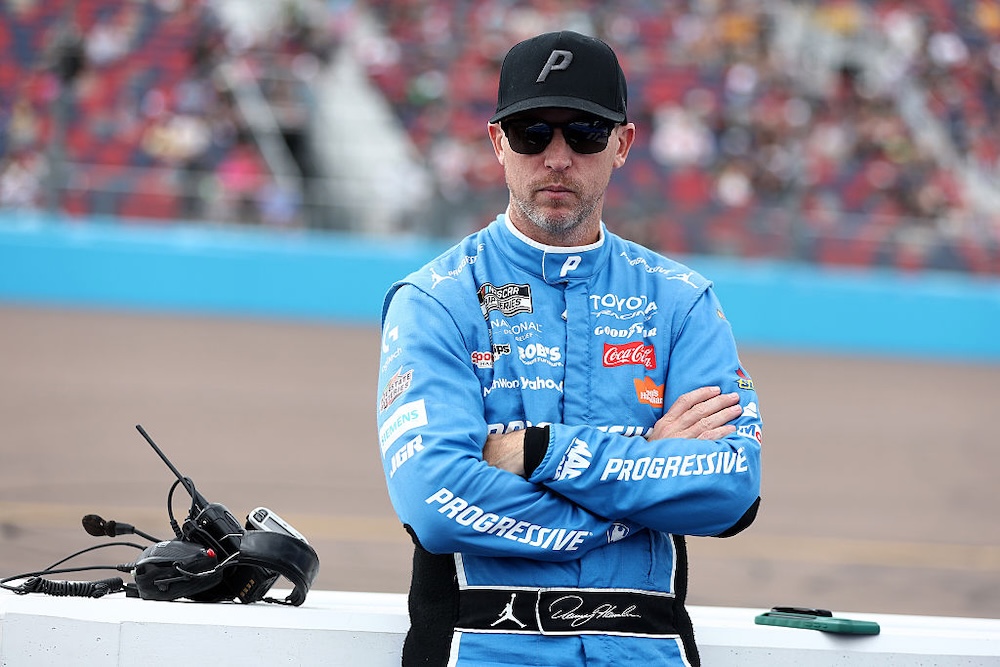
Denny Hamlin has a thought on how to stop Cup Series teams from playing superspeedway fuel-saving games, but it's important to note that, for now at least, it's only an idea.
"There's a way, but we're going to have to increase the speeds by a lot," Hamlin said Sunday night after the Daytona 500. "You're going to have to make it to where handling matters. That's going to spread the field. That's going to make it to where we're not... it'll look a little more like racing from the past. But as long as their insurance company is OK with it, you're going to have to speed up the cars because right now, we're so planted in the racetrack that we can just run in this really tight pack."
It started around 2022 when a few drivers and their teams realized the benefit of saving fuel during the race to reduce the time spent on pit road on the final pit stop. That time saved would help cycle them to the front of the field for the final run to the finish. It has become vital for success in the current age of superspeedway racing, where track position rules all because it's not as easy for a driver to move through the field.
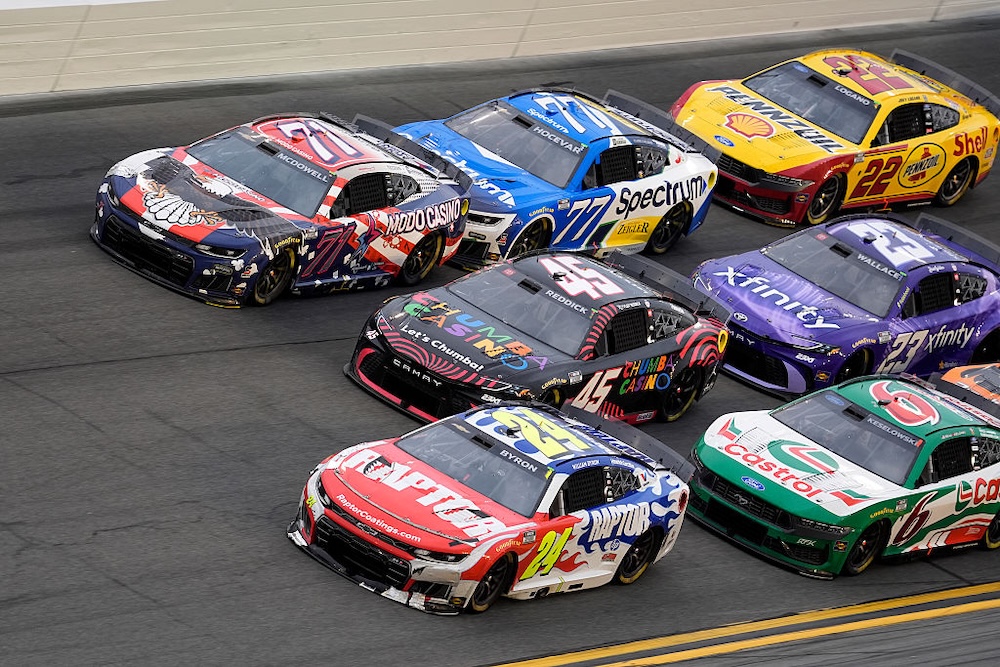
But it has now evolved to the point of the entire field saving fuel throughout races at Daytona International Speedway and Talladega Superspeedway. The pace slows, the field gridlocks at two or three-wide, and laps click off the scoreboard as crew chiefs either chastise their drivers for going too fast, or praise them for being perfect on the throttle.
It happened again in the Daytona 500 and again, was met with criticism from viewers and even the drivers. No matter how visually cool it looks for the field to be three-wide, the drivers will admit they weren't racing.
"One of the suggestions that we talked about just a few days ago is come here next year in the Clash," Hamlin said. "Let a few of us come up with a package that we think… you won't see any fuel saving. You're just going to see people hanging on. That would be the only fix."
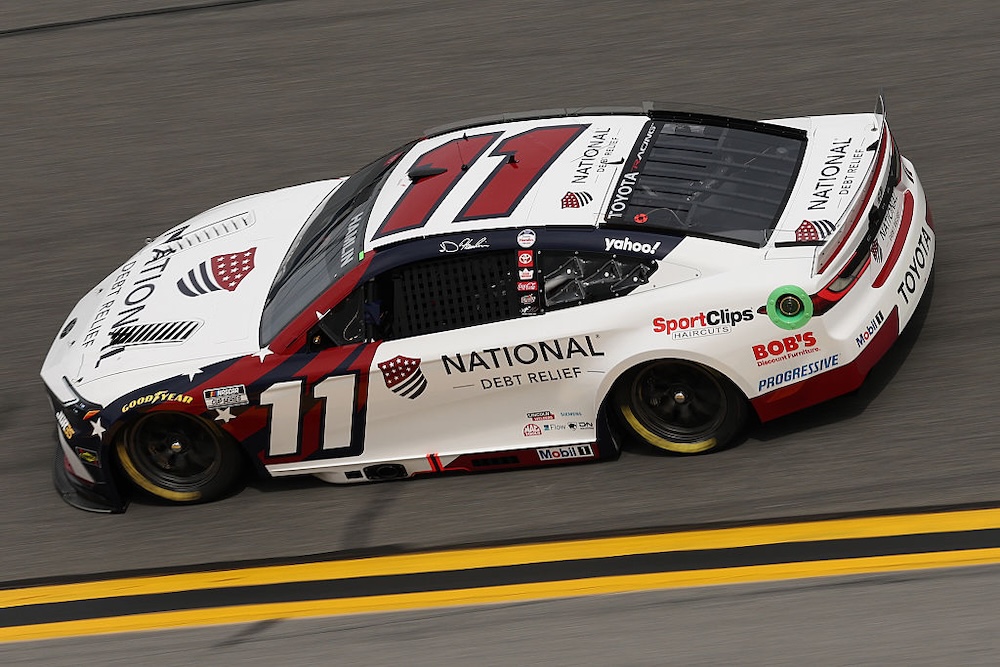
Hamlin has one idea to address the issue of fuel-saving, but some crew chiefs argue that it's too late to put the genie back into the bottle. Chris Graythen/Getty Images
The concept will be hard for crew chiefs to unlearn. It's also not as easy as NASCAR inserting itself in the competition by throwing cautions or changing race lengths. Nor is it about the stages and eliminating the breaks. The teams will still be planning their final pit stop of the race and how they need to approach the event as a whole to ensure they are on pit road for the least amount of time at the end.
Some teams, particularly crew chiefs, of course, enjoy the strategy more than others.
"I doubt there's a fix to it because we're just going to figure out the next way to exploit it, and I don't know that it needs to be fixed," Billy Scott, the crew chief for Tyler Reddick, said. "I think we all, as competitors, are spending as much time trying to figure out what the next best thing is and how to combat what each other is doing. I think it would be like asking if you need to change how chess is played.
"Everybody is trying to react off each other and figure out a way to get in the front at the right time. That depends on whether cautions fly, like in Stage 1 where some of them were able to stretch it all the way to the end. To me, from where we stand that's a very enjoyable part of it."
Alan Gustafson, the crew chief for Chase Elliott, also made the argument that a crew chief can't unlearn something. Gustafson believes it's been the rules that have dictated the need to save fuel, since the field runs the same race car and margins are getting smaller.
"So, you have to find some advantage some way," Gustafson said. "We all learned through the rules and the cars becoming extremely similar that you had to get an advantage another way besides what at the time was conventional, and that was saving fuel and jumping people on pit cycles… It's here to stay."
NASCAR is well aware of the reception fuel saving gets, and continues to be open to conversation around going forward.
"We have lots of fan councils, and we listen to the fans; we listen to the industry," NASCAR Cup Series managing director Brad Moran told SiriusXM NASCAR Radio Wednesday. "I don't know when the last time you went 165 mile an hour, three wide down the highway, but it's quite entertaining when they're doing it. But we understand what folks are saying.
"It's not an easy fix but we've had meetings with several industry members and you guys have had crew chiefs on that have clearly explained it's a tool in the toolbox that they've learned over the years, and if there's any advantage that's what this group – they are the best at taking advantage and that's how they win races. So, telling them to stop is not really going to work. It's not an easy fix, but it is on our radar, and we're certainly looking into it. But it's not one that we can turn a switch and change. It is being discussed within the industry."
Kelly Crandall
Kelly has been on the NASCAR beat full-time since 2013, and joined RACER as chief NASCAR writer in 2017. Her work has also appeared in NASCAR.com, the NASCAR Illustrated magazine, and NBC Sports. A corporate communications graduate from Central Penn College, Crandall is a two-time George Cunningham Writer of the Year recipient from the National Motorsports Press Association.
Read Kelly Crandall's articles
Latest News
Comments
Comments are disabled until you accept Social Networking Cookies. Update cookie preferences
If the dialog doesn't appear, ad-blockers are often the cause; try disabling yours or see our Social Features Support.