Mark Thompson/Getty Images
A reset that reaches beyond Red Bull
The build-up to the Belgian Grand Prix weekend naturally focused a lot on Christian Horner’s departure from Red Bull Racing, and the impact that would have on the team and its driver line-up.
From the first moment Max Verstappen spoke to the media, it became apparent there was more transparency in his comments. As explained last week, the vague side-stepping of questions was replaced by in-depth responses, and there was even a mention of his original intention to see out his career with Red Bull when he signed his latest contract.
That is an intention that still feels far from certain over the long term, but as for an immediate departure, it appears Verstappen will be staying put for 2026 at least. A statement attributed to team advisor Helmut Marko claims as such: Performance-related contract release clauses are believed to be expiring around the Hungarian Grand Prix, and Verstappen is guaranteed to be third in the drivers’ championship heading into the summer shutdown.
Add in the understanding that talks between Mercedes and George Russell over a multi-year extension are heading in a positive direction, and it seems increasingly likely that – if Verstappen were to move, it would be in 2027 and would pair with Russell as part of a very enticing line-up, rather than replacing the Briton.
The discussions between Verstappen and Mercedes were made public by Russell, and clearly did not go down particularly well with Horner prior to his dismissal. The former team principal highlighted Mercedes’ lack of performance and issues in Austria, when Verstappen’s future was the center of growing speculation.
There was always another dynamic at play when it came to the driver contracts, given the history between Red Bull and Mercedes. 2021 was the nadir, but set the tone for ongoing tension between Horner and Mercedes team principal Toto Wolff, perhaps encapsulated best by Horner’s exasperated suggestion to Wolff to “change your f***ing car” that was caught by Netflix's "Drive to Survive" a year later.
While the focus on Verstappen and his future continued at Spa-Francorchamps, and amid the growing likelihood that there will not be any movement over the next 12 months, Belgium offered an interesting opportunity for a reset in the Red Bull and Mercedes relationship.
New team principal and CEO Laurent Mekies does not have the same history with Wolff as Horner did. The pair will have crossed paths when Mekies was at the FIA and deputy team principal at Ferrari – more than his most recent spell at Racing Bulls – but he did not have the same position or rivalry that could evolve from his new role.
So there was an interesting occurrence during the past weekend in Belgium, as Mekies was invited down to Mercedes by Wolff for a meeting on the Saturday evening after qualifying.
It was hardly subtle as Mekies walked through a busy paddock and straight into the Mercedes motorhome, doing so while I was still broadcasting on SiriusXM – while many other broadcasters will still have been live too – and trying to grab interviews. At that time, the movement of a team principal is always likely to catch the eye, because you often have the intention of doorstepping them.
That he didn’t emerge for another half hour and had to end the meeting in time to get to the post-qualifying debrief also suggested some in-depth discussions.
It was also noticed by at least one rival team boss, partly because it was so rare for Mekies’ predecessor and the Mercedes team principal to have any time together outside of group situations. A joke and a photograph instigated by Geri Horner in Abu Dhabi aside, I can’t remember a time I saw either Horner or Wolff walk into the other’s motorhome, and certainly not when it was for anything other than a wider group meeting.
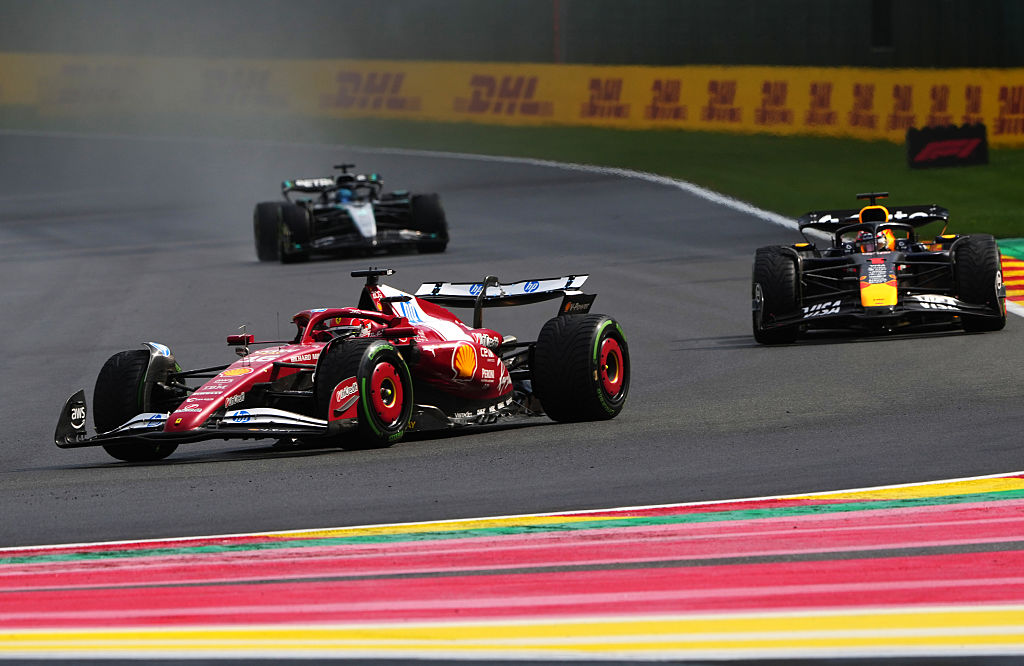
While rivals on track, Ferrari, Red Bull and Mercedes have reason to make common cause off it. Alex Bierens de Haan/Getty Images
They might not both ultimately exist to sell the same product, but Mercedes and Red Bull have more in common than you might think as Formula 1 teams, and Wolff felt an extending of an olive branch at the start of the latter’s next era was beneficial to both.
In 2026, Red Bull will join Mercedes, Ferrari and newcomers Audi as the only teams that manufacture their own chassis and power units. As such, those four are in a different position to the other 10 (or 11 from next year) teams on the grid, when it comes to future directions of regulations and costs.
At a time when there’s uncertainty over future directions for power units beyond the 2026 regulations, and both Wolff and Mekies felt it would be in their best interests to understand what the other’s intentions and preferences are for the sport as a whole moving forward.
It’s the sort of relationship that Ferrari's Fred Vasseur already has with Wolff, and there is a positive one between McLaren and both Ferrari and Mercedes on that front, too. Red Bull has been a bit of an outlier under Horner, where there was a different level of collaboration on wider topics off-track.
Having a better working relationship could prove important over the coming years, given the F1 teams and drivers sometimes facing challenges in dealing with FIA president Mohammed Ben Sulayem.
But beyond that, it is always important for the sport’s main stakeholders to be able to come together on bigger-picture items. That’s not to say they will always agree or want the same things, but when there is a clear understanding of what each team’s preferences or requirements are, then it provides a better chance of progress being made in what can often be combative environments.
Teams will always fight each other hard on track, and there would certainly be no love lost if Red Bull were to eventually lose Verstappen to Mercedes in 2027 or beyond. But the change in leadership in Milton Keynes has provided an opportunity for a more amicable off-track dynamic, and the two team bosses wasted no time in trying to kick-start it in Belgium.
Until they’re fighting each other for championships again, that relationship has a better chance of getting off on a stronger footing.
Chris Medland
While studying Sports Journalism at the University of Central Lancashire, Chris managed to talk his way into working at the British Grand Prix in 2008 and was retained for three years before joining ESPN F1 as Assistant Editor. After three further years at ESPN, a spell as F1 Editor at Crash Media Group was followed by the major task of launching F1i.com’s English-language website and running it as Editor. Present at every race since the start of 2014, he has continued building his freelance portfolio, working with international titles. As well as writing for RACER, his broadcast work includes television appearances on F1 TV and as a presenter and reporter on North America's live radio coverage on SiriusXM.
Read Chris Medland's articles
Latest News
Comments
Comments are disabled until you accept Social Networking Cookies. Update cookie preferences
If the dialog doesn't appear, ad-blockers are often the cause; try disabling yours or see our Social Features Support.