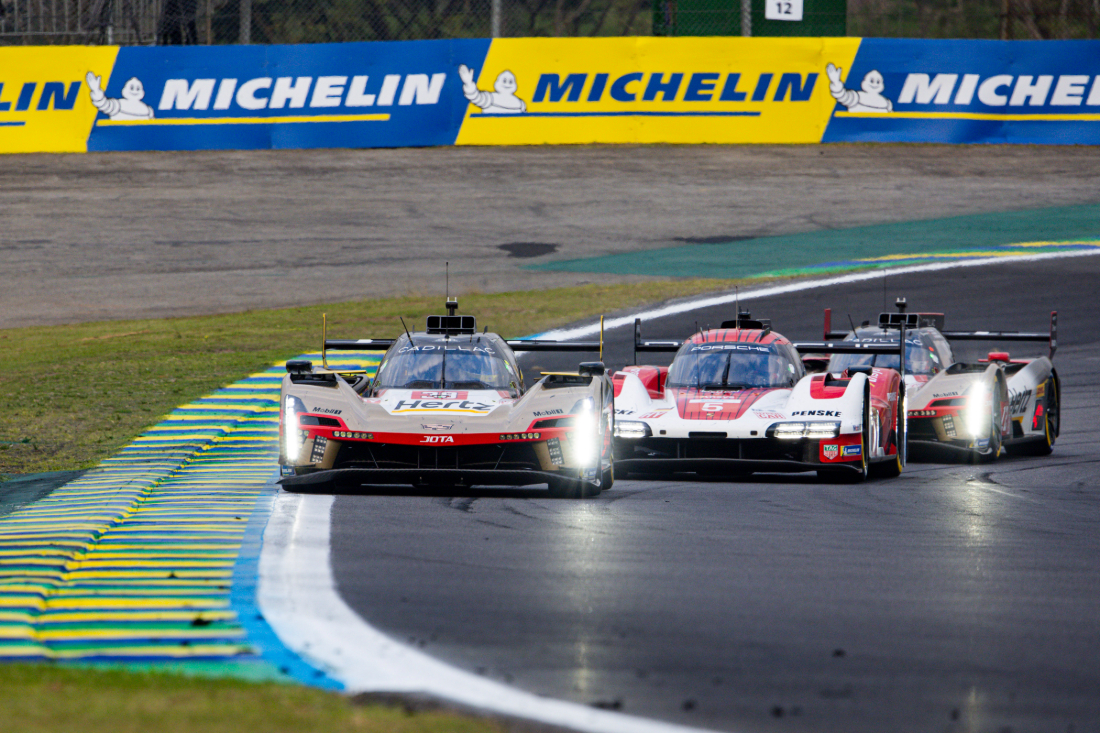
Julien Delfosse/DPPI
Hypercar teams puzzle over tire strategy on resurfaced Interlagos
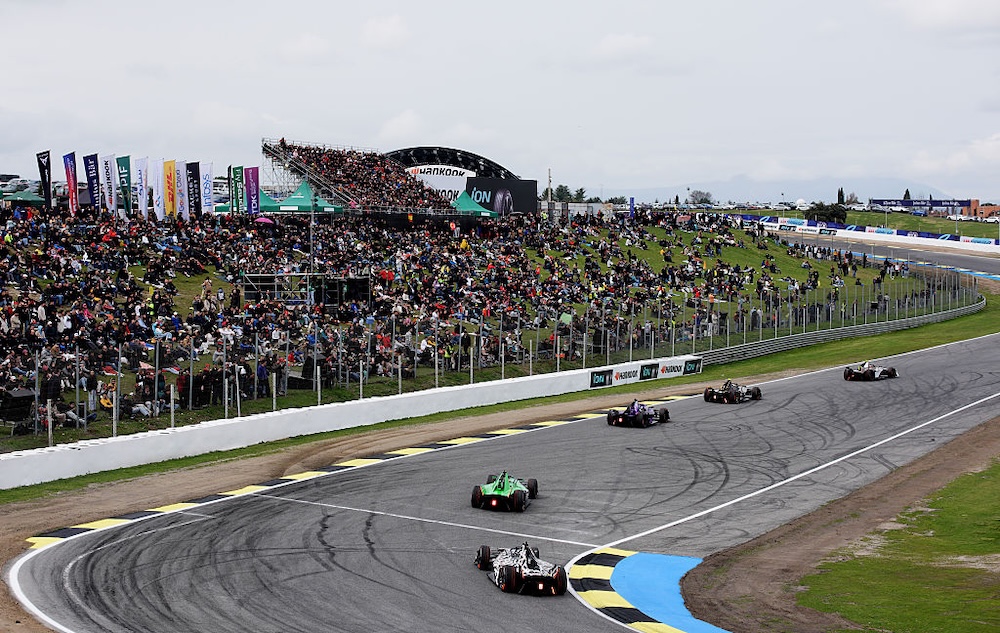
The big talking point in the build-up to qualifying in São Paulo this year for the Hypercar runners is the effect that the resurfacing of the Autódromo José Carlos Pace will have on tire strategy and lap times during tomorrow’s race.
The 2.7-mile São Paulo circuit – the shortest on the FIA WEC calendar – is notoriously tough on tires, specifically the right side, due to its abrasive surface, hills and twisty anti-clockwise layout. And since last year’s WEC race, the track has undergone a full resurfacing and a second round of work in specific areas, forcing teams to start from scratch in data gathering during the early stages of the race.
“The surface last year was challenging,” Pierre Alves, Michelin’s sports car operations manager, reflected in conversation with RACER ahead of FP1. “We’d never seen something like that before.
“We saw last year that the rear-right specifically has to cope with a lot of energy. We have a lot more load for an extended period here, which is why we need to have strong compounds, because the tires heat very quickly. It's going to be a challenge with the new surface to get a read on the performance of the two options we brought to the event before the race.”
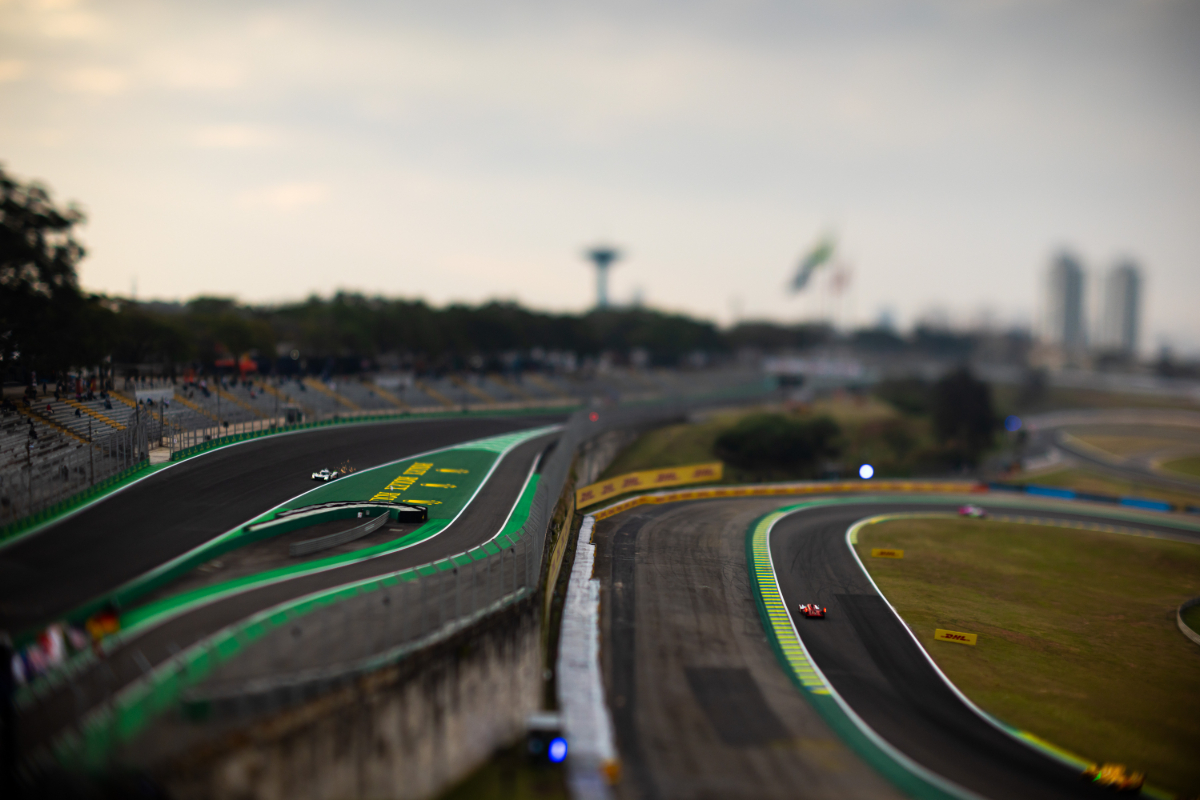
Resurfacing adds another tactical wrinkle to the undulating Interlagos circuit. Javier Jimenez/DPPI
Despite the unknowns going into the weekend concerning the new surface, Alves had zero doubt that the Medium and Hard compounds would prove to be the right choice again for the Hypercar runners.
“The choice of the compound is not related only to the asphalt, but also the energy that the track layout puts on the tires,” Alves continued. “We were always confident that the Soft wouldn’t be suitable because of it.”
More Le Mans/WEC
Porsche Penske Motorsport has set the pace with its 963s, the No. 6 completing the fastest lap of the weekend so far in Free Practice 2 – a 1m23.508s. Its drivers are satisfied with the progress made by the team as it looks to score its first win of the season.
“I have no issues at all, it feels smooth aside from one small bump on the straight towards the start-finish,” Michael Christensen, who drives the No. 5 963, told RACER. “It’s a good situation.
“Wear seems to be improved, but there’s no dramatic change to the feel. The pole time will probably come down. To be honest, if I didn’t know about the surface, I probably wouldn’t think about it. There’s just a lot of acceleration zones where you need the traction, you need the grip, it’s different from other circuits.”
It hasn’t been plain sailing for everyone, though. The championship leaders at Ferrari have been having a tougher time out on track here, in part because, by nature, it doesn’t play to the 499P’s strengths. The Balance of Performance changes for the event have also not played into its hands. The 499Ps are running 12 kilos heavier and 9 kW down on power below 250kph compared to Spa.
“Thermal balance and straight-line speed were not the best,” No. 51 driver Antonio Giovinazzi said after Free Practice 2. “It was a difficult Friday; we expected it. We’ve worked more on the race simulation. It wasn’t positive, but it can happen in season. We’ve been good so far this season, this is the first Friday we are struggling.
“In general, I think the track is less bumpy compared to last year, but the air temperature was lower than last year in FP1 and FP2.
“Last year, it wasn’t easy on this track for us. This is one where we struggle more, along with Fuji. We’ve improved the car, but it’s not enough. I think we need a clean result – if the maximum result is P6 then we need to take it, take the points and survive for the championship.”
Although the drivers are not finding the circuit dramatically different to run on, the new smoother surface and lower trackside temperatures are having a significant impact on compound selection.
In 2024, Toyota was an outlier and made the Medium work throughout the six hours, which played a significant role in the No. 8 GR010’s victory. And this time, it seems, we will see more teams follow suit. Michelin expects teams to almost universally use Mediums on the left side throughout the race, unlike last year, where, aside from Toyota, most cars raced with Hards on each corner.
Where the variation may come is on the right side, where Michelin has reported that some teams have been experimenting by putting Hards on the right rear to combat the effect of the high load placed on that corner through left-handers. Even with a Hard on the right rear though, double-stinting is still unlikely to be on the agenda because the level of degradation is still so high.
With the different compounds clearly labelled – Medium yellow and Hard red – it’s something to keep an eye on during tomorrow’s contest.
“It’s going in the direction of the Mediums this year,” said Mauro Barbieri, Ferrari’s performance and regulations manager. “I don’t think we will see many Hards in the race.”

Stephen Kilbey
UK-based Stephen Kilbey is RACER.com's FIA World Endurance Championship correspondent, and is also Deputy Editor of Dailysportscar.com He has a first-class honours degree in Sports Journalism and is a previous winner of the UK Guild of Motoring Writers Sir William Lyons Award.
Read Stephen Kilbey's articles
Latest News
Comments
Comments are disabled until you accept Social Networking Cookies. Update cookie preferences
If the dialog doesn't appear, ad-blockers are often the cause; try disabling yours or see our Social Features Support.