Oscar Lumley/Getty Images
New Formula E calendar has an eye on continuity – and the future
Continuity is key when it comes to the calendar for the next Formula E season. At least eight of the 12 host venues are returning from this season, with 11 of those being around for three or more consecutive years, while one of the new additions is a different venue in a returning host city, Miami.
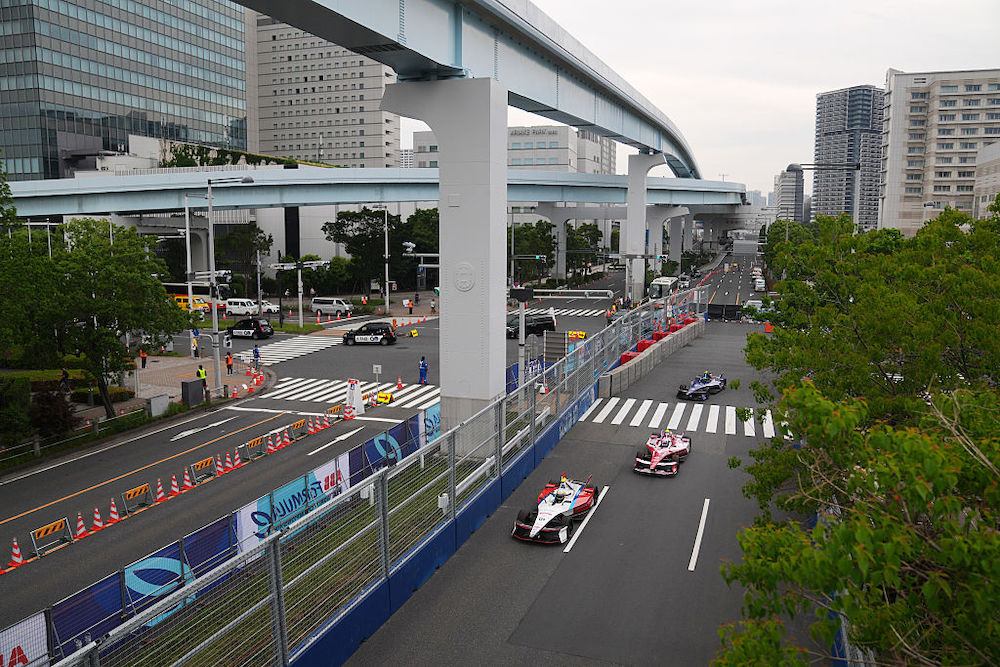
Despite the familiarity, the calendar still looks rather different, with an efficiency-focused reshuffle. The Saudi Arabia and London double-headers aside, the calendar has been conveniently grouped into regions – much like the 2026 Formula 1 calendar which was also announced on Tuesday – starting with a three race jaunt in the Americas, a three race run in Europe at the start of summer, then a run in Asia.
The plan is something that Formula E has always intended to do, but has always been hindered by outside factors.
“Our intention since day one [was] to become more and more efficient, logistically speaking, and this year is looking really good,” says Formula E co-founder and chief championship officer Alberto Longo. “We are super proud of that.
“We are basically racing in clusters, and clusters are good for efficiency, but also good for the fans of the region. I think it's so important to be two or three or four times in the same region so people get used to seeing races at the same time, the 3 to 4PM local slot everywhere we race.
“It's always our intention. Sometimes we manage to get a calendar like the one we are having in Season 12, and sometimes it’s a little bit more challenging because there are a lot of things that impact on a calendar: Ramadan in Saudi Arabia, the carnival in Brazil, the weather, obviously, is one of the most important things.
“There are a lot of things that would impact which weekend of the year we race in every single city, and all of them are really important for the local people, for the people who are actually allowing us to be racing there. So it's probably the biggest challenge we have in Formula E, but this year it came out really, really well.”
A standout change this year is the addition of a race at Circuito del Jarama. Jarama hosted pre-season testing for the current campaign, and despite coming in as a last-minute substitute for Circuit Ricardo Tormo in Valencia which was impacted by flooding, it instantly left a mark on the Formula E paddock.
“The ecosystem found an ideal place to be racing at,” says Longo. “We definitely talk quite a lot with drivers, with teams, with manufacturers, and they all stated the fact that you could deliver good racing.
“And when I talk about the ecosystem, obviously I talk about teams, manufacturers and drivers. They told us that Jarama was an ideal location, that the car was going to perform really well there, and that's the main reason why we decided to go to Madrid – together with having a market, or being in a market, that is also very important to Formula E.”
The Madrid venue wasn’t the only Spanish location considered, and while a long future is hoped for the track, Longo spoke of the possibility of it alternating with a race in Barcelona – namely a street race at Montjuic in Barcelona.
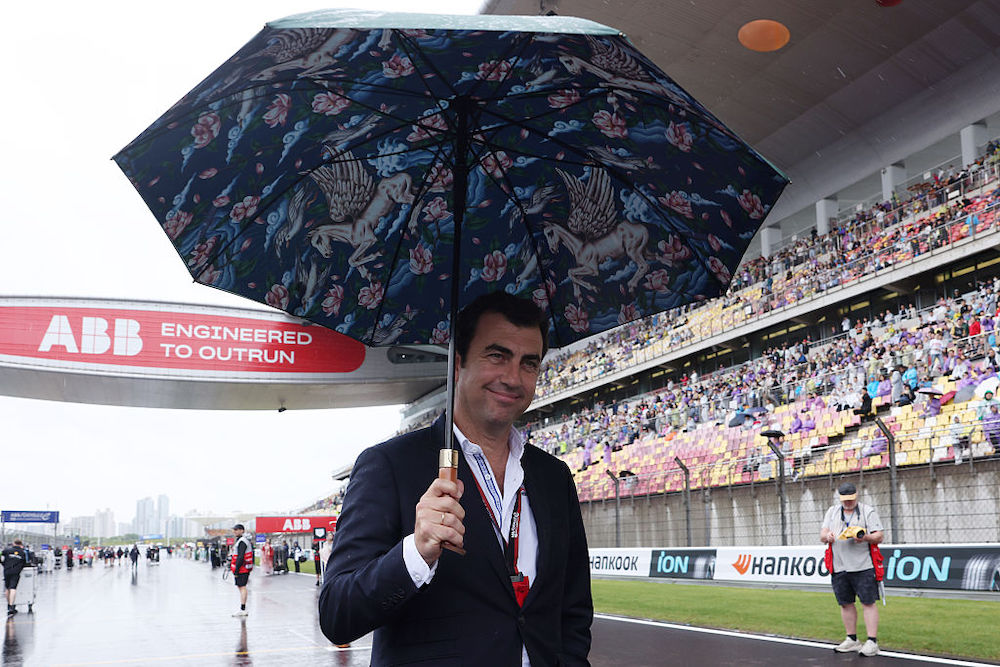
According to Longo, the new FE calendar represents a logistical efficiency that had previously been out of the series' reach. Andrew Ferraro/Getty Images
“In Spain there are a lot of cities that we have been discussing with,” explains Longo. “Barcelona is one of them. Montjuic is one of the venues that we have been discussing, and we would love to be there – that's a purely urban track, it's exactly what we want to do, be racing in the streets of the biggest cities, the most beautiful cities in the world, and Barcelona ticks all the boxes for us.
“So definitely, we will love to be racing there, and why not do it every other year together with Madrid? Madrid and Barcelona could eventually have alternative races year on year.
“But [it’s] too early still. We're discussing with them, as with some of the cities in Spain like Sevilla, like Malaga, the top, biggest cities in Spain. We would love to have more than just Madrid in the calendar for the following seasons.”
But with Jarama joining the schedule for the time being, joining races on traditional circuits in Mexico and Shanghai, as well as the Miami and Jeddah races on less conventional but still permanent courses, the question of whether Formula E is moving away from its temporary circuit ethos has come up again.
Longo insists Formula E hasn’t moved away from that convention, but increased speeds – particularly with the upcoming GEN4 car which will arrive the season after next – occasionally forces a rethink.
“I don't think we're going away from it,” Longo says. “I mean, in practical terms, we are. You can see it in the [Season 1] calendar, we didn't have any permanent track – Mexico, was actually in Season 2 – so definitely there has been a change on that. But that change is driven by the fact that these cars are more challenging to be racing in the heart of the biggest cities of the world.
“Obviously when we go to places like Paris, for example, it would be amazing to be racing there, but definitely we cannot. Same with Rome in that particular location [used from 2018-2023], the streets are just not wide enough or safe enough for us to be racing in these locations.
“Rest assured that what we are, our DNA, remains intact, and every time that we go to a city, we try to find a location in the middle of the city, or at least a street racing track. But for us, it's more important to be racing in the key markets that us and the ecosystem are telling us that that is important and that prevails over the fact of racing in the city center.”
That thinking is particularly prevalent when it comes to the races in London. The ExCeL exhibition center recently announced an extension to its contract with Formula E that will keep it on the calendar until the end of GEN3, but the increased speeds of the GEN4 cars throws the unique indoor/outdoor circuit’s long-term future in doubt, and Brand Hatch and Silverstone both rumored to be in the running for its slot.
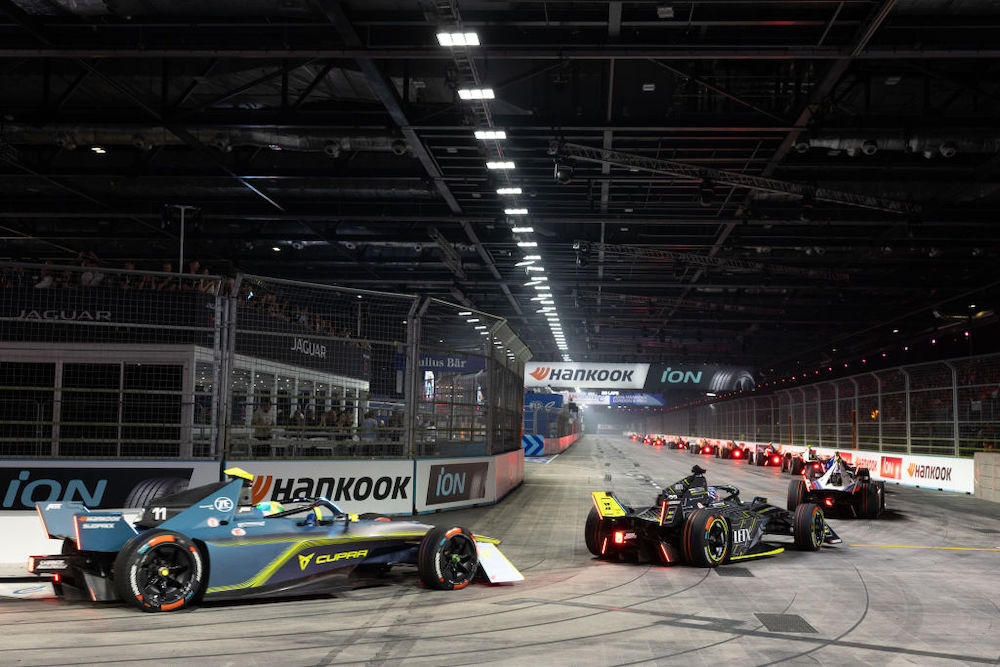
London's quirky layout might not be compatible with the next generation of car. Alastair Staley/Getty Images
“What is going to happen in the future with London, that is too early to say but the GEN4 car is coming with a big uplift,” says Longo. “The car is definitely way more powerful than the GEN3 so we need to select the places where we want to race, and those will be places that allow the car to show it's a big improvement.”
GEN4 is also likely to bring about changes to Formula E’s U.S. presence. Next season the series will move from Homestead-Miami Speedway to the Miami International Autodrome at the Hard Rock Stadium following its use in the ‘Evo Sessions’ influencer event earlier this year, but it is set to be joined by at least one other race in a couple of year's time.
“We wanted to race at least once, but probably twice or three times in the USA, same with China,” says Longo.
“Definitely for GEN4, I think we at least need to have two races in the U.S. We are having active discussions with 11 different cities in the U.S. at the moment, and hopefully one or two of them will materialize,” he revealed, adding that those 11 venues are a mix of previous Formula E host locations (Los Angeles, New York, and Portland) along with new ones.
“It takes time and some of these races are urban races, some of them are in permanent tracks. We're first of all trying to choose the right state in the U.S. I think it's so important to be covering the west and east coast, and this for us is the key element in order to decide. And then, once we decide what the city is, then trying to look and find the best location within the second priority.
“I have a full team, fully dedicated to the U.S. market at the moment and looking into different options, and that has been like this for the last two, three years. So we're close to getting two to three races in the U.S. as well.”
Right now there are two ‘TBC’ events on next season’s calendar, which Longo insists are “definitely races that will happen and will be confirmed in the next World Motorsport Council in the autumn”. Another thing yet to be determined is how Pit Boost will be implemented in next season’s races.
This season, the first in which Pit Boost – a fast-charging pit stop where usable energy is upped by 10 percent in 10 seconds – has been utilized, has had it used in the first race of every double-header weekend. Whether that format will continue will be decided at the end of the current campaign, following feedback from teams, drivers, and fans.
“That still needs to be decided because we like to ask, not only people in the ecosystem, but outside the ecosystem, even our fans,” Longo explained. “For me, has been a blast to see the Pit Boost, but obviously I'm 50 years old, and maybe not the right target for Formula E.
“So definitely, we want to ask a range of people about what they think of the Pit Boost. And we will only do that at the end of the season. And we will only decide what to do with the Pit Boost whenever we receive that feedback from fans and people from the ecosystem. Once we receive all that, then we will decide what to do exactly.”
Dominik Wilde
Dominik often jokes that he was born in the wrong country – a lover of NASCAR and IndyCar, he covered both in a past life as a junior at Autosport in the UK, but he’s spent most of his career to date covering the sliding and flying antics of the U.S.’ interpretation of rallycross. Rather fitting for a man that says he likes “seeing cars do what they’re not supposed to do”, previously worked for a car stunt show, and once even rolled a rally car with Travis Pastrana. He was also comprehensively beaten in a kart race by Sebastien Loeb once, but who hasn’t been?
Read Dominik Wilde's articles
Latest News
Comments
Comments are disabled until you accept Social Networking Cookies. Update cookie preferences
If the dialog doesn't appear, ad-blockers are often the cause; try disabling yours or see our Social Features Support.