Michael Levitt/Lumen
From the new RACER magazine: Helio Castroneves - why I race
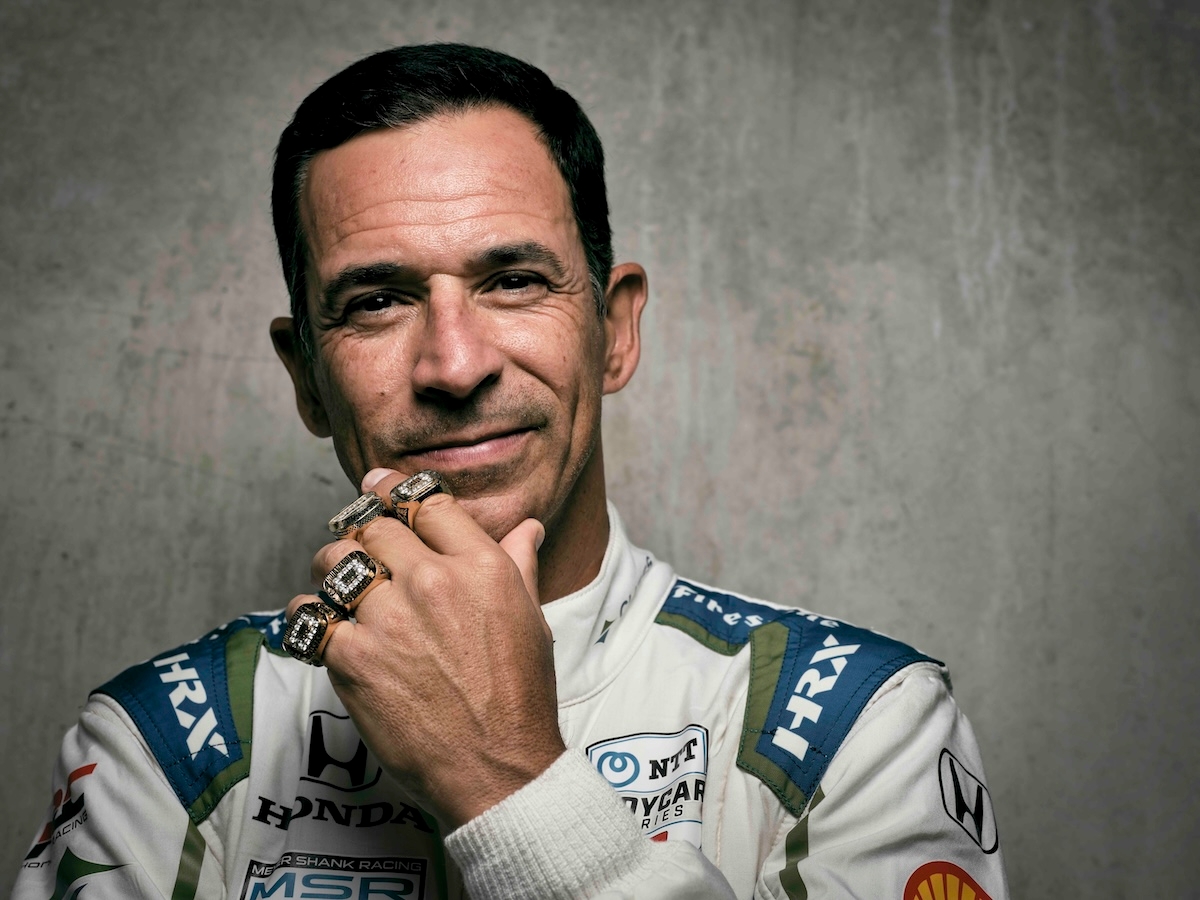
Helio Castroneves is the most charismatic IndyCar driver of this century, but that wouldn’t mean a thing if he couldn’t walk the walk as well as he talks the talk. In fact, his talents have become legendary, winning 31 IndyCar races – including four Indianapolis 500s – as well as the IMSA WeatherTech SportsCar Championship, three editions of the Rolex 24 At Daytona, and three Petit Le Mans.
On Sunday, at the age of 50, the Brazilian will attempt to become the Indy 500’s first ever five-time winner, competing for the team with whom he won his fourth in 2021 and which he now part owns, Meyer Shank Racing.
RACER: At what age did it become inevitable that you would become a race car driver?
HELIO CASTRONEVES: I was about 14 when I said to my mom that I want to pursue a racing career and don’t want to go to school. She said I could do both. I’d been hooked on racing since I was about five because my father ran a stock car team. By 11, I had my first go-kart. I won the Brazilian championship in 1989, and went to Italy for the Kart World Cup in 1990.
And your father helped transition you from karts to cars, starting with Formula Chevrolet in Brazil…
Yes, he pushed all his opportunities to give the best chance to his son, and so I raced for him in Formula Chevrolet in Brazil. We did quite well [championship runner-up in 1991], and moved up to Formula 3 Sudamericana, then Brazilian F3 for 1994 and again I finished second.
I wasn’t ready for Formula 3000 [F2 as it is now] so we aimed for British F3. I went to the International Challenge F3 race at Donington Park in 1994 to drive for Fortec, and we finished third. I signed with Paul Stewart Racing for ’95 and although I didn’t know the circuits, I was near to my teammate Ralph Firman Jr., I won at Donington, and I finished third in points. If I’d stayed another year in British F3, I think I’d have won the championship.
Why the shift in focus from Formula 1 to IndyCar?
Money. The sponsorship required to continue in F3, F3000 up to F1 was too much, and Marlboro Brazil wanted Brazilian drivers in America. But I wouldn’t say I shifted focus: I was still thinking of F1, but I’d come from the IndyCar direction, like Jacques Villeneuve was doing at that time, joining Williams. So I did this test in Tasman Motorsports’ Indy Lights car and it was incredible: the Lola-Buick had double the power of an F3 car. Steve Horne [Tasman owner] spotted I had talent and passion and decided to run a third car for me in ’96. I didn’t start the first race because at Homestead, I learned the hard way to respect ovals! I had a big crash, broke the tub. But after that we had an OK first season, and I won at Trois-Rivieres. Then in ’97, I had a big battle with my teammate Tony Kanaan. I won more races, but he got the championship.
Graduating to IndyCars with Bettenhausen Racing must have been difficult – a small-budget team and you were the only driver. That’s tough for a rookie.
Yeah, plus we had Mercedes engines and Goodyear tires, and they weren’t good. We finished second in Milwaukee, but we were nowhere in the points. But then JJ Lehto left Hogan Racing to race prototypes for 1999, and Carl Hogan signed me, and although that meant I switched from Reynard to Lola and I still had Mercedes, at least I now had Firestones. The results weren’t better, but I got another second [Gateway], took pole at Milwaukee, and we showed good speed at almost all the ovals and Portland.
When Hogan told you he was shuttering his team, did you have anything lined up for 2000?
Nothing. I was going back to Brazil. I literally had all my bags packed and was about to put my apartment up for sale. If the worst situation hadn’t happened in the last race of 1999, where we lost Greg Moore, who had signed for Penske for 2000, I probably wouldn’t be speaking to you now.
How different was Team Penske to where you’d been before?
Incredible! At a Sebring test with Hogan the year before, I remember sweating the crap out of the car trying to get a good lap time. Now at Penske [using Reynard-Hondas], just warming up the car and myself, my lap times were the same as I had run in the Hogan car in ’99. Everything became smoother, I could drive without going crazy which meant I looked after the tires while going quicker. And with Gil [de Ferran] as my teammate – he also arrived at Penske for 2000 – we learned together, but he was also a great teacher.
And seven races in, you get your first win in Roger Penske’s backyard, Detroit. Can you remember that feeling?
I’ll never forget it. I was right on [Juan Pablo] Montoya’s gearbox when he had a mechanical issue, so suddenly I’m leading and I had to keep telling myself to stay cool, and Tim Cindric my strategist coached me really well. I’ve never won the lottery, but when I saw that checkered flag, it felt like I had. It was like how I felt winning Indy in 2021.
You took three wins that year, Gil won the championship, and it was a similar story in 2001. But in between, Penske also did a “raid” on the Indy 500 – and you won! Drivers who win multiple 500s sometimes say they don’t appreciate it enough first time around. Did you?
It’s difficult to be with Penske and not appreciate Indy’s significance to Roger! But the win was also really significant for me personally, because it was my first ever win on an oval. That was a huge deal for me.
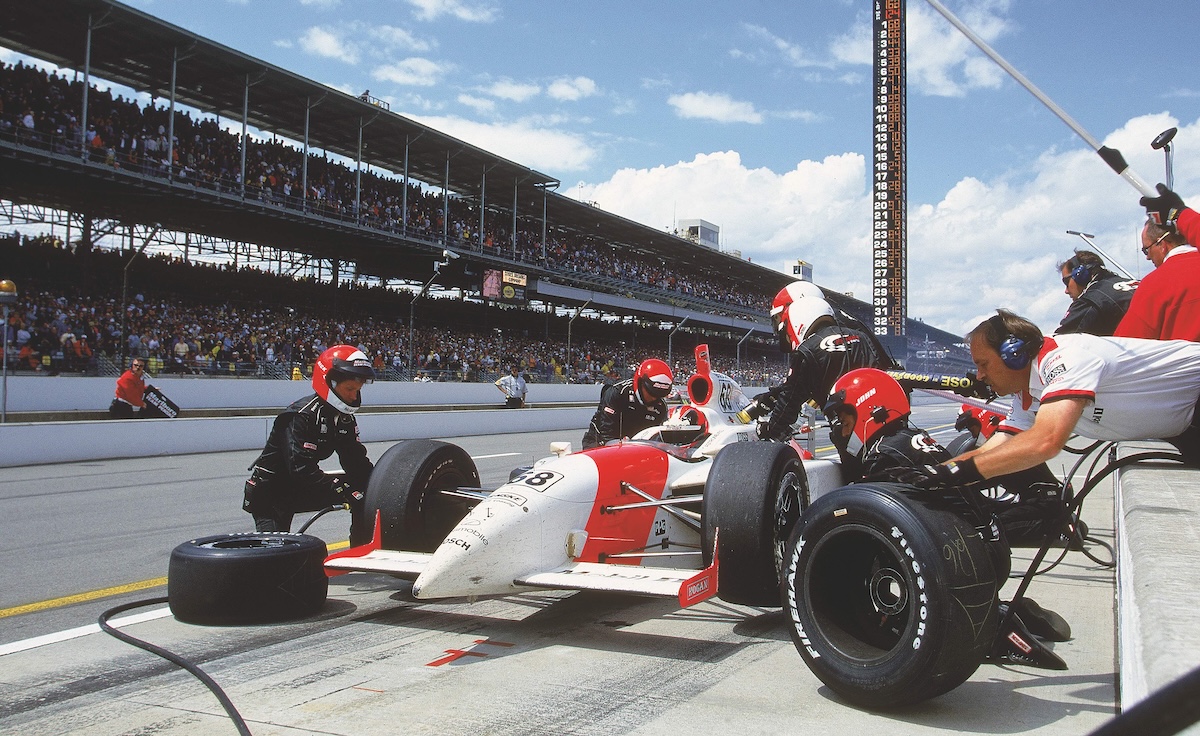
When Team Penske, then a CART team, launched a “raid” on the Indy Racing League’s Indy 500 in 2001, Helio Castroneves won on his debut. Getty Images
So how tough was it when Roger told you that for 2002 Team Penske was switching full-time to the IRL, which at that time was only racing on ovals?
Roger offered to pay me my contract in full for 2002 if I wanted to leave Penske and stay in CART, or I could stay with his team and go to IRL. I said I want to stay with Penske and I want to win Indy again. So I did…and I did! And we finished second in the championship. And because we were running Toyota engines, I got the chance to test a Toyota Formula 1 car at Paul Ricard. It was fun and I was fast, but they only offered me a test contract for 2003. To give up a race seat with Penske for a drive with an F1 team that was OK, but not great – and not even know if you’re going to get to drive? No way!
You won several races over the next several years, and were always in the championship mix. But that third Indy win, in 2009, after a tax trial that threatened your career, must have been the most emotional?
Absolutely. It’s hard to compare Indy 500 wins, but that was an incredible Month of May. The car was phenomenal through practice and I felt that if everything went OK, we could get pole and we did. Then in the race, my crew did a phenomenal job in the pits and on the final restart, I passed [Scott] Dixon and never looked back.
Considering how competitive you still were in 2017, how upset were you when you learned that Roger wanted you to switch categories and lead the IMSA team in 2018? Were you tempted to join another IndyCar team instead?
It was tough to know that he wanted me only racing at Indy because, like you say, I felt I’d still got it. But this team was my family, so I eventually decided, OK, maybe I should be grateful to leave IndyCar while I’m still at the top, and it is time to transition to sports cars. I had enjoyed my time racing sports cars before, like winning Petit Le Mans in the Porsche in 2008.
And now I’m glad I did what I did, staying with Penske but switching categories, because it showed me how much fun IMSA racing is, and Ricky Taylor and myself ended up becoming champions in 2020. That final race where we clinched it was very emotional for me, because everyone knew it was also my last race for Penske, which had been my home for 21 years. Acura and Penske were splitting up, the program was ending. Thankfully, Roger had given me some good warning, so I was able to have talks with Bobby Rahal and Mike Hull [Ganassi’s team manager] about Indy 500 programs. The only one able to offer me a chance was Mike Shank.
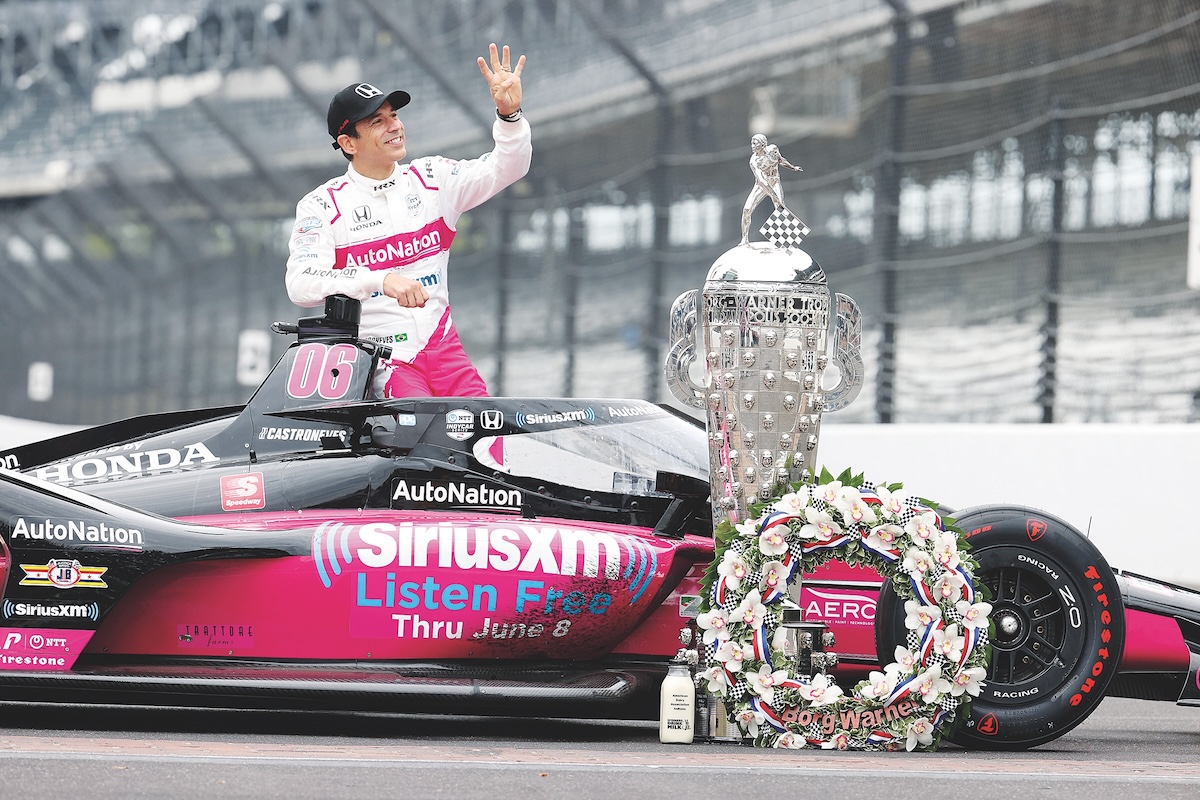
Helio Castroneves joined Meyer Shank Racing for 2021, the pairing putting the Brazilian in the four-time Indy 500 winners’ club at their first attempt. Getty Images
Which famously led to the fourth Indy win. How confident were you in the car and team that Month of May in 2021?
It had been a long time since my third win and since then I had finished very close behind Ryan Hunter-Reay in 2014 and Takuma Sato in 2017. And on Media Day at Indy in ’21, someone asked me, “Don’t you think your chance of winning a fourth Indy is slimming down?” And I was giggling inside because I knew how strong our car was in race trim, so I told this media guy, “No, I don’t think my chances are slimming down.” Not only did I know we had a great car, remember that I won Indy in 2002 because of a caution period, so why couldn’t that happen again?
This led to you doing two complete seasons with MSR, but now you’re back to being an Indy specialist. You turn 50 in the Month of May. Is it true that age is only a number?
First of all, I’m not just an Indy specialist: I’m racing in the Brazilian Stock Car Championship this year, too! But to your question, yes, if you keep up your fitness and desire, I absolutely believe age is just a number. I think other drivers retire around 40 because they’re a little bit tired, they’ve achieved their goals, and their motivation goes down a little bit. Then once they’ve stopped, they miss racing, they think they’ve found again their motivation, and they come back. Well, once you’ve stopped for a year or two, forget it: technology keeps moving, and if you’re not there to learn it when the others are learning it, when you come back you have to learn it in a hurry. So that’s why I’ve never said, “That’s it, I’m done.”
I love being part of the ownership and management at Meyer Shank, and I’m excited about our chances in IndyCar and IMSA. But I still have this great motivation to be in the cockpit of a race car, and until that goes away, or until opportunities go away, I’ll keep racing.
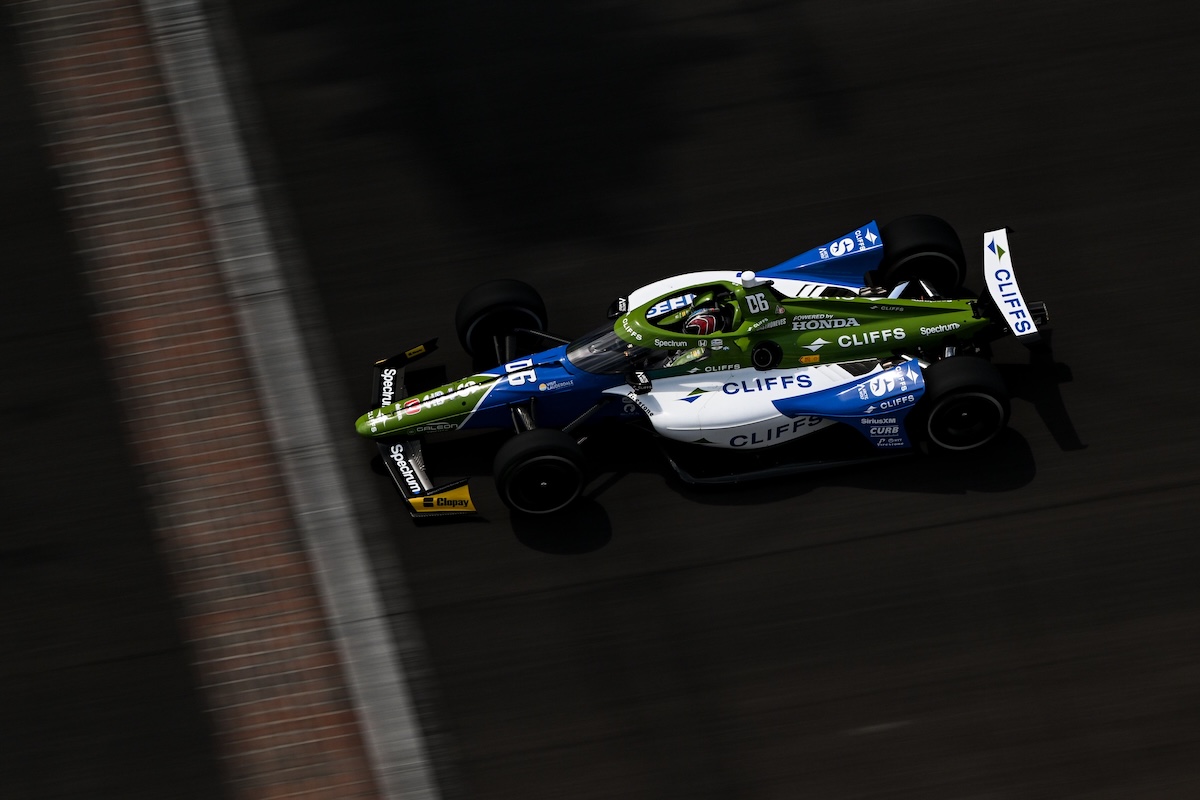
Helio Castroneves will make his 25th Indianapolis 500 start in 2025’s 109th running, once again driving for Meyer Shank Racing. James Black/IMS Photo
• RACER magazine has always celebrated the spectacle and drama, showcased the stars and cars, and told the stories that take you inside motorsports, but now we’re delivering it in a bigger, better, more vibrant way and elevating the magazine experience once again. The latest RACER (No. 334, The Racing Movies Issue) includes a behind-the-scenes look at the soon-to-be-released “F1” movie and sets the scene for three of the world’s biggest races, the Monaco Grand Prix, Indianapolis 500 and 24 Hours of Le Mans.
CLICK HERE to purchase the new issue of RACER. And to have the new-look RACER magazine delivered to your mailbox six times per year, CLICK HERE to check out print and digital subscription options.
Presented by:
David Malsher-Lopez
David Malsher-Lopez is editor-at-large for RACER magazine and RACER.com. He has worked for a variety of titles in his 30 years of motorsport coverage, including for Racer Media & Marketing from 2008 through 2015, to which he returned in May 2023. David wrote Will Power’s biography, The Sheer Force of Will Power, in 2015. He doesn’t do Facebook and is incompetent on Instagram, but he does do Twitter – @DavidMalsher – and occasionally regrets it.
Read David Malsher-Lopez's articles
Latest News
Comments
Comments are disabled until you accept Social Networking Cookies. Update cookie preferences
If the dialog doesn't appear, ad-blockers are often the cause; try disabling yours or see our Social Features Support.