Ryan Pierse/Getty Images
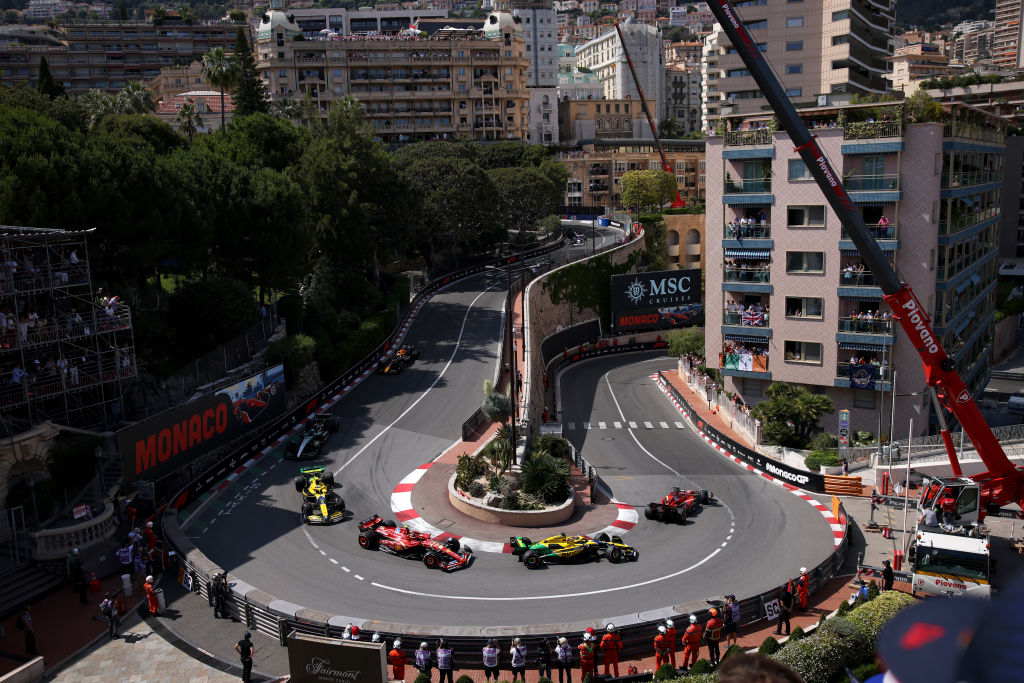
Breaking down Monaco’s two-stop tweak
Think of the Monaco Grand Prix and you probably think of the glitz and the glamor. Yachts in the harbor, bobbing away on the waters of the beautiful shimmering Mediterranean, with expensively dressed diners enjoying a slow lunch sat on the terrace at the Cafe de Paris as Formula 1 cars dance their way between themselves and the Monte Carlo Casino.
You might even think of the brilliance of the drivers to navigate the streets at such speed, particularly on an all-or-nothing qualifying lap. But you almost certainly don’t think of thrilling wheel-to-wheel racing action.
And before I go any further, I better warn you that you’re going to be sorely disappointed if your expectations are changing this year with the introduction of new regulations relating to tires. Because while they are designed to improve things on a Sunday, the track layout is never going to be conducive to overtaking in cars of the current size.
But the sporting regulations have been modified for Monaco specifically, demanding a different use of tires compared to any other event on the calendar. Here’s the important part:
“For the Monaco race, each driver must use at least three different types of tire (either dry or wet). If a driver does not use intermediate or wet tires in the race, they must use at least two different slick tire compounds, of which one must be from the mandatory dry compounds (hard or medium).”
The penalties for failing to do so are severe. In fact, a driver will be disqualified for not adhering to the regulations. Or, if the race is red-flagged and not restarted before a car has used its third set of tires, the driver will be handed a 30-second time penalty, or a 60-second penalty if they only used one set of tires in total.
The long and short of it is teams must still use two different compounds as they usually would in a dry race, but must also use three sets in total. So you can run medium-hard-hard, for example.
The FIA states the change has been made “with the primary intent of improving the sporting spectacle of this race, given the notable difficulty in overtaking at this circuit” and there are multiple ways it could have an impact.
A byproduct of more pit stops is more opportunity for something to go wrong in the pit lane, leading to a position change. But that’s tertiary to the fact that it provides more opportunities for an undercut or overcut situation when a car comes into the pits, and the main aim of simply getting drivers to push harder.
Last year’s race was a brilliant story with Charles Leclerc finally winning his home event, but Leclerc knew as soon as he retained his lead off the line that he only needed to drive far within himself – multiple seconds off his potential pace – to back the field up and prevent anyone behind him having a gap to make a pit stop into and potentially pull off the undercut.
With just one stop to make, Leclerc then needed to increase the pace enough to create windows to make his stop and emerge still ahead of those behind him. Once that was achieved, he could cruise to the flag again.
By having two stops to make, drivers should, in theory, have to push harder to create gaps on two occasions. And by pushing harder on a track that punishes mistakes, it increases the likelihood of an incident that could also prevent the race from being so processional.
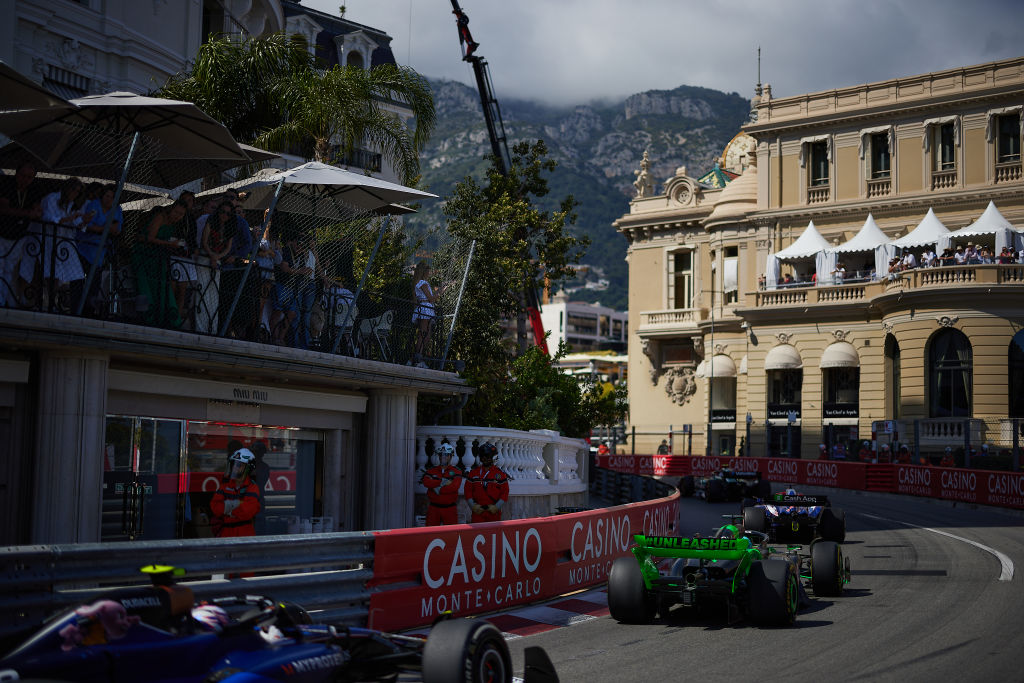
Processional racing is inevitable at Monaco but last year's took it to a new level, and prompted changes. Emmanuele Ciancaglini/Getty Images
McLaren team principal Andrea Stella says it doesn’t have a massive impact on the way teams will prepare for the race, but it does add variables and could be particularly challenging given the need to run three sets of tires even if the race is declared wet.
“In fairness, you approach it in the same way, with the same tools, with the same kind of thought process compared to how you would approach any event,” Stella said. “Let’s say simply, you just have more constraints, so you have to make some adaptations in terms of how you approach this. But in itself, I think it's interesting.
“After the race we had last year, a little bit of change is an interesting aspect. So, I welcome these kinds of changes. Actually, I think it will be trickier in wet conditions. So, for dry conditions, I think it's just interesting. For wet, it could create some situations that may be a little awkward. But we look forward to it and, like I say, I welcome the change.”
More Formula 1
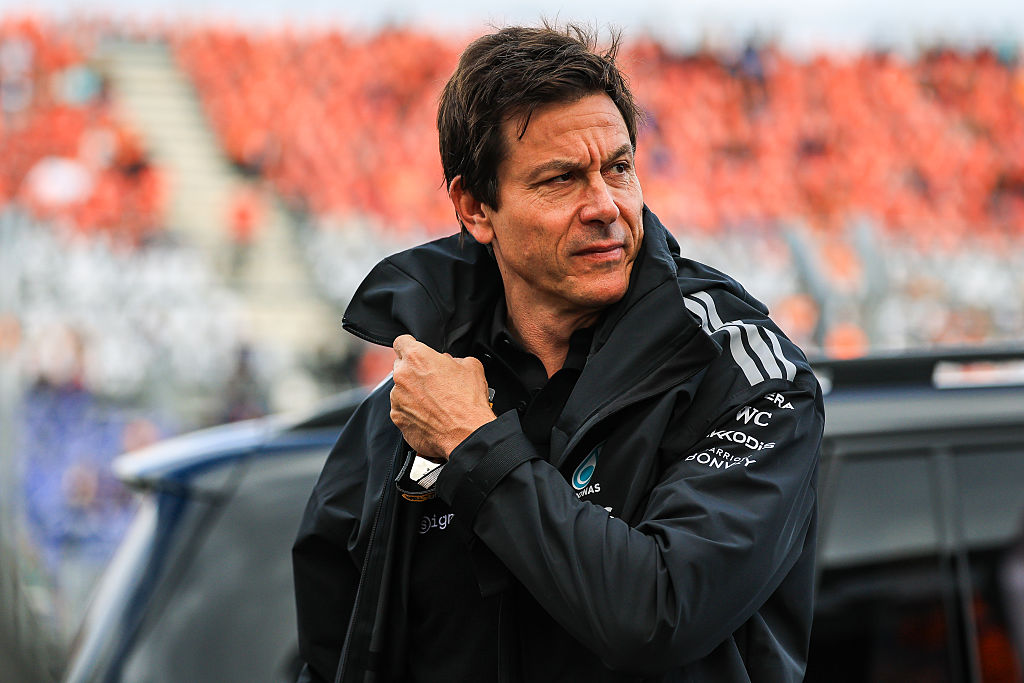
Tim Goss was the FIA’s single seater technical director in 2023, prior to becoming chief technical officer at Racing Bulls, and says the solution has not just been invented out of thin air, despite the speed in which the discussion emerged and was passed into regulation earlier this year.
“For us, it’s just another constraint,” Goss said. “Hopefully, the main purpose of it is to make the race more exciting. What we don’t want is one-stops and processions.
“I welcome the effort that went into it. There were lots and lots of things that were suggested. We’ve been talking about it for many, many years, and I think really, if it does work out as a success, then congratulations to the teams, the FIA and Formula 1 that worked together to come up with the package and the idea.”
The magic of Monaco has always been qualifying, but also the feeling that anything could go wrong at any second, even in a processional race. That felt like it dissipated as the cars got bigger and overtaking became even harder, so if the new two-stop regulation adds more points of intrigue and keeps fans watching just in case something might happen, then it will have been a success. And if not, then nothing will really have been lost.
Presented by:

Chris Medland
While studying Sports Journalism at the University of Central Lancashire, Chris managed to talk his way into working at the British Grand Prix in 2008 and was retained for three years before joining ESPN F1 as Assistant Editor. After three further years at ESPN, a spell as F1 Editor at Crash Media Group was followed by the major task of launching F1i.com’s English-language website and running it as Editor. Present at every race since the start of 2014, he has continued building his freelance portfolio, working with international titles. As well as writing for RACER, his broadcast work includes television appearances on F1 TV and as a presenter and reporter on North America's live radio coverage on SiriusXM.
Read Chris Medland's articles
Latest News
Comments
Comments are disabled until you accept Social Networking Cookies. Update cookie preferences
If the dialog doesn't appear, ad-blockers are often the cause; try disabling yours or see our Social Features Support.