Josh Hernandez/Penske Entertainment
Dixon heads up no-tow speeds on Indy 500's Fast Friday
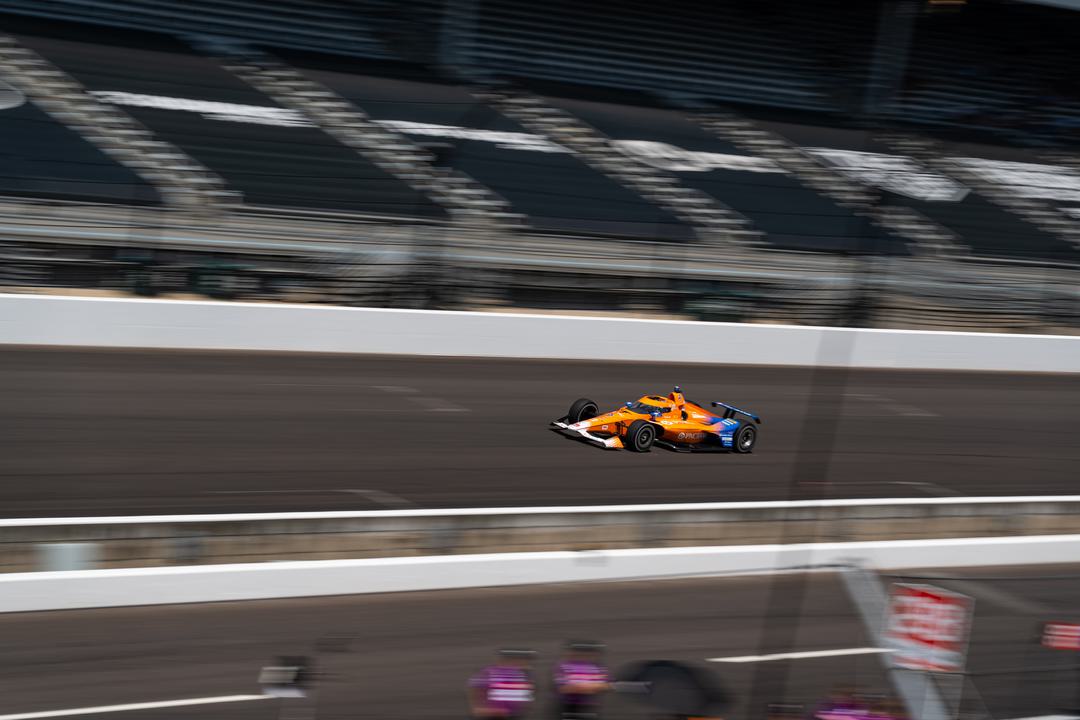
Scott McLaughlin was the fastest driver on Fast Friday at the Indianapolis Motor Speedway with a tow-assisted lap of 233.954mph in the No. 3 Chevy, but the lap that mattered most belonged to Chip Ganassi Racing’s Scott Dixon who delivered a 232.561mph tour of the 2.5-mile track without a tow in the No. 9 Honda to give the strongest representation of single-car qualifying performance.
Dixon’s teammate Alex Palou went out moments before and took third with a nearly-matching 232.528mph with no tow in the No. 10 Honda, and about two hours prior, Andretti Global’s Kyle Kirkwood, at peak ambient and track temperatures, turned a 232.107mph lap in the No. 27 Honda that held on for fourth.
His teammate Colton Herta joined the Ganassi drivers for the close to the afternoon and captured fifth with a 232.066mph in the No. 26 Honda, giving the Japanese brand the top four no-tows while McLaughlin was the best for Chevy in fifth with a 232.005mph. All three Penske drivers headed out at noon, and by 3 p.m. their pit equipment was packed up for the day, preventing a direct comparison between the fastest Chevy cars and the fastest Honda entries in the day’s most favorable conditions.
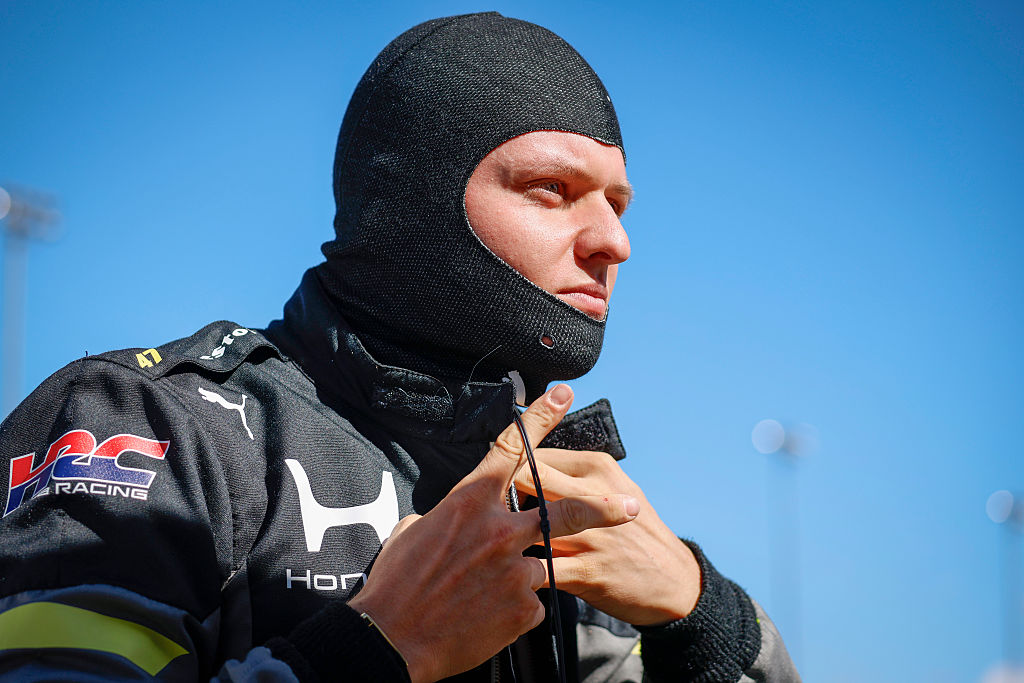
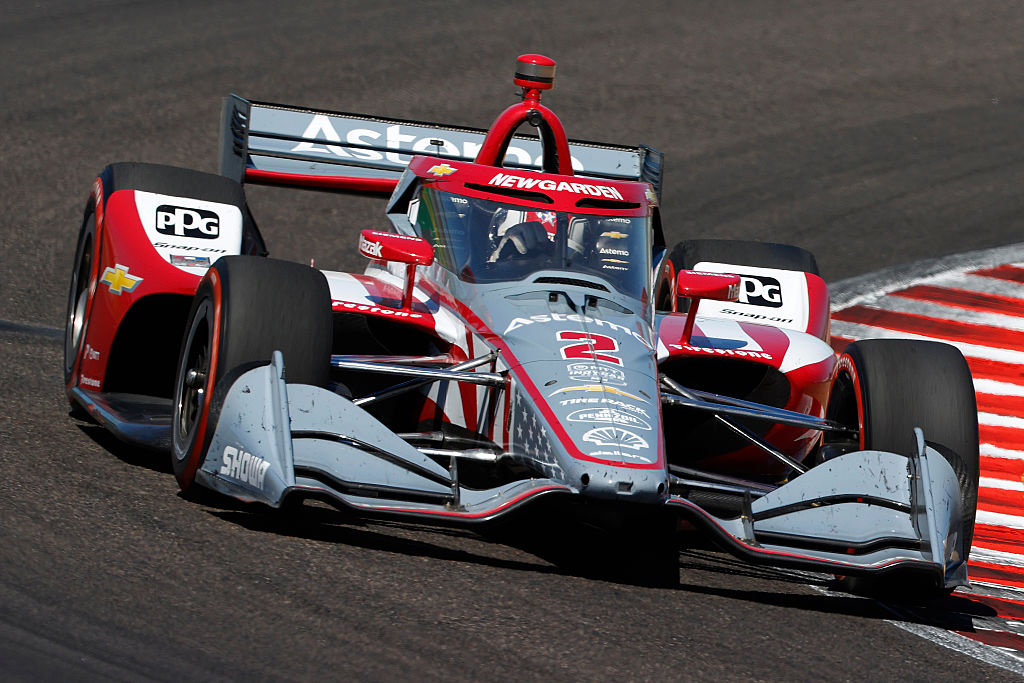
Friday's biggest surprise was the speed of PREMA Racing rookie Robert Shwartzman, who was as high as eighth and ended up 13th in the No. 83 Chevy, but he has a secret weapon on his timing stand with the Indy return of Eric Leichtle, who won the 500 in 2023 as Josef Newgarden’s race engineer. Leichtle left at the end of the ’23 season to work at SpaceX, but is assisting the team on its first attempt to qualify for the great race.
Two crashes occurred, first with Kyffin Simpson in a big one at Turn 4 and the other with Kyle Larson in Turn 3. Both drivers were unhurt, but Simpson was finished for the day while his Ganassi team prepared a spare car. Larson's Arrow McLaren/Hendrick Motorsports team had his car out for an installation lap by 5:30 p.m.
Heat and wind dominated the six hours of running, with the ambient heat settling in the mid-80s and track temperatures soaring above 130F, which Firestone says is a record since it began capturing the data in 2016. Qualifying on Saturday is expected to be much cooler—in the high 60s—and winds could be significantly stronger, which is why most teams did a limited amout of simulation runs on Friday. With the conditions meant to be so different from Friday to Saturday and Sunday, there wasn't much information to be gained that would help in time trials.
Fast Friday opened with a strange sight as pit lane was mostly bare, with exception of a few cars from Team Penske, Arrow McLaren, and a handful of others. With the full-time Honda teams performing overnight engine changes, many were busy finishing the final preparation items as Penske’s Scott McLaughlin went out right after the 12 p.m. start to perform a qualifying simulation.
More IndyCar
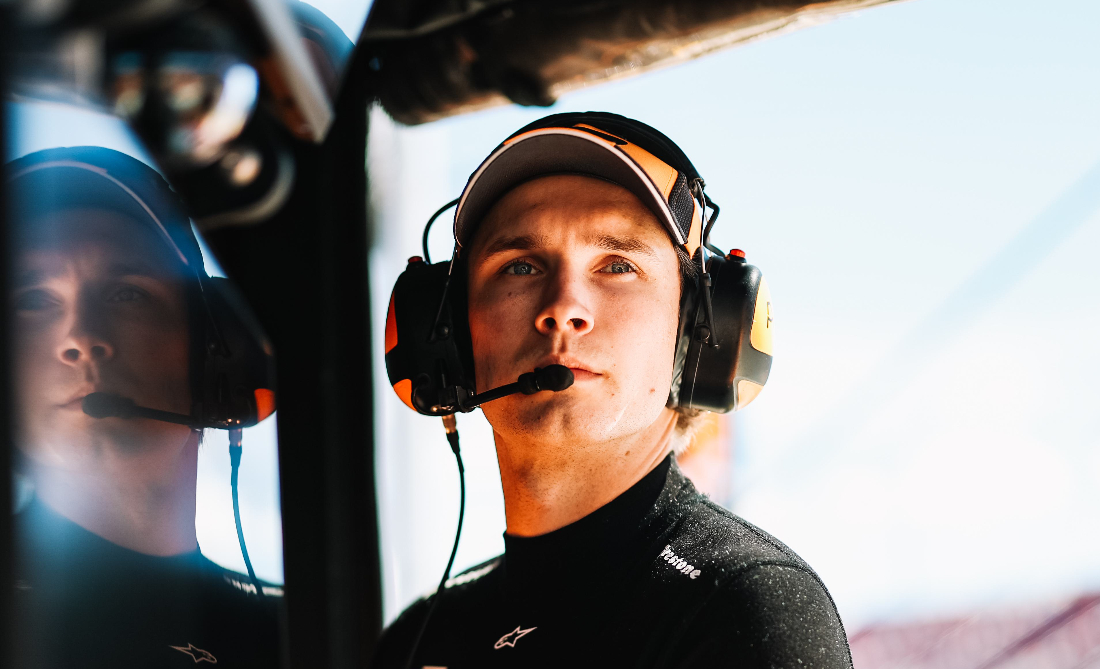
The New Zealander was fast right away, setting a 233.954mph lap with the benefit of a tow to lead the field, and the best no-tow lap of 232.005mph. Within the first 45 minutes of action, the top 10 was filled with Chevy-powered drivers; Alex Palou was the only interloper holding sixth with a 230.799mph that came with a tow. Palou was unable to find clear track on his sim runs, which left him with zero no-tow laps.
At 12:48 p.m. the first crash occurred when Simpson had his No. 8 Honda wiggle in Turn 4 and fire into the wall. Repairs were done to the Turn 4 SAFER barrier and the track returned to green at 1:28 p.m. at 83F ambient and 122.7F track temperatures.
Marco Andretti headed out for a sim at 1:35 p.m. and moved to seventh with a 230.510mph, which also ranked sixth on the no-tow chart at the time.
A caution was needed to retrieve a piece of bodywork that fell off of Andretti’s car, and once the session went green, Dixon charged out at 1:42 p.m. to perform a sim. His first lap was a 230.6mph, second was a 230.5mph, third was a 230.6mph, and with the slow full-lap hybrid deploy on the fourth lap, he turned a 231.0mph. He shot to fourth overall and sixth on the no-tow list.
As 2 p.m. approached, the top five were McLaughlin (233.954mph tow/232.005mph no tow), Power (231.870mph NT), Christian Rasmussen from Ed Carpenter Racing (231.182mph NT), Dixon (231.096mph T/230.695mph NT), and Ed Carpenter (231.054mph NT).
Josef Newgarden went for another sim run at 2 p.m. at 84F/126F and had some big lifts but still managed to set a 231.033mph—his best of the day—with no tow.
Teammate Power went for a sim at 2:35 p.m. in 85F/129.2F and did a four-lap average of 230.5mph, which was impressive as he held onto a wandering car.
Kirkwood, in the highest track temperatures of the day, was quick with a 231.818mph at 3:30 p.m. to represent for Honda in third.
Larson’s day then went sour at approximately 4:30 p.m. when he spun and crashed in Turn 3. He wasn’t hurt and his car appeared to be in better shape than would be anticipated on a qualifying sim.
With the return to green around 4:40 p.m. Felix Rosenqvist made his first appearance of the day and was quick on his sim, averaging 231.2mph in the No. 60 Meyer Shank Racing Honda with a best of 231.389mph to take fourth overall. Minutes later, teammate Marcus Armstrong ran a sim that moved him to fourth with a best speed of 231.568mph at 85F/117.9F conditions. It left the two in fourth and fifth on the now-tow list as well.
Takuma Sato completed his sim at 4:50 p.m. and went to sixth with a 231.365mph.
Happy Hour arrived at 5 p.m. just as Christian Lundgaard completed a sim and went to fourth with a 231.814mph. Larson was on pit lane at 5:30 p.m. to turn an installation lap in his newly-repaired car. Sting Ray Robb went to seventh with his 231.415mph run, and then the fun started as Ganassi’s Palou and Dixon appeared as cloud cover arrived and track temperatures came down.
Palou was first to run with a best of 232.528mph which also doubled as the second fastest no-tow lap. Dixon then headed out and edged Palou with a 232.561mph which earned the top no-tow lap of Friday.
Marshall Pruett
The 2026 season marks Marshall Pruett's 40th year working in the sport. In his role today for RACER, Pruett covers open-wheel and sports car racing as a writer, reporter, photographer, and filmmaker. In his previous career, he served as a mechanic, engineer, and team manager in a variety of series, including IndyCar, IMSA, and World Challenge.
Read Marshall Pruett's articles
Latest News
Comments
Comments are disabled until you accept Social Networking Cookies. Update cookie preferences
If the dialog doesn't appear, ad-blockers are often the cause; try disabling yours or see our Social Features Support.