
The RACER Mailbag, April 23
Welcome to the RACER Mailbag. Questions for any of RACER’s writers can be sent to mailbag@racer.com. We love hearing your comments and opinions, but letters that include a question are more likely to be published. Questions received after 3pm ET each Monday will be saved for the following week.
Q: I know that alternates on the street courses are still an item under development and are definitely a part of the push for sustainability, but they really need a rethink. I like the fact that IndyCar is trying something, but when you see the race start and the majority of the field pitting by lap four to ditch them, it really makes them seem more like a gimmick than pure strategy.
I know that we have had instances like that with the reds a handful of times, but for the most part, the degradation on them hasn't been as extreme (especially if you're Scott Dixon and have a sixth sense for making them last with minimal falloff). Plus there is usually a big enough performance delta, and it leads to some very interesting strategies.
Alan Bandi, Sarver, PA
MARSHALL PRUETT: The good thing is we shouldn’t experience the zero-life alternates again until June at Detroit. The road course alternates last longer, were the preferred tire at Thermal, and I’d suspect they’ll be good at Barber and the Indy GP. After Detroit, the only other zero-life street course left on the schedule is Toronto, so this experiment IndyCar asked for is half over and will only affect two of the 14 remaining races.
With the long production lead times to make racing tires, there’s no option for Firestone to redo its street course alternates ahead of Detroit and Toronto, but I can’t imagine this will continue in the same manner next year.
Q: I was aghast reading the article "Penske Entertainment looking to bring Long Beach vibe to more IndyCar events." Is it not completely obvious that people like days packed with on-track activity, food trucks, music, entertainment and whatever keeps the vibe going? Have these "promoters" been this clueless all this time?
I could give many examples, but let’s take Texas Motor Speedway. You drove way out of town to the facility where there was nothing going on outside of some merch tents, sat in the heat until the race started, and then went home. Even if the race was incredible, it wasn’t that great of a time. How do you keep kids entertained in that scenario?
We’ve taken our kids to Barber the last few years. One of them loves cars and racing, but you know what they’re all most interested in after about 20 minutes? The bouncy houses, Ferris wheel, and the exhibits where they can put stuff together or try to win something. There’s a car show and a museum. There’s even an Indy NXT race before IndyCar. It’s a fun day! This is why street races are popular – it’s easier to stay entertained all day, and the close quarters make the event feel special and busy. I’m not the expert here, but it’s not rocket science.
Ross Bynum
MP: I hear you. This is the way Long Beach has done it for decades, so it was there for the copying by any promoter who was willing to pay attention. But Bud Denker’s insights on seeing the LBGP for the first time from the inside, from having a new reason to go around and take in all of the unique things about the event, should make for better Penske Entertainment owned/led events elsewhere on the schedule.
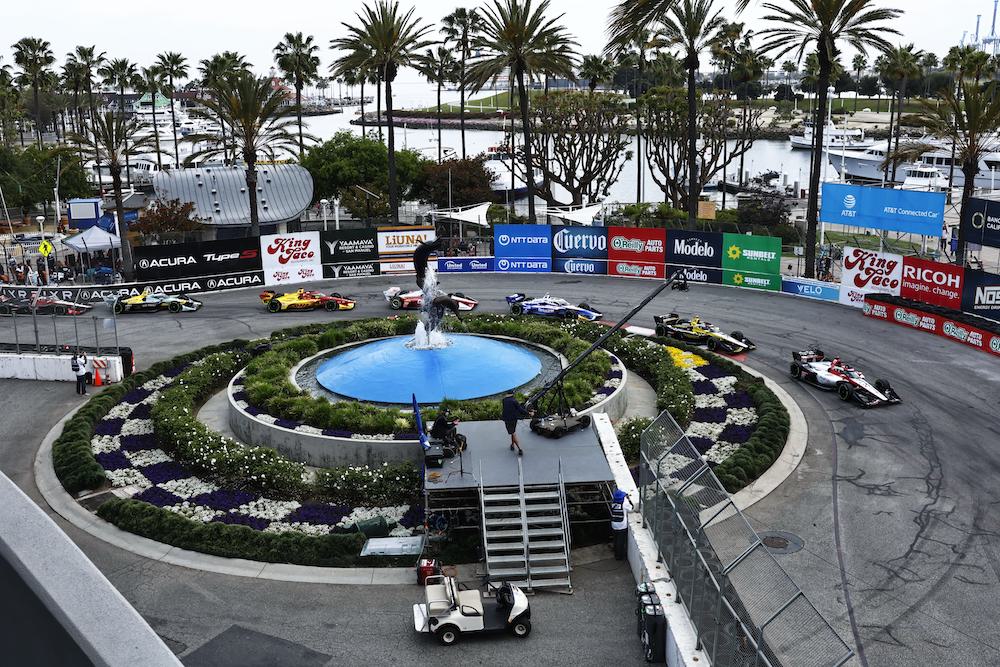
No matter how many times you've been somewhere, there's always an opportunity to see things with fresh eyes. Chris Jones/IMS Photo
Q: Doesn’t it seem Colton Herta's team has an uncanny knack of fumbling race results? Seems like every move is wrong. It's either pit errors or lousy strategy.
Mark, Buffalo, NY
MP: The interesting thing is teammate Kyle Kirkwood’s been having a similar early season run in terms of potential. Kirk has finishes of fifth, eighth and first. Colton has a fourth and a seventh, but started the year with a couple of pit lane disasters at St. Pete with a tire and then with refueling that left him 16th. They were strong at Thermal, and had a light tire-change delay and an underwhelming race at Long Beach.
They definitely need to tighten things up, but they aren’t in bad shape. A good run at Barber or Indy will get Herta up to where Kirkwood is living today. They were the clear best of Andretti Global in 2024 with two wins and a run to second in the championship, so we know what the 26 car is capable of producing.
Q: Any word on what the specific issue was with Newgarden's belts?
Joey Selmants
MP: Best guess is Josef was hitting the buckle while turning through the hairpin and released the belts. Your letter came in before we published a story about it -- if you missed it, here it is.
Q: Any ideas on how to get the balloon release back at the IMS during the singing of "Back Home Again in Indiana"?
David Brown, Birmingham, AL
MP: Best suggestion is to bring your own balloons and helium bottles, because this isn’t coming back.
Q: Some musing while watching the WEC race. F1 has some of the worst-looking and sounding cars. It is expensive to watch in person – the merch costs are insane – and has abandoned us traditional fans, but it is the most popular motorsport ever.
IMSA and WEC have small calendars (IMSA 11 rounds, and WEC eight) and significant gaps between races. However, they are experiencing considerable growth, attracting fans and manufacturers.
Why do I raise this? These are both reasons individuals blame IndyCar for its current predicament. It is true that we need a new car and a better schedule; however, this isn't the reason why IndyCar is struggling to grow. We need answers to the following: What is the vision for IndyCar? What does success look like?
Dan Mayhew, UK
MP: Mentioned here a few times over the last year that we do not have, nor have we had, an IndyCar State of the Union address from Penske Entertainment that I can think of after the initial purchase, so it’s hard to know its wide-reaching vision for the series, its tracks, and its plan for the future. We get things in bits and pieces as certain people from the company speak on whatever topic, but nothing like what some other sporting leagues do on an annual basis. Maybe that will change with Doug Boles in charge of IndyCar; in theory, there’s no reason that couldn’t happen. If his bosses wanted to do one on the parent company, it would be welcome as well.
Success should be the same as always, which is greater popularity as measured by television audience and live attendance, and prosperity, measured by field size and the financial health of all teams. IndyCar also has the unique need to grow a new and younger fan base, and that metric is also easy to track.
Q: This year, I attended the Grand Prix of Long Beach for the first time. What a fantastic event! I will certainly go back next year. While I was wandering the paddock and pits, I saw Don Cusick on more than a few occasions. I've written to you a couple of times, and I've said that I am a big fan of Don and Cusick Motorsports, as well as of Dennis Reinbold, and DRR. You recently wrote an article saying that DRR/Cusick are looking at (hopefully) going full-time in the next year or two. Were you able to talk with Don in Long Beach? If so, do you know if he was in Long Beach working on that, or if he was pursuing something else?
Scott Freeman, Bloomington, IN
MP: Don and his amazing wife effectively life at The Thermal Club, so popping over the hill to enjoy Long Beach is normal. Didn’t see him, but the weekend was a blur, so that’s not abnormal.
Q: Can you explain IndyCar's yellow flag rules regarding lapped cars? If I understand it correctly, it is lead-lap cars are able to pit first. Then the lapped cars are waived around to get their lap back. They are then given the opportunity to pit while staying on the lead lap. Is this correct? If so, seems like it could be advantageous in a fuel mileage race.
Ericglo
MP: Here’s the relevant bits from the rule book, starting with Rule 7.1.3.3.5:
INDYCAR will dispatch the Pace Car to pick up the Race leader. Cars must form a single file line and pack up behind the Pace Car. INDYCAR may allow one or more Cars to pass any Car not packing up immediately.
INDYCAR signals when the Pit Lane is open.
Cars may enter the Pit Lane upon the signal.
Cars exiting Pit Lane rejoin on the Track according to their Blend Line order.
A Car may pass another Car, only if:
• Both Cars are in Pit Lane boundaries,
• The other Car is stopped on the Track,
• The Driver of the other Car has waved by all of the passing Cars in an INDYCAR-specified location and approved by INDYCAR, or
• The other Car is not maintaining the Pace Car speed only upon direction of INDYCAR.
• The other Car is involved in an incident and/or incident in progress, including but not limited to, running out of fuel, mechanical failures, or damage. Final determination of ordering of Cars involved in an incident to be made by INDYCAR. INDYCAR’s decision is not subject to review and/or appeal.
• A Car must not use Pit Lane to improve its position relative to the Pace Car or any Car remaining on the Racing Surface, but a Car may improve its position relative to other Cars in Pit Lane.
Q: With Indy NXT no longer running the oval on Carb Day, has there ever been any talks of trying to move that race to IRP with the other feeder series? Currently there are only three of the 14 NXT races on ovals.
JG, Tennessee
MP: It's possible it has been discussed, but with the Indy 500 to run, I’m not sure Penske Entertainment would want to dispatch the NXT operations and tech trucks, and staff, for an offsite event.
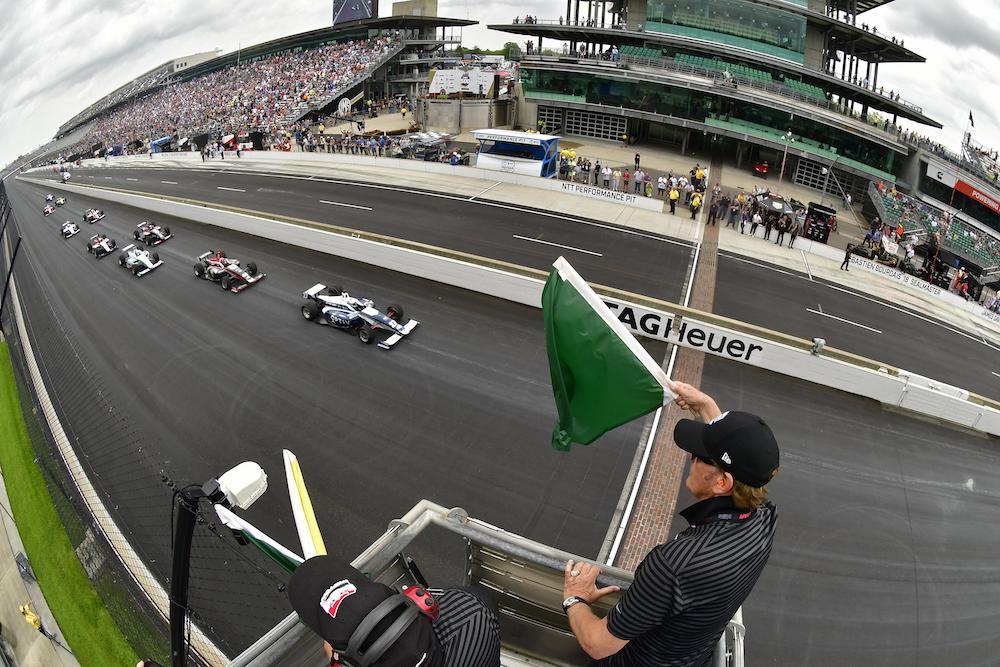
I know where I'd like to see Indy NXT running on Carb Day. IMS Photo
Q: F1 is going with that inwash design to try to reduce dirty air. Nobody knows if it'll work. And as far as I know, engineers hate working with that stuff. But if that that design works, it'll be revolutionary. Is IndyCar looking at it for its next car? I know it needs a new car, but it risks getting stuck with an outdated design for well over 10 years.
William Mazeo
MP: In an ode to the Fight Club, IndyCar isn’t talking about the next car. Not with any specifics, at least.
Q: I saw the talk about IndyCar TV ratings and momentum lost. My take is, it’s about scheduling. Just as Penske Entertainment and IndyCar doesn't believe in marketing, it also doesn’t think having a solid schedule with races every other week is logical.
All the momentum and hype gained by the Superbowl ads is killed by the first four races each being spaced three weeks apart. If you look at the April schedule, we only have Long Beach. The next race at Barber is on May 3, three weeks later. And now there will be three big races in May. They could have moved Barber to April 25 and it would have been a solid April. They seem to be holding these gaps for a fictional future race in Mexico and Argentina, but that has not been happening for the last 10 years.
Also, the weird obsession with not competing against NFL by going into September and October – what is happening now when there is no NFL? They need to bite the bullet and extend the race season to the first week of October. CART used to end in the first week of October and it did fine.
Shyam
MP: Sure, but it’s not like IndyCar has had years of conflict-free TV scheduling and things just got wonky in 2025. There’s almost always a bigger and more popular sporting event for IndyCar to contend with, so I can’t think of where the magical no-conflict calendar gets set.
CART was much more popular, so it’s not a like-for-like situation to compare with today’s IndyCar. FOX is obsessed with the NFL, which brings its biggest audiences of the year, so unless it’s dispatching IndyCar to even tinier audiences on FOX Sports 1 during the NFL season, I don’t see how this extended-season plan would work to IndyCar’s favor. I wish we did run into September and October to decompress the schedule a bit, but that’s just picking a fight with a grizzly bear.
Q: With IndyCar struggling to find a real TV audience because of the fear of going up against golf, football etc., why don’t they consider having races that begin at 9:30-10am? Sure, it seems illogical, but I’d be willing to bet that their TV numbers would increase if they dared attempting such a thing. F1 numbers in the States are only as good as they are because they’re on at 8am for most races.
There’s no excuse to not try something radically different at this point, as the numbers for a premium network aren’t good enough. The season could go longer if they’d try this as at 10am as there’s not much competition other than NFL pre-game or college football. Why not try something different?
TK
MP: Following the question above, the thing where its broadcast partner tends to dedicate its Sundays during the NFL season to 100-percent NFL. Also, thoughts on trying to get tens of thousands of fans to completely alter their Sundays to get themselves, maybe their kids and families, out of the house at 6am or whenever, to be there for a 9:30am start instead of 1pm? And during a window where, for some, Sunday mornings are reserved for religious activities, is something that can’t be ignored. How many sponsors and team guests want to be up at the crack of dawn for a motor race?
Yes, F1’s ratings tend to be great due to the time change here, but those attendees aren’t turning up for early starts in Saudi Arabia or Japan or wherever. There’s nothing to put on TV if ticket sales plummet and events disappear because IndyCar decides to radically change its races early morning affairs for the sake of TV. I’d rather see some turned into Saturday night specials where people expect to have fun and party.
Q: A bit of context to the comment in last week's Mailbag complaining about the demise of California Speedway. Here is a picture of my commemorative paper weight (very cool!) for the first CART race in 1997:
I was an original seat license holder and member of the Speedway Club. There were 90,000-plus spectators at the first race. Mauricio Gugelmin qualified at 240.94mph.
Fast-forward to 2015 (which was the last IndyCar race) and I was in the infield with Robin Miller looking at maybe 4,000 fans and wondering, "How the **** did we get here?" The race was the most incredible, and incredibly dangerous, race I have ever seen. A lot of people called this race "pack racing" but to me there was a difference because there were two or three grooves the drivers could use all the way around the track.
As a side note, my license required me to pay for NASCAR tickets as well. In 1997 the IndyCar tickets were more desirable than NASCAR. By 2015, I could not give away my extra IndyCar tickets.
A sad story, to be sure.
Ed Kelly
MP: Yep, we were there and damn sad about what happened to the once-proud event. Other than Indy, we’ve lost the big ovals that generate mind-blowing speed and there’s no amount of short- and medium-size ovals that can replace the spectacle.
Q: Maybe I missed it in the last Mailbag, but why was the green flag thrown to start Long Beach? The line-up was horrible! Cars were coming out of the last turn, and cars were almost in the first turn.
Wally, Eden Prairie, MN
MP: Not sure how to answer this without saying the obvious thing: Because someone chose to wave the green flag.
Q: In the PREMA paddock garage space, they had a monitor with information for team members:
I've not seen this before. Is this something new that PREMA adds to IndyCar?
David, Waxhaw, NC
MP: I’ve seen it while covering races in Europe, so yes, this is a new thing being brought over by PREMA to IndyCar.
Q: After Long Beach, social media was filled with lots of negative posts about poor ratings for the race. Here's the bottom line on the ratings for Long Beach.
1. More people watched the race this year than last year.
2. A bad day on broadcast is better than a good day on cable and streaming.
An all-broadcast schedule on FOX is still a home run and this race proves it, in my opinion. What are your thoughts?
Tom Knisely, Blaine, MN
MP: The bottom line is the audience size was terrible. Pretending otherwise doesn’t change a thing or help in any way. If one person watched last year and two watched it this year, we could say the same thing about more watching. The all-network deal is amazing. But it’s not a savior, as proven by Thermal and Long Beach. FOX is trying, and trying hard.
Until we see a figure – outside of the Indy 500 – that’s close to St. Pete’s 1.4 million, St. Pete will be an outlier. Barber and the Indy GP will tell us a ton about whether St. Pete was a ratings unicorn due to the heavy pre-season promotions and NFL-driven awareness IndyCar received, or if the March Madness/The Masters conflicts were indeed situational problems for Thermal/Long Beach that didn’t persist at the next races.
Q: I have been a fan of IndyCar in all of its forms and names since the 1960s. One of the things I remember from almost every era was smaller teams showing up with a year-old car to run the races. Almost always, you would see an '89 March next to a '90 March and so on. Is there any chance of a smaller team running a DW12 for a year or two when the new chassis arrives, or are these days gone?
Rich, Austin, TX
MP: I’ve been wondering something similar. Half of the IndyCar teams are flush with cash and can afford cars that are brand-new from nose to tail. The other half might be able to afford them, but it would come at a higher level of personal expenditure.
Andretti Global with zillions to spend could order 20 new cars without concern, but elsewhere in the paddock, a Dale Coyne or a Larry Foyt might like the idea of being able to continue with the DW12. But I can’t see IndyCar opening that can of worms. IMSA’s Balance of Performance system is working better than ever, but equalizing different cars will never be perfect. And would IndyCar really want to balance the old against the new? Doubtful. Why spend all that money on new if the old is still eligible?
Smaller teams back in the day did run previous models because they couldn’t afford or couldn’t get the newest car or engine they wanted, so there was an accepted class separation of haves and have-nots. That separation went away with spec cars, so I don’t know how keen teams would be to introduce it again. Without a BoP system, teams using the old cars would be second-class performers at all times.
That worked when IndyCar was inexpensive enough for car dealers and real estate developers and doctors to put together their own little teams and go take part in the big AAA/USAC/CART races and enjoy being the underdog, but it costs too much to run today’s car, and to fund sponsors or paying drivers capable of getting DW12s on the grid. At least there’s a chance of the occasional good day in equal machinery. I think the days you mention are indeed gone.
Q: I am in my early 30s, and up until about two years ago my only understanding of, and interest in, motorsports was NASCAR. I spent much of my adolescence watching NASCAR and going to races at Dover, Pocono and New Hampshire. A couple years ago an older work colleague mentioned IndyCar and it was the first time I had ever heard of an open-wheel racing series that wasn’t Formula 1. I’ve been completely hooked ever since and recently discovered RACER magazine to feed my interest for IndyCar, even when the cars aren’t on the track.
Anyway, my questions are kind of philosophical and historical in nature. What happened to crater IndyCar’s popularity as the pinnacle of American motorsports? Are things really as dire as some of the fans on social media say? Do you have any recommended reading for me to learn about the long history of IndyCar or American open-wheel racing in general?
The way some folks talk, it makes me feel like I may have hitched my wagon to a bum horse, but I just love the series, the personalities, the speed, and the cars in a way I never have for NASCAR. I really want to get to Indy for the 500 in 2026 and maybe Long Beach, St. Pete, or Laguna Seca too.
Ben
MP: Welcome to the family, Ben. You definitely didn’t hitch your wagon to a bum horse. The horse was the best in the field for a long, long time, but hasn’t been a front-runner for a while, and for those of us who remember it as the best horse in the race, it’s been frustrating to see it languish behind the horses it once beat.
It’s improving, slowly, and regaining its competitive form. But if you weren’t there for the glory days, there’s no need to listen to the old-timers complaining about the difference between now and then. Just enjoy it for what it is, which is an amazing thing. Let me know if you’re able to get to a race; happy to show you around and introduce you to the drivers and teams.
As for what led to the downturn that Penske Entertainment is trying to correct, you’d be wise to buy John Oreovicz’s excellent book "Indy Split," which chronicles the idiocy and self-induced harm caused to IndyCar by creating a breakaway series in the 1990s that led to the eventual collapse of IndyCar’s foundation as the country’s most popular form of racing.
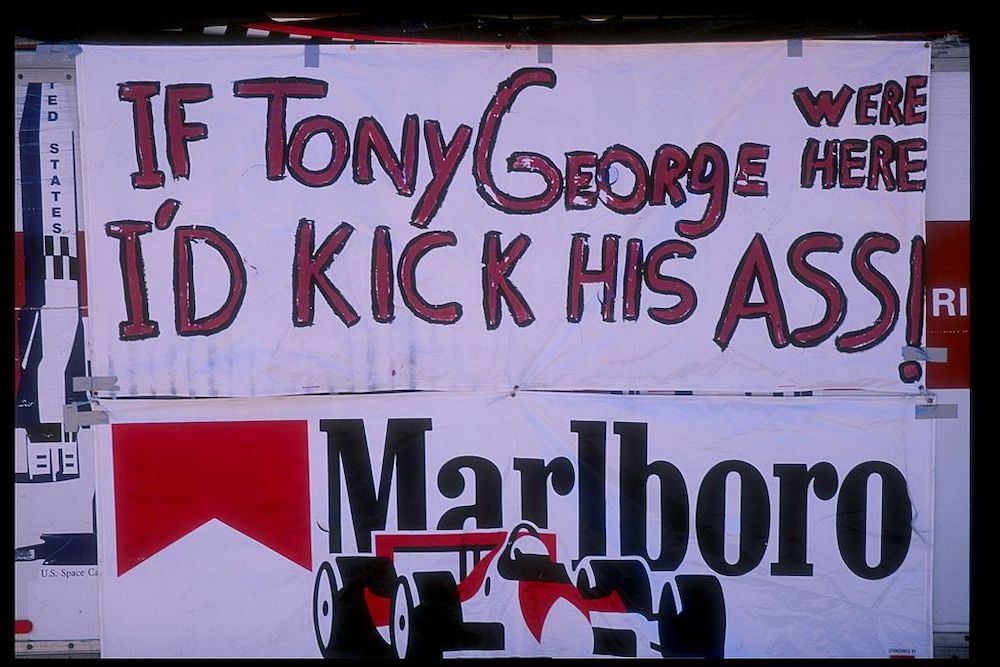
Pull up a chair, Ben. Lemme tell ya 'bout The Split. Jamie Squire/Getty Images
Q: I just got done reading the April 16 Mailbag. Seems to be still a lot of doom and gloom out there. I'm choosing to stay positive. Mostly because by writing this, I'm not outside ripping siding off my house like I'm supposed to be doing.
St. Pete had massive jump in TV viewership. Thermal was down, but I'm not going to get upset because there were a lot of headwinds and last year's non-points event was really bad for racing. Long Beach was up as well. Not as much as we all would have liked but up is up. Overall, for the first three races this year, total TV audience viewership is up 29.09% (yes, I did the math).
This is huge! We are not talking 1% or 2% gains, but 29%! Two years ago, how many team owners would happily sacrifice one of their mechanics for a 29% increase in TV viewers?
Now to tack onto this increase in TV viewership. Actual race attendance was up at St. Pete. Long Beach was rocking with people. My chongker cat didn't loudly lick her butt in front of the TV during the race on Sunday like usual. These are all major wins! So when you combine significant increases in race attendance and increases in TV viewership, this is a very good start to the 2025 season. Isolate this from all of the other crap going on and let's just enjoy results for what they are: solid positive news.
John Balestrieri, Waukesha, WI
MP: St. Pete’s audience was a huge gift. It also set expectations -- unreasonable expectations -- for all that followed to be in that same million-plus range. The dream here is to finally get IndyCar in on the popularity-through-TV routine that’s transformed F1 over the last five or six years, and while there’s no Drive To Survive effect to propel IndyCar into that bigger TV spotlight, we have seen, as you noted, the jumps in onsite audiences at the first and third races.
So yes, something is working, even though we don’t know the exact reasons behind it, to inspire more people to buy tickets and turn up at St. Pete and Long Beach, both of which are in convenient, downtown locations. Barber has been selling a ton of tickets at the recent races, so I can’t wait to see if even more people show up for the race, which isn’t close or convenient to attend; it’s out in the sticks.
Only thing I’ll push back on is the "let’s just be happy" mindset. It’s perfectly fine for fans, but it’s not how businesses improve. It isn’t how racers think. Drivers will win the race, get out of the car, and launch straight into complaining about the struggles they had, the car’s deficiencies, etc. It speaks to never being satisfied. I love the year-to-year audience gain, but the time for victory laps will come when IndyCar’s popularity has steeply risen and all the teams are financially secure.
Q: There always seems to be a question submitted to the Mailbag about going back to this track or that track, and how it use to be popular and perhaps it could be popular again "if only," followed by the obligatory comments (and bickering) in the comments section. Last week it was Phoenix.
For whatever reason, it reminded me of college. When I was a senior, my girlfriend of three years shocked me by saying we should see other people. I was stunned. Up to that point she had been talking about marriage. That I didn't see it coming is an understatement. But I knew it takes two to tango, and if she was moving on then I might as well, too. Besides, I was in college and there were plenty of other options available.
Long story short, six months later she came back saying she missed me, I was the best thing that ever happened to her, she was sorry, etc., etc. Problem is, once I got over my initial grief and moved on, I realized that I could be just as happy with someone else. She pursued me for the next year, but to no avail.
So what does this have to do with IndyCar, you ask? IndyCar had a lot of loyal fans that went to races and watched a lot of races on TV other than the Indy 500. A packed Phoenix years ago and TV ratings for Long Beach from days gone by that put 2025’s number to shame both testify to that.
But then IndyCar had the split. People got disillusioned. They rooted for one side or the other. And the other side was evil, the enemy. Or worse, they simply found something else to attend or watch on TV. And they found that it was just as satisfying, or maybe even better, than what they had with IndyCar.
Then after the 14-year split ended, IndyCar went back to the fans and said, "Let's get back together.’ But the fans have moved on, and they ain't coming back. You said it yourself regarding the Long Beach TV ratings: "All of IndyCar’s diehards tuned in on big FOX, and that’s about it." I moved on from her, and the fans moved on from IndyCar. And going back to Phoenix or Pocono or Michigan, etc., won’t change that either, because the fans ain’t coming back. Maybe if The Split had never happened, both stories would have ended up happily ever after, but we'll never know. IndyCar misses its former fans, but it appears the former fans don't miss IndyCar.
So what do you think?
Name withheld for obvious reasons. (I got dumped) 😊
MP: One thing that never fails at Long Beach is the return of a few friends from back in the day -- might be former teammates on whatever Formula Atlantic/Indy Lights/IndyCar team I worked on, or someone from those paddocks I knew -- who’ve decided to come out and see the cars and series for the first time in ages.
I end up feeling like an IndyCar historian because the questions reveal how heavily they’ve disconnected to the sport. It’s explaining that the series was bought by Roger. It’s answering a lot of true or false questions (“Is Michael Andretti gone?”) and a range of other things that reflect how heavily they’ve let this series, which once consumed all aspects of their lives, retreat to a place where, other than watching the Indy 500 or reading the headlines on odd IndyCar stories they encounter on Facebook, it’s lost all significance.
That’s all just a way to says that yes, IndyCar has been in full finding-new-fans mode for years. The "lapsed fans," as they like to call them, might come back to whatever small degree, because based on what I hear from my old colleagues on their returns, they don’t care for what they see. And that’s only natural, right? If you grew up watching Michael Jordan own the NBA in the 1990s, there’s not much an Anthony Edwards or Shai Gilgeous-Alexander can do today that will stand out.
It's in the making of new lovers of today’s sport, without the baggage of yesteryear, where IndyCar’s future will be secured.
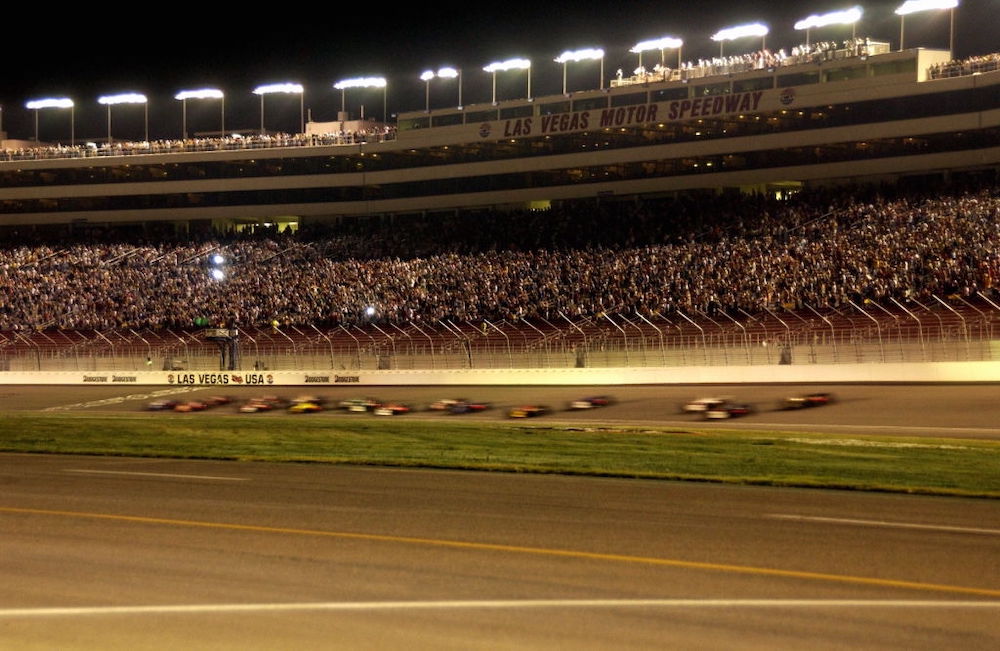
Wonder how many of those people in the stands at Las Vegas in 2004 are still IndyCar fans now? Getty Images
Q: Big and Little Possum watched the Long Beach race and the thought occurred to both of us that unless you were a die-hard IndyCar fan who understood all the nuances of pit stops, different tires, and such, or were familiar with the drivers, the casual first time tuner-inner to see what IndyCar racing was all about would soon be a tuner-outer.
Wasn’t too boring to us, because we knew the players and what was going on – kind of hard to keep the attention of a first-time viewer which is kind of disheartening. Don’t have a solution, just a concern for growing the series.
Big Possum
MP: Veteran NASCAR reporter Jeff Gluck has done post-race polls for a while now that ask fans to vote on whether the latest Cup event was a good race. I think we need to blatantly steal Jeff’s routine for IndyCar with Big Possum’s "Was it a tuner-inner or a tuner-outer."
And no, I’m not kidding. Looking forward to seeing you again at Indy in a few weeks.
Q: When IndyCar gets a new car, would it make sense to have Indy NXT run the DW12 with a smaller engine?
Teams would be able to sell the DW12 and all the parts. IndyCar could set the price to make it work for both sides. It would be safer, and could run on all the ovals. NXT drivers would be more prepared for the next level. What am I missing?
Martin
MP: The fact that Indy NXT teams own all of their cars, so forcing them to stop using what they own, which works just fine and isn’t unsafe, to buy older cars from IndyCar teams, might not make the most financial sense in a series where profit margins are miniscule.
Other than the DW12 tubs, most of the rest of the car is likely to be incorporated into the "new" IndyCar, so there’s that as well.
Q: I'm getting tired of hearing about tire strategies in F1, IndyCar etc. How about going back to one slick, one intermediate and one wet tire for everybody, and let the best driver win?
Jack, Ft. Pierce, FL
MP: We share the same tire/strategy fatigue. IndyCar just needs to embrace its tire approach from previous seasons for 2026 and everything will be fine.
Q: I was listening to Hinch and Rossi's podcast and they mentioned that IMSA has a rule saying a car that causes a red flag in any of the practice sessions automatically loses its fastest lap in qualifying. When did this rule come out, and what in the world was IMSA thinking when they implemented it?
Daniel in the Poconos
MP: I was embarrassed at Long Beach when I learned about the rule; I should know such things. Can’t say when it was introduced, but I hope it goes away in the off-season. The concept of a driver error in a practice session, or a mechanical failure or an electrical failure that is random, leading to a penalty being paid in the next session, makes my brain hurt.
I get the reasoning behind this penalty being created to inspire drivers to have cleaner sessions and create more green running for everyone, but nobody intentionally spins, crashes, leaves something loose, or has something break or shut down during a session prior to qualifying. And if someone does trigger a red flag through intent, throw them out of the event.
Q: I recently caught the Scott Tucker episode of Netflix’s "Dirty Money" and it got me wondering about his time racing sports cars.
Was the paddock genuinely surprised when he was arrested in 2016, or was Level 5 Motorsports more of a "don’t ask, don’t tell" type of operation?
Brad
MP: It was shady from day one. I’ve never come across a person in the paddock who was taken aback by his imprisonment. Never a secret that something was off. It was when Tucker started hiring full-time security -- serious dudes who moved towards you the instant you gave the impression you wanted to go behind the crowd barriers -- to guard the team’s trucks and space in each paddock where it became hard to pretend this was a normal team doing normal things in racing.
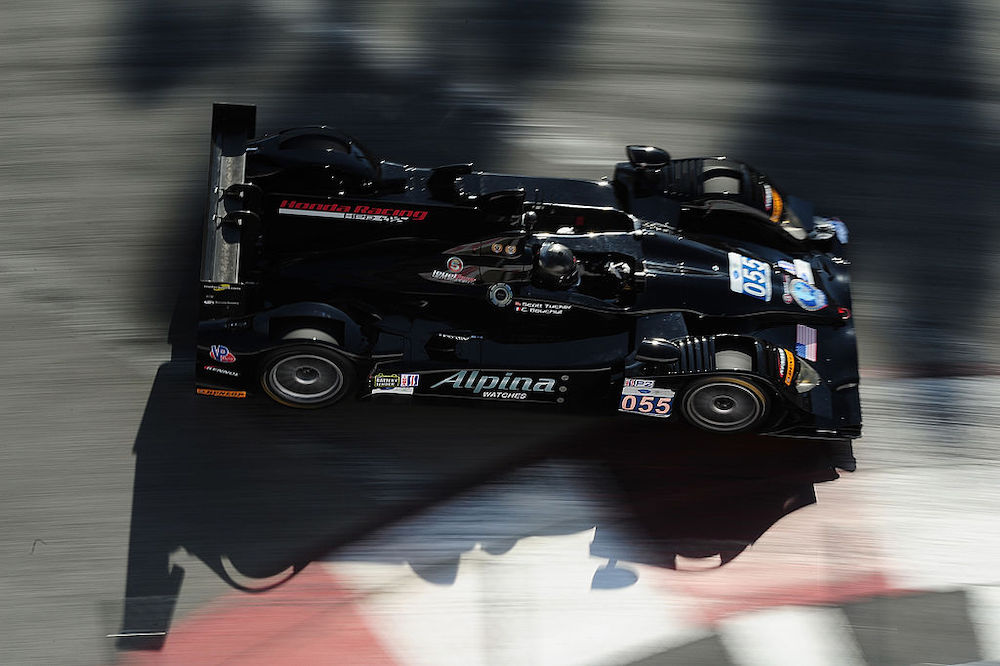
If the Level 5 cars could talk, they'd no doubt have some great stories. Getty Images
Q: The FOX broadcast announcers did mention during the Long Beach IndyCar broadcast the highly unusual case of zero yellow flags, but I don't think anyone brought up that all 27 cars finished. I can't recall a race with both of these circumstances present, so a great job by all!
In my view IndyCar has, historically, had an inordinate amount of first-lap, first-corner collisions. I posit that most are caused by the rolling starts that do not seem to have any rule mandating a minimum distance between qualifying rows. We mostly see nosecones firmly tucked up under gearboxes on starts. At Long Beach the field tends to naturally spread out approaching the green flag due to the last-corner hairpin, and this contributed to a clean start. Would another look at standing starts with set, spaced grid positions be in order?
Chris Marter, Santa Barbara, CA
MP: They could. But why would IndyCar stop being what it is when there’s no problem with decades of rolling starts? Standing starts were tried in 2013 and while it was briefly cool to see something different, there was no improvement to the racing.
So far after Long Beach, we need to move IndyCar races to Sunday mornings, race into the NFL season, and change to standing starts. What else can was change about the series’ fundamentals before the end of the Mailbag?
Q: I can't believe PREMA will freeze out the veteran and top IndyCar engineer and strategist Michael Cannon for the Indianapolis 500. Surely cooler heads will prevail. Cannon has the knowledge they will desperately need to do well at the 500. Michael had his setup on the three Penske cars on the front row, and had his two Foyt cars in the top 10 qualifiers, including a rookie driver.
A foolish contract dispute that hurts them both. Hope they can get it together soon.
Howie Harris
MP: If I’ve observed one thing about PREMA in its short time in IndyCar, it’s how they believe their way is the best way. There’s no reconciliation that I know of here… On Cannon, we’ll know if they’re right by the end of May.
Q: I have been involved in and have followed IndyCar racing most of my life, covering eight decades. Born and raised in Indianapolis – I began attending practice and qualifying at the IMS at the age of 4. My first Indy 500 was 1958. Later in my life, I worked in and was directly involved in the sport for many years.
IndyCar racing has seen many changes. Of those, one of the most impactful has been the use of strategies. Watching a race today requires keeping track of and monitoring multiple strategies – tires, fuel, PTP, the hybrid system, fuel saving, track position, overcut and undercut, and others. Prior to my wife becoming an avid IndyCar follower, she used to comment as we watched races, “We are not watching the same race, are we?”
She was watching cars, I was following strategies. Many times she did not understand why the driver running 12th was most likely to win the race. To follow races and keep track of strategies we need information and data regarding all of the elements of strategy, including, but not limited to, which tire is being used, how long since the last pit stop, how much PTP remains, deployment and regeneration of the hybrid system, gaps and intervals between cars, and lap times to follow tire deg and closing rates.
We know that this data and information is available, since we have seen it in graphics during TV broadcasts over the years and it is discussed in the broadcast booth. We know that team strategists have this information. We may know one or two of these elements, but that does not tell us the whole story, nor all we need to know to follow the competition. I realize that were it all to be displayed at one time, it would most likely cover the screen.
Considering all of these factors, is there a way that FOX could somehow provide this information for those of us who are following strategies?
Steve Edwards
MP: There is. Just takes a willingness to appoint someone to be responsible for revealing the race-within-the-race.
Q: The first question in last week’s Mailbag about the number of races and the size of the TV audience raises a point that nobody mentions. I PVR every sporting event that I watch. So, if an IndyCar race is up against another sporting event that I want to watch, it doesn't make any difference to me because I will inevitably watch them both on my time schedule.
I suppose that this might not show up in TV ratings. Is this tracked at all? If not, why not?
Doug Mayer
MP: There's a misperception that if someone watches something, it's always being tracked. Definitely not the case for network and cable. Streaming is different, since the streamer -- from YouTube to Netflix -- has the live data at their hands. If you're a Nielsen household, as Joe Pompliano explains here, I'm sure your viewing habits via network/cable are captured. If not, they aren't.
Q: No question this time, just a comment in response to Bob Kehoe’s letter last week. In the early 1960s, IndyCar team owner Bob Fletcher was instrumental in building a track for IndyCars at the base of the Estrella Mountains called Phoenix International Raceway. I went to races at "The Last Left Turn Before Indy" from the very beginning until the end, and standing next to A.J. in paddock after he won the very first race there got me hooked.
Seeing the reigning F1 world champion Nigel Mansell go into Turn 1 – as the old-timer seated next to me said, “too high, too hot, and too stupid” – and end up in the Turn 2 wall, Paul Tracy wrecking in the same wall while two laps in the lead, and Buddy Lazier going from last to first in the only win ever for the Riley & Scott chassis are among my most memorable moments from decades of attending races.
The reason the track failed to attract a crowd on beautiful March evenings in the desert the last time IndyCar was there is simple – the racing was beyond boring. While the facility is terrific after being redone for stock cars, which increased the banking and the removed the dogleg, it is now worthless for IndyCars.
Pete, Tucson
MP: I was there for most of the races from the mid/late-'80s onward and got to see Nige and PT and Robby Gordon’s first win, Mario’s last, Buddy and the high-downforce R&S, etc. IndyCar’s short oval package with the hybrid was pretty strong last year. I do wonder if a much better show would be presented if the series returned to Phoenix.
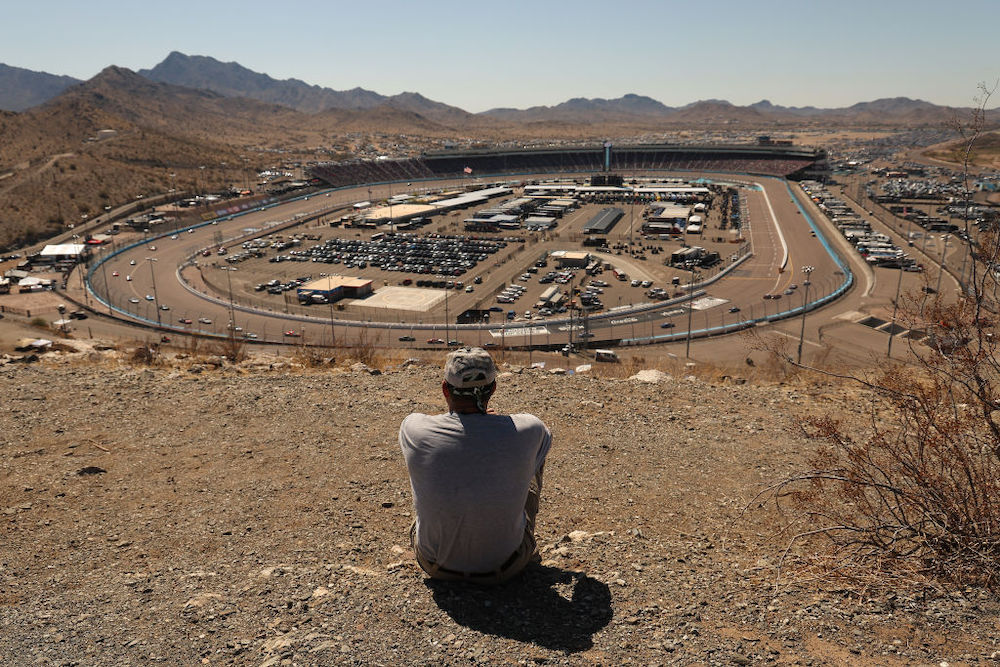
The desert-y bits around Phoenix Raceway look as desert-y as ever, but the facilities and infield have had a massive facelift since IndyCar last visited. Jonathan Bachman/Getty Images
Q: Race fans are always complaining about a lack of "racing" during races. The top-level professional series have all become, through differing means, spec series. When you have a spec car, in theory they are all equal, in the ever-demonstrating reality – the cars in F1, IndyCar and NASCAR are as equal as we have ever seen in racing.
Additionally, the 21st century professional racing series cars are the most reliable that have ever been raced. The 21st century drivers in the pro series, as a group, are the best we have ever seen, with driving mistakes being increasingly rare.
In the "olden days" the equipment couldn't sustain qualifying laps for a race distance, and neither could the drivers. That is not the case today -- the cars can be pushed to qualifying laps, lap after lap after lap; drivers are also sufficiently fit as to drive with qualifying intensity for every lap of a race.
When race grids have most of the field separated by a few thousandths of a second, and in some cases the entire field qualified with one second from pole to last.
Couple those three observations together, and you have set the stage to where there is very little difference between the various car/driver combinations. To make a pass, the overtaking car has to go from a car behind to a car ahead, with the cars and drivers having very little real difference in the speeds corner to corner. Overtaking is as difficult as it has ever been, and it is even harder at the pointed end of the grid.
Additionally, we have seen instances where a driver with a tenth of a second advantage is able to repeat that advantage lap after lap after lap, thus making the race "boring."
Excitement in professional sports, including racing, is dependent on mistakes to generate the excitement. The more professional the participants, the fewer the mistakes.
Chuck McAbee
MP: All true. But we’re also in a bizarre stretch where we’ve just completed three races that were almost entirely run without cautions. And that isn’t because of a new and higher level of professionalism in 2025; it’s effectively the same cast of drivers and teams who competed in 2024.
It was 100 laps at St. Petersburg, and the first six were run under caution. Since then, it’s been 94 unbroken laps of racing at the first race added to 65 laps of unbroken racing at The Thermal Club followed by 90 uninterrupted laps at Long Beach. That’s 249 of 255 laps run under green, or 97.6 percent.
In St. Pete in 2024, we had three cautions. Thermal wasn’t a normal race so that can’t be compared, but Long Beach had one caution last year. It’s not a huge difference, but four combined restarts and the four opportunities to shuffle the running order up front is where the opportunities for fun and change come in. Without them, except for that lone restart on the seventh lap at St. Pete, it’s been pit stops and tire strategies to create the dynamic of risers and fallers over those 249 green laps.
Other than Palou chasing down Lundgaard and Pato to pass them and take the Thermal win -- a result of tire strategy instead of raw pace on equal terms -- we’ve had no wildcards with restarts to create drama.
If anything, maybe this crazy stretch of 97.6 percent green since the lone caution of the year is a reminder of how important adversity is in the composition of a motor race. Without the crashes, blown engines, and mannequins falling from the sky, today’s version of IndyCar is largely a processional affair.
Maybe that changes once we get to some ovals. Let’s hope that it does. And I also hope that someone’s car stalls during the Barber race and a full-course caution is needed to retrieve it. And one or two other incidents occur that call for the race to be paused and restarted. There’s no guarantee we’ll see passing up front on those restarts, but at least there will be a chance that’s been missing since the seventh lap on March 2.
Q: I just don't get it. If IndyCar and FOX are worried about ratings, why run on Masters Sunday? Non-fans watch the Super Bowl, the Daytona 500, the Indy 500 and Game 7 of a World Series. Masters Sunday is the most watched golf broadcast of the year! I live and die for IndyCar during the year, but the drama of Masters Sunday is must-watch – especially this year. With so many open Sundays between St. Pete and Indy, why run our second biggest race of the year in direct competition with the finish of the Masters? Why? Why? Why?
John, Venice, FL
MP: I can confirm Rory McIlroy will be skipping The Masters and driving a fourth Penske-Chevy in 2026
Q: Can you give me a 'splainer on the necessity of road relevancy to F1 when the issue of V10s arises – one with more substance than the usual “it’s what the manufacturers want?”
Is the worldwide popularity F1 is now enjoying built on a showdown between Mercedes, Honda and Renault (don’t bother trying to convince me that Ferrari is simply another OEM)? I’m pretty sure that’s not why those stands in Melbourne, Miami and Monaco are full. The top three drivers in this year’s drivers’ race are all driving for independent teams. An atmospheric engine spec that is commercially viable for a Cosworth could compete with the OEMs that remained, as well as Ferrari.
There seems to be plenty of cash unrelated to road car manufacturers seeking attention in the sport – check out the sponsorship deals of Red Bull, McLaren and Williams. I have to believe that Liberty’s financial interest is tied to visceral excitement, not to road relevancy. As is that of F1 fans – at least those that I know.
Jack Woodruff, Bay Area
CHRIS MEDLAND: You’re totally right that the drivers bring in huge fan interest, but the issue is a lot of the financial interest is also tied to the brands involved. Renault is gone after this year, which is already a slight cause for concern even with the current regulations, but a Mercedes or Honda or Ford or Audi-badged engine is seen as far more attractive and premium than a Cosworth (with all due respect to Cosworth), and sponsors want to be associated with those brands.
For those automotive brands to spend the levels that they currently do – owning a third of an entire team, in Mercedes’ case – they need to get more than just a sponsorship return. They need direct marketing relevancy, because the technological excellence is actually their own, rather than a sponsor wanting to be associated with that excellence.
Don’t get me wrong, if those manufacturers saw enough value in developing and racing a V10, then great. And even more so if they are willing to take on the potential optics of being beaten by a Cosworth or independent manufacturer. But they’ve created whole business directions on turbo-hybrids and in some cases even total electrification, and they need F1’s rules to be in some way related to that in order for it to be relevant enough to justify their involvement. Otherwise they’re spending tens of millions of dollars per year on a simple advertising platform that doesn’t actually advertise something related to their core business. Getting that signed off by management becomes very hard to do.
Look at IndyCar now running hybrid technology too – it’s not just an F1 thing to try and keep part of the technology linked to the wider direction of the manufacturers involved.
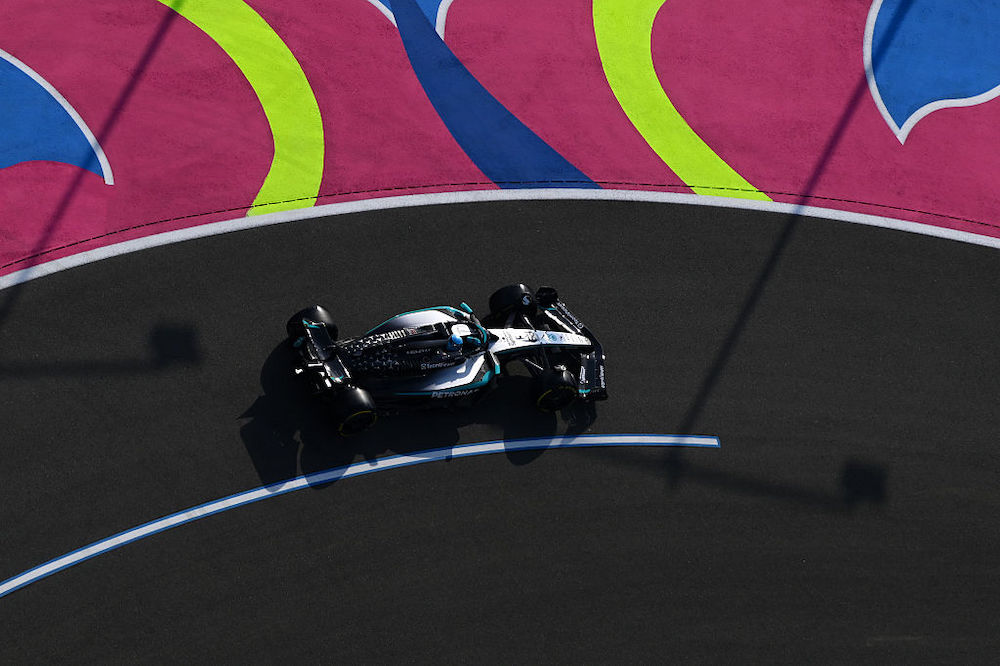
Road relevance is front and center for F1's OEMs. Clive Mason/Getty Images
Q: During the last major F1 rules change in 2021, ground effect was added to the cars to make for closer racing and improve passing opportunities. Nowadays it’s common for the lead car to have an aero advantage over the cars behind, and it’s common to see the driver’s head bouncing up and down due to the stiff suspension settings needed to keep the cars close to the ground. Did the rules change really make any improvements for following cars to pass?
IndyCar, on the other hand, doesn’t seem to have this issue. There are plenty of passes on road or street circuits, and the racing is really good. Of course it’s a spec series, but is that the only reason why the racing is so much better when F1 specifically made changes to improve overtaking?
David L., Overland Park, KS
CM: I personally think the last part is overly simplistic, David. The main difference between IndyCar and F1 at the moment is actually tires in my view, with far more variation in strategy – and therefore tire performance during races – than in F1. But even with that, the races aren’t always classics. I watched Thermal and saw similar issues with difficulty following if you had similar performance.
But to keep it focused on F1’s issues, we’ve seen far too many one-stop F1 races, actually because the field is so close and therefore track position becomes more important. The rules have definitely made a change in how much easier it is to follow in such a high-performance car, but the field spread is so small that there isn’t the performance differential to then create as many overtaking opportunities.
With little difference in pace potential, then dirty air has a bigger impact even if it’s actually far less of a phenomenon than in the past. Say it costs you 0.05s per lap when within two seconds of the car in front. Well if you’re only 0.1s quicker than that car, that’s half your advantage gone. Whereas if you’re 0.5s quicker, it’s only costing you 10%.
We get bigger pace differentials when tires start to wear or overheat, but the Pirellis have now been designed not to overheat so badly so cars can follow each other more closely. It shows how tough a challenge it can be to solve in such high performance vehicles, but softer compounds that degrade more -- leading to more pit stops and more phases of tire performance dropping away -- would really help.
To add one more defense to Pirelli, though, they brought the softest compounds possible to Jeddah, but the soft was so soft it was only deemed good enough for qualifying and not a race stint. So then you were left with only two, slightly harder, compounds to use in the race, and everyone leans towards a one-stop as a result.
Q: The current crop of F1 cars seem, to me, astonishingly sensitive to wind direction, even at low wind velocity. Are the teams working in either setup or design to minimize this? I imagine that reliance on ground effects would make this difficult, but it also seems to me that there might be a significant competitive advantage.
Jack Smith
CM: Teams do work to make the car as compliant as possible in different wind conditions from a design perspective, but it’s very hard to simulate. Gusts are the big challenge -- you’re rarely dealing with a steady wind speed -- but to get a car that is easier to handle in a gusting crosswind than another design is extremely complex.
Speaking to a few drivers pre-season, it appears the best thing you can do is from a set-up point of view (if you have a well-designed car), because a neutral balance will help you feel the impact of the wind a bit more. If you have a car with a poor balance, you don’t know if your struggles are related to the wind or the balance itself.
Of course, that only helps when you get a wind gust, and drivers tend to want simply the fastest car as much of the time as possible. If that means a more aggressive setup and dealing with it being difficult in the wind, so be it.
Q: It looks like Liam Lawson got a 10-second penalty for barely missing the corner after a clean overtake. Max Verstappen got a five second penalty for purposely braking less than needed to in order to make the corner, so he could say he was alongside Oscar Piastri. Why was Max's penalty half of Liam's, and why does the FIA allow teams to take a penalty instead of giving the place back?
Will, Indy
CM: I honestly don’t know why Lawson was penalized for that move, given he had completed the overtake and simply appeared to outbrake himself.
The stewards said Lawson could not successfully complete the move without leaving the track and gaining an advantage, because of the speed he took into Turn 1. That feels immensely harsh to me, as the move was done, and he also returned to the track before Turn 2, compromising himself for running deep rather than cutting the corner.
The Verstappen one I understand – the stewards are more lenient on the opening lap of a race, particularly at Turn 1, so they called that a mitigating circumstance where that fight is concerned. Not enough to let Max get away with it, but enough to lessen the penalty.
Race control used to advise teams to give places back, but now they are more often left to make that decision for themselves. It’s why the 10-second penalty is the standard for such a move, so it is harder to negate by blatantly leaving the track and staying ahead.
Q: I have a question about tire strategy for the Saudi Arabian Grand Prix. Charles Leclerc started the race on mediums and drove an extraordinarily long stint before finishing the race on hards. I do not understand this. Wouldn’t it make more sense to do the long stint early on the hards while the car is heavy with fuel and do the shorter second stint on mediums with the lighter car, rubbered-in track, and cooler temperatures?
Also, why don’t more teams do final stints on softs when the fuel load has burned off and the weather cooled?
Steve Meckna, Long Beach, CA
CM: The reason Leclerc didn’t start on the hards was because if there was a safety car in the first part of the race then you have to do a very long stint on the mediums to get to the end, and have no choice because you’d have to make your pit stop under the safety car or lose loads of race time. It's a riskier strategy in that sense, and teams at the front will rarely do that. Plus, you have less performance off the line and on the opening lap than a softer compound.
He also won’t have been planning on going so long, but the medium simply held up better than expected for him, particularly when he got into clear air at the front of the field. So he just extended that first stint as long as he could, which would then allow him to be more aggressive and push harder on the hard compound he was putting on for the second stint.
As you could see with Lando Norris, if you don’t get a safety car then the hard-medium strategy you mentioned can also work well, although again you don’t know the performance of each tire at the start of the race. So if the hard wasn’t working as well as the medium, you use too much time in them first part of the race and show all your rivals that they want to avoid it if they can, leading them to extend their first stints if possible.
The softs were too soft in this instance in Jeddah, though. Pirelli brought its softest three compounds to try and create more opportunities but they were very good over one lap and not able to hold up to the high-speed stresses for a stint long enough in the race to be usable. That is another reason teams were pushed towards a one-stop strategy, as they used up their soft tires in qualifying prioritizing grid position, knowing there wouldn’t be massive strategic variation.
One of those scenarios that sort of feeds itself!
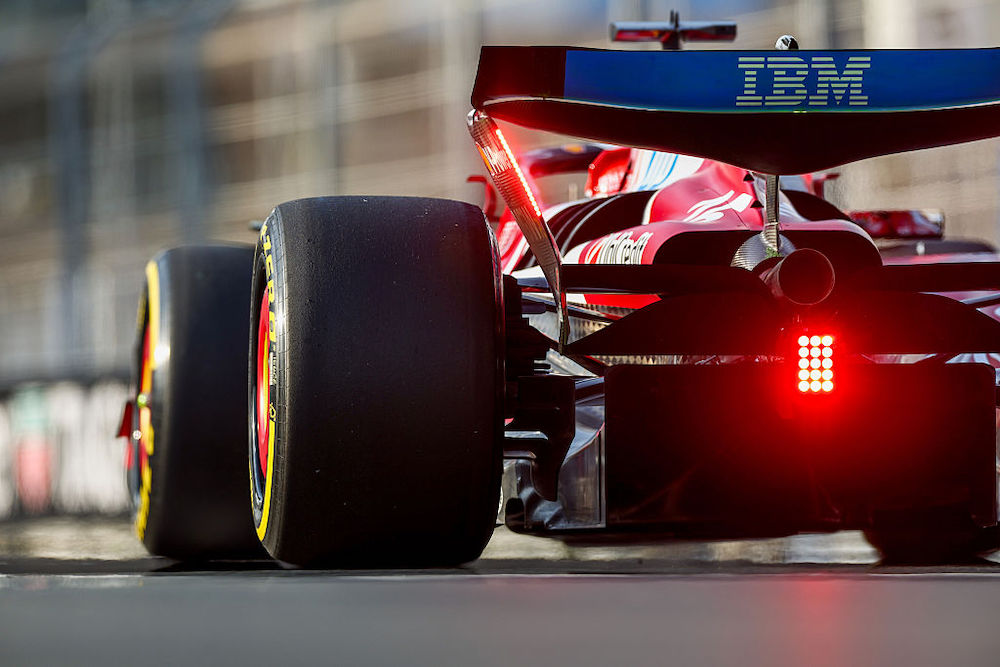
In other words, F1 tire strategy is basically, "What's the best worst-case scenario?" Peter Fox/Getty Images
Q: What a weekend for NASCAR’s return to The Rock! I grew up in NC and my dad took me to the 2012 Truck Series race there when I was a kid. Now as an adult living in Arizona, my eyes were glued to the TV both Friday and Saturday watching the return of Trucks and Xfinity. I’d say much of us in NASCAR nation would love to see a Cup date at The Rock sometime sooner than later. And if there’s anything we’ve learned over the last few years with NASCAR, it’s never say never
Kevin Pearman
KELLY CRANDALL: We have learned to never say never, and we’ve also learned that if something works for the Craftsman Truck and Xfinity Series, it very quickly becomes a call to do the same in the Cup Series. The track operators of Rockingham Speedway have already said there will be a discussion with NASCAR on a Cup Series race, but there are infrastructure things that need to be taken care of before that happens, so I would imagine that would be years away. Personally, I like the idea of Truck and Xfinity being there for their own weekend and I think it went well, as proven by the interest and attendance. I don’t want to see a rush to return a Cup race there.
Q: How many different tire compounds do Firestone, Michelin and Goodyear make for IndyCar, IMSA, and NASCAR respectively? We know Pirelli makes six compounds for the F1 season.
Atilla Veyssal, Madison, WI
KC: Mike Siberini, the public relations representative at Goodyear, was kind enough to go through his notes and add everything up. There are 12 different left-side tire codes for the Cup Series and 11 different right-side tire codes.
He even explained that the "most popular” left-side codes (there are two that run at six tracks each) are St. Louis, Richmond, Phoenix, North Wilkesboro, New Hampshire, Iowa, Charlotte, Darlington, Homestead, Kansas, Las Vegas, and Texas. For the right side, those would be for Charlotte, Darlington, Homestead, Kansas, Las Vegas, Nashville, Pocono, and Texas.
THE FINAL WORD
From Robin Miller's Mailbag, April 23, 2014
Q: With regard to Marco Andretti and Graham Rahal, do you feel we have seen the best of what these two drivers can be in IndyCar, or is there more to come? I agree with your long-held view that a successful American in IndyCar is crucial to the growth of the series, but I’m not sure just any American will do. The brand name these two guys bring with them would bring instant national media attention to the series should either one of them start winning lots of poles, races and championships. You can see that same excitement and headline-grabbing attention that Chase Elliott is bringing to NASCAR. Chase will be the shot in the arm that NASCAR needs going forward: I wish IndyCar had that same superstar in the making.
You have to assume that Marco has the same resources as Ryan Hunter-Reay, but he’s just not getting it done. From an outsiders’ perspective, Marco seems to be content just being a part of the series. I don’t see that same killer instinct that his dad had. Michael seemed to drive like his life depended on it, I don’t see that with Marco. What do you think – have MA and GR peaked?
Jeff
ROBIN MILLER: God I hope not. Like Marco, Michael never drove a s***box and had everything hand-delivered thanks to Mario. But Michael drove just as hard and as well as his father and always said he was motivated by fear of failing. Marco is good on the ovals and still so-so on road racing (although he made strides in 2013) but seems to lack that Andretti gene of go-for-the-throat.
Young Rahal is more puzzling. As a teenager he wasn’t intimidated by Bourdais as a teammate or the power of a Champ Car and seemed like a sure thing to be a star just a couple years ago. He could always pull out a quick lap in qualifying and was a fixture in the Fast Six at the age of 20. But, ever since throwing away that win at Texas in 2012, he’s struggled to regain that early form. His dad says it’s not his confidence but rather the lack of continuity with engineers, but Oriol Servia walked in and kicked his butt at Long Beach so something isn’t clicking. Except the clock, on both of them.
Marshall Pruett
The 2026 season marks Marshall Pruett's 40th year working in the sport. In his role today for RACER, Pruett covers open-wheel and sports car racing as a writer, reporter, photographer, and filmmaker. In his previous career, he served as a mechanic, engineer, and team manager in a variety of series, including IndyCar, IMSA, and World Challenge.
Read Marshall Pruett's articles
Latest News
Comments
Comments are disabled until you accept Social Networking Cookies. Update cookie preferences
If the dialog doesn't appear, ad-blockers are often the cause; try disabling yours or see our Social Features Support.