Jake Galstad/Lumen
Q&A with RLL president Jay Frye
New Rahal Letterman Lanigan Racing president Jay Frye is ready to get moving. It’s how his personality works. The surprise timing of his release as the president of IndyCar in early February required a few weeks of processing and adjustment, but by the end of the month, he was pining to get back to work and launch the next stage of his career.
Calls came in with offers from all corners of the sport, and by mid-March, the outreach from RLL to lead its factory BMW IMSA GTP program and its IndyCar Series team into the future resonated the loudest.
Frye drove to RLL on the first of April to sign the contract, was announced hours later, and two months after his chapter closed with IndyCar, he’s onsite at the Acura Grand Prix of Long Beach with a 100-minute IMSA race on Saturday and a 90-lap IndyCar race on Sunday to use as learning opportunities in the new role.
Ahead of his first day of on-track activity with RLL, Frye gave RACER his first interview since exiting the IndyCar Series.
MARSHALL PRUETT: You had many good options in front of you before you chose to join RLL. What led you to stay in IndyCar and work for one of its teams instead of jumping to an opportunity with another series?
JAY FRYE: Let me start by saying that I had a really good 10-year run at IndyCar. I'm proud of everything we accomplished. When I first got to IndyCar, there was a pretty big disconnect between the series and the paddock, and that's something we worked very hard to correct. We called it 'harnessing the power of the paddock.' I just got to know everybody in the paddock, which is full of great people—really smart people. It was a pleasure working with them.
We developed a five-year plan that was a real collaboration between the series and the teams. That's something I'm extremely proud of, and we had results that were visible and tangible, like the aeroscreen, as well as intangibles that were felt throughout the paddock. So to be back among that group is really cool. I'm excited about that. There are a lot of great relationships and friends. In my former position, those folks were my constituents, in a sense. And now, I’m proud to be one of them. The response has been overwhelmingly positive.
As for how I got here, I’ve known the Rahals a long time, obviously, and Mike Lanigan. They’re phenomenal people on and off the track, and I saw this as an opportunity to come help some friends. The commitment that Bobby, Mike, and Dave Letterman have made, from the facilities to the personnel and everything in between, is just off the charts. I’d put this new RLL facility up against anybody else’s in all of motorsports. It’s that impressive.
These initial days with the team, I’ve focused on getting oriented. From equipment to apparel, to just who's who -- the org charts, the budgets -- all that kind of stuff. It’s allowed me to get a foundational understanding of where we are as an organization. I think we can get up to speed very quickly.
Obviously, we’re at Long Beach this week with both of our programs racing, IndyCar and IMSA. It’ll be awesome to see them in action at the track and experience how it all works. When we come back, we have a little time before the IMS open test, and then we’re right into the month of May.
MP: Despite all the rumors about potential changes at IndyCar, you kept your head down and set the series up to go racing in 2025. On a personal level, talk about what it’s like when this thing you poured your heart into for 10 years stops being your focus through no choice of your own.
JF: In professional sports, things always end at some point. So, to have a 10-year run doing something is significant. Looking back, our good friend Robin Miller bet me that I wouldn't last. He came up and told me, “You won’t last two years. It’ll chew you up.” Well, I made it 10. I'm proud of that.
As for the change, when you do something 24 hours a day, seven days a week, for years, and all of a sudden you're not doing that anymore, you get sort of spun out because that cadence of your life changes.
But as the saying goes, one door closes and another opens. I’m sitting and get to work in a magnificent facility with a lot of great people here, and I’m looking forward to what’s to come. Long Beach will be a little emotional, but in a good way, being back amongst a lot of good friends I haven’t seen in a while.
Brandon Badraoui/Lumen
MP: Tell me about Bobby Rahal and Mike Lanigan. They haven't been the threat they wanted to be in IndyCar. The IMSA side is pretty strong, but it’s got strides to make. Where are you looking to start improving?
JF: There’s a long history of success here. They've done some really great things and performed at a very high level.
In my previous role, I confided in Bobby a lot. He was a driver, he was the CEO of CART for a while, and he ran an F1 team for a while. He was always one of the first calls I made when I had an idea or a question or when I needed an opinion.
Graham [Rahal]’s the same. For the last 10 years, he’d always been one of the first people I reached out to, because there’s so many things that Graham's interested in. We always had a lot to talk about. He’s just a phenomenal kid who works his ass off whether he’s in the car or away from the track. And then with Devlin [DeFrancesco] and Louis [Foster], you’ve got a couple of young guys here, too, that are hungry and ready to get after it.
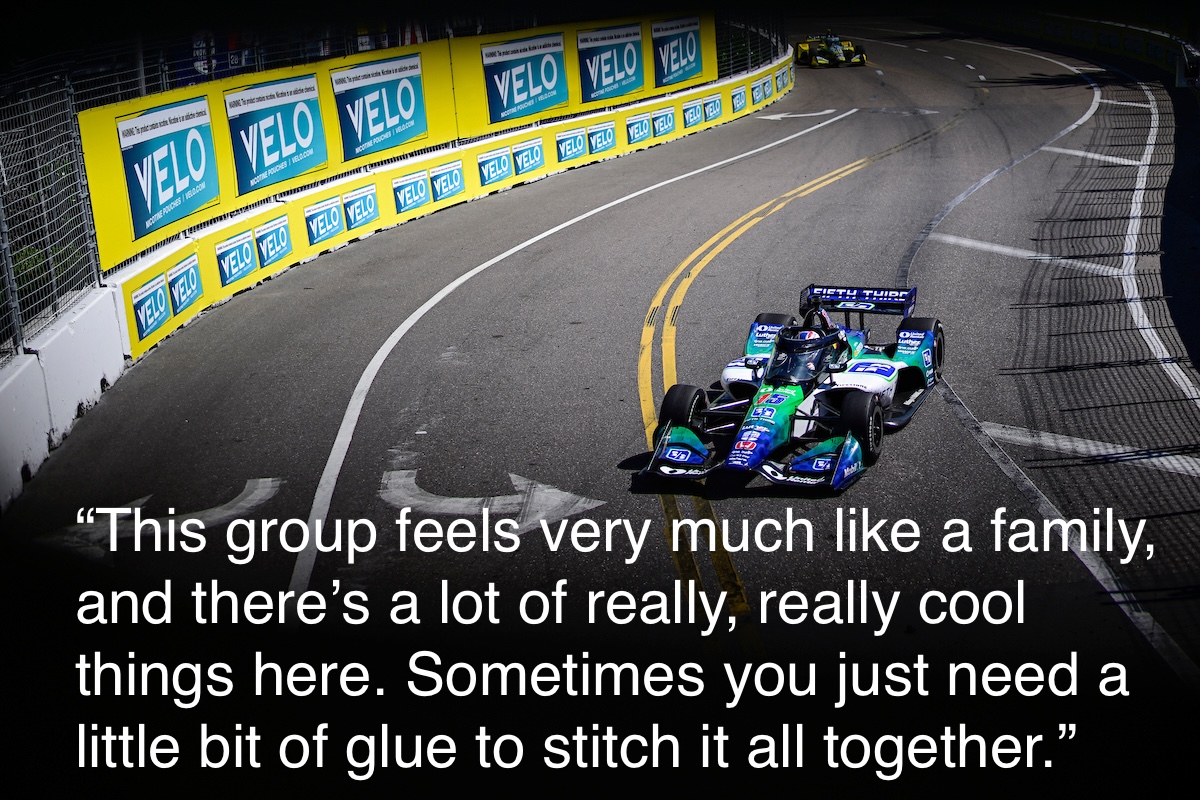
Working with this group feels very much like a family, and from a thinking process, there's a lot of really, really cool things here. Sometimes you just kind of need a little bit of glue to stitch it all together. That’s one of the things about this that stood out.
It goes back to the NASCAR days where we started a Cup team from scratch, and that thing went from eight or 10 people in an 8,000 square-foot building to 200 people in a 200,000 square-foot building 12 years later. And then running the Red Bull team was another completely different experience. But it's funny -- from a team perspective, it's all very familiar. The IndyCar part is very familiar and very welcoming, so it was just a natural fit.
Michael Levitt/Lumen
MP: Has RLL given you hard targets of “we want to be in x position by x date” or have they given you a little bit of freedom and time to work on things?
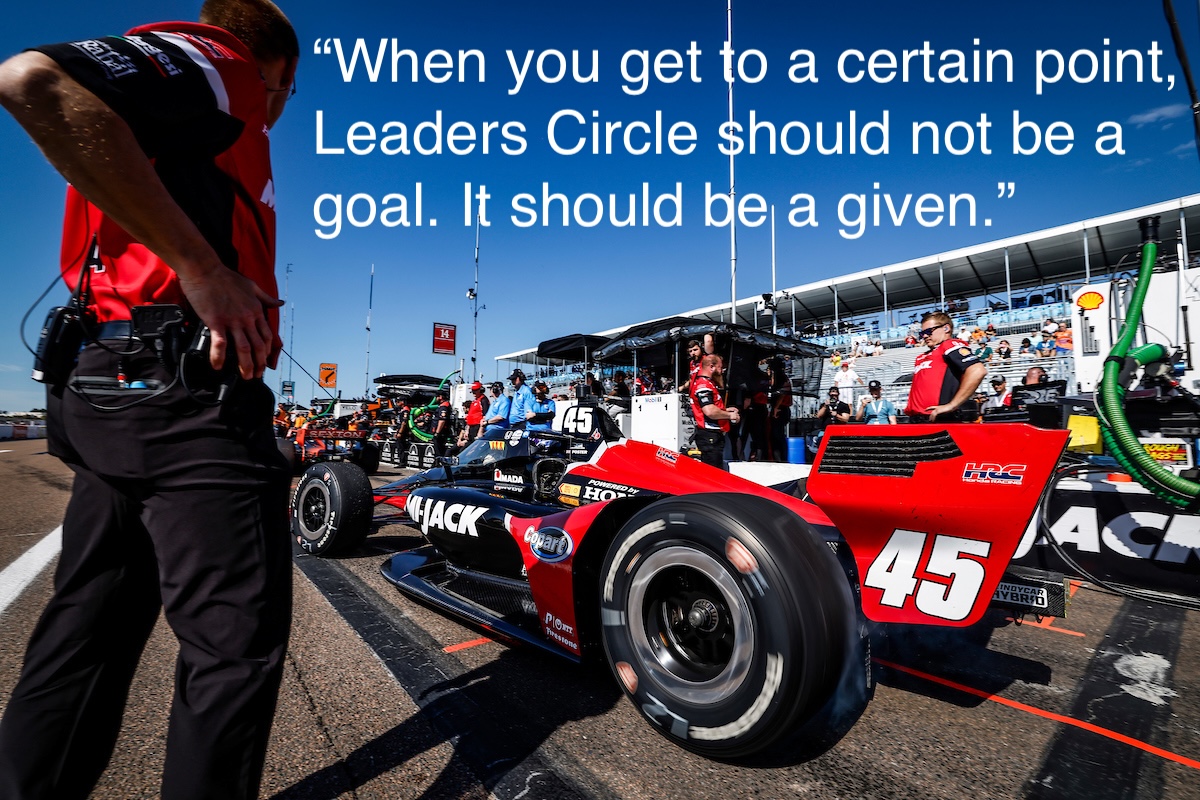
JF: A goal for this year would be to make sure all three IndyCar teams make the Leaders Circle. And that's a goal that shouldn't be a goal next year. When you get to a certain point, Leaders Circle should not be a goal. It should be a given. So if we perform, that'll take care of itself. It's things like that, and having the right mindsets. That's the type of stuff that we've got to get over the hump a little bit, which we will.
We have great people, great drivers, and great resources at our disposal. Once we get the momentum going, good things will start happening, and then the sky's the limit for this organization. From what I've seen here in the week I’ve been on board, there are a lot of great things going on behind the scenes.
MP: You already knew lots of people on the IndyCar side, but you're now president over the IMSA side as well, which is a brand-new series for you.
JF: I knew some of the IMSA group as much as the IndyCar group, because you got Rico (team manager Ricardo Nault), you got Bill van de Sandt on the IMSA side. It’s funny -- there's a group of people you know by name here. Obviously, there's also a group of people here who you know by face, that you say “hi” to, but you might not have known their names before.
There's another handful of people, you know their nicknames, but you don't know their actual names. And then there's a group of people that you've never met. So, on the first day, Bobby was here, and we had a little team get-together and went through the whole facility to try to say hi to everybody who was here on that day.
Remembering everyone takes a little time. That’s something that’ll make this weekend great, because I'll be around everybody at the track. It's the smaller group -- the road crew, but that environment helps you to get to know everyone.
I tried to give the team members here a kind of high-level background about myself, because being at IndyCar for 10 years means there are plenty of people who don't know what I did before that, being on the team side for a long time with different kinds of teams.
As far as the manufacturer relationships go, I obviously know David Salters and Chuck Schifsky and Kelvin Fu and everybody at Honda very well. I haven’t been exposed to or done a lot with BMW in my history, so I'm really looking forward to meeting them and getting to know them and seeing how they operate. There are plenty of opportunities there, and there’s a lot to do. I’m excited about doing it.
MP: Give me some thoughts about the culture side of RLL, because in racing series where everybody’s good, it’s the cultures of a Penske and Ganassi that make them so hard to beat. How do you bring the Jay Frye approach to RLL in a positive, natural way that really strengthens the operation?
JF: What we do is obviously 100 percent a people business. When we had that big group meeting that I mentioned, I said a couple of things about being in the performance business. I’m a big believer in coming in, having your goal, getting your work done, and getting out of here. You don't have to be here 24 hours a day. Let's get our work done, do it right, and be efficient.
There's going to be plenty of times when we can't leave on time or leave early, but it's very important to me that everybody does their job. There's processes, there's procedures, and we can go home. Everyone’s got families. We all work enough.
Before we got to IndyCar, there were no garage hours. Well, we implemented garage hours for them, literally. We wanted to get the guys out of the garage at a reasonable hour. Go back to the hotel. Get a nice meal. Get some sleep. We'll see you tomorrow.
So it became a process to come in and get your work done. Once people got accustomed to that, there wasn't a lot of hangout time. There was a lot of get-our-work-done time so we can get out of here when the garage closes.
It's a performance business. People who want to perform are the people we want here. If you don't perform, you won't be here. That's just the way it is.
MP: Have you had a chance to look at the org chart yet and decide whether you might want to add a lieutenant here or there? Is that something you think Bobby and Mike would support?
JF: Oh, 100 percent. They absolutely would support that. Between now and the end of May, we’re all around each other a lot. So, I think we'll have a better idea of what we can do. Sometimes, it's not even getting new people. It's just that maybe people aren't in the right spot.
Being the new guy, you sometimes think that people aren’t going to share their thoughts with you. In fact, often, the exact opposite happens. There are also things you may have heard before you arrived, but you can't have a preconceived notions on them before you get here, because you need to see it for yourself first.
There’s a lot of really, really good people here who are motivated, dedicated and want to perform. Sometimes, it just takes one little thing to make it all happen. I think we can help with that. I love that.
Brandon Badraoui/Lumen
MP: You've been at Daytona a lot, but you haven't been around much endurance racing. Talk about that side of your job, because a lot of what you're doing at RLL falls right into your comfort zone and expertise, but endurance racing is a whole new adventure for you.
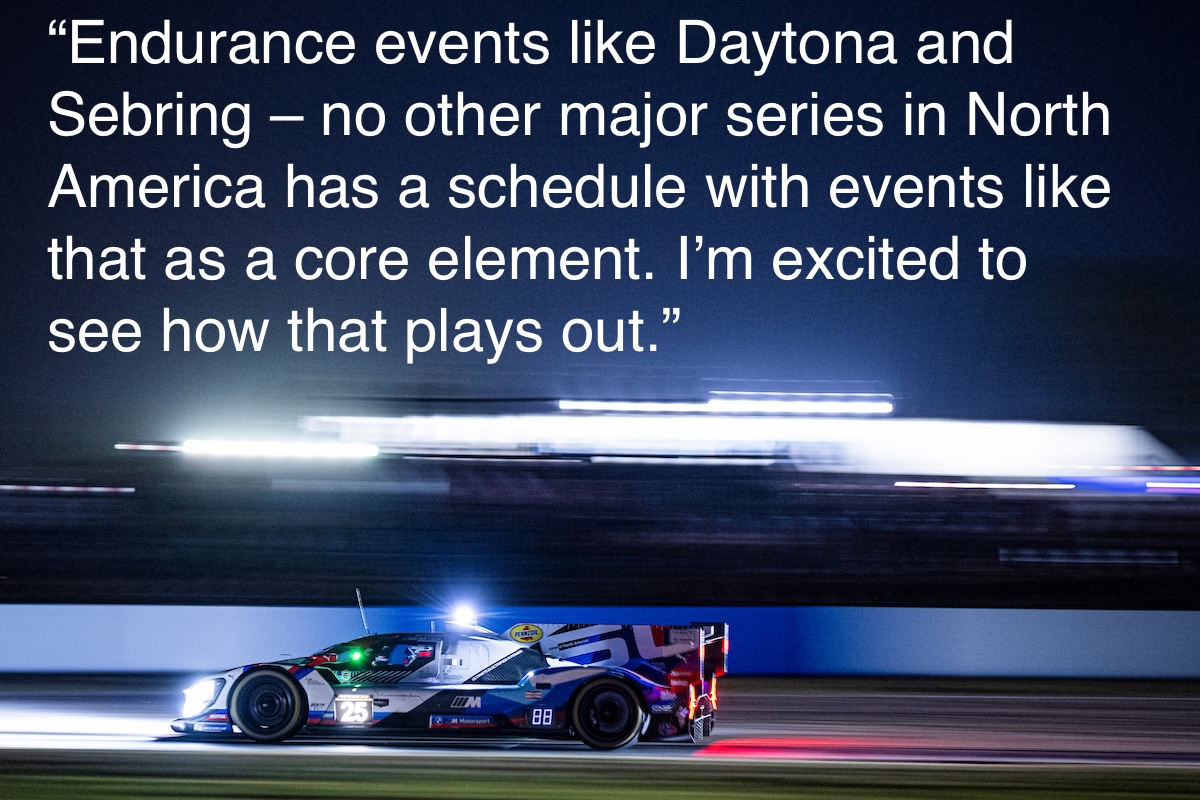
JF: I’m very excited about that. BMW, from what I've seen just in the few days I've been here, is an amazing partner. While IMSA is something I haven’t done yet in my career, I’m obviously a fan and now to be engaged in it is very exciting. It has its nuances, with endurance events like Daytona and Sebring -- no other major series in North America has a schedule with events like that as a core element. I’m excited to see how that plays out. There are really good people on our IMSA team, as well as the people from BMW that support it.
Sometimes, coming from a different racing discipline means that there are different things that we can contribute. I think back to my Red Bull days in NASCAR. Three or four of us from the Cup team went over to Milton Keynes to do an F1 visit. Going through the facility, there's all this super-secret James Bond stuff, but you go the back of the facility and there's guys there bolting the cars together. Same as us. And it's like, hey, those are our guys! We know what works, and there were some things we collaborated on, especially on pit stops at that time, that the F1 team immediately integrated into what they were doing.
Even though IMSA’s a different form of motorsport than IndyCar, it's still motorsport, and everyone in our facility, regardless of which program they’re working on, is dedicated to achieving the best results when we go to the track.
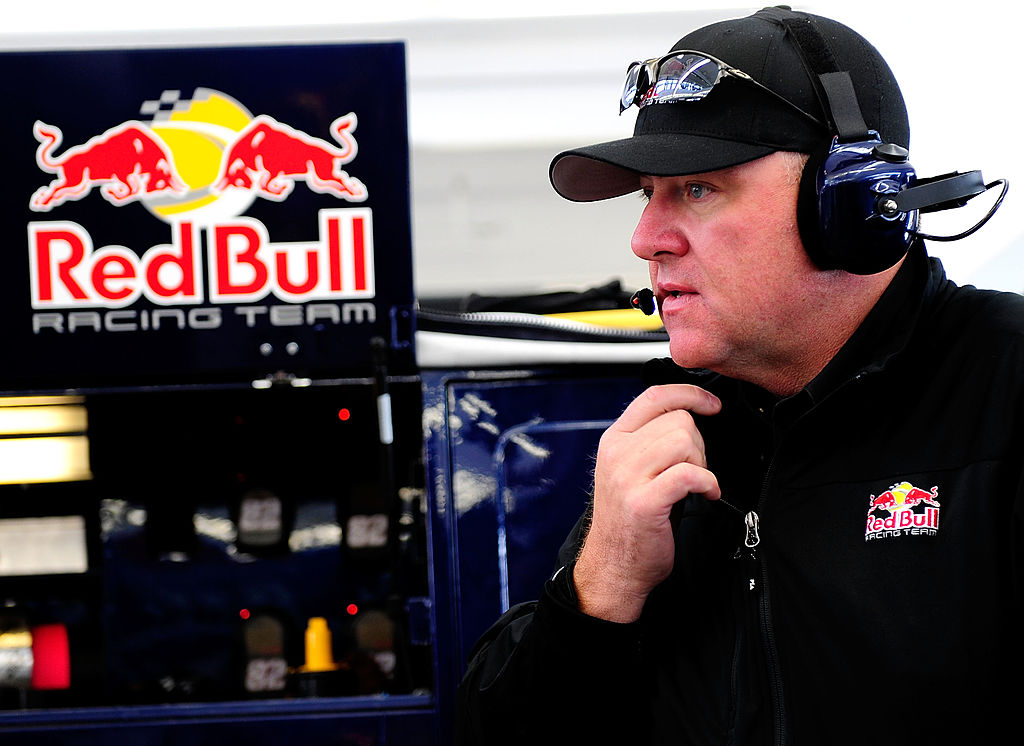
His days at the head of Red Bull's NASCAR team yielded valuable experience for Frye in dealing with series management from a competitor's perspective. Rusty Jarrett/Getty Images
MP: What’s that first IndyCar owners meeting, managers meeting, or whatever going to be like? You used to be the guy leading those conversations, and now you’ll be on the other side of them in your new role.
JF: You know, being on the NASCAR team side for a long time, I had great respect for everything NASCAR did but there were times that I wondered why they did something and I thought, “Well, I would do things a little bit differently” or whatever. But in general they did a phenomenal job So, when I got the IndyCar job, I tried to implement the things that I learned from that experience – the good things.
It was a pleasure to be the one leading IndyCar the last 10 years, in those meetings, that type of thing. But I'm excited to see it from a different viewpoint and different perspective. There were plenty of times at IndyCar where I had a certain thought and I’d survey the teams, and the teams would have a different perspective, so we would go in that direction.
I feel like I have a pretty good grasp on the team thing, obviously, and being here, you see even a little bit more under the hood than I had before. IndyCar is phenomenal and there are talented people who really care and have equity in what we're doing throughout the paddock. From my new spot here at RLL, I’ll do whatever I can to contribute to the betterment of all of us.
Marshall Pruett
The 2026 season marks Marshall Pruett's 40th year working in the sport. In his role today for RACER, Pruett covers open-wheel and sports car racing as a writer, reporter, photographer, and filmmaker. In his previous career, he served as a mechanic, engineer, and team manager in a variety of series, including IndyCar, IMSA, and World Challenge.
Read Marshall Pruett's articles
Latest News
Comments
Comments are disabled until you accept Social Networking Cookies. Update cookie preferences
If the dialog doesn't appear, ad-blockers are often the cause; try disabling yours or see our Social Features Support.