Richard Dole/Motorsport Images
Inside IMSA's big season of digital growth
In the first of a two-part series, RACER is taking an intensive look into how IMSA and IndyCar grew their series through digital platforms in 2024. IndyCar’s will follow in January.
Television remains a vital tool for every racing series in their efforts to increase audience size and reach, but it’s a passive relationship. IMSA and IndyCar aren’t in charge of their TV broadcasts, nor do they have a steady ability to make direct connections with their followers through the networks while live on NBC (IMSA) and FOX (IndyCar).
But that’s entirely different when it comes to their digital initiatives, all driven through social media and the online video platforms they control. Both have a permanent green light to craft and control their own content, and in ways they cannot through their television partners. It’s here where the two series took major steps forward, in ways that were unique to their style of racing and the main demographics of their supporters, over the past 12 months.
Where IMSA (11) and IndyCar (17) have a fixed number of races to harness the power of their TV partners, it’s in the artful deployment of digital content, from simple things like photo and short-form video posts on Instagram, TikTok, Facebook, and X where they’re able to have the most influence.
Longer video pieces on YouTube including original behind-the-scenes material, full race replays and recaps, and retro content help make new fans and feed longstanding followers, and has become the greatest area for a racing series to expand its global footprint.
For Doug O’Donnell, who joined IMSA as its new senior director of brand and digital strategy in June of 2023 after holding similar positions for the IRONMAN triathlon and the NBA’s San Antonio Spurs, YouTube has been the primary area identified within his series' growth strategy.
Based on the numbers, the strategy is an overwhelming winner which will continue into 2025 and beyond.
Free of most geoblocking restrictions, IMSA used its presence on YouTube to follow Season 1 of its Win The Weekend docuseries and deploy Season 2, which was watched throughout the world by millions of viewers for each episode. And in another important decision, IMSA started going live on YouTube — initially for international fans, and without advance promotions — with portions of its legendary Mobil 1 Twelve Hours of Sebring race in March.
The results were an instant hit, which led to IMSA utilizing YouTube for live racing action on a regular basis through the rest of the year, including IMSA’s Historic Sportscar Racing series.
IMSA also made impressive headway with its other digital platforms on social media, but none were bigger than what took place on YouTube. On January 1, 2024, IMSA had 290,000 subscribers, which was decent, but ripe for improvement. Its efforts to make its YouTube page a central rallying point for video content rocketed upward throughout the year, and on September 24, just after the Battle on the Bricks race at Indianapolis, IMSA caught and matched IndyCar’s subscriber base at 389,000.
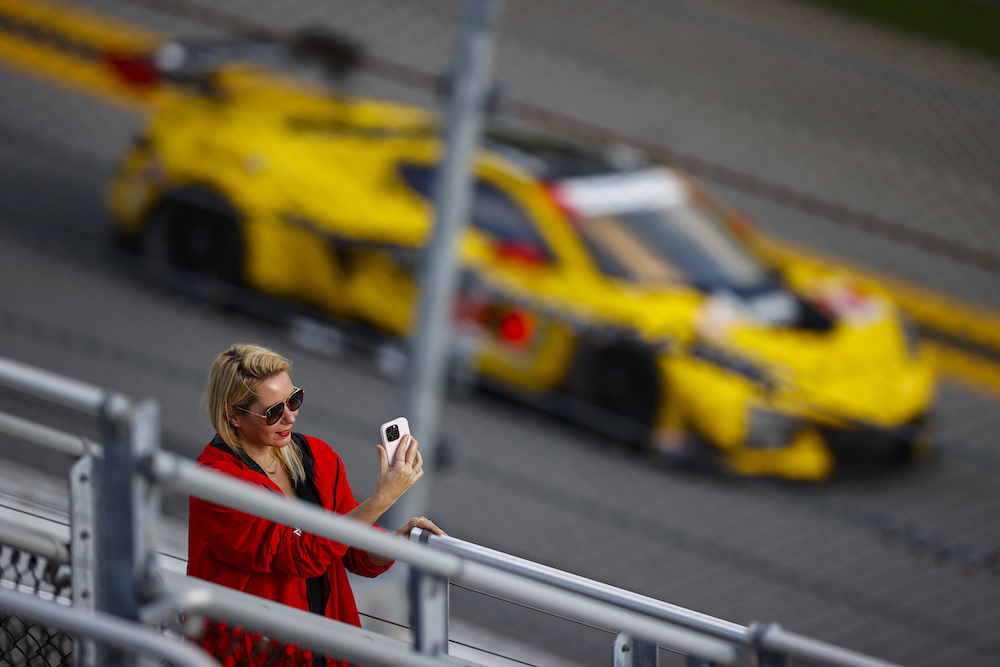
IMSA made huge strides with its social media metrics in 2024. Jake Galstad/Motorsport Images
Adding 99,000 subscribers from Jan. 1 through Sept. 24 was good, but IMSA’s YouTube initiative has really taken off to close the year.
IndyCar was an early adopter of YouTube, joining in July of 2006. Since then, IndyCar has posted 6459 videos that have accumulated 143,353,394 views.
IMSA, which was reborn when the American Le Mans Series and Grand-Am merged in 2012, arrived on YouTube as part of that merger in February of 2013. Despite its comparatively late appearance on YouTube and a modest volume of posts with 1797 videos, its content has generated 115,915,103 views.
Nearing the end of 2024, the subscriber gap has continued to grow, with IMSA almost doubling its Jan. 1 number to 571,000 -- a 97 percent increase with 281,000 new subscribers, 182,000 of those landing since Sept. 24 -- while IndyCar, which has also added subscribers, is at 391,000, up 2000 since the same date.
As of November when IMSA did most of its metrics for the season, it had 2,100,000 overall social media followers, which was up 40 percent – 600,000 people – from 1,500,000 in 2023. IMSA also reports it has seen a 160 percent growth in social media fan engagement and a 70 percent growth in overall video views.
Among other data points related to YouTube, the eight-part Win The Weekend series was responsible for 15,700,000 views, and where IMSA doubled its YouTube watch time in 2023, it doubled again in 2024, which speaks to the domestic and international audience it is building through digital video.
Of the many reasons IMSA went all-in with YouTube once O’Donnell got settled, the youthful demographics stand out, as more than 70 percent of the series’ subscribers are under the age of 44. Well-known strategies of using Instagram and TikTok to reach new and younger fans have been employed for many years by both series, but extending that strategy to YouTube has been a game-changing move by IMSA.
Here’s a quick look at the key digital homes for IMSA before we delve into our discussion.
IMSA’S PRIMARY DIGITAL CHANNELS
YouTube: 571,000 subscribers
Instagram: 647,475 followers
Facebook: 462,000 followers
TikTok
: 281,400 followersX:
182,259 followersAll figures current as of 12/23/24
MARSHALL PRUETT: Let’s talk about digital growth and strategies, because things appear to be paying off for IMSA. After overseeing your first full season in the role, what comes to mind as you look back on 2024 in terms of creating overall growth with the series’ digital footprint and winning over new fans?
DOUG O'DONNELL: Interacting directly with our fans on social media and in our live feeds has been educational. We started the year with a new vision focused on growing the fan base, and determining the most effective and efficient ways to accomplish that.
Obviously, our digital channels are critical. As we headed into the Rolex 24 last January, we were just starting to see our engagement grow. The content produced in the months leading up to the season kick-off primed our channels with high-quality new content that we didn't typically have in prior years. What we saw was an uptick in traffic and engagement that proved what we knew was out there, pent-up demand.
When we produce something that’s relatable, educational, or has some real meat to it — like some of the technical explainers — the core fans engage and dive deep into those topics. And you can tell in the comments of those videos they’re thirsty for more. They’re vocal about it, like, “This is fantastic,” or “I've never heard this explained this deeply or this way before.”
On top of that, we’re letting IMSA show some personality, a less corporate aura, if you will. The obvious example that comes to mind is the 'Chewbacca' video with the Acura GTP car. Making content like that is fun because explaining why a particular car sounds like Chewbacca is actually very technical. But it’s done in a way that’s rewarding for hardcore fans, yet accessible and relatable for the newcomers we happily welcome.
What we saw is that people were discovering us. Even within the paddock, our teams and partners notice that, hey, IMSA’s doing some new things. Now, they’re asking us how they can get involved, too, with collaboration requests from teams and drivers. It’s exciting because they see the same pent-up demand we’ve observed.
On the opposite end, content like our Sights and Sounds videos deliver something that’s cinematic and beautiful and not pushing anything or selling anything. It’s a pure celebration of the sport that lets viewers tap into the emotion we all feel throughout a race weekend.
The comments on those videos are incredible, and they validate what we sensed was out there, which is the cars and the competition bringing people together. People from all different backgrounds love to experience auto racing and sports cars however they can, whether they can attend the event or only view it online. Many fans can’t come to a race in person, but they love to follow along and get a peek behind the scenes whenever and however they can, and we know it’s essential that we give them those opportunities.
MP: What metrics have really stood out to the you and been points of pride that you want to build on?
DO: The first metrics I always look at are engagement and watch-time because, put simply, they don’t lie. As we develop our content and digital strategies, we look for what people are willing to invest in. Engagements are effort, and if our audience takes time to stop and like something and comment or share it, that’s a touch point that they felt was meaningful to them during that moment with our brand.
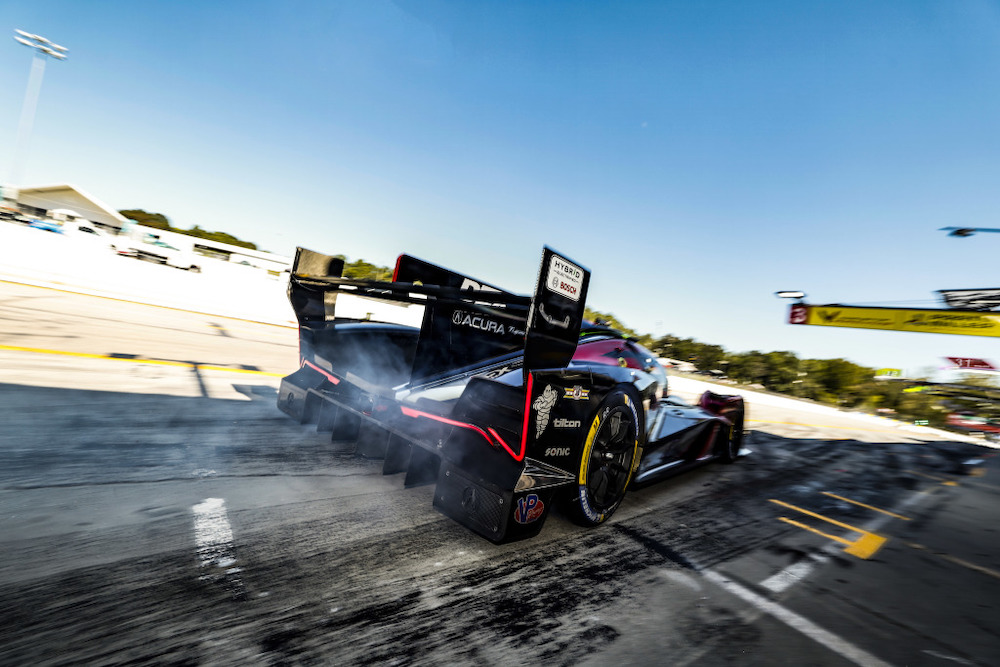
Acura uses zero wookies in its ARX-06, but a technical video about the car's distinctive sound explained why fans might think otherwise. Michael Levitt/Motorsport Images
For us to go from about 7.2 million engagements in 2023 to well over 18 million in 2024 (+150 percent) is a massive jump across our social media channels. And when you also look at the comments we see in our live streams, the chat is exceptionally positive, so much so that if anybody comes in and says some-thing negative, the community addresses it. We've created a safe, comfortable, and welcoming environment to talk about cars.
We see people coming in and asking what some enthusiasts might deem to be silly questions, but the vets and core longtime fans are happy to jump in and answer them. That's how we get meaningful conversations going in our digital channels.
The same goes for our YouTube videos, whether it's a produced series like Michelin’s Win the Weekend or our team's behind-the-scenes content. Even our organic social media generates effusively positive comments. That's rare in sports, where, unfortunately, you see lots of negativity like, “Fire the coach!” after every game.
We see fans mention the parts they loved and what they'd like to see more of. That gives us a lot to work with as we consider what to create and helps us maintain that authenticity that resonates with the audience.
MP: What have you been able to parse out that spurred the digital growth? Are there any specific factors of what IMSA puts on the track that you believe have been big drivers?
DO: It’s interesting. When we reviewed the data, we saw that in 2022 our earned media coverage was very high, leading into the GTP year. It was also very high in 2023 but didn't quite reach as many mentions. And then we had a drop off in earned media coverage this year.
Conversely, growth in 2024 across all our other channels is very strong. I think that, to some extent, that’s due to our team’s creativity in leveraging organic short-form content. A great example of what I mean is an Instagram piece we did focusing on each GTP car and its signature sound.
It’s just a creative riff on many things we're already doing, just in new ways that get a lot more engagement. Our ability to collaborate directly with teams, drivers, and tracks on platforms like Facebook and Instagram has allowed us to connect with and interact with fans in new ways. Honestly, just being open to these approaches has made a big difference. When (IMSA President) John Doonan and (IMSA CEO) Ed Bennett brought me onto the team here, they said, 'we have a big opportunity for fan growth'.
Changing our communications strategy to be fan-facing, rather than focusing only on information like “This is what happened in the last race,” and “these are the point standings.” Switching to informational and educational content that is genuinely entertaining while introducing people to STEM topics in the context of racing has driven a lot of that engagement on our owned and shared platforms.
We saw that the demand for this content was there, and once we started delivering it, it seemed like everything we tried was just working. Fans were thirsty for it.
MP: So much of corporate social media follows a set formula, and fans are sharp enough to know when they're being fed a formulaic product, with corporate messaging points wedged into post, or daily posts that tick a box. Tell me a little bit about how you’ve been empowered to express your creativity and what that means in what your team posts.
DO: The vision set by our leadership is to grow our audience, authentically. And this is a business, but you have push and pull marketing. Corporate marketing pushes predetermined messages to an audience. But when you develop a content strategy, you must pull people in with content that makes them care. When I arrived, we were only covering races, very clinically. There was no nod to sports car fans, broader car culture, creators – so we knew there was opportunity. Then we began experimenting and you can experiment as long as the performance justifies it.
Earlier I mentioned pent-up demand and as we did more race highlights, Art of the Pit Stop, Shop Tours, and so on, the viewers told us exactly what they liked and why – and they also told us what they did not like. For example, we noticed a lot of comments complaining about music. Rob Hunt, our digital content manager, had the idea to remove literally all audio except the cars, and those are some of our best per-forming videos and an obvious sponsorable opportunity for an audio company!
Before I returned to sports, there was a period where I was creating strategy and content for Bounty paper towels and Pringles at the same time. You’d have a Monday content meeting for Bounty, where it was like, “Okay, what are we going to post this week?” Every week you’d come in and that meeting could be tough because you'd say, “Okay, let's think outside the box,” but there’s only so many places to go with it. And it was just excruciating.
And then on the flip side, the first content strategy I wrote for Pringles was at the other side of the agility spectrum. We went out and did some quick research on what's already happening, and we realized that people were collecting these cans because there were 300 flavors of Pringles. Nobody knew that. And it's just different salts on a chip, right?
So they have special flavors like they had crab-flavored Pringles, but you it was only sold in Japan. And we're like, “Oh… we can go all kinds of places with this.” So we developed a layered content strategy where we were showing peoples can collections and showing how they were trading them in different parts of the world. And then there was a DIY group that was making a carburetor for their Jeep out of a Pringles can, or a stereo speaker for their dorm room out of a can.
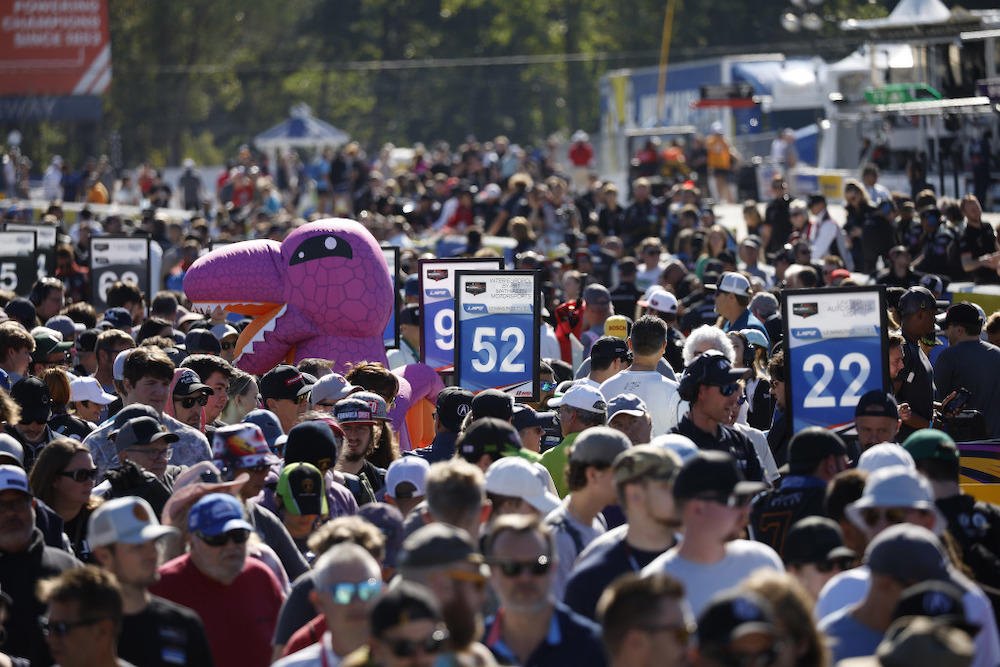
If there was a pink (or is it purple?) dinosaur on the grid, IMSA's digital team probably got a shot of it to use on the series' social channels. Michael Levitt/Motorsport Images
So the can had a life of its own, and we just leaned into that, that culture of creativity, and we grew that account from 12 million followers to 24 million followers in a year, just off of organic content. And so that was a big first lesson for me, which I tell the team today, “Don’t think so hard, you can have fun, you can be creative.”
And then you get to sports… Sports is a cheat code for marketing because it’s really just entertainment, You’re not selling potato chips or paper towels — you're not selling anything. You're just capturing what's happening in the sport, in the moment, as entertainment. So, the content is built in and you don't have to sit in a meeting every Monday morning to decide, “What are we going to post this week?”
Because our reality is, things are happening all around us, like, “Look, there’s 40 Lamborghini Huracan Super Trofeo cars lining up for tech inspection – capture it!” Or, “Look, there’s a rare Mustang in the parking lot outside our offices, let’s go down and capture it!”
We'll go out with a couple of iPhones. We'll shoot it, we'll post it. It’s so much easier in sports when you have cars to play with like we do. That’s why brands and partners activate in sports; they can be included instantly in compelling content outside their normal channels.
To give an outside example from when I worked in the NBA, we had the players' personalities, the team's popularity, and how they were doing on the court as foundations for content creation. But there was also the lifestyle side of it and understanding, “How do you tap into people's emotions?,” because they're such fans of what you're providing, and they're aching for acknowledgment. At the San Antonio Spurs, we would look for fans that were unique and special. Then we’d like their posts, or we would comment on their posts, and they would just flip out and share it with everybody. So there's “a-ha” moments where you're creating brand equity and developing a relationship that is so personal that nothing else can touch it.
And it's easy. You know, it doesn't take very long. You can even block out a half-hour a week and just go like a bunch of posts that you see, and you've just made so many people’s days.
MP: They're feeling seen by something much bigger than themselves that they're hugely passionate about. That’s a rarity, and it’s very generous in how it realizes the fan community’s dreams of being recognized.
DO: Exactly. It humanizes the brand. That’s what we try to do with our collaborations. Every once in a while, we'll get a fan who does a cool shoot, or a video or something, and we'll just collab with them. They can't believe it. And then also, in our live chats, when people are coming in and saying, “This is my first time here,” we make sure that we tag those people and say, “Hey, welcome to your first race, we're so glad you're here.” They respond and say, “No way. IMSA just tagged me!”
MP: NASCAR and IndyCar are series that are much older than IMSA and they have incredibly popular drivers with six-figure, if not seven-figure followings on every social platform. The cars are cool, but they are personality-driven series where fans flock to and rally around the drivers online.
This isn’t so much the case for IMSA and its digital presence. We know that your cars, while they don’t all have their own social accounts, seem to be the things that generate big numbers. You see it with AO Racing’s Rexy, Roxy and Spike, for example. The Cadillac V-Series.R GTP car doesn’t have its own social account, but you post a photo or video of that thing moving, and folks just collapse onto it with support.
Can you speak to that side of not necessarily having the driver notoriety to blow things up like some other series, but maybe where the cars and the racing and the community make up for it? There’s clearly something non-traditional that’s working.
DO: I think there’s a couple of layers to that unique aspect. When I was at the Spurs, we had the same problem, and I don’t think people know that, in the sense that you had Tim Duncan, who was one of the NBA’s most popular players. But Tim Duncan was also extremely humble and reserved. He had no social media accounts. We had Kawhi Leonard, who was an incredible talent, but again, no social media accounts. We had Tony Parker, who at the time, did not have many followers. He may have had a Facebook account and maybe an Instagram account, but he wasn’t using them very much. Manu Ginobili, same thing.
We had this weird situation with a team that was super humble, team-first, and had an incredible fan base. Because we had five championships, we’d sell out every night. The Spurs had a winning record for 20 years, so the team’s popularity was huge. However, nobody could reach the players because they weren’t on social media.
What we had to do with the Spurs, which I think is why we’re so agile here at IMSA today, is run with a team-first content strategy. In other words, for most teams, their digital cheat code is, “Oh, we’ll just post our star player every time, and we’ll crush it.” Which works.
We had to balance it out, and that was the culture of the organization. If we posted Tim Duncan, we had to post a rookie after him, and we had to balance the content around every single player on the team evenly. In doing that, we started to elevate the players that were less known while also leveraging our stars. Team-first and equal exposure was our differentiator in the league.
So when it comes to IMSA, I think you hit it on the head, where the cars are the stars. But we haven’t quite figured it out yet with our athletes because we have hundreds and hundreds of drivers. I think that’s our biggest challenge.
We don’t have the same drivers in the same cars every weekend. Getting to know them over time as you would in NASCAR, IndyCar, or Formula 1 is harder because here’s so much change and fluctuation in the sport, but I think that going through the cars lets us use the manufacturers as the anchor.
So, if it’s Corvette, let’s go with the car and we have a series called 'Meet Your Drivers.' If you’re a Corvette fan, these are your new favorite drivers. You back into it that way, and then you repeat that across the manufacturers as deep as you can go, within the bandwidth that you have. That’s an approach that we want to start trying.
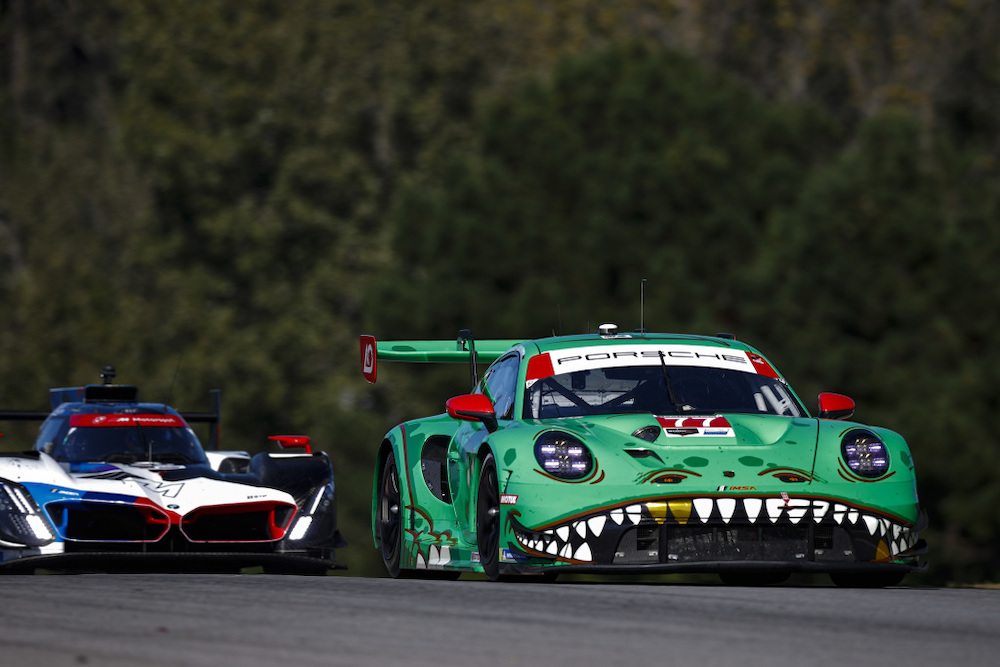
Drivers are the main focus for fans in most racing series, but in IMSA, the biggest stars are the cars. Jake Galstad/Motorsport Images
MP: A phenomenon we didn’t know to expect, but fans are so thankful to receive in the sport, is AO Racing, with a bunch of Jurassic-themed race cars that now have Hot Wheels counterparts that folks are clamoring to find at their Targets and Walmarts.
That team is a lot of fun, and it must be something you’re thankful for and hope you can replicate. How do you bottle this and use it to help grow and improve what other teams might do in a similar vein in IMSA?
DO: I recently posted on LinkedIn about AO Racing’s success. It's branding 101 but also a masterclass, which is what we're trying to do at IMSA with our own brand. It's established, but it needs a personality. The logo is known, but what does it make you feel when you see it?
What AO Racing has done is they've given their race cars personalities. The draw there is to be emotionally invested in something, you’ve got to give fans a reason to care.
It's not just some car in the race. You’ve seen it yourself. When Rexy comes around on the track, fans stop and say, “There he goes.” They're looking for that particular car, and the kids are pointing it out. All of that is a base ingredient for acquiring sponsorships, right? You've got a crowd-pleaser on your hands. Every-body's eyeballs are on it. That's how you build brand equity.
If you take a brand and you think about its logo, that's what a lot of people think 'brand' is. It's a logo. But it’s not the logo. It's the feeling that a person gets when they see your logo. That's the brand equity.
And it's built over time. It's developed at each touch point that somebody has with that particular brand and it’s dictated by the fans, not by the brand. So, every time somebody sees Rexy or the inflatable T-Rex mascot at the race, or a sticker, or a plushy, or whatever, it gives them a feeling of fun every time, and it's reinforced every time they see it.
And you don't see anybody around AO Racing going, “Oh, that car sucks.” Never, right? Everything, every interaction, every touch point, is super positive, super fun, and people just want more of that. And the little touches that they do, they don't just stop with the livery. It's the Porsche GT3 'RAWR'. And the gold teeth? Another level of genius. They’ve got all these touches that are little easter eggs. I think that AO does that really well.
MP: Most racing series have a bunch of official sponsors and partners that get promoted in print and on the broadcasts. Very traditional. Where are we headed with digital sponsorships?
F1 is a monster of its own in the digital space, so I don’t look at is as being representative of reality for the rest of racing, but do you think digital growth has come far enough to where a series like IMSA or others here could look for the same kind of serious marketing partnerships, but on digital platforms?
It’s constantly increasing
.MP: Growth on YouTube is a strategy that you and the executive team have pushed for. It’s home to original content that IMSA produces, and it’s become a huge a vehicle for live coverage during race weekends. Talk about IMSA’s YouTube growth and what has helped the channel take off with subscribers. The metrics suggest you’re using YouTube to set the tone, at least in the U.S., for how a racing series can use that platform to connect with a larger and younger audience.
DO: It really starts with a layered content strategy. Not to use too much jargon, but I think that in 2023, Michelin’s Win the Weekend brought a lot of new attention to the channel, and that was the initial catalyst that brought people in to discover IMSA — this new type of content, this new series.
Then, when I arrived, we had the opportunity to reorganize the channel a little bit and emphasize our series by using playlists and organizing it so that we could prepare to build it into the channel that it is now.
The next ingredient was the archived races that we had that were already posted there — pulling them to the forefront and resurfacing them by doing little organic posts — 'remember when'-types of things on social media.
When we started our behind-the-scenes videos at Indy in 2023, that was the third layer, where we started developing organic content in a totally new way with partners like CoForce that started to have this drip effect on the channel.

Streaming the Sebring race on YouTube opened the series up to thousands of new international fans. Michael Levitt/Motorsport Images
That’s really what you need to keep people engaged and coming back for more and clicking on the subscribe button. So we had Win the Weekend and a lot of older races on the channel, helping to bring people in.
Going into 2024, we had an opportunity internationally because we didn't have rights restrictions internationally. That was a wide open space for us, and when we streamed our first live international coverage on YouTube at Sebring, just as an experiment, we had over 500,000 live views and we saw an instant influx of new people, a lot of people coming into the chat asking, “What am I watching? This is amazing. I've never seen this before.” Other people in the chat stepped right up to answer their questions. We even made a couple of people moderators on the spot because we couldn’t keep up.
We knew that we had that thirst, or that pent-up demand, where we were providing something that people were seeking. We started with just the WeatherTech Championship race at Sebring, and ended up across the year doing all of our single-make series live on YouTube, as well as our Historic Sportscar Rac-ing series, totaling nearly 60 livestreams in 2024.
Everything is now included, and that content volume has been the groundswell, or the impetus for our growth on YouTube. It was all initially organic, Going back to the original metrics, we doubled our channel’s watch time in 2023 only to double it again in 2024.
MP: Embracing YouTube has been a really effective strategy. There are other series that use YouTube in the same way — Australian Supercars is a great example — but domestically, IMSA is the only big series I can think of that’s made YouTube a central part of its digital strategy with each new race. I assume this strategy is working the way you hoped?
DO: Yes. Around 70 percent of our subscribers are under the age of 44, which is exactly what we want. We've also seen growth internationally from the countries you'd expect: Germany, Japan, France, the UK, Spain, and Brazil. So being able to expand our audience and make inroads in totally new places may eventually open up new opportunities for sponsorships and other partnerships that help IMSA stay on this exciting growth trajectory. The entire team is very excited about 2025.
Marshall Pruett
The 2026 season marks Marshall Pruett's 40th year working in the sport. In his role today for RACER, Pruett covers open-wheel and sports car racing as a writer, reporter, photographer, and filmmaker. In his previous career, he served as a mechanic, engineer, and team manager in a variety of series, including IndyCar, IMSA, and World Challenge.
Read Marshall Pruett's articles
Inside MX-5 Cup: Bobby Gossett’s winning destination
Latest News
Comments
Comments are disabled until you accept Social Networking Cookies. Update cookie preferences
If the dialog doesn't appear, ad-blockers are often the cause; try disabling yours or see our Social Features Support.