The RACER Mailbag, December 18
Welcome to the RACER Mailbag. Questions for any of RACER’s writers can be sent to mailbag@racer.com. We love hearing your comments and opinions, but letters that include a question are more likely to be published. Questions received after 3pm ET each Monday will be saved for the following week.
Q: Linus Lundqvist’s chance of a full-time IndyCar seat in 2025 seems slim, but can an Indy 500 one-off be on the cards? Other than that, are you aware of him having had discussions with teams in other categories? I’m thinking IMSA would be a good option to get some track time, in let’s say an LMP2 team.
Fabian Blåder
MARSHALL PRUETT: As I understand where open seats stand today, Linus has Dale Coyne left as the only place to go. I’ve pointed him to a number of IMSA LMP2 teams, and also suggested pursuing options as one of the bigger IndyCar team’s official test and reserve driver, as we see with teams in F1, to ensure a title contender has a rocket on standby who can also help with simulator work, engine test days, straightline testing, and some of the other less desired duties that veterans often want to skip. I haven’t checked in since our last story went up and don’t know what he’s got. There was an IMSA GTD possibility I heard of a little while ago, but can’t say if that was just for the Rolex 24 or more.
Q: In light of Oliver Bearman's comments about the current Super Formula car (also built by Dallara), could the 2027 IndyCar starting point be better starting from the SF23s?
Gordon, Dallas
MP: It’s an interesting call that I’ve heard others in the IndyCar paddock mention as well. Only note to add is Dallara’s spec SF chassis is built purely for road racing and lacks all of the added – and significant – design features to keep drivers safe in the event of an oval crash. With Graham Rahal in the series -- and any future drivers who are either tall or wide (or tall and wide) -- Dallara’s IndyCar tubs need to be larger than anything they’d make for other open-wheel championships.
It makes doing something original for IndyCar a natural starting point instead of trying to adapt a design from another client.
Q: May I suggest that the design of the next IndyCar chassis be a similar footprint and basic look as the 1979 F1 Ferrari 312 T4, which would be updated with carbon fiber wings, body, etc., of each team’s unique design? I think IndyCar should strive to be different from FIA, F1, F2 designs of today's long snouts, and trick DRS wings. IndyCar needs to be a unique product, to strive to be better than F1.
Along with this I suggest that work be done with race engine providers such as Ilmor to reproduce the sound of the V12 engines of 1979 F1 to compliment the new chassis.
Sometimes you need to look backwards to move forward.
Mark Stadelmann
MP: It would be the best-looking/sounding retro-modern open-wheel series in the world, which would be an upgrade to simply being the world’s one and only retro-moderns open-wheel series like it is today. A question, though: Does copying something that already exists, and was retired nearly 50 years ago, qualify as unique?
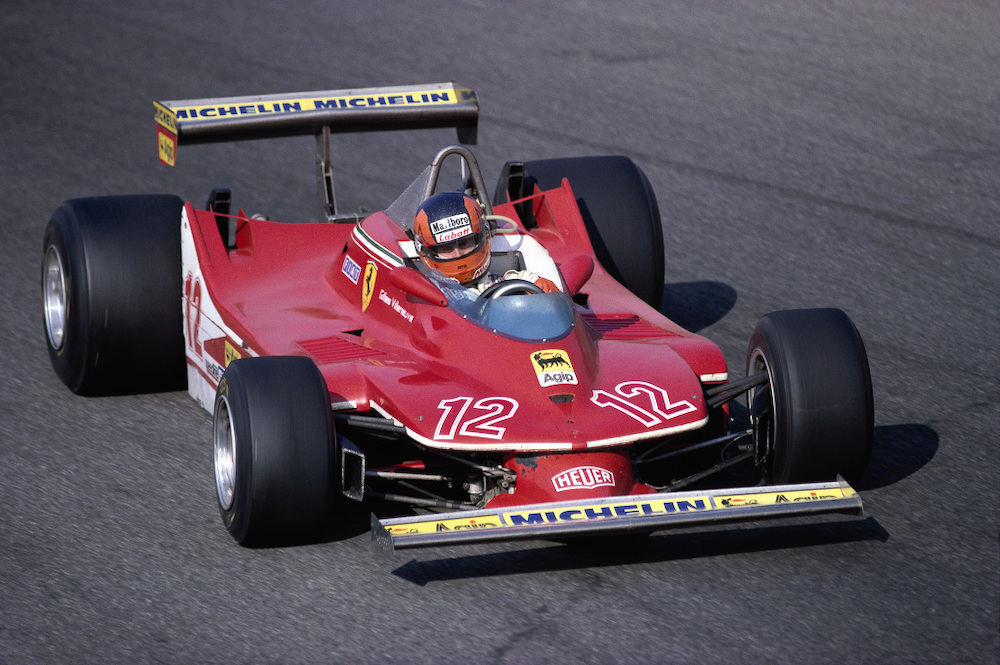
Now try to imagine it with an aeroscreen. Rainer Schlegelmilch/Motorsport Images
Q: After 25 years, SoCal’s iconic Irwindale Speedway has succumbed to the ever hungry real estate market. On Sunday, Dec. 8, the drag strip boasted 250 cars, where racers and fans alike stayed for emotional Final Pass at sunset. As a crew member of this A/FX history run, I’m proud to say thanks to the Speedway along with the countless racers who made it want it was.
Denny Valdez
MP: A sad development. The first racetrack I remember visiting -- Baylands drag strip and figure-8 facility -- presently lives under the parking lots and big-box stores at the next exit south from where we live. Too many stories like yours and mine and others who loved going to Track X and are left with nothing more than memories after it was sold and turned into something else.
Q: I haven't seen or heard anything about this but, what will happen to an IndyCar charter if a team who owns a charter can't come up with enough sponsorship dollars or find a driver with enough money to run a full or partial season? IndyCar has said that they don't want a revolving door of drivers, so let’s suppose Dale Coyne or Juncos can't come up with the money to run their two cars -- do they have to sell their charters? Can they lease them to another team? How will it work?
John
MP: I could be wrong, but I believe there’s the equivalent of a "If you don’t use it, you lose it" clause in the charter. Like the Leaders Circle contracts, where teams commit to entering a LC-possessing entry for the full season to get the $1 million payout, I’m confident in saying charters have the same full-season requirement.
Keep in mind that no team actually owns its charters; those belong to Penske Entertainment, so if a team is unable to field a chartered entry, I’d think Penske would become centrally involved to reclaim the charters if a sale of the charters to an approved buyer could not be completed. No sales are done without Penske’s approval, so in every scenario, the mothership would be involved.
An area of interest for me in such a scenario, or if someone simply wants to sell and get out of IndyCar, is how that would play out on the buyer side. We often think of an owner with two cars and two charters selling both to a newcomer, but what about the other two-car teams who might want to expand to three charter entries? If Team X is looking to get out, would a Foyt or a Shank -- existing two-car teams -- get the first shot at buying one of the two charters before a new entity was considered?
Q: The article on the styling of the proposed 2027 IndyCar was interesting. Is a lower weight chassis still a priority for the design team as well?
Bob
MP: It is. There are a range of options on the table that could bring down the overall weight, but a new and heavier energy recovery system is coming, so it won’t be easy to take a bunch of weight away from the thing.
Q: I was glad to see that Zak Brown offered assistance from McLaren F1 arm in designing the new IndyCar. This is not the first time he has offered his assistance to the series. While I know he has his haters (as does everyone in the paddock), it seems to me that McLaren (and Zak) coming to the series has been a very good thing (beyond just adding an additional strong team). Your thoughts?
Tim, Fishers, IN
MP: With Michael Andretti out of the picture, Zak’s among the few remaining owners/principals who readily push back and tell Penske Entertainment things they don’t want to hear, and that’s vitally important. Penske doesn’t want to receive criticism or dissent, but Brown’s willing to spoil their ‘Everything is awesome’ echo chamber. On that alone, I appreciate his contrarian ways.
And then you have what you’ve cited, which is the other way to try and make things better by committing talent and resources to solve problems. But, in that echo chamber where everything they do is awesome, such offers aren’t likely to be accepted. Regardless, it’s hard to argue against trying to help.
As an entrant, I do hope Arrow McLaren sheds the ‘Team Disfunction’ tag it’s earned after three straight years of turmoil.
It’s on its third team leader since 2022, with the last two — Gavin Ward, and now, Tony Kanaan — having no prior experience running a major racing team. We know about the Alex Palou dramas, the revolving door of drivers this year, the high turnover with personnel, and the ongoing struggles to get over the championship and Indy 500 hurdles.
The bones of an excellent team are there. Look to McLaren’s F1 team as a blueprint of how to make key changes over a sustained period. It took many years of major changes to get there, with the most recent under the steady, multi-year leadership of Andrea Stella, leading the team to its first Constructors’ title in decades.
On the IndyCar side, it’s another do-over, just as it was after team president Taylor Kiel quit and left after the 2022 season finale, and again after the team moved on from Ward. Now Kanaan’s the big boss, with a revised driver lineup, a revised engineering lineup, and yet another huge mountain to climb to catch and beat Ganassi and Penske. It’s entirely possible to achieve, but it will take time.
Think of the Foyt team and its constant year-to-year changes and how the never-ending rebuilding actually kept it from making progress. And then think of how it had proper consistency for two consecutive seasons with Ferrucci in the No. 14 car and how that consistency is what allowed that entry to flourish. Same team president. Same team manager. Same technical director. Same crew chief.
It would be strange for Arrow McLaren to make a big leap in 2025 with another shakeup to process, but it’s what they need. I don’t envy Kanaan, but he’s never been afraid of a challenge.
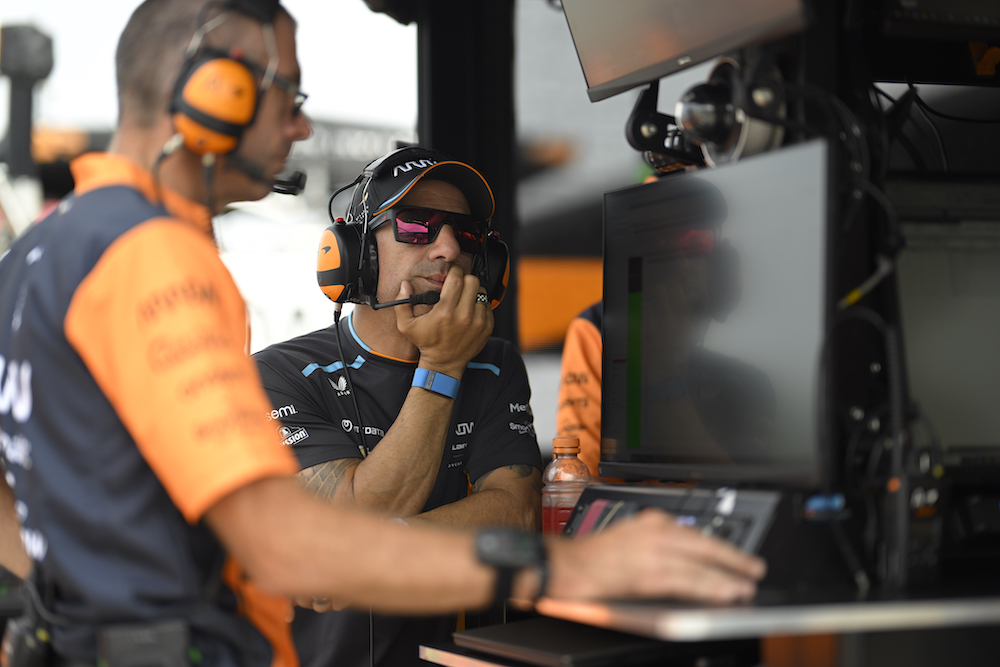
Can Kanaan steady the ship at Arrow McLaren? Gavin Baker/Motorsport Images
Q: Thanks for the article on the owner's reactions to 2027 design proposal. I think I fall in line with Adrian Newey's thoughts; I just want to watch a cool-looking car. What surprised me was that people who seemed to most agree with prioritizing a more innovative look (at a likely higher price) were the teams who seemed to have the smaller budgets for the current cars and would be most affected if the price of racing laps went up with a new one. Penske seems like it could best survive cost increases. It's proposing a plan to keep it as affordable as possible when Penske probably could withstand a cost increase the most.
Everyone seems on the wrong team. What gives? Is there a feeling that a sufficiently innovative design will unlock new sponsors for the current lower tier budget teams to make it worthwhile? Does Penske feel so unexcited about a new design that they've committed to doing something only very slightly new? Is it the hope that a bigger design chance will put everyone back on a more even playing field? The drumbeat for a new design has been so loud and so long that I'm surprised there's such a wide gulf on what the idea is to start – do they all even agree on why they're doing a new car?
NK
MP: Since I started writing a few years ago that the Dallara DW12 is the only current pro-racing chassis that is actively competing in its primary series – IndyCar--and is eligible for entering vintage racing series at the same time, having met the criteria of being at least 10 years old — I hope it became obvious to all involved that being the series with the oldest car isn’t something to embrace.
Truth is, Penske could stick with the DW12 for another 10 years, but auto manufacturers have told the series they’d prefer a high-voltage ERS package, and there’s no way to retrofit such a thing to the current car. The low-voltage system that went into the cars last summer fits in a tiny space, and also has serious limitations — due to the lack of free space — on its capabilities.
That’s where a new chassis, with changes to the tub to accommodate the larger ERS package, became necessary.
Q: Penske people have proven they have no imagination and should not be involved in design of the next-gen IndyCar. Leave it to Dallara and the engineers from the current teams, since they are the customers. Also a simple (stupid?) question. How about a windscreen that you can run without the full plexiglass on those hot street/road courses? Fans want to see drivers working the wheel.
Dave, DE
MP: High-speed crashes happen on road and street courses, which means high-speed debris can strike the driver’s head and helmet, which is why the halo has the PPG laminate. I hate the look of the car with the aeroscreen, and that we don’t get to see drivers fighting the car, but that laminate has prevented major strikes on multiple occasions. It’s not going away or being modified to be half of what it is.
Q: I first want to respond to David Bowers' question from last week.
You could use this rule from the British Touring Car championship for an IndyCar team championship:
"1.6.4. The Teams Championship: Points will be awarded to a maximum of two nominated cars from each team in each Race (provided that they are listed as a classified finisher in the Final Results) as per the format of points scoring for the Drivers Championship except that the additional point for Pole Position and the additional point for Fastest Lap and the additional point for leading a Race will not be awarded. A team must nominate a maximum of two cars in writing no less than 30 minutes before the nominated start-time of the Official Qualifying Session at each Championship Meeting."
Now to my question:
This year, I have gotten into WEC (because Callum Ilott moved into that series, the Hypercar ruleset, and my dislike of F1's current rules), and I love the way their YouTube channel provides content (great preview show and highlights). Next year, I would love to get into IMSA, and given my love of touring cars, the Michelin Pilot Challenge series, too.
What is the best place (aside from RACER) for a UK-based fan to get previews and highlights?
Dan Mayhew, Cambridgeshire, UK
MP: IMSA’s YouTube page is a great resource for highlights. IMSA.com features written previews for all kinds of things as well.
Q: I am not a fan of the concept was for IndyCar's next chassis. IndyCar has to be its own thing, and utilizing the Red Bull X1/F2 rear wing does not excite me at all. I am also not a fan of a spec series car. I do miss the days of Reynard, Lola and Swift battling it out on race weekends. Hell, throw in the ARR Eagle chassis, too.
How do we overcome the spec-ness without breaking the bank? I would propose something along the lines of the Reynske. That car looked great. Give the teams a spec car. Let them experiment with shark fins, the mirrors and wings. Then maybe we get some varied spec cars across the teams. This may ruffle some feathers as it may costs some money but with FOX deal I'd feel like teams would have sponsorship when the next chassis comes around.
What are your thoughts?
Stefan ‘not that one’ Johansson
MP: I’ve said for years that I’d love to see IndyCar do something futuristic that has people running to the fences to see the cars in action. I don’t know what the car will look like, but IndyCar has an opportunity to do something big and bold to make itself stand out in the sports/entertainment marketplace.
Said another way, for the first time in over a decade, IndyCar is approaching significant change with a new car that could be hugely beneficial. Will it take advantage of this turning point, or play it safe and hit a single instead of swinging for the fences? Penske Entertainment’s known for being highly conservative; will that approach be applied to the 2027 car?
For those who don’t understand the fuss about the car’s looks that were raised by the team owners, consider how in recent years, F1 has become the go-to open-wheel racing series in the U.S. for a huge wave of people, many of them newcomers to racing. Many of them.
Staggering numbers of young domestic fans have flocked to F1 and have come to know the look of an F1 car as the standard for open-wheel racing, so if IndyCar is going to build a new and younger fanbase, a boring replacement for the DW12 isn’t going to get it done. That same notion obviously struck the owners who saw the renderings up close and spoke to RACER.
IMSA had phenomenal racing with its former DPi class, but the formula was lacking in a few areas, notably with the lack of hybridization, and a lack of visual creativity. Both of those were fixed with the new GTP formula that launched in 2023, and IMSA is seeing a wild spike in growth with new fans and engagement across all metrics, including manufacturer participation.
Oddly enough, Porsche Penske Motorsport just won the GTP championship and has seen what kind of effect a sanctioning body can have when it hits the right technical and visual formula, but based on what the IndyCar team owners told us, those firsthand lessons from competing in IMSA with GTP haven’t been applied — at least on the visual side — with the 2027 renderings they were shown in the series owned by Penske.
As well, I have no expectation for the 2027 car to have a short life, which means a warmed-over DW12, as it’s been described, would become an eyesore by 2029 or 2030. That’s another reason to aim higher; the 2027 car will look stale long before it’s replaced in 2040.
IndyCar’s been on a slow and gradual rise; it can’t afford to stunt that growth by delivering a dud with its long-awaited new car.
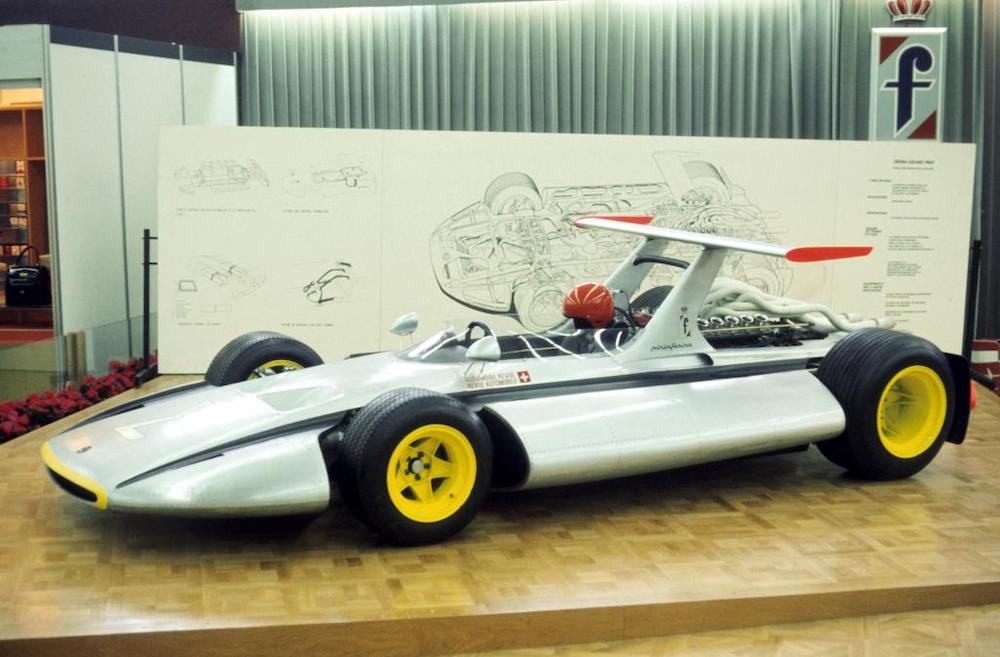
I reckon this ticks most of the boxes. Think of the semi-enclosed wheels as a tribute to the original DW12 bodywork. Motorsport Images
Q: Will we see a female driver or multiple female drivers in the Indianapolis 500 for 2025?
NASCAR Cup has the Busch Clash and the All-Star race. Will we ever see a Formula 1 race that doesn't count for the championship?
Chris Fiegler, Latham, NY
MP: Fingers crossed for a return of Katherine Legge and her sponsor e.l.f. because she’s the only solution that comes to mind.
CHRIS MEDLAND: I think we will see a non-points F1 race, and it’s going to be one for rookie drivers.
F1 looked at rushing through a plan for this season where 10 rookies (one car per team) would compete in a sprint race in Abu Dhabi a few days after the final round. In the end it was decided that it needed more time to be assessed and planned, and then with the 2026 regulations being such a major overhaul – and teams running cars in January of that year – it was pushed back until the end of the 2026 season at the earliest. But I think it will happen.
Q: Missing racing already as it has been four days since Abu Dhabi at time of writing. Seeing pics of McLaren’s championship 26 years ago, I wonder if Ron Dennis involved at even a miniscule amount in McLaren?
Bob the Nitro fiend, Boston
CM: You could always claim he is based on the fact that he helped build the team that exists today, including the amazing McLaren Technology Center that it calls home. But that's as far as it goes. It was a pretty acrimonious departure for Dennis from McLaren, as he was removed from his position as chairman and ended up selling all of his shares in the entire Group in 2017.
From a McLaren Racing perspective, Zak Brown has done things a very different way to Dennis and I did also find myself wondering how Ron would view the team's success. But I’m sure ultimately he’d just be proud and happy to see McLaren winning championships again.
Q: I understand that the F1 ‘World Destruction Championship’ that has been making rounds on social media is compiled by some guy on the internet and not an official standings, but it also looks to me to be plausible from a rankings standpoint, and James Vowles said he was worried about Williams being under the cost cap due to the number of crashes.
My confusion here is that there are components on the car that are regularly replaced even if the car isn't crashed, and also parts like wings that are only used on certain tracks. Obviously not every part is replaced every race, and some parts can be reused after a crash as well. How much of an F1 car is non-perishable, and would removing crash damage from the cost cap lead to better racing?
Will, Indy
CM: I’ll admit I don’t trust those rankings either, because Pierre Gasly was viewed as having caused no crash damage to his Alpine, but he did damage his car. Incidents like running wide over a curb and damaging the floor so that it needed replacing or repairing is a costly mistake made by a driver and Gasly definitely did that, but it didn’t appear in those totals as it wasn’t an obvious crash to observers.
But the actual question you ask is very complex, because teams create spares of every part even if it’s something that could technically run a whole season. The chassis, for example, could do the entire year if they wanted, although they are still regularly stress-tested so you need back-ups. Similarly, things like the steering wheel can do an entire season but you always have spares, especially for potential glitches or technical issues.
As you point out, every component that is involved in a crash is assessed to see if it can be repaired rather than scrapped, and other parts are sometimes refurbished after certain mileage. Basically this is the long route of explaining why it’s impossible to quantify how much of a car, if any, is non-perishable.
There is a crash damage allowance built into the cost cap in the sense that the cost cap goes up as the number of races increases, both due to the components needed and the risk of damage. I actually think the cost cap is at quite a good level as it stands. We still see hard racing and drivers are not taking it easy just because of the cost of damage, but it will reward teams and drivers who manage to avoid major incidents.
Removing crash damage would become so complex that I don’t think we’d ever land on acceptable figures or declarations from teams, and it would just cause more problems than it would solve.
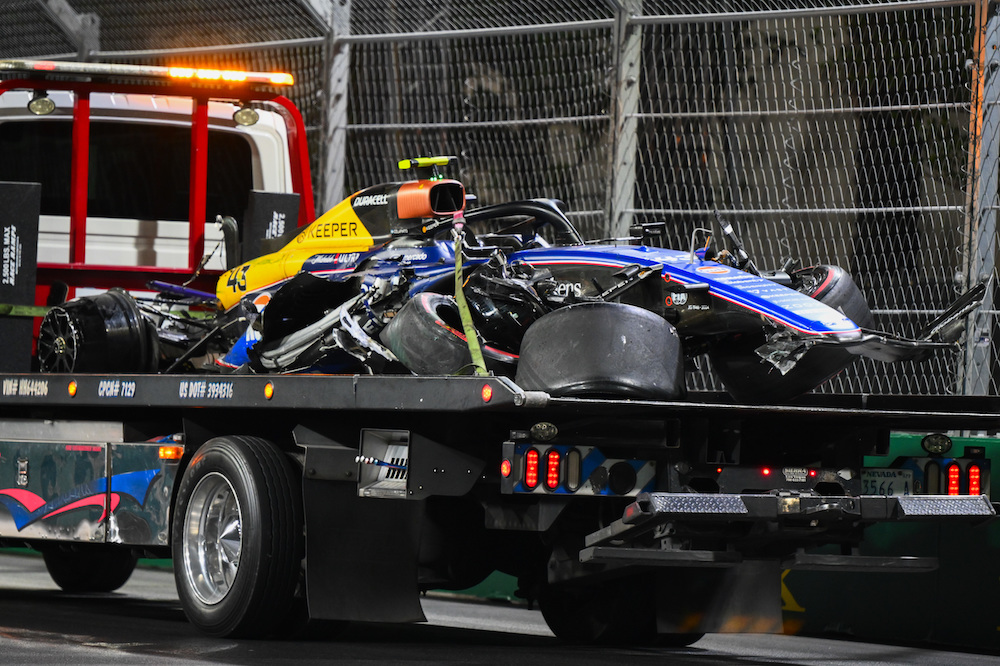
James Vowles probably wasn't too happy to see this in Las Vegas. Simon Galloway/Motorsport Images
Q: Has the number 0 been an option for the drivers to pick since the rule change in 2014? I was always under the assumption that they were only allowed 2 through to 99, with the exception of the 1 reserved for the champion, and 17 which was retired for Bianchi.
Danny, Southend-on-Sea, England
CM: You also can’t use a number that has been raced in either of the previous two seasons, which is why 5 has only just become available again to Gabriel Bortoleto after being used by Sebastian Vettel until 2022. As far as I’m aware, the number 0 is not an option, and when the regulation was originally announced it said drivers would be choosing between 2 and 99. But the FIA did say it’s never been asked, so it doesn’t actually know!
Q: I enjoyed reading that Rwanda has confirmed a bid to host an F1 race in the future. Since there is no permanent road racing circuit in the vicinity, I can only guess they would create a street circuit around the BK Arena or Amphora Stadium. I'm all for it.
But I'm curious about why I haven't heard much about a proposed F1 return to Kyalami. Here's a link to a YouTube video, obviously produced by Red Bull, featuring David Coulthard and a local 'spinning' champion to help pull off the well-written bit. Press releases that spawn articles don't cost a lot of money. This video had to cost a huge amount of dollars, or pounds, or rand.
Does Chris Medland have any more info?
Bill Tybur, Tempe, AZ
CM: Kyalami was definitely a target for F1 and actually got pretty close in recent years, but I was told the financial commitments from the race organizers just weren't there to make it a reality. F1 is looking for a solid platform in Africa, and a confirmed home for a race for multiple seasons rather than one that doesn’t have the stability long-term.
Kyalami is a great track and is being upgraded, but the commercial side around it that didn’t come together. That doesn’t mean it can’t in future, but perhaps it will take another race being a success elsewhere first to really get that side of it in place.
From the latest I’ve heard in the paddock the Rwanda track is being designed by Alex Wurz’s company – much like the one in Qiddiya in Saudi Arabia – and would actually be a permanent venue a little outside of Kigali near where a major new international airport is being built.
Q: I read that Ferrari has reached a deal to supply engines and gearboxes to the Cadillac-GM F1 team. The timeline is to have its works engine ready by the end of the decade. I know there is development, testing, etc. involved, but four years seems like an awfully long time. Why does it take so long?
Steve, Chicago
CM: It’s not just about the development and testing of the engine itself, but also the creation of the facility and infrastructure to do all that work. For example, Cadillac is building a power unit facility in Charlotte that I am led to believe is into the nine-figure range, and that isn't the work of a moment. Once you have the facility built, you then need to kit it out with extremely specialist machinery, which can take time to be delivered, plus you then need to commission and test it all to know it is providing the information required.
Hiring experienced personnel can take many months and even years because of gardening leave times to protect IP, too, and they might want to see proof of the infrastructure before committing. From this point right now you could see all of the above taking at least two years before you’re even ready to properly start work on the full development and testing of an engine, which would be late 2026.
Given established set-ups have been working on the ’26 engines since the summer of 2022, if GM wants to give itself the same development time before first racing one (and don’t forget it would then be playing catch-up with developed and raced power units) you’re looking at 2030.
I don't think it will be waiting that long as I believe GM will have a full facility up and running efficiently far sooner than the end of 2026 – perhaps within 12 months, as it has already started – and will try and learn as much as it can from rivals. But as we saw with Honda in 2015, it can be really difficult to join mid-cycle, and that’s why you’d give yourself as much time as possible.
Q: Hey Kelly, has NASCAR ever thought about racing at Sebring? Watching older NASCAR cars at the HSR event, the track looks like a riot. I imagine that with 43 cars and a full crowd it would be fun show. Especially now they own the track for IMSA. IMSA/NASCAR could do new Super Sebring. Have the Cup race on Friday or Sunday.
Cole Trickle
KELLY CRANDALL: I’ve never heard any rumblings about NASCAR taking one of its national series to Sebring. But if the last few years have taught us anything, never say never when it comes to the schedule. Sebring being a road course would bring into discussion how many of those NASCAR wants on the schedule, where it would fit, and what it would replace.
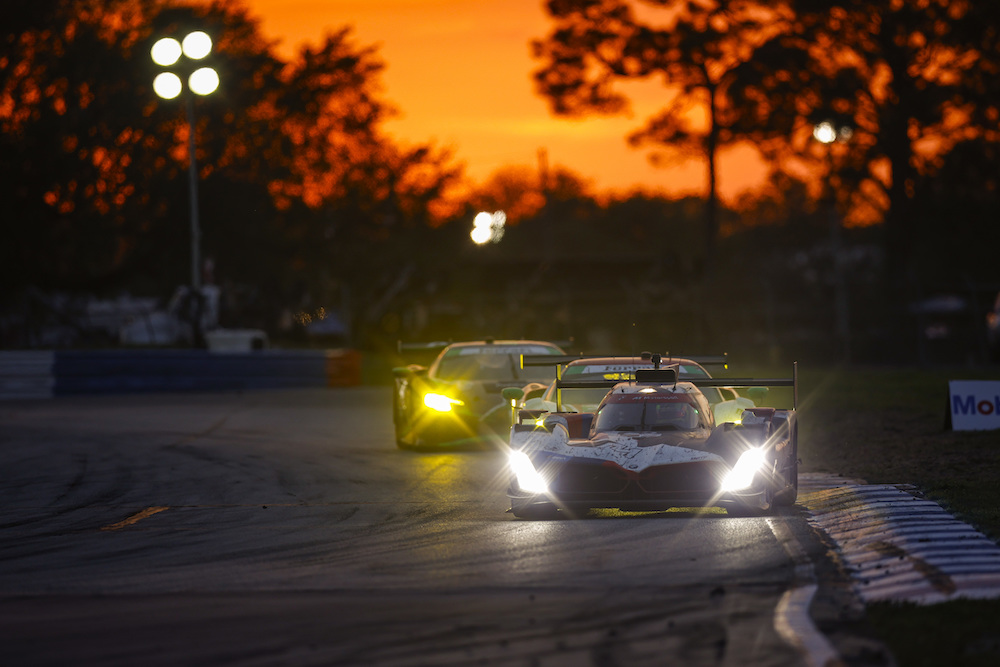
Let's fully embrace the spirit of multi-class racing and have IMSA's WeatherTech Championship and NASCAR's Cup Series on the track at Sebring at the same time. Jake Galstad/Motorsport Images
THE FINAL WORD
From Robin Miller's Mailbag, 16 December, 2014
Q: There seems to be an age-old belief in the Mailbag that putting USAC-raised Americans in IndyCars will somehow magically save IndyCar since fans have been 'following their careers right to the top. The consensus in the Mailbag also seems to be that all these guys that have recently hit the ceiling on the F1 ladder won’t move the needle and nobody cares about them. Nobody, of course, wants the traditional ride-buyer either who has excelled in no series, but brings a personal sponsor.
I have been a hard-core IndyCar fan since 1994 through all the crap of the last 20 years. Let’s be realistic. If Americans RHR, Newgarden, Rahal, and Andretti haven’t made people (those who aren’t already fans) care about IndyCar, then why do we think Daly or Rossi will? Because they win? RHR wins – he won Indy. Let’s say there are as many people following some of the young USAC drivers as there are IndyCar fans today. Zero (relative to NASCAR and F1’s popularity) times zero is still zero. Nobody who is not already a fan is going to tune in for the first time just to see how some guy who dominated GP2 or USAC does in IndyCar. The Mailbags are filled with letters from fans trying to figure out how to make non-fans care. They don’t care about the same stuff as us.
Personally, I just want funded cars and shootouts for the best available (paid) driver regardless of nationality or background. Obviously that ain’t happening anytime soon, nor do I think for a second that’s going to make all the middle-aged ladies at work who discuss Johnson, Gordon, and Keselowski’s performance every Monday morning start debating the performance of Power, RHR, Rossi, or Vergne. Those are the fans that made NASCAR a monster, not us. None of the solutions in Mailbag make these people IndyCar fans. Obviously, I don’t have the answers. But we keep fooling ourselves and wasting our time in heated debates about solutions which solve nothing.
Paul Clopton
ROBIN MILLER: Sadly, you make an excellent argument. The USAC connection and watching heroes matriculate to Indy via Terre Haute and Winchester is never coming back. If Dave Darland got a ride at Indy, most of Howard County and all the HARF members would buy a ticket this May, but that represents a couple thousand people. And even a popular, young American winner like Bryan Clauson has little or no affect on attendance or TV ratings. Nor will Rossi or Daly. Hell, 75 percent of the public couldn’t tell you Ryan Hunter-Reay won last year’s Indianapolis 500.
Having said that, Sage Karam, Daly or Rossi will generate more American media coverage than Sam Bird or Jean-Eric Vergne. If they turn out to be Zanardi or Montoya, sure, that kind of winner captures the public’s attention, but IndyCar needs little victories to try and get back on the map. Had Karam run Pocono last summer, there would have been 5,000 more paying customers – all from Nazareth.
But let’s be honest. NASCAR built its heroes through continuity, television saturation, promotion and marketing while IndyCar lost its identity after The Split. Good example? I followed Scott Dixon down the hallway last week at the PRI Show and not one person stopped him to say hello, take a photo or shake his hand. But Rusty Wallace couldn’t walk 10 feet without being stopped.
Presented by:
Marshall Pruett
The 2026 season marks Marshall Pruett's 40th year working in the sport. In his role today for RACER, Pruett covers open-wheel and sports car racing as a writer, reporter, photographer, and filmmaker. In his previous career, he served as a mechanic, engineer, and team manager in a variety of series, including IndyCar, IMSA, and World Challenge.
Read Marshall Pruett's articles
Latest News
Comments
Comments are disabled until you accept Social Networking Cookies. Update cookie preferences
If the dialog doesn't appear, ad-blockers are often the cause; try disabling yours or see our Social Features Support.