The RACER Mailbag, March 15
Welcome to the RACER Mailbag. Questions for any of RACER’s writers can be sent to mailbag@racer.com. Due to the high volume of questions received, we can’t guarantee that every letter will be published, but we’ll answer as many as we can. Published questions may be edited for length and clarity. Questions received after 3pm ET each Monday will appear the following week.
Q: There are more questions and gaps in the story of Meyer Shank Racing cheating with the minimum tire pressure numbers. As I watched the end of the race, it sure gave the team enormous performance benefit resulting in their victory -- which after learning about the infractions, to my surprise IMSA decided to uphold.
What way do tire pressure data normally get communicated from the race car to IMSA? Live telemetry or on a USB stick or laptop download well after the event? Isn’t this data handled in a closed system if live? How can that be tampered with -- in the software? Can manual entry be ruled out or not?
When did HPD learn about the violation and how soon after the race did they became aware? Was HPD conducting shaker rig testing and comparing tire data coming from Wayne Taylor Racing, for example?
Mike Shank needs to confess who actually came up with this idea: really Ryan McCarthy on his own, or was it the team principal who wanted to do this but used McCarthy as a sacrificial scapegoat?
Why did the car not get disqualified as a minimum? Is this because NASCAR owns IMSA and it is their policy that whoever crosses the finish line first keeps the position regardless whether achieved by means of cheating? What do other teams and manufacturers think about this?
Adam Lipcse, Toronto, ON
MARSHALL PRUETT: If you want a deeper dive, Adam, take a listen to my The Week In Sports Cars podcast I do with Graham Goodwin; it was the opening topic last week.
A couple of things: The violations were twofold. First was the setting of tire pressures below Michelin’s minimum for the event. The second was manipulating the tire pressure monitoring system (TPMS) data leaving the car via live telemetry which was being received by IMSA.
I’m told the data systems on the GTP cars are indeed closed in terms of teams and manufacturers being able to fudge numbers on the regulated items; the TPMS system falls outside of this and, as we learned, was an area where an offset could be applied in the software to fake the tire pressure numbers fired across every second through telemetry.
I can’t say on the exact date and time it was discovered, but anecdotally, I’ve heard it was found and/or reported by HPD to IMSA about a week after the race.
I was not a fan of the statement distributed by MSR pointing to McCarthy, who’s listed as the team’s technical director on his LinkedIn profile, as the proverbial "lone gunman." Having spent many years of my life on teams exactly like MSR in IndyCar and IMSA, I just can’t think of how one person could concoct and execute this plan in complete isolation.
Teams have one to two tire technicians who handle every aspect of tire usage, including the setting of tire pressures. That’s not something the technical director would do once, much less a dozen-plus times over a 24-hour race. So instructions to set the pressures low had to be given, and that now involves multiple people.
And even if the tire techs had no clue about the pressure settings being lower than the rules allowed, there’s no way you send drivers out on cold and under-pressured tires without telling them to be careful -- extra careful -- until they got up to temperature. If you’re running a pound or two low on pressures, you’re also needing to adjust ride heights, at a minimum, or else you’d be dragging the ground. And there are other chassis settings you’d need to adjust to compensate for running low pressures.
Trust me, I’ve had a lot of race engineer friends, team owners and team principals reach out and either ask for details or share their thoughts on this, and not a single one has said they believe one person, and one person alone, acted in isolation from the rest of the team. I want to believe it was one bad actor, but it makes no sense to me or other racers. Others had to be involved, but knowing the majority of the crew, I'd put good money on them being unwitting participants.
What's more likely is the others were unknowingly involved; changes to the pressures, chassis and driver prompts being given without explaining the finer details. Truthfully, and I say this as a former pro mechanic, we do a lot of following instructions -- raise the ride height four flats or take 1.2psi out of the front tires, or whatever -- without there being a dialogue back and forth as to the what and why. It's fairly militaristic in that way: You don't question the orders you're given; you follow the orders you're given.
Yep, this is a straight NASCAR deal (NASCAR owns IMSA for those who weren’t aware) where they refuse to take the winner’s name off the trophy. They’re big on whomever folks saw in victory lane will stay the people who celebrated in victory lane.
Q: MSR just got penalized by IMSA for manipulating the minimum tire pressure data and running below the threshold set by Michelin. The penalties seemed pretty stiff. How big of an advantage did this provide? Was it enough of an advantage to influence the outcome of a race?
Brian Henris
MP: Big, Brian, which is why they did it. I listened to a number of GTP drivers and engineers at Daytona tell me that Michelin set the minimum tire pressure threshold too high -- above where the tires would be happiest and offer the best balance and feel -- but they were bound by the rules to operate above the minimum.
MSR’s Acura was a rocket at every step of the event, and in the race, it was not only the fastest car, but it was notably faster than its stablemate Wayne Taylor Racing Acura. Nobody could explain why the MSR Acura was so unbeatable. This tire pressure revelation was the "AHA!" moment for everyone else in the class. Just so damn disappointing. What will be interesting is to see how they perform at Sebring.
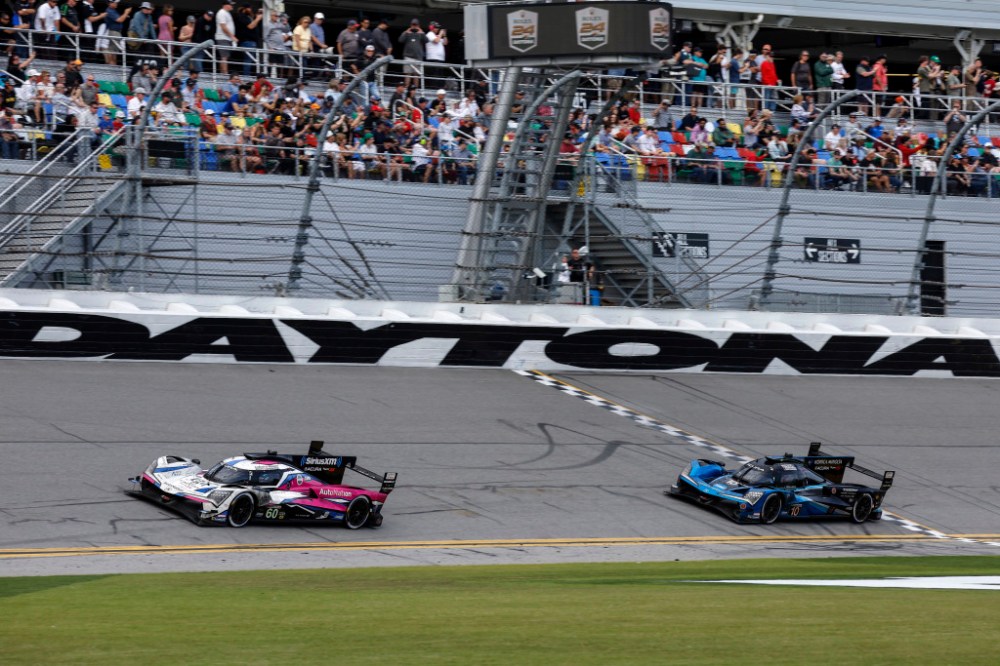
Can the Meyer Shank Racing W/Curb-Agajanian Acura ARX-06 keep the same margin over its WTR stablemate -- and everyone else -- at Sebring while riding on the same amount of air? Michael Levitt/Motorsport Images
Q: I just saw the article about Porsche and Lambo getting some BoP help for Sebring, and saw some teams already pulled out due to BoP issues. It sounds like some teams were shifting focus away from IMSA races. Just looking at the optics of this, it looked like teams pulled out of Sebring and IMSA went, "Oh OK, we will change the rules!" Which is not a great look. I guess I am just confused as to why BoP exists? When the motorsport world is all about innovation and technology, wouldn't BoP cause manufacturers to not invest in tech and development? Especially when you might get a larger restrictor thrown on your car and be a second or more off the pace, what is the point of developing a high-tech fast car?
I know I am preaching to the choir here about BoP, but as a relatively new sports car racing fan, I am so curious about how this all works.
Mike, Michigan
MP: This was an outlier in terms of BoP and Porsche’s new 911 GT3 R model, and frankly, IMSA and Porsche failed each other. IMSA refused to believe the new 992-based GT3 car was as slow as it was in pre-season testing, and insisted -- to the great frustration of the many Porsche GTD teams using the new car -- that the dire lack of speed was a ploy to receive an advantageous BoP. The cars were so slow, that was the only thing that made sense.
In reality, and this is where Porsche failed, the new car is a dog compared to its predecessor. If you’re looking at things from IMSA’s perspective, it just doesn’t seem conceivable. But that’s precisely what we’re dealing with: The 2023 911 GT3 R left the factory in a poor state of development and readiness to compete with the other GT3 models.
When confronted with its dire lack of speed during BoP data gathering at Daytona in early December, IMSA couldn’t and wouldn’t believe the car itself was at fault because, well, when was the last time Porsche came up so short with a new GT3 model? Never, basically. And so now, with clear evidence that the 911 GT3 R needs extra BoP love to measure up to its rivals, its Sebring BoP settings should bring it into the competitive conversation without giving it an advantage.
Porsche has a lot of work to fix its shortcomings, just as Lexus did when it developed multiple versions of what became its original RC F GT3 which has become a race-winning beast. IMSA won’t keep giving Porsche favorable BoPs forever to compensate for the car’s obvious deficiencies, so watch this space.
Q: There has been much discussion of the Rolex 24 scandal since you broke the story last week. Many, myself included, have opined that watches should be returned. It may be a very good gesture for Mike Shank and his team to be the ones to return them voluntarily. I have to believe that owning or wearing the coveted watch will never feel quite right in light of how it may have been won.
Brian Bristo
MP: I think of all the Tour de France cyclists who were caught cheating and had to return their medals. Only seems fair to return the Rolex 24’s VERY expensive version of a medal if you’re caught cheating. How’s this: It would take BALLS to wear those Rolexes in public, right?
Q: For the start at St. Petersburg the first eight rows were lined up nose to tail and looked nearly perfect as they took the green flag, but the last five rows were ragged and strung out helter skelter and once they were informed “Green Green!” you can bet they were all-out immediately. It is possible to do a better job -- race control would have to have an overhead look to make a proper call. If a violation is noted then a drive-through penalty next time by would most certainly change this in a hurry.
Some folks say the track is not suitable to race on with some difficult corners and concrete canyons to cope with for 100 laps, but that is no excuse and we heard the same B.S. of ovals like Las Vegas and Pocono. Along with that the subject of marbles (a dirty racetrack) is of the utmost importance and I can tell you that the IndyCar observers (who work all the ovals) are all over that constantly and when possible we sweep during caution periods. This is not a slam on the corner workers or anyone else; however, marbles will create a one-groove track which brings on a parade since it is not likely to allow racing. It is not rocket science!
Texas Motor Speedway from 1997 through 2007 was arguably the most competitive and exciting racing anywhere. It did have a severe drainage problem at the exit of Turn 2 so they decided to fix the problem and boy did they ever. In this process, they literally ruined the racing through turn 2 by any measure and it altered everything from the start of Turn 2 to the exit since if you get above lane 1 of Turn 2 you have literally no chance to run lane 2 or 3 — the guy on the bottom is going to kick your butt big time. Before the reconstruction you could race from any lane and have a real chance to come out on top.
Before reconstruction the exit of Turn 2 had a sort of reverse camber which was rather tricky to maintain your speed and that is now gone — they took the good with the bad. In addition to that they put down that JP whatever so now instead of losing 25% of the racing in Turn 2, you have lost 40% of the racing since you get above lane 1 between Turns 1 & 2 in addition to Turns 3 & 4.
Unfortunately the fans have gone away with all this mickey mouse stuff and they also have lost the date equity which was sooooo important to all that made it what it was. I can remember many TSM events of 90,000 fans or more and we had a June date and an October date and this was all right behind the Indy 500 which was like hand in glove.
Thank you for listening.
Glenn Timmis
MP: We have a few races every season where the polesitter vanishes before all of the cars have rounded the final corner, so it’s just become an accepted thing, obviously, because if it wasn’t, it wouldn’t happen a few times every year.
I know some sweeping occurred on at least one of the cautions, but we didn’t get entire laps of sweeping.
It was always a terrifying spectacle to behold, but like you, the old IRL/IndyCar races at TMS with big crowds were just magical to experience.
Q: I was enthralled with your explanation of plenum fires in the last mailbag. Would you similarly geek out on why some version of run-flat tires aren't practical in IndyCar? Hate to see a driver's day ruined by a cut tire which wasn't their fault. I imagine hard sidewalls reduce responsiveness, but what about multiple interior chambers or even a honeycomb interior?
Not that IndyCar has an issue with competitiveness, but the more cars that remain in contention, the better!
Ken, Indianapolis, IN
MP: I felt for rookie Marcus Armstrong who was hit by David Malukas and lost out on a big debut finish due to the cut tire he received, but at the same time, contact between cars or cars and walls should have some sort of penalty, even if it isn’t deserved like in Armstrong’s case.
I’m sure "Professor Cara" Krstolic from Firestone Racing and her team could devise a run-flat tire for IndyCar, but honestly, I wouldn’t want to see it. Take away all the potential areas of drama, and racing becomes more of a procession. I think of this like preventing interceptions or strikeouts. We rarely have engine or transmission failures, so let’s not erase all possibilities of unpredictable outcomes.
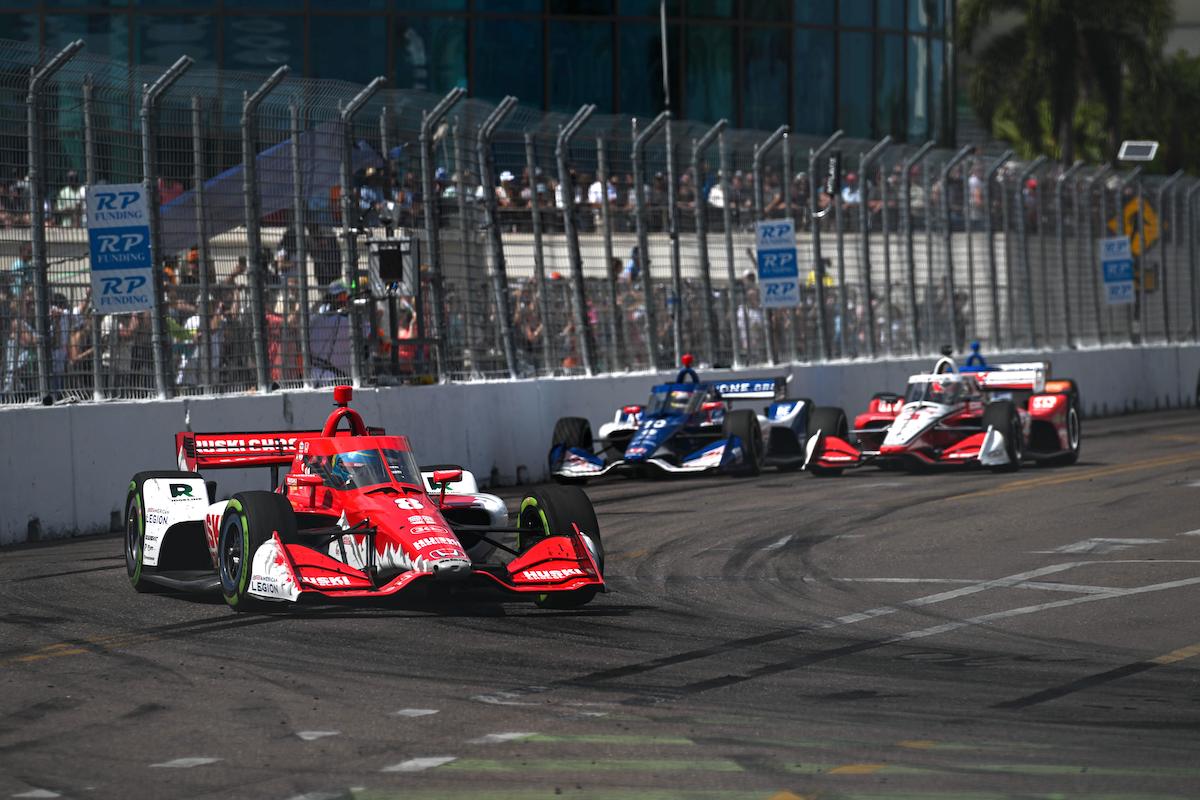
Run-flat tires might reduce the risks associated with street racing cut-and-thrust action, but would that really be a good thing? James Black/Penske Entertainment
Q: The St. Pete race reminded me of a bunch of sales guys at their annual conference doing a corporate event at a rent-a-kart track, after cocktails. The overhead shot of all the wrecked cars piling up behind the fence should be the ultimate embarrassment for all involved.
On a positive note, I can’t want to see the GTP cars on the new surface at Road America. What is your prediction for lap time improvements over last year? How great would it be if this event was an endurance round?
DA, Chicago, IL
MP: Who wouldn’t love Road America IMSA becoming the Lumbermans 500 like it was back in the day… Hard to say on lap times since IMSA governs the speed of its cars/classes with BoP, but if GTP isn’t throttled back, I’d guess 0.5-1.0s faster.
Q: What do you think of dividing the IndyCar grid into groups of nine cars each for practice and qualifying? And yes, I’m assuming a 27-car grid.
The smaller groups would go a long way to providing the entrants clean track for their practice and qualification runs. I propose IndyCar would pick the cars for each group to provide randomization.
Yes, it’s possible cars in the first group on the course may be at a disadvantage to the cars in later groups, but the group order could be swapped between session and days.
Warbird Willie
MP: I’m a big believer in making changes when changes are necessary. We’ve yet to see a need to alter practice or to modify qualifying procedures with 27 full-time cars -- we had 25 full-timers last year -- so we aren’t dealing with a big increase.
Q: Why wasn't Scott Dixon penalized for moving over on Felix Rosenqvist (which he said he did) and putting him in the wall and causing the chain reaction crashes on lap one at St. Petersburg? Many others got penalties for lesser transgressions during the race, such as David Malukas getting one for cutting the tire on the car he was passing. He got that because he damaged another car. Why didn't Dixon? It's time to get rid of this arbitrary penalty or enforce it on everyone anytime there is the slightest of incidences.
Mark, Cincinnati, OH
MP: If I had to guess, there was a belief that Rosenqvist should have conceded the position and got hit where he shouldn’t have been. I don’t see it that way, but usually when there’s contact like that and there’s no penalty for the driver who did the hitting, it’s because there’s a view that both drivers shared in the blame. Malukas drove into the back of Armstrong and flattened his tire. Much easier to appoint sole blame on that one.
Q: Since NBC/Peacock has been covering IndyCar races, the sound quality of the broadcasts has been unintelligible most of the race. Particularly at street circuits like St. Petersburg, the in-car volume has drowned out any voice audio. I contact NBC/Peacock every year with specifics of the problem. Nada! Anyone else experience this?
Bernie, West Milford, NJ
MP: I had no issues hearing what they were saying, Bernie.
Q: Marshall, you were right on with your response last week to a writer's question regarding points. I too feel that there is not enough emphasis on winning and too much emphasis on “participating." People come to see who wins, not who finishes seventh. This de-emphasis on winning, almost to the point of shunning a winner, is a fact of life in our world, let alone racing. Winning is the essence of racing. It's the reason drivers strap in, teams prepare cars, why people watch.
I feel that the number of wins is a season should determine the champion. If two drivers are tied in wins, then use any method you want to determine the champion. I could even tolerate "double wins" for prestigious races like the Monaco GP, Indy 500, Le Mans 24, Daytona 24, Daytona 500. Did you know that at one time in the NASCAR point system, it was mathematically possible for a driver to win 28 of the 29 races, be second in the 29th race, and NOT be champion?! Just crazy.
We will never return to the days when the winner is gets his true recognition. Those days are gone. But always remember what Dale Earnhardt said: "Second place is just the first loser.”
Bill
MP: Thanks, Bill -- some good nuggets in there.
Q: Just got through watching the St. Pete IndyCar race. It was wildly entertaining and very surprising in many ways. It seems the drivers have finally figured out Turn 10 -- no one hit the wall there!
The part I can’t figure out is why do some drivers think they can pass on the outside of Turn 4 or Turns 8 & 9? Narrow track, narrow corners, drivers seem to think if their nose is ahead that the inside driver has to give way. Seems to me that the pass has to be complete before they reach the corner to avoid getting bumped into the barriers.
It looked to me like Herta and Grosjean weren’t completely ahead before they reached the corner. While McLaughlin looked like he braked too late on cold tires, and Power was in the marbles with reduced grip, it looks extremely high risk to attempt an outside pass.
Did anyone successfully complete an outside pass on those two corners?
Curt Larson
MP: If McLaughlin’s tires had one more lap of temperature in them, he and Grosjean would have gotten through Turn 4 without a problem. Turn 8? Not so much.
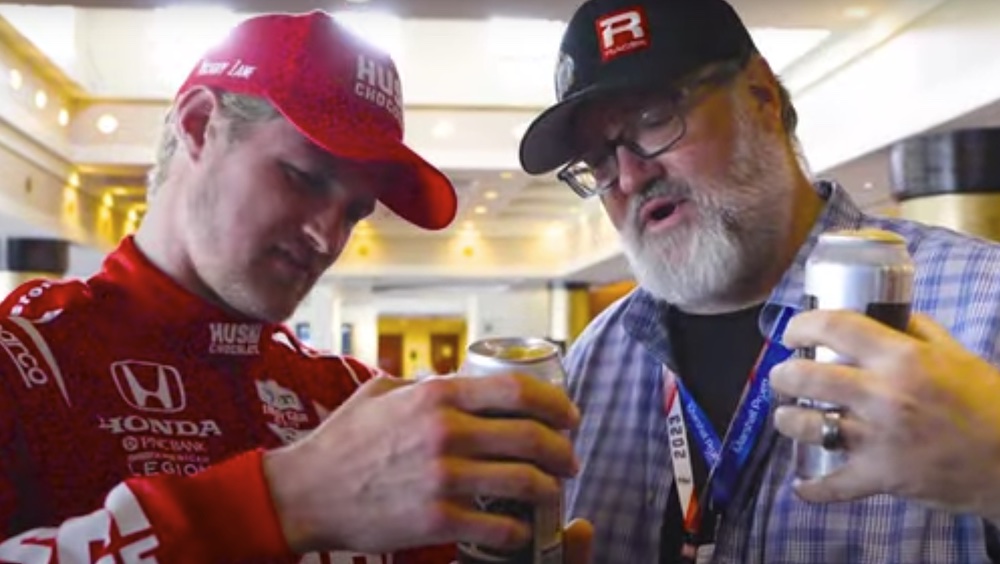
Trouble brewing? Evidently Ericsson's not a chocolate stout fan...
Q: Loved your videos and writing for St. Pete, Marshall. As matter of fact I love all the work you do for RACER and IndyCar. Inquiring minds want to know what were you drinking in the interview with Marcus Ericsson after the race?
Kurt Brenner
MP: Kind of you to say, Kurt.
Marcus had Morning Timber and I had Finding Bigfoot. I loved mine, which was dark and thick. Ericsson wasn’t a fan of his; it was, admittedly, a big sweet with a strong chocolate vibe. They were handed off by my friend Ryan Caminiti, and were originally intended as post-race beers to share with some of my photographer friends, but I think I’ll try and do our post-race winner interviews with beers because, well, why not? If you can’t knock back a beer with the person who just won an IndyCar race, why bother holding the race?
Q: Do the IndyCar chassis tubs ever have to be replaced from age or mileage, or are they just replaced when damaged?
Geoff Branagh
MP: There are a few original 2012 DW12s still in rotation, but most teams opt to buy new tubs every few years for the sake of having the freshest unit possible. Most take a few hard hits and have a few repairs done over a few seasons, so it’s worth going new and erasing any questions as to whether torsional rigidity is compromised.
Q: I was impressed with the nifty marketing video featuring McLaughlin produced for St. Petersburg. It was compelling. Now, tell me that Kanaan will be the driver featured for the 500?
Marcus "Air-icsson" might have won at Indianapolis last year, but he has a more compelling story to tell for this year's Music City GP.
K.S., King County, WA
MP: I mean, if we say it’s TK in the mailbag, it’s got to be carried out by IndyCar, right?
Q: We've seen the F1 cars damn near double in size, to the point they've outgrown places like Monaco, and Baku gets really tight. How much, size-wise, have the Indy cars changed in the past 25 or so years? I know, we've had the same car for 12-ish years, but I feel like the previous generations before this one, in the 2000s specifically, the cars seemed a little smaller.
Michael, Brownsburg, IN
MP: Last non-spec Dallara Indy car chassis was the universally loved 2007 Panoz DP01, so that’s the most recent comparison we can made.
The road course-only DP01 is 190 inches long and 78 inches wide. Today’s Dallara DW12 in road course trim is 201.5 inches long and 76.5 inches wide.
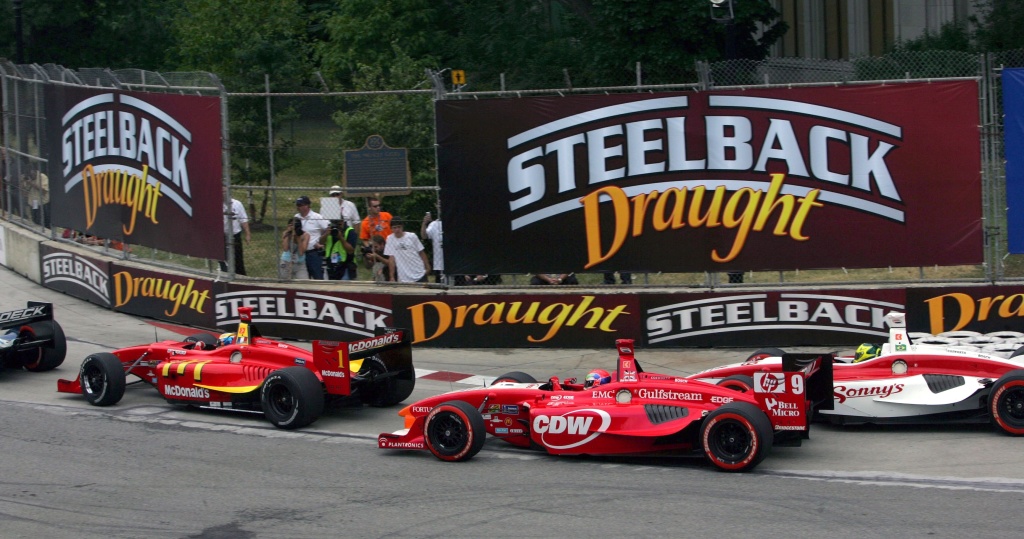
Yes, Champ Car's Panoz DP01s were narrower...but the street course action was just as tight. Motorsport Images
Q: I just don't get how that melee that was called a race can happen. Is the St. Pete track too narrow? If so, then change the track to provide more room.
We keep saying this is the most competitive series in the world with the best drivers, and six cars are taken out before the first lap is complete? IndyCar is a laughing stock, and imagine what the F1 fans and drivers think after seeing such chaos.
I would say the blame is on the drivers. The cars have both a throttle and brakes.
I love IndyCar, but am hanging my head in shame.
Jim Doyle, Hoboken, NJ
MP: And then we’ll go to Round 2 and forget about Round 1. If St. Pete was an annual crashfest, I’d share in your concern. But it isn’t. It was a bad race with way too much crashing. It happens. If it happens again next year, then let’s cry wolf.
Q: I have always wondered why they don't use the oval T1 on the Indy road course like they did with F1? To me, it was fascinating to watch cars at high speed coming down through T1 backwards and onto the main straight. It would seem to make plenty of drafting and passing opportunities. Instead, they dive down into the infield into the slow, Mickey Mouse-type turns. They could still dive down in there for and use it for pit in, but IMS is about speed and should incorporate as much of the oval as possible, much like Daytona does for the Rolex 24. What is the reasoning for not using T1 of the oval for the road course?
Also, my son and I took our first trip to St. Pete over the weekend and enjoyed every aspect of it. Friendly people, lots of food/drink booths, easy in and out on the shuttle, and convenient to the airport. We had pit and paddock passes and were able to get up close to all the action all weekend, especially during the pre-race. This goes a very long way with building fans, and I believe the series understand the importance of it. I am employed by a big NASCAR sponsor and while we have access to the garage and pits, the normal fan does not. This is a huge perk that IndyCar and IMSA gives to its fans.
Rod, West Chester, OH
MP: Great to hear about your first St. Pete visit. Fans who’ve only known NASCAR or F1 events always come away from their first IndyCar race --with the exception of the Indy 500, which isn’t as wide open as the other rounds -- in complete shock at the amount of access that’s available.
Great question on the oval Turn 1 section, but considering how F1’s last visit to Indy went and the extreme tire problems that were seen, I’d guess that there’s a limited desire to invite such problems two days before the start of Indy 500 practice.
Q: It seems that at least in every IndyCar race, one or two cars suffer punctures that put the teams out of contention. The culprit is usually the sharp extrusions on the front wings of the Dallara-18. They may help the aerodynamics, but they also ruin races and can be dangerous if the car gets a puncture in a bad spot. Why can't they either remove them or redesign them to be less prone to causing punctures? Just seems like common sense to me.
And another thing. Why does it seem that all IndyCar street courses are designed for maximum chaos during a race? Formula 1 tracks are designed with plenty of runoff room and are usually very wide. Indy street courses are very narrow and seem to be designed to cause accidents in tight spots where there is nowhere to go but into the car in front. I know they are street courses, but they seem to be designed with zero thought.
John G. Hill
MP: It’s been done before and there was some improvement, but you don’t need a knife to puncture a balloon. Apply enough force with a blunt instrument, or squeeze it with your hands, and it will pop.
I assume you’ve heard of Monaco, the original street course that features none of the attributes you ascribe for F1 street courses? We have F1 drivers running into each other at every F1 street race, so let’s dial back the baseless "F1 does it better" rhetoric on this one. They do lots of other things better than IndyCar. This just ain’t one to crow about.
Q: In response to last week’s Mailbag, I too have been hoping for a new points system for IndyCar. I will throw out my thoughts and see what you think.
1st place = 15 points
2nd place = 10 points
3rd place = 5 points
Pole position = 3 points
Fastest race lap = 2 points
Each race lap completed = 1 point, provided you are within one lap of the lead car. IndyCar allows cars one lap down to pass the pace car and go to the end of the line before a restart.
So, at Indianapolis for example, the race winner could earn 220 points. This system rewards aggression, success and consistency.
What are your thoughts about a system like this?
Bob Linn
MP: So…I love the effort put into this, but…
Marcus Ericsson won the race and led four laps, so that would give him 19 points.
Pato O’Ward didn’t win, but did finish second, and led 23 laps, so he’d have 33 points.
And Scott McLaughlin, who finished 13th, but led 37 laps, would be our championship leader after Round 1.
So, no.
Q: Back in the day IndyCar races were promoted by advertising “The Stars and Cars of the Indy 500.” Lets go back to that – does two things: promotes the Indy 500, which most have heard of and ties it all in to the rest of the IndyCar season.
Big Possum,
Michigan
MP: That’s a great idea.
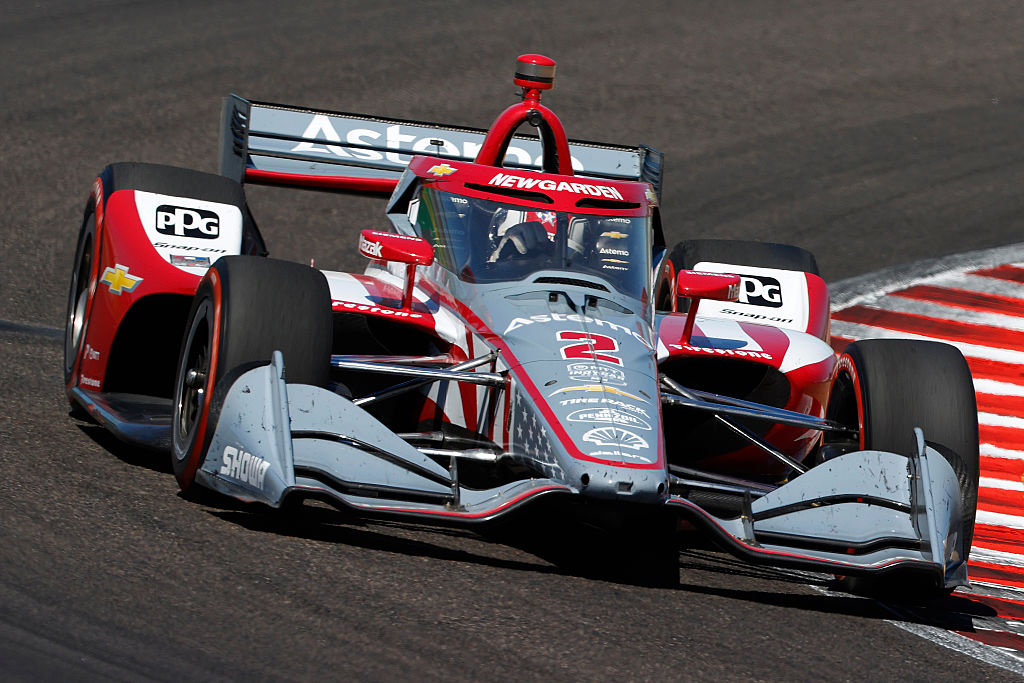
Q: I am wondering if you can enlighten me as to the finishing positions of Sting Ray Robb and Josef Newgarden at St. Petersburg. Last I saw on the broadcast, No. 2 was on fire and heading to pit lane. He is credited with 17th, yet “running." Meanwhile, No. 51 was trundling along seemingly without issue, albeit a few laps down. However, the official results credit the car as "off track," in 16th.
Did something happen to Robb, while Newgarden put out a fire, or did the official results perhaps contain a mistake, where Robb should be "running" and Newgarden “off track" on pit lane at the time the checkered flew?
Kristopher S.
MP: Sting Ray pulled off in Turn 10 with three laps to go with what’s believed to be a brake issue, hence the "off course" note. Unlike Robb, Newgarden’s inability to continue wasn’t immediately known to the series when the checkered flag waved, so he was listed as running.
Q: I have so many questions regarding what Meyer Shank Racing did during the Daytona 24 and accompanying penalty. If Michelin was supplying tires and presumably the TPMS sensors, checking pressures, and setting recommended minimum pressures, wouldn’t they have picked up on something MSR was doing either with the chip readers at the end of pit lane or checking tire pressures? If IMSA has taken wins away for BoP violations before, why didn’t they take this one away since it is in a way a BoP violation and manipulating a single supplier source? In your opinion, does the punishment fit the crime?
Brandon Karsten
MP: Big difference between what Michelin’s tire scanners at the end of pit lane, which records which sets are being used as cars roll through on cold rubber, and faked hot temperatures which are fed to IMSA through its scrutineering telemetry feed. As I’m told, Michelin’s scanners aren’t designed to police the matter MSR exploited.
If the police caught a thief as they were walking out of a jewelry store with their pockets stuffed with cash and diamonds, watches on their wrists, gold chains around their neck, and fingers filled with rings, would you expect the police to take all the stolen loot off of them and send the person to jail, or take back most the cash and diamonds, most of the chains and rings, but let the thief keep the watches, and instead of being thrown in a cell, yell at them and set them free?
That’s what this feels like.
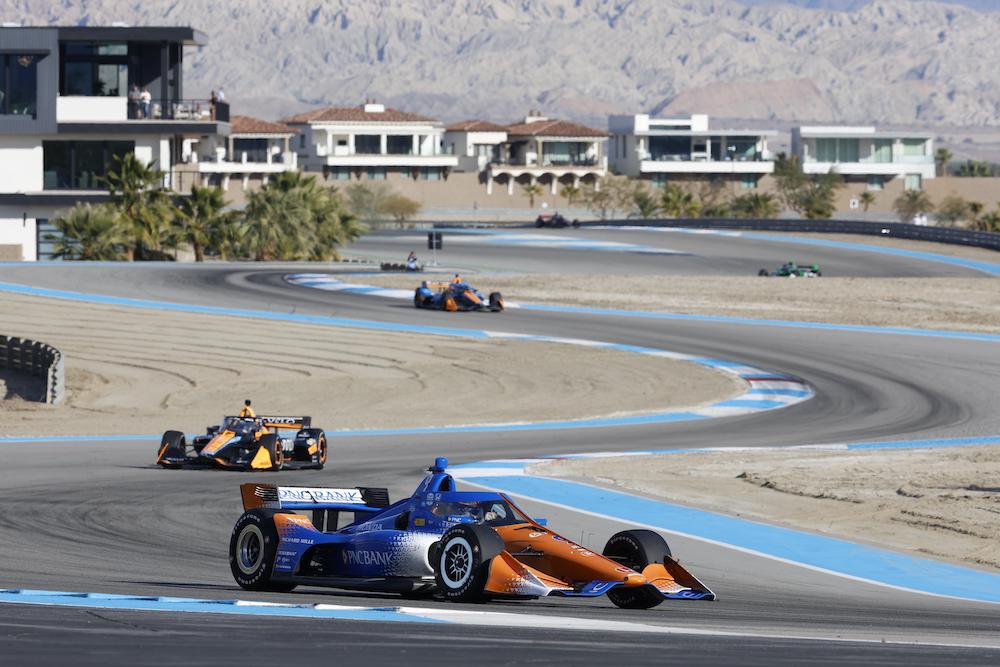
The Thermal Club is an ideal testing venue but gearing up for an IndyCar race would be a substantial undertaking. Chris Jones/Penske Entertainment
Q: Recently you mentioned that you felt that The Thermal Club could host an IndyCar event. As much as I would like that to happen as I live towards the west side of the Coachella Valley, I think it would be very difficult. Using the Google Maps image, if you used the current main paddock, it would seem to be difficult to have stands directly in front of the pits as just about every other facility does. If you did build stands north of the pits, at least one and possibly two bridges would be needed. I assume that the newer track section due north of the original track would be used. There is a paddock area up there to the west side, but would it be big enough for 27 haulers plus Firestone, IndyCar, Chevrolet, Honda and whatever space is needed for other suppliers? It also seems to difficult to place stands around the track due to space allotted for condos and ones that are already built. There would also be more demand for utilities. How do you see all this working out?
Don Hopings
Cathedral City, CA
MP: Yes, I said that with a ton of investment, it could host an IndyCar event. And that was said in the same way that any private of club racing track could host an IndyCar race after a huge sum of money was spent to complete sweeping upgrades to the facility. However, in this case, "could" and "will" are miles apart.
I don’t foresee the Thermal Club doing more than acting as the site for IndyCar Spring Training. The costs to become a facility that’s ready to hold pro races are significant, and then there’s the question of whether the homeowners there truly want their little panacea to do such things. It wouldn’t make much sense to spend all of that money just to welcome IndyCar once a year.
The energy going into Spring Training was one of wide-open possibilities. Leaving the event, it seems like expectations have been lowered to an annual pre-season visit for testing, at most.
Q: I'm taking the plunge and going to the 12 Hours of Sebring and dragging a couple of buddies with me. Any advice you can give a newbie who's never been to an IMSA race before? We plan on getting there for the race start, taking a break for a few hours in the afternoon to pick up some friends and head back around 5 or 6 and staying to the end of the race. We have general admission tickets which I guess means we can wander around the track which we will do but is there a certain area we should look to spend more time at? Also, are there any resources that explain the different car classes, etc.? I'm a longtime IndyCar fan since the 1980s and have no time explaining that to my friends but I'm embarrassed to say I never really followed sports cars.
Mikey P Long Island, NY
MP: Great to hear you’re headed to one of motor racing’s greatest global events and one of its wildest cultural happenings.
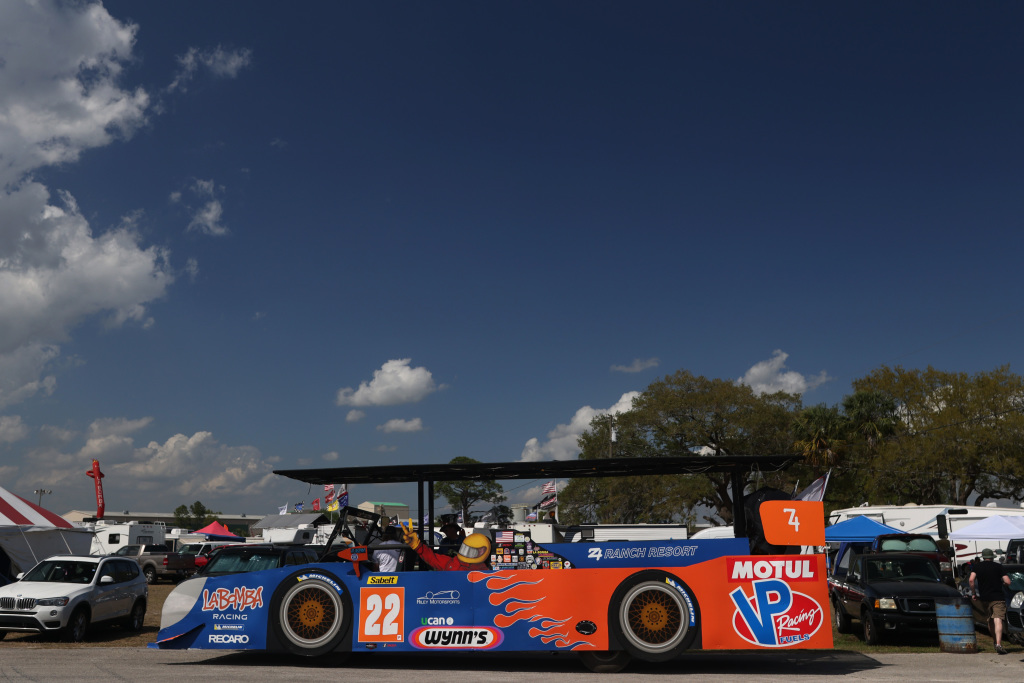
Sebring offers spectacle that has to be seen to be believed...on and off the track. JEP/Motorsport Images
First recommendation, and it’s more of a plea, is to arrive hours before the 10:10am start because if you get there close to the start, you’ll miss it while sitting in a stupid-long line of cars outside the gates. And if you can, tell your friends to Uber their way to the track; leaving halfway through isn’t going to be a lot of fun. Plus, that’s right when most folks are fully loaded and at their craziest.
You can walk the entire track once you’re inside. Green Park, which is in the middle of it all, is where people go nuts. Places to enjoy the spectacles of speed:
Inside or outside of Turn 17 -- big bumps and speed
Inside or outside of Turn 1 -- crazy speed
Inside of the Turns 3-4-5 complex -- appreciation for the cars’ handling
Outside of Turn 7 -- amazing sounds, glowing brakes at night
Inside of Turn 10 -- always a party
Enjoy!
Editor's note: And for the lowdown on the cars and stars of IMSA, CLICK HERE to check out RACER's free digital IMSA season preview!
Q: Do not know if you know this existed but it does and it is glorious: https://ppgpacecars.com!
Back in the day seeing those cars go around the track during downtime was awesome -- my favorite was the Ford F-150 Sport Boss. Any favorites for you? Also, didn’t Margie Smith-Haas drive those frequently?
Steve
Chico, CA
MP: That’s incredible, Steve! I loved the PPG pace cars; genuine concept cars, in many cases, being put to hard use. Yes, my old driver Margie was one of the veteran women racers who comprised the all-female driving crew.
Q: Why does it seem like F1 safety is so much slower and less professional in its response than IndyCar and NASCAR? Perhaps this is just my impression, but the response to even massive accidents (Verstappen in 2021 at Silverstone, Hamilton/Verstappen in 2021 at Monza, Zhou in 2022 at Silverstone, Sainz’s engine fire in 2022 in Austria) all seem to be accompanied by little more urgency than yellow flag waving and some seemingly confused marshals. I understand marshals are generally volunteers, but why doesn’t F1 have a trained safety crew like the AMR safety team we have here in the States?
I am concerned anytime there is a huge accident in any racing series, but I take comfort in the fact that the AMR folks are on site almost before a car stops moving in IndyCar or NASCAR. When watching F1, the response time feels agonizingly slow and drivers often walk back to the pits by themselves rather than being taken directly to medical examination. Is it just that F1 cars have a ton of sensors and are that much safer? Or am I missing something? I’ve tried to do some research on this and haven’t got a good answer.
Nate S, Phoenix, AZ
MP: IndyCar has multiple safety response trucks positioned throughout each track that are loaded with teams of specialists -- firefighters, EMTs, doctors, etc. -- that have every conceivable emergency response tool onboard, and with its fleet of trucks placed in strategic places, one truck is never far from wherever a crash has come to a stop.
CHRIS MEDLAND: I’m likely to be the defender here, Nate, but I disagree. For starters, the cars have shown incredible safety to protect drivers in such instances, by the fact that they all climbed out of each one, even Max at Silverstone. And then when you think of Romain Grosjean’s crash in Bahrain, how many safety systems saved him when others failed, plus the medical car follows the action on lap one to be quickly on the scene in such an event as they were there.
There is a trained medical crew in the form of FIA Doctor Ian Roberts who rides in the medical car with regular high-skilled drivers, and regular marshal posts around the track. The AMR team are brilliant in IndyCar, but the wide variety of global venues and schedules in F1 mean local specialists are used rather than trying to transport one set team everywhere. A specific, professional crew that went to every race would likely be an improvement, I agree, but it’s just a different approach at present and I feel you can’t be overly critical of F1’s given how few injuries there are at events thanks to the other safety standards.
Where I think improvements do need to be made are in race control decisions, which haven’t always been quick enough and have led to confusion in recent years, resulting in worrying scenes like the recovery vehicle being on track in Suzuka last season (another difference in approach, though, where F1 isn’t meant to allow an equivalent the AMR team to take a vehicle trackside to a crash site until the race is neutralized to prevent further incidents).
In terms of drivers walking back, you’re actually right about sensors. There’s a crash warning that is triggered over a certain force that mandates a driver goes to the medical center to be checked before being released. In those instances, they have to be picked up by the medical car and transported, even if they say they’re fine. If that sensor doesn’t go off, they’re free to make their own way back if they wish.
Q: I saw a tweet from Karun Chandhok suggesting that F1 should ditch hybrids and focus on sustainable fuels instead, because it would allow grand prix cars to be light and nimble again while achieving F1's green objectives.
I know F1 is going to have sustainable fuels in 2026, but if that was the sole focus and headline, not only could we have high-revving engines and agile cars again, but it could also lead to things like hydrogen becoming more mainstream, which can only benefit the road car industry. Thoughts?
Jordan, Warwickshire, UK
CM: I agree Jordan, in that F1 could help find a solution to future mobility concerns while also improving the cars that are racing. But you’ve got to remember how much has been invested by manufacturers into the V6 hybrids, and how those have evolved to become more simplified from 2026 because that’s what manufacturers (including new ones like Audi) want. With nobody to build an engine, it’s hard to go racing, so you’ve got to make the power units relevant to manufacturers at this point.
If F1’s sustainable fuel move then opens up a potential return to naturally aspirated V8s and V10s AND manufacturers see value in those engines, then we could well end up heading that way. Or it could provide the opportunity to have totally different architecture that allows all manner of fuel options within the same power unit.
The 2026 rules are designed to be broad enough to be future-proof, along similar lines of what manufacturers believe is important right now, but also looking at other technology like sustainable fuels that could open up new avenues. Due to the forward planning that is needed, as soon as those 2026 engines are delivered then the next era will be being analyzed and perhaps could see the headline focus you’re suggesting.
THE FINAL WORD
From Robin Miller’s Mailbag, March 11, 2015
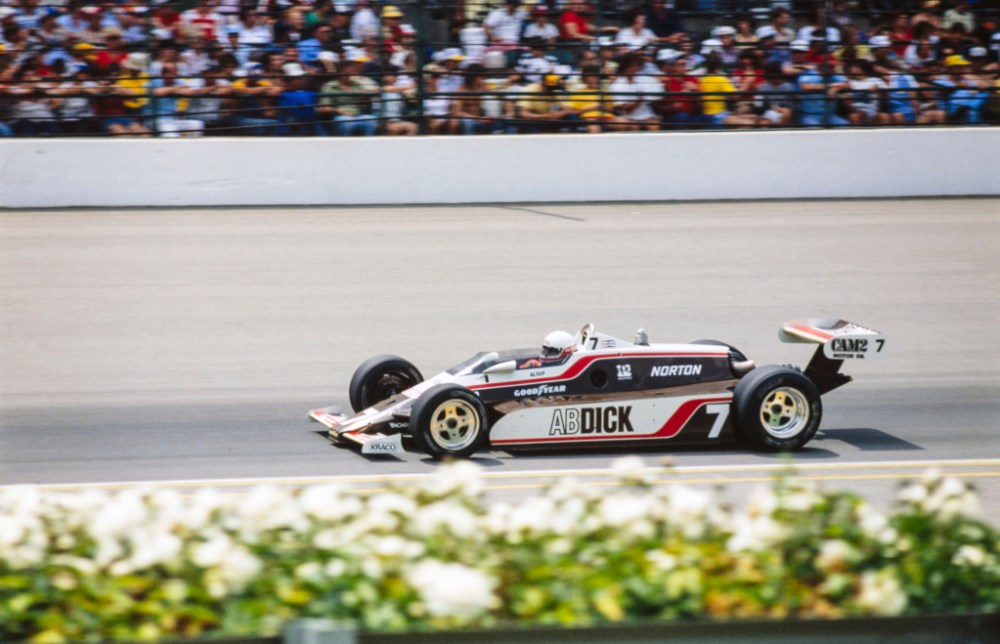
Bill Alsup drove a Penske PC-9B in the 1981 Indy 500. Motorsport Images
Q: I'm always intrigued by the guys who get overlooked by the history buffs but who actually had some good results. One of these was Bill Alsup, who I'm amazed to see finished second in the CART championship back in 1981 – ahead of everyone except Rick Mears. And Pancho Carter, only one win but took pole for Indy one year. What are their backgrounds? Did you rate them?
Steve Alda
RM: Alsup was a very interesting character who didn't start his IndyCar career until 1979 when he was 40 years old. In 1981, he campaigned his own car but also got hooked up with Roger Penske and ran RP's PC-7 in seven of his 10 starts Alsup parlayed two thirds, two fourths and two fifths to take second in the CART standings – and didn't compete in the first race at Milwaukee. Considering his late start and lack of oval experience, the personable native of Honolulu did a damn fine job during his six seasons.
Pancho was the oldest son of former driver Duane Carter and the best all-around sprint car driver I ever saw. He was Rookie of the Year at Indy in 1974 and amassed 70 USAC victories (midgets, sprints, dirt cars) and four USAC championships. He also overcame a devastating injury while testing an Indy car in 1977 and made a great comeback – winning the Michigan 500 in 1981 and Indy 500 pole in 1985 along with the '78 USAC Silver Crown title.
Editor's note: Alsup died at age 78 in 2016 after suffering injuries in a crane accident.
Marshall Pruett
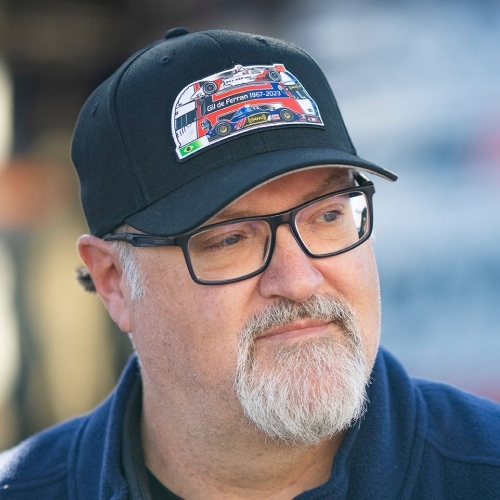
The 2026 season marks Marshall Pruett's 40th year working in the sport. In his role today for RACER, Pruett covers open-wheel and sports car racing as a writer, reporter, photographer, and filmmaker. In his previous career, he served as a mechanic, engineer, and team manager in a variety of series, including IndyCar, IMSA, and World Challenge.
Read Marshall Pruett's articles
Latest News

Comments
Comments are disabled until you accept Social Networking Cookies. Update cookie preferences
If the dialog doesn't appear, ad-blockers are often the cause; try disabling yours or see our Social Features Support.