The RACER Mailbag, August 31
Welcome to the RACER Mailbag. Questions for any of RACER’s writers can be sent to mailbag@racer.com. Due to the high volume of questions received, we can’t guarantee that every letter will be published, but we’ll answer as many as we can. Published questions may be edited for length and clarity. Questions received after 3pm ET each Monday will appear the following week.
Q: Please thank Graham Rahal for pushing the idea of a Pittsburgh IndyCar race. Thank Chip Ganassi and anyone you encounter from PNC, and anyone from PPG you deal with as well. Then push for that race!
While the Skyline of the city against the Three Rivers is only perhaps matched by my current "office"where the Hudson River and East River blend in NY Bay with the Statue of Liberty, I want to make another suggestion. I, like most, didn't enjoy the Music City mayhem offered in Tennessee. Too expensive for teams/sponsors to pay for and too boring for viewers to watch on TV.
If I could afford to see it in person I would have thought I wasted my money. Another race I'm not supposed to mention was a "lakefront" airport race in the city of Browns renown (affectionately known as "The Mistake by the Lake" by Steelers fans) that was adored by race fans for the dynamic racing action. The old airport in Pittsburgh could host the race! I doubt the picturesque Schenley Park Vintage Racing track couldn't meet the safety standards but the original airport could, and without disruption at the new one. What say you?
David Parker, Jersey City, NJ
MARSHALL PRUETT: I’ve never flown into Pittsburgh – Philly, Scranton, etc., yes, but not the home of my favorite baseball team of the 1970s and my all-time favorite player Willie Stargell – but if an airport is a place where fans would be likely to turn up instead of in a downtown street layout, I’m all for it. But the part where local non-racing fans would be drawn to come and watch is the most important part. Would people rock up to an unused airport for a motor race? Not sure if that screams "excitement" to anyone who isn’t a diehard fan.
On the Nashville front, I’ve heard they’re looking to modify Turn 9 for next year – the site of so many incidents – to discourage some of the destruction derby-ness of the corner, so that makes me happy.
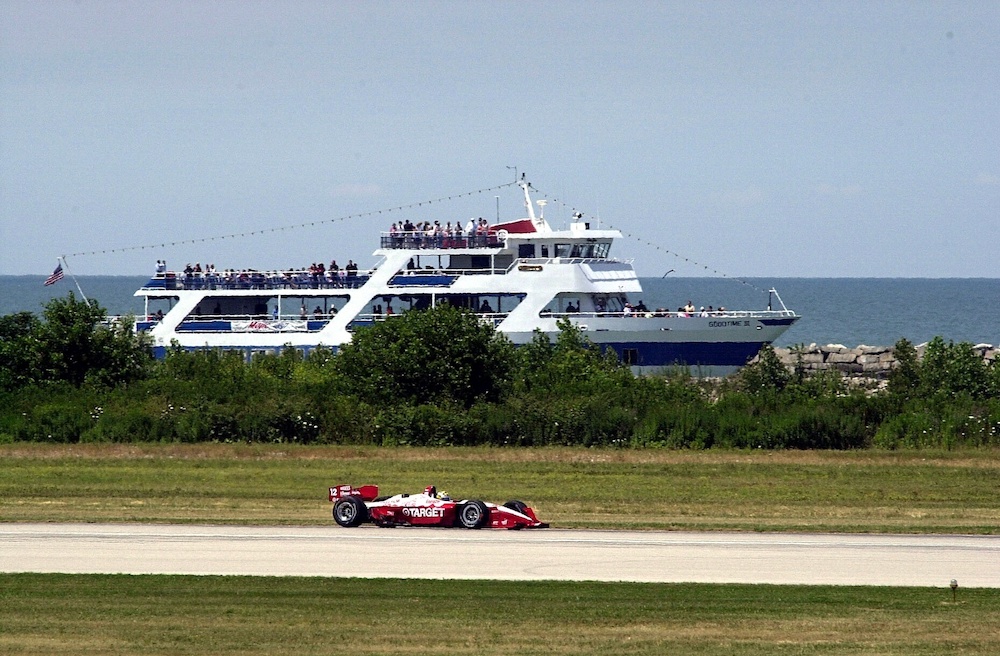
Who doesn't love spending all weekend at an airport? Motorsport Images
Q: The very last part of the August 24 Mailbag about Chris Amon/Parnelli Jones brings back so many memories which I must share. I knew the story about Colin Chapman approaching Parnelli about F1 and his response to the offer, but not the Chris Amon efforts and it was not surprising since Parnelli was a butt-kicker almost everywhere he raced.
I first saw him race The Little 500 on May 29, 1960 in Anderson, Indiana. From that point forward he was my guy and his recent 89th birthday a couple of weeks ago brings back who he really was. I had him at my ticket counter late in October of that year as he was returning to California for the off-season, so I asked him if it would be cash or check.
His answer was that since he had not been home for over six months he had no money in the bank and promptly handed me cash for a one-way ticket to California. This told me that Parnelli Jones was certainly not full of himself and just thought he was obviously anything but just one of the guys. Many years later I wrote him a letter telling him that I thought he was the best to ever sit on four wheels, and he promptly told me that I was giving him a big head. Fat chance of that ever happening, and his place on Robin Miller's Mt. Rushmore is very secure in my mind forever more. As a matter of fact, I had told Robin many times that Parnelli Jones is one subject we will always agree on.
On one of the Facebook pages recognizing his birthday, I stated that Parnelli Jones is as good a person as he was a racecar driver which is one very tall order to fulfill in any way shape or form. As time passes the health of this great warrior is an issue, however he seems to be holding his own as much as can be expected. When he told me in 2018 that he was afraid he had the beginnings of Parkinson's, I was crushed and told him to get help immediately and I wished him well. I do not think that Parnelli Jones quite realizes everything he brought to racing and the joy we had in watching him demonstrate his skills. When he stepped back from IndyCar in May of 1968, the morning edition Indianapolis Star had a report by Bob Collins stating that we no longer had to keep up with the Joneses and everybody can now move up one spot on the ladder. I rest my case!
Glenn Timmis
MP: I’ve been fortunate to spend some time with Rufus on numerous occasions, and he’s just different from the rest of us. What I’ve loved seeing is the heroes from recent eras, the Dario Franchitti types, who fall silent and bow their heads in respect when Parnelli arrives. To think of all he achieved as a driver, team owner, innovator, and businessman, along with raising kids who were damn talented racers, and how he’s one of the last links to a beloved past that’s getting farther away – the oldest living Indy 500 winner – is both astonishing and slightly scary.
Advanced age has narrowed Parnelli’s world; things like long-distance travel and in-depth interviews are rarities, but good friends like Steve Shunck continue to make pilgrimages to his home in Southern California, and although he doesn’t want or need the adoration, he’s constantly reminded of how special he is and how much he means to so many.
Q: In my conspiracy-driven sick mind I had a thought… Might Kyle Busch's contract issues play into IndyCar's hands? If he doesn't sign anywhere in NASCAR, who in IndyCar might be first in line to snatch him up for the 500? And don't you think having that talent in the 500 would be cool?
Dare to dream...
Bill Phypers, Brewster, NY
MP: I loved seeing his brother do so well on his Indy 500 debut and think Kyle would be a great addition to the field. At the same time, in a Team Penske or Chip Ganassi Racing, he’d be at the bottom of the depth charts. As good as Kyle Busch is on ovals, so is Will Power, Scott Dixon, Alex Palou, Josef Newgarden, etc. In a top team, I’m sure he’d run extremely well, but let’s not believe for a moment that IndyCar’s best oval drivers would be playing second fiddle to Rowdy.
Q: Last weekend at Formula 1's Belgian Grand Prix, there was a situation in which the car that qualified fastest on Saturday was unable to start on pole on Sunday due to a grid penalty. While there is debate as to who is recorded as winning pole – Max Verstappen qualified on pole while it was Carlos Sainz Jr who started there – it's a matter that concerns only the record books.
In the IndyCar series however, there is a point (and trophy!) awarded for pole position. My question thus is: if there is such an occasion that a driver qualifies on pole for an IndyCar race but they are already subjected to a grid drop/back of the grid start, are they still awarded the point for their pole position, or would the points be awarded to the driver that qualified second?
Obligatory "when is IndyCar returning to Cleveland/Milwaukee/Michigan/Surfers Paradise/Brands Hatch/Lausitzring/Assen/NOLA...?"
John, Angus, Scotland
MP: Yes, winning the pole and the point that comes with it has nothing to do with grid penalties for a session – the race – that has yet to occur. Point for pole and recognition as the pole winner aren’t voided because of an unapproved engine change. And here’s a Breaking Exclusive Scoop: IndyCar’s returning to Brands Hatch!
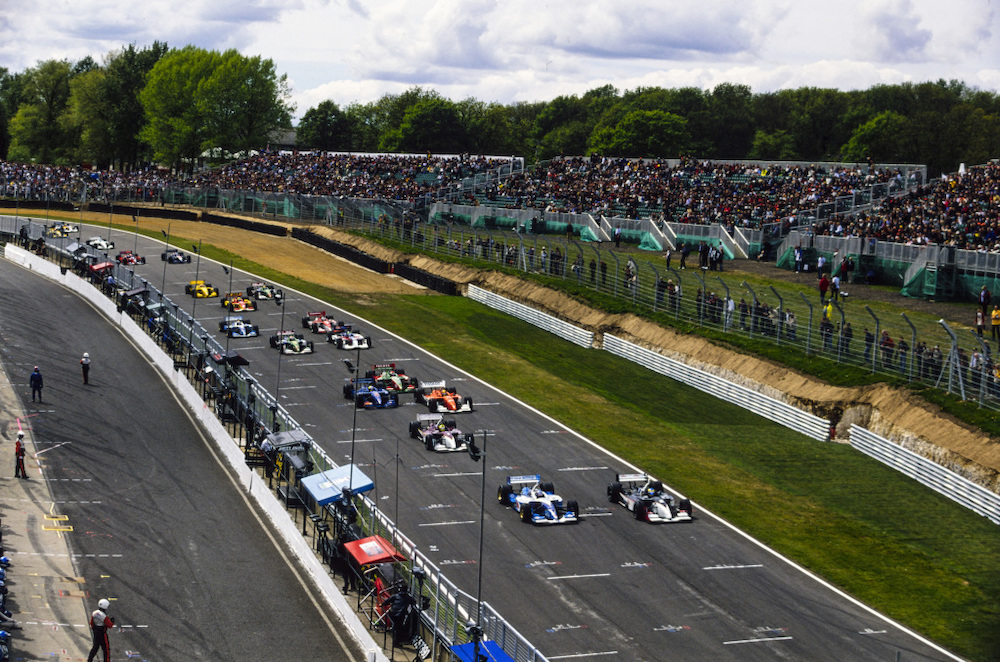
You read it here first. Motorsport Images
Q: Pocono Raceway in August 1984 was the first IndyCar race I attended, and I've been hooked ever since. I'm sad to see Pocono lose its IndyCar race and its second NASCAR date in the span of only a few years.
I wanted to ask you about the feasibility of Pocono Raceway configuring a road course or Roval for use by IndyCar? I don't believe IndyCar has any desire to return to the Pocono tri-oval, but there are compelling reasons why IndyCar should return to the mid-Atlantic region. In my view, the road course at Indianapolis has provided exciting racing, especially the May race this year, and it seems like that success could be duplicated at Pocono as well.
My concern is that Pocono Raceway's long-term prospects are not good, and once we lose these tracks, they are gone forever. A dual date with NASCAR on the tri-oval and IndyCar on a Roval would get me to fly across the country and attend. What are your thoughts?
Kevin P., Los Angeles, CA
MP: The last time I wandered around Pocono’s infield, it had the look of a road course in need of a complete makeover if a pro-level event were to be held. A combo roval event with NASCAR would be an interesting proposal, although I’m not sold on the idea of the region being ready to flood the track with fans who are drawn to road racing. It had good roval crowds many decades ago when IMSA turned up, but many generations have followed who only know Pocono to be a home for oval racing. Anything’s possible, and I’d rather see IndyCar and NASCAR play together at Pocono than on the combo Brickyard weekend on the IMS road course.
Q: I was a spectator at my first Indianapolis 500 in 1963 and a spectator at six more before covering the race as a sportswriter then photographer for 27 years. That was followed by spectating at five or six more and working on the Safety Patrol for three years along the back stretch and Turn 3. I also covered many other IndyCar races over the years. I became known as "Crash" because I never missed getting publishable images of track incidents that could be seen from my position. I never missed because I could tell a driver was in trouble, sometimes before the driver knew it. I studied the cars, the drivers and IMS as well as other tracks to help me anticipate problems.
All of the above is to explain why I believe oval IndyCar racing, and probably twisty racing, could be improved by narrowing the tires. Narrower tires reduce drag on straightaways and reduce grip on turns. That, in turn, creates more variation in speeds during sections of laps. Some drivers will be better at managing slowing for turns and accelerating out of turns. This makes differences in driver talent and bravery a greater factor than it already is and will make for better racing.
With the planned changes to the chassis in a few years, now might be a good time to also consider wheel and tire width.
Mark Wick
MP: Thanks for writing in, Mark. There’s a bit of a misnomer here that changing tire/wheel size would unlock differences in driver talent, suggesting that if it stays the way it is now, such things won’t be seen. We could go twice as wide or go skinny like MotoGP tires, and the best will be faster than the rest. Back in the day when Roadsters were on tall and skinny rubber, the best went to the front and the rest went to the back, so there’s no magic to be had by monkeying with tires and wheel sizes. Turning the cars into dragsters on the straights and turtles in the corners is everything I wouldn’t want to see.
Q: I’ve been at each of the IndyCar races that have been run at Gateway since its re-introduction to the series. A few notes about the attendance at Gateway looking sparse:
• In the section that my seats are in, the number of seats per row has been reduced since last year from 20 to 16, so even a sellout will look more sparse than in the past. I have always purchased four tickets for three attendees because I like the extra space for coolers and my scanner bag. This year with four seats for three people, with the widened seating space, it was like having a mile of grandstand seats to yourself.
• The ticket prices increased this year. I had seats four rows from the top of the grandstand in the past, but had to move down 15 rows so that my tickets would only increase by $10 each. My previous seats were going to nearly double in price. I have a hard time justifying purchasing tickets at races where a 500km race costs nearly as much, per seat, as my Indy 500 tickets. I gave serious thought about not renewing tickets with the dramatic jump in prices.
• I did see a fair amount of people behind and under the grandstands during the race, but probably not enough to make a noticeable crowd size difference on TV.
• The combination of a day race, not the greatest oval racing, increased ticket prices, and the probability of bad weather likely combined to keep the attendance down.
Jason, Batesville, IN
MP: Really appreciate the report from the stands, Jason.
Q: Do you see IndyCar ever going back to Sonoma? That was the one race I could go to easily. Though I like Laguna Seca, it is not as easy for me to get to.
Darrell
MP: I do not. Sparse crowds year after year made it a financial loser for the track.
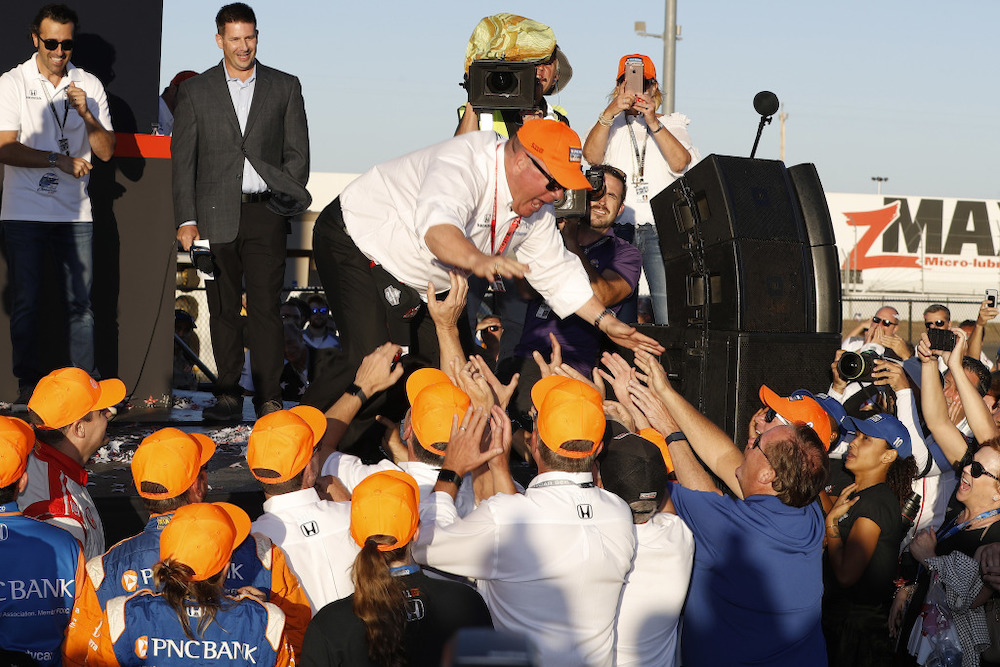
We may not have Sonoma anymore, but we'll always have the memories of Chip Ganassi stage-diving off the podium after Scott Dixon wrapped up the 2018 championship. Michael Levitt/Motorsport Images
Q: In a recent Mailbag, someone mentioned Rick Mears and his comments on the apron at Indy. There was a pretty good article written in RACER back in 2017. I enjoyed reading it for a second time!
Chris, Western Springs, IL
MP: Well I’ll be hornswoggled, Chris. I didn’t recall writing it, but apparently I did. When you write 5-10 stories per week, and multiple that times five years, most fade from memory…
Q: I've noticed on Hemmings and Bring a Trailer that the IMS Museum has been selling quite a few cars. I hope this is not a case of burning the furniture to keep warm. Do you have any idea what is behind the sales?
Matt Townsend, Buhl, ID
MP: The IMS Museum announced a little while back that they’d be selling some of the excess inventory they have; there’s far more in their collection than we’ll ever see.
Q: How much of an impact is switching to Firestone tires going to have on Lights teams? Is it a situation where they'll basically have to take their historic setup and performance data with a grain of salt? Seems like this could be a bit of an equalizer among the teams/cars next year!
Matt Philpott
MP: It will be huge. Cooper Tires is the only rubber the Dallara IL15 has known, so yes, teams will have a ton to learn and adjust to when testing starts. Beyond the engineering changes, also consider the driver feedback quality and how some of the young drivers might be better at delivering tack-sharp input on what’s needed for setup changes while others might struggle in that regard. For those on the struggle bus, it could affect the entire team’s competitiveness next season.
Q: Last week mention was made of trying to get a Tasman-like series started down under for IndyCar during its offseason. I have a better suggestion: The Tasman Series has already been revived via S5000, and while presently a shadow of its old self, with some push from Roger Penske to get some Indy boys to take part, you could certainly make something beneficial to IndyCar out of such a tie-up -- especially considering that three of the series' front-runners are from Down Under!
And I think we can agree that the S5000 sound will be very attractive to the American race fan. Maybe the next generation of Indy Lights should consider such engines now that Mazda's not involved. (We're certainly not getting Ford involved in IndyCar itself, after all!)
FormulaFox
MP: I love the idea. Although I did recently speak with someone who’s raced the S5000 cars and they did not have complimentary things to say about the vehicle.
Q: By now, I'm sure you've been asked a few dozen times why IndyCar doesn't have a USA channel documentary like NASCAR. Turns out, many-time most popular driver turned-announcer Dale Jr is the producer. So I guess that means the people's champ, popular driver turned announcer, The Mayor himself is on the clock? Hinch, if you're reading this, I helped co-associate produce a 15 minute student film project about using cafeteria trays to go snow sledding in 1996, should you need the help. My rate has gone up, though. I no longer work for Bud Light. IPA will do.
Shawn, Maryland
MP: Wait, I think Hinch expects to be paid in booze, not the other way around. Kidding aside, I will admit that when I hear millions are being set aside for new bathrooms or whatever at IMS, I do wonder why the willingness to commit similar funds to produce docu-style IndyCar shows seems to be lacking. Improving the look of your store is great, but when you’re lagging way behind in advertising that you have awesome products to consume inside that store, I get confused on where the priorities should fall.
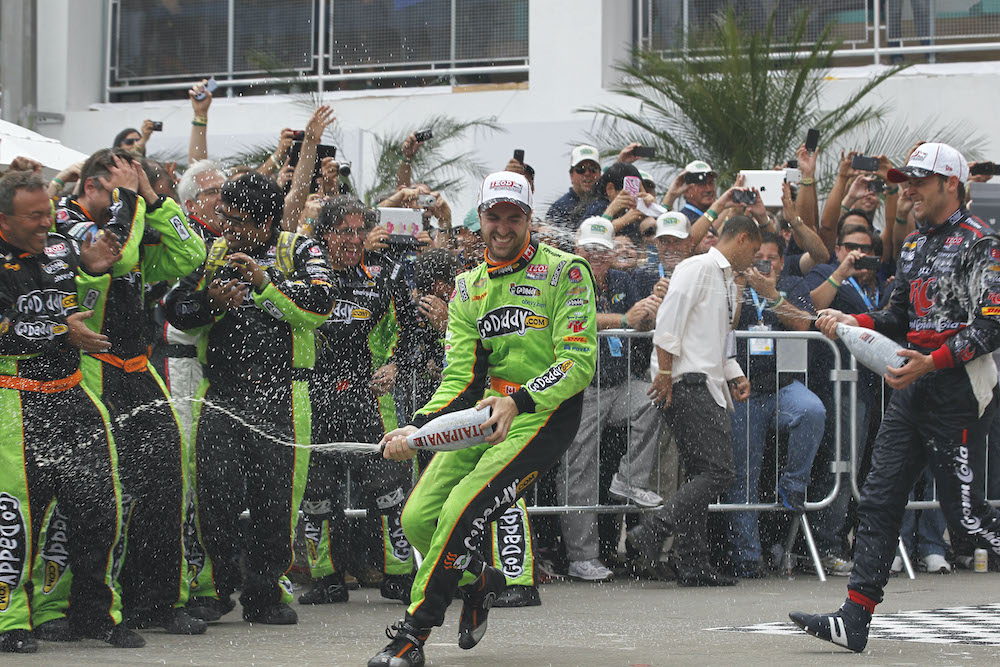
They sprayed beer on the podium at IndyCar's Sao Paulo race, which presumably means that Hinch has just drenched the crew with his prize money. Phillip Abbott/Motorsport Images
Q: Read an article a week or so ago that mentioned it was unlikely that Honda would provide any engine contracts next season above 13, which would take away a third potential Coyne/HMD entry, unless another team drops an entry. I also heard something similar on the Chevy side with the Paretta Autosport if that team wanted to go full-time.
I’m disappointed that Honda and/or Chevy would not try to find a solution to be able to add another engine or two to help grow the IndyCar field, if this is true.
If they can support up to 17-18 engines for the Indy 500, why would they not be able to support 14 or 15 full-time? I suspect it might have something to do with already making a last-time buy of components, but would hope that they might work on a way to support an extra engine contract or two for the growth of the series?
Also, any new updates or status on a third engine manufacturer joining IndyCar? It has been a while since we have heard anything from anyone. Really hoping that there is a third manufacturer that is interested in joining and working on a program.
Rod, Fresno, CA
MP: Thanks, Rod. I’ve written a few times about how both brands have been ramping down, instead of ramping up, as the 2.2-liter TTV6 formula nears its end. As I wrote a few months back, Coyne told us he was looking to go to three cars, and there’s more on that story to follow.
Supporting extra entries for two weeks in May is a lot different than doing it for an entire season; staff from other series like IMSA, for example, get pulled in to support those additional 500 entries and then return to their full-time programs. I wouldn’t drop a third manufacturer update into the Mailbag, but you might be reading about what I have to offer in a story prior to the Mailbag’s Wednesday publishing date.
Q: Why don’t Formula 1 and the F1 teams employ some 21st century electronics to resolve some of the problems that they have?
Formula 1, Formula 1 officials, and the Formula 1 drivers all look silly over the track limits debacle. But many current street cars will warn you if you’re straying out of your lane. That exact technology may not be suitable for Formula 1 cars, but F1 tracks could lay an electronic cable around the complete boundaries of the circuit under the current white line, and F1 cars could have proximity sensors built into the hubs of their wheels. When the car approaches the limits of the track, electronics could not only notify the officials and the team, but could send a signal to a display on the car’s dashboard. A yellow light means the driver is within six inches of the boundaries of the track. A red light means the driver has gone beyond the boundaries of the track.
If this system is in place through all three practice sessions, the drivers will soon learn exactly where the boundaries of the track are, how far they can push those boundaries, and how they need to control the car through the preceding parts of the track to avoid going over the boundaries.
Similar technology built into the cars for proximity detection could notify a driver when another car is close to them. It could identify exactly which car and driver that is, notify them if they’re being lapped, or give them clear indication that the other car is in their way and liable to be contacted if they turn in.
And while you are at it, how about rear-view and side -view cameras with a display in the cockpit to replace those useless tiny analog mirrors that they now rely on?
Bruce
CHRIS MEDLAND: You’re not the first to suggest something like that but logistically it would be a nightmare. A road car reads road markings at much lower speeds for starters, but even if the technology exists with enough accuracy to the millimeter that drivers would want, it’s not always possible to do around the edge of every single track due to the mix of permanent and temporary circuits. Plus there are some corners or areas where drivers are or aren’t allowed to cross lines for specific reasons, and where curbs are adapted/moved etc.
I see the sentiment of your point about proximity too, but then we’re detracting from driver skill. Giving more help when it comes to wheel-to-wheel racing isn’t something we should be doing – it will reduce the need for a driver to make the difference and also reduce mistakes or incidents that create exciting scenarios.
But I do agree with you on the camera front. The mirrors aren’t really fit for purpose and if it’s to aid visibility then that’s a smart bit of a tech that I don’t think would be a bad addition at all. That’s less of a warning device but more a compensation for the lack of view drivers now have due to the higher cockpit sides that were introduced for safety reasons.
Q: Liberty Media has made a large financial commitment to F1 in the U.S. with Miami and Las Vegas. I know there have been hundreds of thousands in attendance at recent races, but is that sustainable? I don't know where these "fans" are coming from. I don't think they are NASCAR fans, and after reading Mailbag complaints, over the years about foreign drivers in IndyCar, probably not from there, either. So are those in F1 attendance really motorsports fans, or are the Netflix and/or video game/iRacing fans? If it is the latter, I don't think they will keep coming back.
Bruce Kerr
CM: I’ve always felt motorsport fans are motorsport fans, and they might have a heavily preferred series but when cars start racing they can get hooked. But from F1’s point of view, I definitely think it’s the Netflix effect that has opened the sport up more, and I do think they’ll keep coming back.
What Netflix has done is get them to engage with the stories within the sport – the drivers, the team members, the underdogs as much as the big manufacturers – and see the value in a sixth place for Haas or a Williams in Q3. And that means even if they go to a race and the grand prix itself isn’t a great spectacle, they’re becoming hooked on other aspects. Plus every race is now making itself much more of a big event with concerts and other activities to ensure fans have a good time.
To give you a recent example, on Sunday’s SiriusXM show that I’m part of, there were four callers we took at the end of the show – two male and two female – and three of them cited Netflix as either getting them into F1 or reconnecting them with it. Now they’re phoning into radio shows asking questions or giving opinions as they get even more involved.
Q: For those who haven't been following F1 since the early ’60s, I was wondering if you could give a history of the four-wheel-drive experiments in F1? As I recall, BRM, Lotus, Matra and McLaren all tried four-wheel-drive during the late ’60s through the mid-’70s. None of them were successful, as they were incredibly complicated for the engineers and the drivers.
My question is, given the incredible tech advances since then, do you see any teams trying this approach again?
Bob Isabella, Mentor, OH
CM: You’ve got the history bit covered for me there Bob, as it’s a pretty short list. The first was the Ferguson P99 that only entered one world championship race but did win the non-championship Gold Cup at Oulton Park with Stirling Moss behind the wheel.
Lotus was certainly the most committed to trying to make four-wheel-drive work but never managed to, and 4WD has been banned since 1982 so I definitely can’t see any teams trying it again! It would take a complete change of regulations that really doesn’t need to happen because, as you say, the tech has advanced so far in the road car world that F1 doesn’t need to push it forward in the way it does with sustainable fuels and hybrid systems.
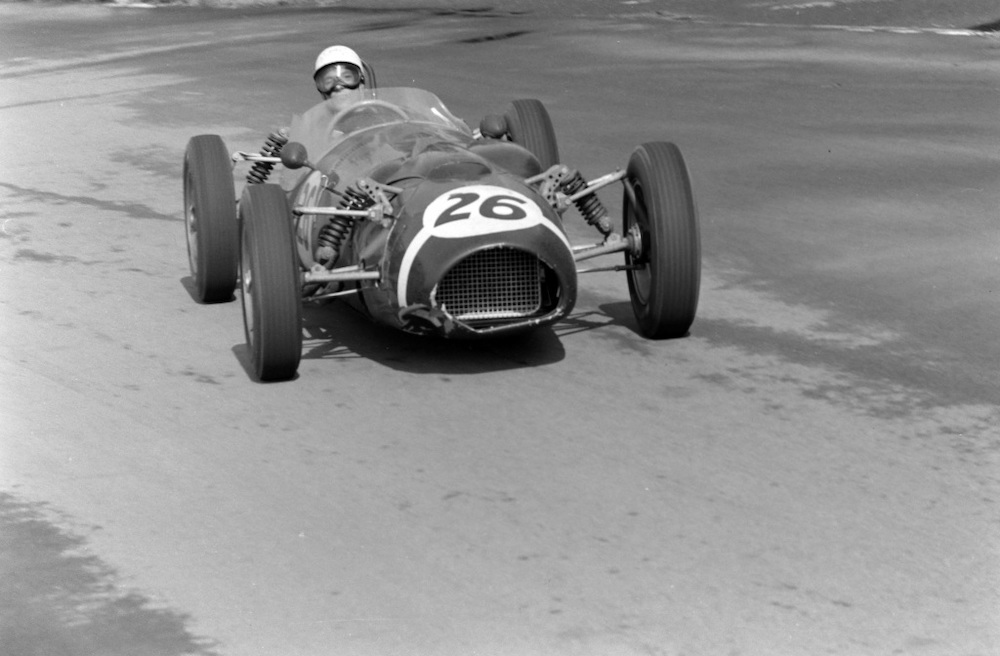
Stirling Moss and the Ferguson P99 Climax on their way to a disqualification for receiving outside assistance at the British GP at Aintree in 1961. David Phipps/Motorsport Images
Q: So, when Mercedes or Ferrari wins the 2026 F1 constructors title because the Audi and Porsche entries were taking points from each other, who at the VW group gets fired?
It makes no sense to have two brands competing against each other in F1. I remember when GM had four brands racing in NASCAR then finally figured out they were racing against themselves. Goodbye Buick, Pontiac and Oldsmobile (remember Pontiac and Oldsmobile?). I seem to remember some noise about VW becoming IndyCar's third engine supplier before Dieselgate. Seems like it would make more sense to run one brand in F1 and another, at a much lower investment, in IndyCar. Alas, IndyCar's third engine supplier is like Bigfoot, often rumored but never seen.
Bill Carsey, North Olmsted, OH
CM: It’s interesting you ask this question Bill, because it actually got asked of Audi (well, a variation of the question did) in Spa last weekend when they announced their arrival. They raced each other at Le Mans as totally separate brands so it clearly has value that they see, but I’ll let Audi AG chairman Markus Duesmann answer the rest:
“You can imagine that was a huge discussion, but both our brands have a lot of fans, and both our brands have their special character, and that’s why we decided to keep it completely separate and do two operations.
Q: When Stefano Domenicali said "unless there is something like a meteorite, I don't see a girl coming into F1 in the next five years," I presume he was referring to said meteorite causing the extinction of dinosaurs like himself within the F1 paddock and management. In which case, that would probably be the healthiest option for the sport, and I welcome his out-of-the-box thinking.
It's clear to anyone who pays attention that F1 isn't the best 20 drivers in the world, not even just the 20 best men. There are notable examples of pay drivers that it would be hard to make the case they're even in a list of the 200 best in the world, one of whom would have been on the grid this year if not for his daddy getting all his money sanctioned so he couldn't pay anymore. That Domenicali can't think of a single woman in the world who, with a similar level of funding, would be better than the worst F1 driver in the next five years indicates a severe lack of creativity from an executive whose job description should include deeper thought than this.
Perhaps his satisfaction with their partnership with W Series is indicative of Stefano having a bit too much agreement with one of the worst of David Coulthard's takes: his belief that “the mothering gene” keeps women from having success in the sport. Seems clear to me it's just the mediocre old men like Coulthard and Domenicali who worry the field-fillers they have so much in common with will be replaced by more talented women if they don't figure out a way to keep the outdated misogyny of BCE alive in the series somehow.
Bakkster, Team Meteorite
CM: Let me start by saying I was on the call where Domenicali made that comment, and while it was an absolutely unnecessary aside, it doesn’t include the wider context of his answer, which was that F1 is working on improving the pyramid to get more females racing at a lower level. From there, he feels they will have a better chance of getting to F1, because he doesn't see a big enough pool right now to make it realistic in the next five years.
And he’s right that it’s not massively likely (although far more likely than his analogy). Who is being actively pushed towards F1 aside from Jamie Chadwick? And she’s still got a few steps to go. I see Jamie racing in F2 next year and therefore being very close, but it’s also true that it would be damaging to just put any driver in an F1 race seat just because they’re female, and then have them not be competitive and reinforce the misplaced view that they can’t do it at that level.
Where I totally agree with you is that if someone wants to bankroll a driver enough, and give them enough experience and track time, then they will reach a level where they are more than competitive. But I think it would be worse for Domenicali to say “hopefully someone will spend millions getting a driver to F1 and then it’s not our problem,” and better to say the likelihood isn’t high enough right now and F1 needs to support lower down the pyramid.
His choice of words was stupid, though.
Q: Can someone please comment on last week's NASCAR race at Watkins Glen? Ross Chastain once again ran into another driver. It is impossible to count up how many times he has done this in this season. Why does NASCAR do nothing about these repeated incidents of dirty driving?
Bob Isabella, Mentor, OH
KELLY CRANDALL: Ross Chastain is having a no-good, very bad year when it comes to on-track contact. Unfortunately for him, it’s all happening in one season, and that makes it easier to put a magnifying glass on. However, NASCAR is not going to step in unless it feels these incidents cross a line where it is dangerous for Chastain and the competition or affecting the racing. Auto racing is a contact sport, and the percentage of NASCAR getting involved in on-track incidents is likely quite low.
How many times did it penalize Dale Earnhardt Sr.? The argument could be made that he made a career out of being involved in incidents and dirty driving. If you look at the times when officials did step in, you’ll see the pattern of when they felt things were escalating too far. But to try and penalize Chastain for each and every incident because he has a history of contact isn’t going to happen. NASCAR doesn’t have dirty driving penalties per se, but it will monitor and step in when they feel it’s gone too far or is blatantly intentional.
Q: At the NASCAR Indy road course event and the Glen, part-time Team Hezeberg entered two cars from different manufacturers. Why and when was the last time a team had two different car makes?
David, Waxhaw, NC
KC: This is not all that uncommon. The reason is quite simple: lower-budget NASCAR race teams do not have full-scale manufacturer technical support. They might get some data and information passed along, but it is not to the degree, access, and support that powerhouse teams like Joe Gibbs, Rick Hendrick, and Team Penske do. In other words, Team Hezeberg and others like them are not backed by a manufacturer and can run whatever body they desire. It is why you’ll sometimes see teams like them running a different manufacturer body on a weekly or regular basis as we’ve seen with Rick Ware Racing, for example, which entered Ford and Chevrolet cars a few seasons ago.
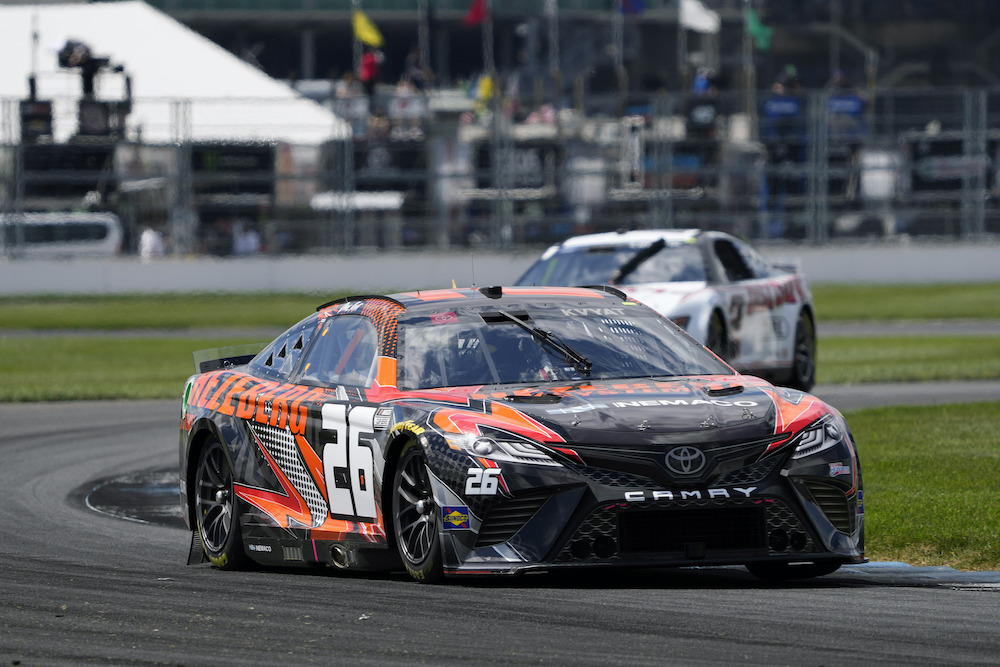
For Team Hezeberg, independence means running whatever Next Gen manufacturer bodywork they want. Motorsport Images
Q: Why didn't sportier-looking "pony car" body styles (Mustangs, Camaros/Firebirds and Challengers/Barracudas) race in NASCAR during the 1960s and 1970s? Also, why was Dodge the only "muscle car" body style that raced in NASCAR, while most of the other racers used family sedan body styles for racing?
Even as a kid following the sport in that era (mostly because of model cars), I never understood why regular family sedan body styles were chosen for racing, while the heftier/sportier aggressive-looking muscle and pony body styles were not used very much at all. Strange.
Interestingly, as a kid I used to think these sedan body styles were boring, and I'm sure I wasn't the only kid that thought this – I say this because race cars were the dominant offerings for kids model and toy cars, and an obvious target to foster a future audience.
PS. I know there were secondary small-time series that raced pony cars like TA/SCCA series (and flopped), but I am specifically interested to know why pony/muscle car body styles were not used for NASCAR Cup races.
Also, I know that body styles were either partially taken from blank bodies provided by the manufacturer or custom made as close replicas of their street versions.
Robert Gaurie, San Diego, CA
KC: This was before my time, so I went to Deb Williams, who has covered the sport for many decades and knows what she’s talking about. In fact, she was here on RACER two weeks ago providing coverage from Waktins Glen. Here is Deb’s explanation:
"The simple answer is the 'pony cars' didn’t meet the specifications set forth by NASCAR for the Grand National, now Cup Series, cars that competed in the 1960s and 1970s.
"When NASCAR introduced the Strictly Stock, now Cup Series, in 1949, Bill France Sr. believed it would be popular if the cars were the full-bodied cars driven by most Americans. The wheelbase, weight, etc., was for those vehicles. In the 1960s, the factories became heavily involved in the sport and 500 units of a particular model had to be manufactured before it could be raced in the Cup Series, then known as Grand National. The factories developed high-powered engines and aerodynamic cars because they followed the 'win on Sunday, sell on Monday' philosophy. The Plymouth Hemi engine was outlawed in 1965. You also had the 427 ci in the Fords.
"As you mentioned, Dodge came out with the first sloped-back car with the Dodge Charger. Then Ford produced the Torino in 1968 and the Talladega in 1969. There was the Mercury Cyclone that resembled the Ford Torino/Talladega that carried a Cobra designation in 1969. Then in 1970 and 1971 you had the Plymouth Roadrunner for the short tracks. The Plymouth Superbird and Dodge Daytona, both with the wing and sloped nose, were for the superspeedways. During the 1960s and 1970s, the current car model and the two previous years were allowed.
"NASCAR recognized the popularity of the 'pony cars’ in SCCA Trans-Am and created the Grand Touring Series in 1968. It was renamed the Grand American Series in 1970 and its last season was 1971. The cars that raced in the Grand Touring/Grand American Series were the Ford Mustang, Chevrolet Camaro, AMC Javelin, Mercury Cougar and Pontiac Trans Am.
"When the factories withdrew their support from stock car racing in the early 1970s, they no longer designed cars for racing and it was tough for the teams to acquire new cars that met the Cup Series specifications. NASCAR didn’t downsize the wheelbase for the Cup cars to 110 inches until the early 1980s."
THE FINAL WORD
From Robin Miller's Mailbag, 26 August 2015
Q: What is the story behind Justin Wilson being called “Badass”? He was so humble so I’m sure this nickname gave him a good chuckle. Also, can you share any anecdotal stories about Justin that always bring a smile to your face? RIP Justin… we will miss you!
Paula in Tempe, Arizona
ROBIN MILLER: Justin got the nickname from his Formula Palmer Audi days. His instructors named him that because he was so good, but he was so un-Badass out of the cockpit. When RuSPORT folk found out, they loved the nickname for the same reasons and pounced on the idea and actually put it on the cockpit of his Champ Cars. Dreyer & Reinbold did the same, across top of his steering wheel.
Presented by:
Marshall Pruett
The 2026 season marks Marshall Pruett's 40th year working in the sport. In his role today for RACER, Pruett covers open-wheel and sports car racing as a writer, reporter, photographer, and filmmaker. In his previous career, he served as a mechanic, engineer, and team manager in a variety of series, including IndyCar, IMSA, and World Challenge.
Read Marshall Pruett's articles
Latest News
Comments
Comments are disabled until you accept Social Networking Cookies. Update cookie preferences
If the dialog doesn't appear, ad-blockers are often the cause; try disabling yours or see our Social Features Support.