Image by Dan R. Boyd
Alan Mertens on creating the Indy-winning Galmer G92
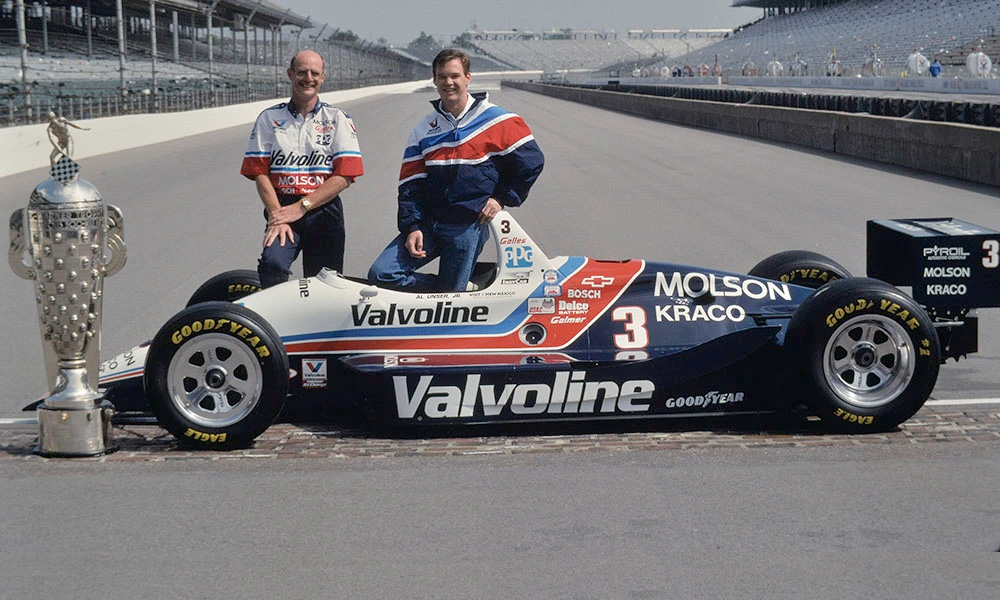
Thirty years ago at the Indianapolis 500, a most unexpected victory was earned. Al Unser Jr. and Galles-Kraco Racing teammate Danny Sullivan were more than capable of winning the race on talent alone, but with the custom Galmer G92-Chevy commissioned by team owner Rick Galles as their only chassis option, the Indianapolis Motor Speedway should have been the car’s Achilles heel.
On road and street courses, where maximum downforce and even aerodynamic drag can be an asset, the G92 was a fearsome tool for its drivers to wield. But at the big Speedway, where slippery aerodynamics and an extreme lack of drag are critical components of success, the boutique Galmer chassis was an undeniable liability.
Lola’s new T92/00 looked like a needle and had the likes of Michael and Mario Andretti, plus powerful new Ford/Cosworth XB engines, to set the performance standard at Indy in 1992. On a normal warm day in late May, carrying all that extra drag that couldn’t be shed, the Galmer G92 would have been a giant headache for Unser Jr. and Sullivan.
But the race was anything but normal as the coldest Indy 500 in modern history was run, and by chance, as the rest of the field piled on all the downforce they had to give their icy tires a chance to work on the frigid track surface, the Galmer’s Achilles was transformed into its greatest asset.
Carrying more downforce and drag than any other car was a perfect fit for this most specific weather where an absence of grip caused driver after driver to spin and crash while grappling with cars that struggled while the G92s thrived.
Looking back on the achievement where Galles and Unser Jr won their first Indy 500, the car’s designer, England’s Allan Mertens, gave RACER the G92’s origin story to help celebrate the 30th anniversary of the amazing victory for all involved.
Marshall Pruett
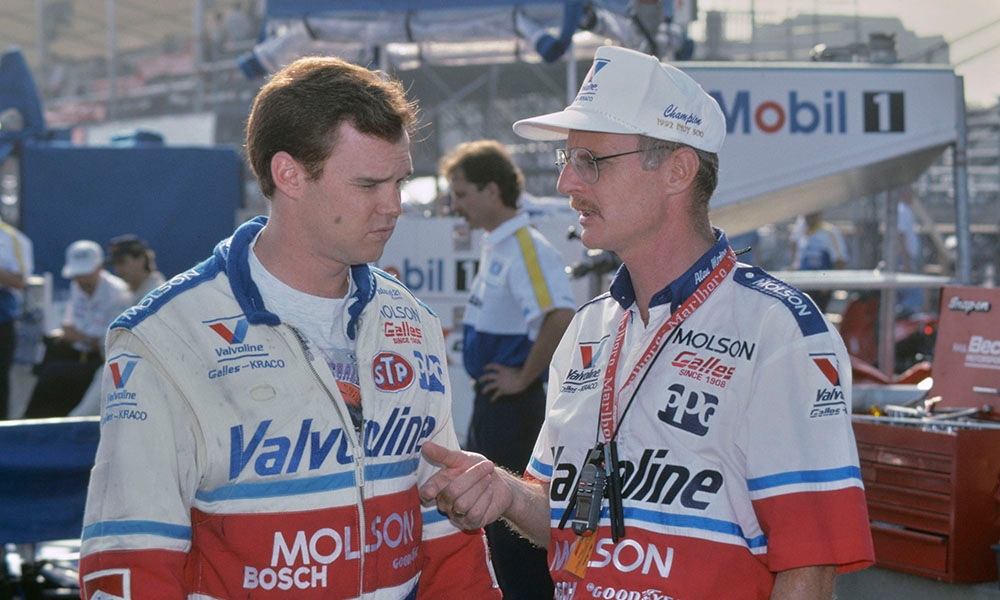
The author and Al Unser Jr. Dan R. Boyd photo
It starts with a brief history going back to my days working for March. After March's first Indy car, the 1980 Orbiter, failed to hit the mark, then-chief designer Ian Reed left for unrelated reasons to move to America with his American wife. I had co-designed the March 801 F1 car for Robin Herd and John McDonald, but Robin asked me to go back to March on the IndyCar side to fill in for Ian.
As a joint effort with Gordon Coppuck, we modified the 801 to IndyCar spec and the 81C was born. I was given the role of heading up the IndyCar program leading a small team while the rest of the drawing office focused on IMSA GTP, Formula 3000, Formula Atlantic and F3.
Although we were credited with five Indy 500 wins, after a couple of years, things started to become difficult. Clearly, my weakness was a lack of aerodynamic talents, and luckily, we had Adrian Newey cutting his teeth on the GTP cars -- he was an obvious talent -- and in the background Andy Brown was working on the F3000 cars. His name would crop up again later.
Adrian was the aero mastermind on the March 85C and 86C, without question our two best Indy cars, and Adrian would say, "This is the shape, now fit an Indy car inside of that shape." Then Adrian left at the end of ’86 and the March progressively struggled again in ’87 and ’88.
At the beginning of ’88, after I had finished the 88C, March had gone public, lost its focus, and I was lured away by Galles Racing to work with Al Unser Jr. running the 88C. Within six months, with Al's support and Rick's enthusiasm, Galmer (Galles+Mertens, shortened to Galmer) was born. We won four races and finished second in the championship.
In 1991, Galles, now merged with the Maury Kraines’ Kraco Racing team, gave the go ahead for the Galmer G92 chassis. CART was going to introduce new regulations to be implemented in ’93 for minimum specifications for the thickness of honeycomb and the thickness of carbon skins in the chassis. When we got to production we decided to adopt these rules for ’92. That was our first problem.
Not until we had finished the car and torsion tested it -- there were no computer simulations at the time -- did we find the chassis to be massively stiff. In one respect this was fantastic, but in the interface between the engine and gearbox, our bellhousing was too soft, made worse by our approach to housing the turbocharger. Now we had lost our linearity of the fifth spring from front to rear axle; the bellhousing allowed the car to twist in the corners, which was not favorable.
The turbocharger arrangement, a fundamental part of our design, was turned 90 degrees so the inlet pointed forward and the exhaust pointed to the rear. Now we were able to have twin inlets, each side of the engine cover, and that gave us twin exhausts with twin wastegates that would blow the diffuser at the back. The tail of the gearbox, which was exposed to the air, had the casting done with the stiffening ribs on the inside of the casing so the smooth exterior was an extension of the center part of the tunnel.
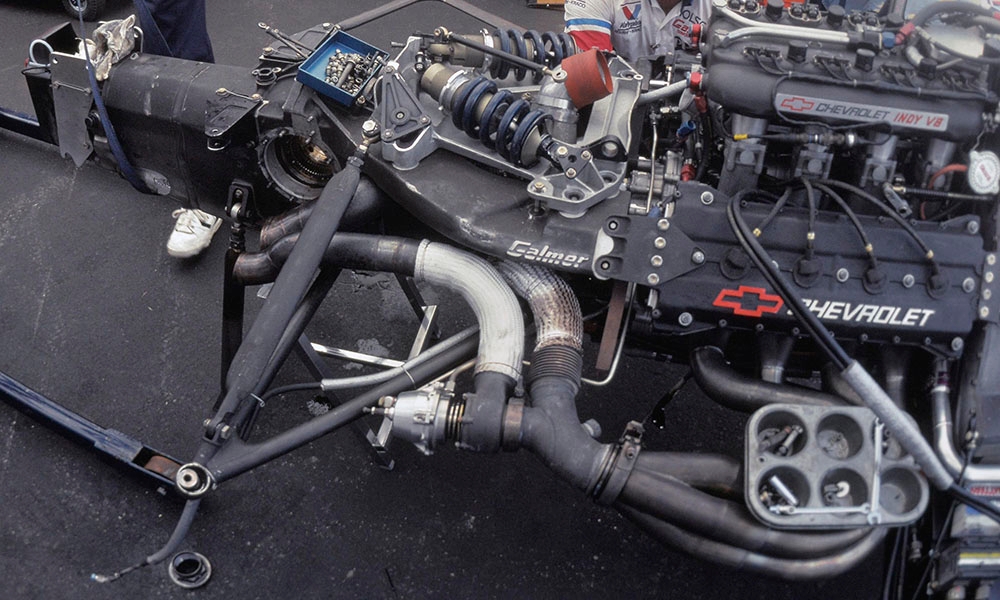
Moving the gearboxes’ strengthening ribs from the outside to the inside gave the G92 an aerodynamic advantage thanks to the smooth profile for air to pass over on its way out the back. Dan R. Boyd photo
Ironically, although this was to prove troublesome, it was this innovation that won Galmer the Louis Schwitzer Award at Indy that year.
The complex inlets and outlets from the turbo took up a lot of space and further compromised the bellhousing size and shape. We tested the configuration in the wind tunnel and although we saw huge gains, the results were inconsistent as the air lines into the model kept freezing. We decided early on to commit to it anyway.
Unlike in the modern era of F1, we never had any way of keeping flow through the exhaust when the driver lifted off for consistency but, we never knew how much that would hurt us on ovals. On road courses it was livable; on street courses it was a huge advantage with the stop/start nature of the tracks. The center of pressure shift to the front helped under heavy braking for all the slow corners, and the rearward shift helped out with traction. On ovals, a slight breathe of the throttle upset the "steady state" balance considerably.
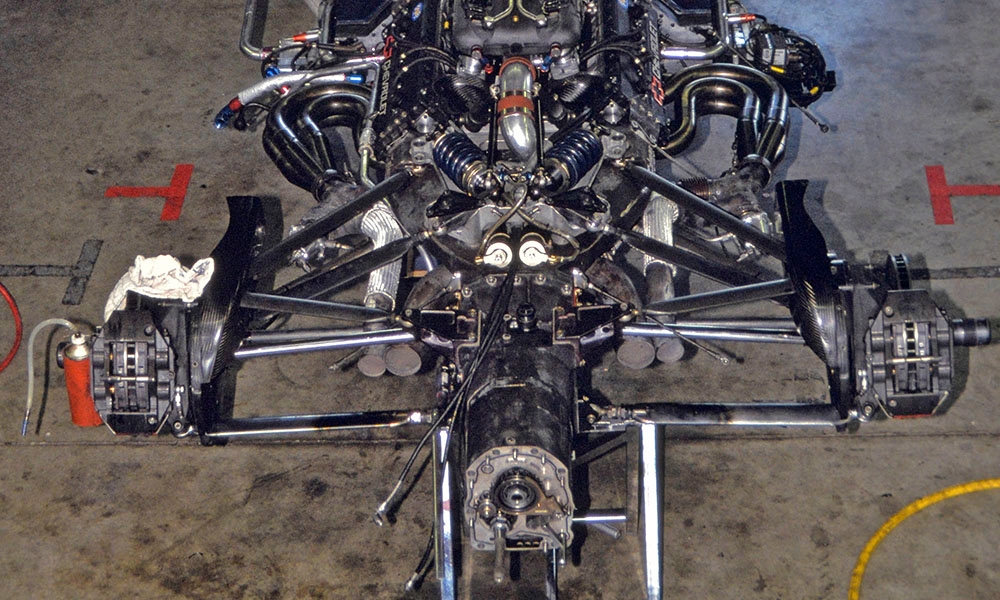
Mertens’ use of twin exhausts in place of the traditional single-outlet exhaust allowed the first known use of a blown IndyCar diffuser. Dan R. Boyd photo
Aerodynamically, we knew we were in trouble at the first Indy test early in the year. Al Jr.’s helmet was being sucked upwards to the extent it caused so much neck pain he couldn’t do long runs. We had decided to have no windshield like the F1 cars, but the high Indy speeds were playing havoc with him so we had to introduce a little flip-up just before the leading edge of the cockpit. Also, he was struggling with the lateral loads on his neck so we had to design and introduce a pad to support the right side of his helmet. And worst of all, we had too much drag.
We had plenty of downforce, which was ultimately a benefit on low-grip days, but the drag was way too high. We half seriously talked about taking the wings off, but their drag contribution was negligible and we still needed a trim device.
Around that time our aero guy left. I’m not saying there was any creativity in his aero numbers from the wind tunnel, but he knew we were in a "no way to fix it" problem and took off. Enter Andy Brown.
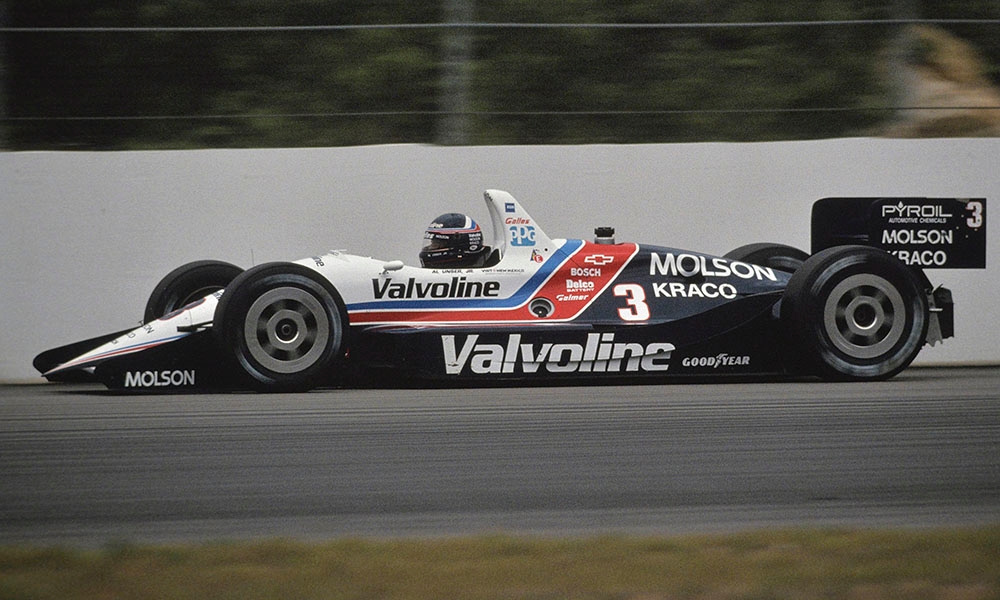
Despite its sleek shape, the G92 carried an invisible aerodynamic parachute behind it at the Speedway. Dan R. Boyd photo
Andy had just finished a stint at the Leyton House F1 team learning the tricks of the trade from Adrian Newey, although Andy was a very clever guy in his own right. Andy was a breath of fresh air, knew his aero stuff and made gains with the G92’s road and street course package with improving the external devices, but could do nothing with the base package for the Speedway car.
At a rainy Portland test early in the year, I remarked to Andy how high the rooster tails were going up in the air relative to the car. We discussed this in relation to the 1/4th model wind tunnel tests we were doing at MIRA, and we decided we should make and move to a bigger 1/3rd model at Brackley, the old March wind tunnel.
The results with the 1/3rd model were shocking. We still had the same downforce but the drag went up a lot. The relative size of the quarter-scale model meant the flow around the car was being choked. In the third-scale tunnel, the relative difference was such that the flow was clean around the model and gave us more realistic results. But it was something we didn’t want to see with the added drag now revealed and confirmed. Now we could understand why the car was performing like it was on the track.
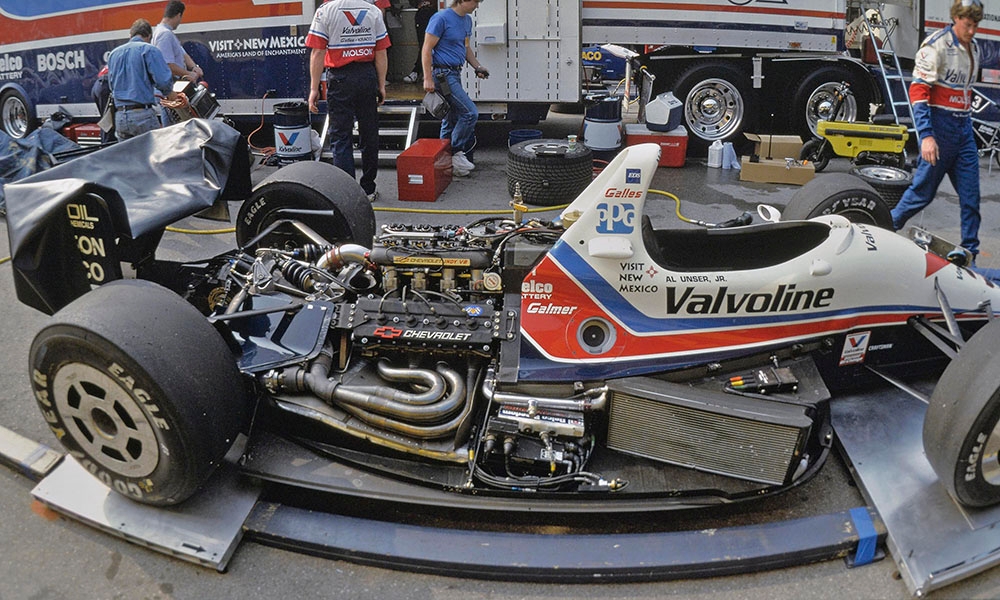
The Galmer was a beast on road and street courses. Dan R. Boyd photo
When we got to Indy, we qualified both cars and were relieved to be solidly in the show. On Carb Day, Al couldn’t get the car to his liking, and was pretty bummed out, but we had no idea what we would face on race day.
There’s no question that Michael Andretti was dominating the race with the small Ford/Cosworth XB-engined Lola. We were offered this by Cosworth early on and made a wind tunnel model to suit. The G92 chassis was very narrow -- the engine across the heads being typically the widest part -- and the results were good. But, Rick Galles was a Chevy dealer so that was never going to happen.
Ironically, the XB engine’s failure in Michael’s car is what essentially handed us the race. At the end we seemed to have the legs on Scott Goodyear everywhere but coming out of Turn 4, where Al said the car was starting to go loose. This was strange as usually Turn 4 was one of the easier corners but Al’s precautionary lift on the last lap nearly gave it all away. However, it did provide, as they say, the closest finish in the history of the Indy 500.
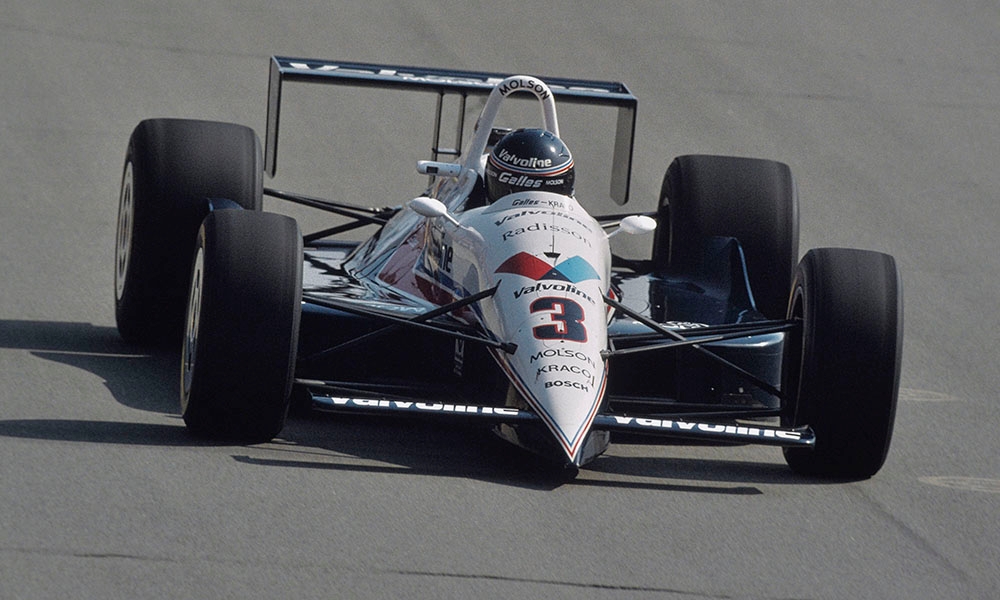
Little Al on the way to victory lane. Dan R. Boyd photo
I wasn’t watching as I had my head in my hands. I was convinced it was all going to end like ’89 when Al got together with Emerson Fittipaldi. I didn’t realize the race went in our favor until crew chief Owen Snyder jumped on me. Danny finished fifth, but then was controversially relegated to seventh for allegedly passing under a yellow. We should have protested but we were so wrapped up in the win. What a day.
Also, what we didn’t know, and weren’t told until the end of the season, was that Rick was going to cancel the Galmer program. This was a great pity as we had learned a lot from the first car. Andy said he had achieved downforce and lift/drag figures not to be seen anywhere else until wind tunnel testing a Reynard chassis in ’96.
After Indy, the G92 was leading the championship until the penultimate race at Nazareth and did generate about $3.5 million. After Rick chose to stop, I sold the G93 design, but not Andy’s aero stuff, to Reynard so we could survive without the Galles involvement. Then Bruce McCaw started the PacWest team and jumped in to replace Rick. After running Dominic Dobson at Indy in ’93 with the old G92 chassis, that was the end of the car’s racing story.
Presented by:

Alan Mertens
UK-born Mertens started his engineering career at British Aerospace, while racing himself in Formula Ford. In 1976, he joined March Engineering, at the time one of the world's largest manufacturers of race cars, where he rose to the position of Chief Designer working on F1, F2, F3 and IndyCar designs. In 1988 he started his own company, Galmer Engineering. The company was formed to provide a fully operational research and development facility for the Galles Racing IndyCar team.
Read Alan Mertens's articles
Latest News
Comments
Comments are disabled until you accept Social Networking Cookies. Update cookie preferences
If the dialog doesn't appear, ad-blockers are often the cause; try disabling yours or see our Social Features Support.