Sam Bloxham/Motorsport Images
Wolff believes Miami gave clues to solving to Mercedes car woes
Mercedes started to gain answers into why its car is so temperamental during the Miami Grand Prix weekend, according to team principal Toto Wolff.
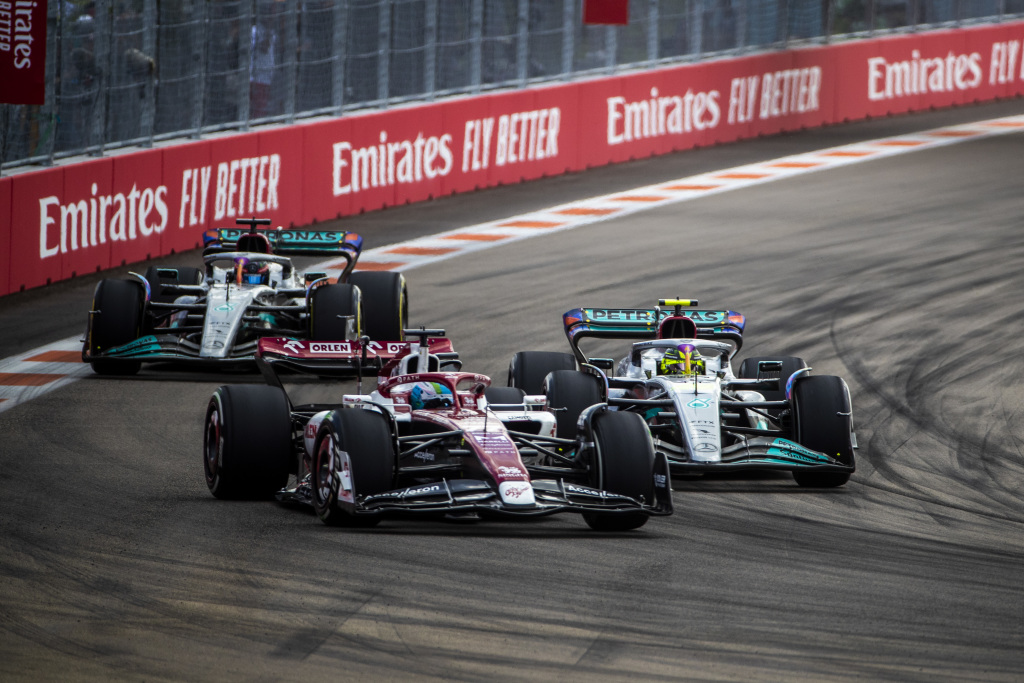
George Russell was fastest in Friday practice but then failed to reach Q3, while Lewis Hamilton lined up sixth behind Valtteri Bottas and struggled to get past his former teammate (pictured above) before the Finn made a mistake. After finishing fifth and sixth with Russell and Hamilton respectively, Wolff says new parts introduced in Miami helped Mercedes further understand the performance of its car.
“It has definitely given us answers,” Wolff said. “On a positive side, the car is quick when it’s in the sweet spot. But understanding where the sweet spot is is something that we will come a step closer (to) after analyzing all the data this weekend. Therefore, whether it’s Barcelona (the next race) or not, I don’t know.”
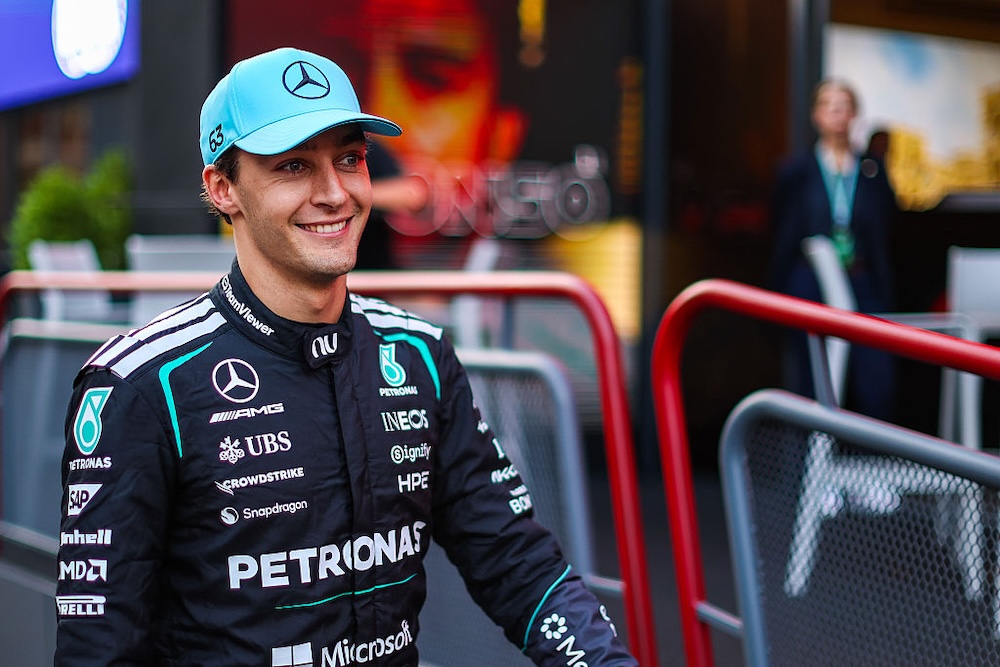
Although Russell’s Friday performance was a cause for optimism, Wolff says one of the biggest challenges for Mercedes to overcome is the difference between what the drivers are feeling and what the data is saying.
“I wouldn’t want to give you the headline (that Mercedes is a bit lost) because it looks like we are a bunch of fools! We’ve been, straight from the beginning, flying in the fog a little bit. It’s clear there’s potential in the car and she’s fast, but we just don’t understand how to unlock the potential.
“It’s a car that is super-difficult to drive and on the edge, dipping in and out of the performance window -- more out than in. And dissecting the data with a scalpel is just a painful process because it takes so long.
“As a matter of fact, the data sometimes doesn’t show what the drivers tell us. Certainly they have their hands full with a car that is just not at all comfortable, nice or predictable to drive. But the data doesn’t show any of these big swings. We haven’t had this situation before in any of the years, so that it just didn’t correlate on the screens what the driver feels and that is just making it even more difficult.”
Presented by:


Chris Medland
While studying Sports Journalism at the University of Central Lancashire, Chris managed to talk his way into working at the British Grand Prix in 2008 and was retained for three years before joining ESPN F1 as Assistant Editor. After three further years at ESPN, a spell as F1 Editor at Crash Media Group was followed by the major task of launching F1i.com’s English-language website and running it as Editor. Present at every race since the start of 2014, he has continued building his freelance portfolio, working with international titles. As well as writing for RACER, his broadcast work includes television appearances on F1 TV and as a presenter and reporter on North America's live radio coverage on SiriusXM.
Read Chris Medland's articles
Latest News
Comments
Comments are disabled until you accept Social Networking Cookies. Update cookie preferences
If the dialog doesn't appear, ad-blockers are often the cause; try disabling yours or see our Social Features Support.