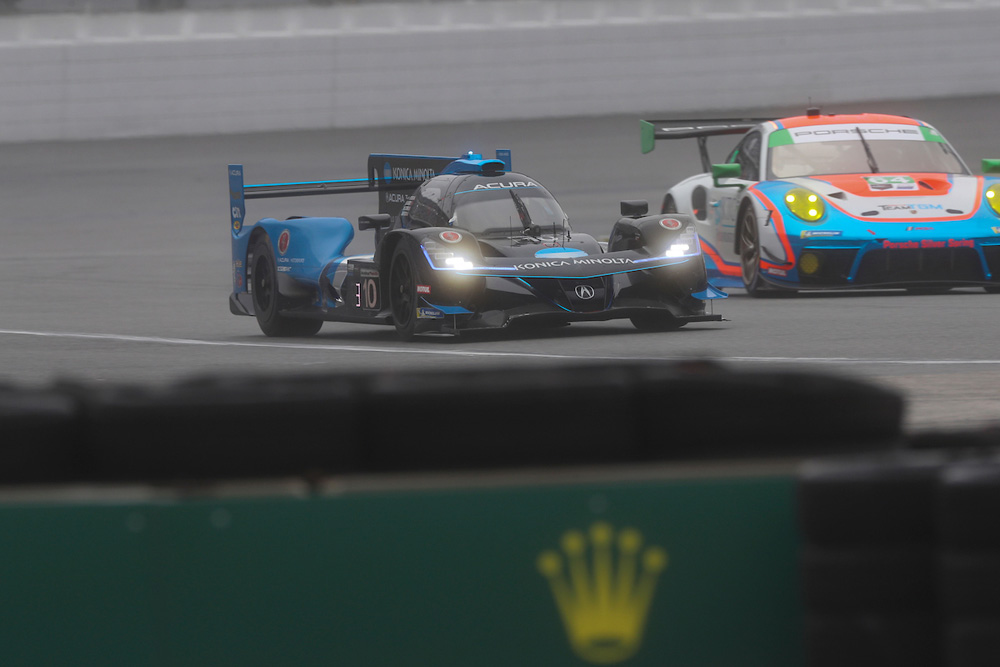
Chris du Mond/IMSA
INSIGHT: The art and science of handling Rolex 24 traffic
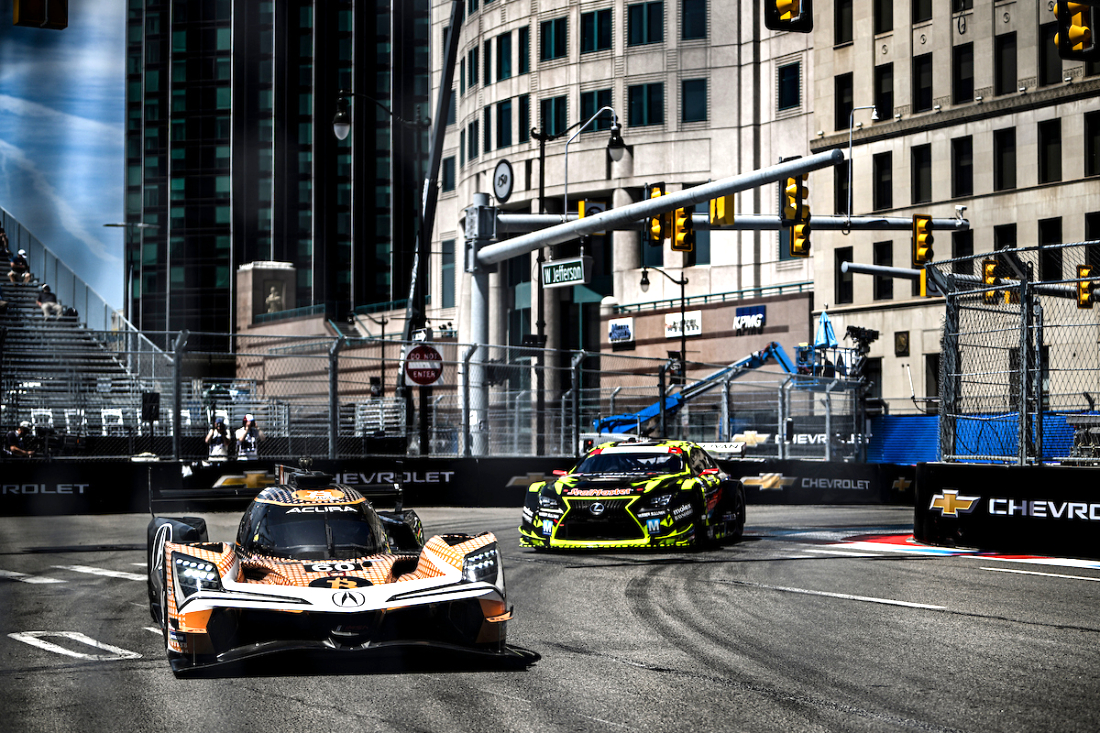
Traffic management is a key to any multi-class endurance race; that’s a given. What makes this years Rolex 24 At Daytona different is that the number of cars has increased dramatically, and the type of cars has changed. It’s pushed the traffic equation to another level.
IMSA added LMP3 to some rounds of the WeatherTech SportsCar Championship, including Daytona, last year. That added an additional element, and another tier of speed for other drivers to manage. This year, instead of a handful of GTLM cars and 19 GTD cars, there are 35 GTD cars. Those cars are spread across two classes, but those classes are defined by the pace of the drivers, not the capability of the cars.
There are 61 cars slated to start the race. The drivers are going to be very, very busy, and getting into a groove where the laps just roll by will be difficult, perhaps impossible. The quiet periods where the DPi and LMP2 drivers aren’t either passing a car or trying to figure out how they’re going to pass the car ahead will be infrequent and brief. For some drivers that will be a blessing; others will find it frustrating. And it will most definitely make a difference in winners and losers in some classes, if not all.
“I was waiting for traffic, because I think at the end of the day, this is what makes this race so interesting,” said Filipe Albuquerque after he and Ricky Taylor won last week’s qualifying race in the No. 10 Wayne Taylor Racing Acura. “It’s exactly the traffic because it gives us opportunities to overtake. That was what had happened to me. I mean, I managed to go up to P2 just managing traffic. I just loved it.”
Tristan Vautier, whose No. 5 JDC-Miller Motorsports Cadillac finished second in the qualifying race, with his co-driver Richard Westbrook hounding Taylor through the final laps, had a different take on the traffic.
“The luck factor is going to be a bit more involved than usual,” he said. “I was surprised in the qualifying race; there were a lot of very unpredictable situations because of the difference of experience levels of the drivers in GTD, LMP2 and LMP3. With the number of cars, it hasn’t been as straightforward as other years. Before, pretty much every corner, you knew which side to the pass the GTD or which side to pass the LMP3 and so on. This year, just because I think there are many more drivers and different levels of experience, it has been way less straightforward. There were many more situations where things were a bit confusing, and you’re not really sure which side to go. So I think there’s going to be a bit more luck involved, and you’re going to have to be very good at judging situations as a driver, and finding the right level of attack and conservation.”
Vautier and Taylor and their counterparts in DPi and LMP2 have the advantage of lots of power and higher corner exit speeds to help them get by GTD cars. The equation changes radically when DPi cars encounter LMP2 traffic, or LMP3 cars are passing GTD competitors. Lap times don’t tell the whole story … different combinations of power, weight, mechanical grip and downforce mean cars that produce seemingly comparable lap times produce those times in very different ways. As shown in the chart below of the maximum and minimum speeds of cars from different classes at some key points on the track, aggregated from teams and IMSA’s data gatherers, where a car catches another can make a huge difference. A DPi catching a car at the entrance of Turn 3, the International Horseshoe, is going to suffer much less than the same situation at the Bus Stop -- or Le Mans Chicane as it has been renamed.
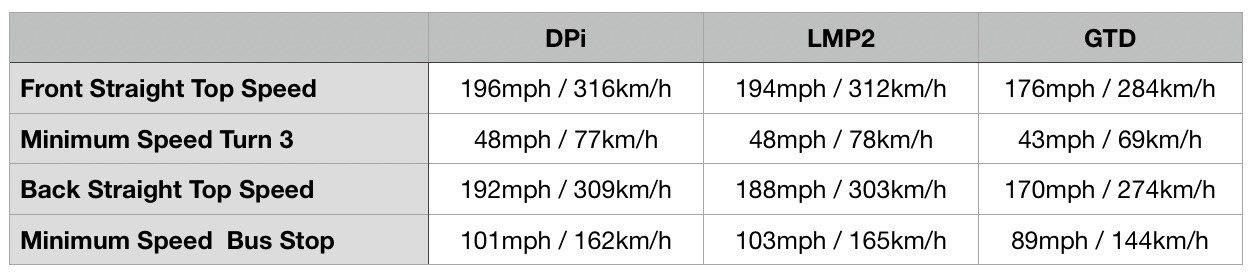
“The hardest thing is the Bus Stop for us, because we’re so much faster,” says Mikkel Jensen, driver of the No. 52 PR1 Mathiasen ORECA LMP2 car. “And you can say there, it’s easier if you caught a GTLM before than a GTD now, because you lose one-and-a-half, two seconds if you get to them right at the braking. We just have so much more mid-corner speed, the Bus Stop is a killer when you catch them there.”
For some combinations of passer and passee, because of the different abilities of the car, where a faster car catches a slower car can really cause a ripple effect and kill a lap. LMP3s and GTD cars aren’t far off in lap time, but they make that time in different ways. That can make it very difficult to pass, notes Jarett Andretti, driver of the No. 36 Andretti Autosport Ligier that earned the class pole. And they have to manage their own passing often while being overtaken by a DPi or LMP2 car. That created some very sketchy moments in the qualifying race.
“The GTDs and us make speed very differently. They have ABS, they do have more power, although we are quicker on the banking,” Andretti explains. “So it's about catching them in the right spot. I think that playing that strategy game is very, very difficult. It's about not losing that extra second or two in traffic, every now and again. In the qualifying race, at least, the P2 cars and the in the DPi cars were pretty respectful; they may not be as such in the real race, but I think that they were pretty calm. It's just about kind of letting them by whenever it doesn't cost you time.”
That speaks to the fact that there is an art to being passed as much as passing. Getting passed in the wrong spot can cost time – the chart of lap time range during the qualifying race (pictured below), provided by Ken Lin of P1 Software, illustrates how lap times will vary for the cars as they deal with traffic. Or getting passed in certain locations can mess up a driver’s battle with the car ahead or behind, giving the opponent an advantage the driver obviously didn’t want them to have.
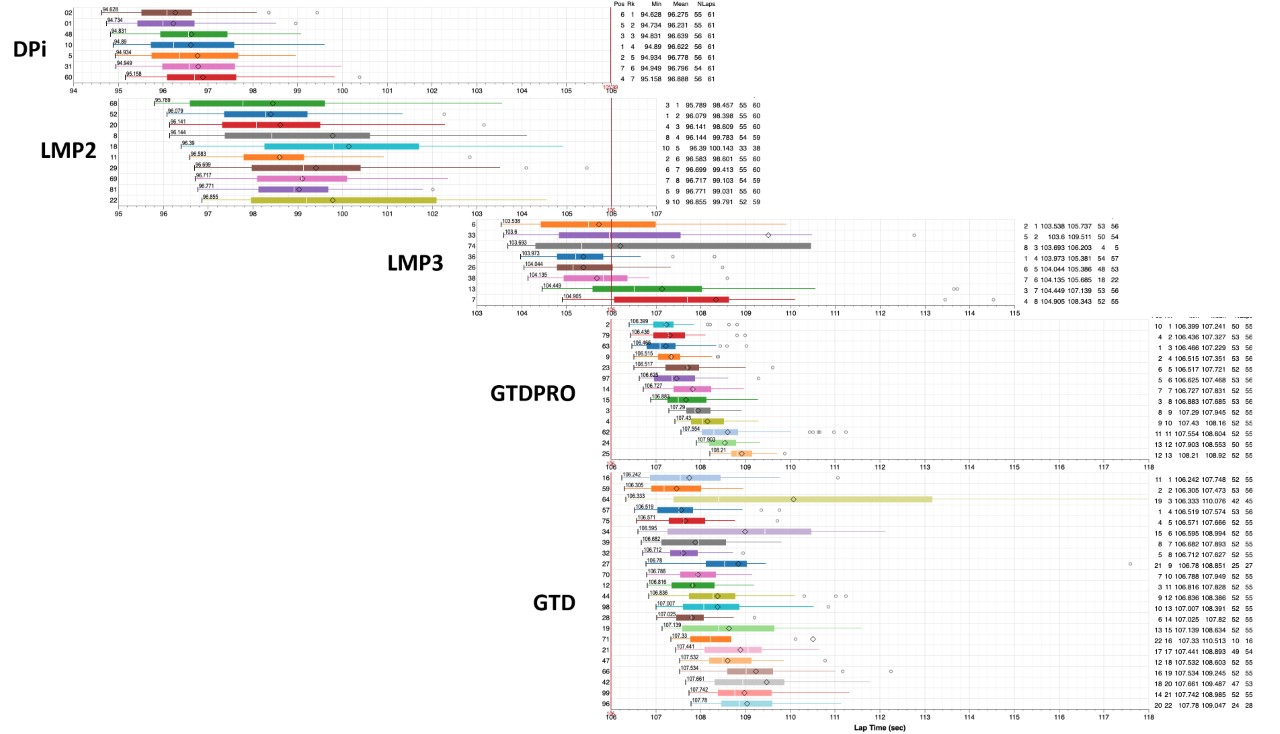
Click on the graph to view in PDF format
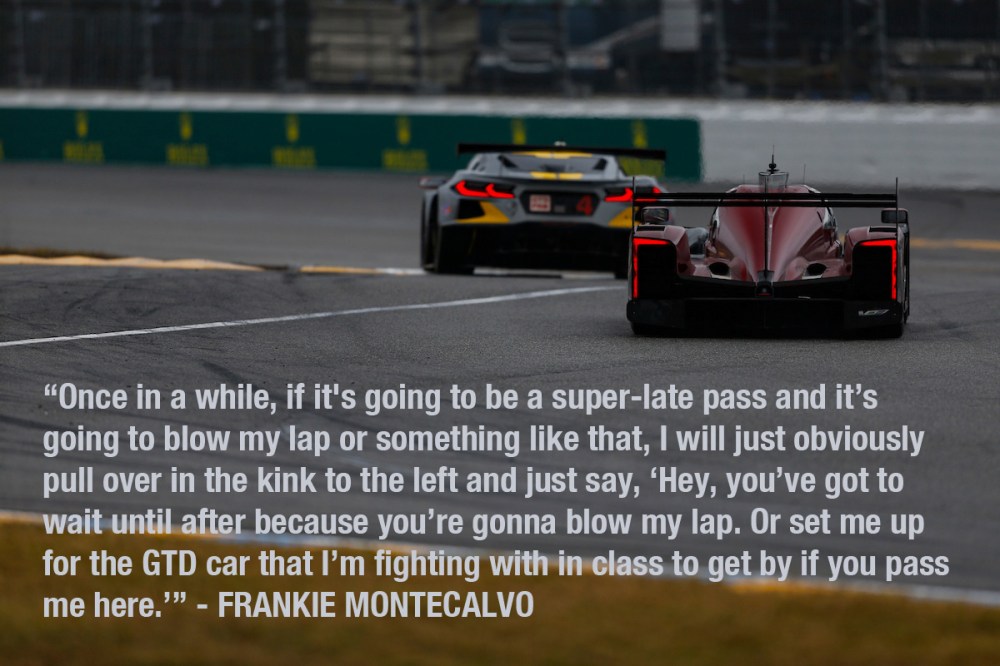
“I just try to be predictable,” says No. 12 Vasser Sullivan Lexus RC F GT3 driver Frankie Montecalvo. “The easiest way for them to read you is just stay on your line and just be predictable. But once in a while, if it's going to be a super-late pass and it's going to blow my lap or something like that, I will just obviously pull over in the kink to the left and just say, ‘Hey, you’ve got to wait until after because you're gonna blow my lap. Or set me up for the GTD car that I'm fighting with in class to get by if you pass me here.’”
In the end, winning the Rolex 24 At Daytona this year will require patience and care in dealing with traffic, no matter what end of the passing equation a driver is on. It’s almost guaranteed that at least one contender will remove themselves from the race with an impatient, ill-timed move. Those who survive to fight for victory will have had both patience and luck on their side.
“Sometimes lifting 20 percent will save you from lifting and braking 100 percent the next corner, and losing a dive plane or a splitter,” says Andretti. “As a racer, you just want to go flat wherever, but sometimes you just gotta say, ‘OK, I'm gonna give it up here, and I'm gonna live to fight the next day.' I think it’s about just being smart, and understanding where you can give and where you can take.”

Richard S. James
Richard James is motorsports journalist living in Orange County, Calif, who has been involved in the sport to some degree for three decades. He covers primarily sports car racing as a writer and photographer, with occasional forays into off-road and other forms of racing. A former editor of the SCCA’s publication, SportsCar, he has a special love for the grass-roots side of the sport and participates as a driver in amateur road racing.
Read Richard S. James's articles
Inside MX-5 Cup: Bobby Gossett’s winning destination
Latest News
.jpg?environment=live)
Comments
Comments are disabled until you accept Social Networking Cookies. Update cookie preferences
If the dialog doesn't appear, ad-blockers are often the cause; try disabling yours or see our Social Features Support.