The RACER Mailbag, January 19
Welcome to the RACER Mailbag. Questions for Marshall Pruett or any of RACER’s other writers can be sent to mailbag@racer.com. Due to the high volume of questions received, we can’t guarantee that every letter will be published, but we’ll answer as many as we can. Published questions may be edited for style or clarity.
Q: Robin always hated the idea of motorsports going all-electric, and I concur that much of the attraction would be lost with quiet cars.
However, if the consumer auto industry is ultimately going all-electric, with announced plans not that far in the future, is IndyCar looking to get ahead of that curve and leapfrog F1 to embrace electric motors and re-establish some innovation leadership, plus possibly its survival? Maybe the transition could be a mixture of engines like the good ol’ days such as the turbine vs Offys, aspirated vs turbo, etc.
Perhaps Penske is already starting these conversations as he foresees the industry revolution firsthand.
Roger in Greenwood, IN
MARSHALL PRUETT: Based on every conversation I’ve ever had with IndyCar president Jay Frye on the topic of whether the series will go all-electric, the answer is a firm and loud no. Time will tell, though. If most of the world’s new cars in the next decade or two are electric vehicles, IndyCar will need to modernize its approach or face the risk of becoming a vintage racing series. But count me among those who need to hear roaring internal combustion engines.
Q: If every driver in IndyCar had a livery as snappy as Simon’s Australian Gold livery, race attendance would skyrocket.
Janis from Tampa
MP: You raise an excellent point, and I do think it’s a shame we haven’t seen that slick livery return. A thing I don’t miss? Simon Pagenaud transforming himself into French Elvis…
Q: How about Gabby Chaves in the No. 11 Foyt car for the ovals? No-one better at Indy.
Dave, Traverse City, MI
MP: Ryan Hunter-Reay might ask you to check his Indy 500 credentials after that last statement, but overall, yes, there’s plenty of talent to consider if the Foyt team is looking to hire an oval ace. I’d love to see Gabby back where he belongs.
Q: I have a couple of questions about driver line-ups for the Daytona Rolex 24. I’m intrigued by the purpose of the fourth drivers that are in nearly all the line-ups at Daytona. Why do teams insist on four drivers, when at Le Mans it’s three? I get that Daytona is often referred to as the tougher of the 24s due to the longer dark hours and constant traffic, but also unlike Le Mans there are many full-course yellows that could render a big proportion of a driver’s stint being spent trundling around behind a safety car, so I’m not sure four drivers are really needed for fatigue reasons. Doesn’t it just add more complexity with seat/pedal position, car setup preferences and also cycling four drivers through practice etc so they are all comfortable? Where is the benefit?
Also, what are the usual drive-time splits between the drivers? Obviously some of these fourth drivers are barely in the car (looking at you Jeff Gordon, McMurray, Larson), but then I recall JPM running nearly half the race in his early Rolex 24 days post-F1.
Julian Collie
MP: I might spin this the other way, and ask why Le Mans limits its driver rosters to three rather than four. Taking the approach that Le Mans does things the right way and IMSA does not is the part that’s curious. The moment a second driver is introduced, you have complexity, so a third or fourth really doesn’t create undue complications.
The most basic answer here is freshness and readiness. I’d rather have four drivers who’ve gotten more opportunities to rest and focus than three who are busier and less recharged. Hard to say on drive-time splits as it varies on skill, who’s paid to drive and who’s paying to drive, whether a driver is better/worse in the dark than the others, etc.
Q: I just read with great pleasure your response about the Cicada IndyCar chassis. I have a huge interest in the “bespoke era” of Indy racing. I enjoyed your all-too-brief Argo retrospective years ago.
Robin indicated that a book was being written similar to "A-Z of Formula Raving Cars." Would you happen to know about that? If nothing else, features on the Argo, Theodore, Ligier and other chassis would be great for helping to preserve their history.
P. Worth Thompson
MP: An encyclopedic book on Indy cars partying and going to raves would be a blast to read! Haven’t heard about the book Robin apparently mentioned, but I do have an interest in documenting as many of the one-offs and oddball cars that I can, either online or in book form.
Among my favorite books on the topic is Alex Gabbard’s "Indy’s Wildest Decade," which is well worth picking up.
Q: Thank you for last week’s thorough response to my question about the Cicada. Since you appear to share my interest in the obscure and the odd, I’d like to get your input on two somewhat related cars from 1971-72.
The Mailbag has a new official mascot. Image by Marshall Pruett
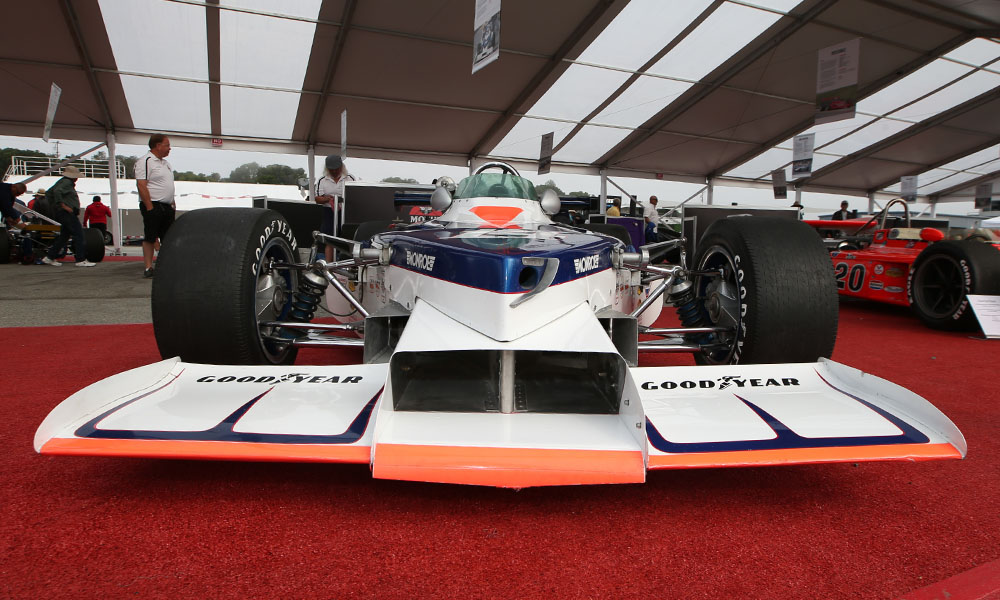
The Antares-Offy appeared at Indy in 1972. It was used by both the Patrick team and Lindsey Hopkins. Only the latter choose to deploy this weapon in battle, however, and it was quickly discarded.
Interestingly, this car, designed by Don Gates who had just penned the Chaparral 2J, featured a boat bow-like nose intended to direct air around the car to the rear wing. That’s noteworthy because modern F1 cars are sculpted to have the same affect while contemporaries of the Antares generally used the bodywork surfaces to create downforce. Oddly, considering the intent of this design, there were lots of odd things blocking the airflow including pontoon tanks and a cluttered front suspension that bordered on steampunk. Then there’s the bizarre radiator inlet on the front… I’m pretty aware of the history of this car and how it was eventually received conventional bodywork and qualified at Indy as late as 1979.
My question is, what was the designer thinking? What a great aerodynamic idea that was well ahead of its time yet seemingly no effort to design the rest of the car to make it work. Where was the disconnect?
Secondly, I have always been interested in the one-off Chaparral GS111. It’s history as a F5000 car is well documented in John Zimmerman’s excellent book "Lost In Time" as well as on the Oldracingcars.com website. My questions have to do with its ancestry. Gates, the Antares designer, conceived it as a Chevy-powered IndyCar back in 1966 for Smokey Yunick to run. It had a less pronounced version of the boat bow nose used later on the Antares. It also – when it appeared in public, anyway – had side radiators. Very unusual for the 1960s. I have found very little information on this part of the car’s history. I know that Gates worked for Chevrolet at the time. Was this a serious plan for GM to tackle Indy? How much was GM corporate on board? If so, was this in response to Ford providing engines to top teams in that time? Finally, Did the laps done at Indy by Jim Hall in a Chaparral Can Am car have any connection to this? Why did GM abandon the project and how did the car end up in Hall’s shop in Midland Texas?
Steven Meckna, Long Beach, CA
MP: Thanks for the great Cicada question, and I enjoyed the time-sink to learn more about a car that was mostly a mystery to me over the years. I also hope I didn’t give the impression this would be a regular occurrence, though. I’ll likely do one or two old-car research deals each year in the Mailbag, since this isn’t meant to be a place where in-depth reporting takes place each week.
I spoke at length with the owner/driver of the Antares last August and will spool that up at some point in the future when an abundance of free time appears.
Q: I don’t really have a question, but more of an announcement for those who read the Mailbag.
Robin Miller will be inducted into the National Sprint Car Hall of Fame in June 2022 as a media member. A well-deserved honor, as he was always touting the prowess of USAC and World of Outlaws drivers in the Mailbag and was a proponent of them from everything I have ever seen or read and was always trying to get IndyCar connected back to the grassroots open-wheel series.
Given the timing of the public announcement during the Chili Bowl and when the Hall of Fame normally contacts the inductees, Robin may have been aware of this honor prior to passing away.
I hope his family is able to attend the ceremony on June 4 for this honor. And for all you IndyCar fans, this Hall of Fame & Museum is only a short 25-minute drive south on Highway 14 from Newton when you’re there for the double-header in July.
Troy in Iowa
here’s a great tale
about their appearance at Indy in the early 1980s), #FlatRobin was present at the Chili Bowl, and one of Robin’s favorite ‘get him to the Indy 500’ drivers, reigning NASCAR Cup champ Kyle Larson, was among those who posed for a photo with our stitched hero.https://twitter.com/TheKatieButtera/status/1482218570062913539?s=20
Q: Many times, during the first session of the day, the driver will bring the car back into the pits after only one lap – the so-called installation lap. Besides looking to see what has fallen off or come loose, what specific things are the crew addressing then?
Rick in Lisle, IL
MP: Great question. Since all the cars are torn apart, serviced, inspected, and reassembled between races, and often — to a less intensive degree — overnight during race weekends, it’s all about having the driver assess whether there are any abnormalities that arise on that install lap. And even if nothing shakes, rattles or refuses to work, the crew will remove the engine cover, at a minimum, and maybe even the sidepods, which are a pain and take more time to detach, and look for any leaks, loose clamps/fittings/bolts, and make sure everything is safe for maximum speed.
I recall the embarrassment of having one of the IMS safety trucks stop in our pit stall during one of our first outings during practice for the 1997 Indy 500. The track had gone yellow for a track inspection triggered by our No. 97 TKM/Genoa Racing Dallara-Oldsmobile driven by Greg Ray. Truck pulled up, one of the safety team members walked over, handed us a large hose clamp that had come loose from the one of the V8’s exhausts, and we were shamed for letting it happen.
He said, "This would have cost you a $50 fine not so long ago." Frightening to think of what could happen if a driver had run over the hose clamp and cut a tire. Not sure how or why we didn’t tighten the clamp correctly, but we made a more thorough effort to check everything we could reach after that mistake.
Q: How many female drivers do you think will be in the 2022 Indianapolis 500 and who will they be?
Chris Fiegler, Latham, NY
MP: One, and it would be the incredible Simona De Silvestro with Paretta Autosport once Beth Paretta is able to secure a car and partner team to assist with the program as Team Penske did last year. I can’t wait for the day when this is no longer a relevant question to ask to due the regular presence of multiple women racing in the 500 as drivers and team owners.
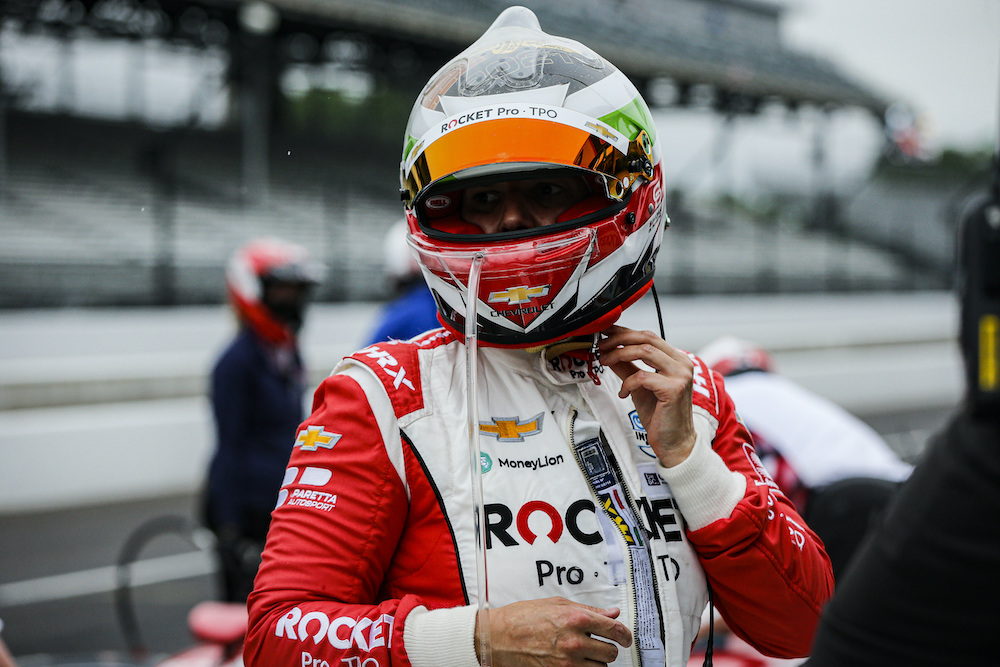
The program's still coming together, but you can expect to see De Silvestro back at the Brickyard with Paretta in May. Barry Cantrell/Motorsport Images
Q: Can you explain to novices like myself the IndyCar points system? For example, is the Indy 500 weighted more than the rest of the races? And how much is the championship worth at the season end?
Pete Jenkins
MP: Double points for the Indy 500, and standard points for the rest. Thankfully, IndyCar stopped giving out double points for its season finales a few years ago. The IndyCar title comes with a $1 million check.
Q: Marshall, I just read your article on the NBC television schedule for the upcoming season. As a Canadian fan, I am stoked, eh? I can’t recall a better TV package. All but three races are on NBC, which every Canadian gets in even the most basic of cable packages. You have to think that one of the Canadian networks will pick up the Toronto Indy, so that just leaves Belle Isle and Gateway that I’ll have to watch in Spanish on YouTube the next day. This TV package is coming at a crucial time for the series, which is in an upswing in car counts with lots of exciting new stars!
I can’t wait to see Lundgaard mix it up with O’Ward, Palou, McLaughlin, Kirkwood and DeFrancesco. It is so refreshing to have IndyCar enjoying such a positive off-season! What is your prediction on highest-finishing rookie? I’ll predict Lundgaard, then DeFrancesco over Kirkwood, although the situation would be different had Kirkwood been able to fit in with Andretti.
Trevor Bohay
MP: Great update on Hoser TV. My rookie money is on Lundgaard. Drop him alongside Kirkwood at Foyt, and I’m picking Kirkwood, but RLL is miles ahead of Kirkwood’s team, and that’s why he should be the runaway Rookie of the Year.
Q: I have a question and a comment. First, the commit. I received an email from IndyCar with a survey. I certainly hope they pay attention. They asked questions about improvements to the sport etc., so hopefully they are serious about improving. Monday was the first day of testing, and the official IndyCar website had zero coverage, Peacock TV had zero coverage. You see where this is heading.
Now, the question, I think I understand the engine change penalty rules, but I want to make sure. Can the teams do any internal work on the engines, adjust values, look at rods and mains etc, or are the engines sealed and nothing can be done except change them out and receive a penalty?
John (still wishing they would race at COTA), Austin, TX
MP: Three cars at Sebring for a private test day just isn’t a realistic thing for IndyCar or any series to spend money on for TV coverage, brother. Manufacturers (not the teams) are allowed to crack open their engines and make repairs under IndyCar supervision without the threat of penalty.
Keep in mind that the types of feasible repairs are somewhat limited; if the thing breaks a crankshaft, you can expect for a bunch of other related damage that would require an unapproved engine change and the penalty that comes with it.
Q: I don’t exactly remember when the TV networks started interviewing the winners on the finish line after burnouts instead of in victory lane. I noticed FOX doing it when NASCAR came back from the pandemic, and NBC seemed to pick up on the practice once it took over the schedule. I do recall last year’s Indy 500 where NBC interviewed Helio Castroneves once as he was sprinting on the frontstretch, and once again once he got his car into victory lane. While I’ve viewed the victory lane interviews as a bland mixture of platitudes trying to explain emotions with thanks to the sponsors, it signified to me it was the end of the race. When have you noticed TV crews interviewing the winner immediately after a celebratory burnout, and do you see the victory lane interview going away?
Brandon Karsten
MP: It does feel a bit old-timey these days when someone wins a race and we have to wait a good while before the podium and other main players are interviewed. The energy is highest right after the win, so yes, I’d love to see NBC go the route of quick interviews right after the top three have come to a stop.
Q: I recently came across this video on YouTube comparing both 2020 F1 and IndyCar championship-winning cars, i.e., Lewis Hamilton's W11 and Scott Dixon's DW12. And while watching the 3D renderings of both cars lying next to each other, I thought, "Man, these IndyCar wings are huge and boxy compared to those of the F1 car!" Now, I'm aware that these are two very distinct cars, designed with a different mindset, for different purposes and with different budgets, but I know enough about aerodynamics to ask myself:
1. If F1 cars have smaller wings than IndyCars (which are able to follow each other closely at twisty tracks like Barber or Mid-Ohio), how come they struggled so much with dirty air over the past few years?
2. Seen the other way around, if IndyCars have larger wings and more reliance on underfloor downforce (the latter allowing them to follow each other closely), why do they still generate much less downforce than F1 cars?
Xavier from France
MP: I’d say F1 hasn’t just struggled with turbulent air making it hard to pass in the last few years; been that way since the late 2000s as more wings appeared. DRS was introduced in 2011 to address the dire lack of passing.
Think of the F1 cars as complete custom aerodynamic creations where wings and barge boards and flow conditioners are stuffed into every area permitted, whereas a DW12 is meant to use four spec aero packages and lacks the regulatory freedom to fill every void with downforce-optimizing pieces.
It’s a bit like comparing a cheetah to a hyena. Plenty of similarities, but at their core, these are entirely different aerodynamic beasts.
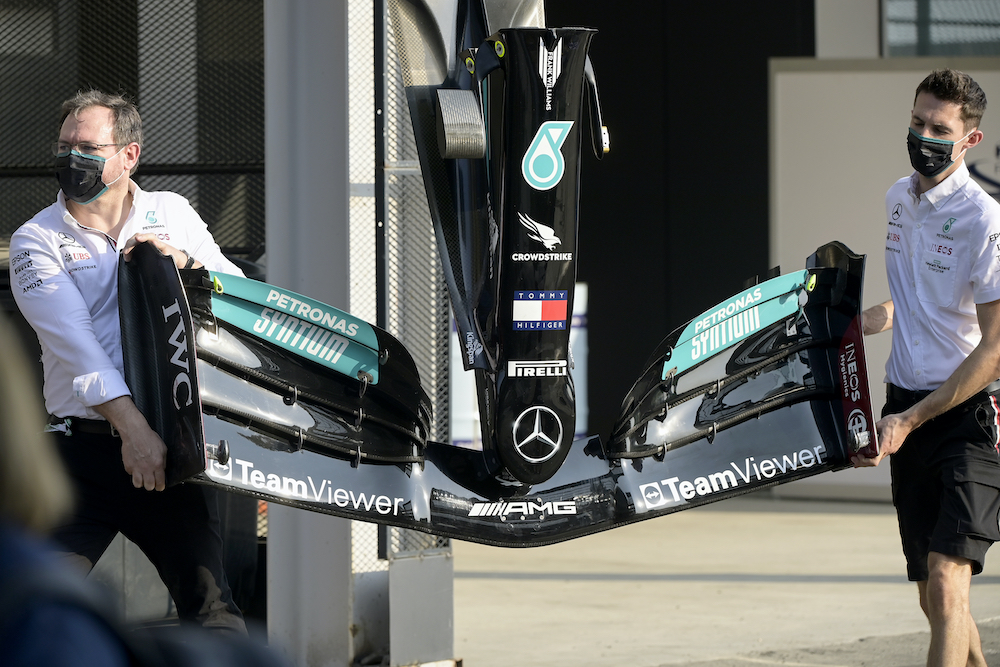
Not all wings are created equal. Mark Sutton/Motorsport Images
Q: It's great to see the amount of network IndyCar coverage slated for '22. Not surprisingly, there are armchair quarterbacks grumbling about network racing being flooded with commercials and pre/post-race coverage being mostly absent. Enter Peacock... Has NBC given any detail about the presence of ads on the peacock simulstreams? If we subscribed to a particular Peacock plan, do we have the opportunity to watch all of the races live and ad free? If so, $35 or $70 (depending which plan is needed) for seven months of ad-free IndyCar racing is a fair deal considering how much it would cost if it required a cable subscription.
Ryan
MP: Hi Ryan, yes, answered in last week’s Mailbag.
Q: This May, to celebrate 50 years of life, I’m taking my way-too-late first trip to the Speedway. While I couldn’t get the 500 in my schedule this year, I will be there for two days of practice and the Saturday qualifying. Any tips on how to best soak in the house that Penske (re-)built? For example, with my GA tickets, should I find one good spot (Turn 1?) for the duration? Watch from different vantage points? Is there a good place to see drivers (and/or RACER journos?) and offer an encouraging word as they pass? With/without scanner? Any tips appreciated. And keep up the great work.
Dave, Cranford, NJ
MP: I’d suggest getting good and low in Turn 1 or Turn 3 to start, to get a feel for the whiplash of speed exploding at you and by you in an instant. Finding a spot that looks directly across onto pit lane to watch the teams at work is worth a look, and from there, find a cluster of fans and introduce yourself to the group — most are darn friendly.
Inside the track behind the pagoda is fun, and then I’d venture out to the four corners and take a gander from the infield. Please go experience all the IMS Museum has to offer, and by that point, your legs might be tired so go sprawl out on the viewing mound behind the museum and take a nap to the sounds of cars cracking by at 225mph.
Q: IndyCar media takes some knocks, but they got Blippi at IMS with Hinchcliffe and Rossi! Even a lap around the track in the two-seater with Sarah Fisher. Granted, it is the back-up Blippi, not the original one. And if you're not a parent of small children then you have no idea what a coup this was... except that the YouTube video has nearly 1 million views in three days, and will probably end up being watched more than anything on IndyCar's channel by orders of magnitude. Does IndyCar have plans to engage other prominent YouTubers? I would think that the science of racing would be great for Mark Rober, or just use IMS as the backdrop for some sort of inane MrBeast competition.
Eric, Hawthorn Woods, IL
MP: They’ve been engaging with YouTubers for a few years now, and there’s no doubt some of them have significant reach. The question, though, is whether reach will translate into creating new fans. The obvious hope is that the efforts pay off with bigger audiences in the short- and long-term, like with Blippi and the kids who might learn about IndyCar for the first time. They’ll keep extending invitations as long as they believe there’s value being returned.
Q: I've enjoyed watching F1 more recently since there is actually one (!) other driver who can contend for the championship, but the thing that could drive me away is how every single pass is analyzed and may or may not stand. Having race control decide a race is not racing.
As an IndyCar guy, I think the main culprit is the layout of these tracks. There's so much run-off room with no walls around the corners that there's no incentive to make a quality pass that will stick/give room to a passing driver who has the corner. I feel like walls or sand traps force drivers to keep each other honest and produce true racing, rather than just throwing a car into the corner without worrying about causing a crash and being taken out. Thoughts?
Randy, Milwaukee
MP: I wouldn’t put it down to the tracks; it’s more of a new and terrible culture that F1’s allowed to take root. Kinda like in the NBA where seemingly every foul is met with an explosive response from the offending player and that team’s coach, with both going way over the top to protest the call. It’s lame, and predictable, and makes the games -- and races -- a chore to get through at times because the refs allow the constant bitching and arguing to come in from the timing stands.
It happens on wide-open tracks, on tight street courses, and everywhere in between. And the virus has infected F1’s fans, too, with non-stop complaining and arguing on social media over every pass, every tiny thing that might be an infraction, etc. Amid the thrills, I found F1 in 2021 to be exhausting for all the wrong reasons. Less communication between pit wall and race control would be welcome.
Q: With the Rolex 24 on our doorstep, it seems to me I remember a story from many years ago where A.J. Foyt was called upon to jump into a Porsche, I believe, and take the stint away at a critical time from a factory driver. Bob Wollek comes to mind as the driver who was pulled in favor of AJ. Do you remember anything like this, because I know on TV they interviewed Wollek and he went ballistic. To add it the fire, I think it may have been raining? What say you?
Thanks, IMSA Dan
MP: That was 1983 and yes indeed, Brilliant Bob -- a Foyt-like character from France who was full DGAF like A.J. and had the speed and respect to back it up -- didn’t take kindly to (equally ballsy) team owner Preston Henn moving Super Tex over to Bob’s Porsche 935 after Foyt’s retired. They didn’t cotton on to one another then, but did win the 24 Hours of Daytona, came back and placed second as friendlier teammates in 1984 with Henn, then won overall again in 1985 with Henn.
It was one of the great hate… slight love… then full love endurance driver partnerships we’ve ever known. Sadly, Bob was killed in March of 2001 when he was struck while cycling just outside the Sebring circuit.
Q: I had one of those moments where I’m 33 and I feel old this weekend. Seeing Frankie Muniz testing an ARCA car at Daytona. I forgot about his racing endeavor in the late '00s. You have any stories about those years Frankie participated in those junior categories?
Phillip Schmitz, Dallas/Fort Worth
MP: I do not, other than seeing some of his races and thinking he had talent, but not enough to earn a career in IndyCar on raw speed.
Q: Frankie Muniz is testing an ARCA car and seems hellbent on racing at Daytona. He said he had an IndyCar deal lined up in 2010 before an injury ended that opportunity in a Twitter video NASCAR posted. I've never heard that before. Marshall, how close were we to Malcolm from Malcolm in the Middle running the 500?
Sam in Crown Point
https://twitter.com/NASCAR/status/1482412152510164999?t=ebMIEOBCnAh3Nq0prBovPQ&s=19
MP: My best guess would involve Frankie potentially moving upward with Team Stargate World (US Racetronics) which blended with Keith Wiggins’ HVM Racing team in 2010.
Good old "Malcolm in the Middle" was teammates with TSM’s Simona De Silvestro, who won four Atlantic Championship races that 2009 season and graduated to IndyCar with HVM featuring Stargate branding on the sidepods and many of the key US Racetronics personnel, including the excellent Shane Seneviratne (who I worked with back in the day at the Dorricott Racing team), ace PR rep Trish Donovan, and shadowy money man/former Simona manager Imran Safiulla joined in.
Q: Once again NASCAR is eating IndyCar’s lunch with multiple NASCAR drivers in the Chili Bowl. IndyCar had one (who has not quit Midgets). If you want the grassroots short track fans, you have to go where they are! Maybe ever since the IndyCar drivers were referred to as athletes they have decided they are athletes and as such won’t spoil their hands with something as pedestrian as a -- gasp -- dirt race? Athletes don’t race dirt Midgets and Sprints – RACERS race dirt midgets and sprints!
If IndyCar won’t do an F1 "Drive to Survive" series, at least go where the real race fans are -- Indiana dirt !
Big Possum, MI
MP: Sometimes I lose track of all the places where the "real" fans are. It’s at NASCAR races, and IMSA races, and F1 races, and IndyCar, and rallies, and drag races, and short ovals, and on ice, and in the air, and on the sea. Newest addition? Indiana dirt!
Q: Despite being a lifelong racing fan (primarily open-wheel and sports cars), I am completely clueless when it comes to dirt track racing. I read articles on RACER and pretend to know what a C-feature is, or what the difference between a quarter midget and a dirt late model is, but truthfully I’m just faking it. Can you give me a simple overview on dirt track racing to get started? I’m interested in things like different sanctioning bodies, race formats, car classes and how they compare, etc. Maybe just the 100-mile view, I can go look up the specifics after.
Tim Elder
MP: I asked a friend to help with this one, since it’s not my area of expertise:
"The dirt track scene is broken up into various genres. You have the open wheel (quarter midgets, mini sprints, three-quarter TQ midgets, midgets, spent cars wing and non-wing and Silver Crown). At the start on the age ladder, quarter midgets see kids started in the five-year old range all the way into the teenage years. Quarter midget clubs exist all over the country and are commonly found on fairgrounds. The next step up you see often is to the mini sprint, where they have the younger aged stock class (Cash Bowyer, Brexton Busch, Wyatt Miller and Owen Larson currently run there). From there you go to restricted, which is a full-size chassis but smaller engine and smaller wings.
The next step in the mini sprint world is the adult classes. These classes are split between stock and outlaw engine classifications and usually run both wing and non-wing.
All of those mini sprint classes were recently run at the Tulsa Shoot Out. The three-quarter or TQ midget scene currently doesn’t seem to be as popular as it once was as a stepping stone, but is increasingly used by teenagers and adults as a budget-friendly way of racing. I know in some places the TQ scene is massive, but in recent years drivers tend to go straight form the mini sprint to the full-size midget. In its prime, midget racing was filled with pavement and dirt, with classic events like the Night Before the 500 at Indianapolis Raceway Park for pavement and the 4Crown on dirt at Eldora Speedway. Pavement racing is making a comeback, if you are running for national points in either USAC or the World of Outlaws new Extreme series, it is currently all dirt. Although not the largest purse on the calendar, the Holy Grail of midget racing is the Chili Bowl Nationals.
The next step from the midgets are sprint cars, with larger chassis than the midget and more than double the power. Another form of racing that at one time split between pavement and asphalt in its prime, it currently resides mostly in the dirt. The big argument is always wing or non-wing. For me, non-wing sprint cars drivers are the last of cowboy mentality that is man vs machine in the rawest form: 900+ horsepower and 100% mechanical grip makes it something not for the faint of heart.
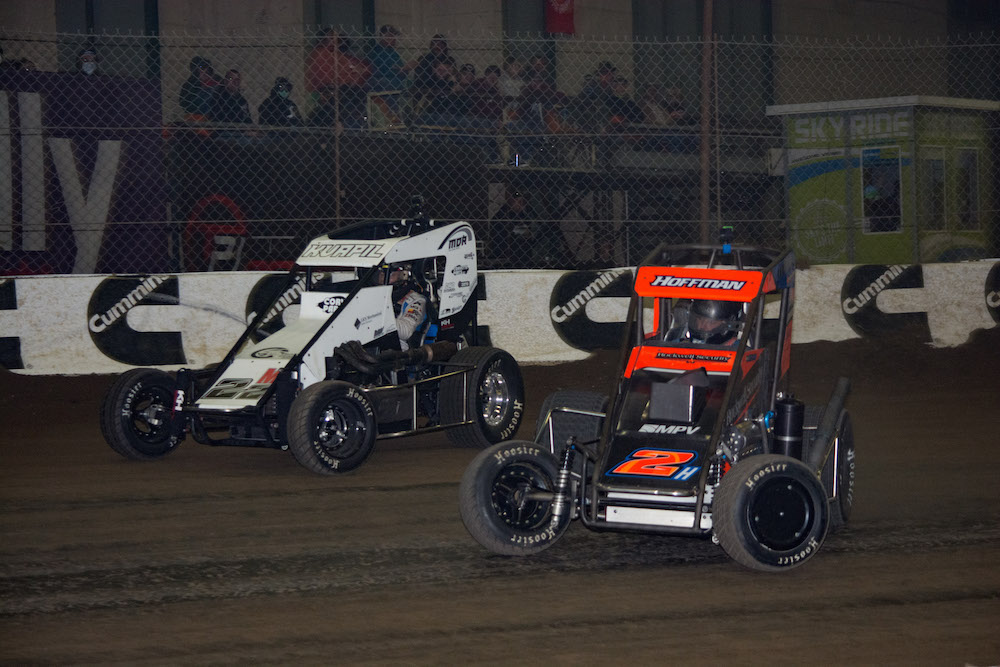
The Chili Bowl is just one tip of a complicated dirt track iceberg. Or dirtberg.
The wing sprint car racing is nothing look away from, however. The World of Outlaws is coined as the Greatest Show on Dirt for a reason. Winged sprint car racing definitely leads the way on the financial aspect as they have much larger paying shows than non wing, with events like the Jackson Nationals, the Kings Royal and the biggest dirt race in the world, the Knoxville Nationals.
Then you have the more full body world that is split between Late Model and Modified. Dirt modified cars are full size machines where the front wheels are exposed but the rear wheels are covered. The dirt late model has completely enclosed wheels. Both genres, the modified and late model, have entry-level classes usually based on engine size, from a stock or mod classification all the way to open unrestricted type classes. Late Models seems to carry the weight as the top level genre in this area with large events and a ton of large paying events.
When it comes to formats, those tend to change based upon the series/region. Some series go with the passing points approach where drivers get to the track, sign in and draw a numbered pill. The pill draw sets line-ups for heat races. At the completion of heat races the drivers are ranked by points based on the equation of positions gained/lost plus finishing position in the heat race. The A Main is always the final event for all the glory and money, however when only X amount of cars can be in the A Main and more then X show up, we have to run lower mains. That’s where you see things like C and B Main most of the time. In the passing points system usually after heats the top X drivers in points are locked into the A Main where others have to go a C or a B.
Traditionally, drivers in the C will race (more laps than a heat, but less than the B or the A). The top two or four or however many are supposed to transfer based on that particular format will go to the next main, which would be the B. Drivers line up for the B Main based on the points system rankings with transfer cars tagging the tail of them. Once the B Main is over, another set of cars will transfer to the A Main. If you watched the Chili Bowl, that format is similar to this, to a point.
For the Chili Bowl, each driver who entered was designated a prelim night. Drivers did this format with a pill draw, heat races and then the top 40 in points went into Qualifiers, after which 41st and below went to C and D Mains. The qualifiers are another set of races for the top 40 to gain points on the same equation as heats setting the grid for the A and B. In the A Main, the top two drivers were locked into Saturday night's A Main event and the Pole Shuffle. After five prelim nights, all drivers with final results were put together into one massive race day format. With so many entries, the Chili Bowl runs double letter mains until the A. This year they had Double Q Mains that start at 9:15am on Saturday. Same as before – drivers lined up in Q1 or Q2 with the top six advancing. A
Drivers who transfer in those early mains are in the car for a while. When they come off the track and the ramp at the Tulsa Expo they are met by crew members with fuel, possible new tires and wrenches to make adjustments before going right back down the ramp to tag the tail of the next one.
An additional model has cars draw when they sign in for single car qualifying order. Those results set heat race grids, which sometimes have an inversion where the fastest qualifier would line up fourth or sixth in the heat and the top four lock into the A Main and the others go to a C or B Main, or something they call the Non Qualifiers race which is like a LCQ.
Every series is different, and they take time to understand completely.
A lot of the people in the dirt racing world are very accessible and are open to answering any questions you may have, just send them a tweet or a DM.
For me, someone who travels full-time in a few series, I love the dirt tracks, I love the big ones and the small local shows. No telemetry or pit strategy, just hard working people who live life to go racing and for me it’s the best.
Q: Back in June of 2007, I saw Mark Martin drive a Daytona Prototype at Iowa Speedway. Given Martin's reputation as a road racer, fan favorite, and opponent/teammate, I was surprised that this was his only sports car race. He would seem to have been a natural as a third driver when he retired from NASCAR. Can you fill me in on the story behind this drive and why he never did any others?
Robert Meegan
MARK GLENDENNING: It actually wasn't his only sports car race – although it was the only sports car start he made at Iowa, or indeed, anywhere other than the Rolex 24 At Daytona, where he had a hand in several GT class wins in his six appearances between the late 1980s and mid 1990s. Marshall interviewed him about his first class win at the wheel of Roush Racing's Mercury XR7 GTO in 1989 on his podcast a couple of years ago.
Q: This one's for Chris and Marshall. There's a trend to promote efficient engines, sustainable fuels, etc., but I see a spot where both F1 and IndyCar are dropping the ball. F1 has had a graphic lately saying something like, "Hybrid since 2014," but I seem to remember 2009 was when KERS was introduced. Yeah, it didn't make as big a difference as the current PUs, but it certainly was a hybrid, and KERS tech is recognizable to those who drive modern hybrids.
F1 also is increasing the percentage of "sustainable fuel" that teams must use, and trying to get some publicity out of that. But IndyCar has been using ethanol since 2006, and last I checked, the corn it generally comes from is a highly renewable resource.
Personally, I think IndyCars should burn methanol because it smells better, and F1 cars should use V10s or V12s that scream to over 20,000 RPM, and if they want to use hybrid tech or sustainable fuels, that's fine. But why do the marketing gurus in each series miss the fact that they're doing better on the sustainability front than they're letting on? With IndyCar in particular, don't some engine makers hesitate to be involved with a series they believe doesn't have green credentials? Both series have been on this for well over a decade, something most other series can't say.
Greg, Ohio
CHRIS MEDLAND: Greg, you're spot on. It has been a mystery why F1 never shouted about its progress more. Even just taking the 2014 power unit regulations and ignoring KERS before it, the thermal efficiency of these engines is now over 50%, making them some of the most efficient combustion engines in the world. Yet it was only at the end of last year that F1 finally started pushing that aspect. Before Liberty arrived, it was because Bernie didn't like them, but since then still took too long. I think a big part of the issue comes from how used to being secretive F1 teams are, and they automatically opt not to say anything in case it gives any insight to a competitor, but that does seem to be changing. There was also the risk of sounding hypocritical, because the engines are a tiny part of F1's emissions, when far more comes from traveling round the world to each race, so if it praised itself too much for the job done with the power units it would probably get more criticism for other areas it needs to improve.
MP: Energy recovery systems did appear in 2009 but they weren’t used by all teams and were gone by 2011, so it’s easier to use the 2014 date where all cars became hybrids.
Good question/point on IndyCar using E85 but not making much out of it. I’m not entirely sure those who are responsible for marketing IndyCar have a grasp of or passion for the technical side.
Q: I’m seeing articles about Otmar Szafnauer switching to Alpine, so the question might already be outdated, but with his American heritage and background, what are the odds that we could see Szafnauer making some sort of transition to North American racing? And here comes another curveball -- how cool would it be to see Kimi Raikkonen racing in IndyCar? Something about his style just seems so applicable to IndyCar.
Also, I keep seeing articles popping up about Callum Ilott taking a “gap year” from Ferrari so that he can race in IndyCar. Are we realistically only going to see Ilott for one year? I find it hard to believe that he would give up full-time racing to go back to being a full-time sim and reserve driver.
Ian, Santa Barbara, CA
CM: I know you sent a follow-up email saying you think the Otmar part is now out of date, but I didn't want to ignore the first part of your question. I don't think we'll see Otmar in North American racing for a little while yet. He was chasing other positions in F1 last year when he knew he wanted a clean break from Aston, so I think we will see him remain in F1 for some time (whether with Alpine, as widely reported, or somewhere else).
On Kimi, I think it would be awesome but I don't think he wants to be away from home as much as a U.S.-based season would require. We might see the odd test or one-off appearance from him (he's hinted he wouldn't mind another go at NASCAR either), but I'd be surprised if he goes full-time anywhere now. I totally agree his style would really work, and I think he'd love the driving aspect, but the rest... not so much. IndyCar drivers are great at promoting the sport and their partners, sponsors etc., and that's always something Kimi would rather avoid if he can – he just wants to drive the car and do as little of the rest as possible.
Callum's a bit of a strange one, but the way I read it is if he performs really well and Ferrari sees an opening for him then he'll be back in the FDA in some capacity if he wants to be. That said, performing well might open more doors and he chooses to stay in the U.S. A bit like Kimi, he's got no time for politics or false promises and just wants to go racing and show his talent -- something he was disillusioned with in F1 -- so it would take a proper opportunity in F1 for him to head back. Budget permitting, I think he's more likely to do a longer spell in IndyCar.
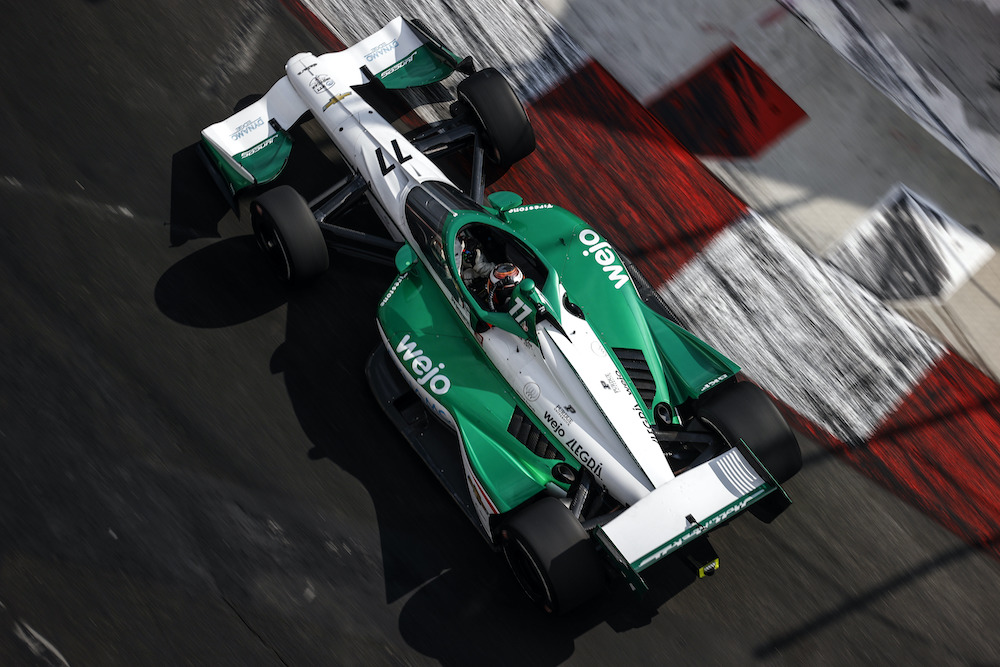
Pretty cool way to spend a gap year. Michael Levitt/Motorsport Images
Q: I think that Jacques Villeneuve’s ride at the Daytona 500 this year should go to Hailie Deegan, although by choosing him, Team Hezeberg has shown that it can’t be serious about being in NASCAR, so the team likely couldn’t capitalize on her talent. Prove me wrong Jacques and actually qualify. Just please don’t sing…
On a slightly related note, I disagree with last week’s photo caption on the BAR F1 split livery. I liked it, mostly because it was a thumb in the eye of Mosley, Bernie and the FIA.
Trevor Bohay, Canada
KELLY CRANDALL: I think it’s very unfair to say that Team Hezeberg isn’t serious about being in NASCAR because Jacques Villeneuve is going to run the Daytona 500 for the them. Villeneuve has ties to the team and is helping them where he can since their primary driver, Loris Hezemans, is young and inexperienced. Team Hezeberg is taking the right approach of starting with a limited schedule this year to get their feet wet in the big pool and running on road courses, which they, and Loris Hezemans, are used to in the Euro Series.
As for Hailie Deegan, she is in no way ready to be thrown into the Cup Series right now, let alone the biggest race of the season. She might be a big name and have a great following, but you can’t put a driver into the Cup Series just because it would make a good story. Deegan’s national series experience only consists of 23 starts in the Truck Series, so no, absolutely do not throw her into the Cup Series on a superspeedway. Don’t we criticize other teams who do that?
Q: Why is NASCAR moving the car numbers forward in the Next Gen car?
Kurt Perleberg
KC: Moving the car numbers forward is simply to allow the sponsors more space on the side of the car. NASCAR tested the idea back in 2020 during the All-Star Race by sliding the numbers back near the rear wheels, which was an experiment requested by the teams. Since then there have been discussions and research about how the side of the car could be an important advertising area when it comes to visibility for sponsors, and here we are. You’ll notice as teams begin releasing their paint schemes that some are taking full advantage of the move with either a bigger logo or playing around with having more space.
THE FINAL WORD
From Robin Miller's Mailbag, January 22, 2014
Q: We are having a debate at work about who was the first driver to do donuts/burnouts after a race win. I say it was Alex Zanardi and he says it started before that. As we are both longtime fans of your work, and respect your knowledge and passion for racing we agreed that we would allow your answer to stand as the real answer proving which of us is right.
Josh Wagar
ROBIN MILLER: I hope you bet him a lot of money, because Zanardi was the first guy I ever saw perform a victory donut and I’ve been covering racing for 45 years. I just can’t remember if it was Portland in 1996 or Cleveland in 1997. Of course, NASCAR does take credit for air, fuel, pit stops, SAFER walls, dirt racing, the first 200mph lap and anything that’s been successful in the past 100 years.
Marshall Pruett
The 2026 season marks Marshall Pruett's 40th year working in the sport. In his role today for RACER, Pruett covers open-wheel and sports car racing as a writer, reporter, photographer, and filmmaker. In his previous career, he served as a mechanic, engineer, and team manager in a variety of series, including IndyCar, IMSA, and World Challenge.
Read Marshall Pruett's articles
Latest News

Comments
Comments are disabled until you accept Social Networking Cookies. Update cookie preferences
If the dialog doesn't appear, ad-blockers are often the cause; try disabling yours or see our Social Features Support.