The RACER Mailbag, January 12
Welcome to the RACER Mailbag. Questions for Marshall Pruett or any of RACER’s other writers can be sent to mailbag@racer.com. Due to the high volume of questions received, we can’t guarantee that every letter will be published, but we’ll answer as many as we can. Published questions may be edited for style or clarity.
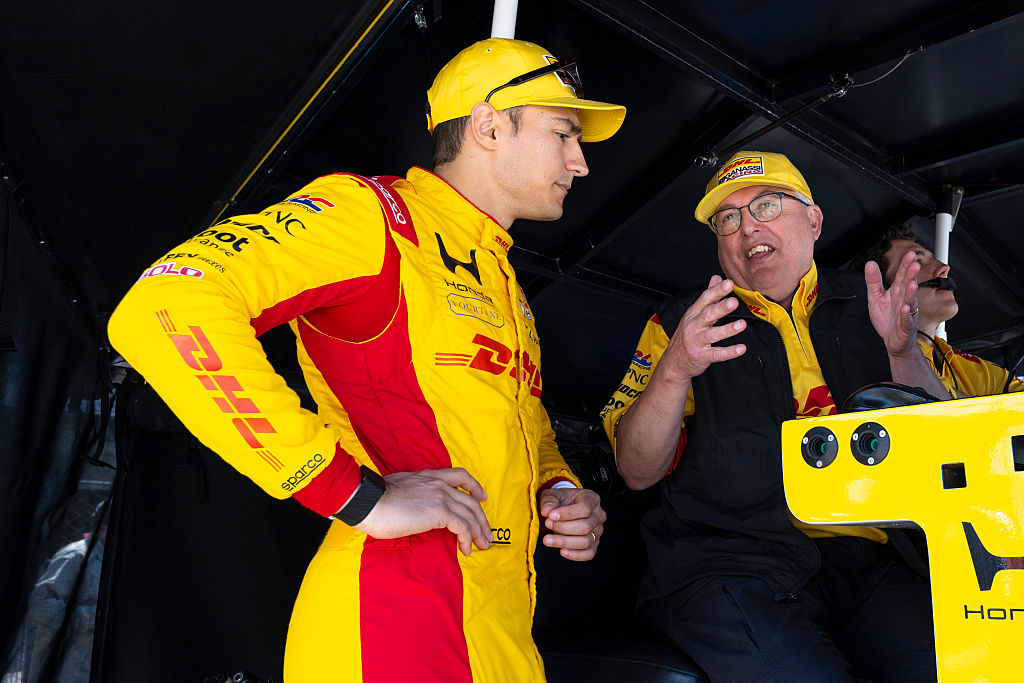
Q: It's surprising to see that DHL is sponsoring Romain Grosjean next year and not following Ryan Hunter-Reay to a new team. I thought DHL was a personal sponsor of Hunter-Reay's. Did Hunter-Reay receive the Zach Veach treatment from Andretti Autosport, or is there more to the story?
Also, Takuma Sato leaving Rahal Letterman Lanigan was also unexpected. Is he bringing less Honda/Panasonic sponsorship to Coyne/RWR? Or is Christian Lundgaard bringing a bigger check to the RLL team?
Nolan Porter
MARSHALL PRUETT: There’s a lot to unpack here, so let’s get rolling: I’d heard DHL was likely to leave after the COVID-affected 2020 season, which would have meant RHR’s time with the team could have come to a seriously premature end. Then I began to hear about a desire to do one more year together in the No. 28 Honda as a farewell tour, and from some of the comments made last year by the team when Grosjean was announced, RHR went into 2021 knowing it was his last with Andretti Autosport, so that aligns with what I’d heard on the driver side. Nothing Veach-like to see here.
DHL was/is a team sponsor, and while they are still attached to the No. 28 with Grosjean, the team did make it clear that other sponsors will be involved with the new GRO effort, which suggests we’ll see something other than the shipping company being the primary sponsor on the car at every round.
Sato leaving was something that should not have come as a surprise; we documented Sato’s expected departure from RLL at least a half-dozen times on RACER.com before it became official. Similar thing to RHR; heard 2020 was Sato’s last season with financial support from Honda/Panasonic to cover a fair portion of the operating costs for the No. 30 car at RLL. But then Taku went and won the Indy 500 for the brand and RLL, and there was no way Honda Japan was going to have its reigning Indy winner sitting on the sidelines for 2021.
After completing his final tour with RLL last year, I wasn’t sure if he’d continue since teams of similar caliber to RLL either had no available seats or required a sizable increase in sponsorship needs. Nonetheless, he and Dale Coyne and Rick Ware should be an interesting trio to watch this season. As for Lundgaard, the Renault/Alpine Academy he belongs to is believed to be a quality investor in his No. 30 Honda effort. The kid is seriously quick, so it looks like a wise decision.
Q: I’ve used Mailbag twice to ask about old Indy cars before, Once about the Parnelli VPJ 3 that was on the pole at Trenton in 1974 then disappeared. Another time about the Lightning, a Roman Slobodynskyj design of the late 1970s that looked sharp but never won a race.
This time I am going deep into the well of esoterica. My question is about the Cicada. In the mid 1970s, back when a design would race for three or four years, this car had a relatively undistinguished career, qualifying for a handful of races but never at Indy. It had a triangle shaped monocoque that somewhat resembled the 1972 Parnelli, and initially radiators placed high just behind the driver’s shoulders. It was driven by mid-fielders like Jigger Sirois and Dan Murphy.
What interests me about this car is a picture in a pitlane somewhere showing it with Ferrari prancing horse logos. I have read that at one point its creator had intended to use a Ferrari V12 from the 512S and 512M program. I would like to know more about this if possible. I followed USAC then, and I would have thought a Ferrari-powered IndyCar would have received more attention. How would a massive sports car V12 be effective in an IndyCar? Even in the 512 these engines look like beasts.
Finally, doing some research into the Lightning, I noticed that at least one car was adapted to the stillborn Drake V8. Another was fitted with a Cosworth DFX and driven by Pancho Carter. Considering this car was designed around a four-cylinder Offy, this seems like a difficult task. As an engineer, could you shed some light on this?
Steven Meckna, Long Beach, CA
MP: I always love it when a fellow lover of obscure IndyCar designs raises their hand, and with the Cicada, I’ve had the good fortune to learn a lot about a car I knew very little about until you asked me to go on a journey of discovery.
I reached out to my pal Mike Lashmett from the Vintage Indy Registry series that runs a few times each year with IndyCar, and then spoke with Rick and Jacques Dresang from the Kettle Moraine Preservation & Restoration shop located near Wisconsin’s iconic Road America circuit, and across the three, I have enough to write a small book. But since the Mailbag isn’t meant to be the place where we do features, I’ll try and put something deeper together for May.
For now, here are a few snippets that might be of interest, and with more time, I’ll be able to verify or correct a few single-source items:
• The do-it-yourself Cicada Indy car was the creation of Plymouth, Wisconsin school teacher Harvey Weisse who, and this is my favorite part, built the car in his basement.
• Among the logical questions you might ask next is whether Mr. Weisse had a basement with some form of large opening to easily remove the Cicada once it was finished. The answer to that question would be no.
• A lot of home demolition and repair was required to free the Cicada.
• Weisse had a background in mechanical engineering, and it’s believed he also worked at a technical college teaching in that discipline.
• The Milwaukee-based (and renowned) Leader Card team tried the car at Indy in 1972 but it wasn’t fast enough. Bruce Walkup, Bob Harkey, and Jerry Karl are said to have given it a whirl.
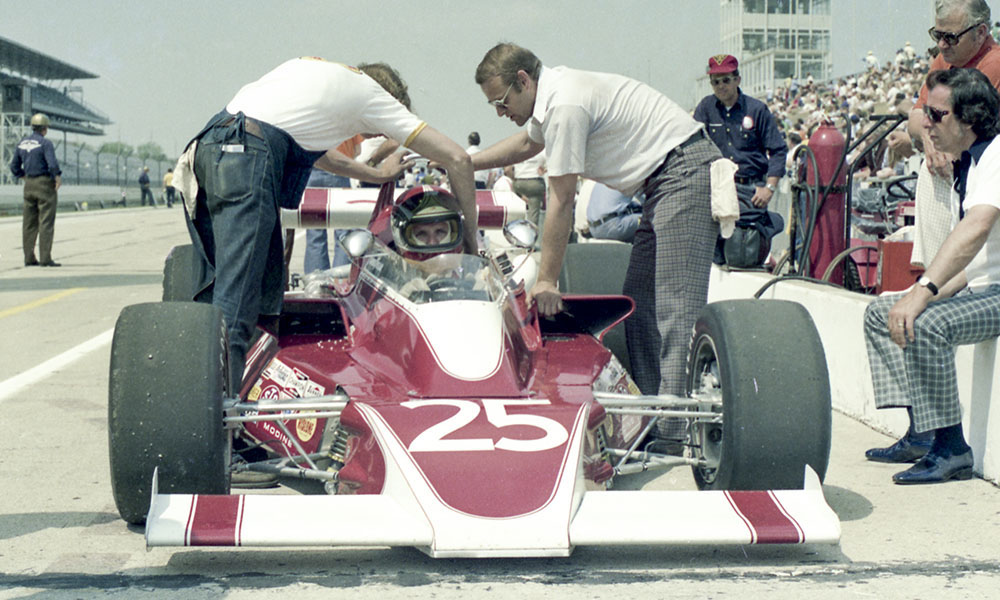
The technically-minded among us can look at this shot of Dan Murphy failing to qualify the Cicada at Indy in 1975 and marvel at the the first hints of tall radiator cooling ducts, and the front suspension pullrods being attached to middle of the upper A-arms, rather than at the outer edge. The rest of us can look at the guy on the right and wonder who was the last person to wear patent leather shoes into the pits. IMS Photo
• Wisconsin’s Dan Murphy was also heavily involved with the Cicada, and beyond driving the car to its best finish of seventh at Michigan in 1974 where high attrition provided a flattering result, he’s also said to have been one of few Americans at that time who was approved by Ferrari to rebuild its flat-12 engines.
• Legendary Indy 500 chief mechanic George Bignotti, who worked for Patrick Racing while the Cicada was most active, was fond of the little team and sold them pit equipment and a used Offenhauser engine to power the thing.
• Murphy had a huge crash in the car at Phoenix in 1974 and landed in the grandstands, but no spectators were in the area.
• The car went through a number of bodywork changes, with the giant radiator cooling ducts atop the sidepods coming towards the end of its time with the original design and ownership group.
• The Ferrari-loving and occasionally incarcerated real estate developer Walter Medlin got hold of the Cicada at some point afterwards, and that’s where the dream of replacing the Offy with a flat-12 road car-based Ferrari boxer engine came into play.
• In 1979, Medlin entered the Indy 500 with the car, and it did have Ferrari badging, but not the Ferrari engine. Bill Puterbaugh failed to qualify.
• Final race was at Milwaukee in 1979 where Puterbaugh finished 13th of 20 cars, dropping out after 69 laps.
that was damaged when Hurricane Charley struck Florida
.• The car reappeared in the mid-2000s, seen on a large, open car hauler, and was moved from Florida to Indianapolis.
• Medlin maintains a private collection in Indianapolis where the car is said to live. According to one eyewitness, it was last seen with no motor, no transmission. I’ve found nothing to suggest a Ferrari engine was fitted to the car after its racing days were over.
Cars like the Cicada are one of the many things that makes me love the mid-'60s to mid-'70s IndyCar era more than most. Regular people with a dream of competing at the Indy 500 would drum up the money and people needed to build a s***box from scratch and go test their ideas and skills against the best in the business. And there was no real barrier to entry.
So a schoolteacher like the late Mr. Weisse, who loved the 500 and had a valuable education to apply towards the creation of his own car, rallied the resources to live that dream. Even though the car was far from exceptional when pitted against Eagles and McLarens and other grand designs, it was capable of making the show at key events chosen by the Cicada team where they stood the best chance of making the field.
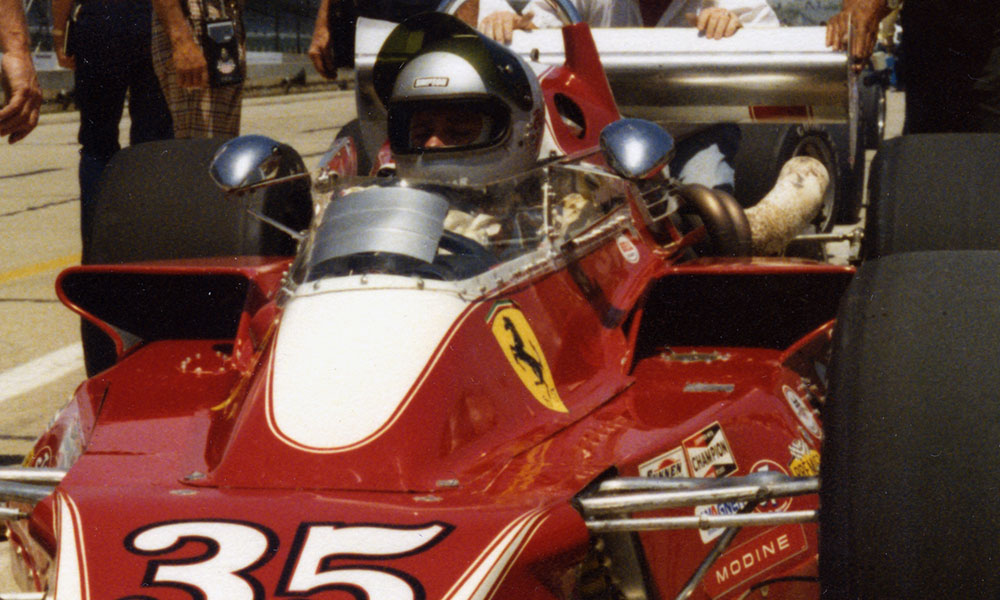
Yes, that really was a Ferrari logo on the Cicada. Image by IMS Photo
Fitting a wide and long Ferrari engine -- I was told it would have come from a 512BB road car -- would have extended the Cicada's wheelbase, thrown a ton of weight at the back and made it a nightmare to turn. And unless they bolted turbos onto the thing, it would have been at a huge power disadvantage. Losing idea in every regard. As for the Lightning, it was a beauty of streamlining with the Offy turbo installed. Swapping it for a Cosworth DFX would not have been a major challenge since metal fabrication was an expertise found within every team and trying new and different motors was not uncommon. At some point, every serious Offy-powered team had to make the same change to the all-conquering DFX in the late 1970s to remain competitive.
I cannot adequately describe how much I miss the ability for such things to happen today in IndyCar.
Q: Regarding the Indy 500 being seen live in theaters, here is a little more info. MCA (which owned Universal Studios at the time) did live closed-circuit television presentations of the Indy 500 in theaters and arenas across the country from 1964-70. Here in Los Angeles, there would be around 10 to 12 venues each year with the race, and some of the local presentations were J.C. Agajanian promotions. Charles Brockman (a local Indianapolis sports commentator) was the race announcer some of the years, and except for 1964 and 1966, Rodger Ward was the color commentator.
Chris Economaki did double duty reporting from the pits, doing live shots for MCA, while also filming interviews for ABC to be used a week later on "Wide World of Sports" and its Indy 500 highlights show. In 1970 the Daytona 500 was shown live and in color (the Indy 500 had been in black and white) on closed circuit TV around the country, as was the inaugural California 500 at the new Ontario Motor Speedway, though both did poorly at the theater box office. In 1971 ABC began same-day home TV coverage (a two-hour highlight package) of the Indy 500, so closed-circuit TV then became mostly a boxing (and later wrestling) business, until the emerging home cable TV business had enough households to make pay-per-view profitable. The 12/29 Mailbag picture of the Wiltern Theatre in Los Angeles was 1967, but rain after 18 laps on Tuesday 5/30 moved the remaining race to the next day. The Wiltern Theatre today is now a concert venue.
Dan Redant
MP: Dan, you’re the Mailbag’s new Donald Davidson of Indy 500 closed-circuit history!
Q: Recently on their podcast, Hinch and Rossi made a suggestion that I think IndyCar should consider. They suggested that since the IMS road course layout has been/is being used multiple times for the IndyCar season, IndyCar should run different layouts when they utilize it. I could see keeping the Indy GP layout for the split weekend with NASCAR but maybe try the F1 layout (or a modified version of it) for the GMR Grand Prix? I’d love to see the Indy cars rip around Turns 1 and 2 of the oval down the front stretch.
As a fan, I think I’d be more interested in purchasing a ticket to either race knowing it’s not a copy of the other’s layout. Or a bit more variety to the Penske dominance of the IndyCar layout.
Justin F., Connecticut
MP: I’m all for randomness when it comes to things like this. Only downside is most tire companies would not agree to supply teams without having them test on the various track configurations and building tires to suit the backwards blast through oval Turn 1.
Without that requirement, I’d love to see a random draw an hour before the first road course practice session where Roger Penske pulls one of the many configuration options out of a bag and uses that layout as the surprise circuit for the event. I know we’d need to scramble and get corner workers in place, and maybe even monkey around with TV camera placement, but hey, if we’re trying to inject some anarchy into the series for our amusement and see how teams react, this might be worth exploring…
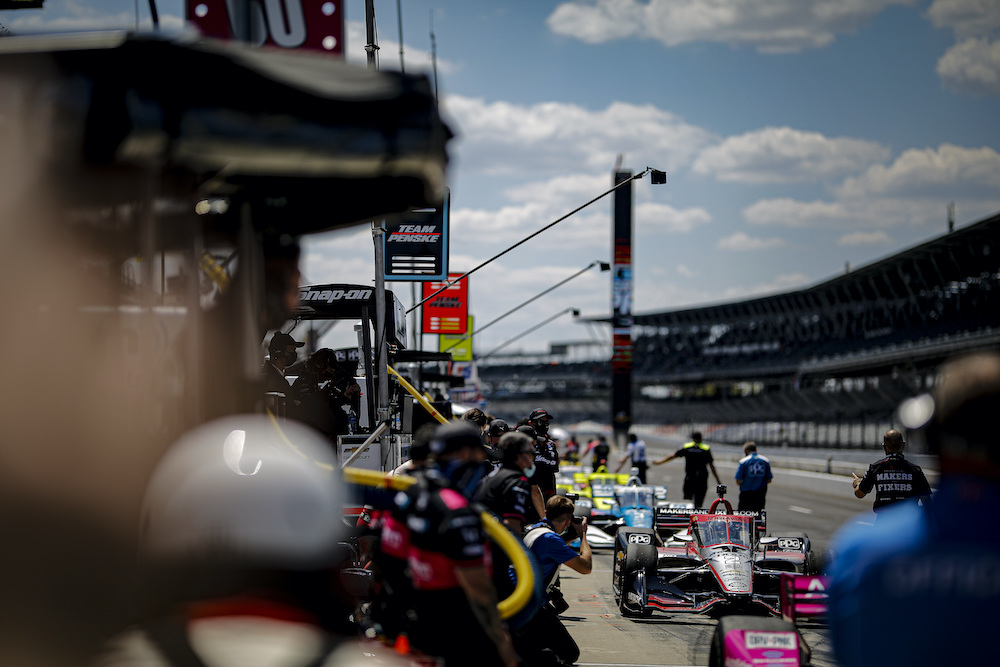
Let's change the Indy road course layout every couple of laps and really keep the drivers on their toes. Barry Cantrell/Motorsport Images
Q: I've seen you sneak in some tidbits about IndyCar's forthcoming hybrid system, such as its approximate 250 pound weight. As far as I can remember, no other details or specs have been published – how much power will the hybrid system provide; how often will that power be available; is it a battery system; who are the manufacturers, etc. Is there any other general or specific information you can share with us at this point?
Corey in New Orleans
MP: Most IndyCar race engineers would quit if the thing weighed 250 pounds! The number they’re anticipating is about half of that at 120 pounds or so. Nothing more to share at this moment, but when we do – hopefully in the next month or two – it will be a standalone feature on the site.
Q: I remember reading about the turbine cars in the '70s dominating the 500 until they broke and were eventually banned for reasons that were never clear to me. It seems that a natural progression after hybrid battery/ICE Indy cars would be battery/turbine. The battery-electric drive provides instant torque and would let a turbine engine run at maximum efficiency all the time. Of course nothing happens without dollars, but if an energy company wanted to highlight the all-fuel capability of these engines, what are the chances IndyCar would allow for experimental technology like this again?
Paul Miranda, Austin, TX
MP: Dial the clock back to the late 1960s and you’re spot-on. Back then, the rules were all but nonexistent, and since USAC/the Indy 500 was not betrothed to the auto industry and reliant upon it providing engines for its cars, teams were free to come up with all kinds of crazy solutions to stuff behind the driver.
Where the Fun Police step in and ruin that possibility is the modern system where turbines, nuclear reactors, warp engines, and anything else that doesn’t fit the tight confines of today’s rulebook aren’t allowed. If it isn’t a technology being sold by one of IndyCar’s engine partners, I don’t foresee it being on the grid. Granted, the minute Chevy or Honda make a hybrid turbine coupe I can go lease from my local dealer, I’m in!
Q: The kids gave this old man a Roku stick for Christmas. Which level of the Peacock do I need to get the IndyCar events that will be moving to this NBC streaming service? Wish I didn't have to add another level of technology just to watch all of the greatest racing series in the world.
Ray Schmudde
MP: For those who don’t get it for free as part of their cable package, you will need to sign up for Peacock Premium to get the Toronto IndyCar race that’s being streamed, and all of the practice and qualifying sessions and broadcast races for the year.
Q: Now that Atlanta Motor Speedway has been repaved, what are the chances IndyCar would consider moving their oval race at Texas Motor Speedway to Atlanta?
With a brand-new track surface at Atlanta there is presumably no need for PJ1 TrackBite, which has so negativity impacted the IndyCar race at Texas.
Kevin P., Los Angeles
MP: If the good folks at Atlanta Motor Speedway make a solid pitch to IndyCar, I’m sure they’d listen, Kevin, and while I’ve only been there a few times, wow, my memory of that place is how fast it is.
I remember our little Nienhouse Motorsports IRL team booked a test day there in 1999 as part of Eliseo Salazar’s comeback after his big season-ending crash the year before. We needed to help get his confidence up after being terribly injured, and he was all smiles after pulling away from our pit box and never lifting until he returned to pit lane.
The track grip was just immense, and as he found, there was no need to ease into things. He also forgot about the comparative lack of grip on pit lane because he came charging in after the first stint, and with no other teams there, he maintained a high speed until he got to within four or five pit boxes, hit the brakes, and promptly did a Danny Sullivan spin-to-win routine!
Truly impressive that he didn’t hit anything, and while he executed a perfect 360-degree rotation and kept going, the only issue was the matter of distance remaining to his crew… most of the gap from where he hit the brakes to where we were standing on pit lane was gone, which led some of us to dive for cover. That story aside, I’d love to go back to AMS and remind Georgia that it’s important to IndyCar.
Q: I recently located a memory card that I used at the 2016 Formula 1 race in Austin. After searching through images for quite some time, I came this photo (below) I took from the general admission area in the Esses. It shows the drivers being taken around the circuit so the fans can see all of them. You will note that Lewis Hamilton is sitting down all by himself while wearing headphones and holding his phone.
Later in the ride, Will Buxton was able to corner Lewis and inquired as to why he wasn't with his teammate and the other drivers and texting. Lewis stated that he was communicating with his fans. Must have forgotten about the fans at COTA that paid dearly to see him.
I have nothing against Lewis, and he is entitled to do what he wants, but his action(s) that day made me wonder if he thinks he is too important to take part in such events at the track.
Pat Rizk, The Woodlands, Texas
MP: Had a similar situation back in 1988 at the CART IndyCar Series race on the Phoenix oval, Pat. I was there working as a 17-year-old crew member on a SCCA Super Vee team and wanted nothing more than to get Mario Andretti’s autograph if the opportunity presented itself. Our last Super Vee session was over before the last IndyCar session on that Friday, and with my 1987 "Autocourse" book in hand, I wandered up to pit lane, stepped over the wall, and waited behind Mario’s rear wing as he spoke to his engineer.
Pit lane was almost empty of people and cars at the point, so it was pretty much me standing and looking at Mario and Tony Cicale (I think) who were standing in front of the car. I mention this part because there were no other distractions besides me, and with my book and a Sharpie in plain sight, it was clear why I was there. I swear they stood and spoke for 30 minutes, with the odd glance in my direction from Mario, who never acknowledged me.
Total hero worship on my part, but as the minutes wore on, I felt completely invisible and insignificant. Who knows, it might have only been 10 or 15 minutes, but it felt like an eternity of waiting. Finally, as their debrief was nearing its end, Mario – without looking my way – motioned me over with a free hand, took the pen, signed the book, and did so without breaking eye contact with Cicale.
Want to know who went from a hero to someone I semi-loathed for years afterwards? All because I felt he didn’t place my needs and desires ahead of his own while he was at work. That’s the context I was lacking, and since I was 17 and immature, I failed to grasp that Mario was indeed focusing on the most important part of his job. It wasn’t self-importance. It was him doing what he was hired to do. Another thing I quickly learned, which remains true today, is drivers, team owners, mechanics, etc., don’t do their jobs to entertain us.
The interviews, the autograph signings, the riding around on trailers or in the back of trucks before a race, appearing on podcasts, and so on, are all cool byproducts of the job, but none come before the core tenets of being prepared to race and win. I understand the "but we pay their salaries by buying their sponsor’s products" angle, and while there’s an element of truth to that, it took me a while to realize Mario (and maybe Lewis in this case) wasn’t there for us.
They include us in their world when they aren’t focusing on racing, but there was no reason for me to hold a grudge against Mario for making me wait. And if Lewis, on that day or any other day, wasn’t in the mood to stand and wave, I can see how that could be aggravating. I also know how silly I felt after realizing I was using one encounter with Mario to cast him in a negative and long-lasting light.
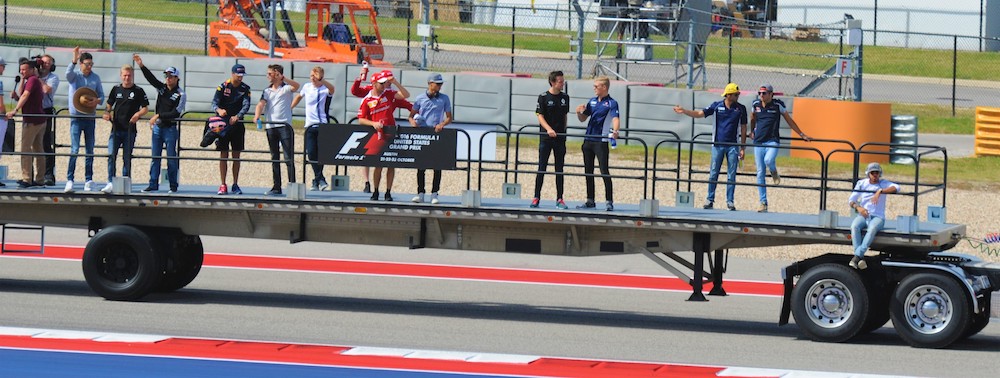
When you consider that Hamilton went on to win the 2016 USGP by 4.5s, you'd have to say he had his pre-race routine pretty well dialed in.
Q: A while back you wrote about driver salaries and l noticed you also referenced the Formula E circuit as being a lucrative one. Can you elaborate on what average salaries are for Formula E?
Danny Bridges, Indianapolis
MP: Wish I had insights for you, other than sharing how whenever I’ve spoken with someone who fielded an IndyCar inquiry from a Formula E driver or their manager, or chatted with drivers who competed in Formula E and have gone on to other series, they all mention how the salaries are so high compared to what most IndyCar teams are willing to offer, they’d be crazy to leave Formula E.
Q: I, as well as many other readers, really enjoyed the inside look at the tiers of drivers' salaries. So, this brings me to ask (what I've wondered for a long time): Do you know, and can you reveal, how Paul Newman got his rides? I pretty much assume that Le Mans came via a hefty payment from P.L.N. to get on the roster. But all the SCCA years, did he have to pay his way into them, too? God knows he had enough money to support the upkeep of his machinery... so, was it all on his dime?
Ken Fischer, Tucson
Team Panoz physio at 2001 Le Mans, for Brabs and Mags, Klaus Graff, etc.
MP: I recall select situations where Paul was invited to drive, but most involved paying for the cars, team, or both to operate and provide something for him to race. Keep in mind that at the amateur (or even pro) SCCA levels, these are small business owners to make their living by running paying customers, and despite Paul’s stardom, those owners can’t pay their bills by giving freebies away to people who can afford to pay the bill.
At one racing team/prep shop I worked at where we were all assigned to run various clients in their open-wheel cars or the ones our team owned, we had a few "don’t ask where their money comes from" types that were regular customers. Some grew things that, in the late '80s and early '90s, would have drawn the interest of the DEA. One would bring us mason jars with the moonshine they made and sold, and there were a few others who were deep into the financial/investment world who never spoke about their dealings. One went on a race car buying spree and snapped up a dream collection of recent F1 and Le Mans cars that would break a bank these days, and it was pocket change for them.
I share all this because whether it was forking over a nominal sum to test a Swift DB-6 FF2000 or something else, they all paid by check or credit card… even when some might have wanted to pay with the products they grew or distilled… because even at the highest levels of racing, most teams are businesses in need of cash to cover their monthly expenses.
Q: Who determines what the liveries will look like on an IndyCar, and why don’t more teams do something fun? Even if the sponsor says it has to be these colors and have the logo a certain way, why not get fun or creative? Some of these schemes are just downright boring. I realize the cars are zooming by so simple is good but I imagine they are trying harder to get the eyes on TV versus the track so we can see the cars quite clearly. Is there some kind of cost issue or just not enough concern over this? I feel like the teams who do this catch eyes and am surprised other sponsors aren’t thinking, yeah that could be good to get more people looking at our logo!
Second part: Are F1 teams required to have matching liveries? If so, why? And are the driver helmet paint schemes controlled by the team to some degree? I miss the classic, iconic style helmets versus the ones full of sponsorship. I get it (financially), just don’t like it.
Erik
MP: Teams are free to do as they please as long as the correct series stickers are in position and there’s nothing crazy being promoted. So, that means each choice is up to the team and the sponsor of that car, and to be honest, few sponsors say, "Let’s do something fun!" Most say, "Let’s do something that fits this year’s marketing campaign!"
It makes me appreciate what Arrow McLaren SP did last season with Felix Rosenqvist’s car on a few occasions where the team and its sponsor did a design challenge and chose a few that really stood out. Conor Daly’s pastel "Miami Vice" colors and sponsor slogan at the first Indy road course race last year was all kinds of awesome. But, and here’s the un-fun part: Most sponsors just want the car to have recognizable logos that can be easily seen and recognized on TV. The playful liveries are, sadly, a rarity.
We couldn't get the second part of the question to Chris Medland before the Mailbag went to press, so you're stuck with RACER.com editor Mark Glendenning: The FIA mandates that F1 teams run identical liveries across their two cars, save for minor details such as flags for driver nationalities. BAR caught the wrong end of this at the launch for its debut season in 1999 when it had one car in Lucky Strike colors, and the other in a 555 scheme. The cars never even made it onto the track before the FIA stomped on the idea, and the team's compromise resulted in the most unusual F1 livery of the past 25 years.
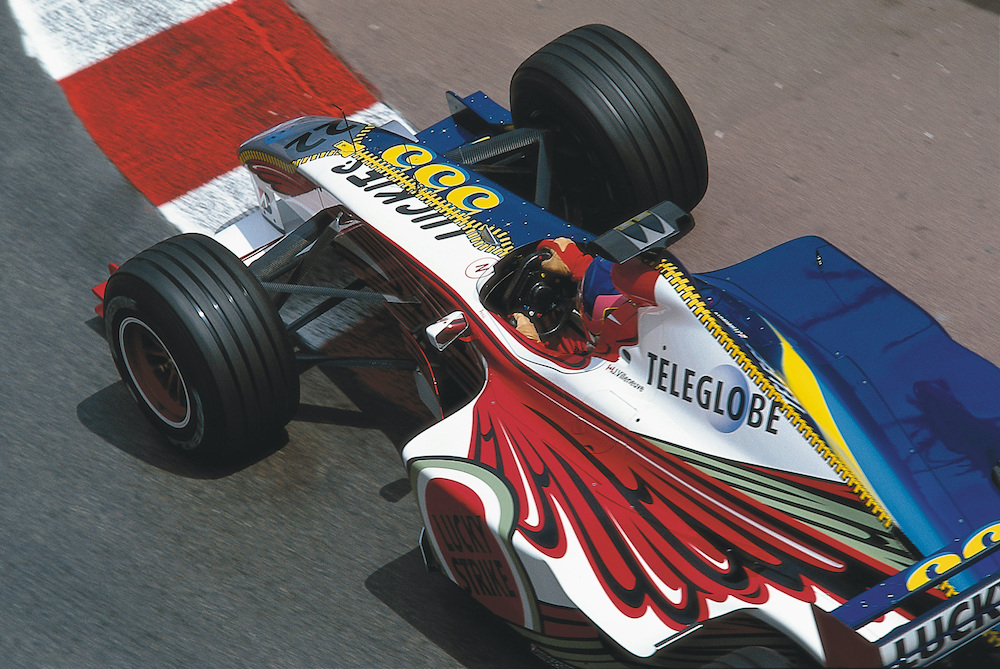
The look of the 1999 "split livery" BAR has not been improved by the passage of time. Charles Coates/Motorsport Images
Q: Could you please give us the job descriptions of the various positions on an IndyCar team? I'm not quite sure of the different roles played by the crew chief, race engineer, car chief (which may be a NASCAR-only position), etc.
Rick in Lisle, IL
INDYCAR UNIVERSITY
Q: What are the various roles of a single team and how do they operate during a race weekend?
Cook family, MI
MP: Two birds, one stone on this one, Rick and the Cook family.
Every team goes about constructing its organizational chart in unique ways, so the staff for Car No. 1 at Team A will be different than Car No. 2 at Team B. With that being said, here’s a general overview:
• Team owner: Run the business in part or in whole, search for drivers and sponsors, make key hiring decisions. Could also play a role on the timing stand calling race strategy.
• Team manager/managing director/team president: Run the business in part or in whole, run the day-to-day aspect of the racing team, hire and fire most employees, oversee the other non-competition departments like marketing and PR, finance, HR, business development, hospitality, etc. Likely plays a role on the timing stand calling race strategy.
• Team manager: In teams where a president or managing director is installed, they’re akin, in government parlance, to the vice president working directly below the team owner(s), who are like the president. In those teams, the managing director/team president can be a bit removed from the day-to-day side of what’s taking place on the shop floor, and in those instances, it’s not uncommon for a team manager or two to be found in the bigger teams who are do manage the cars, spares, schedules, crew, and just about every aspect of running the entry or entries.
• Crew chief/chief mechanic: Every team goes with one title or the other, based on preference. The "chief" is in charge of all aspects of car prep and its crew, reports directly to the team manager. Often plays a role during pit stops by going over the wall to change the outside tire, but it’s not always the case.
• Mechanics: Also a team-specific thing on how specialized they like to go on the org chart. Common to have a front-end and rear-end mechanic, but it’s also possible to have mechanics dedicated to each of the four corners. One will often be a gearbox specialist who performs all gear changes. Many, but not all, will perform chassis setups, and almost all will go over the wall to do pit stops.
• Technical director: The head coach of the team’s engineering group. Oversees the engineering staff in many instances, and is responsible for testing plans, engineering R&D plans, budgeting for those R&D expeditions, etc. Big-picture thinker who is ultimately responsible for a team’s competitiveness. Also tends to move among multiple cars at events to help with decision-making, if necessary.
• Race engineer: Responsible for working directly with the driver and developing chassis setups and making chassis tuning calls during the race. Also works directly with a number of support engineers, and the crew chief, who receives the setup info, applies it to the car with their crew, and reports back with setdown info after measuring the car’s settings once it finishes a session or race.
• Assistant engineer/data engineer: Once referred to as the "DAG" (data acquisition geek), this person works directly with the race engineer, looks after all of the electronic systems on the car, often monitors telemetry and fuel strategy and feeds key info to the race engineer, takes care of the entry’s general computer and It needs, possibly the radios as well, and can assist during pit stops on the cold side of pit lane by opening the refueling valve on the big tank, etc. The role frequently comes with oversight and execution of the team’s computer simulation program, which is used to model virtual chassis setup changes before they are tried at a test or during a race weekend.
• Performance engineer: Person who is tasked with taking driver and vehicle performance data and finding areas of strength and weakness to focus on. The role continues to evolve, and in some cases, performance engineers might be asked to look at all aspects of team performance -- pit stops, intra-team communication, decision-making processes, race strategy calls, etc. -- to find where improvements can be made.
• Truck driver: Another role that varies considerably from team to team. General helper, person in charge of tires, person who maintains the transporter between and during events, and the workspace under the tent. Could retrieve food for the crew, refuel the car during pit stops, serve as the spotter, or one of 50 other things. (Trust me, while a team’s truck driver(s) might not sound like an overly important position when compared to the more glamorous roles, a good truckie can make a world of difference to whether the team runs smoothly and the crew are kept in good spirits. If there’s an unsung crew member who also acts as the glue that keeps the team together, this is usually the person.)
• Public relations: Often writes the press releases and handles the team’s social media, but not always. Manages the driver(s) schedule at the events, often accompanies them for interviews and appearances, handles interview requests from the media. Sometimes serves as a semi-personal assistant the driver(s), but that’s almost a thing of the past.
OK, that’s a fairly straightforward look into your average IndyCar team’s composition. We could go deeper, but that can wait for a future Mailbag question.
Q: I was looking through past race results on the official IndyCar website and noticed that the results only go back to 1996, only showing IRL results and neglecting to include any of the CART results. At this point, shouldn’t IndyCar officially embrace both sides of “split-era” IndyCar racing and highlight the results from both CART and the IRL? I know they upload classic CART races onto their YouTube channel, which is great, but it’s a little strange that they haven’t updated their official website to include this historical information, which is vital to the sport.
Pedro from Miami
MP: Yes. Yes. And yes, Pedro, but this is nothing new, unfortunately. As I was told, when the IndyCar Series bought Champ Car, there was almost no effort to preserve and integrate CART/Champ Car’s history.
Want photos of the 1989 Mid-Ohio CART race won by Teo Fabi in the Porsche Motorsport March 89P -- the only win for Porsche in IndyCar? Reach out to shooters from back in the day like Dan R. Boyd, or Cheryl Anderson, or Paul Webb and see if they can help you, because those assets, along with press releases and all the other items that CART/Champ Car kept, weren’t blended into the IRL/IndyCar Series’ archives. It was a problem long before Roger Penske bought everything off the Hulman family, and I’m not sure how or if it will ever get resolved.
Q: In what areas could IndyCar or Dallara reduce the costs of competing? I've been around long enough to understand that racing, at its highest levels, will never be inexpensive, but trimming expenses would certainly be prudent in light of the new diversity initiatives and the lingering problem of "IndyCar Veteran A" or "Road to Indy Star B" having silly levels of talent only to lose their ride because they couldn't bring money. Certainly, increasing revenue through series sponsorships and TV contracts is also greatly needed.
Steve in Zionsville, IN
MP: Two things here to cover: The series, as a product, needs to increase in value before teams can ask sponsors for more money. The main value metric they use continues to be Nielsen rating figures, which measures how many people watch each race. The ratings have been good -- good, rather than great -- and while the audience size has grown each year in recent years, we’re still not talking about a giant number.
That’s where having 14 of IndyCar’s 17 races on big NBC should have an immediate effect on growing the series’ footprint by reaching more viewers, and with more viewers and better Nielsen numbers, teams can ask for more money in 2023 and beyond.
The second item is an interrelated dynamic of testing and personnel. There’s not much meat left on the DW12’s bones to carve for savings, and IndyCar has tried to trim budgets by drastically reducing track testing, but since teams are hyper competitive, they’ve circumvented the problem by hiring more engineers – the ones that aren’t cheap to hire – and investing heavily in the hardware and software to do offtrack testing. Plus the addition of a lot more vehicle dynamics testing systems with 7-post shaker rigs, etc.
So, as one would expect, when a racing series tells its teams, "Hey, you can no longer do this thing here." Teams respond under their breath by saying, "OK, then we’ll do it over there." One IndyCar team manager told me earlier this week that will all the investments in extra engineers and offtrack testing, they think it might actually be cheaper to go back to the old and freer on-track testing regulations.
Q: I was at the Molson Indy Montreal race in 2005. Local hotshoe Andrew Ranger, driving for Mi-Jack Conquest Racing, smacked one of the walls around the Gilles Villeneuve track pretty hard in practice and the low-dough team didn’t have the spares to repair it! Knowing Ranger's fans in Quebec wouldn’t be able to see him on the grid for his home race, Mr. Kalkhoven, owner of the PKV team, bought what was needed to ensure the fabled No 27 car was in the race on Sunday! True gentleman and Champ Car savior!
Yanie Porlier
MP: Kevin had two very strong sides that people saw. On the business side, he was known as someone you don’t take lightly or mess with. And then you had a guy who was relentlessly charitable. The Andrew Ranger story — and boy, I wish he had more/better opportunities beyond Champ Car — seems like it falls right in the middle, with Kevin wanting to make sure his series delivered for a homegrown star while also being committed to helping a kid who deserved it.
I hate the feeling I have that Kalkhoven didn’t receive all of the respect and praise he was due while he was alive.
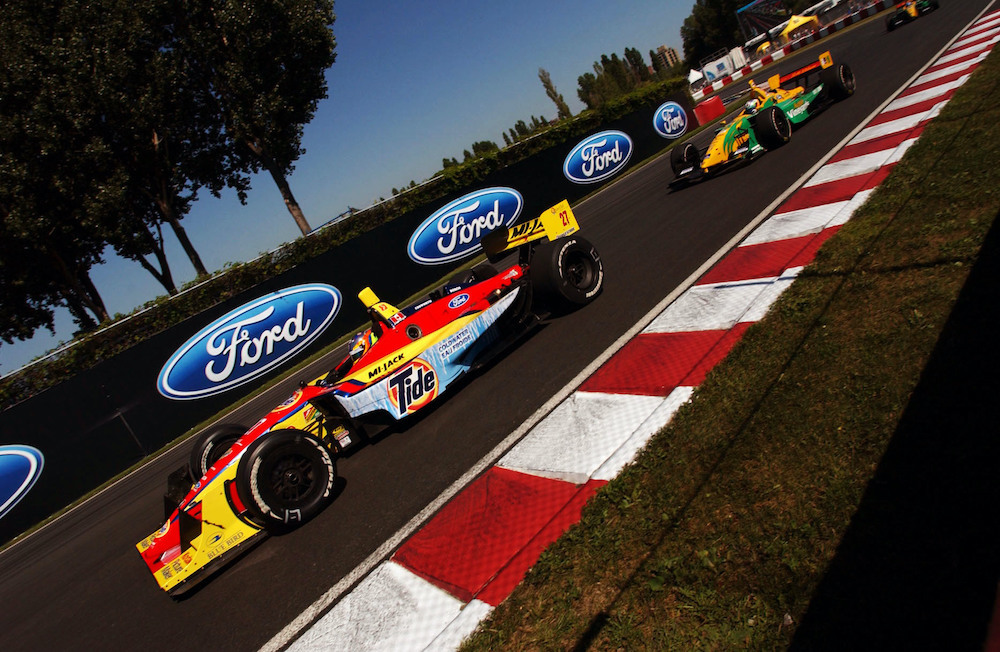
Thanks to some help from Kevin Kalkhoven, some spare PKV bits found their way onto Andrew Ranger's Mi-Jack Conquest car at Montreal so that he could race in front of a home crowd in 2005. Motorsport Images
Q: Robin would've snarled about this (below), but I don't care. We in the iRacing community will miss him and I just wanted to pay my respects in the virtual world.
Tony Obrohta
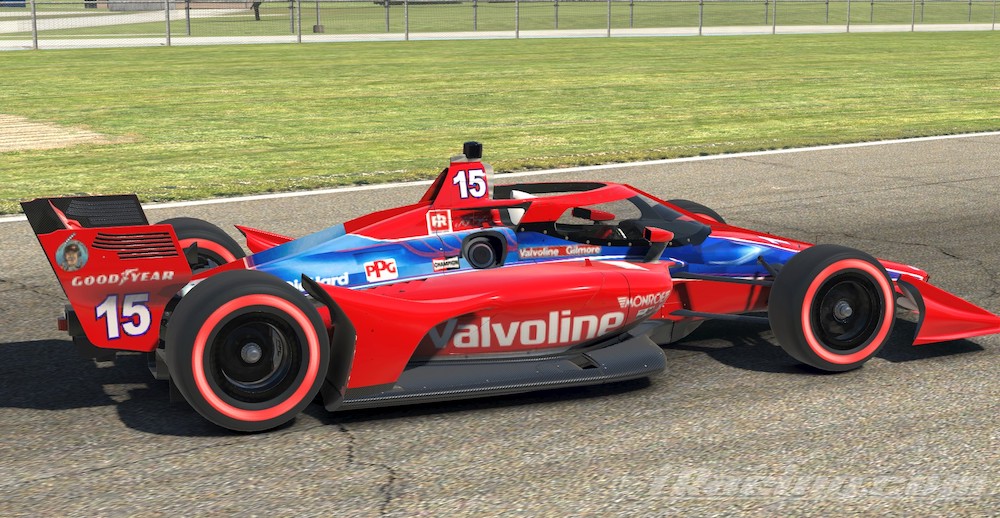
MP: Miller snarled about a lot of things; that was part of his charm. Buying him a few things for Christmas was an annual joy since I knew whatever I’d ordered was the equivalent of a gift grenade.
If the books shipped on Monday, the pin was pulled and I knew I was days away from a phone call that always went something like, "YOU ***DAMN ********ER, IF YOU EVER BUY ME ANOTHER GIFT, I’M GOING TO **** ON YOUR ****." Followed by, "Thanks MP, but you really don’t need to buy an old man like me any gift. Take your wife out for a nice steak dinner instead." Then I’d curse at him, tell him to deal with it, and that routine went on for years. So, the point being, he’d love it but tell you he hated it.
Thumbs-up on the rear wing end plate tribute, but if you really want to pay tribute to Miller, let’s see an iRacing DW12 wearing the livery from one of the cars he worked on, like Jim Hurtubise’s Mallard.
Q: I'd like to know that is there any news on Spencer Pigot's plan for the 2022 racing season (especially for the Rolex 24)? His social media seems to be silent since the end of last year, and he's too a good racer to be left on the sidelines.
Mitsuki Matsuura, Kanagawa, Japan
MP: I reached out to Spencer and here’s what he said: “Unfortunately, I haven’t been able to find anything yet. I’ve contacted tons of [IMSA] teams but everyone was either full or needed funding. Still looking.”
Q: This could be a nice memory lane question for you, or a complete dud if I got the team wrong.
If I remember correctly, you worked for Hogan Racing in the late '90s right? If so, did you ever have any interactions with a mechanic who worked there at the same time by the name of Andy Brass? As I understand, he was a fabricator, and also worked over the wall as one of the fuelers during the race weekends.
Reason I ask is that before his time at Hogan, he was a hell of a Monster Truck driver, driving the Bigfoot truck to many championships over the years (See link below). Many (including me) consider him to be one of the best Monster Truck drivers to ever get behind the wheel. I was a massive fan of his back then, and was blown away to learn that his career took him to the CART paddock in the late '90s. A fascinating "six degrees" type factoid that connects two of my favorite things; Indy cars and Monster Trucks. Just wondering if you knew him or had any interactions or fun stories in general from your time at Hogan.
Thanks!
Here's a link
about Andy's Bigfoot exploits.Kevin from Houston
MP: Great letter, and I was just an engineering assistant at Hogan, but did have fun getting my hands dirty when asked to pitch in when our motors went kerblammo. My memory is a bit fuzzy from back then, but my old pal Matt Swan, who started with Andy at Hogan in 1997, has a few tales to spin. Here are the ones that won’t get us in trouble:
“A more printable one was the story about when they went from show to show and Andy changed rod bearings in Bigfoot (inside the trailer) while his partner drove the hauler!
“He met Michael Waltrip (before Waltrip was a big name) and Michael asked Andy how much he made on his trading card sales. Andy was like, ‘What? You get royalties?’ Apparently Bigfoot founder Bob Chandler was a bit cheap.
Andy was almost in the movie Roadhouse with Bigfoot. But then Chandler inserted himself in the movie for a cameo instead of Andy... He moved to Oregon to work for his father- in-law after Hogan shut down.”
Q: Is Logan Sargeant the American we need in F1? Sometimes it is about right place, right time. I’d argue this year’s F2 champ Oscar Piastri is wrong place, wrong time. My understanding is Piastri can’t return to F2 and nobody offered him a ride in F1. Your recent article pegged 2023 as a potential season for Sargeant to land a seat in F1. I don’t know a lot about him. Is he extremely talented? I’d argue the U.S. would benefit from a U.S. driver on the grid, but not if that driver is going to be battling with Mazespin every race. So Mr. Medland, what say you about Sargeant? Is this the foot in the door for an American driver we’ve been waiting years for since Rossi last drove for that really bad team nobody remembers any more?
Ryan in West Michigan
CHRIS MEDLAND: I'd say let's not get too carried away yet. Logan impressed me a lot battling Oscar for the F3 title in 2020 but that was his second season at that level, and while last year was actually excellent from him in an uncompetitive team, we haven't seen what he can do in F2 machinery yet. Carlin is a good team that should mean some podiums and maybe the odd win, and if he can get himself into a title fight then that would give the U.S. something to get excited about. For now he's just the closest on the F3/F2/F1 ladder, and has a clear path as part of the Williams academy and with every chance Albon will move back to a Red Bull-backed team if he impresses again. Logan's good but not leaping out as a definite future F1 driver yet, so to reach F1 in 2023 would need a big season this year. But two years of progression in F2 and race wins would also still put him in the frame, and you're spot on that the U.S. would benefit from a driver on the grid in a decent car (Williams is owned by U.S.-based Dorilton Capital too don't forget), so Logan's timing could prove to be good.
Q: What year do you think that we will see a female driver in the NASCAR Cup Series again, and who do you think she will be?
Chris Fiegler, Latham NY
KELLY CRANDALL: I can’t put a year on it, but it’ll be sooner rather than later. At least, if everything continues going well with Hailie Deegan. Deegan is primed to be the next female at the Cup Series level, and if NASCAR could put her in a car tomorrow, I’m sure it would. Deegan is young, marketable, outgoing, and has a huge social media presence. Right now, she’s the only female in NASCAR’s national series with some backing and on an upward trajectory.
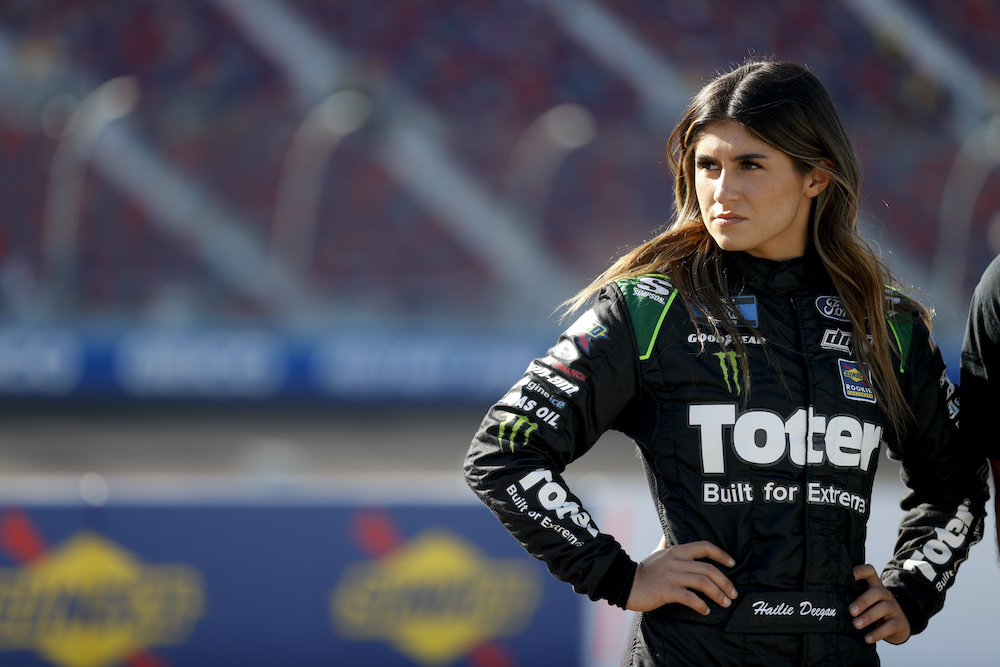
There's a Cup ride looming somewhere on the horizon for Deegan. Matthew Thacker/Motorsport Images
Q: With all of that talk about that Let's Go Brandon cryptocurrency sponsor in the Xfinity Series, I have a question: what was the most controversial sponsor in NASCAR history?
Kurt Perleberg
KC: It’s a great question, and I think LGBcoin is going to be that sponsor for now. Considering what it stands for and the back-and-forth between the team and NASCAR on the approval process, it certainly garnered its share of headlines and then opinions on both sides of the fence. When you say "controversy," I think of numerous headlines and a lot of conversations around the sponsor, so ones that easily come to mind from recent years would be one like DC Solar. Granted, headlines there came after the fact when it turned out to be a Ponzi scheme, but it was a pretty big deal considering how much it hurt Chip Ganassi Racing. Barstool is another one when it partnered with NASCAR because many were upset given all the negativity around that brand's culture. NASCAR disallowing sponsors isn’t a new thing, but what brings the attention is how divisive that sponsor is, as in the case of LGBcoin.
Q: It’s been a few weeks since the season-ending F1 race at Abu Dhabi and I'm betting a lot of folks wish everyone would just stop talking about it. The end of the race was clumsy (at best), but I've seen a lot of YouTube footage of late that has me thinking.
For years now, Mercedes has had the best cars, the best drivers, and just as important, their strategy calls have been near-perfect. Undercuts, overcuts, tire selection – all spot-on.
In videos from both Bottas and Hamilton's cockpits, the race engineer(s) can be heard saying "we did not box, because we would have lost track position."
I've watched enough stock car races to know that NASCAR engineers face this dilemma pretty often. Late race wreck, do I pit my driver for four fresh ones, or do I leave him out and maintain track position? Engineers never know if another yellow is about to occur. If one does, the drivers that stayed out are sitting ducks, because those with fresh rubber are rocketships. Flip of a coin stuff.
Is it possible that in addition to botched race management that Mercedes just got their strategy call wrong? I would be interested in Kelly's take regarding Abu Dhabi.
Jonathan and Cleide Morris, Ventura, CA
KC: You are spot on – it’s always a flip of a coin. The leader is a sitting duck late in the race because the field does the opposite nine out of 10 times. I won’t pretend to know everything about F1, but I will say that I was blown away that Mercedes only pitted Hamilton once during the finale. Yes, track position was clearly on their mind, but they were also clearly faster than the Red Bull of Verstappen. So, yes, I think that was a day their strategy just went wrong when, from my couch, they could have pitted more than once.
THE FINAL WORD
From Robin Miller's Mailbag, January 14, 2015
Q: After 25 years of amateur racing, I determined that motor racing is a stupid, time-consuming expensive hobby. So I bought an airplane. The plane is no less expensive than racing, but at least I don’t crack it up every other weekend. A good number of pro racers are also pilots. Do you have any "flying racer" stories you can share?
GW in ON
ROBIN MILLER: Flew with Jim Hurtubise a couple times in his SeaBee and we used the Interstate signs because his radio and navigation system didn’t work. Not that it would have mattered since he wouldn’t have used them. He took some people fishing once and when they tried to leave, the plane couldn’t climb out of the lake so Herk unloaded all the people and equipment. He tried again, no luck. Then somebody saw the pontoons had filled up with water so that made the plane way too heavy to take off. Legend goes that he landed on the backstretch at Trenton once and he and Parnelli lived to tell about landing in a tiny pond by Eldora.
Presented by:
Marshall Pruett
The 2026 season marks Marshall Pruett's 40th year working in the sport. In his role today for RACER, Pruett covers open-wheel and sports car racing as a writer, reporter, photographer, and filmmaker. In his previous career, he served as a mechanic, engineer, and team manager in a variety of series, including IndyCar, IMSA, and World Challenge.
Read Marshall Pruett's articles
Latest News
Comments
Comments are disabled until you accept Social Networking Cookies. Update cookie preferences
If the dialog doesn't appear, ad-blockers are often the cause; try disabling yours or see our Social Features Support.