Jake Galstad/IMSA
INTERVIEW: IMSA president John Doonan
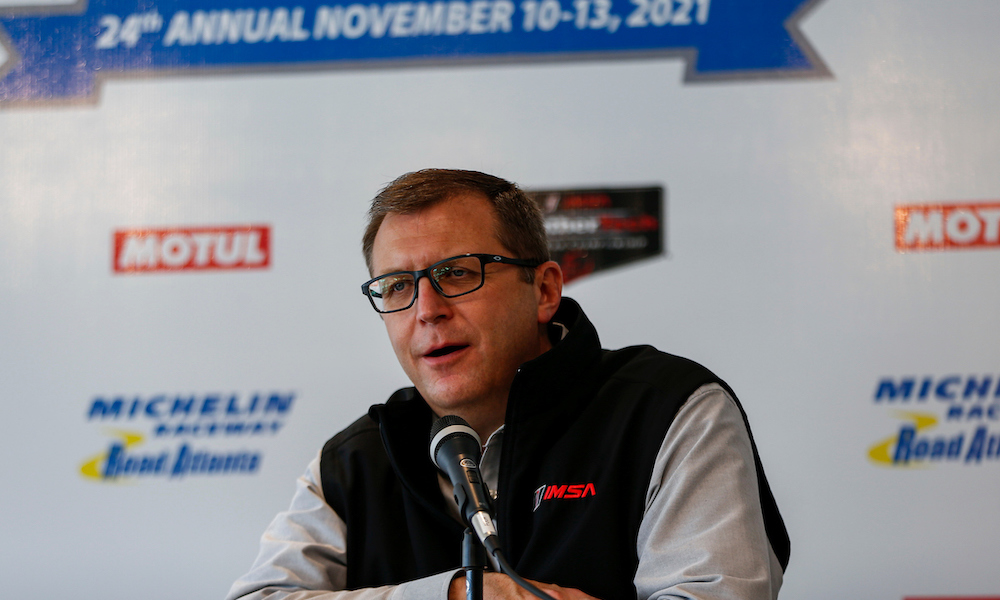
IMSA president John Doonan visits with RACER’s Marshall Pruett for a deep dive into his first two seasons atop the series, some of IMSA’s positives and negatives, the new NBC broadcasting deal, the litany of feeder series below the WeatherTech SportsCar Championship, one key change being considered for Michelin Pilot Challenge, and what to look for in 2022 as next-generation LMDh prototypes start testing ahead of their 2023 debut.
Q: Why don't we start by talking about your second season as IMSA’s president and the close to your first normal season after starting the job last year and having COVID-19 turn everything upside down? What comes to mind as the last green and checkered flags wave over your second year on Saturday at Petit Le Mans?
JOHN DOONAN: It's interesting to start with that, because as I drove into the front gate at Michelin Raceway Road Atlanta the other night, I was thinking more about 2019 and the last sort of “normal” season where I arrived here at Petit Le Mans, and the fact that it is finally feeling truly normal as we execute the event this weekend.
We had significant attendance here in 2019. Last year, of course, was challenged due to COVID, but we're currently trending up in attendance for year over year to 2020, and above 2019, as well. So it feels right, and this place is buzzing with people and energy.
Going back to 2020, it was a challenge for all of us. But that's where it makes me extremely proud and honored to have this opportunity, because we got through it and we’re growing.
I knew, coming into the organization, the vision of Jim France had for IMSA and what it needed to be. And I think all the things that we have done, despite the headwinds of the pandemic and the challenges that that presented... we have found additional commitment from existing auto manufacturer partners around the top prototype category with LMDh in 2023. We have made a leadership move regarding our GT strategy for the future, which kicks off with GTD Pro in 2022 where several OEMs have already publicly stated their commitments to that top category, like Lexus and Corvette, and more are coming. So we have a lot to be proud of, despite the rocky roads are the rough waters that we just navigated.
We have 18 OEMs, the sponsors, we have the tracks and promoters, we have the race teams, and all the partners who’ve remained committed to IMSA in a historic time for endurance sports car racing. The momentum and the morale seems to be aligning with a positive trend, and we’re excited about what the next few years are going to bring.
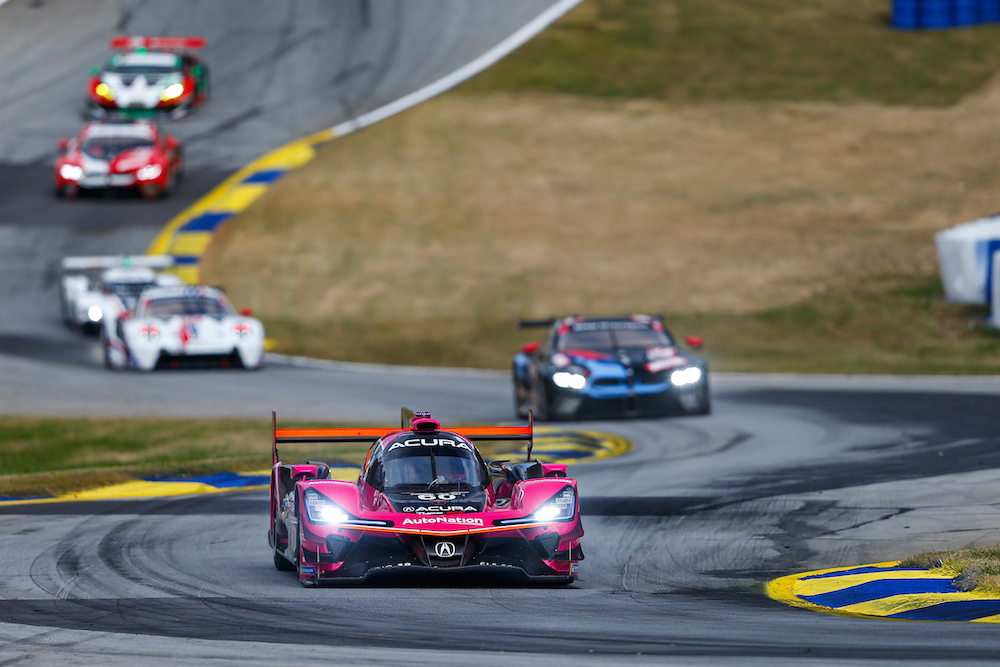
After a pandemic-affected 2020, Doonan views this weekend's season-finale at Road Atlanta as a big step back toward "normality," but he's even more excited about what's in the not-too-distance future... Jake Galstad/IMSA
Q: Let’s look at some of the positives and negatives, starting with a few of the good things that stand out from the current season. There are fewer explosive arguments about Balance of Performance in the WeatherTech Championship. I’m not saying there haven’t been some missed targets with BoP, but the changes to your technical team led by Matt Kurdock seem to have made BoP less of the never-ending knife fight we recently had in the paddock. So that, at least compared to 2020, would be a net gain. Despite my expectations for LMP3 to be an ill-fitting issue for the big series, it has integrated well and had solid entries, and LMP2 also appears to be rising, especially going into 2022. What else comes to mind on the positive side?
JD: If you look at the level of driving across not only the top series, but Michelin Pilot Challenge and all the single-make championships as well, I’m really, really proud of the level of driving that's out there. The competition is fraught with very tight points chases. The racing has been good across the board, and that does start with BoP and parity. And I do believe that the technical committee has gotten into a process with our OEM partners that's communicative, using performance-demonstrated data, on-track data, to create relative consistency across the season. There have not been huge fluctuations in BoP changes, and I think we've done a solid job of keeping things in check, without taking huge swings at it, and we’re constantly working to improve the BoP process.
You mentioned LMP3; I think we are all pleasantly surprised at the results of adding LMP3 into the WeatherTech Championship, with the quality of teams and the quality of drivers, which we’re proud of. And you can see a long-term future of LMP3 in in the WeatherTech Championship. I also always judge the health on the number of teams that have stuck with us all year, and we've had some consistent full-season entries. And based on conversations we're having, that appears to be continuing and growing for 2022. So really, really positive there.
Partner retention is another one, which has been huge, even in the tough climate that we've been in the last 18 months to two years. And LMP2 has been on an uptick, and I think there are more announcements coming there from teams; it’s their news to share. But we have had a lot of inquiries. We made a commitment back in May, that we would retain the power levels and the specifications of the LMP2 cars as we run them today, in 2022, with the intention and focus on our class separation, between DPi, and of course, our GT cars. And so that could be a factor. I have had the opportunity to speak with some of the European-based teams; they talk a lot about wanting to come and race here. I'm hearing the same that we could see some extreme growth there not just for events like Daytona and Sebring, but for the full championship next year.
Q: On the negative, there’s been one glaring item, and that’s both TV ratings and ease of access for watching IMSA’s longer races. It’s the one area that, if it could be fixed, would leave you with very little to criticize about IMSA’s overall game. But now there’s a serious solution coming next year with NBC Sports which, if it plays out as anticipated, could fix both problems.
JD: If you roll the clock back to 2018 where average race viewership was 130,000 people, and you move that up to 2019, it climbed to 200,000, and if you continue up to 2020, it's 250,000, so there’s been improvements every year. And we’re looking at another increase in 2021, so it speaks volumes of the value of having NBC as our broadcast partner.
The promotional elements, and the quality of the shows on linear TV has given us a real boost with a collaboration with our colleagues at NASCAR, and NBC promoting IMSA broadcasts during NASCAR races, like Talladega promoting the Michelin GT Challenge at VIR, and the Phoenix Cup Championship weekend promoting the Petit Le Mans broadcast. All of that helps our OEM partners. And those partners help make our television possible with their brand and product line advertising programs.
And we have obviously still work to do, but it's definitely heading in the right direction. One of the concerns to your point is the channel hopping that's needed to happen in years past. We're fortunate that in 2022, we're going to have four network shows on NBC, with Daytona, WeatherTech Raceway Laguna Seca, Canadian Tire Motorsports Park, and Michelin Raceway Road Atlanta. With that, the remainder of the calendar is on USA Network. So if we're not on network, NBC, we’ll be on USA, which immediately adds five million homes to our viewership potential. And even more significant, perhaps, is the fact that NBC has seen a keen interest since they launched the TrackPass platform that our audience, both current and future, take in our content in a digital way on their devices with the highest uptake rate of any motor sports property on TrackPass. So in addition to the network, in addition to USA, we will have flag-to-flag coverage across NBC’s Peacock streaming service at every event in 2022.
MP: Let’s start to wind down on the topic of IMSA’s 273 different training series – your "Road to Daytona" ladder system – that support the WeatherTech Championship. Are there too many? Not enough? The right amount? Any tinkering you might consider there? We continue to hear the multi-class Michelin Pilot Challenge series might absorb at least one of the single-make ladder series…
JD: We have been strategic with the single-make championships and where they fit within IMSA, so if we started at the base of the pyramid, adding the Mazda MX-5 Cup has been a tremendous asset. The entertainment of those races with five-wide finishes and just tremendous racing across all the events that we've added them to has been big. We can also be super-proud of the first season of Porsche’s Carrera Cup in North America; they're thrilled with the turnout.
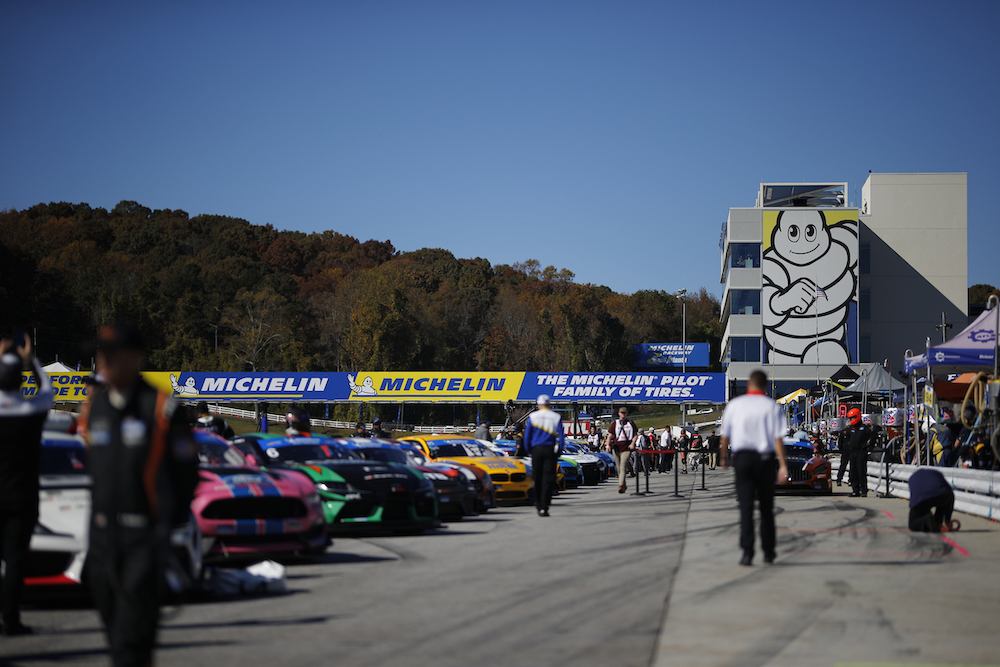
Changes could be on the cards for the Michelin Pilot Challenge. Barry Cantrell/IMSA
And then similarly, Lamborghini Super Trofeo is seeing tremendous growth across its platform. Entry numbers are something that the manufacturers and those championships really use to measure success, and the forecast spell even higher car counts heading our way. And that's tremendous.
And for Michelin Pilot Challenge, we have tossed around and we've actually got quite a bit of feedback from stakeholders about our Prototype Challenge LMP3 platform. And the concept of potentially integrating those races into certain number of the Michelin Pilot Challenge races where you'd have an LMP3, a GT4, and a TCR category, competing in those two-hour races, has at least perked some interest among the community.
It's unique and would emulate where drivers are headed, if the WeatherTech championship is their ultimate goal with multiclass racing, learning about the closing speeds of prototypes and production-based GT and touring cars on track at the same time. It’s never done until it's done, but the concept definitely causes you to smile.
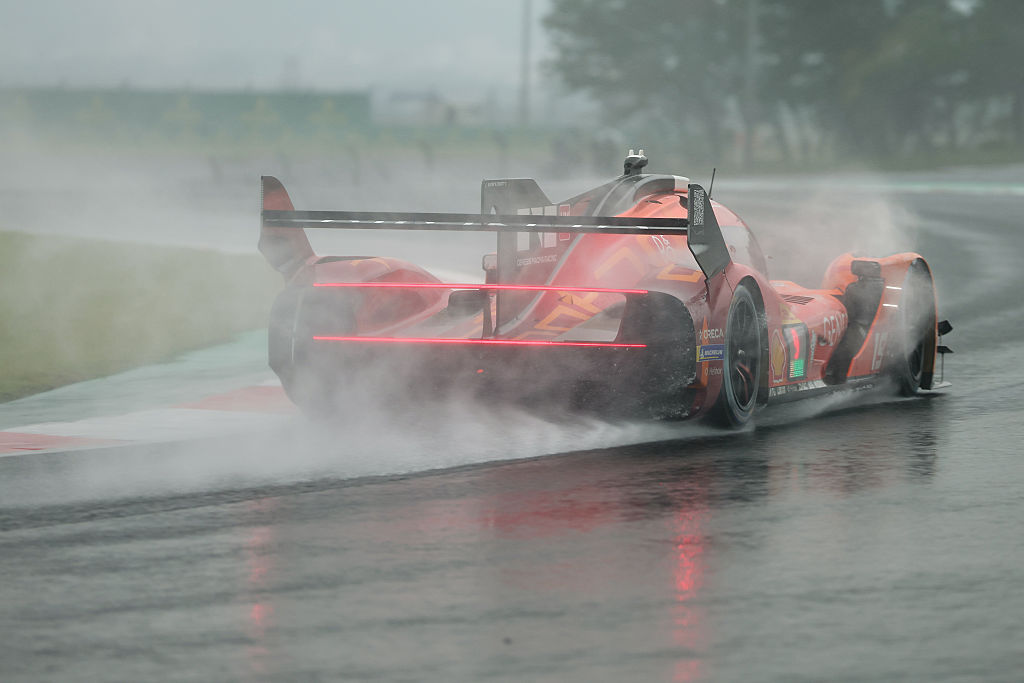
MP: The last thing that comes to mind as we're about to wrap 2021 is, 2022 is coming, and that means we’ll almost have a sixth WeatherTech Championship class – a shadow class – running as manufacturers get out and start testing their new LMDhs ahead of 2023. What might that look like, as least from an IMSA-sanctioned aspect of your next-generation prototypes being out and running while next season is in motion?
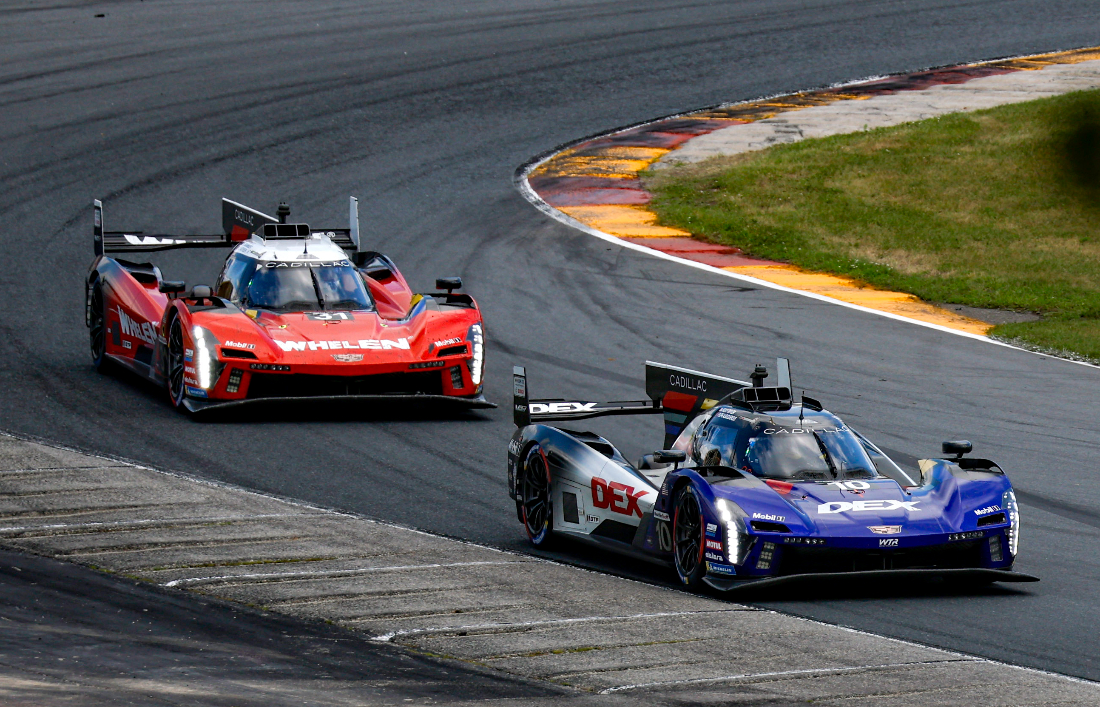
JD: Super excited about 2022, not only what is coming in field size and commitments around GT programs and the continuation of existing DPi programs with Acura and Cadillac. So you've got the main the main course that's going to continue to be served up to the audience, and then there's a bunch of appetizers going to be sprinkled in. And to your point, there's going to be car unveils. There's going to be private testing. There's going to be, thanks to the technical committees at IMSA and the ACO, some series-sanctioned testing sprinkled throughout the year to give the prototype OEMs an opportunity to put mileage on their new cars together.
And imagine showing up to some IMSA events throughout the year, seeing the existing show, and having some special unveils and announcements about what is to come at those races. The thought of whetting the appetite for our audience on-site that can come and touch and feel and perhaps hear the next generation of prototypes, is something we look forward to unveiling. All of us are immensely proud to provide that for our fans.
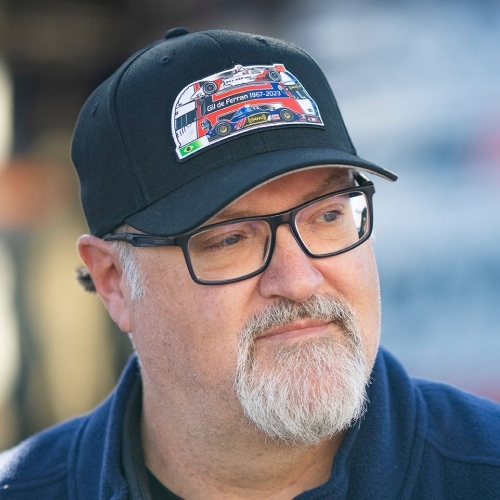
Marshall Pruett
The 2026 season marks Marshall Pruett's 40th year working in the sport. In his role today for RACER, Pruett covers open-wheel and sports car racing as a writer, reporter, photographer, and filmmaker. In his previous career, he served as a mechanic, engineer, and team manager in a variety of series, including IndyCar, IMSA, and World Challenge.
Read Marshall Pruett's articles
Latest News
Comments
Comments are disabled until you accept Social Networking Cookies. Update cookie preferences
If the dialog doesn't appear, ad-blockers are often the cause; try disabling yours or see our Social Features Support.