Phillip Abbott/Motorsport Images
INSIGHT: Dan Wheldon's accident, 10 years on, Part 2
Editor's note: This installment is a continuation reflecting on the tragic events of the late Dan Wheldon's tragic accident. Read Part 1 here.
“There are very few days that are imprinted on your life forever, that you know exactly where you were. And to me, this was that day,” former IndyCar president Randy Bernard says of October 16, 2011.
“That was the most miserable day of my life. And most numbing day of my life. And you feel the pain, not only for Dan's family, but all the drivers, all the friends. There was nothing good that came out of that day.”
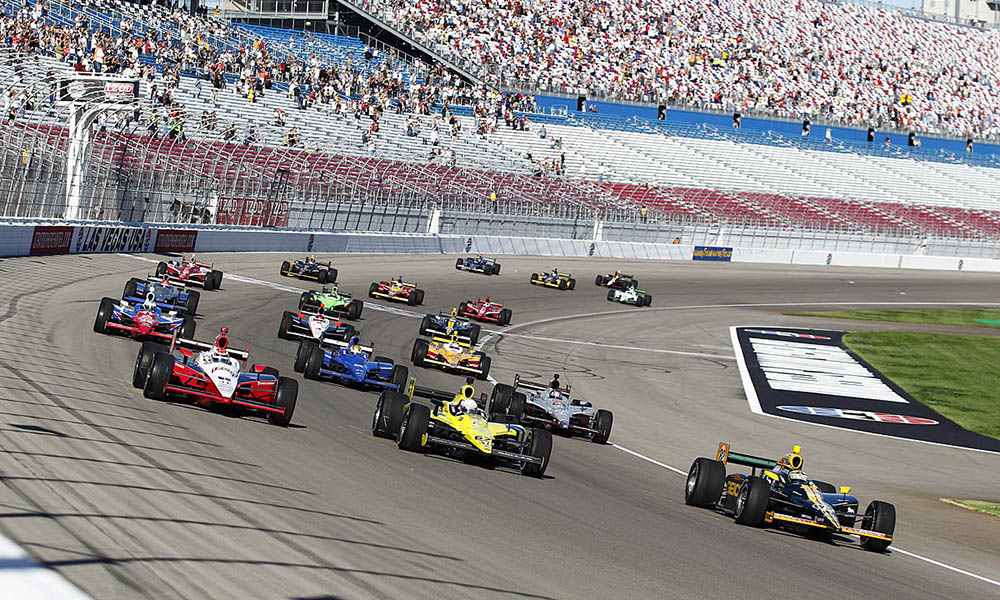
With the field nearly halved after 15 of the 34 entries became entangled in the lap 11 crash, the IZOD IndyCar World Championship at Las Vegas Motor Speedway was temporarily stopped. Safety workers, medical workers, and tow truck operators had an immense mess to handle with broken cars strewn throughout Turns 1 and 2, and a steady stream of injured or shaken drivers to treat in the infield care center.
Amid the trackside footage captured during the live broadcast, and from the handful of in-car camera perspectives, surreal and astonishing imagery was replayed. Cars seemingly defied gravity as the open-wheel slam dance briefly erupted for the world to see.
Somewhat lost in the moment was Dan Wheldon’s accident. Like a Russian Matryoshka doll, his was a crash within a crash within a crash. As his fellow drivers emerged from their stricken cars, it was the concentration of safety personnel surrounding Wheldon’s No. 77 Sam Schmidt Motorsports Honda, hurriedly working, that told us a sizable crisis was being managed.
Within the media center, IndyCar’s communications team was bombarded with questions about Wheldon for which they did not have answers; ABC’s broadcast team offered the most immediate and accurate information until its cameras abruptly cut away from his car.
If the same crash happened with today’s 4K60 Ultra HD technology, few questions would have been left unanswered within seconds of the accident’s end. Ten years ago, however, the lack of crisp imagery meant the audience was unable to freeze the incident frame by frame and conduct rapid investigations of their own by DVR or mobile phone. Left to rely on the trickle of news that was coming out from the series, eerie feelings of worry and dread began to surface.
INNER STRUGGLE
Directly below the second-floor media center was the conference room where IndyCar drivers -- those fortunate to escape the crash and those who were checked and released by medical staff -- gathered in secured privacy. Outside in the paddock, Bernard received a powerful quartet -- three who were in the race and one who was in attendance, albeit sidelined due to injury -- to speak on the behalf of the 34.
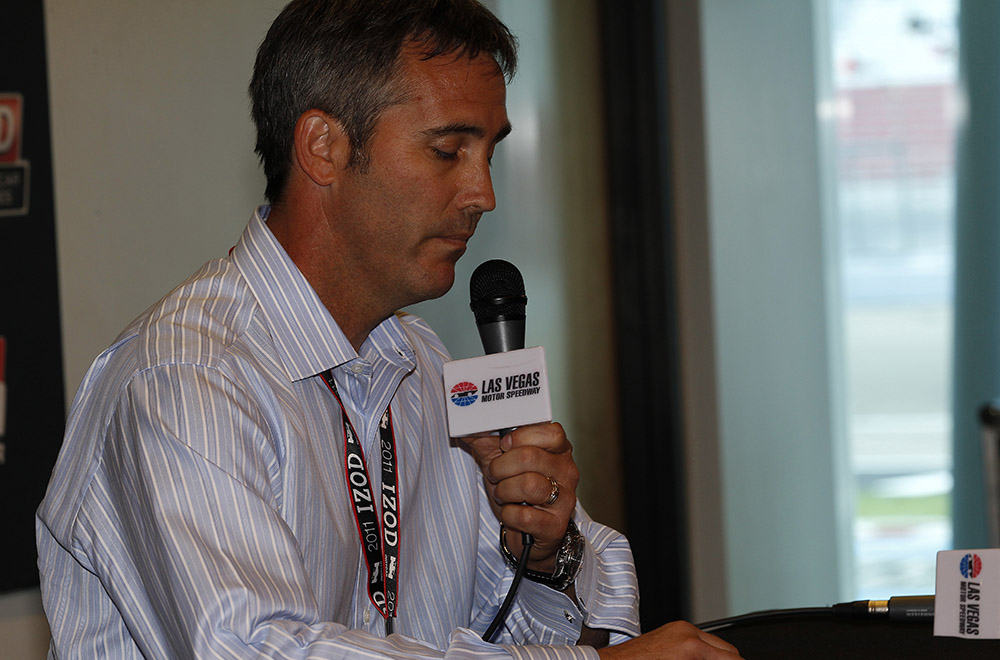
Bernard (above) announced the confirmation of Wheldon's passing to the media, in a day that he admits will remain "imprinted" on his life. Michael Levitt/Motorsports Images
Randy Bernard: So when the race was red flagged, I had Dario Franchitti, Tony Kanaan, Marco Andretti, and Justin Wilson, four representatives of the drivers, come into my trailer in my office and they said, ‘We don't want to race anymore. It's over.’ And I'm like, ‘Fair enough. I'm not going to make you race.’
You know, at that point, we're still live on television. Just about that time. Mario Andretti walks in and asked to see me. Before I step out for Mario and leave those four in my office, the doctor comes in and says, ‘We don't believe Dan's going to make it.’ He told me with those four in my office. It was very emotional inside there.
And so then for Mario, I walk outside. Mario is very strong, like, ‘Don't you dare cancel this event,’ almost like a typewriter with his finger on my chest. ‘Don't you dare cancel this event. We've never done it. This won't be good for the sport. Races have to go on. That's racing.’
And yes, he's right. That's exactly how the world has always handled it. In the past, if you look at the 60s, you know, out of 100 drivers, they lost like 35. Mario was accustomed to this through his racing career. But what I don't feel Mario had a clear grasp on was the power of social media. And I'm like, ‘Mario, we can't do it.’ I said, ‘Listen, I'm not going to convince those drivers in there to go get in their cars if they don't want to. It's very emotional, but you're welcome to go in there and talk to them and I'll leave you guys alone.’
While Mario was in my office with those guys, I was outside talking to our PR team about everything going on. Dan was on the helicopter, on the way to the hospital. Then, a little later when I’m back in my office, the doctor comes in and goes, ‘Bad news. Dan didn't make it.’ And so I had to take that and let everybody know.
With Andretti, the immensely influential legend set among the driver representatives, a new course of action awaited IndyCar’s president.
Randy Bernard: I get back to my office and Mario says these guys have decided they want to race. I looked at them and they were all in agreement. They were acknowledging that they were willing to do it. I go, ‘Here's the deal, guys. You're gonna have a driver's meeting. The team owners aren’t gonna make this decision. The drivers are going to make this decision. If 90 percent of the drivers say they're fine with racing, we'll go on and do it.’
At the time, I told [IndyCar safety officer] Charles Burns, ‘I want these drivers separated from their owners. I don't want the owners telling their drivers that they've got to go race. I want to hear the hardcore facts from them. So I gave him 15-20 minutes to gather them before I went over to the meeting room. And we hadn’t announced yet that Dan had passed.
The first time I walked in, there was no resolution. And so a lot of emotions in there; some drivers at this point, of course, knew that Dan had passed. They needed more time to figure out what they wanted to do, and so I decided to walk into the team owner’s meeting.
As I'm walking out from the driver’s meeting, Roger Penske is outside waiting and follows me out. And he said, ‘Randy, let me tell you, this will be one of the biggest decisions you make.’ He goes, ‘You make the decision that you want.’ I'll never forget that. It was very classy. And he really just wanted was in the best interest of the sport. He didn't tell me what he wanted. He just gave me assurance, like, ‘Hey, this is your call, nobody else’s, and you need to make it.’ And I walked back into the drivers’ room and said, ‘OK, enough is enough. We're not going to continue the race.’
As Wheldon’s death was confirmed among the drivers, Bernard’s call to end the race was later hailed as a relief for those who had no interest in resuming the event. Universal support for that decision, however, was not available.
Randy Bernard: I know Mario was very upset. And he had every right to be. I’m not here to tell you he was wrong. He came from a different generation on how racing was looked at. And again, I took Roger Penske’s advice to the heart. He said, ‘With social media, this isn't what we need right now.’
I mean, we've lost a life and it's over. We're going to do tribute laps to Dan, and then we’ll be done.
FIRST SIGNS
Standing in the media center, overlooking pit lane as the meeting ended, I stared down and saw a door open directly below. A number of drivers emerged and began walking towards their pit stalls. Andretti Autosport’s Danica Patrick, one of the first to appear, was visibly affected, tears flowing as she stepped forward and embraced a loved one. Looking down through the pane of glass, the sight of her mournful state told me we’d lost Dan Wheldon.
Within a matter of minutes, Bernard confirmed the news in a brief press conference as drivers continued to head towards their cars to perform a five-lap tribute to Wheldon (pictured, top). We made our way to pit lane where hundreds gathered to salute Wheldon and the remaining drivers as they slowly toured the oval to say farewell.
Polesitter and race leader Tony Kanaan, who looked upon Wheldon like a little brother from their time together at Andretti Autosport, was adamant in his need to carry one of the Briton’s effects in the cockpit of the No. 82 KV Racing Technology Honda.
A piece of Wheldon’s racing suit bearing his name was duly secured, and with tears streaming down his face, Kanaan completed those five laps chauffeuring his dear friend on one final ride. Fans at the lightly-attended event stood and cheered.
Drivers pulled onto pit lane, stopped, and in most instances, climbed from their cars and made beelines for their transporters and motorhomes. Nobody wanted to talk. Getting clear of Las Vegas Motor Speedway and having the space to process the day was the greater priority.
SILENCE
Teams broke down their pit equipment and cars, packed everything away, and left. Reporters filed their stories and left. Shellshocked fans trickled out of the grandstands and made their way home. The race had been abandoned and would be scrubbed from the history books like it never happened.
Franchitti and Power, locked in a season-long battle for the IndyCar championship, saw the title resolved in the Scot’s favor as he was leading the standings entering the Las Vegas race. The big championship banquet, arranged at the MGM hotel at an estimated and non-refundable cost of $400,000 to IndyCar, was cancelled.
As part of the celebrations, Wheldon was also meant to be announced by Andretti as the replacement for Patrick, who was leaving for NASCAR.
Dario Franchitti, No. 10 Chip Ganassi Racing Honda: When I think about Las Vegas, I never think about winning the championship. I think about the job we did that whole year, and about the team, but we never celebrated that championship. It was never something to celebrate. Losing Dan was a much, much bigger event in my life.
A joyless conclusion to the 2011 season had been reached. I don’t recall the exact time I left the media center, but the sun was starting to fade and it was jarringly quiet at the Speedway during the walk to the car. It was a dreamlike experience.
I’d been in Australia the previous weekend covering the V8 Supercars’ Bathurst 1000 race, flew home for a day or two, then onto Las Vegas, and was due to catch a flight home that night, spend one day with my wife, and then make a return flight to Australia for the following weekend’s Gold Coast 600 V8 Supercars race at Surfers Paradise.
Immersed in a thorough state of jet lag and mental haze, getting to my gate at the Las Vegas airport and waiting 30 minutes or so for the boarding process to start provided the first chance to decompress.
Junior open-wheel racer Robbie Montinola, sitting across from me, waiting for the same flight, asked how I was doing. I had no words to offer and started weeping uncontrollably. It opened a flood gate of dark emotions that continued for days. I’ve occasionally wondered if hundreds of others from the IndyCar paddock left the track for the airport and had similar experiences.
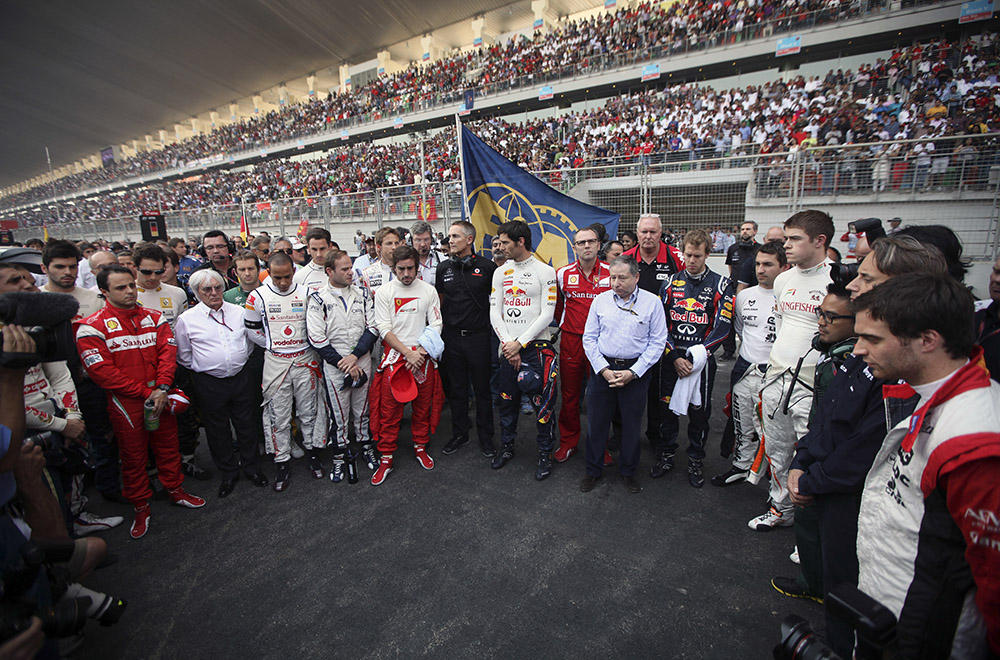
The aftermath of Wheldon's death sent immediate shockwaves throughout the entire motorsports community, even to the Formula 1 paddock, which also took a moment to pay respects. Glenn Dunbar/Motorsport Images
WORK TO DO
Back at the Speedway, there was one piece of procedural business in motion. Wheldon’s No. 77 car had been impounded immediately after the crash, secured in a private garage to be made available to the Clark County coroner if needed. It was released that evening to IndyCar officials and transported back to Indianapolis for examination by the series.
One week later, Wheldon’s wife Susie held a smaller gathering at home in Florida. The following day, a giant memorial was organized for Wheldon at the Fieldhouse NFL stadium in Indy.
THE FINDINGS
With Wheldon’s car in its possession, plus on-board performance data from 12 of the 15 cars involved in the crash, IndyCar spent the rest of October and November combing through the physical and computer-based information at its disposal.
A technical committee was first convened at the Indianapolis Motor Speedway on the 18th of November where video and data from the Las Vegas race was reviewed. The series’ official investigation report was compiled and published in mid-December.
Breakdowns of each crash were presented, starting with the triggers of the 15-car pile-up, James Hinchcliffe and Wade Cunningham. The series would state the following: “This initial contact was an occurrence common to racing as was each subsequent contact.”
In light of the "pack racing" that was sanctioned by IndyCar at Las Vegas, the assessment was not well received at the time.
Next was the crash sequence between Vitor Meira, EJ Viso, Charlie Kimball, and Wheldon. Using the No. 77’s data recorder, the investigators portrayed the car’s pilot as someone who went to great lengths to avoid what ultimately transpired. Simply put, Wheldon made a number of rapid-fire judgement calls to try and keep himself safe and the No. 77 and intact.
“As the chain reaction of the crash increased, and more race cars became involved, the No. 77 stayed low on the racetrack consistent with an attempt to avoid the race cars crashing up against the outside retaining wall,” IndyCar wrote.
“Several race cars were in a cluster directly in front of the No. 77, including the No. 9 (Scott Dixon), the No. 10 (Dario Franchitti), the No. 14 (Vitor Meira), the No. 59 (EJ Viso) and the No. 83 (Charlie Kimball). As the No. 14 began to spin toward the infield, the No. 14 made contact with the No. 59 and the No. 83. This gathering of race cars is directly in front of the No. 77 and effectively blocked the path of the No. 77, which was about two race car lengths behind.
“Approximately 3.8 seconds before impact, the driver of the No. 77 reduced throttle to about 55 percent. Approximately one second later, the throttle was reduced even further, down to less than 10 percent and the throttle remained in this position until contact. The driver of the No. 77 applied the brakes for approximately 2.4 seconds prior to contact, and had decelerated to a speed of 165 mph as the right front of the No. 77 made contact with the left rear of the No. 83.”
The crash involving JR Hildebrand, Cunningham, and Jay Howard was next in the breakdown, followed by the crash of Tomas Scheckter, Paul Tracy, Pippa Mann, and Alex Lloyd. The analysis closed with the crash of Will Power and Lloyd, with Power’s airborne event estimated to be nearly identical to Wheldon’s at 315 feet which left the Australian with a “compression fracture in his back.”
Although there was no question as to Wheldon’s lack of voluntary participation in the crash that ended his life, the report confirmed what was already known.
“No conduct by Dan Wheldon's driving of car No. 77 during the course of the race including lap 11 was found to have contributed to the cause of the racing incident or its consequences,” IndyCar wrote. “Furthermore, no conduct by any drivers on lap 11 was found to be inconsistent with expected driving during the race.”
IndyCar’s summary for the fatal outcome at Las Vegas was somewhat puzzling. While nobody held realistic expectations for the series to speak truthfully and blame itself for the conditions that created the pack racing that led to the crashes, the conclusion it offered was cold and detached, like it was another series’ race being reviewed.
For those who were hoping to find meaningful answers or accountability, none were offered.
“The accident was significant due to the number of race cars damaged, but more importantly due to the non-survivable injuries to Dan Wheldon,” IndyCar wrote. “While several factors coincided to produce a ‘perfect storm,’ none of them can be singled out as the sole cause of the accident. For this reason, it is impossible to determine with certainty that the result would have been any different if one or more of the factors did not exist.”
STILL DEBATED
There’s a difference of opinions on whether IndyCar was adequately warned by its teams and drivers about the potential for pack racing at Las Vegas. Was the series sufficiently interested in listening to those concerns? And were those concerns registered at the highest level?
An indisputable truth exists on this topic: Long before the IZOD IndyCar World Championship at Las Vegas Motor Speedway was run, some drivers were outspoken in their beliefs that the series did not belong at that track with those cars. Many of us listened to those drivers and wrote or spoke about their fears of pack racing and the unreasonable risks it would produce.
Unlike any other IndyCar race I can recall in my lifetime, there was a pervasive feeling of dread expressed by more than a few in the paddock as October 16, 2011, approached.
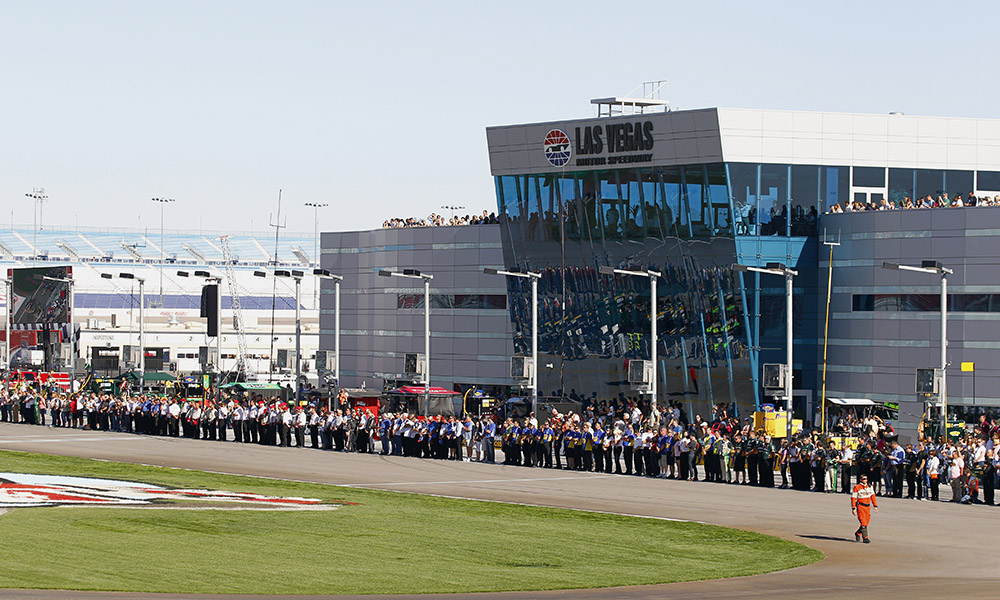
Fans, team members and officials lined up along pit lane as the remaining 19 cars run five laps to honor Wheldon. Phillip Abbott/Motorsport Images
Graham Rahal, No. 38 Chip Ganassi Racing Honda: On our side, the drivers were pretty vocal. But unfortunately, for many years, the culture was that the drivers are easy to replace. And that's just the truth. For many years, it was, ‘Hey, you don't want to drive? Somebody else will.’ And I think a lot of people felt that they had to go do it. Again, that's not right. But I do think that that's how a lot of people felt. So we all just thought, ‘Well, this guy will take care of me, that guy will take care of you,’ so on and so forth.
Dario Franchitti: My opinion hasn't changed. The track combined with the cars wasn't suitable. And we knew that going in. Hindsight is obviously great. Going back with hindsight, we should have said we're not driving. But that’s what we do, we race. Whoever’s in charge if it comes up again in the future, I’d hope would never ask drivers to race in those conditions or put the decision on the drivers.
Graham Rahal: I remember Ryan Hunter-Reay and I, before driver intros, we looked each other in the eyes and said, ‘Hey, you've got my back, I've got yours today, let's give each other some room.’ In the end, that didn't work all the way through the field. I think people did their best, I really do. But again, we're racers. That's the truth. You put that helmet on, God only knows what can happen. We were all aware of that.
Sam Schmidt, Wheldon’s team owner: It was way too easy to drive those cars on that day, on that track, with that downforce. You hope that everybody doesn't lose their memory and lose sight of those factors.
IndyCar’s former president disputes the notion of alarm bells being rung -- at least within his office -- prior to the season finale.
Randy Bernard: Not one person sent me an email prior saying that we shouldn't have the race. Everybody liked the idea of what we're trying to do. And so there are a lot of people saying, ‘Oh, we warned them.’ Absolute bull****.
BLAME
From the moment the crash happened, Bernard came under fire for conceiving the prize-driven event, the choice of Las Vegas Motor Speedway, the technical configuration of the cars, and for Wheldon’s demise. I’ll admit to harboring critical feelings towards Bernard on the first topic -- turning an IndyCar race into a cash grab -- but those views have softened, even during this writing process.
The rest of the criticisms seem misplaced, but as the person in charge of the series, the bullseye was placed squarely on his back.
Randy Bernard: I don't want this to be mean, but there was a lot of scapegoating. A lot of people wanted to blame me for having that event. I felt that one that was unfair. There were some team owners who were already against me because we went the way we did with Dallara for the new 2012 car that was coming. There were some who were going to get even with me, and I feel that this was one way that they could. Blame it on Randy.
And consequently, it created death threats, created a lot of stuff you didn't want your family to see. But the bottom line was we lost a life that. It was the most painful thing that that you could ever, ever have. When you're in a position like that, the bottom line is you have to accept responsibility. And that happened under my watch.
Wheldon’s entrant at Las Vegas sees Bernard as someone who did what he was hired to do by creating the season-ending spectacle.
Sam Schmidt: I still don't think to this day it was a bad idea to bring Randy in and try and differentiate yourself and create a show and an atmosphere. I don't think anybody can put it on him because he doesn't have knowledge of the engineering side, the aero side of things, and all that kind of stuff. You've got to rely on others to stand up and say we shouldn’t have raced there. But for the promotional side, I was as much a part of it as anybody. But I don't blame Randy for any of it.
Townsend Bell, No. 22 Dreyer & Reinbold Racing Honda: You know what, when I think back to that day, I don't have any anger. I wasn't mad at anybody or anything. I was devastated and disturbed. But I wasn't mad. And not in the moment or that evening or in the subsequent years, would I blame anybody or anything.
IndyCar’s relationship with risk tolerance is a really critical component to the entertainment and historical success of the sport. We'd be lying to all of our collective selves if we thought any different. And I think the folks that were upset about the circumstances of that event that that accident, that tragedy, had probably more to do with the risk versus reward profile as opposed to just the risk.
What's the difference in trying to go big and win that race in Vegas versus going big to set a new track record and Indy for the last 80 or 90 years? The risk of setting a track record at Indianapolis was considered much more valiant. But is it really? Is it a more tolerable pursuit at Indy than winning at Las Vegas Motor Speedway in a pack race? Who's to say that one is less pure or less noble than the other? They're both incredibly risky. And they both have produced fatalities through the years, whether that's in the race or qualifying.
I think what was different about Vegas is just by nature of the pack races that defined the era, it probably should have probably happened many, many times before. And when the merger happened, I think a lot of us thought, ‘OK, finally, the Civil War is over. And we'll go back to racing Indy cars and pushing the limits, in a more sensible format.’
We'll go back to the road and street racing, which we did, and we'll go back to ovals that are, you know, a little more testing of the driver, as opposed to the pure kind of gladiator courage test in Vegas. And I think that's what was upsetting for some people. It felt like that Vegas tragedy with Dan was like all those years of some crazy IRL racing, white-knuckle, flat-out races.
I mean, if you were anywhere near the industry, you watched those pack races and thought they would all end in catastrophe, as they did many times, but there just hadn't been that fatality. It felt like we dodged a lot of bullets. And then Vegas came on the schedule, there’s a big spectacular promotion, and then it bit us. But like I said, I wasn't angry at anybody. I knew exactly what I was signing up for.
WHAT HAVE WE LEARNED IN 10 YEARS?
Dario Franchitti: I think the first thing is we made the car safer, the Dallara DW12, named after Dan, of course. Unfortunately, it showed up one race too late. You know, that's nobody's fault. The way the cockpit was laid out in the DW12 was so much safer.
The fact that we don't do that dreadful pack racing anymore. That's probably the biggest thing we learned. And then, more recently, the introduction of the aeroscreen. To me, that is the biggest development of all over the 10-year period. If you go back 20 years, you’d probably say the SAFER barrier and the HANS device. Since we lost Dan, I think the aeroscreen has been a game changer.
Graham Rahal: A lot of the advancements in technology and safety we can thank Dan for, in a very sad way. It's sad that it often takes a terrible event for us to see change. In Dan's case, and then also obviously Justin Wilson, they've led us to where we are today with a much safer car.
Another thing we need to continue to learn from is what a great soul and human Dan was, the cheery nature, and the loving and caring nature that he carried himself with. I do think about that often. I do think that a lot of people could learn from his spirit and the way that he carried himself. Both with fans, but also with each other.
Sam Schmidt: We can talk all day about the improvements in the car’s safety, by we certainly haven't made any progress in the redesign of the catch fences. We continue to go to some places where poles are on the outside of the fence as opposed to the inside. There’s been nothing really to come down for improvements from a track design standpoint. I try to find a silver lining in everything but can’t point to a silver lining here.
Townsend Bell: I think we have a much lower appetite for risk, as an industry. And that's been a huge change. Our sport was built on the shoulders of men and women taking oversized risks for 90 years. But definitely Dan's crash was a turning point in adjusting the industry's risk tolerance profile.
FAST FORWARD
If the same scenario for pack racing presented itself today, would it be handled differently by the teams and drivers? We have achieved our first consensus.
Graham Rahal: I really don't. That was the right downforce, the right tire grip, the right track grip, you had ability to run three- or four-wide sometimes, and we don't go to any places that do that anymore. If we went back to Vegas, it wouldn’t be that way because the tires aren't as good and the cars are totally different aerodynamically today than what we had.
A lot of people look down on Vegas. I actually had somebody say to me the other day, ‘I can't believe you guys ever raced in Vegas.’ Unfortunately, that's not actually true. I think if you went back to Vegas tomorrow, the race that you would have would be way, way different than the race that you had on that given day. That was the ultimate scenario of pack racing. Today's cars, even if you went back tomorrow, you would never be the same as back then, truthfully.
But I do think that if it got to that point, yes, you better believe you're going to hear from me, from Will Power, from all these guys that were there that are so strongly against it. I’ve got a family; I've got a baby girl and a wife and things that I've got to take care of. I've got a great responsibility to them to try to come home in one piece and be healthy. That weighs heavy on your mind.
That time in Las Vegas, I was 22 years old, man; it's 10 years ago. I had nothing to go home to. I could be an idiot, and I could go out and be crazy and be fast and not worry about my wife, not worry about my baby girl. Your mind changes, even for a guy like myself.
Sam Schmidt: You would hope that the powers that be would come to the realization that you can talk as much as you want, but once the helmet goes on, they tend to throw caution to the wind. Hopefully that goes into the thought process for any potential new events.
Townsend Bell: Vegas had nothing to do with humanity and everything to do with entertainment. I don't imagine we'd be in that situation again. Certainly not. Not with the players at the helm today. I just don't think that we would ever be in that kind of environment.
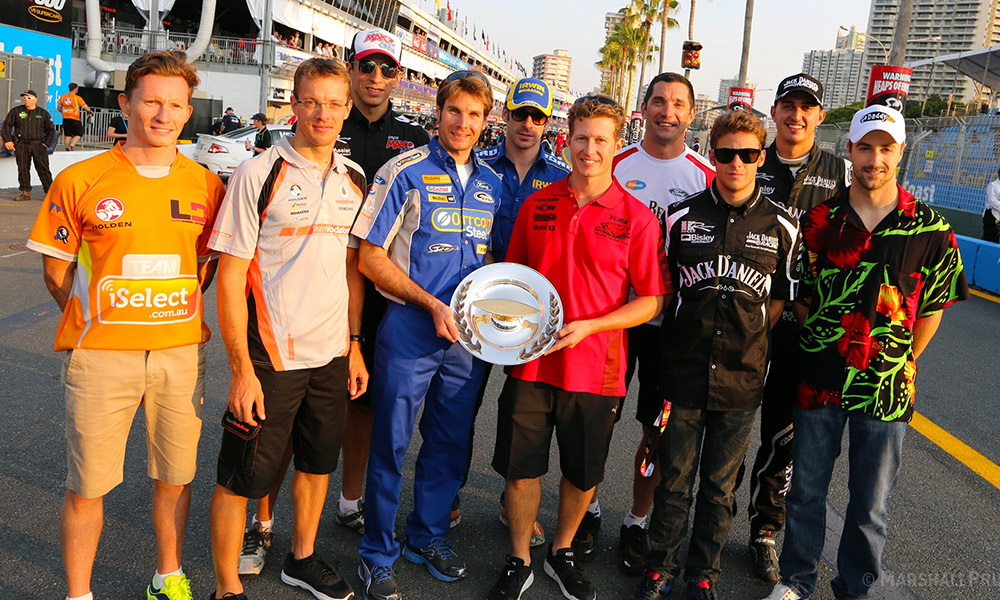
Drivers (from left to right) Mike Conway, Sebastien Bourdais, the late Justin Wilson, Will Power, Simon Pagenaud, Ryan Briscoe, Max Papis, Marco Andretti, Graham Rahal and James Hinchcliffe with the the Dan Wheldon Memorial Trophy in Surfers Paradise, Queensland, Australia. Image courtesy of Marshall Pruett
EPILOGUE
IndyCar was scheduled to return and race in Las Vegas in 2012, but those plans were cancelled in the wake of Wheldon’s death. Neither drivers, nor their teams owners, have expressed a desire for its inclusion on future IndyCar calendars.
Susie Wheldon would press on, concentrate her energies on raising their sons Sebastian and Oliver who, while in their pre-teens, were recently signed to junior development contracts by their father’s 2005 IndyCar championship- and Indy 500-winning team, Andretti Autosport.
Rahal, barely out of his teens, would assemble a charity auction that generated more than $600,000 for the Wheldons. The V8 Supercars series, missing Wheldon who was scheduled to take part in the Gold Coast 600, created a trophy bearing his name for the top international driver at the event.
Hunter-Reay created a tribute helmet to Honor Wheldon and auctioned it off with the proceeds going to charity. A street has been named after Wheldon, a book was published by some of his best friends, and dozens of other gestures, big and small, continue to be made with Wheldon as the central inspiration.
All manner of little details would emerge, like Bernard leaving IndyCar aside and spending hours with Susie and the Wheldon family in their private suite on the night of the crash. The CEO of the MGM refused to accept payment for the cancelled banquet, willfully losing hundreds of thousands of dollars with the decision. The No. 77 chassis, once the series was finished with its investigation, was destroyed and sent to a land fill at the request of the team.
Ten years on, IndyCar is under different ownership, new leaders are in place, and of the 34 who competed in the IZOD IndyCar World Championship at Las Vegas Motor Speedway, 12 suited up for one or more NTT IndyCar Series races in 2021.
We’ve moved on since the day we lost "Danny Boy," but not so much that we’ve forgotten what took place. And on their current path, a gift awaits us in the near future.
Sam Schmidt: We’ve got a picture of Dan with his Indy 500 ring right above my fireplace. Somebody asked me, "Do you still have Dan in your memories?" I see his smiling face above the fireplace every day.
It's really good that Susie is still involved. Not sure if she really wanted the boys to do what they're doing, but the fact that they're racing karts and racing well is good. We haven't seen the last of the Wheldons at the track.
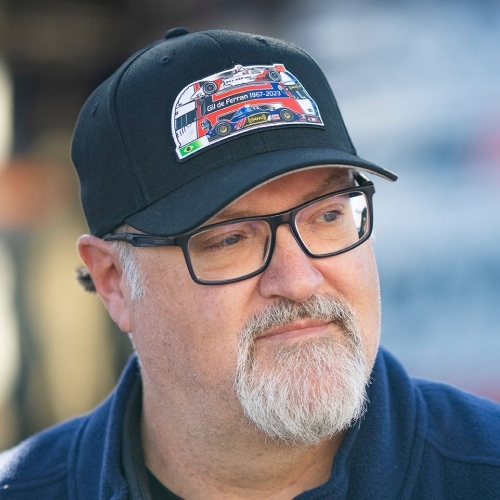
Marshall Pruett
The 2026 season marks Marshall Pruett's 40th year working in the sport. In his role today for RACER, Pruett covers open-wheel and sports car racing as a writer, reporter, photographer, and filmmaker. In his previous career, he served as a mechanic, engineer, and team manager in a variety of series, including IndyCar, IMSA, and World Challenge.
Read Marshall Pruett's articles
Latest News
.png?environment=live)
Comments
Comments are disabled until you accept Social Networking Cookies. Update cookie preferences
If the dialog doesn't appear, ad-blockers are often the cause; try disabling yours or see our Social Features Support.