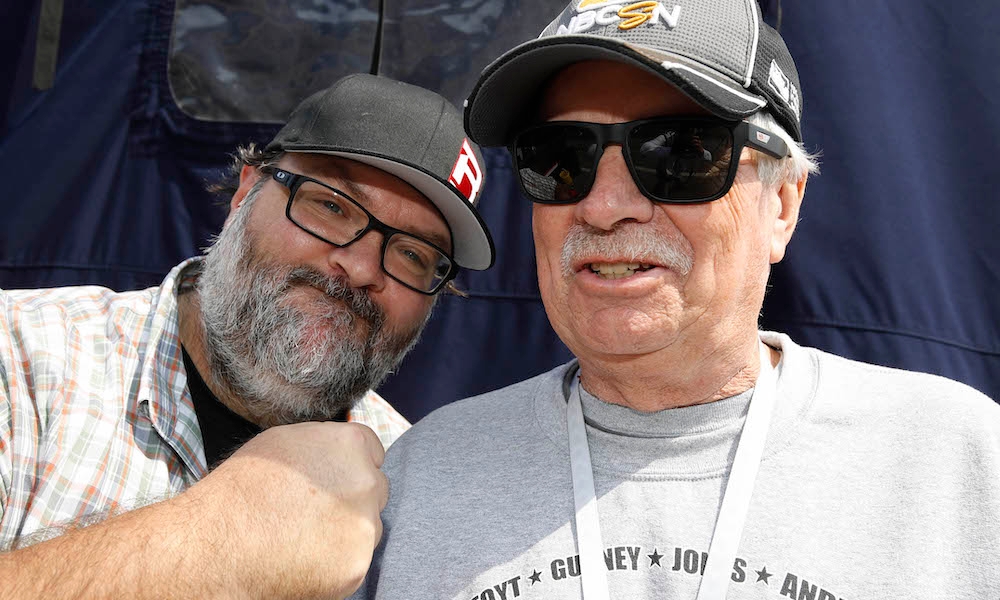
Michael Levitt
PRUETT: There was nobody like Robin Miller
His voice was the loudest in any press room, his personality the biggest in any paddock. He was more famous and more revered than half the drivers he covered. His stories started more conversations, stressed more friendships, and did more to champion IndyCar racing than any person or sanctioning body. His heart was IndyCar’s heart.
Robin Lee Miller, a man who was loved or loathed with intense passion by drivers, team owners, and fans alike, died this morning at the age of 71 after a prolonged fight against cancer and leukemia. Even though we’ve known it was coming, it’s still hard to process. Through open-wheel’s best and worst times, Miller was always there, reporting, fanning the flames of fires he often set, driven by a need to make people care about the sport he loved, to ensure it survived.
I can’t imagine motor racing without him.
To his readers, Miller was a writer, reporter, author, and broadcaster. That was only one version of the larger-than-life character. To the tenured men and women in the IndyCar paddock, he was one of their own, a hapless and unkempt kid who grew up on pit lane at the Indy 500 ‘stooging’ -- serving as the lowest member on a pit crew -- for his hero, renowned Indy entrant and driver Jim ‘Herk’ Hurtubise. To their amazement, Miller eventually made something of himself.
He added another wrinkle by donning a driving suit and spending the better part of a decade trying to kill himself in midgets, sprint cars, and Formula Fords. His friends gasped with relief when Miller decided it was time to stop the crash-laden experiment. Sporadic bursts of talent were shown, though, and from the wisdom earned in the cockpit, more respect was gained from the IndyCar drivers he chronicled.
They took pride in all he became in his new media career. With the role came trust and sources that would serve his calling until his final days. And to their surprise, he was actually more dangerous with a keyboard than with a wrench or steering wheel in his hand.
Despite uttering the phrase “I’m a mechanical moron” a few thousand times over the years, Miller’s lack of knowledge about the cars of Indy never mattered. His innate curiosity and willingness to ask extremely basic questions was warmly received. There was an authenticity born from that innocence and ignorance. Most of all, Miller understood people and their motivations.
Where he put this talent to use was in celebration of the day’s biggest names—many of whom carried an air of mystique—and made them human, relatable. As often as Miller’s been praised for extolling the unvarnished truth, his reach inside the paddock and connection with IndyCar’s most heralded characters is where he changed our game. The A.J. Foyts, Dan Gurneys, Roger Penskes, and other mythic figures opened up to Miller in ways that were personal, unguarded.
He brought IndyCar’s new stars to the Indiana State Fair, forced them to eat fried monstrosities, and made sure to film and write about it for our amusement. He always found ways to help his legion of readers form bonds with the kids who were about to take the reins. We know the pillars of our sport, old and young, in deeper ways because of Miller.
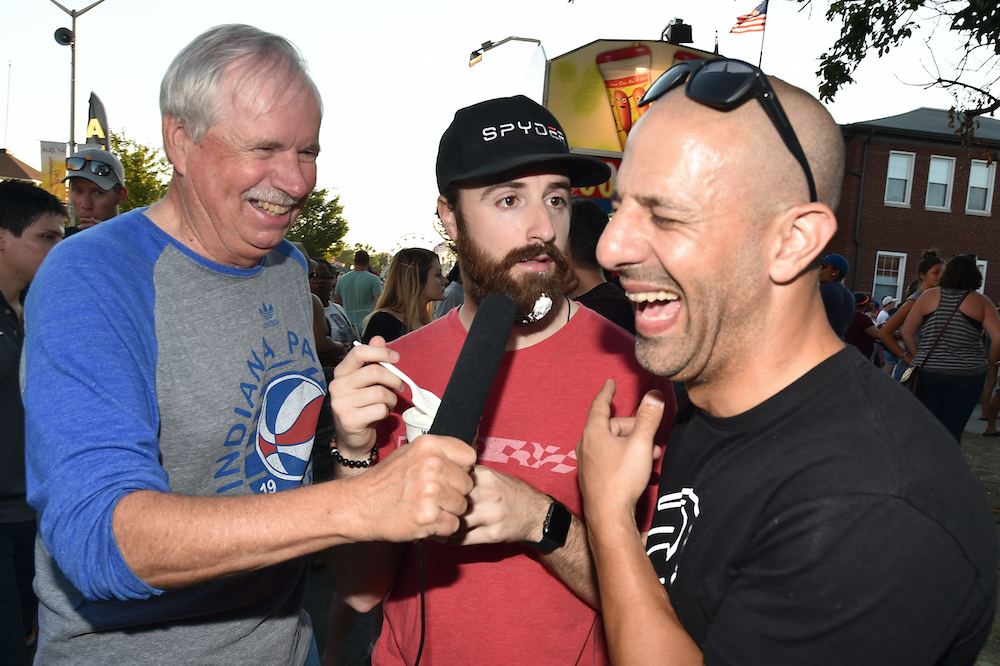
Miller, James Hinchcliffe and Tony Kanaan test-drive some treats at the Indiana State Fair. Image by Joe Skibinski/IndyCar
His oxygen came from conversations, often held in full view of the public, occasionally reserved for the deep recesses of a garage or transporter, where he’d gather the latest scoops and scandals. Miller loved the hunt, chasing the next story, and had an army of guides pointing him in the right direction.
And he had a knack for pulling strings.
We’ll never know how many decisions made by USAC, CART, Champ Car and IndyCar Series bosses came as a result of Miller’s private emails, phone calls, and impassioned pleadings. It never mattered if they wanted to hear what he had to say; Miller was IndyCar’s self-appointed consigliere. Yes, his name was on thousands of story bylines, but his influence was just as great as an uncredited co-captain trying to keep open-wheel’s ship from running aground.
Miller’s shotgun laugh, a loud cackle that disrupted everything within earshot, was a thing of beauty. It was a featured part of his most prized contributions to our world: The stories. Oh, sweet father, the stories.
Miller’s steel-trap mind had hundreds of them at the ready to tell in an instant. Picture the average scene in an NFL or NBA locker room where throngs of reporters surround a Tom Brady or LeBron James and hang on everything they say. Then turn that scenario around and imagine a reporter at the center of the scrum, enveloped by the Bradys and LeBrons, the head coaches, and staff members who we’re enraptured by every curse-filled sentence he had to offer.
That’s been IndyCar’s reality for decades as the paddock was drawn to Miller and his ability to breathe life into years and eras that preceded their own. He was our village elder, keeping the memories of his heroes and the unsung aloft. With Miller, the past was always kept present and fresh, delivered as oral documentaries.
Miller was IndyCar’s generational rallying point, connecting the greats who made the sport what it is with the fans who loved and revered all they witnessed back in the day at Trenton, Milwaukee, and other woebegone haunts his mailbag readers mentioned every week. He was also the bridge between generations, taking modern fans to times and tracks that pre-dated the internet.
The 'RACER row' in the IMS press room, a few hours after the checkered flag for the 2016 Indy 500 (left-right: Marshall Pruett, Mark Glendenning, Robin Miller). While it was all business when there were stories to file, Miller's desk was one of the Speedway's main social hubs in the days leading up to the race. Image by Paul Pfanner
And he brought his heroes together with your heroes. Ask a Dario Franchitti, Scott Dixon, Tony Kanaan, or Josef Newgarden how many legends of the sport they met through Miller because he knew their predecessors, a Dan Gurney, or a Parnelli Jones, were kindred spirits.
Being a member of Miller’s inner circle came with an invitation to a group that includes every living Indy 500 winner, the power brokers who’ve ruled the sport, and an oddball assembly of mechanics, journalists, engineers, PR reps, and childhood pals.
One of the greatest joys in my life took place each May in the media center at the Indianapolis Motor Speedway. Seated to his right on our sprawling row, separated by his diabetes-size assembly of candy, bags of plain potato chips, boxes of Long’s donuts, cold fried chicken, and warm bottles of his beloved Pepsi, the world’s oldest teenager was the hottest ticket in town.
Uncle Bobby -- Bobby Unser -- would get his motor home parked after the long drive from New Mexico, make a beeline for the fourth floor of the media center and emerge from the elevator with his hands raised and waving -- like the three-time Indy 500 winner was surrendering and begging Miller not to shoot. Unser would proceed to sit between us and from there, no work would be done as they spent hours spinning yarns at the top of their lungs.
Whomever was the CEO of IndyCar or president of IMS at the time would stop by to pay their annual tribute to the man who both eased and complicated their lives. And the receiving line continued each May. The Mario Andrettis, Johnny Rutherfords, Tom Snevas and other titans of the Speedway all came to cajole Miller in his natural habitat.
Even Carlos Huertas, a one-time race winner and proverbial blip on IndyCar’s radar, couldn’t avoid pulling up a chair and experiencing media-center Miller for a few hours.
In typical fashion, and Miller spared none of his guests, he gave the Colombian a heavy ration of **** from the moment he sat down. Some might’ve expected the journeyman to hold his tongue, and he did take Miller’s best verbal jabs, but Huertas was using Muhammad Ali’s old rope-a-dope trick and let the old crank wear himself out.
Once Miller’s accosting began to wane, Huertas pounced, spending the rest of the afternoon landing haymaker after haymaker. From taking Miller to task for his clothes, diet, and reporting skills, Huertas carved up the dean of IndyCar without mercy. I’ve never heard Miller laugh harder. The po-faced driver we nicknamed ‘Grumpy Cat’ became one of Miller’s new favorites that day, all because Huertas understood the man lived for jousting, insults, and mischief.
The people of IndyCar orbited Miller on a daily basis. It was his patented ‘Team Lunch’ events held weekly at favorite local restaurants where his buddies would meet to reminisce and tell lies over plates filled with greasy delights. It was his month of May dinners, reserved for the inner circle, where he ate and sparred with men whose faces are permanently enshrined on the Borg Warner trophy. His other guests -- the mortals -- spoke afterwards of feeling unworthy to have been seated at the table, gushing all the while over the honor and experience.
If you weren’t greeted with some form of insult, announced to the group he was with as a ‘Sorry sack of ****,’ or hailed as your parents’ worst mistake, Miller probably didn’t like you. And after the verbal assault, he’d flash that glossy grin and let you know he didn’t really hate you. Well, not that much.
With prose as his ammunition, Miller took delight in stringing together a symphony of curse words designed to question your faith in humanity. If you’d made it through life with virgin ears or were a devout churchgoer, prayers and passages from the bible certainly weren’t going to protect you from Miller. That man could make the Devil blush.
Getting Miller to dress like an adult was one of life’s greater challenges. It took stern words and more than a few threats from his bosses at NBC to make sure he didn’t turn up in front of the cameras looking like he stepped away from a pickup basketball game. If the Smithsonian finds itself wanting to host an exhibit with the finest collection of sweatpants and mustard-stained t-shirts that smell like pork tenderloin sandwiches, point them towards Miller’s condo in Indianapolis.
The volume of reporters who’ve expressed their gratitude to Miller is another sign of the man’s influence; he was a mentor to all who were willing to watch or listen. Half of it was on the how-to side, and the other half -- and I’m being generous -- was on the how-not-to side. Nonetheless, Miller offered a masterclass on how to be a sports reporter if you buckled in and went along for the ride.
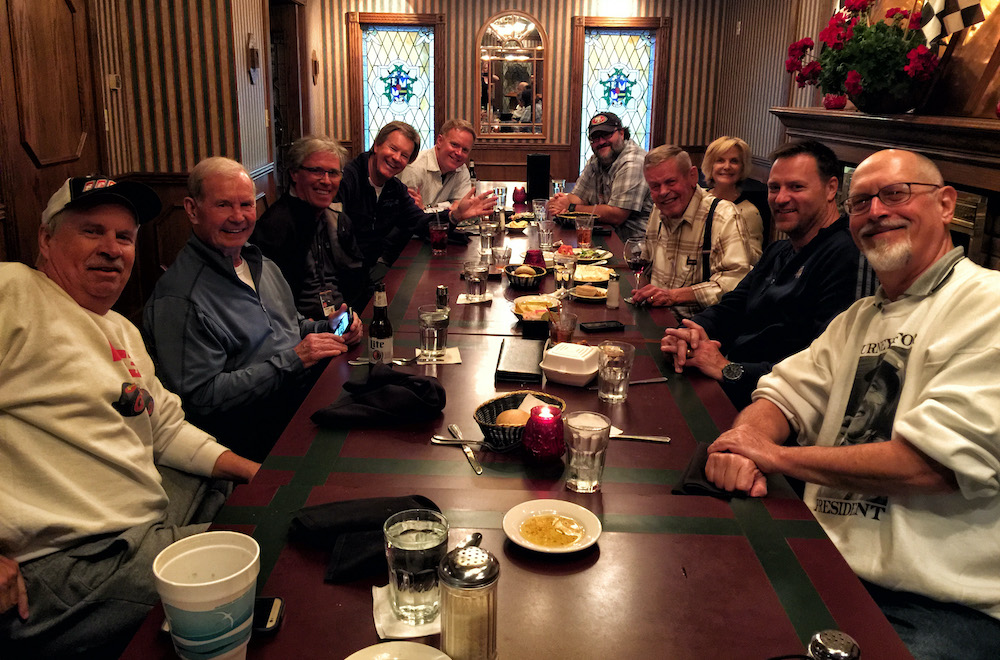
Having a place at the table for one of Miller's Month of May dinners meant being surrounded by a loud, boisterous Borg Warner Trophy. Image via Marshall Pruett
Back in 2006 or so, as a brand-new reporter at SPEED, I was assigned to assemble, edit, and post his weekly mailbag. He was the biggest name in the building, I was an entry-level nobody, and while he could have held me in my place, Miller became the greatest cheerleader and mentor I could ask for. In time, we’d become a reporting team. How surreal. I owe my career to that man, and know I’m not alone in that regard.
I’m 50 years old. I’ve worked in open-wheel racing since I was 16. And I was Miller’s colleague and reporting partner for nearly 15 years. After my wife, he was the most constant presence in my life, either in person or on the phone, since we met. And yet with Miller, despite whatever age or achievements I’d reached in life, I always felt like a five-year-old staring up at Santa Claus. Now gone, this is an emptiness that cannot be filled.
When he wasn’t hurling invectives at nuns, and to the surprise of his harshest critics, the man was inherently decent and kind. He’d hate for it to be said out loud, but there was a soft side to Robin Miller.
After one journalist got fired from a well-paying job and fell on hard financial times, Miller was quick to visit the grocery store and fill a shopping basket with steaks and other food so he and his family wouldn’t go hungry. He organized charity softball games, and was always free with his earnings. If he knew someone was struggling, a $20 bill, or maybe a $100 if he had it, was stuffed into the person’s pocket, no questions asked, no chance to decline, and no repayment allowed.
From the moment my wife got sick in 2018 to our last conversation a week ago, Miller was searching for new ways to help, offering her all manner of sympathy and encouragement. From his hospital bed, no less. Behind the scenes, he was there for friends, there for injured racers and their families, bringing cheer, lending a hand, demonstrating the best virtues.
His last grand act was one of giving, as more than $11,000 has been sent to St. Jude Children’s Hospital from the sales of his ‘Get Well Robin’ stickers. While dreadfully sick and dying over the last few weeks, all Miller wanted were updates on how much had been raised and donated to help St. Jude’s offer free care for kids fighting the same disease. That’s the Robin Miller I’ve known.
Even as his weekly contributions to RACER and NBC Sports began to decline as the ravages of cancer and leukemia took their toll, he was filled with inspiration and story ideas. Sadly, most went unfulfilled. The greatest IndyCar reporter we’ll ever have, recently enshrined in the Motorsports Hall of Fame of America, who casts a shadow that envelopes every journalist in the sport, would privately confide that he didn’t feel like he was keeping up his end of the bargain and feared he was letting his audience down. Hard to fathom, isn’t it?
It took a heart-to-heart conversation about a month ago to help Miller to understand that we’d received a lifetime of gifts from that brilliantly twisted mind; we were in his debt. His time as a reporter who was always on deadline was complete. He seemed to find peace in the idea of contributing if and when it was of interest. He also felt the full weight and size of appreciation he deserved on his final visit to IMS during the IndyCar/NASCAR road course event. NBC asked him to interview Jimmie Johnson, and that was like a shot of adrenaline.
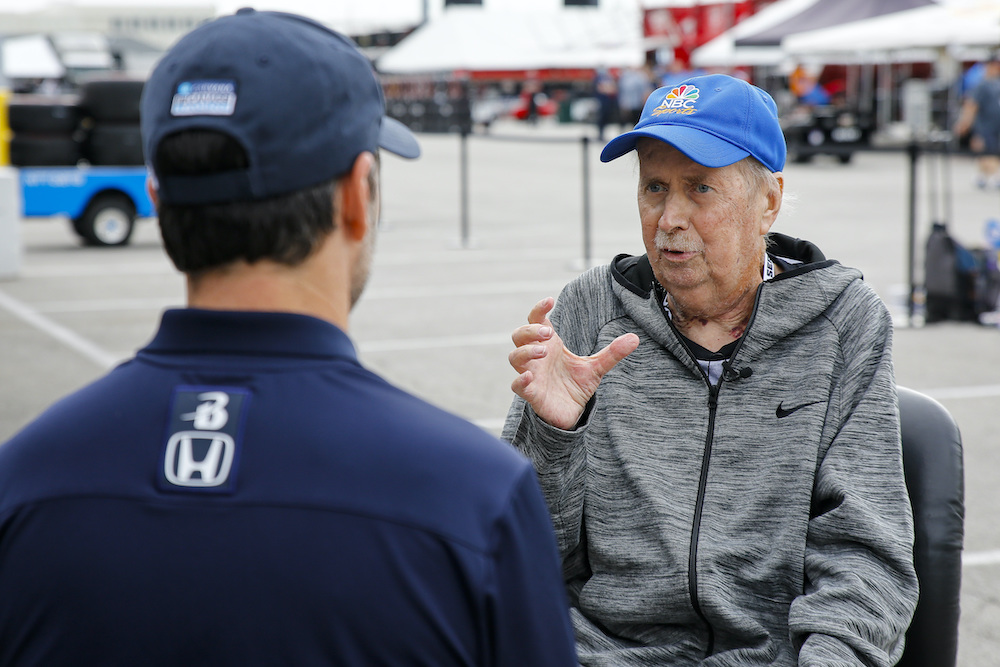
Miller sat down with Jimmie Johnson at the Speedway two weeks ago for what would be his final driver interview. Barry Cantrell/Motorsport Images
Frail, and sporting another fashion ensemble found on the clothing isle at Menards, Miller was lavished with attention and love from both paddocks. Beforehand, he’d told me it would be his last trip to the Speedway, a final farewell said to the track that made him, and to his many friends, on his own terms. His heart was full; he was content. I’m so incredibly thankful he was able to die as he lived: On the throttle and in charge.
It’s both sad and funny to think that in recent weeks, after he filed his farewell letter on RACER, some people have actually been offering their services and jockeying to replace Robin. As if any living creature could fill that void.
Robin Miller was a self-professed asshole, degenerate gambler, and the High Priest of S*** Disturbers. His body of work over six decades was immensely prolific and won’t be matched. No reporter stood taller on their soapbox, or genuinely loved being themselves -- flaws and all -- more than Miller.
How in the hell do you talk, write, or think about one of your best friends in the past tense? It’s an adjustment many of us will have to figure out in the coming months. He spent a lifetime telling his stories to us; for once, it’s our turn to start telling stories about him.
Can you imagine the arguments he’s having right now with Uncle Bobby? Or the patience required of the Big Eagle as he attempts, for the 943rd time, to help Miller understand how the Gurney flap works? And is Herk chasing him out of the garage at the big Gasoline Alley in the sky?
I’m heartbroken at our collective loss and have tears running down my face as I write this. But I can’t stop smiling when I think about all that Robin Miller gave us to cherish about the sport we love. Godspeed, old friend.
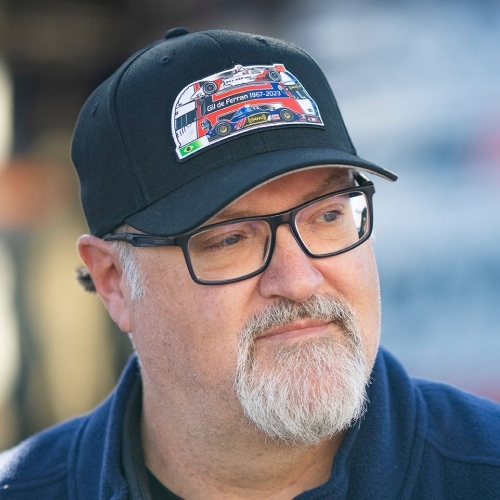
Marshall Pruett
The 2026 season marks Marshall Pruett's 40th year working in the sport. In his role today for RACER, Pruett covers open-wheel and sports car racing as a writer, reporter, photographer, and filmmaker. In his previous career, he served as a mechanic, engineer, and team manager in a variety of series, including IndyCar, IMSA, and World Challenge.
Read Marshall Pruett's articles
Latest News
Comments
Comments are disabled until you accept Social Networking Cookies. Update cookie preferences
If the dialog doesn't appear, ad-blockers are often the cause; try disabling yours or see our Social Features Support.