Barry Cantrell/Motorsport Images
PRUETT: IndyCar midseason thoughts
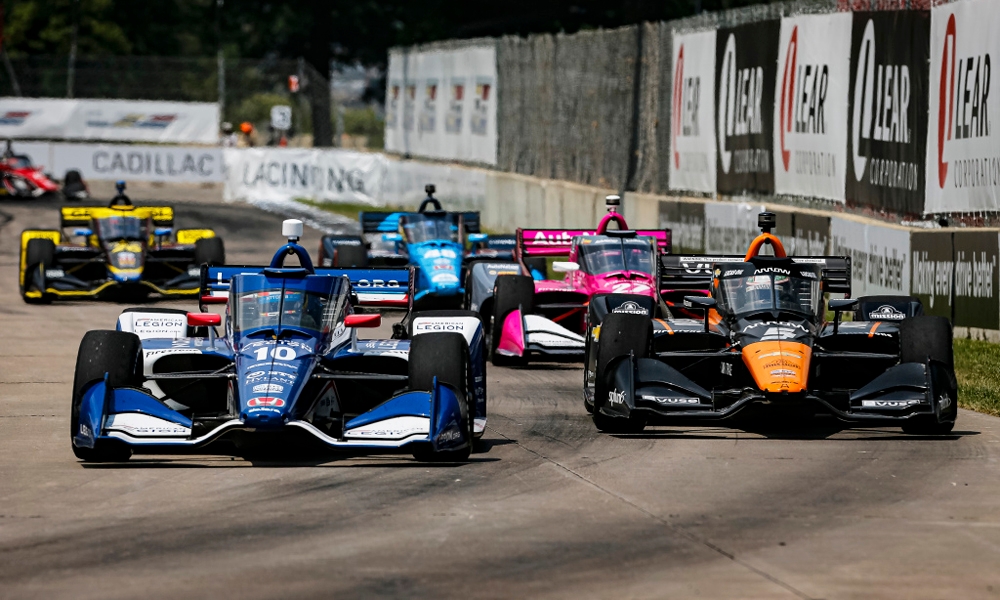
It’s nine races down and seven to go in the NTT IndyCar Series season. Just past the halfway point of the championship, we can rightfully say fans have returned in force, TV ratings are up, and each race has felt like a scripted drama designed to extract maximum emotions from the audience and participants alike.
As we start a new run to settle the championship, let’s wander through some teams and drivers and make a few observations about how the year has unfolded so far and what the full-timers and those spending the majority of the year in each entry need going forward.
Chip Ganassi Racing
Alex Palou: P1 in the championship, average starting position of 6.7, average finishing position of 5.9, +0.8 positions.
Scott Dixon: P3 in the championship, average starting position of 7.1, average finishing position of 6.4, +0.7 positions.
Marcus Ericsson: P8 in the championship, average starting position of 13.7, average finishing position of 9.2, +4.5 positions.
Jimmie Johnson: P30 in the championship, average starting position of 22.8, average finishing position of 22.0, +0.8 positions.
A kid who participated in his first IndyCar race on June 6, 2020, is your championship leader. Let that sink in for a moment.
He qualified inside the Fast Nine on his Indy 500 debut and scored a runner-up finish on his return. He’s also been on the podium -- with two wins included -- in five of nine starts for his new team. And he and race engineer/technical director Julian Robertson have become the series’ newest revelation.
I wouldn’t pretend to know the details of Alex Palou’s contract with Chip Ganassi Racing, but I am confident in saying whatever he signed during the offseason might be the steal of the century based on how the sophomore IndyCar driver from Spain has performed in the No. 10 Honda.
Just as Pato O’Ward was the breakout star of 2020, it’s fair to say Palou was not expected -- even within CGR -- to play that role in 2021, or to be leading the standings and have a 56-percent podium output to date.
With seven races left to run, it’s far too early to paint Palou as the championship favorite, but if he can continue delivering quality results in the coming rounds, why can’t the 24-year-old complete his season of shock and awe with the title in hand? There’s a reasonable chance it could happen, which is yet another fascinating aspect of this crazy season.
Dixon’s always there or thereabouts at the front of the standings, so there’s not much to add here, but there’s been a slight lack of crispness in a number of qualifying sessions and races this year for the six-timer that stand out from the easy speed seen so often on the way to last year’s title. For the first time since Dario Franchitti was his CGR teammate, Dixon has a legitimate threat to his championship aspirations under the same tent, and that will make for a thread to follow as the season marches ahead.
Factor in Marcus Ericsson’s rise in competitiveness, and the defending series champions hold P1, P3, and P8 in the standings—best among all teams—through collective consistency.
NEEDS: With Palou and Dixon in title contention, let’s turn to Ericsson, who’s one of IndyCar’s biggest movers on race day. But it’s a bit of a false read since he tends to start well behind the other two. The Swede’s season would be vastly improved with better starting positions and less ground to cover to then earn bigger helpings of championship points, so for him, focus on the Fast Six. Jimmie Johnson has struggled, as expected, and shown noteworthy improvement, as expected. But it’s the making of the same mistakes in the races, with spin after spin, that suggests the car is talking when its at its limit and he’s still not hearing it. Learning without being a regular generator of caution periods is his next breakthrough.
Arrow McLaren SP
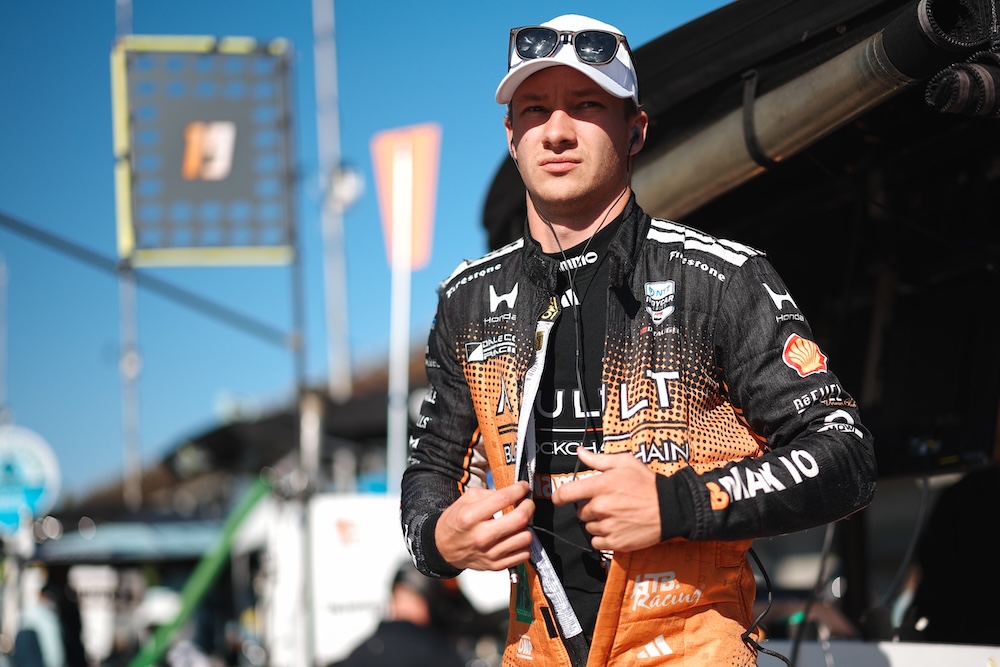
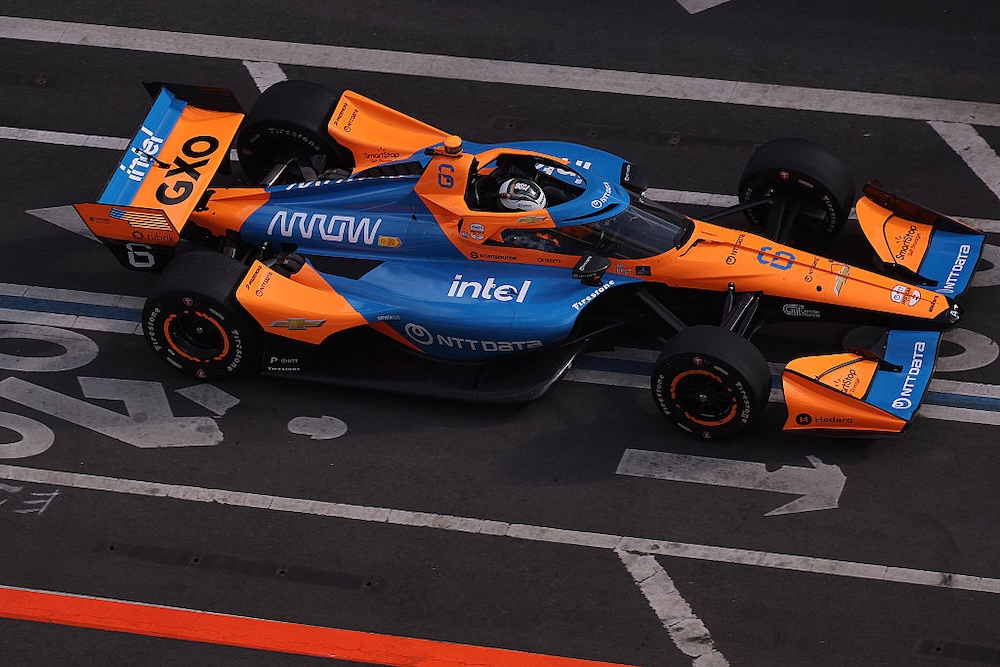
Pato O’Ward: P2 in the championship, average starting position of 8.8, average finishing position of 6.6, +2.2 positions.
Felix Rosenqvist: P24 in the championship (P20 prior to his Detroit 1 crash), average starting position of 16.4, average finishing position of 18.7, -2.3 positions.
O’Ward told RACER before the start of the season that he wanted to be "a headache" for the rest of the drivers, and boy howdy, he’s living up to that lofty expectation. NBC Sports’ Leigh Diffey has nicknamed O’Ward "The Ninja" for all of his daring drives, and I think we might add one more by borrowing the "Human Highlight Reel" nickname given to NBA legend and all-time slam dunk great Dominique Wilkins.
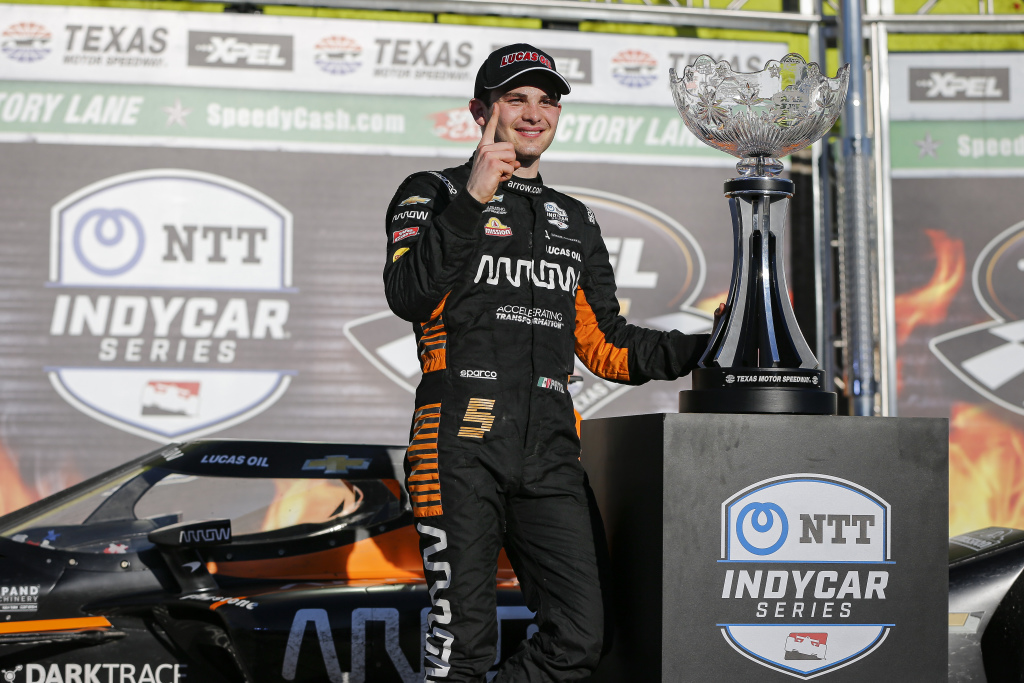
O’Ward at Texas: Looks like the rest had better get used to this... Barry Cantrell/Motorsport Images
Thanks to his constantly outrageous passes that defy logic, gravity, and physics, O’Ward has been the season’s must-see driver. He doesn’t win his first IndyCar race without summoning the ever-present bravado and car control at Texas to try passes high and low that were too extreme for others. And that’s another attribute O’Ward has displayed; if there’s a question as to whether he should try a pass that might end in tears, he’s already shot through the gap or ventured onto an unfriendly piece of tarmac to give it a try. So far, his aggression has not resulted in tears.
O’Ward’s youthful precociousness is a major ingredient in why he’s led the championship and been inside the top four in points at every race except for St. Petersburg. The team has done a reasonable job of keeping the bad days from becoming terrible, and that’s the kind of consistency a rising operation like AMSP needs to keep mixing it up with its more established rivals.
Teammate Felix Rosenqvist’s crash was a most unfortunate punctuation point to an unrelentingly bad start with his new team.
NEEDS: For Rosenqvist to get back in the groove at Mid-Ohio and deliver the results he produced on a regular basis during his first two years in the series. Before the crash, the obvious difference between O’Ward and Rosenqvist was shown in qualifying where for former’s average start of 8.8 and the latter’s 16.4 meant the two were competing in entirely different races. With so much separation to consider and distance to cover to reach the front of the field, O’Ward’s been left to fend for himself on most occasions. If O’Ward’s going to mount a championship run, he could use a tail-gunner to assist in taking points away from his rivals. With his hopes for the season all but lost, Rosenqvist’s assignment is clear.
Team Penske
Josef Newgarden: P4 in the championship, average starting position of 6.3, average finishing position of 9.1, -2.8 positions.
Simon Pagenaud: P5 in the championship, average starting position of 10.3, average finishing position of 8.7, +1.6 positions.
Will Power: P11 in the championship, average starting position of 11.6, average finishing position of 11.9, -0.3 positions.
Scott McLaughlin: P12 in the championship, average starting position of 14.6, average finishing position of 12.9, +1.7 positions.
It’s easy to focus on the lack of wins and draw conclusions that the team is missing the competitive mark, but that would be inaccurate. On speed and potential alone, Penske could have multiple wins this year, so there’s no need to worry on that front.
But there have been an inordinate amount of errors that range from wheels falling off to speeding penalties to gearbox problems, not to mention the ridiculous misfortunes intervening when Newgarden and Power have been moments away from victory.
If you want evidence of Penske’s capabilities, consider how Newgarden opened the year with a big mistake at Barber that left him P23 in the championship. From there, he jumped to P3 after the third race and has hovered between P3-P6 since then, despite the adversity he faced at every race in June.
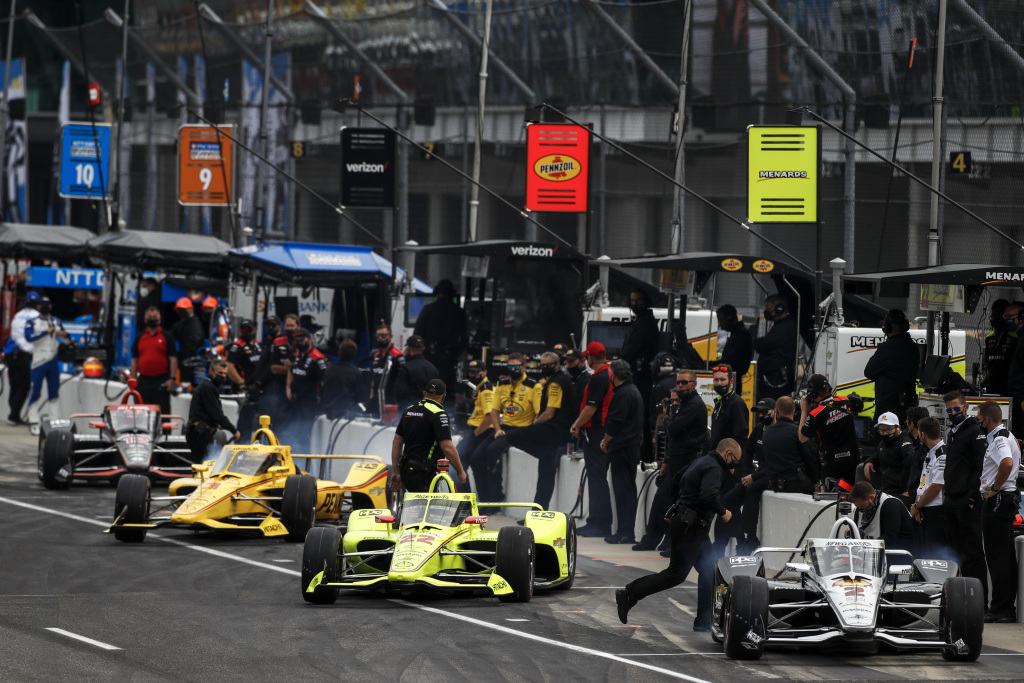
Penske’s Fab Four have all had their moments thus far, but they're all still looking up the points chart and none have visited victory lane. Motorsport Images
Pagenaud has been a solid performer and used a strong finish of P3 at the Indy 500 to spark his current run, and a string of five poor results outside the top 10 has Power well behind in the championship. IndyCar’s Polemaster General has been decidedly off the mark in that area of expertise; only two appearances in the Fast Six and no P1s. McLaughlin, one spot behind Power, has ridden a wave of rookie highs and lows, but how harshly should we critique a guy holding P12 in the standings -- directly ahead of Alexander Rossi -- as he learns almost every track he visits for the first time?
NEEDS: It’s a lot of obvious things for Penske’s foursome: Fewer hiccups for Newgarden’s entry, more calm and consistency from Power, more fire and less caution from Pagenaud, and a good mid-season reset for McLaughlin, who’s already overachieving in his transition from Australian Supercars to IndyCar.
Ed Carpenter Racing
Rinus VeeKay: P6 in the championship, average starting position of 8.3, average finishing position of 9.1, -0.8 positions.
Conor Daly: P17 in the championship, average starting position of 15.8, average finishing position of 18.1, -2.3 positions.
VeeKay has been as much of a revelation this year as his team, which had difficulties in making its presence felt on road and street courses for quite a while. The kid from Holland has reframed ECR’s expectations, thanks to his qualifying speed -- his average starting spot is sixth best in the series -- and craftiness in the races where he ranks fifth among best finishing averages. Six results inside the top 10 and a win tells us VeeKay is right there with Palou, O’Ward, and Herta as part of IndyCar’s young and race-winning badasses. VeeKay’s on his way to becoming a must-have driver whenever his contract is up for renewal; ECR or another team will make him wealthy.
Daly’s season has been downright perplexing. One some days, he’s locked in with VeeKay; on too many other occasions, they’re on different planets. Leading the Indy 500 was massive, but in the final results, a best of 13th speaks to a season of missed opportunities. Sometimes it’s in the pits, or with race strategy, or overheating, and sometimes it’s just being well adrift on pace, but whatever it is, race days have been the big letdown.
NEEDS: The parallels between AMSP and ECR this year are interesting: Two young rockets, two slightly older veterans, and fortunes that vary between the two in ways that need immediate fixes. With VeeKay shining a spotlight on ECR’s front-running capabilities, don’t be surprised if more high-caliber drivers are asking if Daly’s seat could be made available in 2022. A boost in starting positions would be a great first step in an end-of-season rally for Daly.
Andretti Autosport
Colton Herta: P7 in the championship, average starting position of 4.9, average finishing position of 11.0, -6.1 positions.
Alexander Rossi: P13 in the championship, average starting position of 9.6, average finishing position of 13.4, -3.8 positions.
Ryan Hunter-Reay: P15 in the championship, average starting position of 14.6, average finishing position of 16.9, -1.3 positions.
James Hinchcliffe: P20 in the championship, average starting position of 18.0, average finishing position of 17.9, +0.1 positions.
This is the one big team in the paddock that needs to find its way out of a season-long funk, and it’s not entirely clear if and when that might happen. The mood has been described as "heavy" within the four-car operation where, for the second year running, a single driver has done most of its earning.
Andretti Autosport’s entries have made a combined 36 starts this season with its four full-time programs, and 38 starts if you add in its two Indy-only entries. From those 38 starts, the team has two podiums. Granted, one of them was a win by Colton Herta at St. Petersburg, so there’s extra value there, and he earned another at the last round in Road America, but overall, 2-for-38 is hard to ignore from an institution with high annual expectations.
Oddly, Herta has the unique honor of holding the best average starting position in the series of 4.9, which says there’s plenty of qualifying speed on tap. He also holds the distinction of being last in the field with the biggest average drop of 6.1 positions on race day. Compared to 2020 where he finished P3 in the standings, Herta hasn’t been able to sustain a regular presence at the sharp end of the grid.
Through misfortune and a number of days where winning speed was elusive, Herta’s a distant P7 in the championship, yet six positions clear of the next Andretti driver. Mired in what might be the most miserable season of his career, Rossi’s become a favorite target of the cartoon anvil that also refuses to leave teammate Ryan Hunter-Reay alone. Across the trio, bad luck has played an undeniable role in their seasons to date, but it can’t be used as a magic answer to explain away all the shortcomings.
The fourth member of the team has been subject to a nightmarish return to Andretti Autosport. For all of the high hopes to rekindle the winning formula during his first stint with the team, James Hinchcliffe has been persevering from one anonymous finish to another. Rumors have persisted for months that he suffered a left leg injury that has kept him from performing at his usual peak. I can’t say if those rumors are true, but drivers don’t forget how to drive, engineers don’t forget how to engineer, and strategists don’t forget how to strategize in a 12-month span.
NEEDS: Stronger qualifying for all but Herta, more pace across the board, and an exorcism to root out the bad vibes and bad results for a team that should have all four cars in the win column.
Rahal Letterman Lanigan Racing
Graham Rahal: P9 in the championship, average starting position of 13.4, average finishing position of 9.8, +3.6 positions.
Takuma Sato: P10 in the championship, average starting position of 16.0, average finishing position of 10.7, +5.3 positions.
The sleeper of the year so far is Graham Rahal. If it weren’t for his early three-wheeled exit from the Indy 500, Rahal would be parked closer towards the front of the championship. Six finishes inside the top seven is anything but a fluke. But at the same time, winning has not been on the menu for RLL as a whole, which is strange. Prior to 2021, the team had won at least once by this stage in three of the last four seasons.
NEEDS: It’s a familiar note by now: If Rahal were to improve his average starting position -- he’s 12th on the list -- there would be less work and fewer miracles required between green and checkered flags. Rahal’s epic charges forward that have been a steady sub-plot to track this year, but what if the odds weren’t stacked against him at most races? What if he was in or near the Fast Six and didn’t need to exhaust himself to produce meaningful results? Qualifying has never been his specialty, but in this new era where no weaknesses are permitted, it’s the one consistent item keeping Rahal from challenging for a title. Same note for Sato, who ranks 19th on the average qualifying position list. As a result, he’s been too far from the leaders to have a realistic chance of winning, despite being first in average positions gained. The shape of RLL’s season changes once its drivers start winning in qualifying.
Meyer Shank Racing
Jack Harvey: P14 in the championship, average starting position of 9.7, average finishing position of 14.7, -5 positions.
That Indy 500 victory definitely changed MSR’s trajectory in the sport and gave us the feel-good story of the year. Helio Castroneves’ win also might have illuminated the chasm between where the team wants to go in the future and where it is now with it’s one full-time car for Harvey.
It's a tale of two seasons in that regard with Castroneves’ amazing result and early promise for Harvey’s year that has turned ugly with six straight finishes of 16th or lower. Put it down to growing pains as the team tries to take on the establishment in its second full season of IndyCar competition. Lots of little mistakes have prevented better results, and even when Harvey’s been on a strong run like the last race at Road America, a truly bizarre choice to throw him onto an alternate strategy while running P8 conspired against their success and proved to be a giant strategical misfire that left him in P17 at the finish.
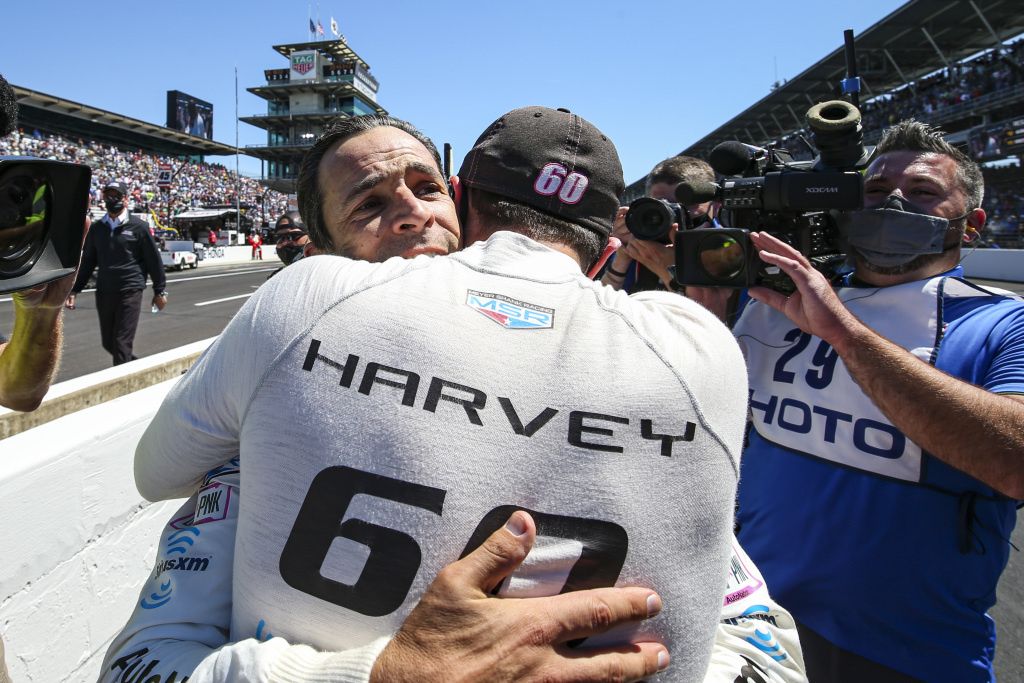
The joy of Castroneves’ Indy breakthrough had a poignant touch for teammate and Meyer Shank Racing regular Harvey, who still waits for his. Jake Galstad/Motorsport Images
NEEDS: The numbers don’t lie. Harvey’s been a star in qualifying, ranking ninth with his starting position, but in the races, he’s 22nd, losing more average positions than all but two drivers. MSR’s arc with Harvey is backwards -- the opposite of Rahal -- peaking on Saturdays and plummeting on Sundays. It’s in cleaning up the driving, pit stops, and strategy errors where Harvey’s season can be salvaged. Worth mentioning: He’s in a contract year.
A.J. Foyt Racing
Sebastien Bourdais: P16 in the championship, average starting position of 13.7, average finishing position of 16.2, -2.5 positions.
Dalton Kellett: P25 in the championship, average starting position of 24.2, average finishing position of 21.2, +3 positions.
For the first time in many years, there’s a reason to expect the No. 14 Chevy to be in the mix on road and street courses. Three visits to the Firestone Fast 12 for Sebastien Bourdais and new engineer Justin Taylor have shown promise, and on the days where he hasn’t been hit from behind, had slow pit stops, or experienced mechanical woes, the Frenchman has been a contender for solid finishes.
Bourdais also admits there have been times where he hasn’t gotten the most out of the car, and together, it speaks to an organization that has made plenty of positive steps forward but has a long way to go to become a regular threat to the establishment.
His teammate, Dalton Kellett, has performed within expectations when some of the team-related mishaps haven’t slowed his progress.
NEEDS: A return to that early season form where ample speed and limited drama had the No. 14 mixing it up with the big teams.
Dale Coyne Racing
Romain Grosjean: P18 in the championship, average starting position of 6.8, average finishing position of 12.8, -6 positions.
Ed Jones: P19 in the championship, average starting position of 15.4, average finishing position of 17.2, -1.8 positions.
Grosjean, who’s done six races which didn’t include the double-points Indy 500, is five points ahead of his full-time teammate Ed Jones, who’s done all nine, including Indy. A brutal Detroit doubleheader that featured a crash (P23) and a brake fire (P24) ruined Grosjean’s stats, but he’s been as high as P15 in the standings, which came after missing the Texas doubleheader. Grosjean’s shown himself to be a hardcore racer who only trails Palou, O’Ward, and Newgarden in average qualifying position. It feels like one or more victories are possible before we put the season to bed. Armed with race engineer Olivier Boisson, something special is brewing here.
Jones’ IndyCar return has not been kind; a new-to-IndyCar rookie teammate in Grosjean has been hard to handle, and if we look to last year, his predecessor in the same car was P8 in the championship after nine races.
NEEDS: It’s hard to say why it’s become a thing, but of the four two-car teams in the series, three -- AMSP, ECR and DCR -- find themselves with one driver soaring while hoping the other finds their way out of the midfield. Tough to say if the year can be salvaged for Jones, but there’s no question as to whether he’s been pushing like mad to turn his -- and the DCR with Vasser Sullivan team’s -- season around. Out-performing Grosjean seems like a lot to ask at this point, but shortening the gap between the two has the feel of something that can happen.
Carlin Racing
Max Chilton: P27 in the championship, average starting position of 21.0, average finishing position of 20.3, +0.7 positions.
Chilton and the Carlin team were rather racy last season as the modest operation finished every road and street course race -- plus the Indy 500 -- between P11-P17. Prior to a strategy gamble that just paid off with a handsome P10 at Road America, every finish for Chilton in 2021 had fallen between P20-P24, which speaks to the growing difficulties of executing a two-driver program with a single entry in 2021. Factor in an unusual degree of bad luck, and it’s been an arduous adventure so far.
NEEDS: Last in Entrants’ points, the team is in jeopardy of losing out on a $1 million Leaders Circle contract if the No. 59 Chevy fails to finish well clear of the other entries at the bottom of the standings. From Mid-Ohio through Long Beach, coming home ahead of Dalton Kellett, Felix Rosenqvist, Santino Ferrucci, and James Hinchcliffe is Job No. 1.
So, what are the big takeaways as we close the book on the first half of the season?
I’d start with how much adversity has been visited upon most of the field; in many cases, it feels like a full-season of hardships on track and in the pits have been experienced, and there’s still three months of racing to complete. It’s the same song for all but a handful of drivers, which makes me wonder if some of the lucky few should be on the lookout for turbulent waters.
We also have a number of drivers who, at a relatively early stage of the year, are on shaky ground. And finally, there’s the theme we’ve been speaking about since the pre-season with IndyCar’s next-generation stars giving the veterans all they can handle. In the top 10, drivers aged 24 and younger hold P1, P2, P6, and P7.
It's been an upside-down season where change -- both good and bad -- is the constant. What might Mid-Ohio add to the story?
Marshall Pruett
The 2026 season marks Marshall Pruett's 40th year working in the sport. In his role today for RACER, Pruett covers open-wheel and sports car racing as a writer, reporter, photographer, and filmmaker. In his previous career, he served as a mechanic, engineer, and team manager in a variety of series, including IndyCar, IMSA, and World Challenge.
Read Marshall Pruett's articles
Latest News
Comments
Comments are disabled until you accept Social Networking Cookies. Update cookie preferences
If the dialog doesn't appear, ad-blockers are often the cause; try disabling yours or see our Social Features Support.