Etherington/Motorsport Images
OPINION: I was an American designer at Mercedes. F1 needs to create a path for others
Design engineer Gabriel Elias has recently returned to his native Florida after spending the past six years employed at Mercedes F1, where he helped to design the cars that have carried the team to the past seven Formula 1 constructors’ championships.
Like most kids who were into racing, I started out wanting to be a driver. That was a non-starter because my family didn't really have any money, so my father said, ‘You should go be an engineer.’
I had been going to Homestead-Miami Speedway with my father, who was the track photographer, from the day it opened in late '95. There used to be IndyCar Spring Training every February, and my dad suggested that I write to Roger Penske and say that I wanted to be his engineer someday. I was eight or nine years old, but I typed up a letter, and a few months later I got a reply on Penske Racing letterhead saying, ‘If you study math and science, and then study engineering in university, someday you could be one of our engineers – good luck!' It was having Mr. Penske write back to me that really sparked that engineering focus.
So from there, I started messing about with RC cars and graduated into wrenching on my first car at 16. I went to the University of Miami to study engineering, and everything I did was automotive-focused. I was swapping my engine in the dorm parking lot, doing random things like that. I always had a wrench in my hand. I was trying to keep very practical sense of what a car was, but also learning the engineering underpinnings.
I graduated in 2010, at the mid-to-tail end of the financial crisis. I was applying for jobs with racing teams unsuccessfully, but I also knew Honda had a really stout tradition of motorsport in both F1 and in IndyCar, so I applied to Honda R&D, and got hired as an engine design engineer.
I stayed at Honda for two-and-a-half years, and learned a phenomenal amount: how to do 3D CAD using Catia, 2D drawings, assembly drawings, geometric dimension and tolerancing… those are the underpinnings for designing anything. Honda also really taught me about things like servicing – installation and disassembly of vehicles; the process of understanding what goes into designing for service of a vehicle. You're going to take apart an engine; how are you going to put it together? The guy has to hold a wrench in here. Can you fit a wrench there? Those kinds of questions.
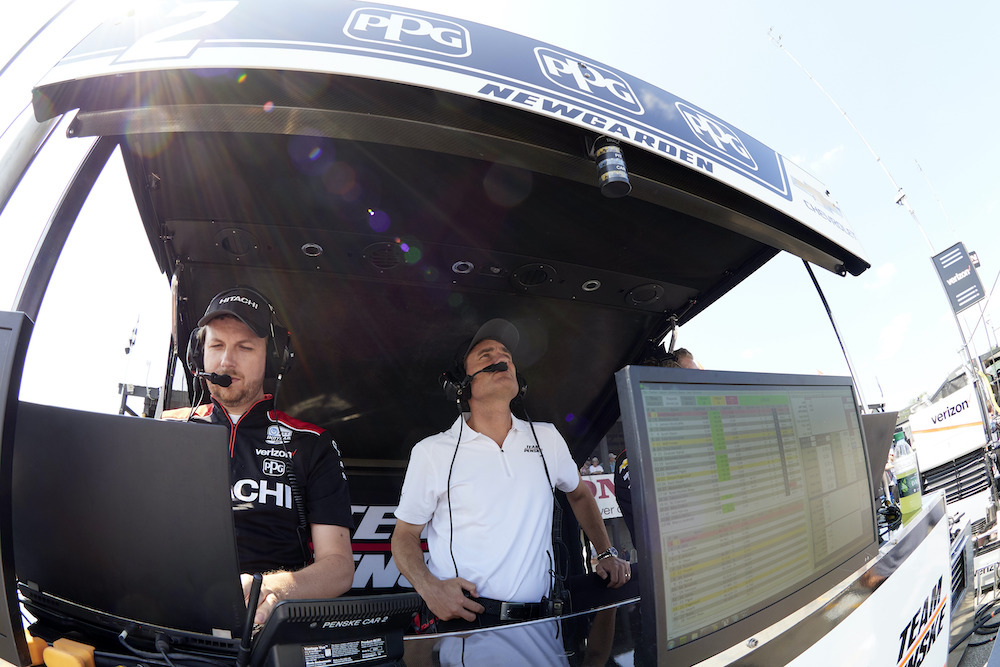
Before becoming an IndyCar title-winning engineer with Josef Newgarden, Gavin Ward (above, with Tim Cindric) worked in F1 with Red Bull, and helped guide Elias onto the path that would eventually lead him to Mercedes. Levitt/Motorsport Images
At the same time, I had this idea that I could transition from passenger cars to Honda's motorsport arm, because I’d met a couple of engineers who did the same thing. But I began to sense that that would take longer than I wanted it to, so I had to make a new plan. That was when I read an article on the Red Bull Racing website about a Canadian engineer named Gavin Ward, who was working in F1 at the time. He’s now Josef Newgarden’s engineer at Penske. He was an inspiration for me and became a mentor, and is now really a good friend of mine. In the article he mentioned going to Oxford Brookes University in the UK and doing the Masters in Motorsport Engineering program, so that sparked my next move.
I sold everything I owned, resigned from Honda, enrolled in Oxford Brookes to do my Masters, and moved to England. And while I was there, I took this approach that while everyone else was focused on Formula Student, I spent every waking moment that I wasn't working on my dissertation looking for jobs, or messaging people on LinkedIn. Mercedes posted a grad scheme job that was a really unusual opening in that they wanted someone who had dealt with future car concepts, scheming, early layouts of vehicles, stuff like that. And I thought, ‘Not only is this really interesting to me, I actually have some experience with this at Honda. I know how to approach this.’
I ended up getting invited for an interview. But the one thing that I tried to make very apparent to the team was the visa issue, because I had already been rejected by Mercedes HPP for a job that I thought I was perfect for, which was a graduate engine designer. They'd rejected me because they didn't want to sponsor my visa. I was devastated by that, so I wanted to make sure that didn’t happen again. I gave Mercedes a pamphlet with all of the information explaining the process to sponsor me, and asked for an interview. And they agreed.
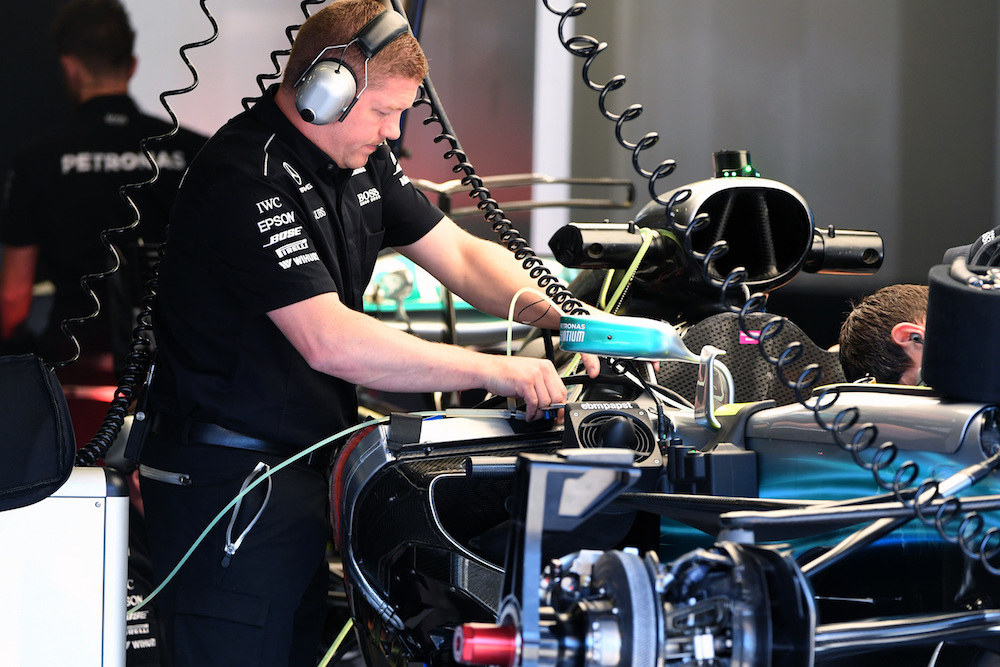
A mechanic works on the Mercedes W08 EQ Power+ at the 2017 Austrian GP. Elias designed the car's sidepod radiators. Motorsport Images
It was nerve-wracking, because that opening was my one shot – I had maybe one or two months left in England on my student visa. I was a nervous wreck. I spent two weeks preparing for it. And to this day, that the hardest interview I’ve ever done in my life, by far. I've interviewed at Ferrari; I’ve interviewed at most of the teams on the grid, but that was by far the most difficult. After going through it and then working there for a couple of years, though, you could start to see why the pecking order on the grid is the way it is. The effort that Mercedes put into things making sure it hired the right candidates, even for a graduate-level job, really does show up on the track. But in the moment, I was thrown by it, for sure.
I was very fortunate during my time at Mercedes: I had a career that most F1 engineers don't get to, in that I switched positions three times and had the chance to touch lots of different parts of the car. The 2017 car holds a special place for me, because I was able to be a part of it all the way through the process from inception to reality, which is very rare. I designed the sidepod radiators on that one, but due to changes with my role, I'd previously worked on the car's concept design – really early, basically block figures of a vehicle. And I went from that into doing the detailed design of parts I’d previously been doing the early schemes on. Then I went all the way through the manufacturing, the testing, the validation, and all of that. So for that reason, the 2017 car was the coolest car I worked on.
Fast-forward to now, and I’ve left F1 behind: my last day with Mercedes was in August, and I’ve moved back home to Florida. My time in F1 was phenomenal in every respect. I was with the team right through its unbroken championship streak, and that was an incredible thing to be a part of, and something that I’ll always take great pride in. The decision to leave ultimately came down to nothing more than me feeling ready to try something else, but F1 was an amazing experience, and I wouldn't trade my time with Mercedes for the world.
But it also showed me how hard it is to make it to F1 in any capacity if you’re not from Europe. It’s not impossible though, and the constant messages I get on LinkedIn from young aspiring engineers from around the world shows that a lot of people need to see that. There’s a definite barrier if you’re not European, but that’s not the product of bias within the teams. It’s a question of practicality. Every HR department at every F1 team gets far more CVs than they can ever process, so you can understand from their standpoint why, when they have a CV from a well-qualified graduate from the UK and another CV from an equally well-qualified graduate from America or Asia, but who will need a visa, they’ll just go with the person from the UK. It really comes down to that. So you have to work so much harder if you’re not from the typical engineer feeder school, or the typical background, or nationality or what-have-you, to get in the door.
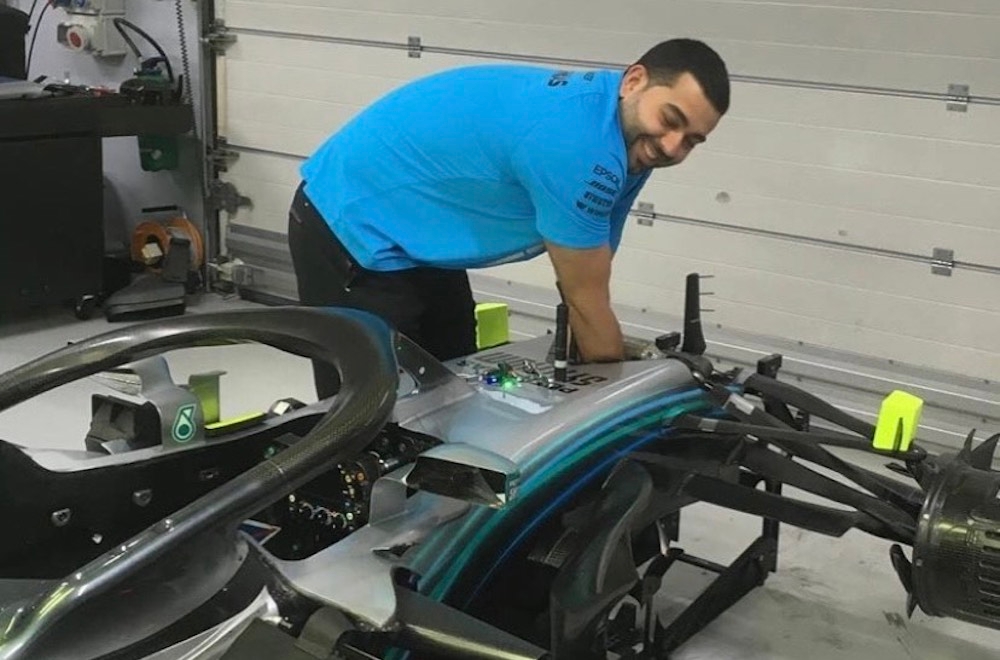
A Pirelli tire test at Paul Ricard in 2018 allowed the author a chance to step away from the design office and get his hands dirty – in this case, making changes to Valtteri Bottas's brake pedal. Image via Gabriel Elias
Something needs to be done to lower these barriers and make it easier for people from around the world to pursue STEM jobs in Formula 1, but I don’t think it’s fair to expect the teams to take action. The problem is too big. The change really needs to come from F1 and the FIA.
Perhaps F1 could sponsor some students, create some initiatives to help grow the sport. Formula 1 goes to these countries all around the world and it just takes: it rakes in hundreds of millions of dollars. Go to Russia, you get a $60 million race-hosting fee. You go to Abu Dhabi and all these places, and you get all these fees. But what are you actually giving back? And that's where I think that the sport could really make a huge jump, by saying, ‘Hey, we want to bring STEM to these locations.’
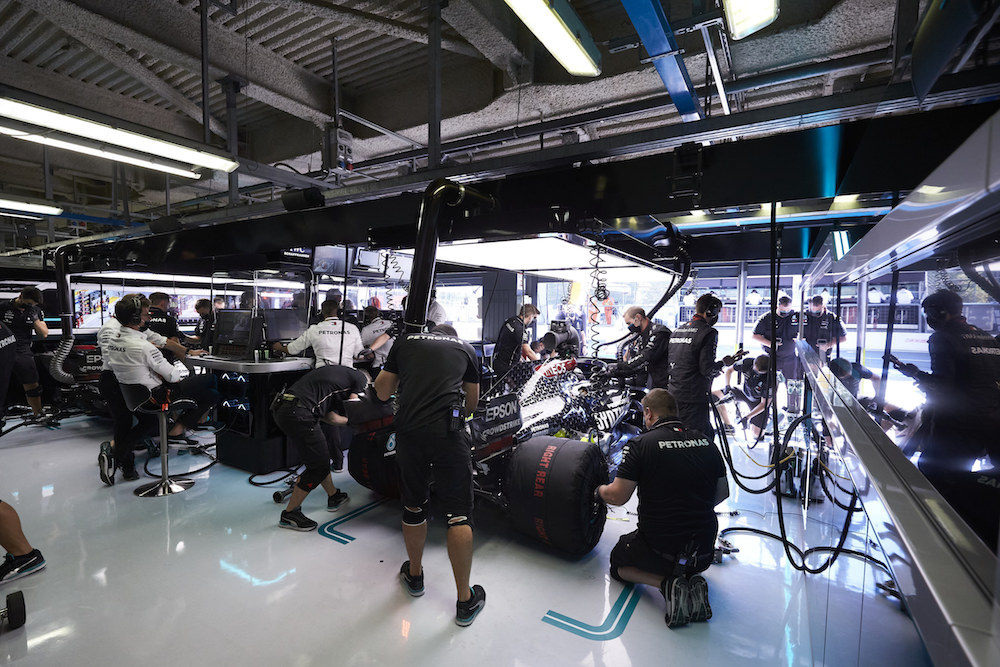
As a championship that travels the world, is there more that the sport can do to lower the barriers for well-qualified non-Europeans to be hired in STEM roles? Motorsport Images
And then maybe we could foster education and foster further learning for some of these kids, and give them a pathway. It might not be a big pathway – you might only be able to get one engineer and place them at an F1 team. But those stories are what can make the sport grow around the world, because that kid might go back to wherever he's from and say, ‘Hey, look, let me show you about what we did in the F1 world, and how cool it is.’ It spreads the gospel of the sport, but you’re not spreading a gospel of opulence and stupidity – when you underpin it in STEM education and engineering, you're spreading technology; you’re spreading new methods and learning and science. To me, that's what's cool about F1. Each car is a 900+ horsepower rolling laboratory of the newest technology, and the most advanced new materials, and the things no-one's ever seen or heard or done. And it's coming to your country. And I always thought that was something F1 as a whole could really benefit from doing.
I just started a new post recently as a senior engineer for an electric vehicle company. I’ve tried to bring many different nuances to the way that we operate, which all came from my time in Formula 1. Speed is our overarching theme in Formula 1 engineering -- speed in delivery design development. When you see how slow and laborious some of the conventional design processes are, you see a lot of scope to implement ideas that came from what we did at Mercedes. And that’s applicable in many different industries, not just automotive. So it would be a huge benefit to bring those Formula 1 skills and experiences back to different parts of the world. We just have to find a way to make it happen.

Gabriel Elias
Gabriel Elias is a seven-time Formula 1 world champion design engineer. Formerly with the Mercedes AMG Petronas F1 team in Brackley, UK, he currently operates from Miami as an automotive senior designer and director of GME Concepts; a full-service motorsport consultancy. The firm is active with projects working to expand F1’s commercial interests within the United States. GME Concepts is also involved with global motorsport young-driver scouting and driver management.
Read Gabriel Elias's articles
Latest News
Comments
Comments are disabled until you accept Social Networking Cookies. Update cookie preferences
If the dialog doesn't appear, ad-blockers are often the cause; try disabling yours or see our Social Features Support.