Robin Miller's Mailbag for December 23, presented by Honda Racing / HPD
hpd.honda.com
and on social media at@HondaRacing_HPD
and https://www.facebook.com/HondaRacingHPD.Questions for Robin can be sent to millersmailbag@racer.com. Due to the high volume of questions received, we can’t always guarantee that your letter will be printed, but Robin will get to as many as he can. Published questions have been edited for clarity. Views expressed do not necessarily reflect those of RACER or Honda/HPD.
Q: The decision to move the series finale to Long Beach is so obvious that it’s genius! ‘Genius’ in that I don’t remember it ever being mentioned in the Mailbag (or any other forum) during the annual “armchair season finale locale debates.” What was the revelation that all of a sudden made this an option, because if it were straightforward somebody would have thought it up long ago? I’m sure you have the insight and history to enlighten us.
Scott B., Gainesville, FL
RM: As Jim Michaelian stated in our story on Monday, the option of no fans or only 25 percent capacity was unacceptable and moving to September for the IndyCar finale was a great option -- providing the city and all your partners and other series were on board. But California’s stringent shutdown and pending hangover were the catalysts for moving to the spring.
Q: I jumped for joy when I read that the Long Beach GP is moving to late September next year. This, I hope, will ensure we have the race next season. (I could not see how life would be back to normal enough here to have my home race in its usual April slot.) And the LBGP is now the 2021 finale. Yippee! Was it a misprint that the event is two days instead of three? With the other series involved, that will make it a jam-packed weekend.
Deb Schaeffer
RM: The reaction was overwhelmingly positive, and it will be its usual three-day event.
Q: Just saw that Long Beach shifted to September and that got me to looking at the schedule again. Something has to be sandwiched between March 7 (St. Pete) and April 11 (Barber). Five weeks is beyond reasonable. At my age I forget things daily, but everyone will forget St. Pete by the time Barber throws the green flag. So I submit, since we tried NOLA one time, let’s go to Daytona and run the roval on March 28 a week after Sebring. Snowbirds and spring breakers are still here. Imagine the teams trying to set up the race car. Oval or road course? Since they use about 90% of the oval I guess lean that way, and however you handle on the road course, so be it. It would be fun to watch. What say you? Good way to stay in the south between St Pete and Barber. Let’s try it. Can you make it happen?
Jeff, Florida
RM: I don’t think IndyCar or NASCAR are in any position right now to start adding races, let’s wait and see if the season gets going in Florida and Alabama. They might both opt to move like Long Beach if it means being allowed regular attendance. But I don’t see Daytona as being a particularly good option for racing or fans.
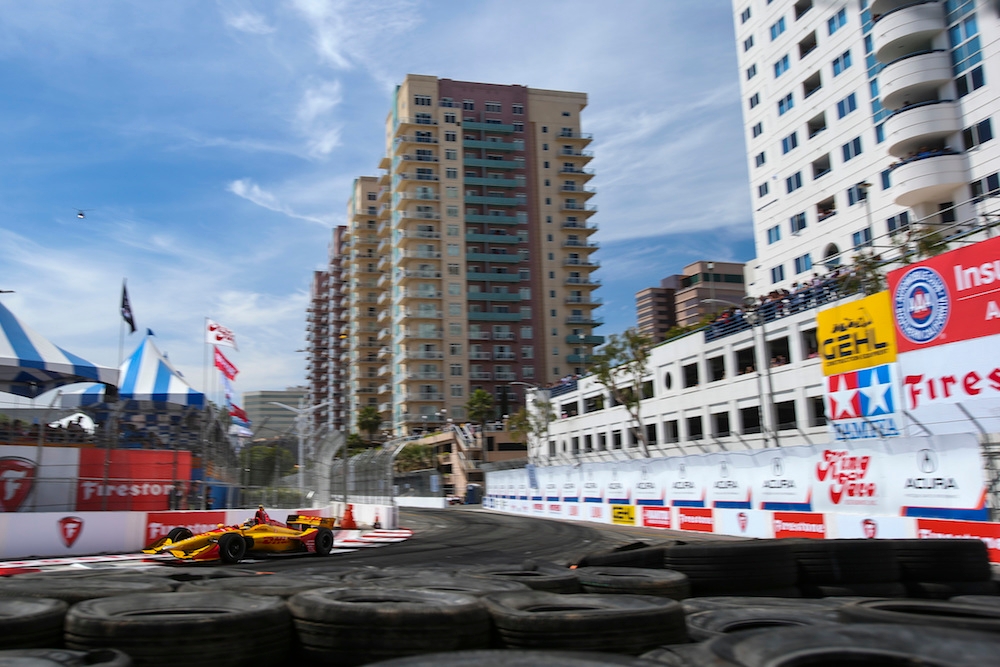
There's plenty of Mailbag love for Long Beach's move to the end of the calendar. Jake Galstad/Motorsport Images
Q: John Ourand at Sports Business Daily reported that NBCSN likely would be folded up by November 2021 (in other words, after the Summer Olympics), and that NBCSN’s two big sports properties, the NHL and the Premier League, would be moved to Peacock, where they’d be kept behind the paywall, and USA. This is apparently an open secret within the business; various observers have described the folding of NBCSN as “one of the worst-kept secrets” in the sports media industry. Have you heard about this, and should it come to pass, what would it mean for IndyCar coverage? Does it suggest that NBC is less likely to renew its IndyCar deal? Would the NBC Gold package go away? Would IndyCar get squeezed out onto USA? Would it be good for IndyCar to be pushed to yet another streaming service for which non-Comcast viewers would have to pay a monthly premium?
Mitchell, Plymouth, MN
RM: I’ve heard rumblings that NBCSN might go away after 2021 but those decisions are way above my pay grade, and I think NBC Gold will be around for the 2021 IndyCar season. Nobody knows what the future holds for IndyCar on NBC, but we’re lucky to have a partner that promotes as much and as well as The Peacock. You might see IMS Productions become more involved in the races down the road but NBC made a commitment to become the auto racing channel, and it seems to be satisfied with its partners. And I can’t see any benefit of IndyCar going to another cable network.
Q: So in your opinion, what were the five things IndyCar got right this year?
D. Krueger, West Allis, WI
RM: Selling the series to Roger Penske, creating doubleheaders to make sure there were 14 races, taking a conservative approach to future car and engine rules, not red-flagging Indy and adding the Nashville street race for 2021.
Q: I know you don't cover F1, but I'll ask this question anyway since it applies to what happened at Road America too. If you have an Armco barrier, it's there for a reason. Even if there is a low probability of hitting it, shouldn't they all have a SAFER Barrier? Do you think the windscreen would have saved an IndyCar driver from the Grosjean crash? I don't think it would have.
Ray G.
RM: A well-constructed Armco barrier in a low-speed corner or a place where accidents seldom happen would seem to be just as effective as a SAFER Barrier. The one in Bahrain was defective, or there’s never even a discussion about fences or roll hoops. And I have no idea if the Aeroscreen would have protected a driver in a similar crash, but it’s made to deflect and it’s pretty damn stout so maybe it would have.
Q: Just got done reading your article on the RACER website about the '70s and the various headlines of that decade. Great job! Very interesting facts, some I had never heard. Any chance you could do the same for the '60s? I don't know if you were at the Indianapolis Star then -- probably not -- but that decade was pretty interesting too.
Joe Weiss, Spooner, WI
RM: Thanks Joe. I started at The Star in the winter of 1968 and covered the 1969 Indy 500, but I attended USAC midgets, sprints, stocks and Champ Car races from 1964 on, so I paid attention. My plan is to do a review of the 1960s and 1980s in the near future.
Q: Forever reader, eternal fan, first-time writer. Your '70s piece really brought things back, so thank you! My first Indy experience was actually Time Trials in ’69, (six years old, hooked, you know the rest…), but it wasn’t until 1976 that I finally went to the Indy 500 to see J.R. win in a McLaren. I saw Anthony Joseph win his fourth, saw Big Al win in ’78, and we had Paddock seats for the ’82 Johncock/Mears finish. I’m a lifelong fan because of the '70s, and your piece cemented this. It was the absolute coolness of the ’70s, however, that hooked me for life. In said life, it’s been an honor to shake hands with Mario, Mears and Unser Sr.,(all ’70s heroes), and I’ve spent so much on collectibles/artwork from The Motorsport Collector that I should be on Paul Zimmerman’s Christmas card list for eternity.
Anyway, you’ll be glad to know that my family’s open-wheel passion has remained unchanged through all of the changes in IndyCar for the past 100 years, and we have zero complaints about any of it. Zero. Just being able to attend a race is a gift, just like your ’70s article and your endlessly entertaining Mailbag. Ever considered writing a book on the 1970s?
Jim W., McHenry, IL
RM: I haven’t thought about a book but that would be the decade I chose if I did, because I was around for all of it and right in the middle -- writing 52 columns a year on USAC, working on Indy 500 crews and competing in USAC midgets while living in Larry Rice’s YMCA with Chuck Gurney, Larry McCoy, Mark Alderson and a few AMA flat-trackers. I just feel like the '70s was the decade that changed the face of American motorsports -- at least in open-wheel.
Q: I just got done reading "1970s - a Decade in Headlines", and although I wasn't born until 1980, this article was fascinating to read. Kind of makes me wish I was born earlier so I could witness some of these events first-hand. We have come a long way in safety in motorsport, and some of these stories and the courage of these drivers at that time were insane. It was a different time for sure, but when a driver was killed or critically injured in an accident, how was it portrayed by the media and public at that time? Did it just come with the territory, and was accepted as one of the risks that was part of racing? Thanks again Robin, maybe a sequel about the 1980s?
Hutch, Cabot, PA
RM: Good question. A newspaper like The Indianapolis Star always treated racers with great respect in life and death because it was a major beat, Indy was the epicenter of open-wheel racing and famous drivers had the same status back then as NFL, NBA and baseball players have today. They were eulogized in print and on television, and we made a lot of trips to Conkle’s Funeral Home in the 1960s and '70s. It did become the accepted reality of the business. But it was always The Washington Post or National Geographic that was calling for the end of auto racing following a fatality because they either didn’t accept the mentality, or just needed a platform that particular day. I pointed out to a stick & ball writer once that more kids died playing high school and college football than in race cars throughout the years, but he didn’t want to hear it. Look for the 1980s in January.
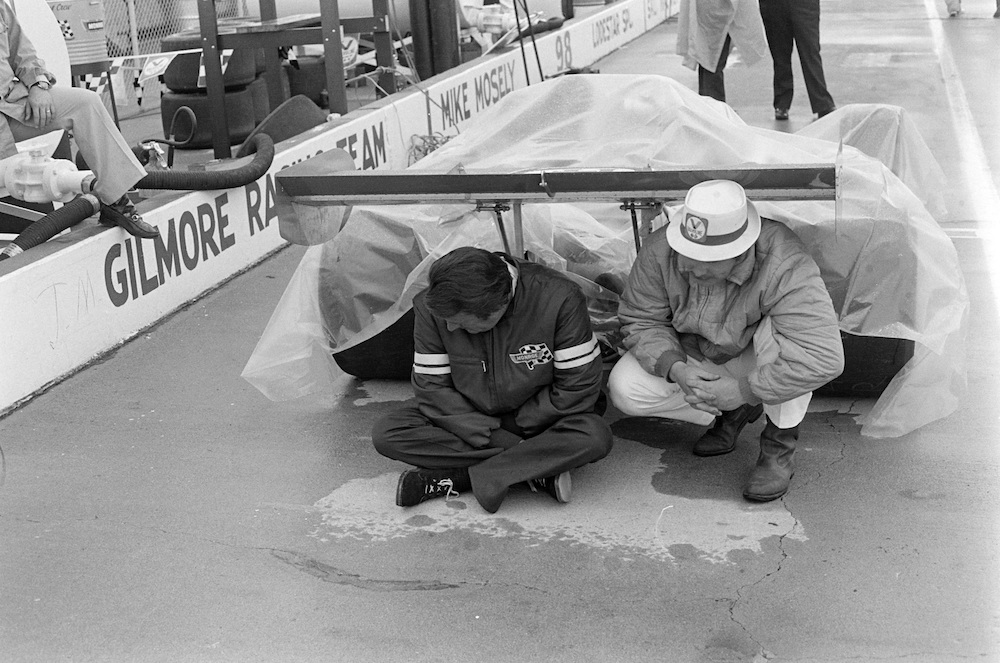
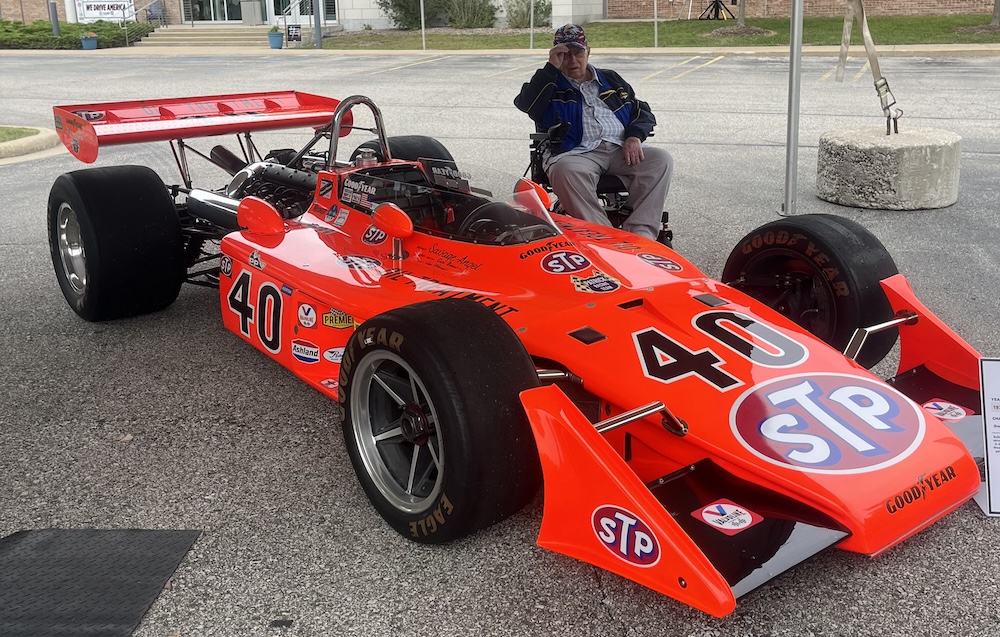
The 1970s: Cool facial hair, great music, exciting trousers, and rear wings so big that two crew members could hide under one during a downpour. Phipps/Motorsport Images
Q: While going back and learning about a lot of drivers from the past, Ed Elisian keeps popping up as having been involved with several fatal crashes before his own. I admittedly know little of him other than this. It seems at some point guys would be looking at him a little sideways or hesitant to get on track with him. Have any drivers from that era ever spoken to you about him and about having issues with his driving?
Kevin Clark
RM: Elisian was before my time, but he’s blamed for the first-lap carnage in 1958 that killed Pat O’Connor, and was involved in a sprint car crash the next month at New Bremen that killed Jim Davis but was cleared of any wrongdoing. He was also accused of tangling with Bob Sweikert at Salem in the 1956 sprint car accident that claimed the life of the 1955 Indy winner, but it wasn’t true. He received a sportsmanship award for stopping his car and rushing to the aid of Bill Vukovich on the backstretch in the 1955 race that killed Vuky, who was one of his few friends. My dad’s first job at Indiana Bell was to collect on back payments, and he went to Elisian’s house and got the door slammed in his face. Angry Ed passed bad checks, ran with gamblers and died a fiery death at Milwaukee in a life that was always on the edge.
Q: So maybe 10 years ago, I’m at the kart track in New Castle practicing. I go out and there is a shifter kart out there. I’m in a TaG so the shifter should be much faster than me. I keep catching it in the corners, but then it leaves me on the straights. Their lines are all over the place -- not even close. Ran me off the track a few times. I drive through the pits to get away from it and within a couple laps, same thing. Running into me in the turns, never taking the same line, etc. It was like they’d never driven a kart and someone threw them in a shifter. So I pull in and go to the track manager in a rage, and I’m like, "Who the hell is that out there in the shifter? They’re going to kill someone! They can’t drive at all! You’ve got to get them off the track!’’ By this time, the manager, Mike, (Dismore’s son-in-law) is on the ground laughing. He finally stopped laughing enough to tell me that it was Milka… Now, after that I did crew for her at the RoboPong and she’s super-sweet (my ex-wife was pissed because she liked to flirt a little), but she was as bad in a kart as in a car. And I don’t think you were one of her favorites?
Scott H.
RM: God, that’s perfect. Reminds me of when she ran Ryan Hunter-Reay off the track in three consecutive corners at Watkins Glen during practice and he confronted her only to hear: “I was just holding my line and I never saw you.” She despised me, but her presence in the Indy 500 starting line-up remains as one of the biggest jokes on record.
Q: Wintertime. Pandemic. Bleak and dreary (at least here). No racing on the tube. Silly season is fun, but no on-track action to discuss in the Mailbag. So here's a technical question for you. We see (or hear) that in IndyCar and NASCAR, when a car is not handling properly, one of the actions taken during a pit stop is to install tires that have different pressures than the preceding ones. In my Formula Ford days I learned that varying the tire's initial pressure did indeed affect the car's handling (at least, if I took a big enough swing at it). And it wasn't necessary to know why, just that it did. So can you lateral this question to one of your technical boffins and ask why? Is it the tire's spring rate? Effect on ride height? Changed contact patch area? Combination of those? Other?
Rick in Lisle, IL
RM: Firestone’s technical whiz Kara Adams was kind enough to respond: “My answer is yes, yes, and yes. Clearly your reader has done their homework. When teams make a “tire pressure adjustment” by changing the cold pressures of the tires from the set that went on the car last, there are many reasons they could be doing so. When lowering pressure, a tire loses stiffness, and deflects more in the sidewall. Think of a basketball with not enough air. Sure, there’s more contact area, which can add grip, but that takes away stiffness. And more grip isn’t always better if the car, or one end of the car, is bound up. Tire pressure is one of the quickest and most effective tuning tools an engineer has at his or her disposal. Changing pressures can affect the amount of grip and the handling of the car. Teams may just raise or lower the front or rear pressures, or sometimes only one position. If the balance is off, this can be a quick aid to car handling.”
Q: Indiana is a great basketball state, and was just wondering if any outstanding players ever ended up in the cockpit of a race car or found their way into auto racing in another capacity?
Mike Edwards, Maryville, TN
RM: The only one I can think of is John Mengelt, a hard-nosed all-state guard from Elwood who went to Auburn and then played 10 years in the NBA. He spent a brief time working for Champ Car in the 2000s, and that’s the only big name I can recall that dabbled in auto racing. The late, great Jimmy Rayl loved Kokomo Speedway and his Shelby Mustang and I think he wanted to try driving, but wisely opted to remain a fan. (Note: the writer of this letter, Mike Edwards, was Indiana’s leading scorer for Greenfield High School in 1969, averaging 36 ppg, and a high school All-American who went on to play at Tennessee and then professionally in Mexico).
Q: I grew up on Falcon Lane, which runs parallel to 38th Street, not far from the Indianapolis Motor Speedway during the '60s and '70s. Our house was directly in the landing path of the old Bob Shank Airport just to the north. Plane traffic was always heavy during May, especially on race day. Any good old stories around the IndyCar racing community about flying in or out of that airport? Do you know if car owner Michael Shank is any relation to the pioneering pilot Bob Shank?
Jay Hertz, Midway, Kentucky
RM: I don’t think the Shanks are any relation, but one of the scariest stories came in 1966 and it could have been Shank’s Airport. Lloyd Ruby took off downwind in his Beech Bonanza and flipped into a cornfield and broke his back, taking him out of his Ford factory ride at Le Mans. It also injured his chief mechanic, Dave Laycock, and fellow racer Bill Cheesbourg.
Q: I'm a longtime reader of the Mailbag and lifelong IndyCar fan. I attended my first race at the old Langhorne Speedway in 1967 and since that time have attended more than 125 IndyCar events. Recently I acquired an old program from the 1927 event at the Atlantic City Speedway board track. This prompted me to become interested in the early events held on the old board tracks, and I was wondering if any of the winning cars from the Indy 500 were the same cars racing on the old board tracks?
Jerry Hair, Carlisle, PA
RM: Nobody knows more about old Indy cars and their whereabouts today than my pal Mike Lashmett, former IndyCar crewman for Parnelli Jones, who runs Vintage Indy Registry. Here’s what he had to say about your question:
“As you may know, the boards existed from 1910 to 1932. At their height 24 noted board tracks existed and most National Championship races were contested on them in the 1920s. By 1930 20 of the 24 were gone and by 1932 none were used. The 10 years I resided in Beverly Hills, CA, I lived four blocks away from the main entrance to the famed Beverly Hills Board Speedway, which was off Wilshire Blvd. at El Camino. Many of the homes in the ‘flats’ of Beverly Hills were built from lumber salvaged when the track was torn down. Our place was believed to have been framed with such. The surface of those tracks were basically 2x8s laid on edge with banking approaching 50 degrees (Talladega is 31 degrees)! When I worked for Bignotti, Louis Meyer was frequently in the shop with his wife June, as was on occasion Harry Hartz and Dale Drake – all veterans of the boards. I use to pick their brains about that era. I recall them telling me that the cars were shipped usually by rail and that in Beverly Hills the train station was on Santa Monica Blvd. Louis said they would unload the cars and drive through town the few blocks to the track.
“In specific answer to your question regarding IMS-winning cars that would have raced on the boards, it is believed that of the six pre-1933 winners in the IMS Museum, the 1914-winning Delage of Rene Thomas is probably the only ‘real’ complete complete car with board track history. The 1922 Duesenberg (Miller-powered at Indy) of Jimmy Murphy now displayed in French GP winning livery and the 1928 Miller of Louis Meyer are not allegedly the real winning cars due to the fact they were assembled with a sundry of parts but are representative of the 500 winners, which would mean they are also representative of having been raced extensively on the boards. I would say for certain that many parts on both cars have board track history.
“So, just those three cars. Please note that in the 1920s almost all the National Championship races were contested on the boards save for Indianapolis. Also in regards to our emails of a few weeks back regarding surviving Indy 500 winning cars, here is a good site to start your research with http://inrd.gotdns.com/indystuff/win.htm."
Q: Read in last week’s Mailbag where Terry Capps was asking if you knew where he could donate his many motorsport books. When I retired six years ago, I donated most of my collection (F1, IndyCar, Le Mans, IMSA, Pirelli, Brembo, and many other books from Fangio, Moss, Regazzoni, et al) to the Petersen Automotive Museum here in L.A. Terry Karges is the executive director now. I called this morning to confirm that they still are accepting books for their automotive/motorsports library collection, but none of the phone numbers would answer because of the pandemic. Many years ago Chris Economaki and I toured the National Automotive Museum in DC and were disgusted in the lack of vehicles and information in our national museum. Thank God for Bob Petersen who founded probably the best automotive/motorsports museum in the world. Just a thought.
Jack Gerken, Fountain Valley, CA
RM: Appreciate the info, Jack. No doubt the Petersen Museum is a godsend for racers. I’ll pass along your message.
Q: This is in reference to Terry Capps's post in the 12/16 edition of the Mailbag. Is there a library at the IMS Museum? If not, there should be. I'm sure that there are lots of folks like Terry that have books and other printed material who would like to see it preserved somewhere. I was down in the basement looking for something last week and came across a pile of stuff from the Can-Am series circa 1980-'82: press releases, entry lists, qualifying and race results. Several drivers in that era of Can-Am were later front-runners in CART/Indy 500, so I think that stuff would be of interest to IndyCar fans. I'm sure that if I dug deeper I have similar stuff for CART circa 1983-'86. I probably have most issues of AutoWeek and On Track in the 1980s, which have a lot of good data on races that may not be available elsewhere. It would be nice to know the stuff I've saved for 30 years is not going to a landfill.
Mark Stetson, Truesports (1984-'86)
RM: IMS does have a library, but you have to make an appointment to use it -- no walking in unannounced. And if you have a Speedway badge collection then sell it, because it’s going to be worthless in five more years when a lot of us who care are gone.
www.racingarchives.org
) takes books in for benefit auctions or archives and is a great place to visit. I know you are aware of the facility-- they are actively looking for collections and donations.Rob Craig
RM: Thanks Rob, we now have three places for Terry to check out about donating his books.
(ED: The following question and answer caused some confusion among readers, however it has since transpired that part of the question was somehow lost in translation during its journey into Robin's mailbox, through the answering process, and onto the editorial desk. Hopefully this revised version makes things a little more clear, and thanks to Mr. Turner for getting in touch to let us know. Happy holidays, everyone).
Q: I just randomly remembered sending you this in 2018. Call me Kreskin, I guess! (No, I will not give you NFL picks). Hope you're doing well.
Hey Miller, longtime reader; I write from time to time whenever I think I have a brilliant idea. So I got to thinking, maybe we should move TMS on the calendar to throw Eddie Gossage a bone. Let’s move the IMS road course race to anywhere else, and let Texas kick off the month of May by racing the first Saturday night. One-offs would get a chance to do a shakedown race (that most of them wouldn’t make due to budget, so overcrowding on track shouldn’t be an issue) and I’m sure TMS would love, and more importantly respect, the honor. Just my two cents.
Stitch Turner, Gainesville, FL
RM: Good call, and I think everyone is happy to have a couple oval races in their pocket prior to Indianapolis. Who you gonna like in the 'Bama-Clemson game?
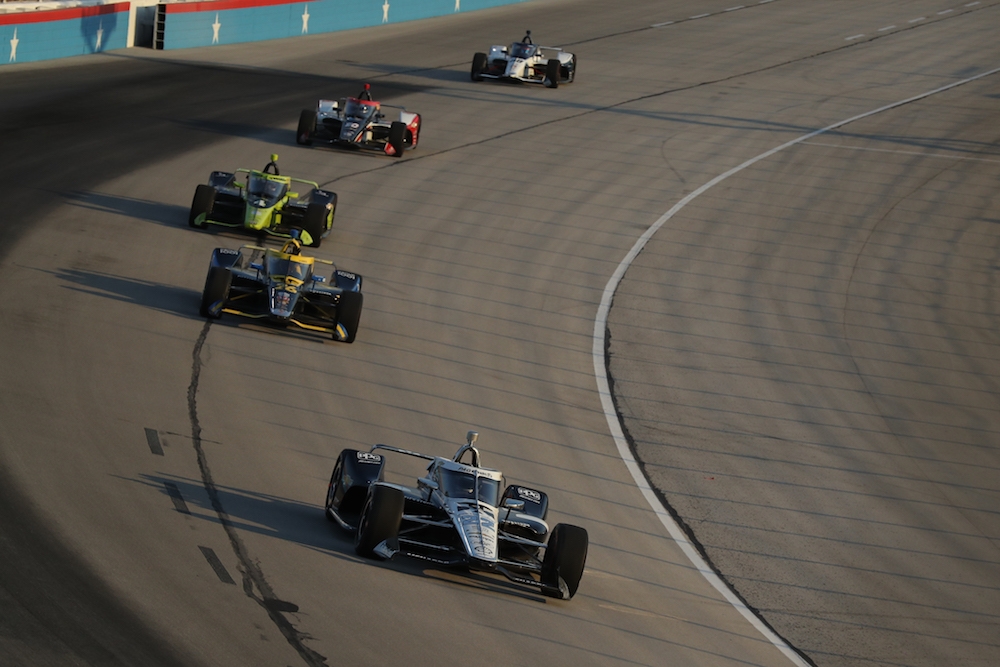
Eddie is up for hosting IndyCar at Texas in May. Owens/IndyCar
Q: I thought you might enjoy this story of how my fiancee become an IndyCar fan. I've been a fan of motorsports for the last 25 years or so. I met my fiance a little over two years ago. As we started getting to know each other, I gradually told her how much I was into racing, and how much it is a part of my life. Trying to explain your passion to someone who isn't into racing can be a tough sell. One night at dinner in January of 2019, I told her that attending the Indy 500 was on my bucket list, especially with Alonso attempting to make the 500 that year. Much to my surprise, she responded with, "we can go to that." Within a matter of minutes, we had purchased tickets to Indy. I couldn't believe it.
During the months leading up to Indy, we watched F1's "Drive To Survive" to help her learn a little bit more about racing in general, and you could tell her interest was growing. I told her that Pippa Mann was attempting to qualify for the Indy 500, and her interest peaked even more. As the weeks went on in May, I jokingly told her, "Watch, the year I finally get to go to Indy, I bet you Alonso doesn't qualify." Of course, we all know what happened next. About an hour after Alonso didn't make the show, I received a text from her that said, "You called it." I laughed, but I also realized, she was showing the signs of becoming a fan of racing. She was excited to see that Pippa Mann had made the race, and she'd have a driver to root for at Indy.
After the race she raved about how awesome the experience was, and understood why I like racing so much. The speed, the sound is incredible in person. It was clear that IndyCar had a new fan.
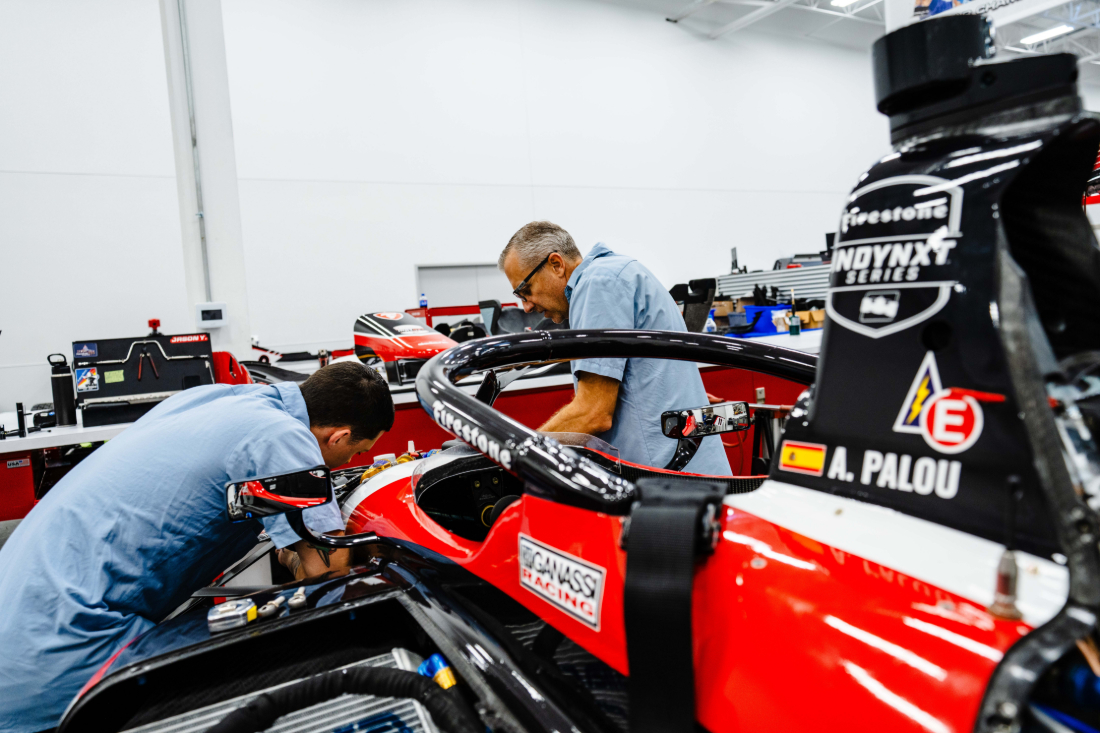
Fast-forward to around this time last year. We were newly-engaged, looking for our first house to buy. I told her that the area we were looking for a house was the same area as Dale Coyne Racing. She responded with "That's the Sealmaster car you like, right?" I also told her that Pippa Mann drove for Coyne a few years back. Long story short, we ended up buying a house down the street from Coyne's shop, and now we get to see that Sealmaster transporter every day (as of now, Santino's name is still on it). As we waited for the IndyCar season to start this year, we saw Alex Palou's transporter outside Coyne's shop as well when we'd drive by. She responded to one of his posts on social media with a picture of his transporter, and she couldn't believe that he responded to her. I told her that's another reason I like racing so much. The drivers care about their fans and they're very personable. After that one response to her by Palou, she's now a huge Palou fan. People don't realize how much that one interaction can mean to someone.
We were supposed to go to the Indy 500 this year, but since that was postponed until August, I mentioned that Road America wasn't too far up the road, so we ended up going there and she enjoyed that quite a bit. When it was announced Indy was going to run without fans, I mentioned Gateway to her. It was an instant yes. With that, I managed to check a new racetrack off the list. Even though the Sunday race at Gateway turned out to be a parade, we still enjoyed ourselves, and even got to meet Chris Blair after the race. I complimented him on what a great job he does with that track. I managed to get one more race in this year, as I had my bachelor party at the Harvest Grand Prix Race 2, to which she responded with, "I'm jealous." Three IndyCar races in a pandemic year -- not bad.
We will be married on 4-3-21, because as race fans, the wedding has to be in countdown fashion, and we'll have a clip of Mari Hulman George's command of "Ladies and Gentlemen, start your engines" at the beginning of the reception. And also, 4-3-21 is an off weekend for IndyCar, also a race fan requirement. We have our tickets to the 2021 Indy 500, and plan on attending a few more races this year at Road America, Gateway, one of the Indy road course races, and potentially putting off our honeymoon until August to attend the Music City Grand Prix. Sorry to ramble, just thought you'd like to hear the story of someone becoming a huge IndyCar fan, and end the Mailbag on a positive note. Happy Holidays, and thank you for all that you do with IndyCar, Robin. Your work is fantastic. Hopefully we'll be able to run into you at Indy in May and say hi.
Patrick, Plainfield, IL
RM: This sounds like the Christmas Story by Donald Davidson.
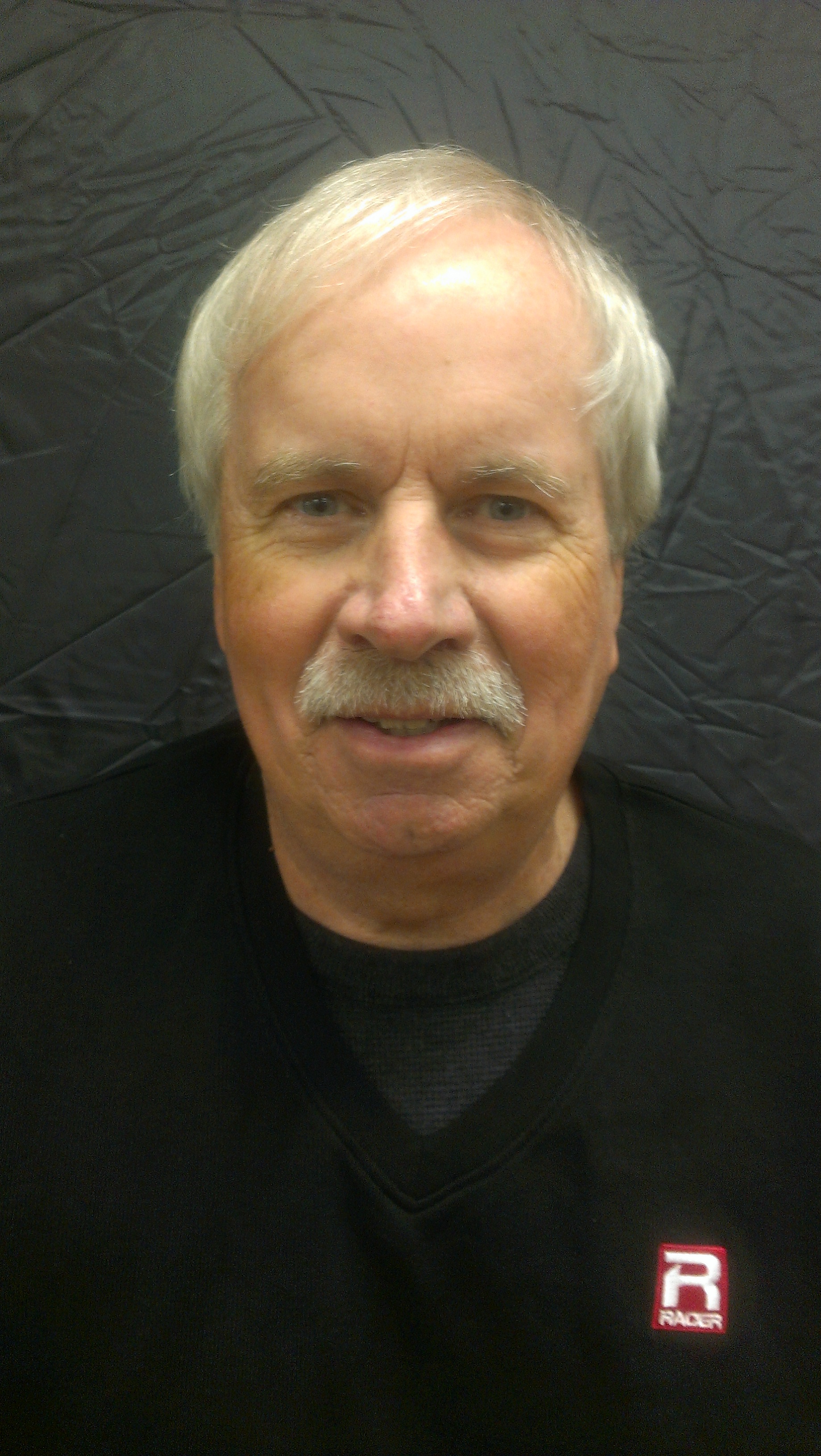
Robin Miller
Robin Miller flunked out of Ball State after two quarters, but got a job stooging for Jim Hurtubise at the 1968 Indianapolis 500 when Herk's was the last roadster to ever make the race. He got hired at The Indianapolis Star a month later and talked his way into the sports department, where he began covering USAC and IndyCar racing. He got fired at The Star for being anti-Tony George, but ESPN hired him to write and do RPM2Nite. Then he went to SPEED and worked on WIND TUNNEL and SPEED REPORT. He started at RACER when SPEED folded, and went on to write for RACER.com and RACER magazine while also working for NBCSN on IndyCar telecasts.
Read Robin Miller's articles
Latest News
Comments
Comments are disabled until you accept Social Networking Cookies. Update cookie preferences
If the dialog doesn't appear, ad-blockers are often the cause; try disabling yours or see our Social Features Support.