Motorsport Images
MILLER: The 1970s – a decade in headlines
Long before we had the internet, Facebook, Twitter and instantaneous ways to communicate, all we had was National Speed Sport News, Competition Press & Autoweek and The Indianapolis Star & The Indianapolis News to keep us informed. Those were the four most popular ways in North America to stay on top of auto racing, and they gave us the news, rumors and scoops, but at a pace today’s enthusiasts likely couldn’t comprehend.
Speed Sports News was published weekly and came out on Thursdays, while Autoweek was a bi-weekly newsletter than became a magazine. The Star was a daily morning paper that had two writers dedicated to racing and The News was the afternoon version, with both primarily blanketing USAC with coverage.
Chris Economaki owned SSN and his Editor’s Notebook was a must-read, while Pete Lyons and Leon Mandel were Autoweek’s big guns and Ray Marquette, Bob Renner, Dick Mittman and yours truly cranked out story-after-story for Indy’s dailies.
The 1970s were chocked full of breakthroughs, tragedies and a spirit of innovation,may so while we’re all quarantined and waiting on our COVID vaccine, let’s look back at some of the headlines/stories of that decade.
1970
A.J. Foyt wins the USAC midget race on a dirt track inside the Astrodome in front of 40,000 spectators, and it rates a story in Sports Illustrated.
Al Unser starts on the pole and leads 190 laps to win the first of his four Indy 500s – the first for Parnelli Jones and Vel Melitich as car owners, and fourth for George Bignotti as a chief mechanic. Johnny Lightning is the sponsor and the model of the car immediately becomes one of the hottest toys in the country.
Phillip Morris Inc. signs up for two years as the title sponsor for USAC’s premier series, which will be called the USAC Marlboro Championship Trail with a $300,000 point fund set for 1971.
Bruce McLaren is killed on June 2 while testing his Group 7 sports car at Goodwood.
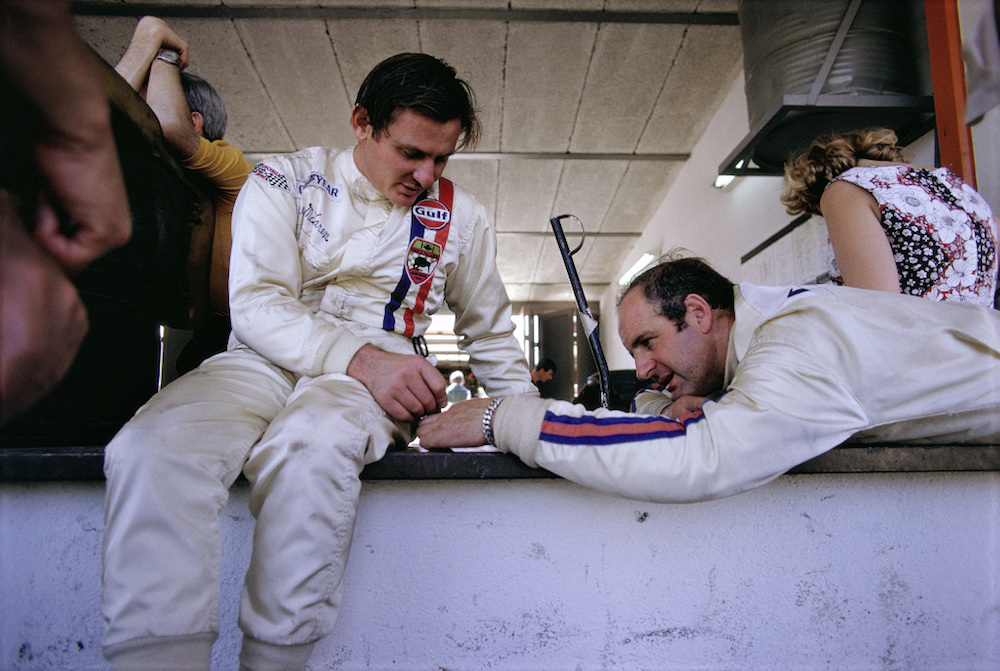
Bruce McLaren compares notes with compatriot and teammate Denny Hulme at the Spanish GP at Jarama in mid-April, 1970. Weeks later, McLaren was killed in a testing crash. Image by Rainer Schlegelmilch
After being badly burned at Indianapolis during practice, Denis Hulme returns to the winner’s circle in August and wins the Can-Am race at Watkins Glen for McLaren as Jackie Stewart’s challenge in Jim Hall’s Chaparral 2J is thwarted by brake problems. The starting lineup includes Hulme, Dan Gurney, Peter Revson, Stewart, Mario Andretti, Jacky Ixkx, Pedro Rodriguez Jo Siffert, Brian Redmond, Jo Bonnier, Vic Elford and John Cannon among the 34 starters.
Roger McCluskey wins the USAC stock car race at Milwaukee by two laps over Norm Nelson in a Plymouth Superbird. The purse is $57,000.
Mario Andretti is rumored to have been offered a full-time F1 ride with Ferrari for a $250,000 retainer and still would be allowed to compete at Indy and Ontario. He is also been invited to drive for Colin Chapman at Lotus in 1971.
USAC loses two IndyCar races in one week. The 200-mile race set for Dover, Delaware was cancelled after it was determined the new paving was not acceptable for an Indy car, and the proposed road race at the Dallas International Motor Speedway is nixed because of a lack of time to properly promote it.
Illinois International Speedway – formerly Meadowdale Raceway in Carpentersville, Ill – gives up on trying to build a 1.5-mile oval for a pair of fall USAC IndyCar and stock-car races.
The SCCA runoffs move from Dallas to a new 2.6-mile road course named Road Atlanta, near Gainsville, Ga.
Emerson Fittipaldi scores a stunning victory in the USGP at Watkins Glen in only his fourth F1 start and clinches the championship posthumously for Jochen Rindt and the 23-year-old Brazilian's new team (Lotus).
The inaugural California 500 openes to massive crowds at Ontario Motor Speedway – estimated at 50,000 for qualifying and 175,000 for the race won by Jim McElreath. Mac evidently didn’t impress too many people, as he finds himself walking back to the Holiday Inn (approximately four miles) a few hours after the race with his driver’s suit tied around his waist before actor James Garner kindly gives him a ride.
Parnelli Jones captures the Riverside Trans Am race and Dan Gurney announced his retirement. PJ beats teammate George Follmer by nine seconds with Mark Donohue third, Swede Savage fourth and Gurney fifth. “I am 39 and although there are many examples of athletes succeeding in competition beyond that age, I’m getting more and more interested in other aspects of racing,’’ says The Big Eagle, who plans to field two Eagles on the USAC championship trail.
Al Unser triumphs on Saturday at Trenton’s IndyCar race and then flies all night to Sacramento, Ca. where he wins the USAC dirt car race.
NASCAR’s greatest character, Curtis Turner, is killed in airplane crash at DuBois, Pa. at the age of 46.
The 12-race USAC Marlboro Championship for 1971 will consist of 12 races, including a new venue at Parkersburg, West Va. and two races at Hanford, Ca., and there is also a possibility of a date for Argentina. But USAC removes the dirt-car races from the Championship Trail and starts a new division in a move that will impede, then deny USAC drivers from ever getting to Indy.
1971
During a January autograph show in Rochester, N.Y., Mark Donohue tells a reporter that if Indy cars were going to become vacuum cleaners at Indianapolis by 1972 that qualifying speeds would jump 25 mph. Donohue and Roger McCluskey are both concerned that A.J. Foyt had a leg up on the competition in what somebody called “ground effect.”
The Questor Corp., an Ohio-based management firm, has signed on as the title sponsor for a March race at Ontario Motor Speedway’s road course pitting F1 cars against F5000. The QGP entry list sports some of the biggest names in motorsports with Stewart, Surtees, Hill, Hulme, Fittipaldi, Foyt, Andretti, Donohue, Revson and Follmer.
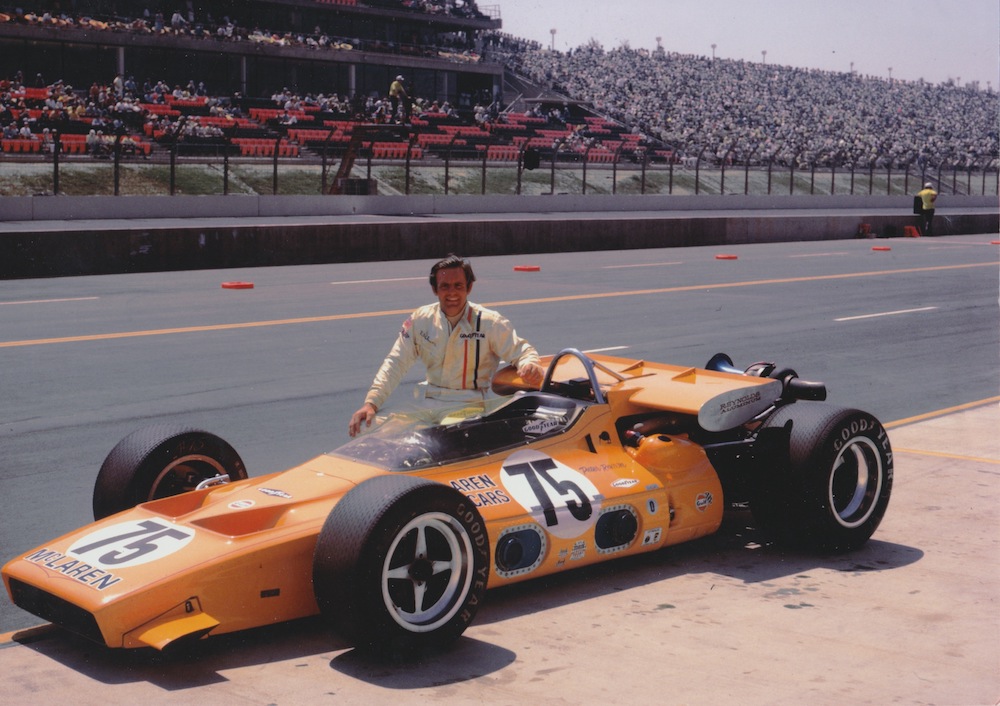
No shortage of people in the stands to see Revson take pole at Ontario, although the track would struggle to see out the decade. Image via Robin Miller Collection
For sale: 1969 Merlyn Formula Ford, race-ready with trailer for $3,300.
USAC adds two tracks to its Champ Car road racing schedule: Bryar Motorsports Park in Loudon, N.H. and Bridgehampton, N.Y. to join Wentzville, Mo. Castle Rock, Colorado and Kent, Wash.
A year after being badly burned and broken in a sprint car when the throttle stuck, Lee Kunzman applies for his USAC midget license in Cincy and is denied because he is deemed not ready yet. So he borrows a helmet, qualifies, races under a different name and wins the feature.
The Holman-Moody team withdraws its entry for NASCAR star David Pearson in the 500-miler at Ontario because it is reportedly “too costly” to make the west coast trip.
Parnelli Jones files a $365,000 lawsuit against NASCAR, three of its top officials and Riverside International Raceway for making him go to the rear of the Motor Trend 500 field over a tire controversy. After winning the pole position, NASCAR deems that Jones’ Firestone tires were outlawed because he could not provide them for all 45 entrants (Jones’ Firestone store serviced the west coast races). In the race, Jones charges through the field to take the lead and give NASCAR officials the one-fingered salute, but his car breaks with three laps left.
USAC cancels Bridgehampton one month before its scheduled date because of a shortage of entries and a conflict with F5000 race at Mount Tremblant. The plug is also pulled on Bryar and Wentzville so USAC’s road racing series wound up with only two events.
Jerry Hansen and David Hobbs win the L&M Continental 5000 races at Road America, while Mark Donohue runs away with the Trans-Am feature.
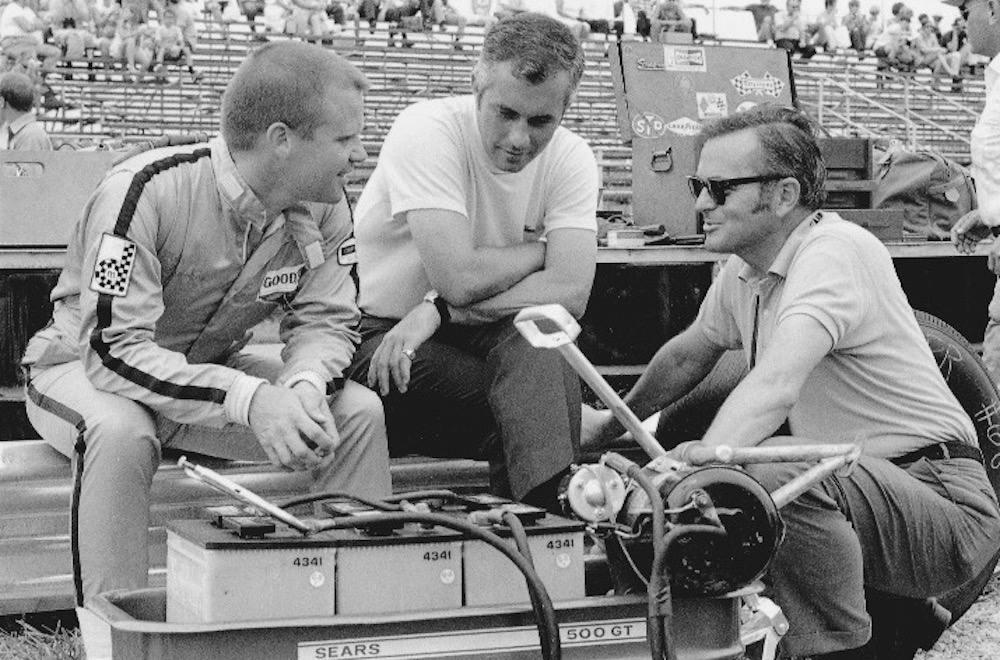
Mark Donohue, Roger Penske and Chris Economaki make good use of some downtime. Image by Gene Crucean
Friday Hassler wins the pole but Richard Petty captures the NASCAR 300-miler at Trenton, N.J.
Rumor has Group 7 series in Europe merging with Can-Am.
Herschel McGriff will reportedly make his USAC IndyCar debut at Phoenix with Rolla Vollstedt.
A.J. Foyt ends a three-year drought by winning the USAC season finale at Phoenix.
Jo Siffert loses his life in the F1 finale at Brands Hatch.
Roger Penske is rumored to having a Matador prepared in the Holman/Moody shop to see if it’s feasible for NASCAR Grand National competition.
Brock Yates, one of the top motorsports and automotive journalists in the country, recruits a few racers and gearheads to race from New York City to Los Angeles in passenger cars without stopping and for no money. Then Yates works his magic and convinces Dan Gurney to be his co-pilot and they win the Cannonball Baker Sea-to-Shining-Sea Memorial Trophy Dash in just under 36 hours in a Ferrari.
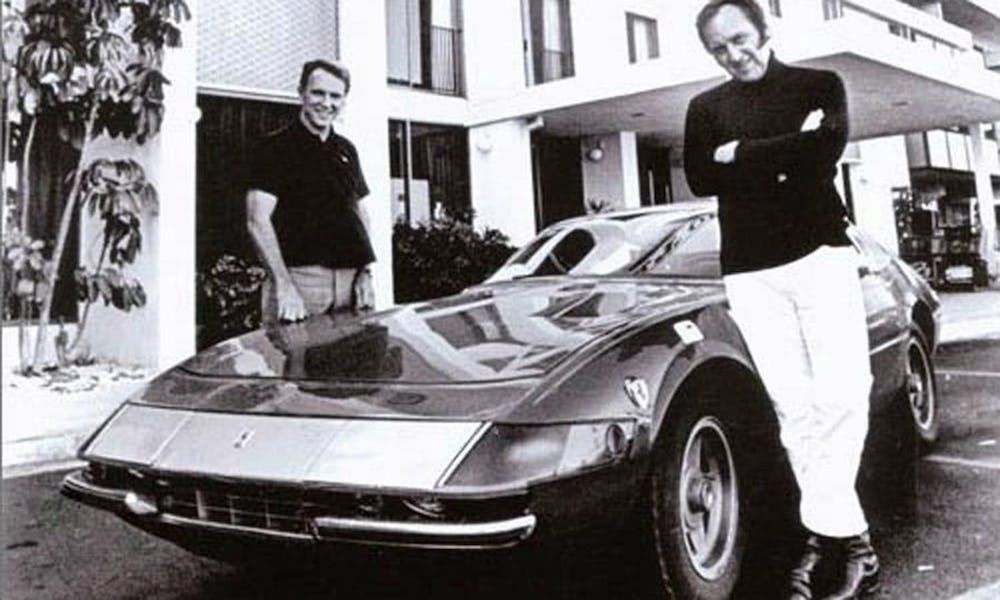
Yates and Gurney have a cunning plan for that Ferrari. Image via Robin Miller Collection
Danny Caruthers is killed warming up for a race in Corona, Ca. just a week after clinching the USAC midget championship.
The Federal Trade Commission rules that Al Unser and Don “The Snake” Prudomme can no longer endorse Johnny Lightning and Hot Wheels on television because they didn’t have a degree in social sciences and it was “deceptive” for a race driver to try and influence children about toys.
1972
Viceroy shows up as sponsor for VPJ’s Super Team of Mario Andretti, Al Unser and Joe Leonard and Marlboro pulls its title sponsorship because it had requested exclusivity from any other tobacco companies. Marlboro goes on to spend millions of dollars over the next three decades sponsoring IndyCar teams.
After years of coming close, Foyt finally wins the Daytona 500.
Penske’s 1-2 punch of George Follmer and Donohue dominates the Can Am series and wins six of nine races with a Porsche 917.
Jim Malloy finally scores a first-class ride for the Indy 500 but is killed during practice, apparently trying to run wide-open in Turn 3.
Bobby Unser obliterates the IMS track record by 16mph in Gurney’s new Eagle to win the Indy pole at 196mph.
Team Penske wins at Indianapolis for the first time after Gary Bettenhausen dominates but breaks down 17 laps from the finish and gives the victory to teammate Mark Donohue in a McLaren that is light-years ahead of everyone except Gurney. “If a Bettenhausen can’t win with the car I had today, I don’t think we’ll ever win Indianapolis,” says the second-generation star whose father (Tony) was killed at IMS in 1961. Two weeks later in his IndyCar debut at MIS, younger brother Merle loses his right arm and is badly burned in a crash.
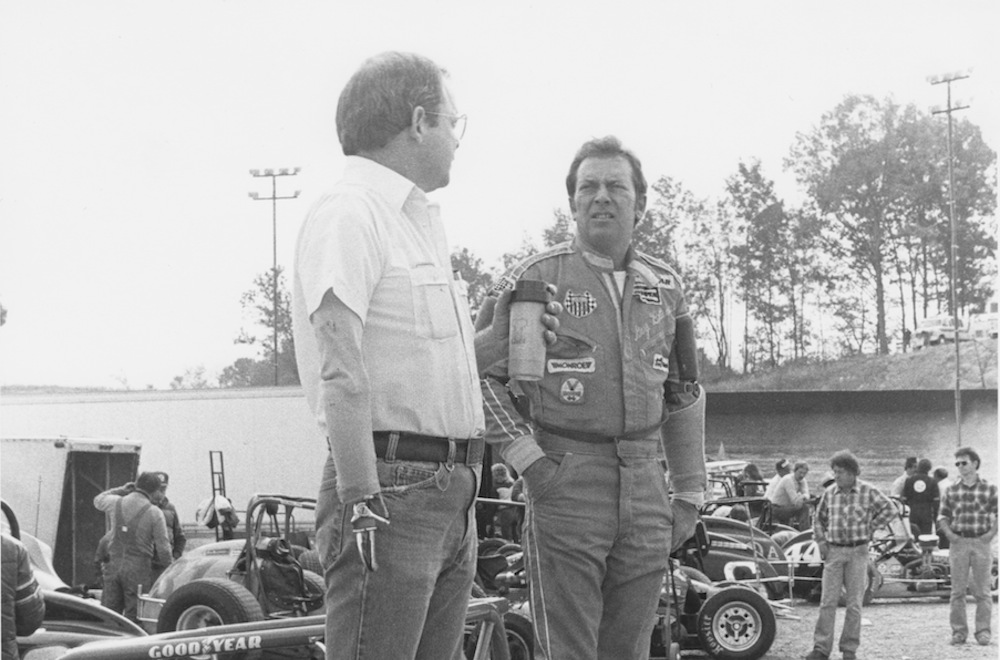
Merle and Gary Bettenhausen take in qualifying. Image by John Mahoney
1973
The longest, cruelest Indy 500 finally ends three days after it started in a rain-shortened 133 laps with Gordon Johncock the weary victor. His teammate, Swede Savage was critically injured in an horrific crash but as he was being loaded into the ambulance he told a crewman: “Tell my dad I’m going to be OK.” Art Pollard lost his life in practice and crewman Armando Teran was killed in pit lane, while Salt Walther suffered severe burns in a first-lap pileup that red-flagged Indy for the third time since 1964. Savage died on July 2.
A year after his devastating accident, Merle Bettenhausen wins a USAC midget race at Johnson City, Tenn. on the last lap driving with a hook instead of a right hand.
Penske’s latest Porsche 917 produces as much as 1,300 horsepower and dominates the competition again (winning six of eight races) as Mark Donohue comes out the champion. The engine rules for 1974 will be rewritten to try and balance competition.
USAC denies Donohue’s entry into the Schaefer 500 at Pocono because he does not hold a USAC license and it’s not registered as a full international event. Pocono had accepted the entry of the inaugural winner at the tri-oval in 1971 and 1972 Indy 500 winner. This is also a few days after Penske purchased MIS.
USAC comes to its senses and allows Donohue to race at Pocono, but Bill Marvel resigns as general manager.
Foyt’s lawsuit against Sports Illustrated is headed for Federal Court in Houston. S.I. wrote a story claiming Super Tex used the words “hillbilly” and f*****” in describing a couple drivers in the 1971 Questor Grand Prix, which the three-time Indy winner denied. A.J. ends up winning a six-figure settlement.
Bob Sharp wins the SCCA National for B Production at Nelson Ledges, Ohio in his Datsun 610 and teammate Paul Newman finished third.
Francois Cevert is killed at Watkins Glen during F1 practice and Jackie Stewart, who is set to retire after the final race, quits on the spot.
1974
Mike Mosley starts last and finishes first ahead of Bobby Unser, Foyt, Johncock and Andretti at Phoenix to give A.J. Watson the final win of his illustrious IndyCar career.
Nine years after his only win at Atlanta, Johnny Rutherford storms from 25th in his McLaren to capture the first of his three Indianapolis 500s.
Country Music Magazine will sponsor Marty Robbins on the reminder of the NASCAR circuit.
Gary Bettenhausen flips out of Syracuse, N.Y. in a dirt car and his left arm is rendered useless due to nerve damage. Penske fires him and he never gets another good chance to win Indy, but continues to compete through 1993 – finishing third in 1980 after starting last.
Jerry Miller’s fabulous book Fast Company is on sale for $6.95.
Parnelli Jones says he’s contemplating Alfa engines for his F1 effort with Mario in 1975.
The L.A. Times switches its sponsorship from the Can-Am race at Riverside to the NASCAR race at Ontario, citing “a broader base of interest.”
Penske unveils the F1 car he will campaign in 1975 – the PC-1 – designed by Geoff Ferris. Asked about the driver, The Captain replied, "It won’t be me and it won’t be Mark.’’ The rumor is that R.P. had been to France to talk to Ronnie Peterson and Jochen Mass about driving for him in ’75.
Jackie Oliver leads a 1-2 sweep for Shadow in Can-Am at Road Atlanta with teammate George Follmer second.
Hurley Haywood wins the Camel GT race at Daytona by three laps.
1975
After two seconds and a third as a driver, Gurney finally finds Victory Lane at Indianapolis with Bobby Unser in a race called after 174 laps because of a monsoon.
A half-page ad in SSN says: “Let’s give automobile racing back to the racers” and asks fans for contributions to get Ralph Ligouri a good ride for the 1976 Indianapolis 500.
Donohue succumbs to head injuries after crashing during practice for the Austrian Grand Prix. He had come out of a brief retirement at age 38 to lead Roger Penske’s F1 effort.
Promising open-wheeler B.J. Swanson dies after suffering massive head and internal injuries at the start of the USAC/SCCA Formula 5000 race at Mid-Ohio.
Tiny Lund is killed in the NASCAR race at Talladega.
Lella Lombardi becomes the first female to ever score points in an F1 race after finishing sixth at the Spanish Grand Prix.
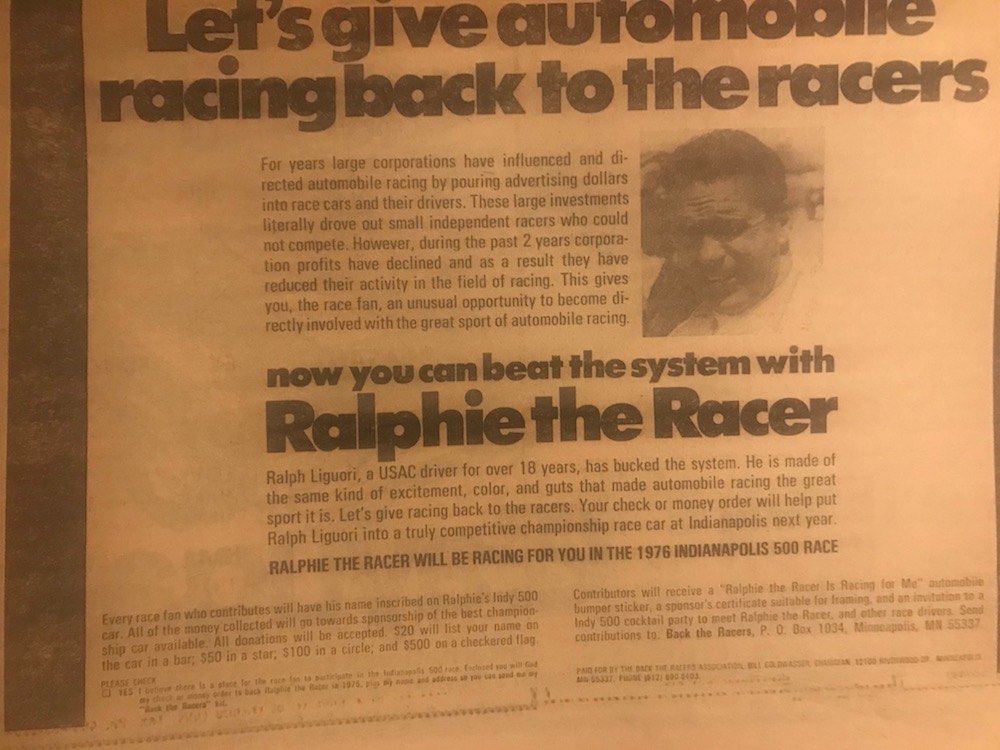
Ligouri takes his quest for a racing budget to the people in 1975.
Mike Mosley wins at Milwaukee and, at age 28, announces his retirement two weeks later, saying: “I wanted to quit a long time ago but so many people wanted me to keep going and it was all I knew how to do.” He'd suffered burns and many broken bones in 1971 and 1972 while charging to the front in an older car.
Jimmy Caruthers finishes third at the Hoosier Hundred and clinches the USAC Silver Crown championship, then dies six weeks later of cancer.
Chris Pook, a travel agent from England, stages a Formula 5000 race on the streets of Long Beach with some of open-wheel racing’s biggest names.
1976
Arlene Hiss becomes the first woman to start an IndyCar race when she takes the green flag in 21st starting spot and finishes 14th, 22 laps behind winner Bobby Unser. “What a joke, it’s a black eye for USAC racing letting her out there,” says Unser afterwards.
Pook brings Formula 1 to Long Beach and begins an eight-year run that produces big crowds and a renaissance of downtown.
Fans donate $11,000 to Ralphie The Racer, but nobody would give the popular 49-year-old USAC veteran a ride and he finally resigns himself to the fact he will never be in the Indy 500.
Janet Guthrie becomes the first woman to pass her driver’s test and attempt to qualify at Indianapolis, but numerous engine failures thwart her chances. A.J. Foyt puts her in one of his Coyotes on the final morning of qualifying and she runs fast enough to make the show. “I did it because Mr. Hulman asked me to,” confesses Super Tex.
Rutherford becomes the first Indy winner to walk to Victory Lane when the race is called after 102 laps, and another big storm unloads just before it is about to resume.
Before the World of Outlaws kicks off in 1978, there is Jan Opperman. The Racing Hippie barnstorms across the country, winning every big sprint car race there is, and even cuts his hair to run Indy for Parnelli in 1974.
But his summer of '76 is a sight to behold: He wins a USAC sprint show on the high banks at Daytona, then beats Pancho (almost impossible) in a midget race at IRP in a car that never made the feature; another midget race at Little Springfield; and leads the USAC dirt race on the mile at Springfield when his car breaks down.
Opperman then finishes sixth in the IndyCar race at Ontario and flies back for the Hoosier Hundred, where, running second, he is caught up in someone else's mistake and gets nailed squarely in the cage. He suffers severe head injuries, and while he recovers to drive again, he was never the same old Opp.
Niki Lauda is critically injured during the German Grand Prix and would have burned to death if not for the heroic rescue from fellow drivers Guy Edwards, Arturo Merzario and Brett Lunger. Lauda returns to competition six weeks later at the Italian GP.
Mosley reconsiders his decision to quit and is back in Victory Lane at Milwaukee.
1977
Mario wins USGP West and cements Long Beach’s popularity, as well as putting F1 back on the map in America.
USAC takes over the Robert Bosch Super Vee series from the SCCA to better prepare drivers for Indy cars. Bob Lazier is the first champion and Bill Alsup the second, and they both to go on to qualify at Indianapolis.
Guthrie becomes the first woman to qualify for Indy and starts 26th, and Tom Sneva becomes the first driver to best 200mph to take the pole position.
A.J. wins No.4 at Indy and Tony Hulman takes the victory lap with him in the pace car. The savior of Indianapolis dies five months later.
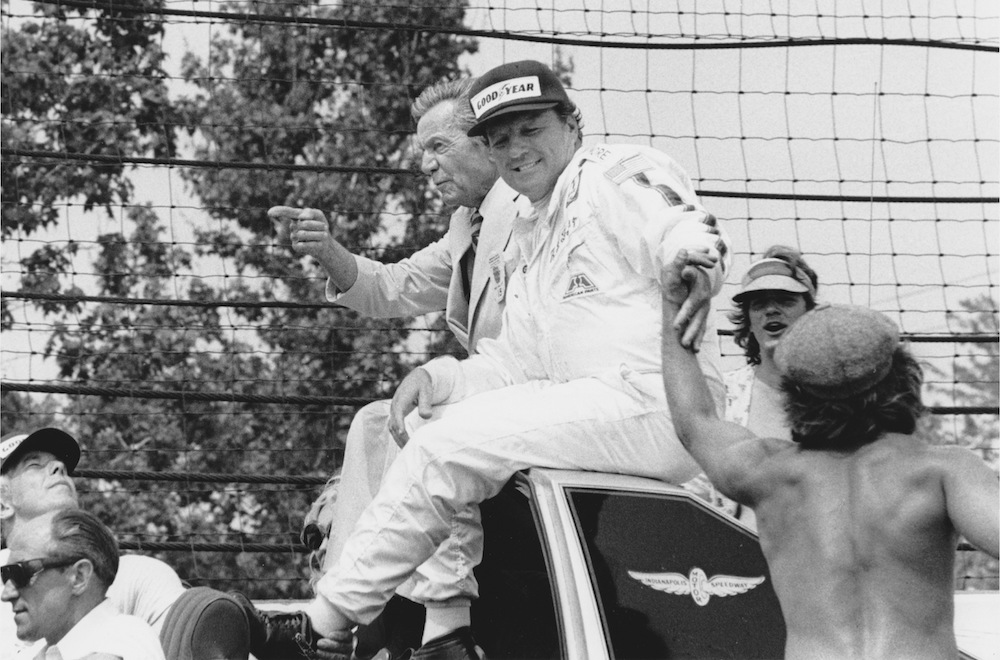
Hulman joins A.J. for the victory lap at IMS in 1977. Image by John Mahoney
In a USAC doubleheader at Salem on a 100-degree day just 24 hours after the Indy 500, Pancho Carter wins both midget features, one sprint main event and runs second in the other sprint show. He’s seriously injured in an IndyCar test at Phoenix a few months later, but recovers to win his first two races back in a USAC sprint car and the 1978 USAC Silver Crown championship.
Cale Yarborough wins nine times and collects his first NASCAR title.
1978
Al Unser wins Indy, Pocono and Ontario – the only Triple Crown winner in USAC history.
USAC stages a pair of races on two of England’s F1 bastions – Silverstone and Brands Hatch – with Foyt and Mears victorious.
Tom Sneva claims his second consecutive USAC national championship without winning a race and is not renewed for 1979 by Roger Penske. “I figured I might be in trouble when they invited everyone to a Cosworth party in England except me,” laughs The Gas Man.
Andretti’s six wins carry him to the 1978 F1 championship with Colin Chapman and the revolutionary Lotus that he developed, but his clinching of the crown at the Italian G.P. is ruined by the death of teammate Ronnie Peterson.
It’s rumored that Jim Hall is planning to bring a ground-effects car to Indy in 1979 after Andretti’s F1 dominance with Lotus.
Frustrated with USAC’s purses, lack of expansion, rules-making decisions and secrecy surrounding TV and back gates, Gurney sits down and pens a letter to his fellow owners. The 'White Paper' becomes the genesis for Championship Auto Racing Teams.
1979
A.J. Foyt shocks the racing world and everyone on West 16th Street by dropping out of USAC to join CART. “USAC has got a lot of things wrong lately,” he says. That was January. In early February, Super Tex announces he is resigning from CART’s board of directors and heading back to USAC. “I asked three questions which I already knew the answer to and received flat-ass lies,” he states. “They used me to get CART started, but they’re on an ego trip to conquer the racing world and I have no desire to do that.”
CART opens its inaugural season at Phoenix in a race won by Johncock, while USAC opens its IndyCar schedule two weeks later at Ontario with Foyt prevailing.
Hall unveils a gorgeous, sleek Chaparral designed by F1 wizard John Barnard – it’s yellow, sponsored by Pennzoil and is the obvious class of Gasoline Alley before it turns a wheel.
USAC files a suit to prevent the teams of Penske, Patrick, Hall, Fletcher, Gurney and McLaren from competing at Indianapolis. A federal court judge rules in favor of the CART teams, citing the right to work law among other things, and sends them out to practice at IMS.
Unser is long gone in the “Yellow Submarine” before breaking, and a kid named Rick Mears takes the checkered flag for Penske.
Ontario, which changed dates from Labor Day to March to August to September, is back on Labor Day weekend, but is also on its last legs as the crowds have become scarce. The rumor is that the track will either be shut down or bulldozed in the next two years.
Foyt wins five of the six USAC races for his seventh title while Mears parlays his three victories into his initial CART championship.
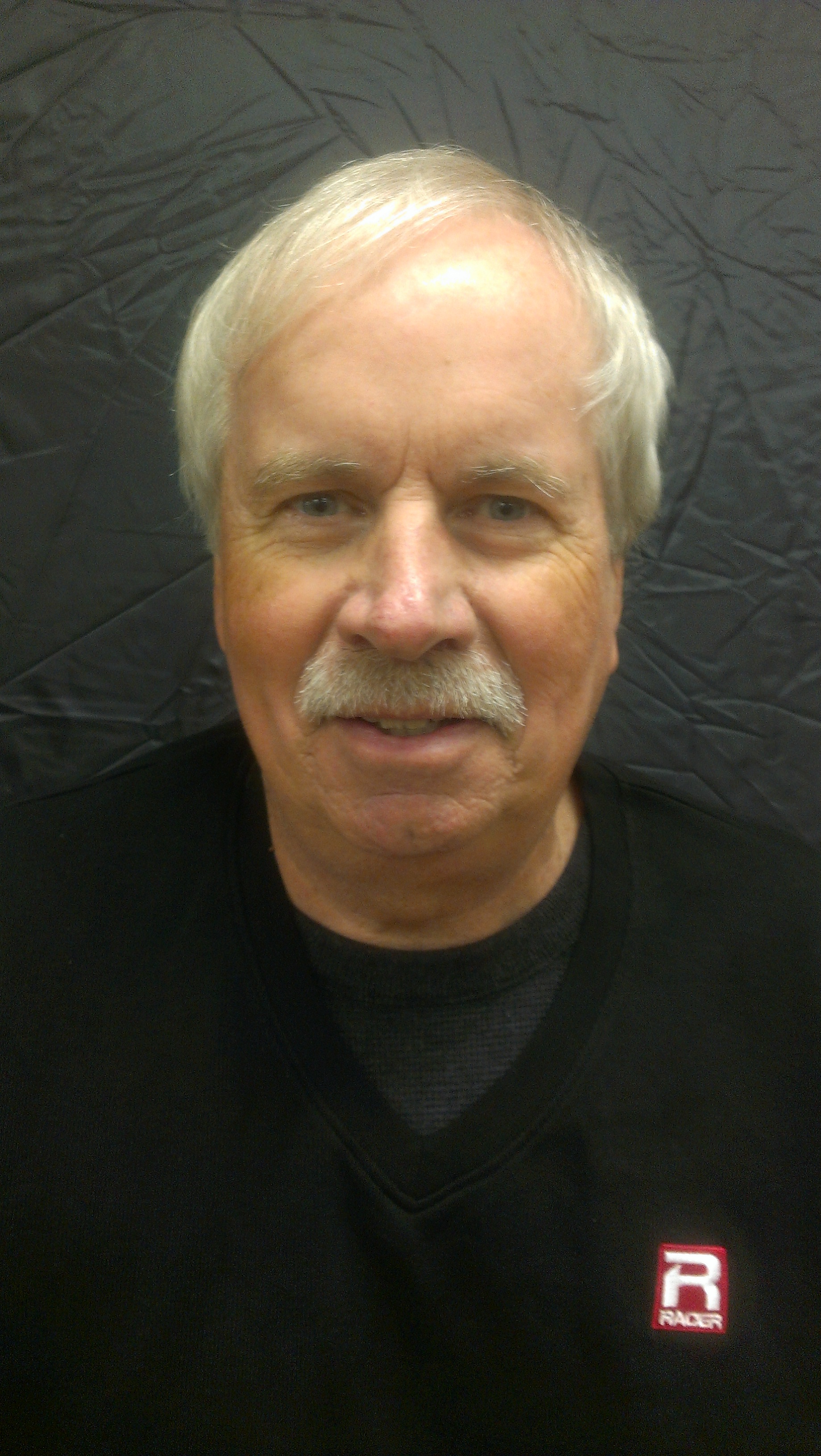
Robin Miller
Robin Miller flunked out of Ball State after two quarters, but got a job stooging for Jim Hurtubise at the 1968 Indianapolis 500 when Herk's was the last roadster to ever make the race. He got hired at The Indianapolis Star a month later and talked his way into the sports department, where he began covering USAC and IndyCar racing. He got fired at The Star for being anti-Tony George, but ESPN hired him to write and do RPM2Nite. Then he went to SPEED and worked on WIND TUNNEL and SPEED REPORT. He started at RACER when SPEED folded, and went on to write for RACER.com and RACER magazine while also working for NBCSN on IndyCar telecasts.
Read Robin Miller's articles
Latest News
Comments
Comments are disabled until you accept Social Networking Cookies. Update cookie preferences
If the dialog doesn't appear, ad-blockers are often the cause; try disabling yours or see our Social Features Support.