Barry Cantrell/Motorsport Images
INSIGHT: HPD’s multifaceted year of achievement
There’s a strong likelihood many of us will want to forget 2020, but don’t include Honda Performance Development in that conversation.
Amid all the strange and forgettable aspects of a year tainted by division and a global pandemic, a rather remarkable series of achievements were earned by HPD that have made 2020 the most successful season in its history.
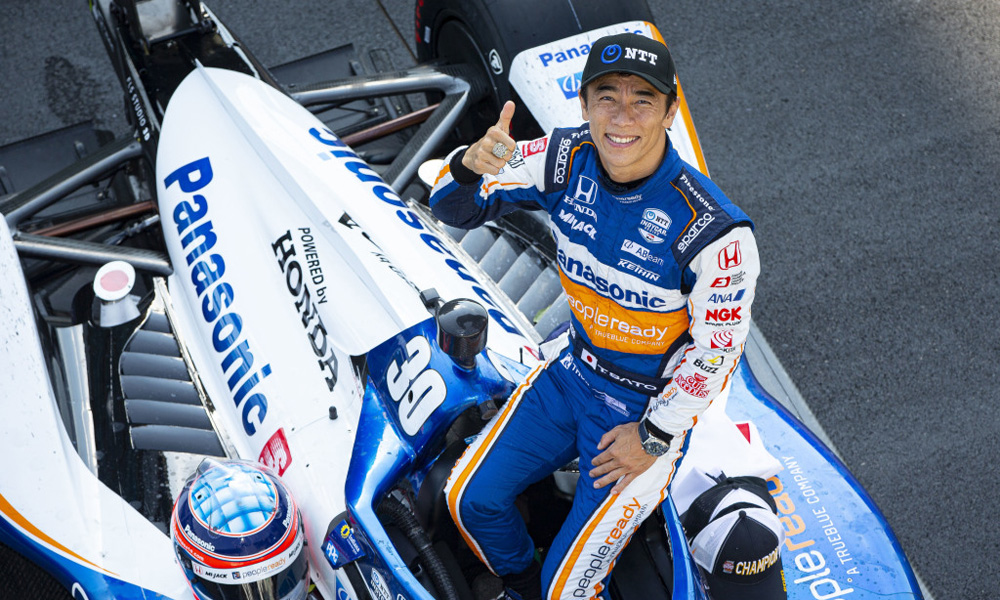
On the NTT IndyCar Series front, Chip Ganassi Racing and the No. 9 Honda driven by Scott Dixon delivered drivers’ and manufacturers’ championships as Honda-powered teams claimed 50 percent of the wins. And for good measure, the series’ crown jewel, the Indianapolis 500, was won by Takuma Sato in Rahal Letterman Lanigan Racing’s No. 30 Honda, giving HPD a clean sweep of IndyCar honors.
The trend continued in IMSA where Honda’s sister brand, Acura, vied for glory in the top and bottom WeatherTech SportsCar Championship classes. In DPi, Acura Team Penske ran the table for HPD, claiming the drivers’ title with Ricky Taylor, Helio Castroneves, and Alexander Rossi in the No. 7 Acura ARX-05 prototype. Teams’ and manufacturers’ championships were taken as well for HPD’s second clean sweep of the year, and second consecutive in DPi.
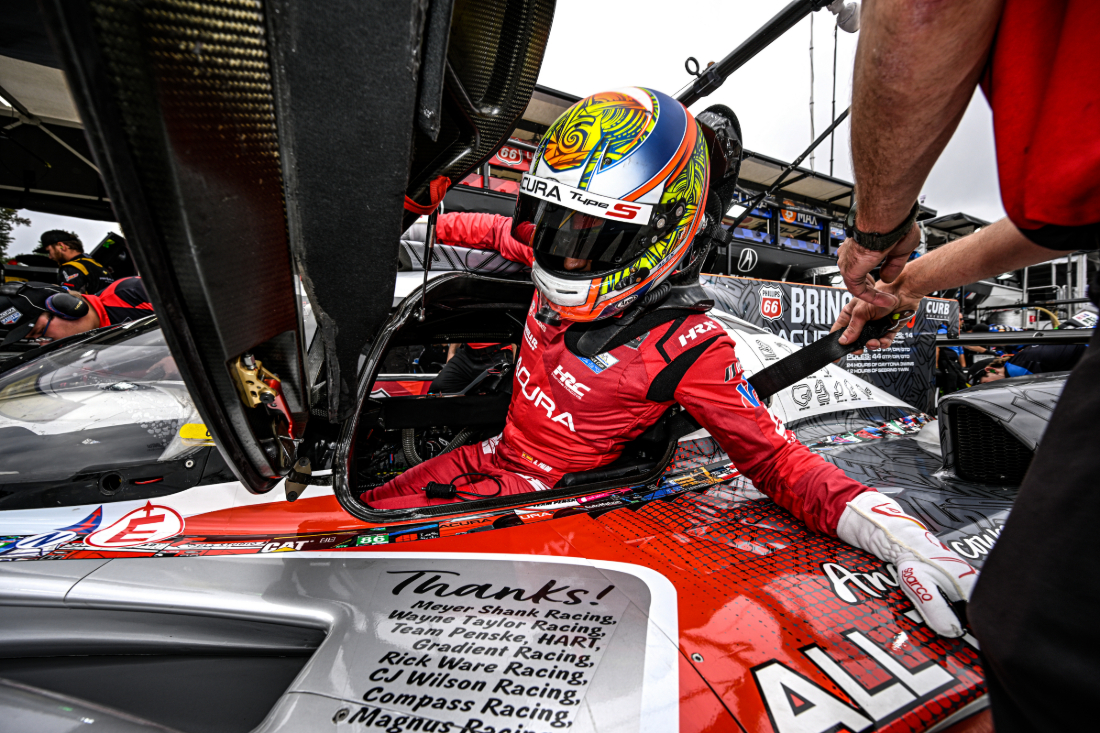
And in GT Daytona, where Meyer Shank Racing entered 2020 as the defending champions with the No. 86 Acura NSX GT3 Evo, the squad repeated, with Mario Farnbacher, Matt McMurry, and Shinya Michimi handing drivers’, teams’ and manufacturers’ crowns to HPD to complete its third clean sweep.
“This has been a very special year,” HPD president Ted Klaus told RACER. “It is absolutely worth celebrating, and it's nice to come up for a breath of fresh air after a long hard grind, and really say thank you to each and every person at Honda Performance Development that really just has been getting after it, not only this year, but for some years leading up to this. But there is no question that we hit all of our targets, all of our stretch targets, all of our dream targets, all together in one year, and it is starting to sink in. And it was an unusual year. For us to do this in any other year, it might have been magnified even more, but that doesn't lessen the achievement and the sense of satisfaction.”
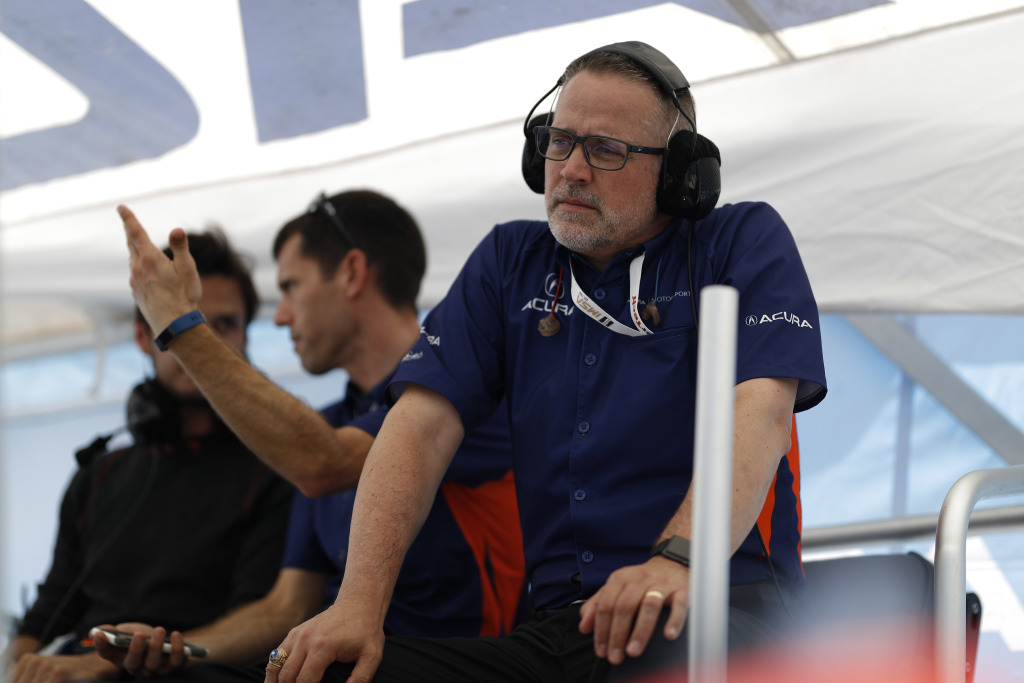
He's in Acura rather than Honda gear here, but Ted Klaus liked what he saw play out for both brands in 2020. Michael Levitt/Motorsport Images)
If filling HPD’s proverbial trophy case with eight significant pieces of hardware, and adding another driver to the Indy 500’s BorgWarner trophy wasn’t enough, HPD’s total domination of ‘The Greatest Spectacle In Racing’ from the start of practice through qualifying and a 1-2-3-4 in the race could be its defining performance of the year.
“At the end of the 500 in 2019, we immediately set sights on the 2020,” Klaus said of losing the race to Simon Pagenaud in the No. 22 Team Penske Chevy. “We didn’t know about the turmoil we’d all be facing then, but you clearly start with the 500 and you really measure your success. That's the yardstick for the whole season. So to lock out the front row in qualifying; almost lock out all Fast 9 spots in qualifying, and then to go earn it in the race... What's not lost on me is we not only finished with the top four positions, but they cover three different teams, with two of the three Rahal Letterman Lanigan cars in the top three, plus Ganassi, plus Dale Coyne’s team.
“So, it was just a tremendous accomplishment. It is magnified by the extremely tight competition, and so very little to be found in the way of large performance gains with an engine formula in its final stages. So, therefore, it was an accomplishment of people putting together all the small gains into a well-balanced setup that multiple teams could get after and achieve. I don't know that we've ever had that dominating of a performance in the 500, and we really relished it and we really are celebrating those achievements.”
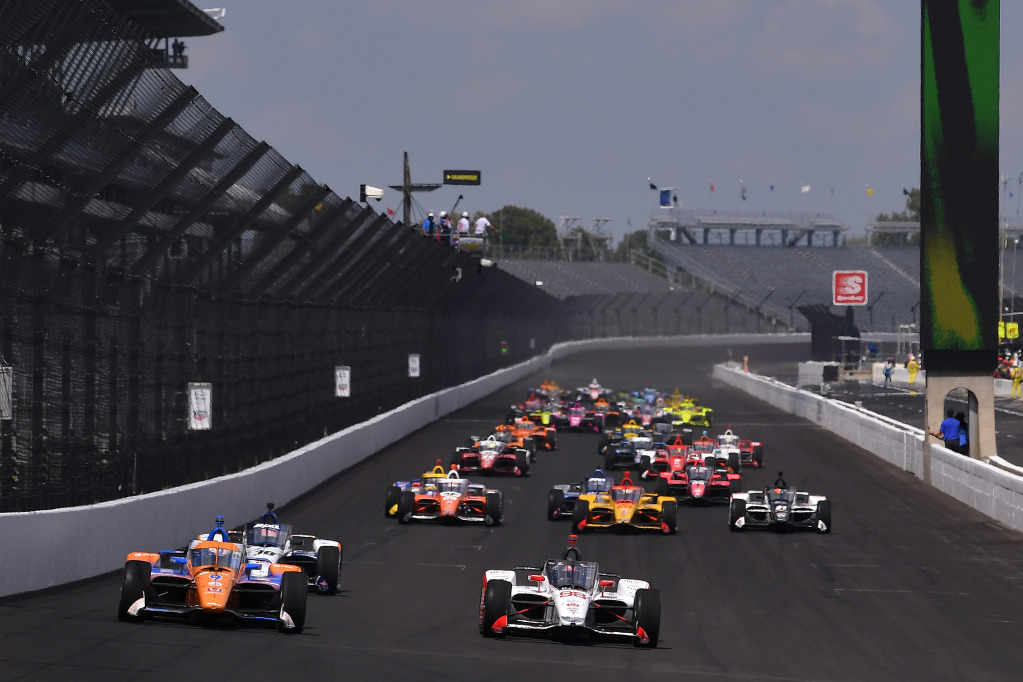
From start to finish, the Indy 500 was all about Honda this year, and Scott Dixon completed the coveted 500/championship sweep for HPD at season’s end. Gavin Baker/Motorsport Images
As Klaus, who joined HPD as its leader early in 2019 and is set to retire from Honda at the beginning of December, watched Chevy take the Indy 500 and the drivers’ championship with Penske’s Josef Newgarden, ideas for a new working relationship style with its IndyCar teams were turned into action items. The byproduct of the change was evident as Dixon and former teammate Felix Rosenqvist combined to win the opening four races.
“We really sought to reinvent ourselves between 2019 and 2020, similar to how Scott Dixon and Chip Ganassi Racing did the same on their end,” he said. “There was an appreciation for just how much the 2019 season and results didn't sit well with us. So together, there was a hunger there, led by Scott, and so we experienced this reinvention. One of the keys to achievement in life is to truly throw away the old ways and reinvent yourself. And I think the same could be said for the whole Rahal camp, as Piers Phillips is bringing in new ideas there, and it takes a lot of guts for people to follow the new ideas.
“I think if we took that out across all the Honda teams, there's a renewed openness to allow HPD, to do the things that only we can do and support all those teams, not only with our powertrain, but with our driving simulator. Then there's a renewed set of ears, if you will, on HPD, listening to our teams and really quickly responding to their ideas and their demands of us. So I think that teamwork was better. We were really letting the drivers lead us in the direction we need to go, and our teams, and HPD is supporting all of that.”
Compared to IndyCar and its spec chassis formula, IMSA’s DPi class -- featuring three unique prototype models built by Dallara, Multimatic, and ORECA, along with three vastly different types of engines in those machines -- made for an exceptionally challenging repeat performance. The titles went down to the wire at the positively insane Mobil 1 Twelve Hours of Sebring season finale, and Klaus didn’t mind as HPD farewelled its partnership with Team Penske with a trio of new championships in hand.
“IndyCar is wonderful because you just go out and it's a winner take all and may the best team technology manufacturer win,” he said. “In IMSA, even though there's the same approach, there is a balance of performance to allow our twin-turbo V6, ORECA chassis to compete with the turbocharged four-cylinder Multimatic Mazda and the big honking normally-aspirated V8 Cadillac Dallara. So the BoP is a necessary evil to have that kind of character and variety of racing. Acura partnering with a Team Penske, we had a tough first year in the series in 2018, and we didn't hit our stride till 2019 when the No. 6 car won the championship led by Dane Cameron and Juan Pablo Montoya.
“Then this year, in spite of a rough start, the No. 7 car triumphed in the championship led by Ricky Taylor and Helio Castroneves, with all those successful years in the Penske organization, getting his very first championship. It was just supremely satisfying and bittersweet, but at the same time, three years ago -- or even longer than that -- we imagined the kind of championships we thought we could bring home. Then to do it, it still is a little surreal and you still have to pinch yourself. You're grateful for all of the little things that everyone did at HPD to support those results.”
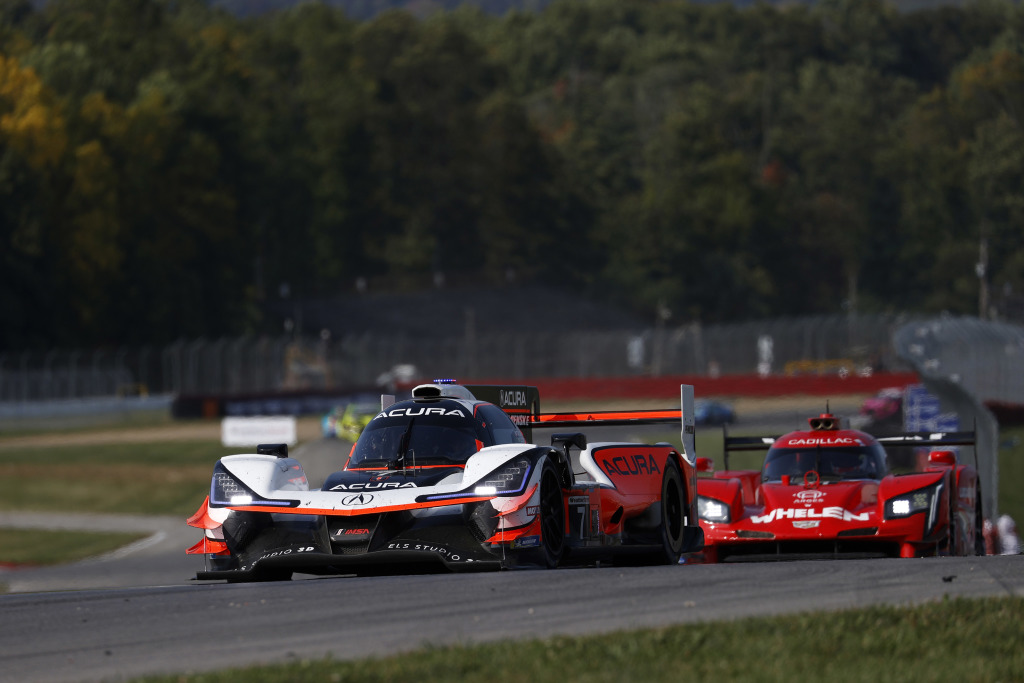
The HPD approach has also proven ideally suited to the complex challenge of mastering IMSA BOP, as demonstrated by Helio Castroneves and Ricky Taylor bringing home “supremely satisfying and bittersweet” championship glories in the final year of the Acura Team Penske partnership. Michael Levitt/Motorsport Images
Where the relationship with Penske came to a victorious end after three years, HPD’s alliance with Meyer Shank Racing is headed upwards -- from GTD to DPi -- when the new season arrives in January. But there’s another farewell in store, as MSR leaves four years of campaigning the NSX GT3 Evos it established for HPD in GTD to other teams.
“Well, you can't say enough about Mike Shank and Jim Meyer; their passion, their grit, and they just get it done on the track,” Klaus said. “The NSX GT3 Evo holistically has HPD behind it; we designed and developed and then did the Evo package on that, so it's especially rewarding when we have so much skin in the race car itself. But there's no way you achieve that without Mike Shank running the team. And then we had parallels to 2019, with Mario Farnbacher and Trent Hindman winning the championship, to this year, where Mario carries over as the leader of the team, Matt McMurry stepping out of a P2 car last year into a GT3 car, and winning with a different combination.”
Klaus had the rare treat of seeing McMurry in the halls of HPD between races as the second-generation sports car driver and engineering student landed his first job after college.
“Matt works for HPD and we'll continue to work for HPD; he came here as an intern,” he said. “Very, very smart between the ears, but then very, very skillful to actually extract the most out of the car. It's really neat to see the growth in the non-professional drivers and the way that they are able to perform and grow throughout the year. So I think this year was truly kind of the cherry on the sundae that we've been whipping up here with Meyer Shank Racing. I know Mike Shank would probably tell you this year was as satisfying if not the most satisfying, because what we believe about IMSA is it should be a platform for amateur racers to really cut their teeth and get their stripes. Matt McMurry pays down that intention in spades this year with the championship.”
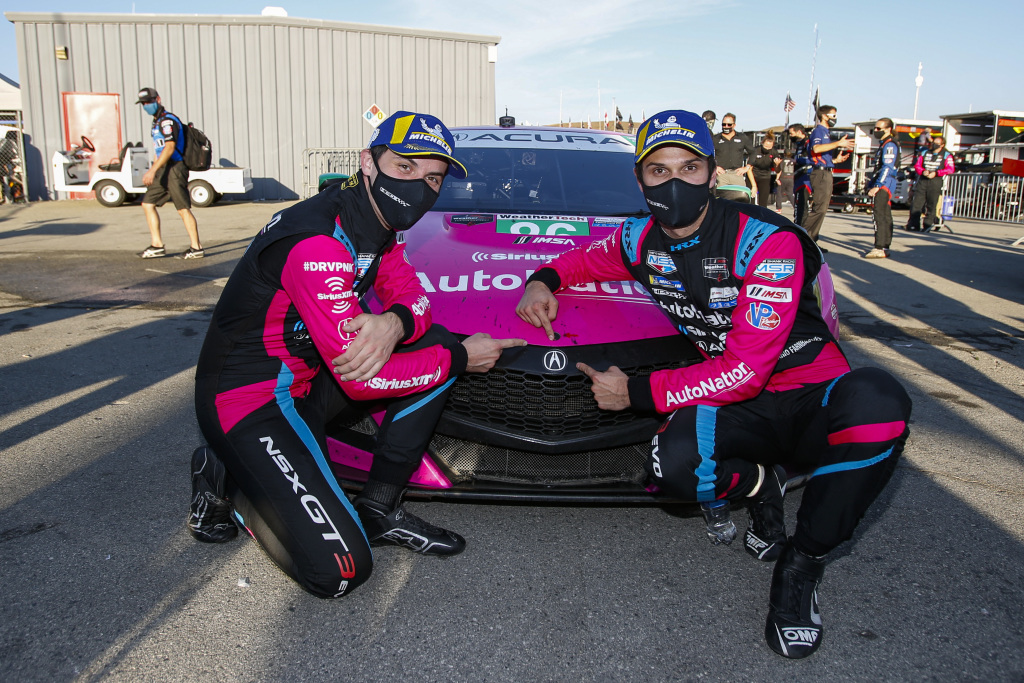
In a year that has forced an obscured view of race winners, Meyer Shank Racing's title-winning duo of Matt McMurry and Mario Farnbacher found new ways to commemorate their success and their appreciation for Acura/HPD’s part in it. Jake Galstad/Motorsport Images)
As Klaus finishes his final days at Honda, he’s left HPD’s David Salters, who will step forth as its new president, with one hell of an act to follow in 2021.
“I've been fortunate -- I've worked for Honda for 30 years, and it's the kind of company that allows you to bring your full passion, all your hopes and dreams,” he said. “And if you're skillful enough to align everyone and you just push beyond difficult or impossible, you can chop it up and make things possible. So for me, working at HPD was the culmination of my 30-year career. At Honda, I was able to lead a skillful group of passionate people who not only simply got after it, but they got after it in a way where they constantly reinvented themselves, took on challenges.
“I believe that what happened this year is a little bit of luck, but you always get a lot luckier when you're working with a smart, skillful group of people. So I wish this same group of people nothing but good fortune in the future. I believe that David Salters is the right leader and that we've got good partner teams, and we're going to continue to earn our stripes as we go forward and continue to bring our unique sense of homegrown passion to all the series that we compete in.”
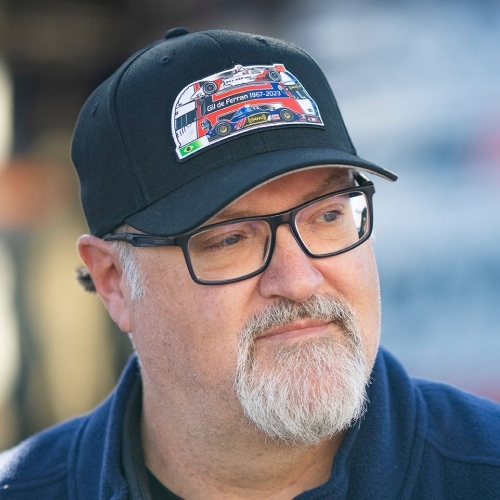
Marshall Pruett
The 2026 season marks Marshall Pruett's 40th year working in the sport. In his role today for RACER, Pruett covers open-wheel and sports car racing as a writer, reporter, photographer, and filmmaker. In his previous career, he served as a mechanic, engineer, and team manager in a variety of series, including IndyCar, IMSA, and World Challenge.
Read Marshall Pruett's articles
Latest News
Comments
Comments are disabled until you accept Social Networking Cookies. Update cookie preferences
If the dialog doesn't appear, ad-blockers are often the cause; try disabling yours or see our Social Features Support.