Robin Miller's Mailbag for November 11, presented by Honda Racing / HPD
hpd.honda.com
and on social media at@HondaRacing_HPD
and https://www.facebook.com/HondaRacingHPD.Questions for Robin can be sent to millersmailbag@racer.com. Due to the high volume of questions received, we can’t always guarantee that your letter will be printed, but Robin will get to as many as he can. Published questions have been edited for clarity. Views expressed do not necessarily reflect those of RACER or Honda/HPD.
Q: This week is Veterans Day, and I was wondering if you know of any veterans that have ever raced in IndyCar? If so, how successful were they?
James Jackson, Livonia, MI
RM: Lots of WWII veterans, a few from Vietnam and one from Korea, but the best known came out of WWI and that was Eddie Rickenbacker. A four-time Indy 500 starter, Captain Eddie made his name by shooting down 21 enemy planes, winning the Medal of Honor and Distinguished Service Cross. He then bought IMS in 1927. Two-time Indy winner Rodger Ward flew B-17 bombers and was a P-38 fighter pilot before being recruited as an instructor because of his skills. Billy Arnold, the 1930 Indy winner, joined the Army Air Corps a week after the attack on Pearl Harbor and rose to the rank of brigadier general. Sam Hanks, the ’57 winner, also joined the Army Air Corps, and 1951 winner Lee Wallard was with the Navy’s Seabees.
Jimmy Daywalt, an eight-time Indy starter, was a tailgunner on a B-24 and Art Cross, the first rookie of the year at Indy in 1952, served as a tank commander in Europe. Polesitter Johnny Thomson was the captain of a B-25 bomber in Italy. Cactus Jack Turner spent three years on the Pacific front. Three-time Indy starter Ray Crawford was a decorated pilot of a P-38 and shot down six enemy planes to earn the Distinguished Flying Cross. Iron Mike Nazaruk, who lost his life at Langhorne after finishing second in the 1951 Indy 500, served as a U.S. Marine in the Battle of Guam and Guadalcanal and vowed to become a race driver if he lived through the war.
All-American racer Dan Gurney spent two years in the Army as an artillery mechanic before launching his brilliant career. Three-time Indy starter Steve Chassey was on the front lines in Vietnam for two years and won the Soldier’s Medal for bravery, while Pete Halsmer flew a helicopter in 'Nam and Hurley Haywood served in the 164th Aviation Group. And longtime car owner/builder Rolla Vollstedt landed at Normandy on D-Day and was struck twice by machine-gun fire to earn a Purple Heart. Apologies to those I left out because I’m sure there are more vets who deserve recognition, but I’m glad you asked the question James.
Q: Oliver Askew says: “Don’t be surprised if my IndyCar career is over.” I saw this on another site. I thought he held his own and had some really good results. Is there an outside chance he'll find a full-time ride with Meyer/Shank or Dale Coyne Racing?
Alistair Fannell, Springfield, MO
RM: I think Oliver was just being realistic about his situation (no money), so if he could come up with sponsorship he might have a shot at Coyne or Carlin. It sucks because he had some good drives and packs a ton of potential, but he understands how hard it is nowadays to get hired without bringing sponsorship.
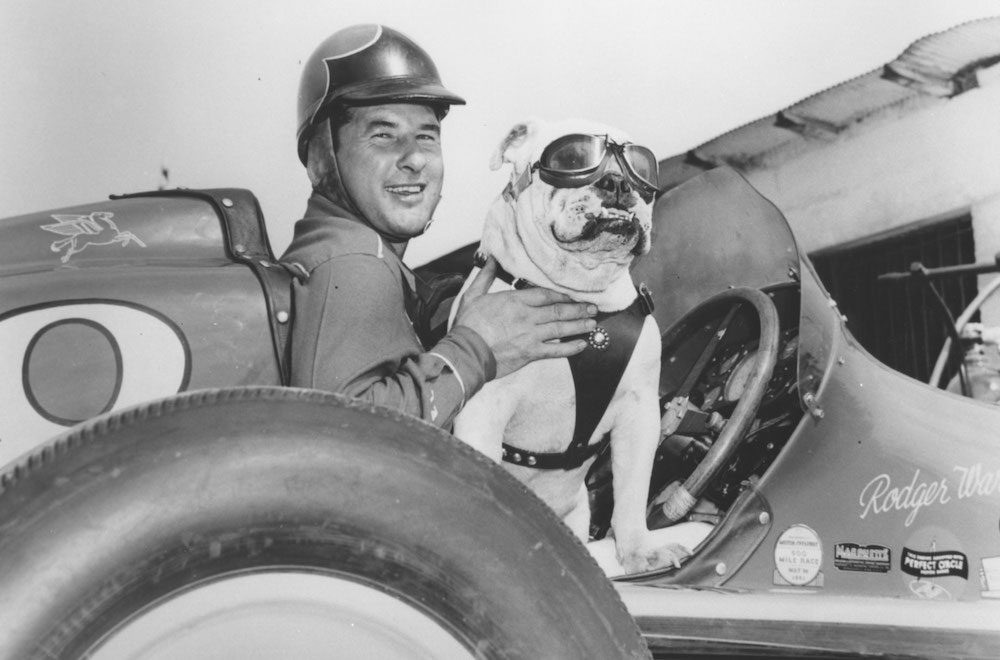
Rodger Ward was as acclaimed for his skills in the air as he was for his prowess at the Speedway. That dog looks like it could handle itself, too. Image by IndyCar
Q: I was curious about your answer to a question in last week's Mailbag about rivalries in IndyCar when you mentioned Santino Ferrucci and Rinus VeeKay vs. the rest of the paddock. I know Ferrucci has gained a bit of a reputation for past racing incidences and some silliness in iRacing. But I wasn't aware VeeKay was disliked in the paddock. Or did I misinterpret your answer? Are the two friends?
Ben Fisher
RM: I didn’t say they were disliked, but both have ruffled a few feathers with their aggressiveness and that’s usually the outcome when kids push their way to the front instead of quietly running 15th. I have no idea if they’re friends, but IndyCar still needs a rivalry.
Q: Any ideas why Ganassi never considered Bourdais for the No. 8 or No. 10 cars? He's a proven winner and even drove (and won) his Ford GT car for Chip. On the surface, it seems like he and Dixon have similar driving styles.
Nick C.
RM: What if I told you that Ganassi did offer him a seat a couple years ago but he couldn’t get released from his contract?
Q: I loved the story about Juncos and Sting Ray Robb. I hadn't heard of him, but will definitely keep him on my radar going forward. It's the young guys like him and all the others that kept me coming back this year to watch races. I'm hopeful Cap'n Penske sees the value of bringing along young talent and makes it a priority. What would you suggest he do to make sure we learn about guys like Sting Ray before they hit the big show?
Norm Shaw
RM: The best way is to invest in the feeder system. That’s what The Captain is doing for 2021, and I think everyone is looking forward to seeing what he does in Indy Lights.
Q: I know IndyCar fans love to bitch, and I am one of them, but I also can appreciate the history we are watching with Scott Dixon. What an incredible talent! And you have to give kudos to Chip Ganassi, Mike Hull and the rest of CGR for 13 championships. I for one am going to love watching Dixon and CGR and their attempt to tie A.J.'s seven titles. And if Newgarden stays at Penske, I have a feeling a decade from now we might be saying the same things about Josef that we are saying about Dixon right now.
Thank you for your story about Ricardo Juncos. I forgot how many of the guys now in IndyCar drove for Juncos. Went to the St. Pete race with some Pennsylvanians who have transplanted to Florida and his guy Sting Ray Robb (what an awesome name) is going to be another one to watch. Guys like Juncos are exactly the type of guys that Andersen and Penske need to support on the Road to Indy and in IndyCar, because the current crop of owners, and fans like myself, aren't getting any younger. Do you think Ricardo can field a car for the NTT series in 2021? Thank you and everyone at RACER for all the great coverage in 2020.
Scott St. Clair, Erie, PA
RM: All I know is that Juncos is working on sponsorships for Indy and the series and it’s not exactly a fertile market, but I’m hoping he find backing and bring Sting Ray all the way to IndyCar in a couple years. Thanks for reading.
Q: About two years ago there was an up and coming hotshoe. I think his name was Enerson. Whatever happened to him? He has dropped off the radar.
Jerry, TX
RM: R.C. Enerson drove a few Lights races and then jumped into an IndyCar at Mid-Ohio and Watkins Glen in 2016, and turned a bunch of heads with his speed. But he didn’t have funding for a full program so he tried sports cars until a one-off IndyCar appearance in 2019. He was the driver mentioned for the on again, off again Top Gun Racing team and drove their "car" in the iRacing Indy 500 this spring. Haven’t heard his name lately.
Q: “… why would any of the big teams want a 34-year-old driver that has never won a race and is squeamish about ovals?” That was your response to a question last week, and my response is that the reigning series championship team owner just hired a 45-year-old driver who has never driven an open-wheel car in competition and currently refuses to drive ovals. Why? Is his presence at Mid-Ohio going to sell more tickets? Or get an additional 100K viewers on NBC? Or even sell $5K of Johnson merch? It’s an intriguing and inspired hire, for sure. But I don’t know if Ganassi or the series gets rich off of this deal, especially without the 500 as part of the package. The same way I don’t think anyone would get rich off of hiring Romain Grosjean, who to be fair, I’m not even a fan of. Your question in the Mailbag was probably rhetorical and if so, I apologize for wasting your time. This was just my thought when I read your response.
D. Wagner
RM: No, it’s a very fair question and good observation. Johnson will garner a lot of media at first, and the key will be for him to be competitive at some point because it’s going to be tough sledding. I wish he were driving the ovals because he would stand a much better chance of being competitive, but I do think he will run the Indy 500 next May. He can draw more fans and interest, but not if he’s running 22nd every weekend.
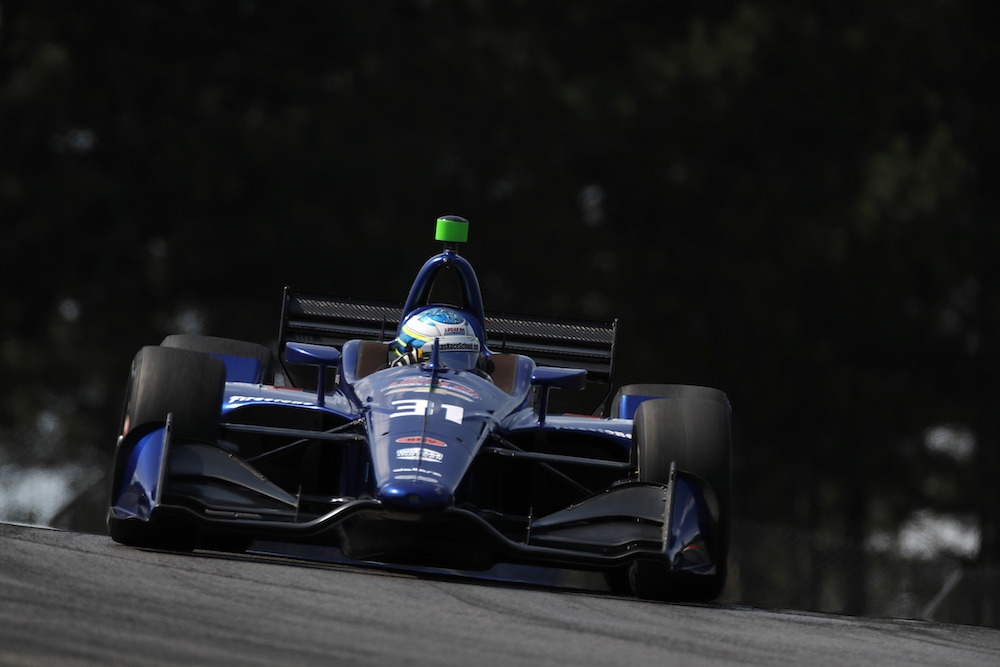
Enerson's most recent IndyCar outing was with Carlin at Mid-Ohio in 2019. Phillip Abbott/Motorsport Images
Q: Three ovals on the 2021 IndyCar season is not enough, but I believe it will not get any worse than that. I think it is safe to say that the Indy 500 will not go away unless Indiana gets hit by an asteroid. Texas has been a part of the IndyCar schedule since the earliest IRL days, and looks like it's here to stay. Gateway is the most vulnerable of the three because it's a fairly new re-addition to the calendar, but the promoters have been doing a stellar job, and the racing is good as well, so I'd call it a success. Therefore, I believe IndyCar will not lose any oval races in the near future. It would be interesting to know your thoughts on this subject.
Martynas Barzda
RM: I imagine as long as Eddie Gossage can get title sponsorship and a reasonable sanction fee, IndyCar will continue at Texas. And as long as Bommarito Automotive Group backs Curtis Francois at WWTR and he gets treated fairly by IndyCar, it will get better and better.
Q: First, what do you think the chances are of the 2021 Indy 500 running on Memorial Day weekend with full attendance? Given the renewed global lockdowns, it feels like the world is stuck in a holding pattern. And while Indy is still seven months away, I have to believe that IndyCar management is already discussing contingency plans. What have you heard?
Second, what's the possibility doubleheader race weekends will become more commonplace, even after COVID-19 subsides? I ask because we camped at Road America for the IndyCar event, and having two races really made the weekend worthwhile, even after factoring in the lack of support races and paddock access. I wouldn't think Road America would struggle to sell tickets for both Saturday and Sunday, so it seems like a win-win for both the facility and fans.
Ben Malec, Buffalo Grove, IL
RM: Got no idea on your first question -- we’re six months away and there’s all this talk of a vaccine so I don’t know how anyone can make a prediction yet. I’m sure R.P. has backup plans in place. As for doubleheaders, Texas is hosting a twin bill next year but I think most promoters like to focus on one main event because it’s pretty pricey. Doubleheaders became a necessity in 2020 and they were a hit with the fans, and if 2021 has the same restraints as 2020, I believe Road America, Gateway and Mid-Ohio would step up again.
Q: Can you please let me know just why does NASCAR get better ratings than IndyCar except for the Indy 500? I watch every IndyCar race on TV and then might try -- ‘try’ being the key word -- to watch a NASCAR race, and it is almost impossible. A good example would be a “normal Memorial Day weekend. I watch the Greatest Spectacle In Racing and then try to watch that six-hour marathon from Charlotte, and by about the fourth or fifth yawn I can’t take it any longer. So please Robin, fill me in on why NASCAR gets better ratings?
Don, Grand Rapids
RM: I guess the only explanation is that after NASCAR blew past open-wheel racing during The Split and posted incredible ratings, a lot of those stock car fans have stuck around. Granted, the numbers are much lower than they were in the 2000s, but they still swamp IndyCar and do quite nicely up against a daily baseball or basketball game. NASCAR has tried every gimmick known to man to make things more interesting, but the races are still way too long for a lot of people -- and obviously just right for the three or four million that tune in each weekend.
Q: I was just a kid so maybe my memory is off, but in the late '70s/early '80s Gary Bettenhausen drove one of my dad's cars in the Mini Indy series -- these cars were the same as SCCA water-cooled Super Vees. At some races GB had a Champ Car ride, too. I think it was sponsored by Evel Knievel of all people. Gary had his own steering wheel with a knob on it, just like a tractor. The steering wheel went with him to whatever car he was driving. My recollection is that he had some use of his left hand but not great grip strength, and the knob helped him hold on, especially when shifting. I remember watching how much work it was for him to put his gloves on before a race. Even with just one good hand GB was one of the best drivers I have ever seen, and a heck of a nice guy who had no particular reason to be friendly to a 13-year-old kid, but was anyway. Thanks for bringing these memories back.
Anthony Lathrop, Carmel, IN
RM: Gary B. made his comeback in 1975 after his Syracuse dirt-car crash by taping his bad arm onto the steering wheel and then winning the 100-lap indoor USAC midget race at Fort Wayne. He was always experimenting with how to get a little more comfort and/or leverage behind the wheel, so that ‘Brody Knob’ in a Super Vee sounds about right. I was so lucky to buy Merle’s midget and spent the next few years as an unofficial Bettenhausen brother because I got to see ‘The Schmuck’ up close on a daily basis, and nobody ever had more desire to drive a race car -- or more heart. BTW, your father (Steve) was a good road racer and a helluva car builder, so please tell him hello.
Q: You were rapturous promoting Mario Andretti and the IndyCar two-seater program, now without Honda as a backer. Have you ever had the privilege of a lap with Mario (or Arie )? If not, why not? I'd think you'd have seniority and respect throughout the paddock – and maybe Mario as a buddy.
Jenkins, Toronto, Canada
RM: I was fortunate to get two laps with Mario at Laguna Seca in 1999 in the two-seat Reynard-Honda that had some serious boost, and I said afterwards I wished all the mechanics and engineers could have shared that experience. Montoya was sitting on the pit wall and said: “He’s going to scare the %$# out of you Miller,” and I replied: “Like hell. I did that when I drove at Salem and Winchester, he is one of the best of all-time and it will be fantastic.” Which, of course, it was, and I think he was quicker than Shigeaki Hattori.
Q: What year had the most advanced car in IndyCar? Was in 1999, 2000, 2001 or another year in Champ Car? How fast would they have gone at Indy?
Steve M.
RM: Arie set the IMS record of 236 mph in 1996 in what was basically a CART/Champ Car, a Reynard-Ford, but the biggest advance came with Dan Gurney’s Eagle in 1972 when Bobby Unser broke the track record by 17 mph. Of course Luyendyk’s speed could have been smashed in 2000 if everyone was together since Gil de Ferran set the all-time closed-course record of 241.428 mph in a Reynard-Honda at Fontana.
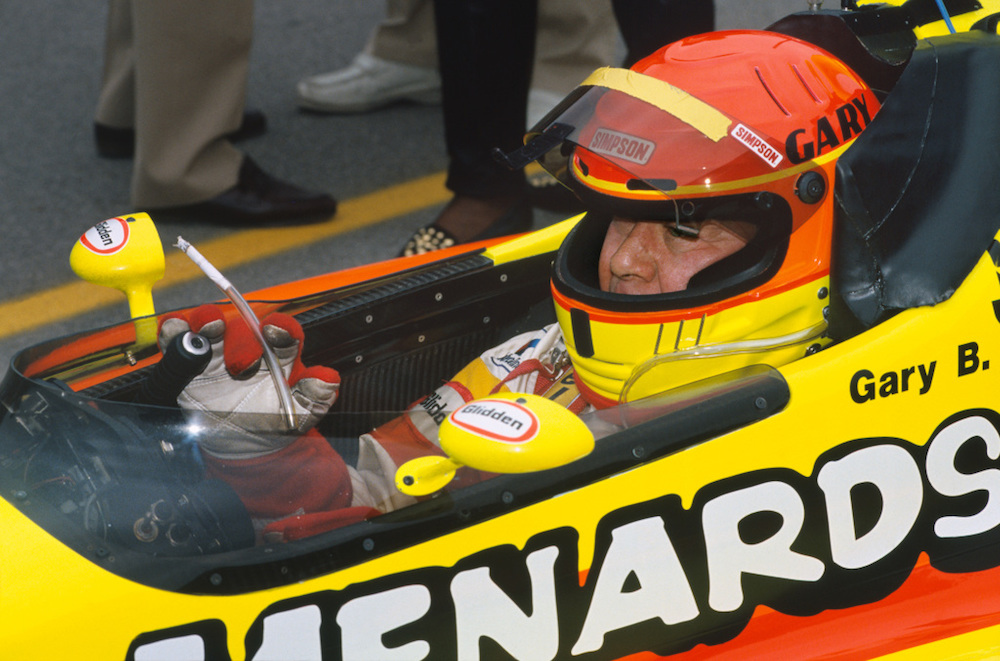
Gary Bettenhausen's sheer desire to race was in a league apart. Motorsport Images
Q: It seems Penske/Indy has a real opportunity to attract disgruntled NASCAR fans and become the premier racing show in the U.S. Is there any news about attracting manufactures like Ford and others, to Indy?
Tom, NYC
RM: Haven’t heard anything about Ferrari in a long time, and even though R.P. campaigns a Ford in NASCAR, that company’s CEO is on record as saying IndyCar isn’t worth the investment. Could The Captain change his mind?
Q: I have always been a fan of your unique style of reporting and intimate understanding of what goes on behind the scenes in IndyCar. I have been a fan since the late '50s (grew up in Brazil, IN) and have attended nearly 50 Indy 500s and numerous other IndyCar events. My question is related to the Road to Indy ladder system. It seems that very little has been done to commercialize the lower levels of open-wheel racing, which makes drivers (and their families) need to come up with several million dollars over a driver's career to get the experience and the exposure they need to have an opportunity with IndyCar. (NASCAR and sports cars seem to be able to get TV coverage for their lower level series).
I know it must be difficult, otherwise it would be happening, but getting television coverage for USF2000, Indy Pro 2000 and Indy Lights would create sponsor value and create some level of subsidy opportunity for the driver/ team. Is this just low priority for IndyCar or is there a reason that these series are not commercialized? Should there only be two levels in the ladder instead of three to increase car count and therefore more commercial interest? I am excited to know your insights!
Joe K., Dayton, OH
RM: Let’s be honest. IndyCar isn’t much of a draw on television, and having NBC is a Godsend, but the feeder system has even less appeal to a network unless you buy the time and pay for the production. Lights went from NBCSN to NBC Sports Gold and it would seem like the Road to Indy is pretty much made for cable streaming. But just about every series all over the world costs mom and dad a pretty penny -- from go-karts to trucks to sports cars to midgets to F2000.
Q: I have memories of watching the 500 as a kid and absolutely marveling at shots from a camera mounted in the track itself. I remember the cars were driving straight over the camera, and I have vague memories of a short pre-taped piece during one broadcast explaining this fancy new camera tech that made those shots possible: a miniature (for the time) TV camera built into a little spring loaded housing that would move out of the way as it was driven over.
Since this IndyCar season ended, I've been watching old races and realized that I don't think I've seen that camera angle since, and I started to wonder, "Did I make that whole thing up?" Totally possible. I was a technically-inclined kid with a big imagination, so maybe it's just an idea I had and wished was real. On the other hand I know Paul Page was always suggesting wild new camera ideas! I first watched the '87 race at age five and first went in '90, but still watched the broadcasts later, so it must have been a late '80s/early '90s innovation if it existed at all. Does this ring any bells? And if it was real, why not still use it?
Matt M.
RM: Nope, you’re not hallucinating. It started in 1991 on ESPN’s Thursday Night Thunder and was called the Tread Cam and won an Emmy long before NASCAR ‘invented’ the Gopher cam. It’s not used anymore because it’s tough to keep clean with sweepers and jet dryers.
Q: What can the average IndyCar fan do to encourage NBC Sports to rehire Jon Beekhuis in some capacity? He is one of greats of IndyCar broadcasting over the decades and it's such a shame for him to not be a visible part of the great product that IndyCar and NBC Sports is producing. His experience, intellect, and insight would only make it even better. Thanks for everything!
Tim Howell, Manchester, PA
RM: A couple of IndyCar fans started a petition a few weeks ago to bring Jan back, but that’s about the only approach to take.
Q: I'm confused about something which I hope you can explain. There were two qualifying heats for the 1973 California 500, but the results of these races don't seem to have had any bearing on the starting grid for the 500-mile race. Can you explain? I've searched the internet but can not find any explanation. Also, the combined number of cars in the heats is less than the number of cars that started the 500. Making things even more confusing is that the polesitter for the 500 was not even in either of the heats.
Doug Mayer
RM: The front row (Revson, Grant, Johncock) was locked in and didn’t have to run the qualifying races, which determined starting spots fourth through 18. McLaren didn’t have any backup cars and Revson wasn’t in the point chase so Johnny Rutherford won a heat in his McLaren while his teammate watched. And Wally Dallenbach won the race a week later.
Presented by:
Robin Miller
Robin Miller flunked out of Ball State after two quarters, but got a job stooging for Jim Hurtubise at the 1968 Indianapolis 500 when Herk's was the last roadster to ever make the race. He got hired at The Indianapolis Star a month later and talked his way into the sports department, where he began covering USAC and IndyCar racing. He got fired at The Star for being anti-Tony George, but ESPN hired him to write and do RPM2Nite. Then he went to SPEED and worked on WIND TUNNEL and SPEED REPORT. He started at RACER when SPEED folded, and went on to write for RACER.com and RACER magazine while also working for NBCSN on IndyCar telecasts.
Read Robin Miller's articles
Ford’s Formula 1 return builds momentum and results
Latest News
Comments
Comments are disabled until you accept Social Networking Cookies. Update cookie preferences
If the dialog doesn't appear, ad-blockers are often the cause; try disabling yours or see our Social Features Support.