Image by Richard James
INSIGHT: SRO America's big play
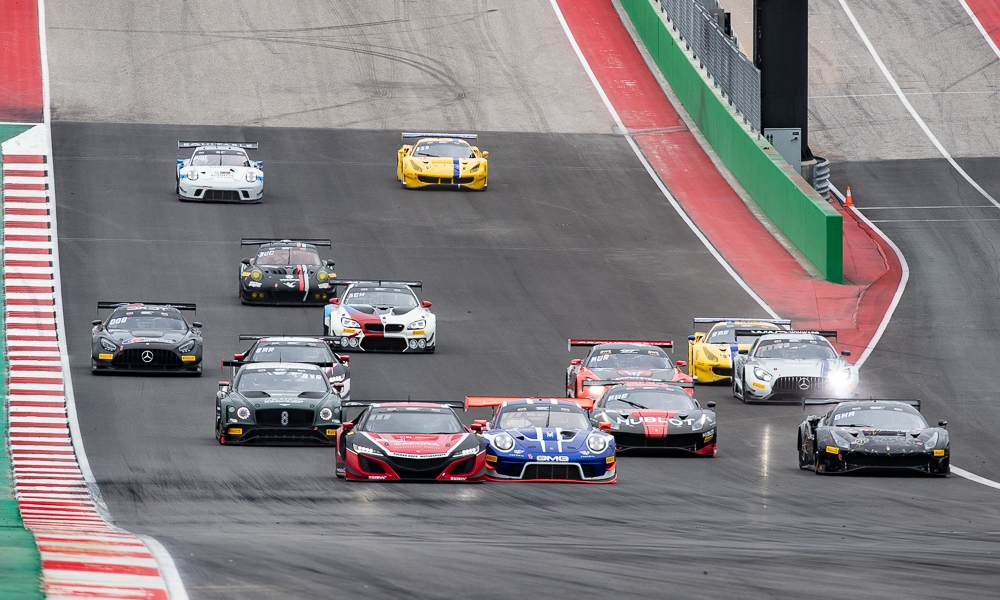
When the SRO Motorsports America trio of series opened their seasons at Circuit of The Americas in March, among the GT World Challenge America, Pirelli GT4 America and TC America series, there was an impressive 93 entries. The grids were full of recognized stars of sports car racing and much of the competition was fantastic.
But there were some obvious issues boiling up, and those have only been magnified in the months of shutdown for the COVID-19 pandemic. First, the entry for GT World Challenge America was 14 cars, down significantly from last year’s season-opener (23), but up from the 2019 closer at Las Vegas Motor Speedway (13) and equal to the SprintX season opener in 2018. Part of that drop from 2019 is due to the elimination of the all-Pro class, which accounted for six cars a year ago.
Now, after the recent months of uncertainty and economic turmoil, that number has dropped even further. As the series returns to racing this weekend at VIRginia International Raceway – sans spectators – there are a mere nine entries in GT World Challenge America. That’s a problem for a professional series.
Another issue is that, for the first time in decades, the series is without a title sponsor. Speedvision/SPEED Channel filled that role for many years until replaced by Pirelli. In 2019, unified under the SRO Motorsports GT World Challenge umbrella, Blancpain became the title sponsor. But the watch company ended its decade-long title sponsorship of SRO’s GT Championships at the end of 2019. However, Amazon Web Services and Crowdstrike have both increased their participation in the series, and SRO Motorsports America has new partnerships with Total and Rebellion.
In contrast to the car count in GTWCA, GT4 America SprintX has experienced good growth, perhaps simply speaking to the economic realities of GT racing. A GT4 car is not only roughly half as much as a GT3 car, it also costs less than half as much to run, especially considering the lack of refueling during a 60-minute GT4 races vs. the 90-minute format for GTWCA. And while the numbers have dipped a bit for VIR, they remain relatively strong.
Among the other bright spots are the continued success of the Touring Car and TCA classes – successful enough that SRO America is exporting the classes to Europe, beginning next year. Plus there’s the aforementioned star power, not just in GT3 but into GT4 as well. While Platinum-rated drivers such as defending champion Toni Vilander and past champion Patrick Long are barred from competition in GTWCA, there are still plenty of notable drivers, including Ryan Dalziel, Colin Braun, Jeroen Bleekemolen, Jeff Westphal, Kyle Marcelli and Trent Hindman. Star power in GT4 includes Bill Auberlen, Spencer Pumpelly, Michael Cooper, Jarett Andretti and a host of up-and-coming, future champions.
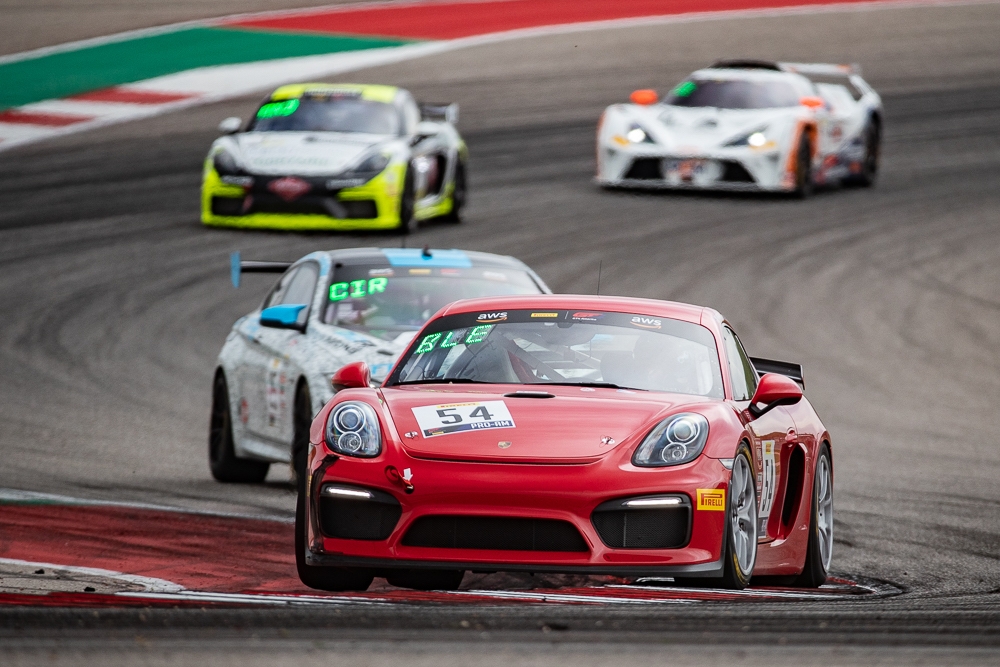
Star power on the grid reaches all the way through to the GT4 field. Image by Richard James
Clearly the series has some big positives, but also some negatives to consider. In March at COTA, RACER sat down with a few key players to see where the series are going and what it’s doing to shore up the GT side.
I’m happy with the overall grid,” said SRO Motorsports America President and CEO Greg Gill. “We really appreciate the growth, particularly in GT4, and I could not be more happy with that. I think the interesting thing when you look at what we’re not happy with, but not surprised by it either… when we eliminated the pro-pro category – and we did this reflexively, knowing that we were seeing K-PAX, two of the pro entries, going to Europe – we looked around and said, ’Is this a good way to distinguish GT3 in this country so they truly know what is a customer class?’
“Now we have 14 Pro-Am entries there, and I would have been much happier with about 16-18, that would have been a good number. Overall I’m pleased, and for the long haul, I believe Pro-Am is an excellent combination. It gives us an opportunity for people to still get the ability of a pro driver, but recognizing that GT3 racing was developed as customer racing. It has morphed, due to expenses and factory interest, into a pro racing class, and there’s a place for that, but now we will get back to our roots and pursue it as a customer racing class.”
Jim Haughey’s K-PAX Racing is taking its Bentleys to Europe to run in in the GT World Challenge Europe Endurance Cup. Haughey, who has had a team competing in World Challenge for 14 years and holds a very small interest in the series, said he was already considering that move before the decision was reached to eliminate the Pro category and move to Pro-Am, Silver and Am categories in the U.S. But he is also maintaining a program in GTWCA for Patrick Byrne and Guy Cosmo, because he likes the series. He also says that while the entry numbers at COTA were disappointing, he believes that elevating the customer racing aspect was worth a shot.
“You’ve got to experiment,” he said. “I understand that some of the people in Pro-Am may get a little discouraged having the Pro drivers in front of them and always coming in the back. I think it’s fair to try something new; let’s try to let some of the Pro-Am teams see if they can come up front, have more fun, compete for podiums and first places overall. We’ll see where that goes, but I think it’s worth trying.”
David Askew is one of those Bronze-rated, amateur drivers that the series is courting more than ever. The principal of DXDT Racing and owner of chemical company USALCO is very much the model the series has in mind – a successful businessman with the means to go GT3 racing and hire a pro as co-driver and coach, in this case Ryan Dalziel. DXDT also fields a sister Mercedes-AMG for Crowdstrike founder George Kurtz and his co-driver Colin Braun, and this year added a couple of TCR Honda Civic Type Rs to the mix as well.
“I think it’s a good place for Am drivers, and I’m a work in progress.” Askew explained. “I started racing when I was 51; I’m 56 now. I’ve only been I’m GT3 cars for... this is really kind of my third season. There are a lot of guys here that are on the same program as me. So it’s good racing for me. I also get to race around pros, and I get to race with a pro. Ultimately I want to find my way into other series. I need as much experience as I can get, and this is a good place to get it. It’s also a lot of bang for the buck– it’s got a shorter schedule, it’s more doable for guys like the that have a day job, and the budget is right.”
Askew, who previously raced sailboats and won many of the major ocean races in the world, does see a path to growing the field: The GT Sports Club, which will begin in this weekend at VIR. That series, which had a soft launch during the SRO Winter Invitational at The Thermal Club, is for Bronze drivers in GT2 and older GT3 cars.
“Lowering the cost will never hurt,” he said. “I think they’re doing the right thing with Sports Club and trying to attract guys who probably have been on the fence about whether or not they want to mount a season in SRO. It’s even less of a season, so it’s even more doable. It’s less of a budget, it’s sprint races, single driver. Once those guys and gals get out there and start racing, I think they’ll see what’s going on in the rest of the series and I think that will be a good starter to get people into the GT3 world in GT World Challenge America.”
Askew says he always dreamed of being a motorsports team owner, even before he started driving. For him, GTWCA is a great launching point for whatever the next step may be. The same is true for Shelby Blackstock as he tried to further his career. Blackstock is racing this season with IMSA GTD champ Trent Hindman in a Racers Edge Acura NSX. As the only car in the Silver category for two drivers with Silver FIA driver rankings – discussions as to a single-team class and the derogations of many silver drivers down to Bronze in order to run Pro-am are a topic for the future – they won both rounds in the opening weekend overall. It was Blackstock’s first race weekend in a GT3 car, having run some GT4 in SRO America and TCR in IMSA Michelin Pilot Challenge.
“I’m racing with Honda in the TCR car in IMSA, so it’s the next logical step,” Blackstock explains. “I want to be in GT3 cars and eventually compete on the world stage. This is the next stepping stone for me; Trent’s already on his way. We’re just trying to progress our careers.”
The desire of Askew and Blackstock to move to different things after their GT World Challenge experience begs the question: is it a minor league, a development series, for IMSA’s WeatherTech SportsCar Championship, the World Endurance Championship or even other SRO series such as GT World Challenge Europe and the Intercontinental GT Challenge? Perhaps for some, less so for others who enjoy the 90-minute format and shorter season that GTWCA offers. Either way, Gill is fine with that.
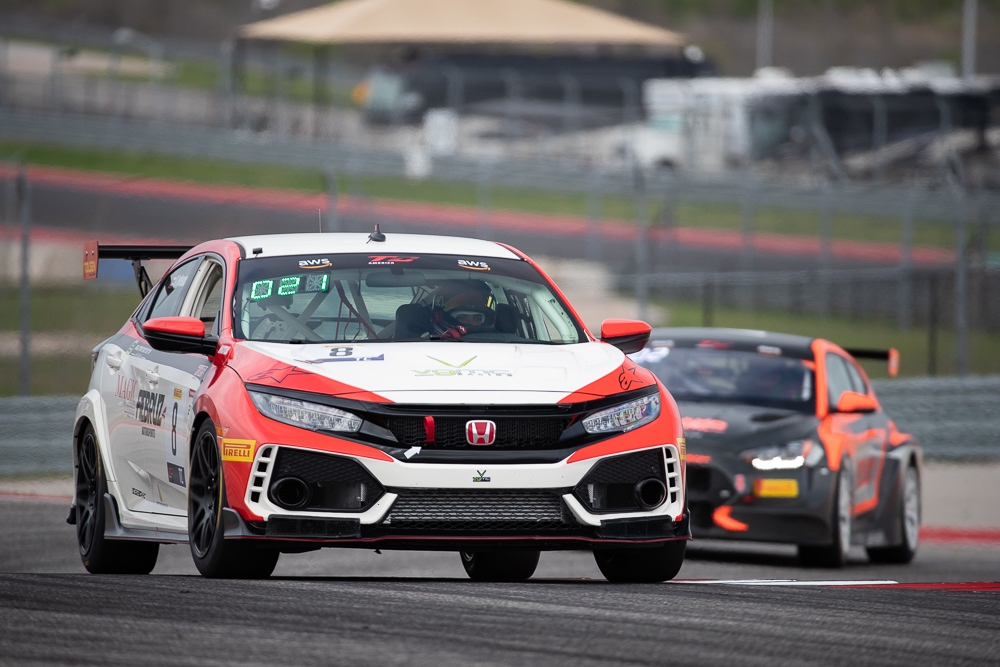
Grids are expected to remain consistent or even grow in TC, despite the effects of the pandemic. Image by Richard James
“World Challenge… five years ago, we’d say, ‘Oh, we’re just the same.’ That was a foolish notion,” Gill said. “There was never a time we were equal to IMSA. We were always different. Certainly just by cost alone – we were somewhere from 20 percent to half the cost. You can’t really compare the two areas. Yes, we added a driver and extended our race lengths, so we must certainly be like IMSA… No, and we’ve made it a point to discuss with the management at IMSA that we view ourselves very much as a path. If you want to go to Le Mans someday, you are almost certainly going to race in the U.S. with IMSA at some point. If you want to be part of a path, you’re going to spend some time in World Challenge.”
Given the crossover between machinery and drivers, along with the frequent movement back and forth with many teams, comparisons with IMSA are inevitable. The reality is that IMSA’s GTD class typically has around 18 cars outside of Daytona and Sebring (that dropped to 12 for IMSA’s return to racing at Daytona last weekend), so 14 isn’t far off; but IMSA’s GT3 class is the tail end of a four-class structure, so it appears larger. And a GT3 racer in GTWCA is racing for overall, not class victories, so ‘different’ is a good description. It’s another product for racers and teams to enjoy as it is, or hone their craft for 6, 12 or 24-hour races.
It will take some time to see if elevating the non-pro teams to be the top tier of GT World Challenge America racing is the right move or not, and whether GT Sports Club, which has a quartet of GT2 Porsches and a couple of GT3 cars for its first weekend at VIR, truly spurs some racers to take the leap. In the meantime, SRO Motorsports America has much to look forward to, such as the growth of GT Sports Club and all three series ending their seasons at Indianapolis Motor Speedway as part of the Intercontinental GT Challenge race weekend in October.
In fact, the series managers of GT4 (Jack Baldwin) and Touring Car (Jim Jordan) expected both to grow some during the season, global pandemic notwithstanding. In fact, TC America’s total numbers didn’t drop from COTA, and the TCR class actually grew despite stalwarts FCP Euro dropping its program after COTA. And growth may be in the cards for GT World Challenge from what is hopefully a low point, which would be a welcome change from its usual dwindling of entries as the season progresses. Gill said in March that there were a lot of teams sitting on the sidelines, taking a wait-and-see attitude. If those teams are looking for high bang-for-the-buck racing in top-flight machinery with pro drivers and good teams, they could do much worse.
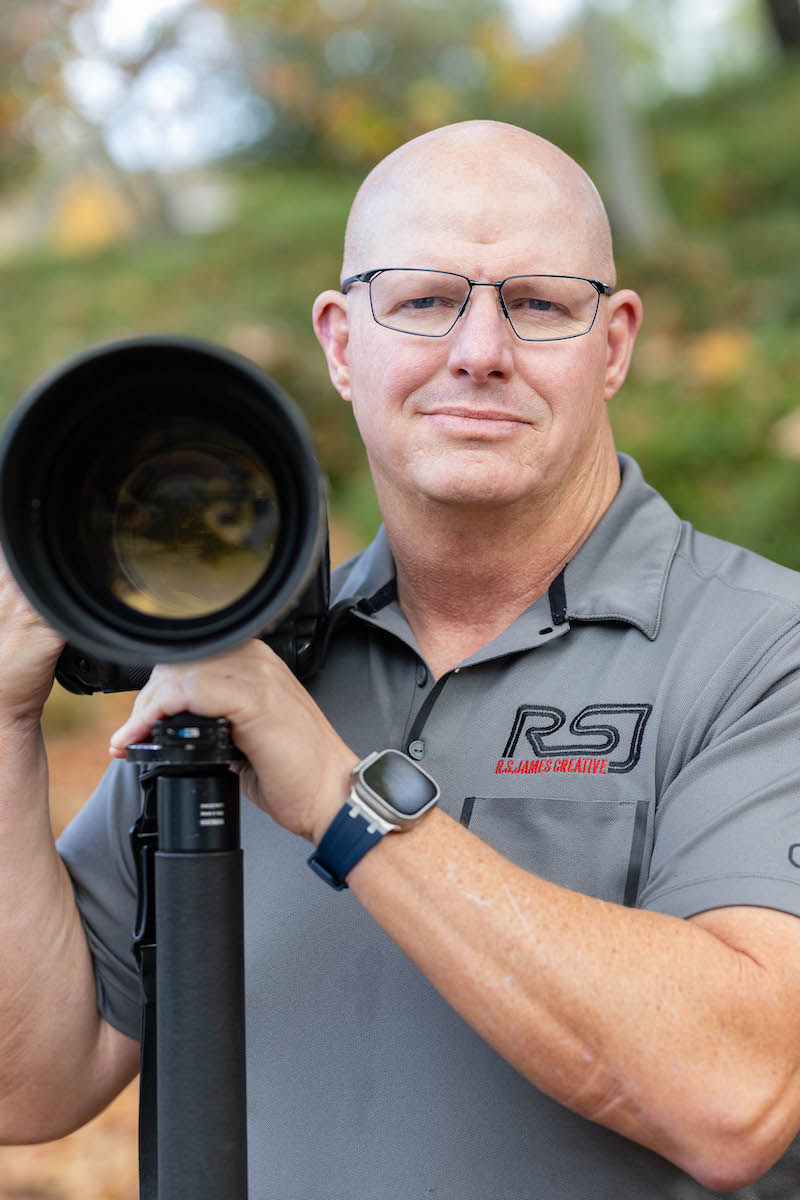
Richard S. James
Richard James is motorsports journalist living in Orange County, Calif, who has been involved in the sport to some degree for three decades. He covers primarily sports car racing as a writer and photographer, with occasional forays into off-road and other forms of racing. A former editor of the SCCA’s publication, SportsCar, he has a special love for the grass-roots side of the sport and participates as a driver in amateur road racing.
Read Richard S. James's articles
Latest News
Comments
Comments are disabled until you accept Social Networking Cookies. Update cookie preferences
If the dialog doesn't appear, ad-blockers are often the cause; try disabling yours or see our Social Features Support.