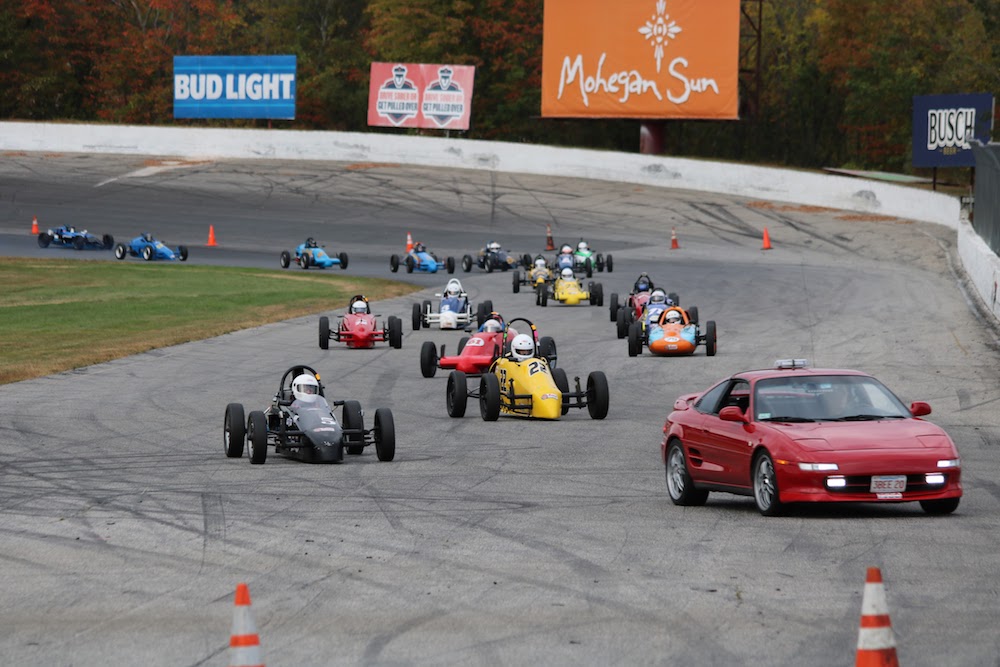
Image by Alison Turpin
Formula Vee: A legacy of momentum in SCCA's New England Region
The conversation between several New England Region members and myself began as a brainstorming session to see how we could recognize the passing of longtime SCCA member and Formula Vee racer Paul Faford who died in 2018. Chats via e-mail and phone wound hither and yon covering various initiatives in the Northeast, but, at every turn, the talk was not necessarily of Paul Faford; rather, it was of a legacy he inspired.
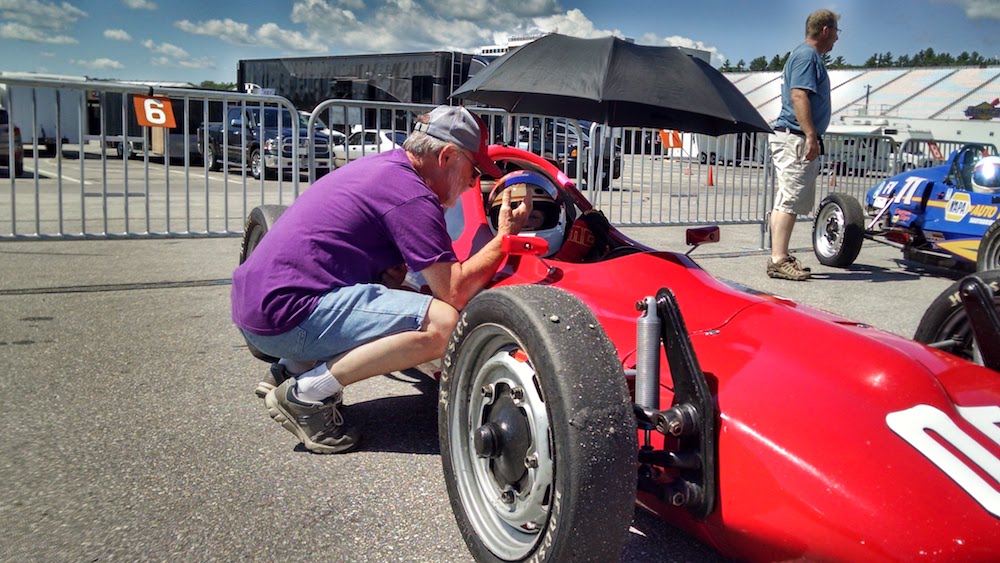
The late Paul Faford (kneeling). Image by Nick Galuardi
Soon, another story revealed itself -- a story larger than one person, which, in reality, is probably most fitting to Faford's memory. So, in the strangest of twists, the story you’re about to read is not about Paul Faford at all.
“I started working on oval cars around the time I was 14. I had a very dismal career driving a stock car, and a year later was in go-karts. Then, in 2001, I retired from any racing at all,” Jeff Adams explains, beginning the story of how he came to fully develop an idea that Paul Faford had come up with in the early 2000s. “Then, in 2014, they were putting the road course back into Thompson Speedway and a friend of mine decided to stop beating himself up in enduro motorcycle racing and get a Formula Vee.
“I was giving my friend a hand as crew, and that was the first year these guys were putting on the Open Wheel Driving Experience, so I jumped in a car with that program.”
The Open Wheel Driving Experience, or OWDE as it’s locally known, was a relatively new program and was, in part, the brainchild of Paul Faford. The idea was simple: Adapt SCCA’s Club Racing Experience (CRE) through the SCCA Time Trials program in order to allow Formula Vees, placing non-competition licensed drivers safely behind the wheel of a Vee in order to hook them on racing.
For Jeff, it worked like a charm.
“I fell in love with driving the car and with the group of guys racing these Vees,” Jeff admits. “Then, in October 2014, I bought my own.”
Jeff competed in New England Region’s 2015 SCCA Road Racing season, but he noticed that while there were regularly six to 12 Vee drivers per event, they were frequently different drivers.
“So, in the winter of 2015, Mike Hinkle and I went to Paul Faford, John Petillo, and Nick Galuardi with the idea of starting a Formula Vee series, which over the last four seasons has exploded,” Jeff says.
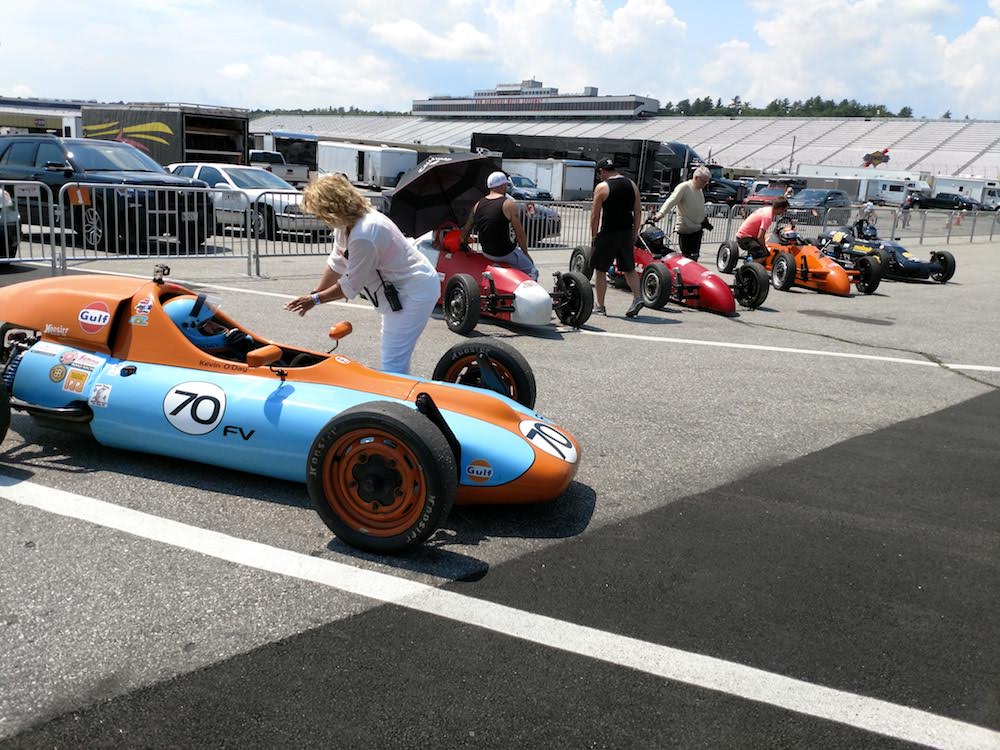
Over the last four years, interest in Formula Vee racing in New England has grown exponentially. Image by Nick Galuardi
The Northeast Formula Vee Racing series (check it out at nefv.org), didn’t happen overnight, as John, Nick, and Jeff are quick to point out. The concept came to life due to groundwork set in place many years earlier.
“If you step back to about 2003 or 2004, Paul Faford had come up with the idea of creating "Vee Fest" – all (area) Formula Vee racers coming to one event,” Nick explains. “For several years, we would have 20-some Vees coming to that one event. In a way, this was the start of the championship series from more than 10 years earlier – but Jeff took it a step further with the series.”
Following the creation of Vee Fest, a group of Formula Vee drivers had begun promoting New England Region racing. “Paul Faford had been racing for 30 years or more in New England,” John explains. “He’d really become the face of Formula Vee in the area -- he was the lead open-wheel instructor at SCCA Driver’s Schools, and he would sometimes call me up with ideas.”
One such idea was to check out local racing shows. “He and I would go to the local shows like Racing Expo,” says John. “Then we wondered if we could bring a racecar to one of the shows.”
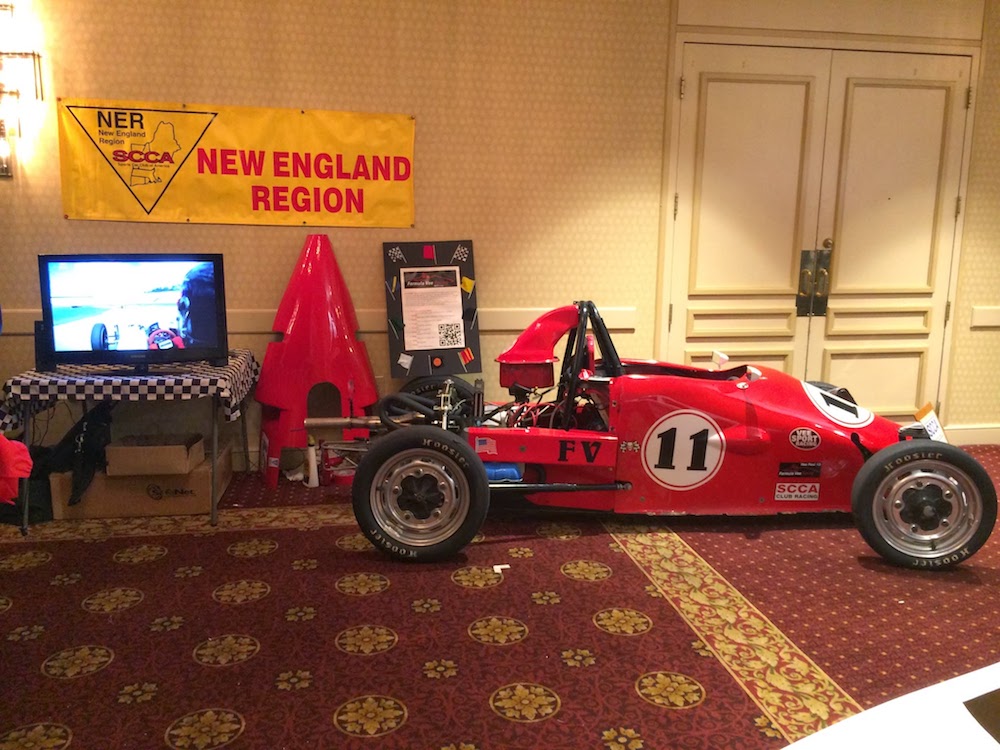
Promotion at local auto shows helped build momentum. Image by Nick Galuardi
They did, plus a website was made, business cards and pamphlets were printed, and the Vee racers went to work promoting their local SCCA race weekends.
“We did that for a few years and, by 2013 or 2014, we managed to get our Formula Vee race participation up from six to about 10 cars,” John explains.
“This was right around the time SCCA came up with the Club Racing Experience. But that’s not for open-wheel cars, so Paul said, ‘Do you think we could get the Region to go for an open-wheel version of that?’” says John.
“We knew that we needed to be careful if we were going to do this,” John laughs of their creation of the OWDE. “We were going to be putting people in our Vees, and we weren’t going to be charging them for using our cars for the event.”
“Ultimately, we had to trust the people we were putting in our cars for the OWDE because we were going to be racing our cars that weekend, too,” Nick explains of the event that takes place one weekend per year. “They also had to trust in us, too,” he adds.
Largely, Nick believes OWDE participants are drawn into the Formula Vee group because of that trust. “They see it as a class they can afford, and they also know they are going to have support from a whole community.”
“When they show up for the Open Wheel Driving Experience, we have a classroom and we also drive participants around the track in our street cars,” John says. “Then we go out and qualify for our races in our Vees. At that point, OWDE drivers see these aren’t rental cars – these are our racecars. Several sessions later the OWDE drivers are going out, so the whole Vee paddock area is involved in switching the cars around to get the new drivers to fit, and then we’re on the grid helping them out. They see us in action, and they also help crew our cars.”
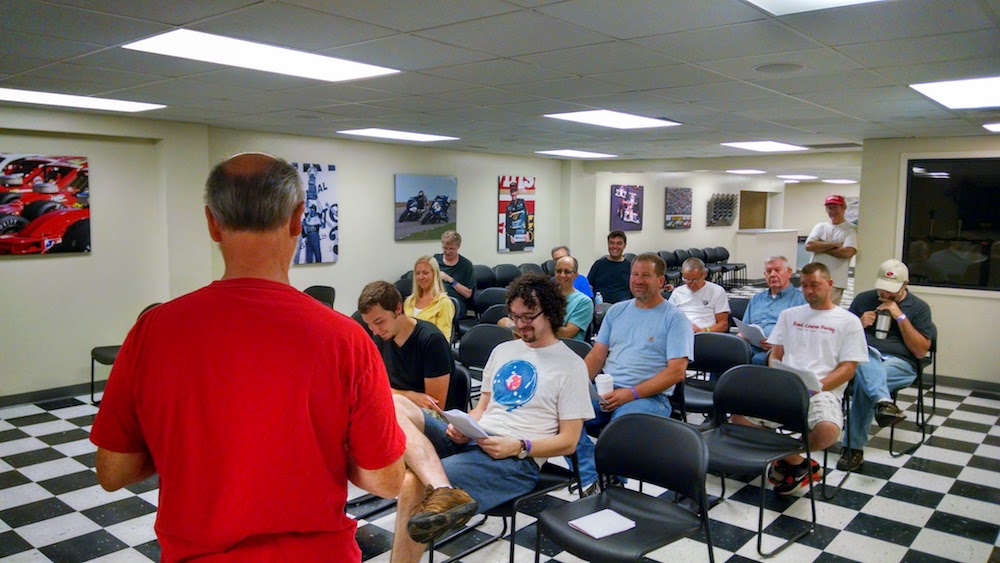
OWDE experience includes a classroom introduction and overview. Image by Nick Galuardi
“Those first couple of OWDE sessions are so memorable when you’re getting your feet wet,” Nick notes. “It’s that first euphoria. It’s great to see people appreciate something you love so much.”
Jeff emerged from that enthusiastic OWDE program with stars in his eyes, and he has returned that trust many times over.
“In the winter of 2015, I worked with these guys to develop an idea that the Formula Vee racers would go to five out of the eight New England Region events,” Jeff says of the creation of the Northeast Formula Vee Racing series, an idea born of similar cloth of Paul Faford’s Vee Fest, wherein Vee racers would cluster to build stronger fields.
“That winter, we reached out to some of the supporters we’d had over the years like Autowerks Engines, Vee Sport Racing, Quixote Racing, Hoosier Racing Tire, Penske Racing Shocks, eventually Advantage Motorsports, Revolution Formula Cars and more, and they gave us goodies to give to the racers in the series.”
Like the OWDE, the goal was to build enjoyable events, creating camaraderie between the Formula Vee racers.
“Keeping it fun, all of our contingency prizes are drawn out of a hat, starting with the best prize and working our way down,” Jeff explains. “That got people even more interested because who doesn’t like to get stuff? It sweetens the pot.”
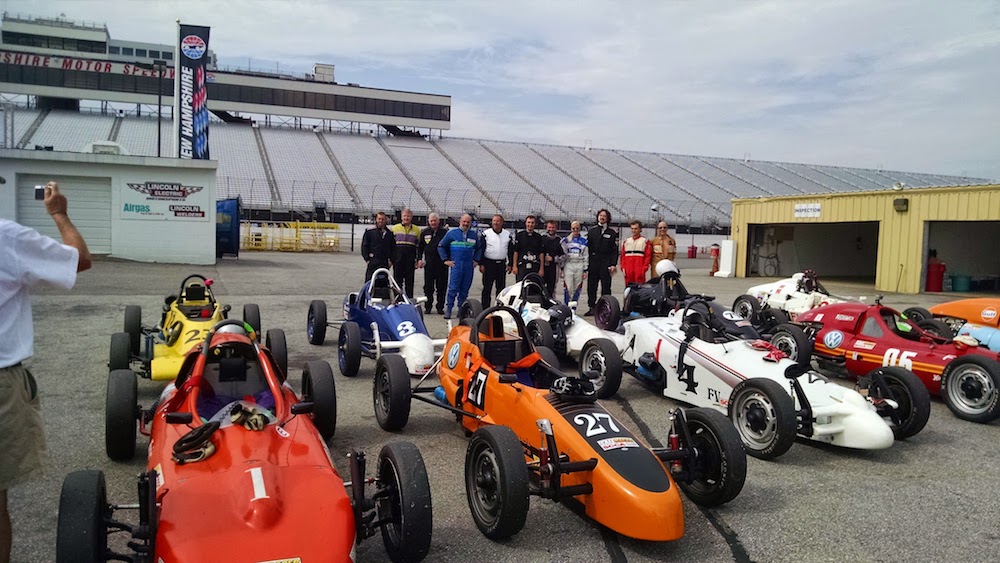
Image by Nick Galuardi
“The contingency offering also gets everybody together, because when you give out prizes, it’s not locked to positions one, two, and three,” says John. “When you pull names out of the hat, it’s one of those things where everyone goes home happy – you don’t have to be a frontrunner to win something. That keeps everyone together and interested. Everyone pits together and it’s like a huge family.”
“We also started adding an additional $25 to the entry fee so we could give away better trophies,” Jeff adds. “And, when the racing’s done, usually someone has a campfire going and there are 15 of us around the fire telling racing stories. It truly has become a huge family.”
The clustered competition into fewer race weekends also attracted more drivers. “What’s nice with a big racing field is you always have someone to race against,” says John, adding, “and that applies to both ends of the field, because it’s not nice to be the only fast guy.”
In 2016, New England Region Formula Vee race fields averaged 10 cars per event. With the Northeast Formula Vee Racing series roaring, 2017 saw participation jump to 14 cars per race weekend. Come 2019, that per-race average was an astounding 27 cars.
Nick, John, and Jeff are quick to point out that while the Formula Vee racing series really helped, no solitary element led to success. From Vee Fest to show promotions to a website and social media pushes, everything worked to create a winning formula. “It’s all of the pieces coming together,” says Nick.
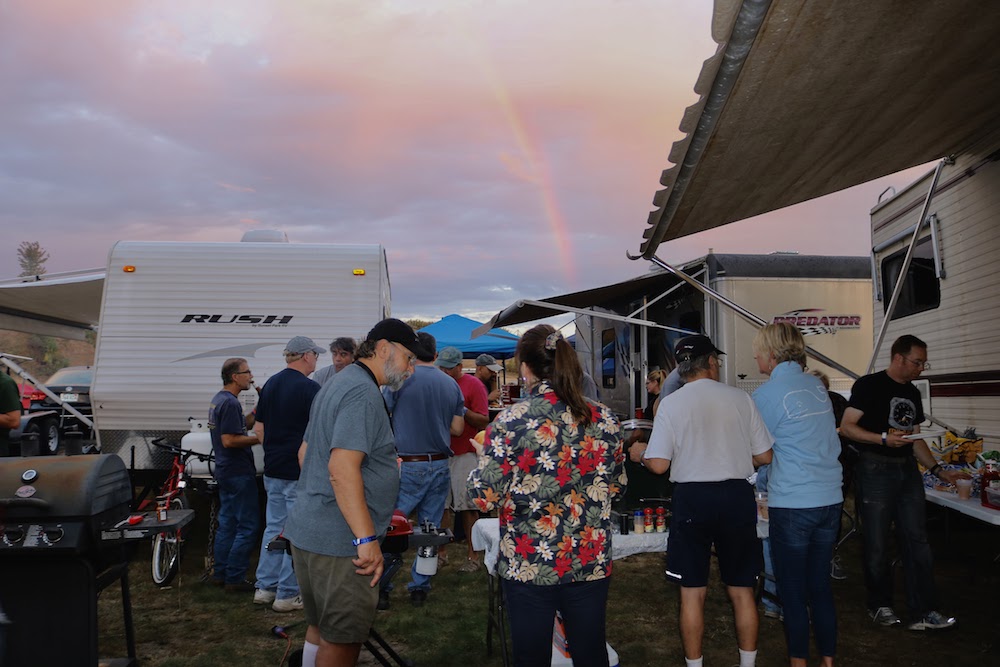
The current success of FV racing in New England is built on camaraderie, a major ingredient in the late Paul Faford's legacy. Image by Alison Turpin
Truly, one of those crucial pieces was Paul Faford. “He was one of the most trusted people,” John recalls of their friend who passed away roughly two years ago. “You knew he was in it because he loved it, and he was always trying to find ways to make things better through a calculated, methodical method.
“The August New England Region racing weekend is dedicated to him,” John continues. “That event features the OWDE and Vee Fest – both of which were his idea. From now on, that weekend in August will be the Paul Faford Memorial Event.”
In 2019, that event marked New England Region’s largest Formula Vee turnout of the season. “Paul meant a lot to a lot of people – drivers who have retired even come back for that race,” John notes.
Indeed, this is the story about the reinvigoration of Formula Vee racing SCCA’s New England Region area – but none of it would have happened without Paul Faford.
This story originally appeared in the July 2020 issue of SportsCar magazine, the official publication of the Sports Car Club of America. A print and digital subscription is just one of the many benefits of SCCA membership.

Philip Royle
Read Philip Royle's articles
Latest News
_.jpg?environment=live)
Comments
Comments are disabled until you accept Social Networking Cookies. Update cookie preferences
If the dialog doesn't appear, ad-blockers are often the cause; try disabling yours or see our Social Features Support.