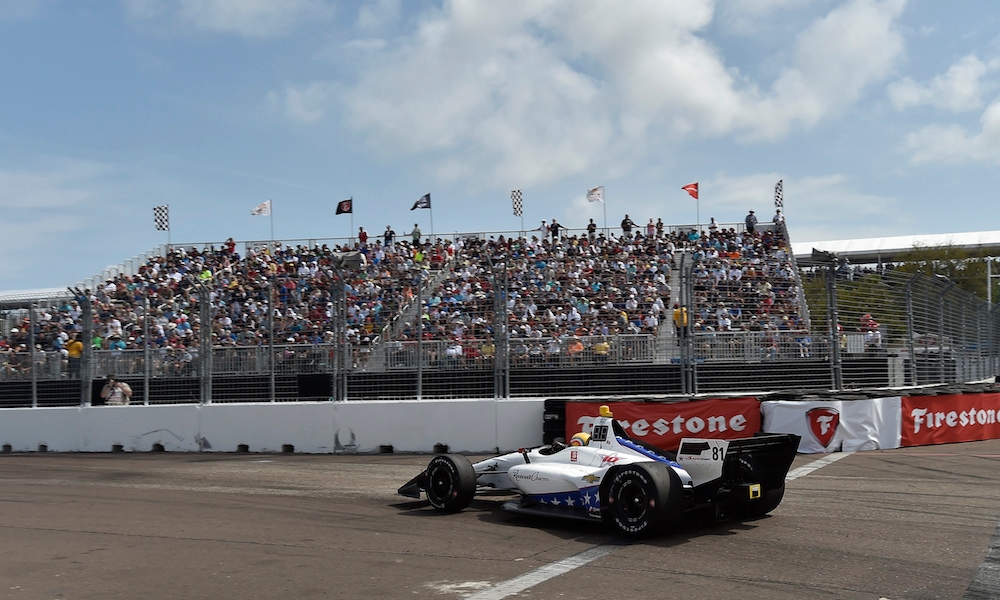
Image by LePage/LAT
St Pete, Sebring weighing impact of Europe travel ban
In response to the COVID-19 virus outbreak, a new travel ban on European residents entering the United States for the next 30 days is expected to have wide-ranging ramifications for a number of major motor racing events scheduled to take place starting this weekend. Announced Wednesday night in an address by President Donald Trump, the ban takes effect on Friday, and does not include England.
The NTT IndyCar Series, all three steps of the Road to Indy, and other support series take to the streets of St. Petersburg on Friday morning, and with all major participants expected to arrive on the east coast of Florida by Thursday at the latest, those hailing from European ports of departure should be able to arrive in the U.S. prior to the ban.
But with the month-long exclusion in place, those within the greater IndyCar community headed to St. Petersburg from Europe could be forced to stay within the U.S in the weeks following the race.
Reached Wednesday night, an IndyCar spokesperson told RACER the Firestone Grand Pix of St. Petersburg is going forward as planned. Support staff for Italian chassis supplier Dallara are said to be unaffected by the ban, as the company's traveling spare parts and engineering group is based in Speedway, Indiana.
The following weekend’s Super Sebring event, where IMSA’s WeatherTech SportsCar Championship and the European FIA World Endurance Championship share the bill in Central Florida, might not be as fortunate.
Featuring a diverse array of drivers, crew, manufacturers, media, and fans from Europe, IMSA’s paddock is known for its international roots. Although the vast majority of IMSA’s Sebring attendees are from the U.S., a number of drivers fly from Europe for each race, along with technical staff from the dozen-plus auto manufacturers who populate the series. Between IMSA and the WEC, IMSA would be the least affected by the ban, but its teams would not be completely unaffected by the potential loss of personnel.
The FIA WEC is largely comprised of European participants, leaving the Paris, France-based series to consider the viability of its upcoming visit to the U.S., and whether the majority of its globetrotting contingent would be capable of leaving in a matter of hours to arrive Thursday night – before the ban takes effect – in order to participate in next week’s race.
“I start with engine support; are European teams going to be able to start their engines without their engine techs there from some of the countries banned after Friday?” DragonSpeed team owner Elton Julian, who competes in IndyCar, IMSA, and the WEC told RACER.
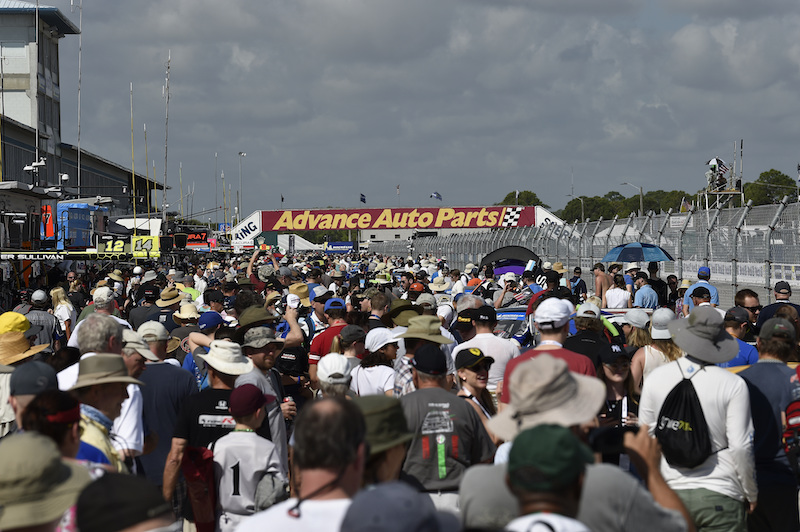
For the Super Sebring weekend, the implications of the Europe travel ban could be significant. Image by LePage/LAT
“There’s a bunch of people – it's not just the drivers and crew, but the main people responsible for making the cars go, or running the race, or mounting all of the tires – coming from Europe who probably aren’t going to be able to drop everything in their lives, buy a crazy-expensive plane ticket, and get here tomorrow to sit around for almost a week until Sebring starts. It’s almost impossible to expect everyone to respond in time for something unexpected like this.”
Like most teams in motor racing, DragonSpeed survives by representing sponsors at events, and by providing cars for paying drivers to use. The thought of having the travel ban extended beyond 30 days is worrisome for Julian.
“Resource wise, I don’t know if a smaller team like ours survives this if it lasts six months,” he said. “We earn money by being on track. This can become a massive killer if it wipes out our season.”
Presented by:

Marshall Pruett
The 2026 season marks Marshall Pruett's 40th year working in the sport. In his role today for RACER, Pruett covers open-wheel and sports car racing as a writer, reporter, photographer, and filmmaker. In his previous career, he served as a mechanic, engineer, and team manager in a variety of series, including IndyCar, IMSA, and World Challenge.
Read Marshall Pruett's articles
Latest News


Comments
Comments are disabled until you accept Social Networking Cookies. Update cookie preferences
If the dialog doesn't appear, ad-blockers are often the cause; try disabling yours or see our Social Features Support.