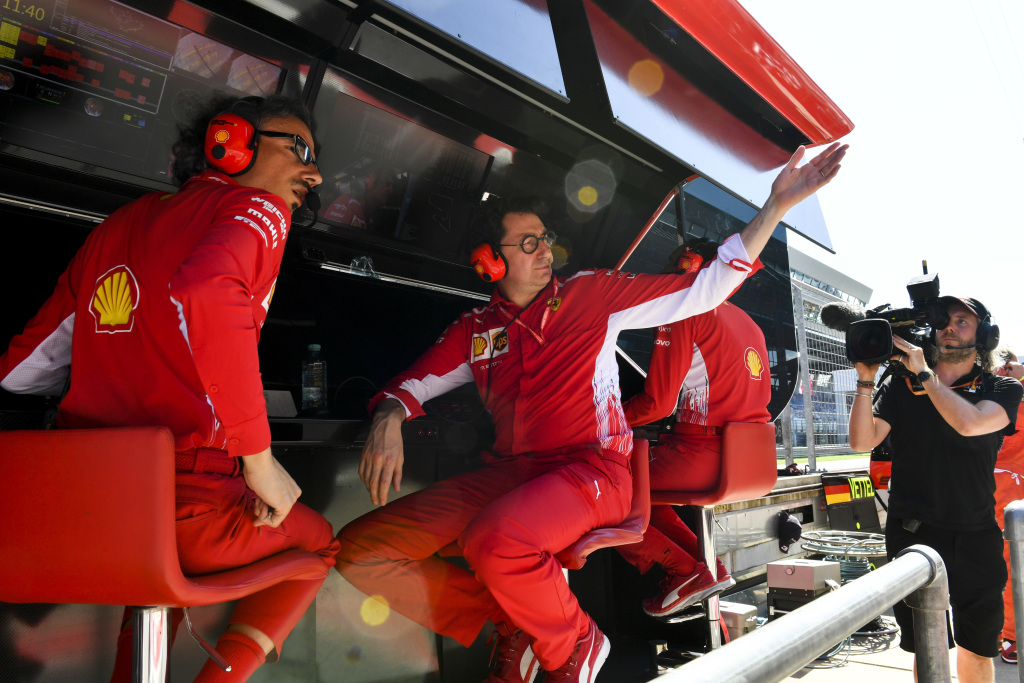
Mark Sutton/Sutton Images/LAT
Ferrari fuel was checked 10 times in 2019 - Binotto
Ferrari team principal Mattia Binotto says the fuel in its car was checked on 10 occasions during the 2019 season before the infringement in the Abu Dhabi Grand Prix.
Charles Leclerc’s car was found to have 4.88kg more fuel than Ferrari had declared was in it ahead of Sunday’s race at the Yas Marina Circuit, leading to an investigation that resulted in a €50,000 ($56,000) fine after the checkered flag. While Ferrari’s power unit usage -- including accusations of potential fuel flow monitoring interference -- has come under increased scrutiny in the latter part of the season, Binotto says to have the fuel amount checked is nothing new.
“You have a quantity of fuel to be consumed in the race -- 110kg -- which you have got direct measurements through the fuel flow meter or through the injectors, or eventually through the weighing of the car,” Binotto said. “You weigh it at the start of the race and you weigh it at the end, you do the delta and you will know how much you have consumed.
“To do that, you declare a certain quantity of fuel at the start of the race, that you are filling in the car. The FIA may sometimes check what has been declared by simply weighing the car and somehow try to verify if you have concurrence. This year we have been checked at least 10 times. It’s not the first time.”
Binotto also hinted there had been an error with the FIA’s readings, believing there was no discrepancy between the declared fuel and actual weight. Despite that view, the fine was handed out due to Ferrari being found to be in breach of the International Sporting Code because a technical directive had outlined the fuel declaration requirements.
With the drivers being told to use conservative engine modes at times during Sunday’s race, Binotto also explained such practice was normal given the high mileage on the power units at the end of the season.
“We had an engine failure in Austin with Charles and we know in terms of mileage we could have been at risk. I think we had to manage it to save the tires as well -- at least on the hard to attempt a one-stop race, which was not the case. So I think overall it was simply the reason to manage engines, tires and also the race.”
Chris Medland
While studying Sports Journalism at the University of Central Lancashire, Chris managed to talk his way into working at the British Grand Prix in 2008 and was retained for three years before joining ESPN F1 as Assistant Editor. After three further years at ESPN, a spell as F1 Editor at Crash Media Group was followed by the major task of launching F1i.com’s English-language website and running it as Editor. Present at every race since the start of 2014, he has continued building his freelance portfolio, working with international titles. As well as writing for RACER, his broadcast work includes television appearances on F1 TV and as a presenter and reporter on North America's live radio coverage on SiriusXM.
Read Chris Medland's articles
Latest News


Comments
Comments are disabled until you accept Social Networking Cookies. Update cookie preferences
If the dialog doesn't appear, ad-blockers are often the cause; try disabling yours or see our Social Features Support.