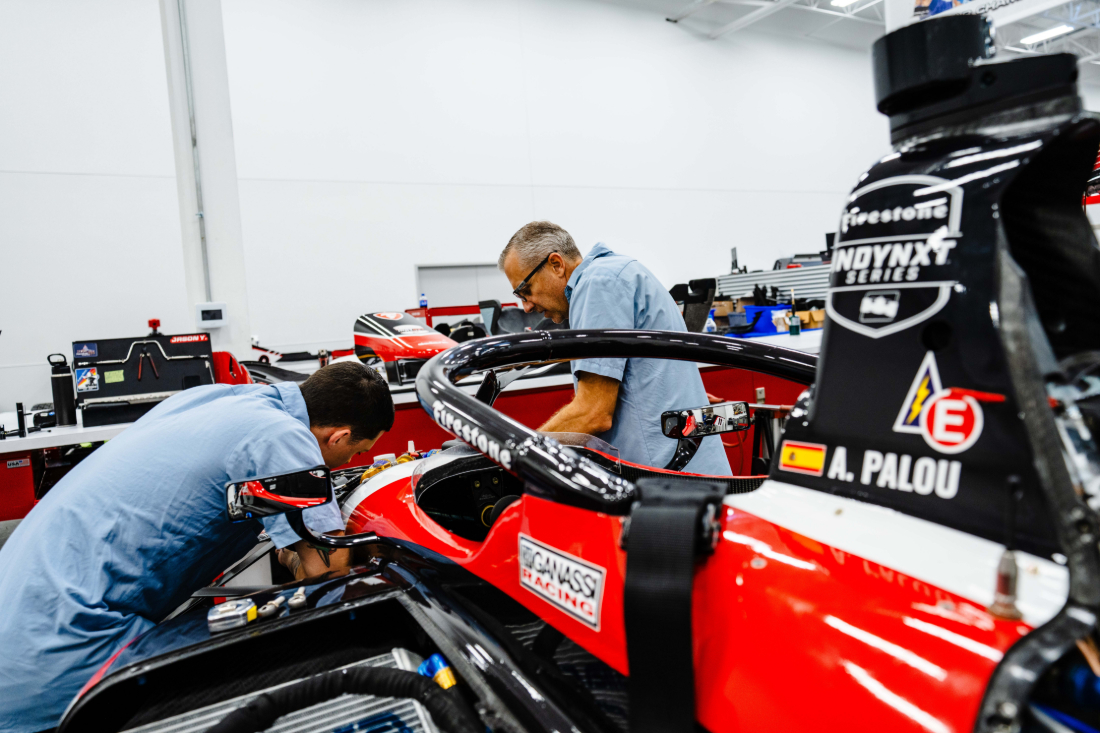
Road to Indy adopts frontal protection device
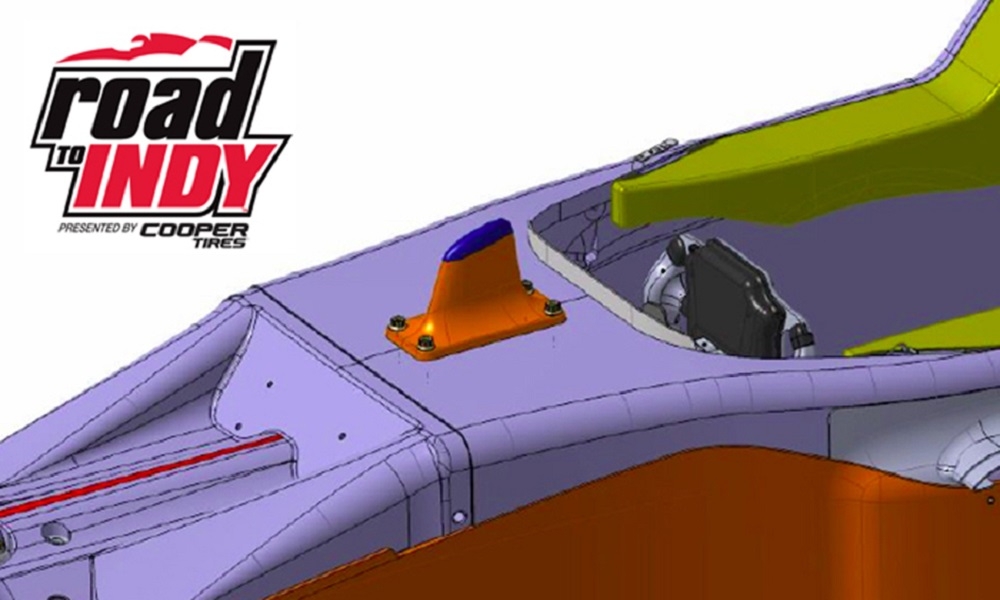
The Road to Indy will mandate the use of its first enhanced cockpit safety device ahead of the 2020 Indy Lights, Indy Pro 2000, and USF2000 seasons. Set in motion by Anderson Promotions, the organization that runs the three-tier ladder system in support of the NTT IndyCar Series, the new Cockpit Frontal Protection (CFP) unit has been mandated for the Dallara IL-15 Indy Lights chassis and the Tatuus-built USF-17 and PM-18 model, which uses a common tub.
Modeled after IndyCar’s Advanced Frontal Protection device, the CFP is designed to deflect low-flying debris that would otherwise strike a driver’s helmet without interruption.
“This is expected to be the initial phase of cockpit safety updates,” Dan Andersen said. “We are closely following the evolution of the IndyCar aeroscreen, which is expected to drive the direction for the future. Safety is the highest priority and we appreciate both Dallara and Tatuus’ willingness to help us advance in this area.”
Although the CFP, like the AFP, offers an increase in cockpit protection, its ability to deflect debris is subject to the angle and trajectory of items headed towards a driver. The move to a wraparound aeroscreen, which IndyCar has chosen for its cars in 2020, would be the next consideration for the Road to Indy.

Marshall Pruett
The 2026 season marks Marshall Pruett's 40th year working in the sport. In his role today for RACER, Pruett covers open-wheel and sports car racing as a writer, reporter, photographer, and filmmaker. In his previous career, he served as a mechanic, engineer, and team manager in a variety of series, including IndyCar, IMSA, and World Challenge.
Read Marshall Pruett's articles
Latest News
Comments
Comments are disabled until you accept Social Networking Cookies. Update cookie preferences
If the dialog doesn't appear, ad-blockers are often the cause; try disabling yours or see our Social Features Support.