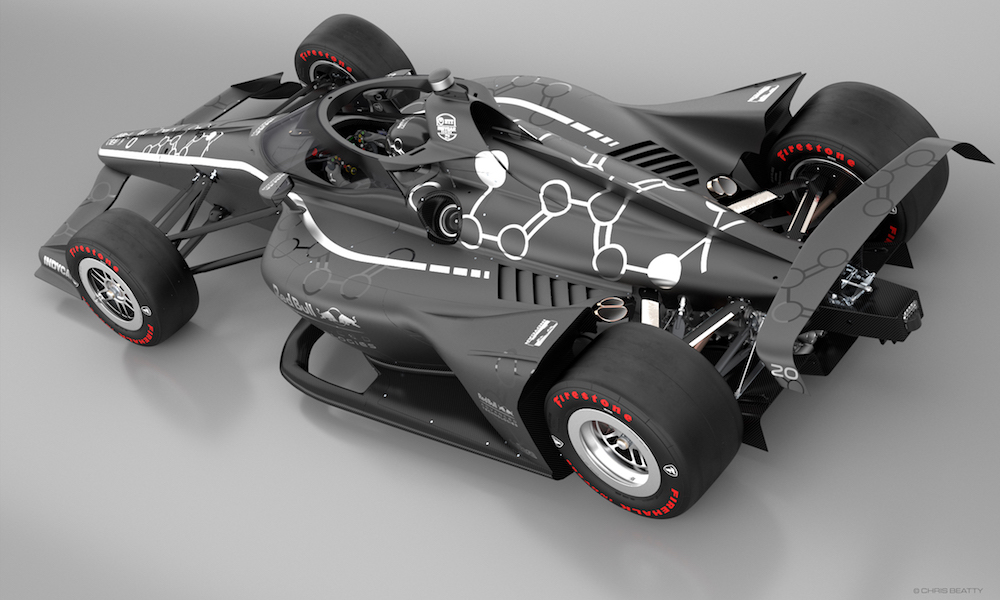
Images by IndyCar
PRUETT: Inside the development of IndyCar's Aeroscreen
IndyCar president Jay Frye sought the input of Mario Andretti, Dario Franchitti, and Rick Mears to get their thoughts on the new Red Bull Advanced Technologies Aeroscreen unveiled today at the Speedway.
In individual meetings, the trio of legends -- men who’ve won eight Indianapolis 500s and championships aplenty since the 1960s -- gave their thoughts on its looks, its function, and most importantly, its ability to take driver safety to stratospheric heights.
Franchitti, whose body endured fractures and breaks over 20 years of racing, and whose brain reached its limit to recover from concussions, earned his opinions through pain. The Scot has also dealt with crushing emotional loss, earned as well, as IndyCar’s need for an Aeroscreen grew more certain with each goodbye.
A best friend. A little brother. A big brother.
"First of all, I think it's a great addition to the safety of the current IndyCar," he said. "I say that as someone who has strapped themselves in for a long time into an IndyCar and someone who lost three good friends to injuries that might have been prevented.
“Safety moves on. That's the thing. I've certainly benefited from it a lot. Advances as well as the SAFER barrier, the HANS device, better helmet technology, accelerometers in the ears, there's been this ongoing seat technology. There's constant developments. I go back to Greg [Moore], I go back to Dan [Wheldon], go back to Justin [Wilson]. If we'd had the new Aeroscreen, if we'd have had that combined with everything they've done to integrate it into the top [roll hoop], those guys might still be here.”
"I go back to Greg [Moore], I go back to Dan [Wheldon], go back to Justin [Wilson]. If we'd had the new Aeroscreen, if we'd have had that combined with everything they've done to integrate it into the top [roll hoop], those guys might still be here.” – Dario Franchitti
Some will pan RBAT’s Aeroscreen for the change it brings to IndyCar.
“I don't care what it looks like at that point,” Franchitti said. “I happen to think it looks good, but I don't care what it looks like, if that was the trade-off that you need to have to still those friends around. And IndyCar is never going to be fully safe. And everybody accepts that. But if you have the opportunity to make it safer, you have to do it.”
The path to Aeroscreen 2.0 was a helpful one. Limitations in the original concept developed by RBAT, created as Formula 1 sought a new cockpit protection solution for 2018, led to IndyCar’s upcoming design.
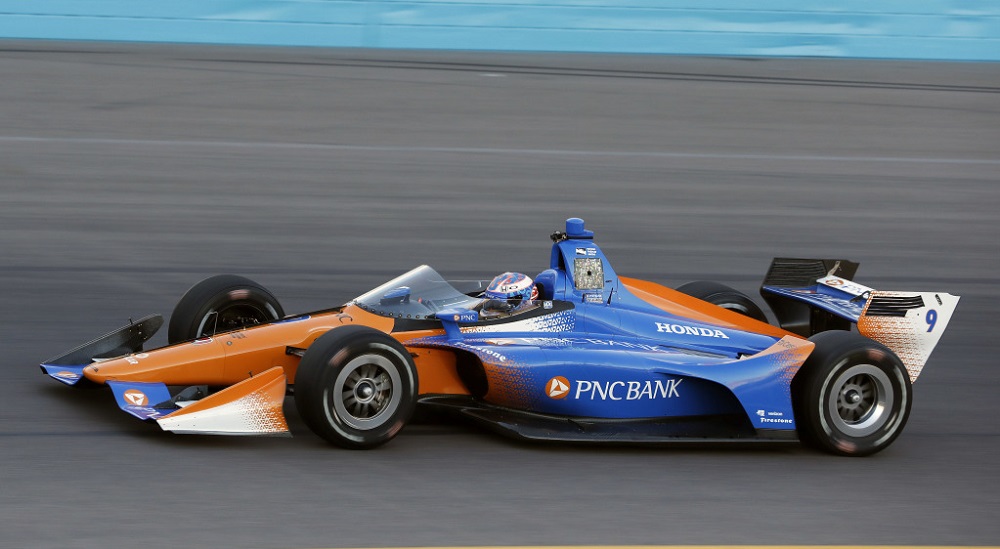
Scott Dixon tests the original IndyCar windscreen at Phoenix. Image by Phillip Abbott/LAT)
Tested by Scott Dixon on the one-mile Phoenix oval and Josef Newgarden at the Indianapolis Motor Speedway, IndyCar’s prototype relied on the fortitude of the Aeroscreen material, a product named Opticor made by PPG, to withstand impacts on its own.
Borrowed from jet plane and jet fighter applications, the thick Opticor material was bolted to a custom bottom frame that mounted to IndyCar’s spec Dallara DW12 chassis. Unlike the airplane installations, which offered 360-degree window frame mounting for the Opticor, IndyCar’s prototype suffered in ballistic testing. Lacking a frame at the top of the material, heavy objects fired at the prototype caused the Opticor to bend, warp, and reach its elastic limits before ultimately experiencing catastrophic failure.
Befitting its name, the prototype, which gave IndyCar gigabytes of important information to process, was shelved as a comprehensive re-think was performed. In the interim, the series commissioned a stop-gap cockpit safety enhancement, the Advanced Frontal Protection device, which required retrofitting dozens of DW12s with new structural mounting points above the chassis bulkhead at the leading edge of the cockpit.
Where the Aeroscreen 2.0 makes use of the prototype’s shortcomings is with the addition of a new titanium superstructure that mounts where the current AFP is attached, and branches upward, in a nearly identical fashion to F1’s Halo device, and gives the Aeroscreen material the rigid upper frame it was lacking.
Although PPG was not named as the Aeroscreen’s material provider – nor were any other companies – the primary RBAT design was made to turn Aeroscreen 2.0 into a protective device that does not rely on the see-through material to carry the brunt of an impact in isolation.
The new titanium superstructure, which sits behind the screen at the front of the device, and wraps around the cockpit -- above the driver’s helmet -- on its way to being anchored at the primary roll hoop’s mounting points, is the heart of what makes Aeroscreen 2.0 a game-changer for IndyCar.
With a new capability of handling obscene forces fed into the three load-bearing chassis fixtures, RBAT and IndyCar have achieved something special by fashioning a halo device covered in an aeroscreen. Girded by the strength of titanium, the protective system wraps the superstructure with material that the AFP or Halo, due to the exposed nature of a driver’s helmet, would not be capable of stopping.
Credit the relationship formed between Frye, the former head of Red Bull’s NASCAR team, and Red Bull F1 boss Christian Horner, for bringing the Aeroscreen to IndyCar.
“Well obviously Jay, and you know, we met during his time in NASCAR running the Red Bull entry, and obviously he has gone on subsequently to running a whole IndyCar program now,” Horner said.
“We just kept in touch with a few of the drivers and other bits and pieces and then he came to me with saying that they wanted to do an aeroscreen and obviously this was something that we developed in Formula 1 so it made a lot of sense to put the two groups together. I'm sure Formula 1 will keep a close eye on it as well, and see how it performs aesthetically as well as functionally and from a safety point of view.”
With one follow-up call to Red Bull sporting director Jonathan Wheatley, the project was approved. With Tino Belli, a renowned open-wheel chassis designer and IndyCar’s director of aerodynamic development inserted into the Aeroscreen development loop, the march toward 2020’s 2.0 version in concert with RBAT came into focus.
“I happened to be going to England for Christmas, and they asked me to go up and visit them; we had a very open conversation, and they were a very open book to us. They wanted to work with IndyCar on developing the screen,” he said. “Of course, Formula 1 went in a slightly different direction. They went in the direction of the Halo, and we went in the direction of the windscreen, let's say, without the top frame. Just the windscreen on its own.
“The windscreen on its own didn't quite work out the way we wanted. So the track test, it went well. It meant it was optically good. We knew there were going to be a few issues, which is head forces – which we found out in CFD and was backed up by Josef's run here at the Speedway last year – and the other one is ventilation. But when we finally did the ballistic tests on the optical screen, it didn't do well enough.”
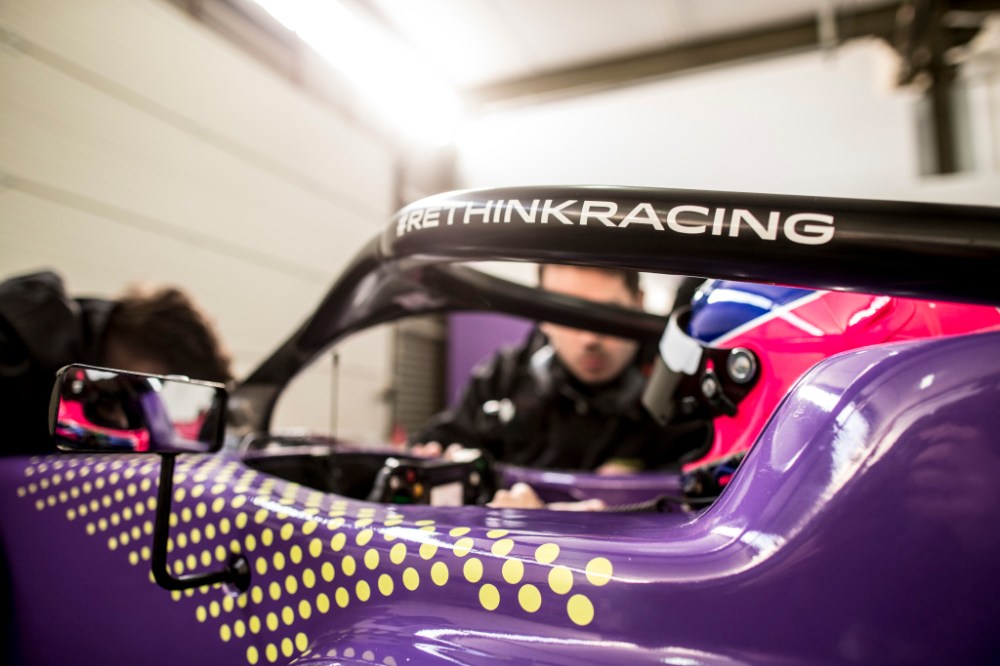
FIA Halo, seen here on a W Series F3 car, was considered for IndyCar use but ultimately rejected.
With IndyCar’s aeroscreen prototype parked, its chassis supplier floated an alternative.
“One of the options was to, and this was Dallara's suggestion, just to go to the regular FIA Halo,” Belli continued. “So we tested the Halo for visuals on the Dallara simulator, because there was concern that on the high banked speedways, the Halo would obscure the vision. So we ran with Scott Dixon and on the Dallara simulator with a standard FIA Halo, and to our surprise, it didn't obscure any visions in any way. But when we came to do the stress test on the tub, this current tub couldn't sustain the loads of the FIA Halo in the back corner of the cockpit opening, which made us revisit some of our other thoughts.”
Affixed to every custom F1 chassis atop the cockpit’s sidewalls, the Halo proved unsuitable for mounting in the same manner on the DW12, which was never designed to accept crushing vertical loads in those locations.
“So we then said, ‘Hey, you know, where are the strong points on the tub,’ and we said, ‘Well, the base of the roll hoop is strong,’ and later, we put in the strong point for the AFP on the front, and so we said, ‘Well, why don't we make our windscreen with a top frame mount to those points?’ Belli said.
“So we partnered up with Red Bull to try and make a version of their screen fixed to the Dallara chassis. This screen incorporates a top frame so that it can take the big hits, like from a wheel assembly or a nose. Plus, we have the windscreen, which in our type of racing we need, because our racing is very proximal.
"We didn't like the halo-only solution because debris could be deflected into the torso of the driver, and that would be catastrophic. That's a completely unprotected part of the driver." – Tino Belli
Marrying the Aeroscreen to the Halo met the safety objectives outlined by Frye’s team.
“You take Iowa, [a] 17-second lap, 24 cars,” Belli said. “Even if we have a parade, we're basically half a second between cars. So when we have a crash with no runoff area on an oval, and a 175-mile-an-hour impact with a debris field that we can create, we knew that we needed a windshield as well, because, yes, big objects hitting the driver are not good, but small objects hitting the driver on the helmet is also likely to knock the driver out or give him a serious injury at 175 mph.
“We didn't like the halo-only solution also because debris could be deflected into the torso of the driver, and that would be catastrophic. That's a completely unprotected part of the driver.”
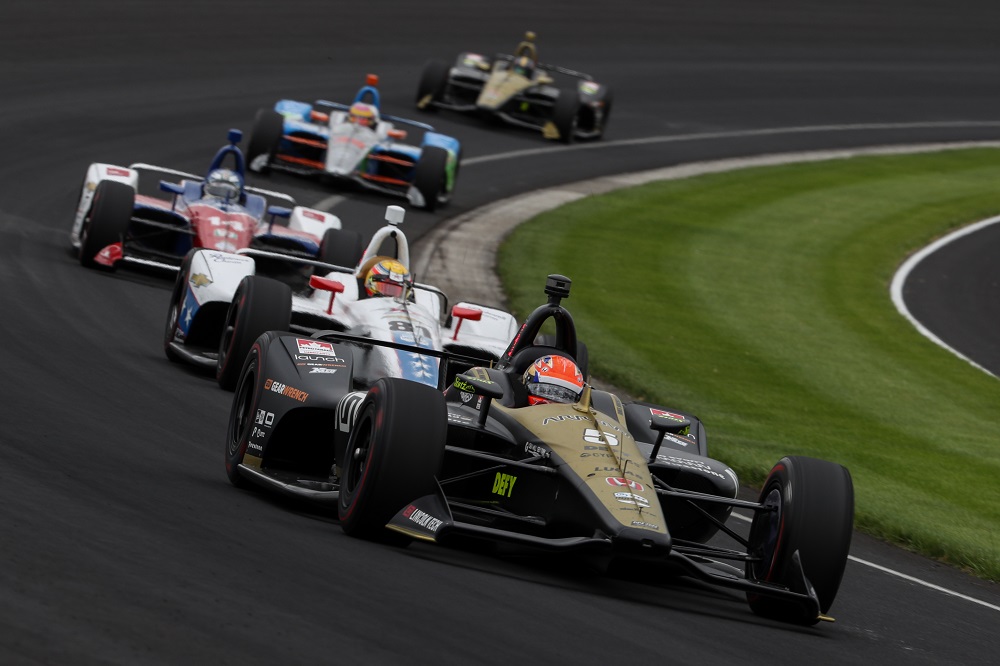
Aero effects of the new device should be minimal, Belli says.
Negative effects to the aerodynamic performance of the Chevy- and Honda-powered Dallara DW12s are negligible, according to Belli, with the Aeroscreen installed.
“On the main forces of the vehicle – and this will be surprising to a lot of your readers – the Aeroscreen really isn't as detrimental to downforce and drag as you might expect,” he said. “It hurts a little bit more on the speedways, because the rear wing is so low. It's basically below the level of the top of the windscreen. But when you get to the road course with the two-element rear wing, it really has almost no impact whatsoever on the car aerodynamics. You know, people are skeptical of this, but with the original PPG screen, we found the same thing and it was backed up on track, and the small changes that were needed to the aerodynamic setup of the car were what we found through CFD and in the wind tunnel was correct.”
A problem reported by Dixon and Newgarden in testing, involving an eddying effect as air passed over the top of the Aeroscreen prototype and pushed their helmets forward, has been addressed in 2.0.
“One of the problems is now the head sits in this completely cocooned atmosphere,” Belli said. “The positive pressure that we normally get on the front of the helmet, which... let's take the AFP for example: we discovered a couple of weeks ago, you reduce that positive pressure, which is like just between the eyes and above the eyes, which pushes the helmet back. Once that moves away, the helmet tends to get pushed forward by the air going over the top and gets in between the headrest.
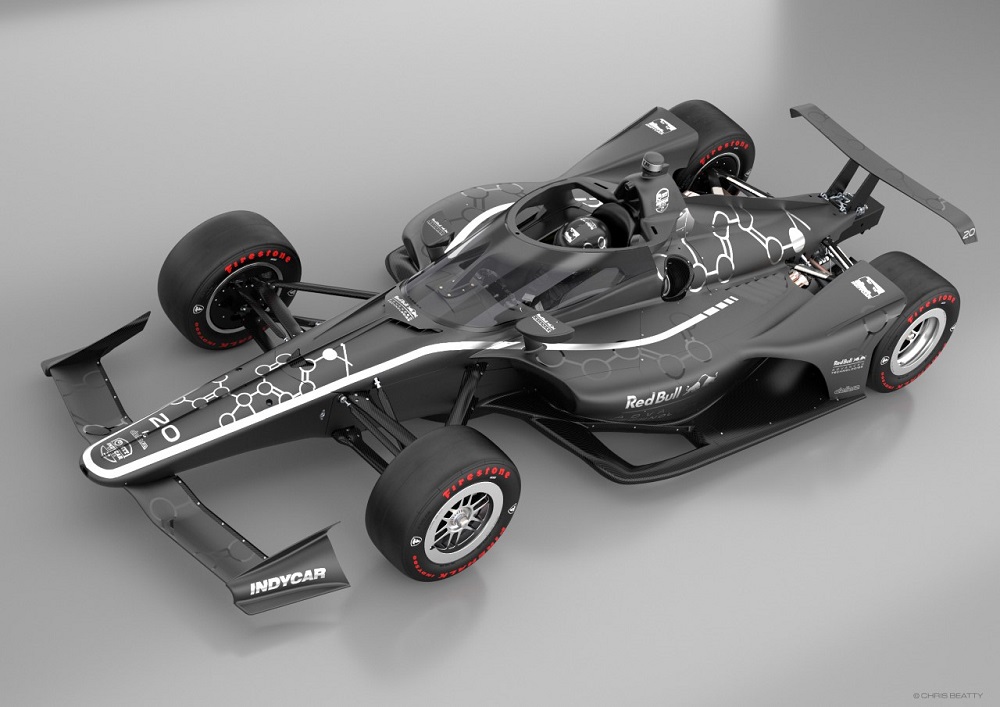
“The slots that you see at the base of the windscreen are mainly to try and inject some airflow back at the helmet to push it back a little bit against the other aerodynamic forces that are trying to push the helmet forward. So they're not really for driver ventilation, because they are aimed quite high at the helmet, and of course, you don't cool the driver on his helmet. You need to cool the driver on his torso.
“Then you have the effect, [that] now there is very little air spilling over the cockpit rim down onto the torso of the driver. We have to provide a bit more air into the cockpit, so where we have a hole where the anti-roll bar is, and we're going to try to push some air down there and push that air over the whole body. It basically goes from the driver's feet all the way up over his body and then out of the car.”
Designed to withstand a blow of 150 kilonewtons – nearly 34,000 pounds – Belli and RBAT will pivot from the Indy 500 press conference and begin work on testing Aeroscreen 2.0 in the lab and on the racetrack in the coming months.
“We've been really pleased,” he said. “All the calculations done by Dallara and Red Bull show that the tub with this type of mounting can take the 150 kilonewtons, and we've just gone from there. Obviously we have tried to make a step forward in having the halos constructed, and we are trying to make it look a little bit nicer too.
“The project has three phases. Phase one was to make sure that the idea was feasible. So that was really FEA analysis of the tub with a pretend top frame, and to do some basic aerodynamics studies, although the aerodynamic studies go all the way through to the end of phase two. So phase one is complete, and we're probably about one-third of the way into phase two, which is to start designing the top frame in mind for detail manufacturing.”
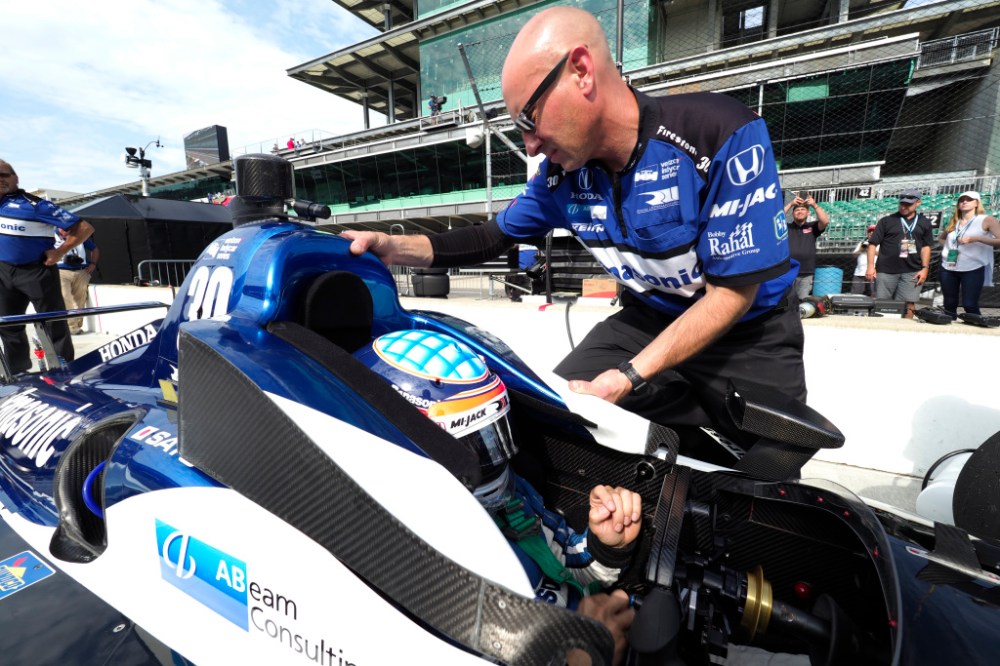
The final version of the Aeroscreen will incorporate additional tweaks for practicality.
The new Aeroscreen will carry a few practical improvements missing on the prototype.
“We've had to take into account some other things like fogging, so the screen will have a heating element in it,” Belli added. “We're looking at tear-offs and reflections and all sorts of other possible issues that we get. Driver cooling we've mentioned. Helmet forces take a lot of effort, and Red Bull has done the first FEA analysis on the top frame production, phase one production design top frame, and they're now going through a second iteration, because we want to minimize the weight of the top frame. So we don't want to put material where we don't need it, and we want to maximize material where it is needed.
“We are a couple of weeks to three weeks away from making a rapid prototype version of the top frame, which we will recheck in the Dallara simulator for sight lines. There are certain things that have happened with the screen, so in putting the heating element in, you need a certain amount of thickness top and bottom where what they call the bus bar, which was where the main copper comes along to the heating elements that go down the screen, and you can't see through those areas. So, we're just tuning, and next week we'll start manufacturing parts so we can go in and make sure the sight lines are OK on the top frame and the bottom frame.”
Managing the dozens of smaller projects that comprise the greater Aeroscreen program will continue through the summer.
“Then we've got to get into the detail design phase that goes through the end of July,” he said. “We have to obviously decide who’s going to manufacture the windscreen, and we have to start deciding who’s going to manufacture the top frame and the bottom frame. Then we have to take the prototype frames and put them into a fixture and do the load test on the first frames that we make. We're going to make three to five frames to start.
“We have to do ballistic testing. We plan to fire a weighted wheel assembly like you see in the FIA, the whole assembly, but we also plan to do ballistic tests. We're firing a one-kilogram piece of aluminum at a 220 mph. These materials, the design criteria and the windscreen material, have all passed these sort of tests in the past.”
Franchitti, speaking for the racers who will benefit from the Aeroscreen 2.0 program, welcomes the arrival of a generational evolution to IndyCar. In looking ahead, it’s time to leave exposed helmets to the past.
“Everybody has their own opinion about it, and I'm not going to tell anybody what to think,” he said. “But Christian Fittipaldi used to have a great saying. He would turn around and say, ‘Well, [five-time F1 champion Juan] Fangio used to race in a leather helmet. Doesn't mean we should.’”
Hear more insights from Belli, Franchitti and Horner in the full podcast interview below:
[protected-iframe id="bf792ae8a60740375cc566317211c4dd-139854255-134618127" info="https://www.podbean.com/media/player/t5s7m-b244ab?from=yiiadmin&download=1&version=1" width="100%" height="122" style="border: none;" scrolling="no"]
Marshall Pruett
The 2026 season marks Marshall Pruett's 40th year working in the sport. In his role today for RACER, Pruett covers open-wheel and sports car racing as a writer, reporter, photographer, and filmmaker. In his previous career, he served as a mechanic, engineer, and team manager in a variety of series, including IndyCar, IMSA, and World Challenge.
Read Marshall Pruett's articles

Latest News
Comments
Comments are disabled until you accept Social Networking Cookies. Update cookie preferences
If the dialog doesn't appear, ad-blockers are often the cause; try disabling yours or see our Social Features Support.


