Image by Scott LePage/LAT
PRUETT: Rossi's 85-lap knockout and more Long Beach reflections
The end of the world
I wanted nothing more than to watch Mike Tyson, the bruising superstar of boxing, live via pay per view. It was 1987 or so; the concept of PPV through cable was a newish experience to consider; and, as a big Tyson fan, I was dying to see the knockout artist in real time. As a junior in high school, the only issue I faced was a lack of money: I needed a friend to cover the other half of the PPV.
After laying out my impassioned proposal, that friend left me with a response I’ve never forgotten: “Why would I pay to watch a 30-second fight?”
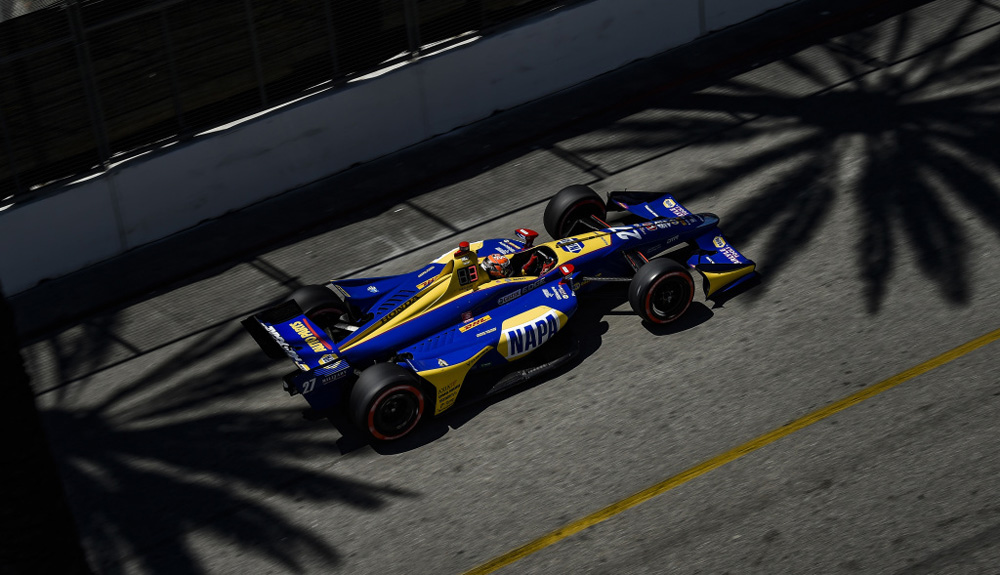
That exchange came to mind after the first few laps of Sunday’s Acura Grand Prix at Long Beach, once it became clear Alexander Rossi had commenced an “ass-whipping party,” as Sebastien Bourdais deemed it in RACER’s post-race video report.
If you were looking for sustained action, it came and went with the Turn 1 pileup at the water fountain. Minus a few caution periods to give teams an opportunity to try alternate pit-stop strategies, the race ended more or less as it began.
It was all Rossi, from beginning to end, and from a flurry of input via social media, including one bombastic commenter who wrote “terrible day for the series, though -- dreadfully boring race, barely any overtakes, no real incidences and yet everyone raved about Long Beach producing great racing,” it clearly failed to entertain. That part was obvious.
And that’s probably why the Tyson PPV exchanged popped into my head. Yes, there was a very real possibility the fight would be over moments after the bell rang to start Round 1, but there was also no guarantee it would play out that way. Wanting to see Tyson, and his opponent, and if drama or an upset would happen, justified the costs -- for me, at least.
Sunday, Rossi delivered an 85-lap knockout. Drama and upsets were missing altogether. But to suggest it was a “terrible day for the series” is lacking all manner of context. One snoozer from the first four races -- with 13 more to come -- should not be a cause for panic.
If it happens repeatedly over the remaining rounds, we’ll have something to talk about. Until then, it’s one forgettable race (for all but Rossi and his team).
Swede speed
Felix Rosenqvist and Marcus Ericsson might be the two most recognizable Swedish imports to grace the NTT IndyCar Series this season, but they aren’t the only products from Sweden making an impact early in the 2019 championship.
Having seen a fleeting glimpse of them at St. Petersburg (but not enough to fully process what I’d observed), and gotten another look on pit lane at Long Beach, it appears Team Penske has taken the unexpected path of using something other than its coveted homemade Penske dampers during the first two IndyCar street course events.
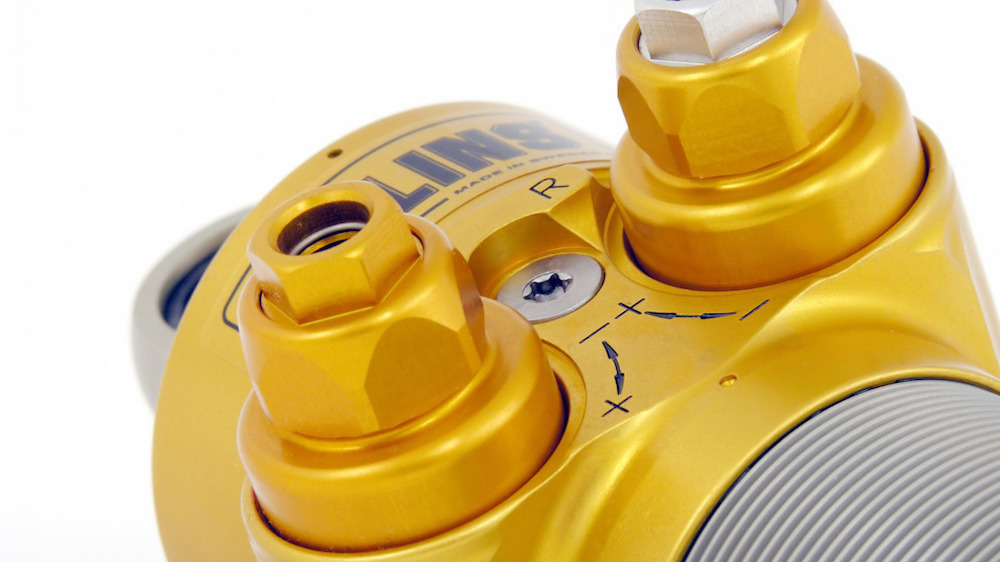
Dampers on the Penskes carried a different "Made in ..." stamp. Image by Ohlins
I can’t speak to COTA or Barber, but at least for the bumpy city roads in Florida and California, Penske’s big uptick in street course performances certainly had something to do with bolting dampers made by Sweden’s Ohlins onto its trio of Chevy-powered Dallara DW12s.
Citing a need to make gains with its street course package coming into the new season, the shocking (bad pun intended) move to something other than its exclusive Penske dampers has paid off with a pole by Will Power and win by Josef Newgarden at St. Pete, plus having all three drivers qualify inside the Firestone Fast Six at Long Beach where Newgarden delivered a fine second-place performance.
There are tons of customization options to be made inside those Ohlins, so it’s hard to say whether the Penske-owned units are heavily modified or mostly stock. But either way, whatever they’re doing appears to be an improvement.
We’ve seen Penske turn away from its home-built products in the past, most recently with its 1999 CART chassis after the PC27 model proved incapable of keeping up with the Reynard 99i, which says a lot about the humility found within the team.
With the goal of winning as its only mission, hitting the pause button on Penske’s coveted dampers -- on street courses, at least -- is another sign that, for The Captain, success comes before pride.
Is the Silly Season already here?
The most frequent rumor being whispered within the Long Beach IndyCar paddock involved talks between Alexander Rossi and Roger Penske regarding 2020. Like many rumors -- at least the ones that aren’t completely far-fetched -- there’s often a kernel of truth to be found among the noise.
After his first or second race in 2016 as a rookie for Andretti Autosport, I wrote that Rossi would be a Penske driver before long, and it didn’t require much brainpower to imagine that scenario.
His speed and potential were clear for all to see, and with his demure, buttoned-down approach to the sport, Rossi looked like he was made in a Penske laboratory. Well-spoken and crisply presented, anyone could see the Californian would soon draw the interest of IndyCar’s most successful team.
There were rumors it would happen after his first contract with Andretti was winding down, but in that instance he opted to stay with the Honda-powered team as part of a new, two-year deal announced toward the end of the 2017 championship.
Just as there’s no guarantee he’ll leave Andretti for Penske in 2020, there’s also no guarantee he won’t. What’s different between his last window of availability and today's is his role as a member of the Acura Team Penske IMSA DPi program. Joining forces with Helio Castroneves and Ricky Taylor, Rossi wheels the No. 7 Acura ARX-05 at IMSA’s longest races. He’s mightily impressed the team in his first two outing at the Rolex 24 At Daytona and Mobil 1 Twelve Hours of Sebring.
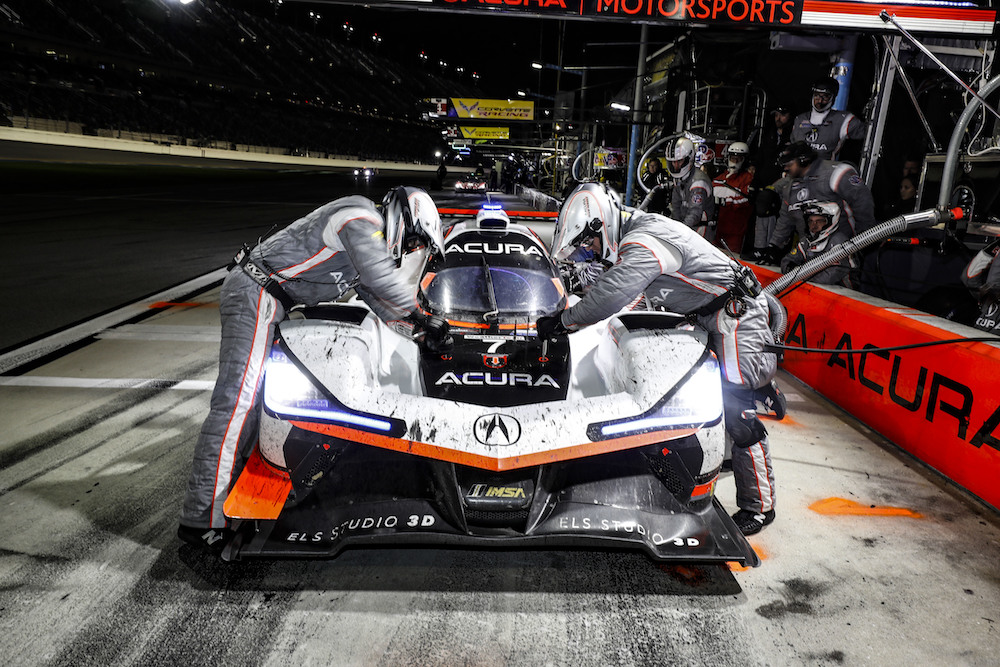
Rossi has been a letter-perfect addition to Penske's IMSA Acura program. Image by Michael Levitt/LAT
For those who follow IndyCar and IMSA, you might recall Penske invited Taylor, the young sports car champion, to test Simon Pagenaud’s Chevy Indy car in 2017 to “help” the team with fresh input on changes to its braking package. That “help” also gave Penske a chance to evaluate Taylor, who was signed later in the year to drive one of the incoming Acura DPis.
It might not be a stretch to suggest that with Rossi signed to drive one of Penske’s sports cars, the team has evaluated and confirmed the value of having the 27-year-old expand his services in 2020 to include one of its Indy cars.
Of all the things we can safely assume, it’s that Rossi will be well-paid when he inks that next contract. We know Honda is keenly interested in keeping him within its camp. We know Andretti and NAPA will sweeten the offer as much as possible. And we know Penske, along with a limited number of teams in the paddock with money to spend, will vigorously pursue Rossi’s talents.
If Penske is able to nab Rossi, who would get the axe from his current trio? Newgarden, our championship leader, isn’t going anywhere. Power, the reigning Indy 500 winner, is enduring a rough patch of late, and yet still holds sixth in the standings. Simon Pagenaud, who’s been remarkably consistent this year with three top 10s, sits 11th overall. The latter looks most prone at the moment.
In this game of ifs, Pagenaud, who was also part of the Long Beach rumor mill, has been mentioned as having an open door to return to Arrow Schmidt Peterson Motorsports if 2019 proves to be his final year with Penske.
Finally, as we consider the biggest dominoes that might fall, if Rossi does pack his bags for Penskeville, who would Andretti hire to fill the void in the No. 27 Honda?
Without knowing his availability, there’s a kid by the name of Colton Herta using Andretti engineers and suspension technology at Harding Steinbrenner Racing that could be the perfect fit.
And what about Andretti’s 2018 Indy Lights champion Patricio O’Ward who, despite the ugly falling out with SHR and social media back-and-forth with Andretti, is drawing interest?
It’s hard to say if the Andretti-O’Ward bridge can be rebuilt, but with newfound interest being shown in the 19-year-old Mexican by McLaren Racing, who is believed to have met with McLaren CEO Zak Brown last weekend, the wheels on the 2020 silly season are already turning.
Bomb free
I’m not sure how it happened, but we just completed the Acura Long Beach Grand Prix and Saturday’s Bubba Burger Grand Prix without witnessing wipeouts at the Turn 11 hairpin. It’s become an annual tradition to watch rookies and veterans alike as they attempt dive-bombs into the hairpin -- moves that only end in misery -- but despite the seeming inevitability of collisions that create parking lots in Turn 11, IndyCar and IMSA got away scot free.
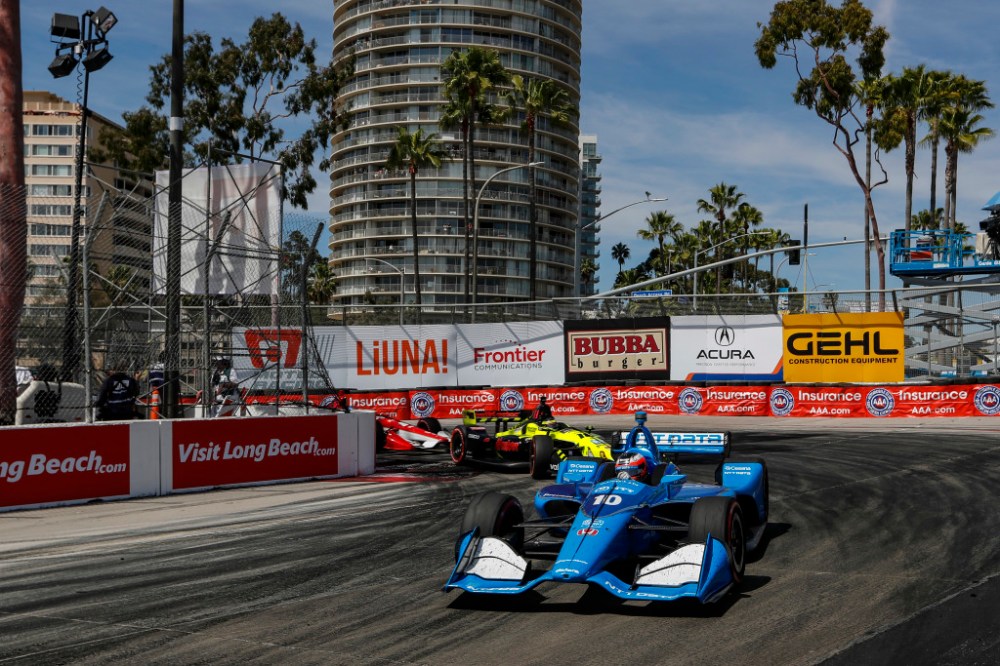
Good behavior at the hairpin. Image by Phillip Abbott/LAT
Something tells me the odds of it happening again next year are close to zero.
BBGP
Speaking of IMSA’s 100-minute WeatherTech SportsCar Championship race, it’s a rare occasion when the best race among Long Beach’s marquee series takes place before Sunday, but that’s exactly what happened.
One member of the Action Express Racing team found themselves stuck in a loop Saturday evening, repeating the phrase “We shouldn’t have won” at least a half-dozen times. Crafty strategy to pit and place Filipe Albuquerque in the No. 5 Cadillac DPi-V.R and send him out in clean air allowed the Portuguese ace to make up massive amounts of time and win a race that should have been an Acura Team Penske 1-2.
And that was the other comment heard Saturday evening and into Sunday: “How did Acura not win?” Blessed with happy Balance of Performance settings made by IMSA, the ARX-05s qualified 1-3 and appeared to have the field covered on pace. But the No. 77 Mazda RT24-P, along with the sister No. 31 AXR Cadillac, also had speed, and only a disastrous pit stop knocked the latter from contention.
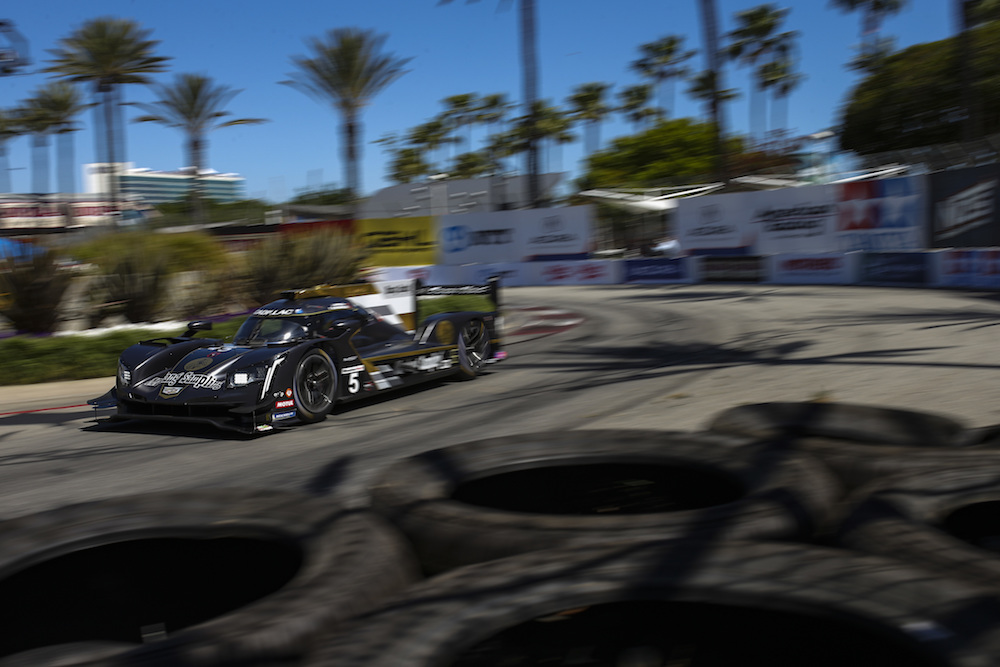
Dropping to eighth, carving through to first, the Mustang Sampling Cadillac was the star of Saturday's show. Image by Jake Galstad/LAT
It left the Acuras, the lone Mazda, and the No. 5 to settle the race, and, with Albuquerque and teammate Joao Barbosa working a miniature miracle, the car that fell from fourth to eighth at the start stunned its faster rivals.
Meanwhile, the GT Le Mans class also added to the Saturday fun: The day before Rossi’s virtuoso performance, Porsche took total ownership of GTLM with a 1-2 in qualifying and a victory in the race. It was the duel for second and third where the craziness broke out. On worn tires, and having surrendered the lead by mistakenly hitting the pit lane speed limiter while exiting the hairpin, Ganassi Ford GT driver Dirk Muller did his best to keep the charging Corvette of Jan Magnussen behind him on the final lap.
Tight on fuel, Muller’s Ford sputtered and died exiting Turn 8, and with no time to take avoiding action, Magnussen speared Muller from behind, wrecked the GT, and mashed the nose of his Corvette C7.R, but managed to complete the lap and cross the finish line in second as teammate Tommy Milner made it a Corvette 2-3.
It was everything the IndyCar race lacked -- misfortune and long shots making a difference in the final outcome.
Maturation
We’d have been in for days of grumpiness from Graham Rahal if the last-lap penalty that dropped him from third to fourth had happened a few years ago. Clearly displeased with the decision made by IndyCar’s race control team, Rahal vented a bit, stated his case and then, in a nod to his ever-increasing growth, began the process of moving on.
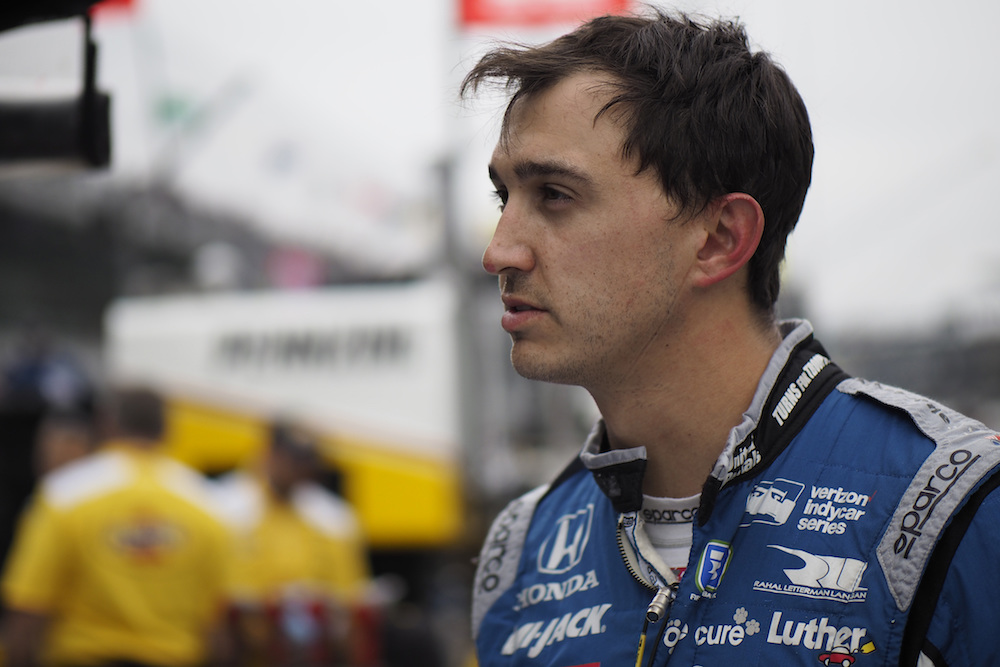
Always classy, Rahal's post-race comments and actions showed off a new maturity. Image by Michael Levitt/LAT
In place of being raving mad for days and blaming the world, Rahal displayed maturity after the highly suspect call was handed down, which can only help as he chases his first title.
Rookie watch
Nothing to see here. That’s two weekends in a row where IndyCar’s rookie class looked their relative age.
Felix Rosenqvist and Colton Herta hit things (in qualifying, and the race, respectively); Pato O’Ward started 12th, went backwards, then went forwards ... to 12th; and Santino Ferrucci showed promise until another mistake ruined a decent result.
In other words, the rookies looked like rookies. The first two races showed how good they can be, the last two showed how much they have to learn, and over the four events, the mix of blazing speed and inconsistency serves as a reminder of the vast learning curve they must overcome.
Hard questions
The lower rungs of the drivers’ championship paint an ugly picture of how poorly some teams have fared through the first 25 percent of the season.
Fans of Tony Kanaan and A.J. Foyt Racing must be in agony after seeing the Brazilian struggle, with a 12th-place finish as his best result. Holding 19th in the standings, his young countryman and teammate Matheus Leist is 23rd and last among the full-timers.
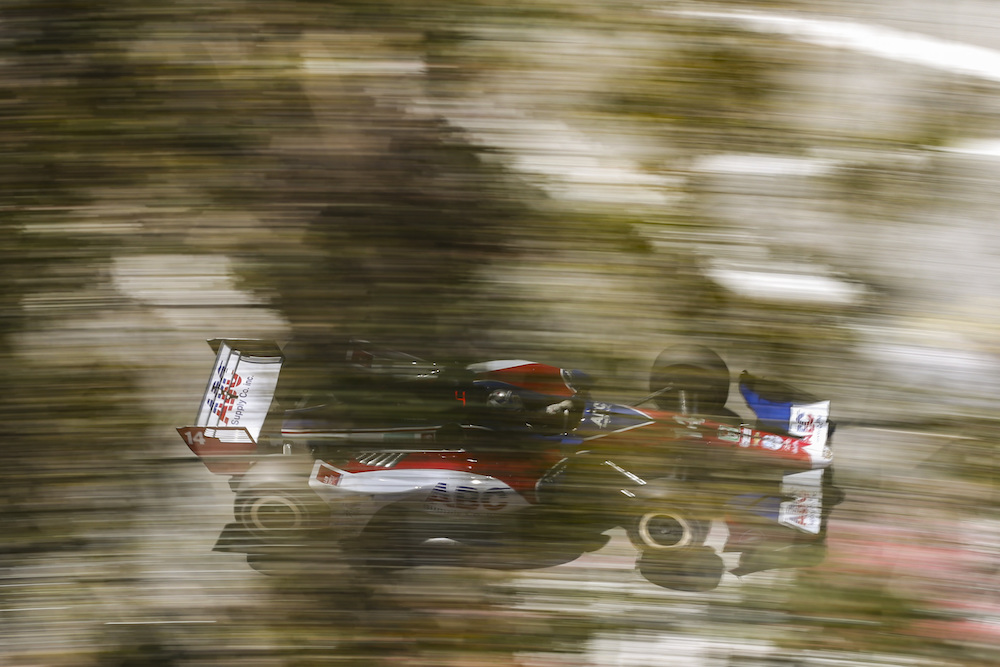
Off-season progress made by the Foyt Racing team has been obscured. Image by Jake Galstad/LAT
Whatever gains were made in the offseason, the rest of Foyt’s rivals made more, leaving the proud outfit right where it ended 2018.
Andretti’s Zach Veach is 20th which, coming off of a strong rookie campaign, illustrates the deep wilderness where he’s resided as an IndyCar sophomore. With his teammates holding second, fifth, and 13th in the rankings, Veach knows he has the tools to be much closer to the top 10.
Ed Carpenter Racing with Scuderia Corsa’s Ed Jones got off to a bad start, injuring his hand in a crash at St. Pete, and has yet to significantly improve. Jones holds a disappointing 21st overall in points, as ECR, whose Spencer Pigot has a light grip on 15th, searches for a return to relevance on road and street courses.
And then we have Carlin Racing’s Max Chilton, one point ahead of Leist in last, and four positions behind new teammate O’Ward, who missed St. Pete.
This part of the year, when teams assess their early season form and look at what’s coming in May at the Indy GP and Indy 500, is beyond uncomfortable for those who are struggling. Whether it's drivers or team personnel, questions of whether changes should be made before the month of May gets here will be asked.
It happens every year, and it’s never easy.
Farewell
Factory Mazda driver Tom Long, whose family builds the Global MX-5 Cup cars that are sanctioned by IndyCar, was on the minds of the Mazda Team Joest IMSA team members, and many in the sports car racing community after his mother, Alana, died in the days leading up to Long Beach. RACER extends is condolences to Tom, his father Glenn, and the entire Long family.
Miscellany
- RACER’s 27th annual Long Beach party was its usual celebration of racing series, drivers, team owners, crew members, and industry insiders. The unveiling of the cover for the new issue, featuring Doug Garrison’s painting of Rick Mears’ 1979 Indy 500 winner, got the festivities flowing, and from there, all manner of great conversations were had with legendary AAR chassis designer/race engineer John Ward; RRDC honoree David Hobbs; Porsche engineering ace Owen Hayes; Michael Leven, son of the late IMSA entrant/driver Bruce Leven; Porsche tuning legend Alwin Springer; a variety of IndyCar drivers ranging from Hildebrand to Ferrucci to Servia; and more. Between spending the day at AAR on Wednesday; visiting with former IndyCar driver George Mack at his Long Beach auto repair shop; interviewing three members of Team Penske at the track; and raising a few glasses of red wine to Hobbo on a packed Thursday evening; then three days of racing -- including Saturday night’s RACER party -- I was worn out, and snored like a fool on the one-hour flight home Sunday.
- We’ll close on something I keep writing should become an integral part of every IndyCar and IMSA event, and that’s having a vintage racing series on the schedule. The Grand Prix at Long Beach Association has made a habit of bringing vintage Can-Am, Trans-Am, and this year, 1980s and 1990s IMSA GTOs to the event, and that decision was made independently from its headlining series. Based on how much the fans appeared to love the cars, it’s hard to fathom how IndyCar and IMSA aren’t working with every circuit on the calendar to give its audience a taste of the old and the new. The Indy 500 will have historic open-wheel cars turning laps as the race weekend approaches, and Gateway has sought out the Vintage Indy Registry to put on a show before its IndyCar race; but elsewhere, including on the sports car side, there’s a continual failure to honor the past. As Long Beach would suggest, the show only improves when its history is brought forward.
Marshall Pruett
The 2026 season marks Marshall Pruett's 40th year working in the sport. In his role today for RACER, Pruett covers open-wheel and sports car racing as a writer, reporter, photographer, and filmmaker. In his previous career, he served as a mechanic, engineer, and team manager in a variety of series, including IndyCar, IMSA, and World Challenge.
Read Marshall Pruett's articles
Latest News
Comments
Comments are disabled until you accept Social Networking Cookies. Update cookie preferences
If the dialog doesn't appear, ad-blockers are often the cause; try disabling yours or see our Social Features Support.