Image by Thomas Outzen
A new adventure
I started in racing at a very young age. My father found an old dirt-racing kart chassis and pieced together an asphalt sprint racing kart. He then somehow convinced my mother to take the entire family to the track every weekend, so my brother and I could race. We had a very small budget.
I purchased my first road car at age 15 and reworked it to compete in autocross events. I sold this car after returning home from Army Basic Training shortly after high school, and my racing ambitions took the passenger seat while I pursued an Army career. I joined the Wisconsin Army National Guard with plans to go on active duty as an officer after college.
With that, life, as it does, began to take me on a journey very different than one I ever anticipated when I was a car-shopping teenager.
In 2009, I was deployed to Iraq as an infantryman. Shortly before my tour was complete, I was injured when a Mine Resistant Armor Protected (MRAP) gun truck weighing over 40,000lbs hit me from behind and drove up my left foot before coming to a stop on top of my thigh. Most of the bones in my foot were broken and some were missing. My left leg, left knee, both hips, upper back, and lower back all were injured as well.
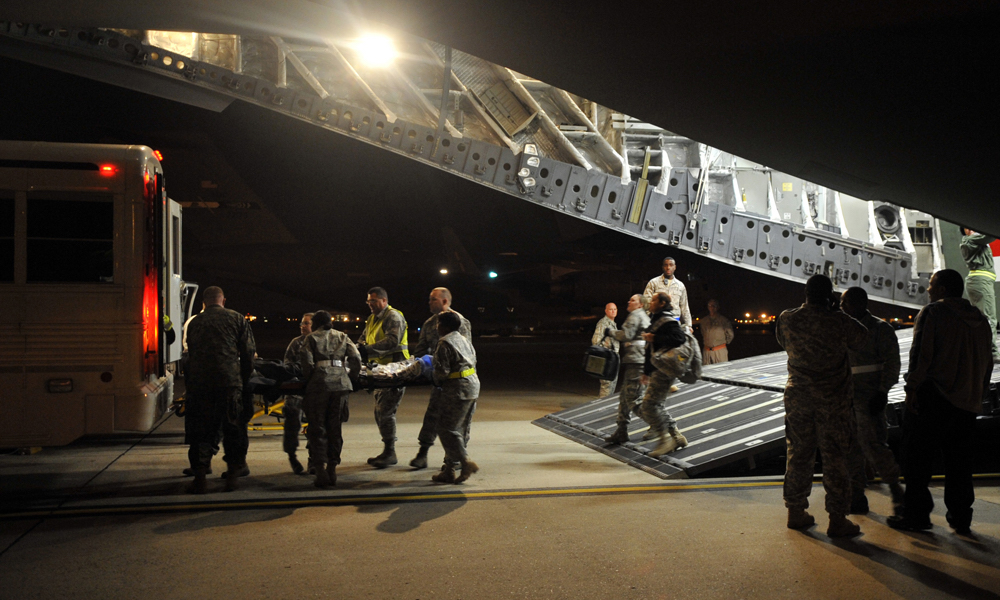
Badly injured, Winker was flown to Joint Base Andrews in Nov. 2009. Image courtesy of the author
I was medevac’d and, thankfully, my foot was salvaged. I spent the next 18 months going in and out of surgery and physical therapy to repair the damage to my left leg and foot. My life would never be the same.
A Long Recovery
While in the hospital, I found myself dreaming about racing – not unlike when I was 15. I started reading books about racing, and I even found myself buying go-fast parts for my Roush Mustang, although these purchases were made unknowingly by me as I was on very strong pain medication.
Between surgeries I would go home. While still recovering and in a wheelchair, my brother helped me install a supercharger in my Mustang. I even modified my leg cast to be able to work the clutch to take the car for a test spin.
At the age of 24, I needed a cane to walk, had very limited mobility, and had to deal with extreme pain every day. I was medically retired from the Army and no longer medically fit for duty. Before my injury I competed in paintball and soccer; now, I couldn’t play either sport in the same way. I did, however, find that I could still drive. I started driving in track events to begin honing my skills. And, when I was on the track, I did not have a disability.
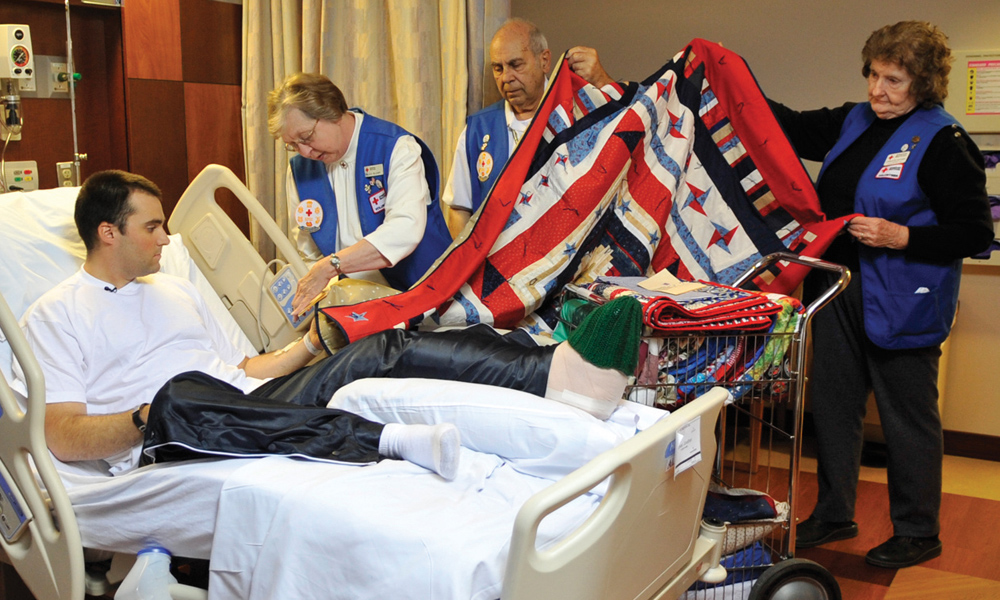
The hand-made quilt was a special gift, but Winker was more interested in automotive hard parts. Image courtesy of the author
In 2013, my pain was increasing, and it was getting difficult for me to even perform daily functions. I was still in physical therapy and working with pain management doctors. Nothing was working, and this was not the quality of life I wanted. I was presented the option of having yet another surgery to fix my foot or amputating my left leg below the knee.
The surgery would require another long recovery period, and even if it was successful, there was no guaranteeing a reduction in pain. The foot surgery would also likely require more surgeries with age. The amputation had a better likelihood of pain reduction, but there were obvious drawbacks. How difficult would it be to drive my Mustang -- or any car -- with a prosthetic leg?
Still, I opted for the left leg amputation, which took place in October 2013.
Soon afterwards, I was given the opportunity to attend a sport car racing event at Road America. CORE autosport hosted me and another disabled veteran at this event, and the weekend got me completely hooked on sports car racing. I was introduced to everyone on the CORE team and given a tour of their race trailer as well as the paddock. I watched the race from pit lane and listened in to all the activity on the team radio.
I left that weekend knowing that more than anything else, I wanted to start sports car racing.
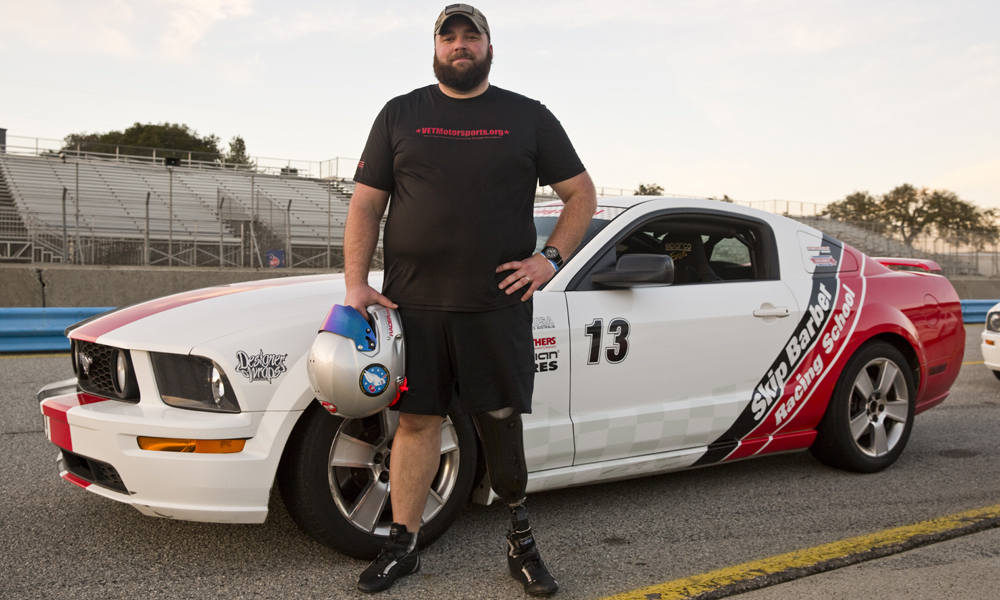
When I am on the track, I am not disabled. I can compete on a total level playing field with other able-body drivers, something few sports can do. I wanted to share my newfound therapy with other disabled veterans, and started planning to build an endurance racing team for them.
I soon learned about a non-profit organization called VETMotorsports, which honors and empower injured war fighters through active participation in motorsports. I started volunteering with VETMotorsports by arranging to host qualifying veterans at local SCCA autocross events, helping to put them behind the wheel and compete.
VETMotorsports experiences provide direction, empowerment, and challenges that all of us with disabilities desire most: a mission and a purpose.
VETMotorsports introduced me to Paul Pfanner of RACER Media & Marketing (which produces SportsCar and RACER magazines), and Paul in turn introduced me to Anthony Demonte, the CEO of Skip Barber Racing School. After sharing my story of recovery and my dream to start sports car racing, I was offered a seat in the Skip Barber Three-Day Racing School at WeatherTech Raceway Laguna Seca. There, I would experience my first professional driver training and, upon successful completion of the school, be eligible to apply for my SCCA Road Racing Novice Permit.
A New Adventure Begins
I arrived at Laguna Seca early and found the Skip Barber team was already hard at work preparing their many Ford Mustangs for the class. After a hot breakfast and suit and helmet fitting, we all made our way to the classroom and were introduced to the Skip Barber staff. All of the instructors are very experienced -- many were professional drivers with many hours logged on the racetrack -- and we jumped into the classroom instruction.
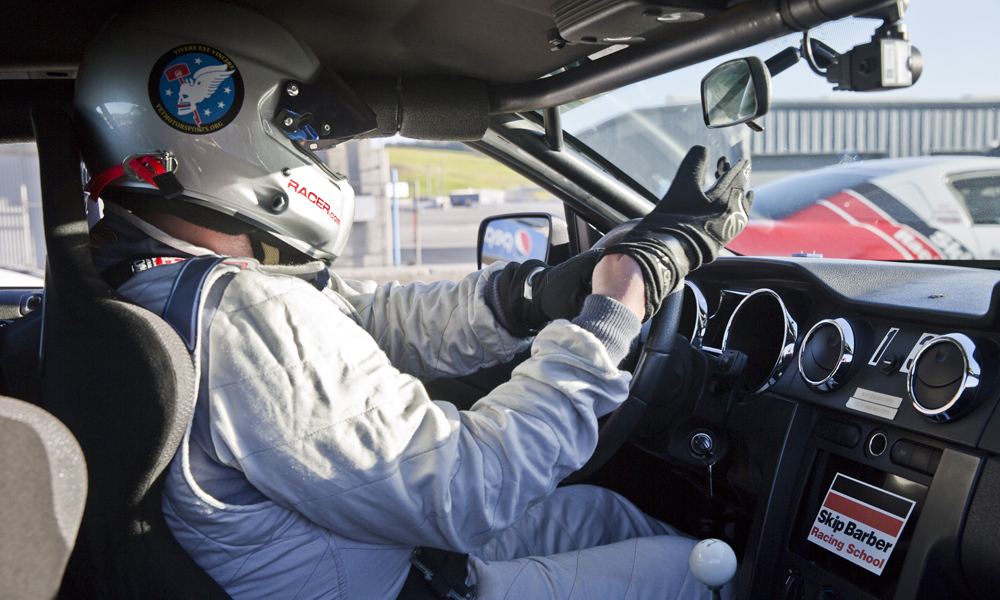
Winker: "When I am on track, I am not disabled." Image by Thomas Outzen
Things started slowly: We learned about traction and how weight transfer affects a tire’s contact patch. We learned about oversteer, understeer, and how to correct for both. But before I knew it, we hit the skid pad and an autocross course to put what we had just learned into action. After that, we returned to the classroom to learn about racing lines and how to read a track, and then we jumped in a Transit van for a tour of the circuit, stopping to walk certain sections.
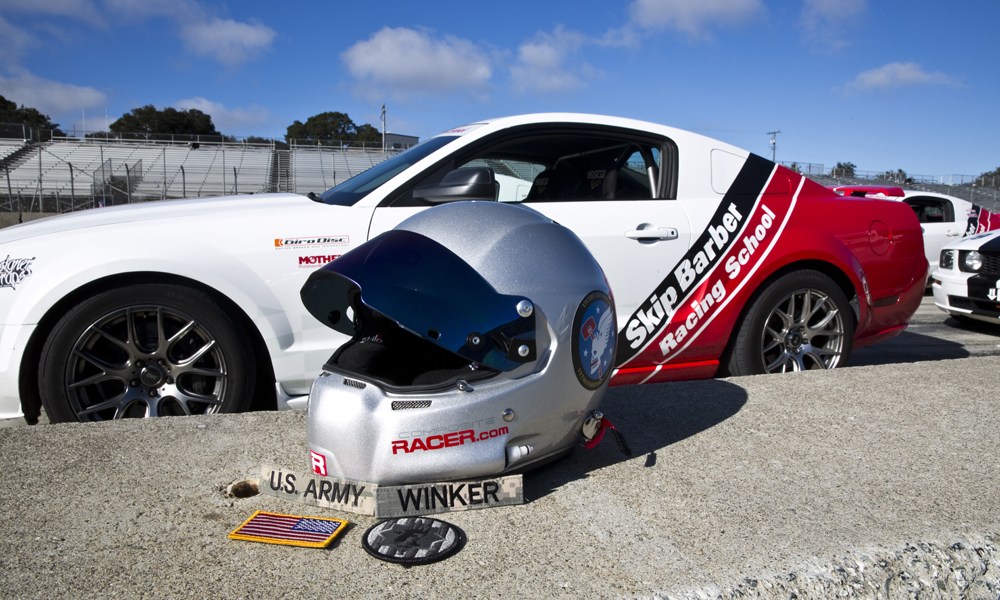
From classroom to skid pad and an autocross track. Image by Thomas Outzen
My major takeaway on day one was that the most minor elevation changes have a major effect on the car, and taking advantage of the positive or negative camber on the racing surface is key to squeezing out lower lap times.
We finished the day with lead/follow sessions in the Mustangs, putting some of what we had learned into action. (Shout out to Lou and the whole Skip Barber support crew for the immaculately prepared cars!)
Day two began with more classroom instruction, covering downshifting and more technical racing-line talk. Then we all loaded into the Mustangs again to practice heel-and-toe braking.
I knew going in that this particular area would be especially tough for me. I have no feeling in my prosthetic left foot, meaning I don’t really know where it is. In addition, to work the clutch I have to use my hip and knee; I have no ankle joint. While this may seem like it’s a physical hurdle, it affects me more psychologically. Consequently, I am so involved in making sure I downshift correctly that it takes my concentration away from what I should be focusing on. While I’m thinking about the downshift as I approach the corner, I really should be focusing on my braking and turn-in.
Even before going to the school, downshifts were a big area of frustration as I never had a problem with them before my amputation.
But with help from Mike Stillwagon, a lead instructor, I was able to get things under control and found a method that worked for me. I still need some practice, but I definitely am more confident working the clutch with my prosthetic now.
We headed back to the classroom to discuss braking, and then once again hit the track to put the newfound knowledge into action. We had one more classroom session to talk about flags and technical racing lines, then we did some laps around Laguna while receiving feedback from the Skip Barber instructors. The feedback was fantastic -- I learned so much in such a short amount of time.
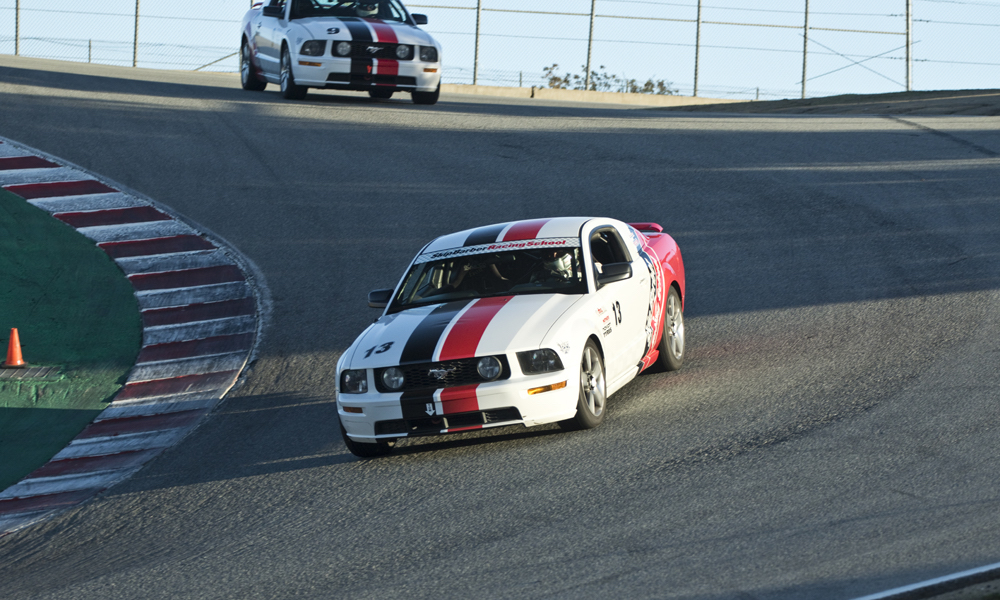
Feedback from the instructors was critical and valuable. Image by Thomas Outzen
The third and final day began with a classroom session on passing and racing lines in the rain. We performed some passing exercises and then moved into more feedback sessions.
The final classroom session was on race starts and restarts -- and then we hit the track once more.
I can’t say enough about how the information provided in these sessions has improved my driving skills. The Skip Barber instructors utilized bite-size pieces that allowed me to progressively improve; nothing was overwhelming.
With SCCA Competition Novice Permit now in hand, what’s next for me? I will continue my learning through Skip Barber’s Two-Day Advanced Racing School, where I will earn my full SCCA Competition License. Then on to private coaching sessions with Skip Barber’s instructors, where I can learn the race craft I need to compete in this great sport.
My ultimate goal is to begin sports car endurance racing, but this will require a level of mental and physical toughness I have not experienced since my time in the Army. But I’m up to it, and I can’t wait for this new adventure.

Jonathan Winker
Read Jonathan Winker's articles
Latest News
Comments
Comments are disabled until you accept Social Networking Cookies. Update cookie preferences
If the dialog doesn't appear, ad-blockers are often the cause; try disabling yours or see our Social Features Support.