Image by Etherington/LAT
Team aero predictions of limited use to Pirelli
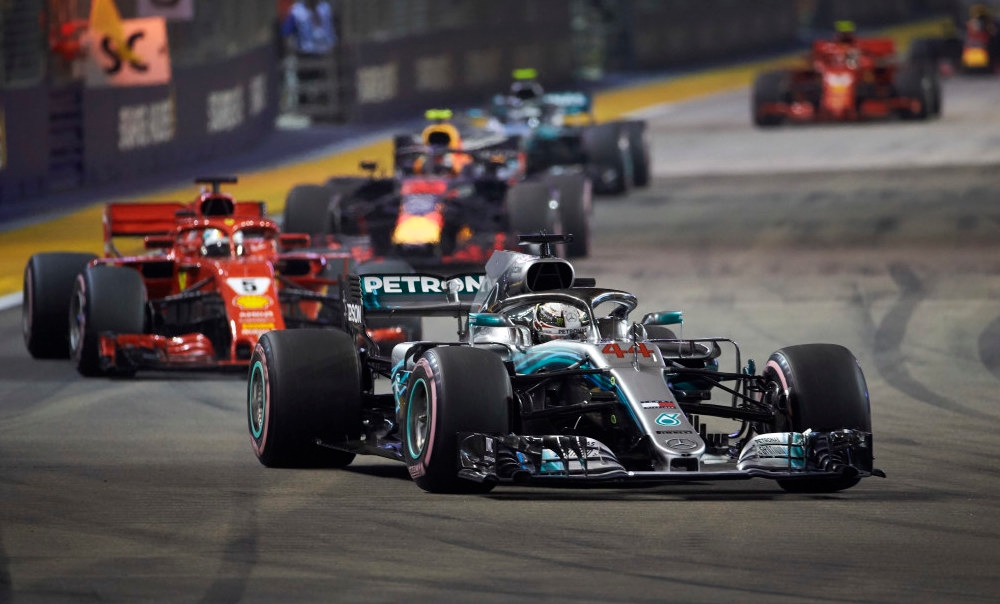
The predicted impact of the aerodynamic changes to Formula 1 car performance in 2019 is of limited use to Pirelli due to their focus on the way two cars interact.
Significant changes to the front wing, brake ducts and rear wing are designed to reduce the amount of aerodynamic performance lost by a car when it closely follows another. While Pirelli has had to produce tires based on what the changes are expected to do to a car when it is running alone, head of car racing Mario Isola says team simulations can only provide a limited amount of information.
“We have all the simulations from the teams and it’s good because they are very good at simulating the performance, their predictions are very good,” Isola told RACER. “When you consider what they did in 2016 for 2017, a complete new car, I have to say that in the last loop of simulations they were very close to the real performance of the cars in 2017. So they are good at doing that.
“What is difficult is to understand the impact of the new regulations when they follow each other. The absolute level of downforce is predictable -- they came to us saying ‘We lose this amount of downforce in the front, this amount of downforce in the rear,’ and that’s an important simulation to have. They make some calculations to understand what is the difference compared to following in 2018 but this is a bit more difficult.”
Isola believes testing is still unlikely to provide full answers on the impact on a following car given the differences in test programs even with multiple cars on track at once.
“In testing yes, sometimes, because you have 10 cars so sometimes you have a situation in which one car is following another car. But it’s difficult because you should look at the specific laps and try to compare the load on the tire to understand how much the difference is.
“We did it during some of the races last year and I said when they lose in the range of 150-200kg of load it’s difficult. It’s a number that gives you a dimension of the impact of following another car, and it’s huge. So if with the new rules you lose half of this amount it has a big impact.”
Presented by:


Chris Medland
While studying Sports Journalism at the University of Central Lancashire, Chris managed to talk his way into working at the British Grand Prix in 2008 and was retained for three years before joining ESPN F1 as Assistant Editor. After three further years at ESPN, a spell as F1 Editor at Crash Media Group was followed by the major task of launching F1i.com’s English-language website and running it as Editor. Present at every race since the start of 2014, he has continued building his freelance portfolio, working with international titles. As well as writing for RACER, his broadcast work includes television appearances on F1 TV and as a presenter and reporter on North America's live radio coverage on SiriusXM.
Read Chris Medland's articles
Latest News
Comments
Comments are disabled until you accept Social Networking Cookies. Update cookie preferences
If the dialog doesn't appear, ad-blockers are often the cause; try disabling yours or see our Social Features Support.