Image by Sean Rice
Bagne's a racer on the move
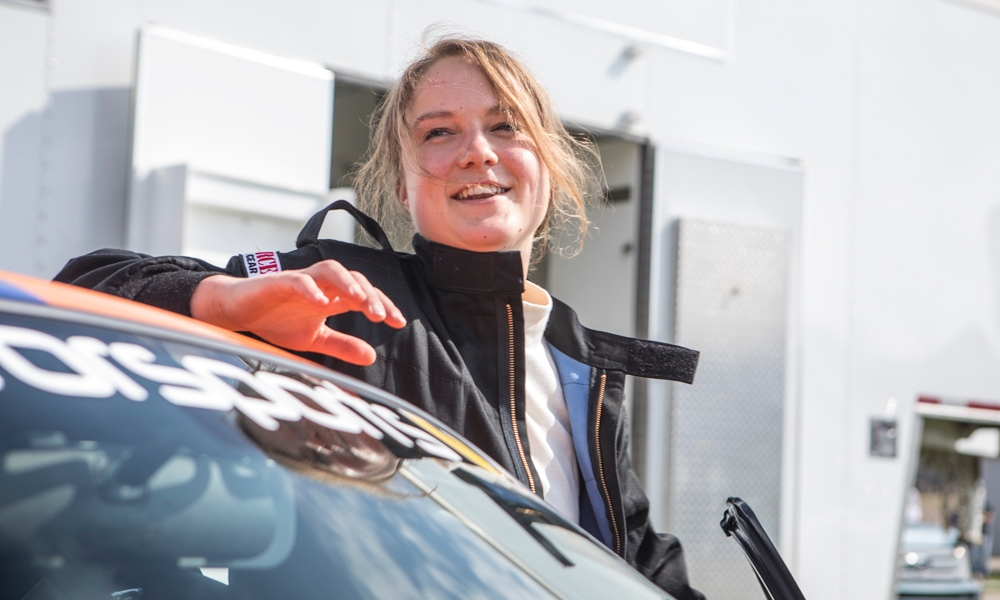
Christie Bagne’s motorsports journey is only just beginning, but she’s accomplished a lot in very little time.
Catching up with Christie Bagne isn’t easy. She’s constantly on the move, dashing from one place to another, barely having time to breathe. But when I finally locked her down, I found that she thinks nothing of her crazy scheduling. “It’s been a tiring month,” she admits as we chatted on the phone while she drove home from a busy day at work – this being our third conversation of the day, the first two being cut short when something arose on her side. “It’s been a tiring life, actually,” she laughs, “but this is all a very Christie-Scheduling activity, so it doesn’t feel that bad.”
“Christie Scheduling” largely refers to her two hobbies, horses and cars, both of which consume copious amounts of her time. Over the years she’s done everything from amateur horse training and horse jumping competitions to ice racing, autocross, track events, and now road racing. When I spoke to her, the previous few weeks had involved obtaining her SCCA Road Racing novice permit and completing her first two race weekends.
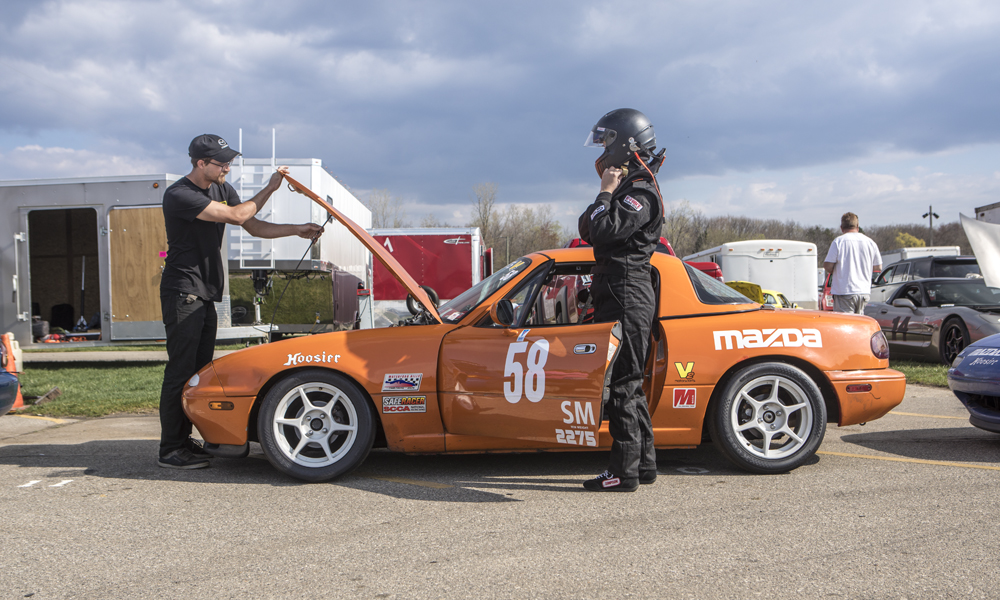
Then there’s work. Christie’s currently navigating her way through her first few years as a TRACK engineer at General Motors; this coming after a two-year stint at Kettering University that involved alternating between engineering classes and a work program at Ford. Then there’s the fact that Kettering was her second time through higher education, her first concluding with a neuroscience degree.
I was exhausted listening to what she’s been through in the last few years. But, taking a breath, I asked her to start at the beginning.
“Living in Detroit, there’s pretty much a car event every weekend,” Christie explains of her high school days in the late 2000s. “We would basically go out, stand in a parking lot, talk about cars for a few hours, and then we’d get kicked out for loitering and we’d go to someone’s garage until 3 a.m., at which point we’d disconnect our mufflers and things like that.
“I lacked sophistication at the time,” she laughs while looking back at her high school years, “but it was a good way to start tinkering on cars and learning basic maintenance.”
Christie’s automotive appreciation was undoubtedly a combination of living in Motor City and having a mother and grandmother who were enthusiasts, both owning older Camaros. But when she went to college – the first time, earning a neuroscience degree – Christie was suddenly thrust into a world that lacked cars. “That’s when I started a car club,” she explains. “There are a bunch of engineers in the [Detroit] area and the automotive industry is huge there, so it was a big market for a good car club.”
Many associated with Christie’s club were into autocrossing, but then a new guy, fresh from Utah, approached her with a question. “He came to me and said, ‘Hey, are there any racetracks around here?’ That’s when I found Waterford Hills...and we decided to go to a track day.”
Absent a track-worthy car herself, she took her mother’s sporty sedan to Waterford. “After that track day, I learned how to do my first brake job,” she chuckles.
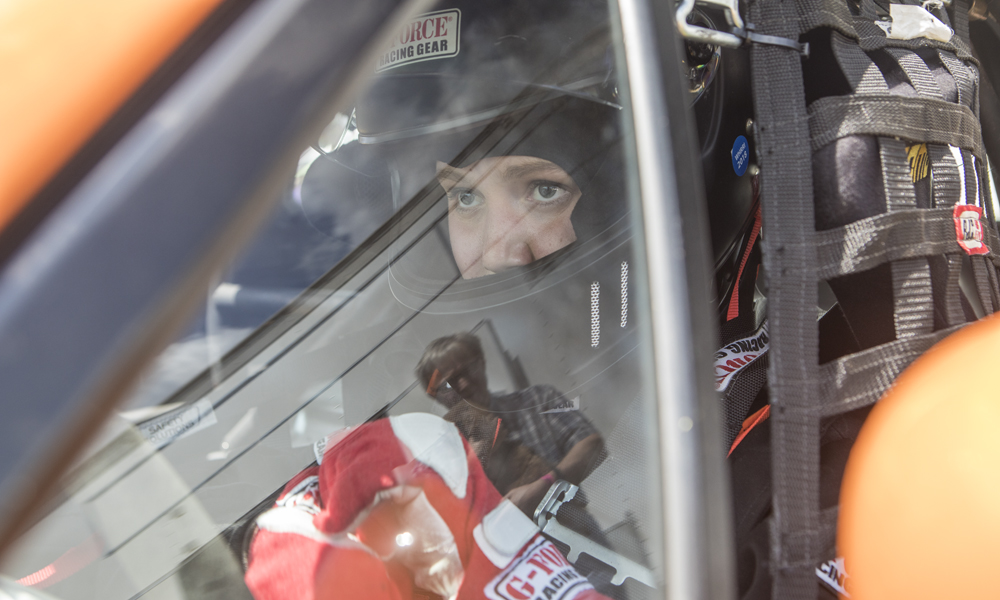
Hooked, she bought a Subaru and jumped in full bore, logging about 10 track events that year at either Waterford Hills or Gingerman, including one of the first SCCA Track Night in America events.
“Then winter came, and I started ice racing,” she says of the colder months of 2014. “Saginaw Valley Region of the SCCA does ice racing in Michigan...and I had never ice raced before,” she says. “That was a totally new experience and it helped me a lot with car control.”
Despite being outgoing and seemingly willing to jump into any situation, Christie still found racing on ice intimidating. “I’d never driven around on a lake before, and I was pretty bad at the beginning – but I got pretty good by the end,” she recalls, noting that playing on the ice helped her on dry pavement, too. “That was the thing with ice racing – you have to figure out where there is traction and where there isn’t, and that translated over to dry pavement.”
With the ice thawed in 2015, Christie pushed forward with track events. “I ended up doing something like 22 track days in the Subaru and never crashed it,” she laughs with the contagious and welcoming chuckle you quickly come to know when you speak with her. “That was the year I got out to Mid-Ohio and I did Grattan a lot, went to Waterford, and I kept working with [30-year SCCA member and road racer] Danny Kellermeyer and getting faster. I decided I wanted to move on to club racing.”
Another season of ice racing later, Christie headed back to Waterford Hills for an SCCA competition license school in early 2016 – but “Christie Scheduling” once again came into play. “At the same time, I decided I wanted to go back to school for engineering, so I did not end up racing for basically two years – that’s why I ended up doing the SCCA Driver’s School again this year.”
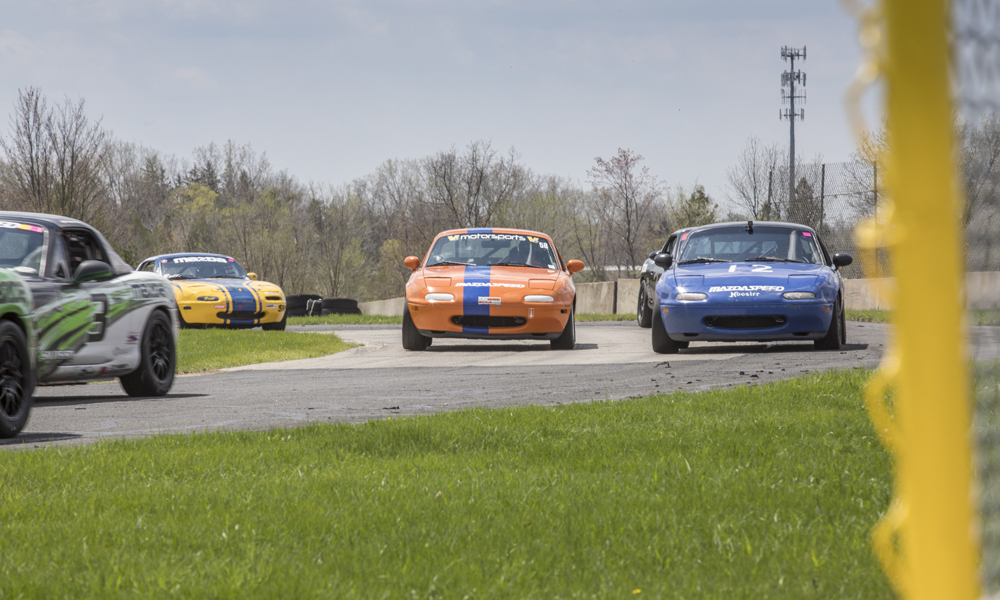
Bagne can apply what she learns in the pits and on track (above, center) to her job as an engineer at General Motors.
Between her first competition license school and the second, Christie filled the weekends she wasn’t studying or horse riding with autocrossing, track events, and crewing for local racers, including Danny. “Crewing was good during that two years because I began to understand different elements of racing; like how much fuel you want in the car and what you need to have ready when the driver gets in the car. I learned a lot.”
Prior to her 2018 SCCA Driver’s School, she graduated with her engineering degree, got a job, and purchased a 1.6L Spec Miata. “As soon as I accepted GM’s job offer in early December 2017, I started looking for racecars,” she says. “I was looking mostly for Spec Miatas, and I got in March. It was pretty much ready to go, although I had to mount the seat, which was a pain. Otherwise, it just needed basic maintenance, which was perfect because I was super busy with a new job and taking care of two horses every day after work.”
While she prepared for her SCCA school early, when it came time for things to jump into action, they jumped quickly, and in a period of one month she’d attended the SCCA school and completed two race weekends, towing there on her own (in a Chevy Silverado, of course) and mostly supporting herself at the track. “Things went the way I expected them to, which I didn’t expect,” she chuckles. “I’m not winning, but I am getting used to the car and I am getting faster every session. I’m hoping that trend will continue.”
Her ambitions behind the wheel are straightforward, but also twofold. “Club racing is a lot of fun, and I’m not planning on winning any Majors this year, but I am planning on learning a lot and understanding vehicles in general. I do count this as professional development,” she says, laughing once more, “I’m trying to justify buying another set of tires.”
To that end, she points out that her SCCA background has already paid off professionally. “It’s been very valuable being able to go and talk to a GM brake engineer when I already know about the parts,” she says. “I know about the issues you get when brakes get too hot, I know about shudder, so you come in with a working knowledge that sometimes even other engineers don’t have.”
While car racing helps her in her work, her horse background actually pays off in car racing, too. “There’s jumpers, there’s hunters, and there’s equitation,” she says of horse competition, “and I do the jumpers. [In my horse competitions] you’re following a racing line, and there are some places where you want to be tight and others where you want to carry momentum. And there are a lot of ways where one horse is better than another one at something and you have to change what you do based on what that horse is good at, which is interesting in the context of cars.”
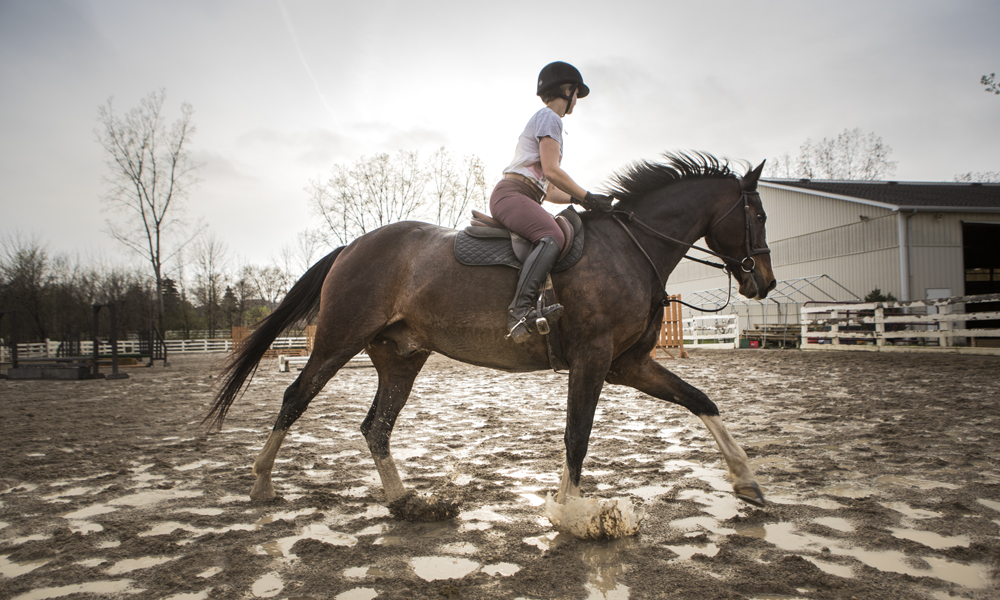
Likewise, she says, “if you pull back quickly on a horse, he’s not going to like it; if you jerk on a wheel, the car’s not going to like that.”
So, what does the immediate future hold for the hyper-scheduled Christie? “My plan is to keep driving the [crap] out of the Spec Miata,” she chuckles, noting that her 1.6L Spec Miata has been amazingly reliable despite her intense schedule.
As our conversation winds down – she’s home now, presumably about to tend to the horses and work on the racecar – Christie says, “Right now it’s nice because I have a job and I have a racecar – this will be a summer of doing as many Regional race weekends as I can.” I ask what she plans to do if there’s no race nearby? “I’m going to be either on a horse or backpacking or traveling. There aren’t going to be any free weekends.”
Somehow, that doesn’t surprise me.

Philip Royle
Read Philip Royle's articles
Latest News
Comments
Comments are disabled until you accept Social Networking Cookies. Update cookie preferences
If the dialog doesn't appear, ad-blockers are often the cause; try disabling yours or see our Social Features Support.