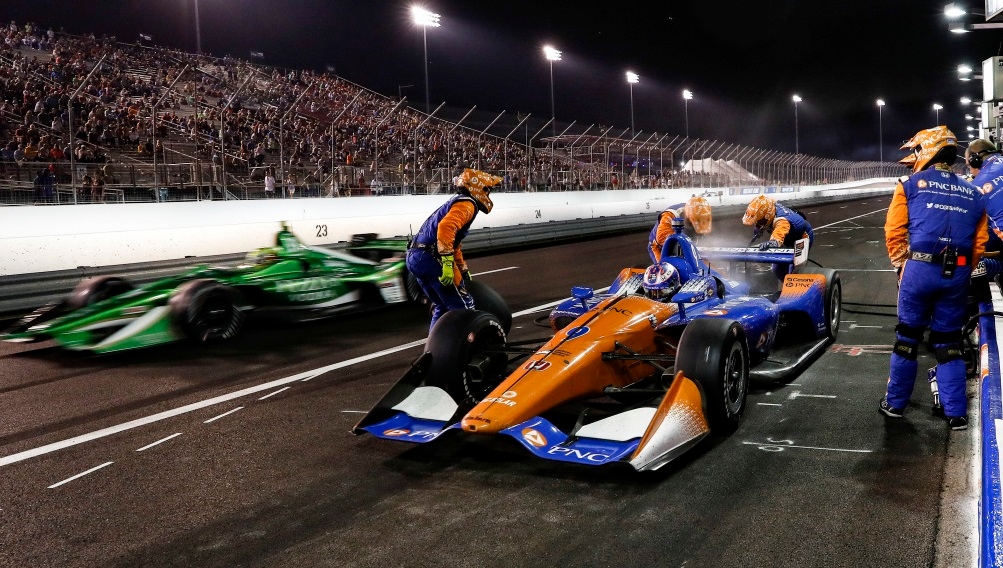
Image by Michael Levitt/LAT
IndyCar growth could push facility limits
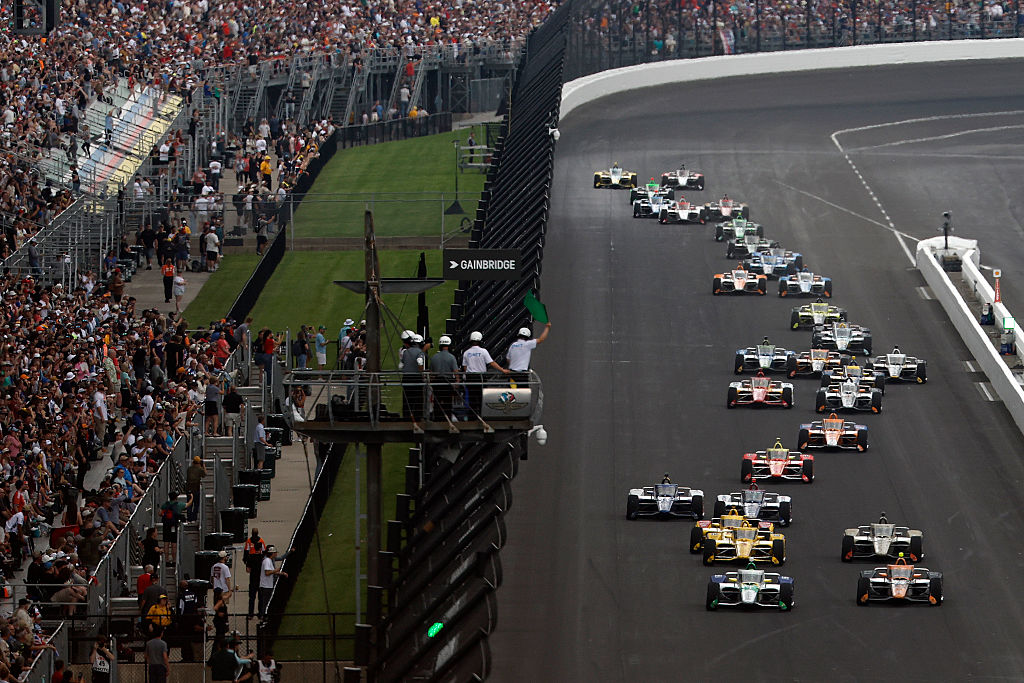
With the possibility of an increase in part- and full-time entries next season, the Verizon IndyCar Series is working on a contingency plan to determine the maximum number of cars it can handle at the various circuits on the calendar.
In many cases, particularly on road and street courses, a fixed number of pit boxes are available for use. It could lead to practical limitations for certain tracks if some of the positive growth pushes car counts to the upper 20s.
Outside of the Indy 500’s field of 33, the series has welcomed between 22 and 24 entries to most rounds this year. This weekend’s Portland Grand Prix is playing host to 25 cars, and for the season finale at Sonoma, it could stretch to 27.
And with the potential for at least two new full-time entries from Andretti Autosport with McLaren Racing and/or Harding Racing in 2019, and other teams looking to either expand or join IndyCar with part-time efforts, IndyCar competition president Jay Frye says the series does not want to be caught off guard if it experiences unprecedented year-to-year growth.
“We know, at least from informal conversations we’ve had with some teams, that it’s worth getting an understanding for the maximum amount of cars we could fit at each track if we end up in that position,” Frye told RACER. “We’ve known the basics of how many pit boxes there are, but we wanted to see if those numbers could be stretched at all if the need existed.”
Disregarding Indianapolis, which can accept 43 cars on pit lane, and most ovals, where unused space could be used to locate a few extra entries, the pit box findings have shown that every road and street course has a different story.
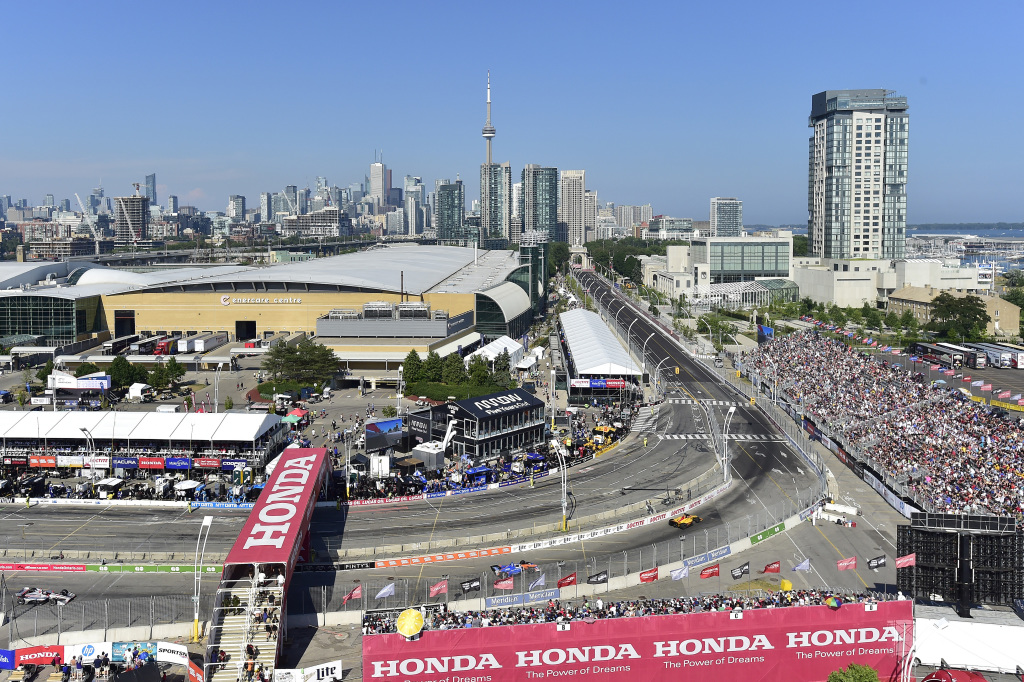
Toronto's Exhibition Place circuit. (Image by Scott LePage/LAT)
“Take Toronto, for example: we can get 23 cars onto pit lane, but that’s it, with the configuration that’s presently available,” Frye added. “No more. Then you look at Road America, and there’s room to have more than the [24] we have now. With some tracks, we have longer boxes that could be tightened to free up a few more spots. And there’s others where what we’ve got is what we’ve got. So we’ll see where we end up on how many we can fit and work with the teams from there.”
From the pit box matrix IndyCar has worked from this year, Mid-Ohio has the fewest available spots with 22, but was adjusted to wedge 24 cars in place for the July 29 race. Long Beach, with 27 boxes, was more than able to receive its 24 entries and elsewhere, most road and street courses have between 24 and 26 spaces to offer.
Some, like WeatherTech Raceway Laguna Seca, have shorter stalls, which would make further reductions to go beyond the current number of 24 stalls rather difficult. St. Petersburg, on the other hand, has the longest pit boxes in the series after the Indy and Gateway (pictured, top) ovals, and could, in theory, take a few feet from each of the 26 stalls to make 27 or 28 available.
As the series gets a better handle on how many cars are preparing to race next year, it will be able to give those teams a more definitive answer as to how many pit boxes await their entries.
Marshall Pruett
The 2026 season marks Marshall Pruett's 40th year working in the sport. In his role today for RACER, Pruett covers open-wheel and sports car racing as a writer, reporter, photographer, and filmmaker. In his previous career, he served as a mechanic, engineer, and team manager in a variety of series, including IndyCar, IMSA, and World Challenge.
Read Marshall Pruett's articles
Latest News


Comments
Comments are disabled until you accept Social Networking Cookies. Update cookie preferences
If the dialog doesn't appear, ad-blockers are often the cause; try disabling yours or see our Social Features Support.