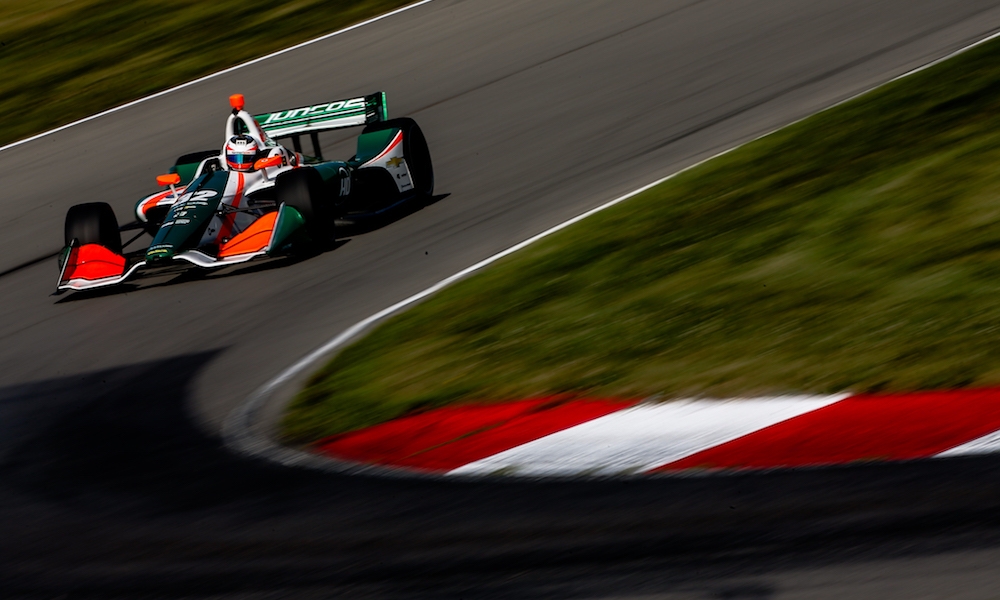
Rene Binder at Mid-Ohio. Image by IndyCar
IndyCar to introduce driver licensing system
IndyCar will roll out a licensing system that will require future drivers to meet certain criteria before becoming eligible to race in the Verizon IndyCar Series.
plans to bring IndyCar and Indy Lights into closer alignment
over the next five years, and accordingly, some drivers who would previously have been able to move directly into IndyCar from elsewhere may now be required to spend time in Lights first.“It’s for sure a guideline, something we didn’t have before, and as we’ve had a lot of expansion lately, we thought it was appropriate to create a formula on how to become an IndyCar driver,” IndyCar competition director Jay Frye told RACER.
“Not every series in the world is mentioned, so we’ll take each case individually, and some are streamlined for licensing like Formula 1 and the Monster Energy Cup Series. But overall, we want to focus this process and use Indy Lights as a training ground, where necessary, to get drivers ready for our diverse set of tracks and challenges in IndyCar.”
Outside of F1 and Cup, drivers can gain automatic eligibility for a license by finishing in the top three at the end of a full-season Lights campaign, or in the top five at the end of two full Lights seasons. Qualification from other series, including the WEC, Formula 2, NASCAR’s Xfinity Series, GP3/F3, Formula E, Pro Mazda, USF2000 and Formula 4, will depend on accumulating a set number of qualifying points over a two-year period.
In addition to the racing license, there will also be an IndyCar testing license that will require drivers to have met certain results or experience-based standards in IndyCar, Lights or Pro Mazda. According to the series, exceptions to the eligibility requirements may be made depending on an individual driver’s experience.
Based on the qualifying criteria, Foyt’s Matheus Leist (who finished fourth in his only Indy Lights season), Coyne’s Zachary Claman de Melo (who only finished one of his two Lights seasons in the top five) and Santino Ferrucci (insufficient points), SPM’s Robert Wickens (whose DTM achievements wouldn’t have automatically registered in the qualification process), Juncos’s Rene Binder (insufficient points) and ECR’s Jordan King (insufficient points) might have struggled to gain automatic race license eligibility.
However Wickens’ extensive resume and Leist’s three Lights wins in 2017 – including the Freedom 100 – would have likely made them especially strong candidates to be granted exceptions.
Mark Glendenning
Read Mark Glendenning's articles
Latest News
Comments
Comments are disabled until you accept Social Networking Cookies. Update cookie preferences
If the dialog doesn't appear, ad-blockers are often the cause; try disabling yours or see our Social Features Support.