Image by Levitt/LAT
PRUETT: Can two Bay Area IndyCar events thrive?
Should the Verizon IndyCar Series: A: stick with Sonoma Raceway as its lone Bay Area circuit, B: consider a switch to WeatherTech Raceway Laguna Seca a few hours south, or C: try and hold two road course events in Northern California next year?
Those are the three scenarios currently being debated as the open-wheel series puts the finishing touches on the 2019 calendar. For those who love picturesque venues with amazing food, wine, and great corporate getaway possibilities for all the sponsors in the paddock, the easy answer might be C.
But, and there’s always a but in situations like this, it might not be a slam dunk for IndyCar to double its annual presence above and below Silicon Valley. Not without destabilizing itself -- and both tracks -- if Laguna and Sonoma receive the green light.
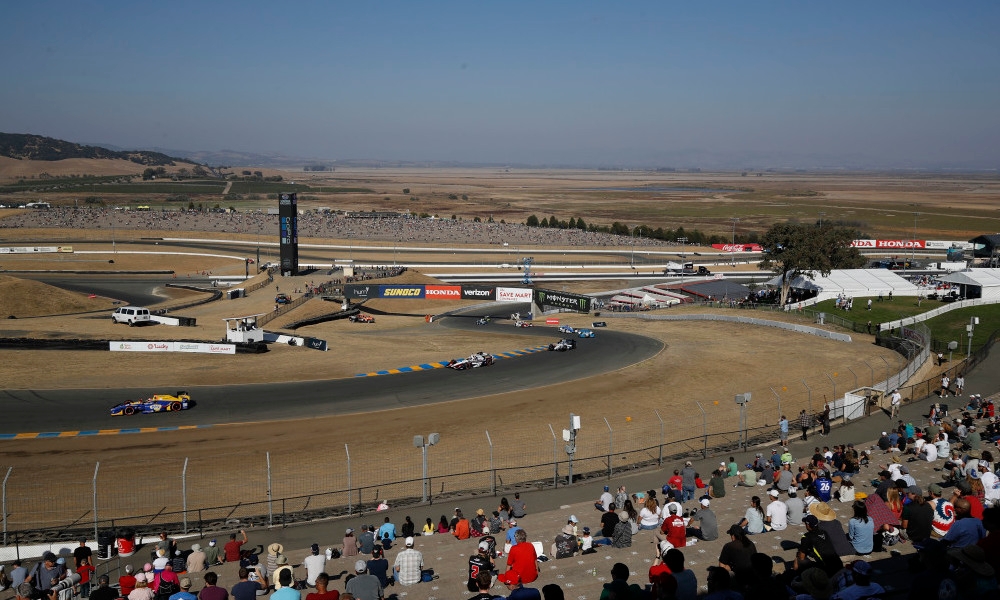
The most obvious concern involves diluting attendance by hosting two Bay Area IndyCar events. Sonoma, despite strong efforts to promote its IndyCar race, has not been burdened with an excessive number of fans. Interest was high when the modern IndyCar Series first appeared at the intersection of Hwy 37 and 121 in 2005, and with Danica Patrick and a few other stars at peak power, ticket sales were encouraging.
Image by LePage/LAT
Numbers have long since settled at whatever they’ve been in recent years, and while small upticks in growth have been reported, big stretches of empty seating atop Turn 2, down through the Esses, and overlooking the pits remain hard to ignore.
And if Sonoma’s non-NASCAR crowds have been light, Laguna’s non-FIM Superbike masses have been even smaller.
Sadly, turnout for established road racing properties like IMSA and the Pirelli World Challenge series at the Monterey County-owned property have been tiny. Even at a grand event like the Rolex Monterey Motorsports Reunion, foot traffic is heavy on Saturday -- the day before the Pebble Beach Concours, but far from busy on Thursday, Friday, or Sunday.
With both tracks, the struggles to put a meaningful audience in front of open-wheel and sports car series that draw huge numbers elsewhere -- Road America, Canadian Tire Motorsport Park, Lime Rock and VIR, for example -- should be a cause for alarm.
As someone who’s fortunate to have Laguna and Sonoma as home tracks, crowd size has been the only negative to report on a regular basis. While it’s easy to blame the respective series and tracks, it’s more likely a result of having too few fans in the region to support open-wheel and sports car races. NASCAR’s also seen a consistent decline, which speaks to shifting interests in the Bay Area.
In what was once a hotbed for road racing, the sport’s footprint, while still visible, has been shrinking. Where I’m fully convinced Road America could host two IndyCar races each year and pack the house on both occasions, I’d dream of seeing Laguna or Sonoma even half full for one open-wheel or sports car event. Different places, different responses to the products being offered.
Having listened to the local radio ads, watched TV commercials, and seen all manner of online advertising for the aforementioned IndyCar and sports car events, it’s possible those series are actually capturing a high percentage of fans who are interested in what they’re offering. As much as I’d like to believe there’s a great untapped audience to grab, or a large contingent of lapsed fans waiting to fall in love with road racing again, I just haven’t seen evidence of it locally.
It makes picking A or B -- one venue or the other -- a worthy candidate in the battle of Bay Area IndyCar venues. Especially at a point in time where the series and ISM Raceway in Phoenix parted ways after dismal attendance and financial losses brought an end to the experiment.
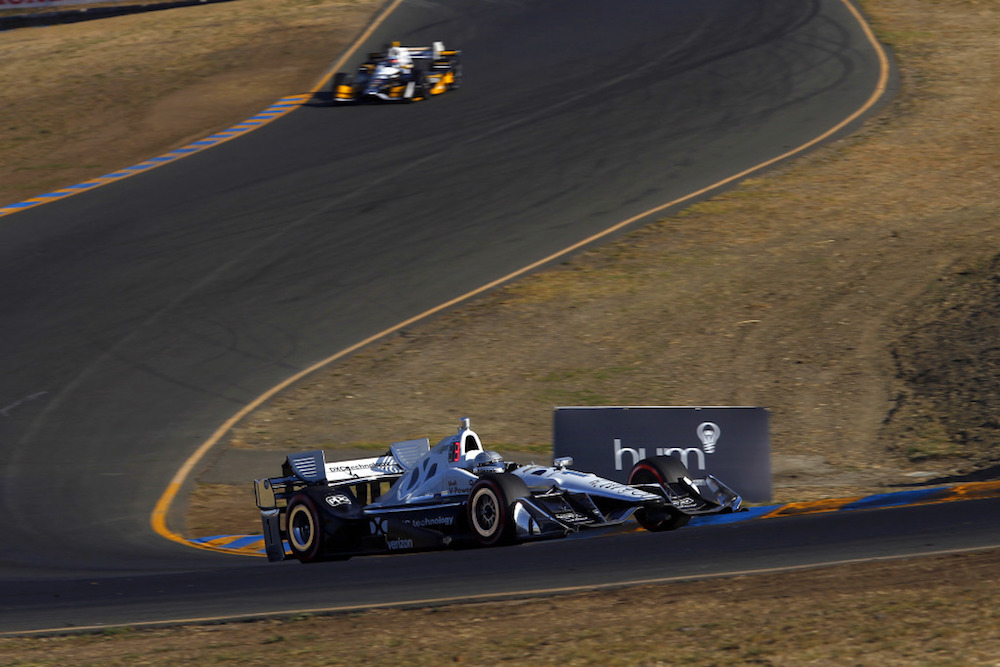
Image by Abbott/LAT
If we ignore crowd size, Sonoma is where IndyCar’s teams -- and the series itself -- bring VIPs to show gratitude and, in some cases, finalize business deals for the following year. After the Indy 500 (and maybe Long Beach), Sonoma is where the love is returned to those who make IndyCar’s corporate engine sing.
Laguna holds the same value for IMSA and other series that don’t have Sonoma on the calendar. It’s pure wining and dining, plenty of golf, and all with Monterey Bay as the backdrop. If IndyCar were to choose both, it would effectively be picking a second set of hotels, restaurants, and 18-hole options for its CEOs, CFOs and CMOs in attendance.
And while that isn’t a bad thing in terms of business relations, what’s more important? Offering two Bay Area IndyCar holidays to its high rollers, or ensuring those guests -- and all who watch the races at home -- see strength and vitality in the grandstands and open spectator areas?
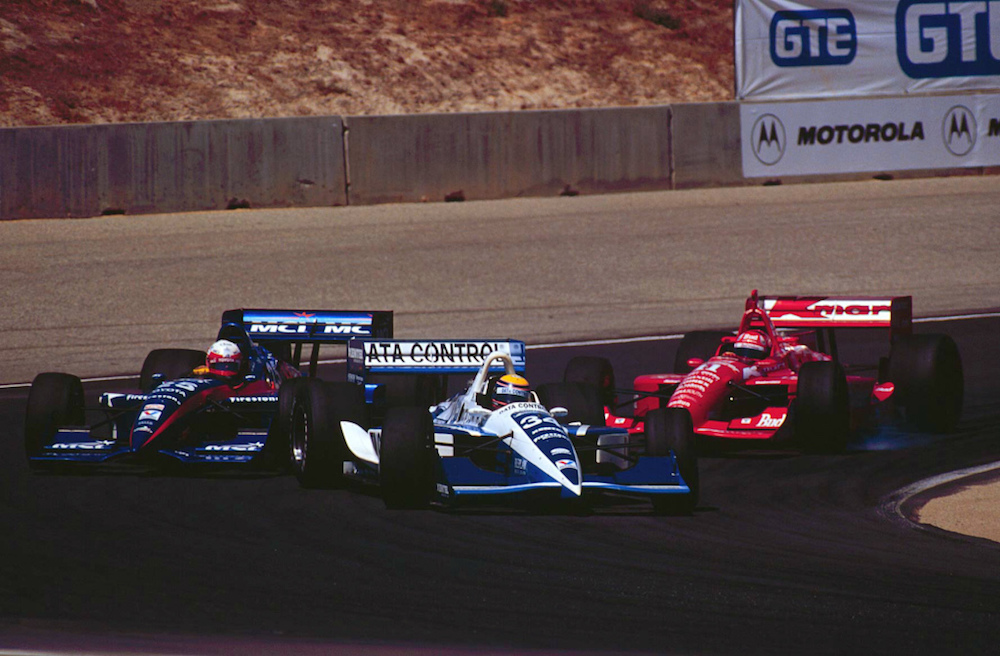
Roberto Moreno, Max Papis and Christian Fittipaldi at Laguna Seca, 1996 (Image by Levitt/LAT)
If it’s the latter, investing in one event -- take your pick -- would be another reason to opt for A or B. Whether it’s an extension for Sonoma when its contract ends following September’s season finale, or an attempt to rebuild interest for IndyCar in Monterey, the modest attendance figures and costs involved have the men in charge of the tracks concerned option C could tank both races.
Sonoma Raceway president Steve Page and new Sports Car Racing Association of the Monterey Peninsula (SCRAMP) CEO Tim McGrane, who runs WeatherTech Raceway Laguna Seca on behalf of the county, shard their unfiltered thoughts on the single-or-double topic.
“I think one MotoGP event in North America works, two didn’t, and three really didn’t,” McGrane said of the motorcycle series that once raced at Laguna Seca, and was its biggest event before the Indianapolis Motor Speedway and Circuit of The Americas were added to its calendar.
“There are only so many people who are rabid fans of a particular race series that have the time and money to spend on attending events. I don’t think this market would support two major [IndyCar] events. Any numbers that are taken away because fans have two choices in the same arena is certainly one path I wouldn’t choose to go down.”
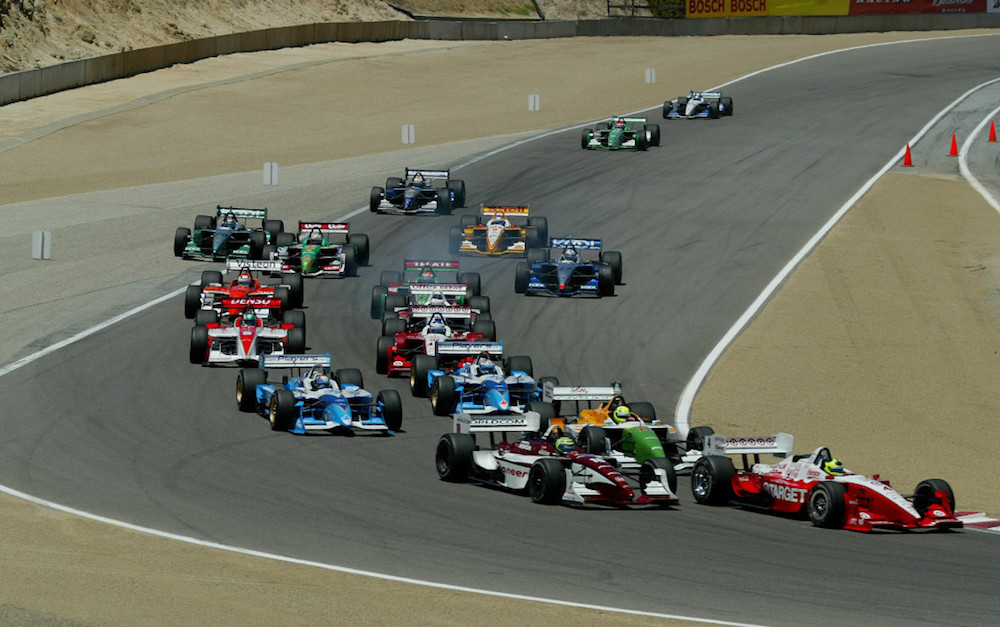
Start of the 2002 CART race at Laguna Seca. (Image by Hill/LAT)
Page, who grew up working at Laguna Seca, agrees with McGrane.
“I have a great sentimental attachment to that racetrack, and there’s such great memories from when CART visited there,” he said. “You’d have a big outpouring of people wanting to be there for the first year. It’s human nature. And I also know that a lot of that attendance would come at our expense.
“[Holding dual events] would absolutely not thrive. Neither event, at least by the second year, would be as large as our event is currently, either from fan support or corporate support. You’d end up with two smaller events. I can’t see how that would be in IndyCar’s interest.”
Page also reiterated Sonoma Raceway’s desire to remain on IndyCar’s schedule.
“We are very anxious to find a formula where we can continue to be an IndyCar track,” he continued. “Over a decade and a half, we have invested a lot of money and energy into the capabilities of the staff to built the event, and we’re seeing modest growth. It would be heartbreaking for this group here if we were in a position where we could not continue with IndyCar.”
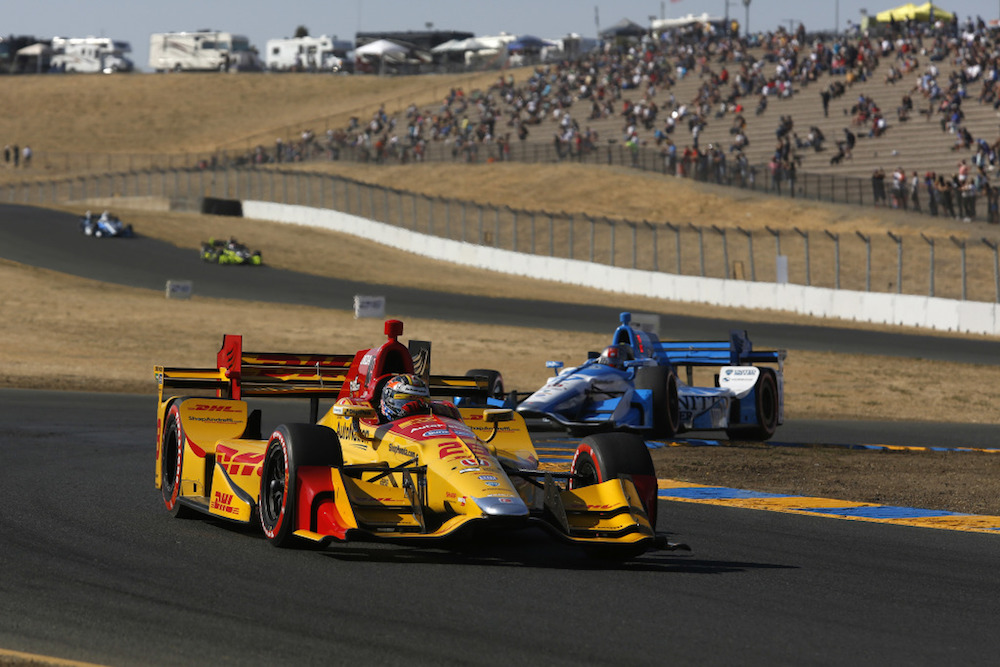
Image by Abbott/LAT
If Bay Area IndyCar fans get two chances to see the series race locally in 2019, it could feel like a second Christmas has been announced. But are there enough fans to warrant the extra holiday? With a Phoenix vacancy to fill and Homestead said to be out of the running, a Bay Area double sounds amazing, but at what cost?
Since overcrowding isn't on the cards, profit would be the other value to explore. We know Monterey County has placed tight financial controls on SCRAMP, and SMI, owners of Sonoma Raceway, aren’t prone to burning large wads of cash on anything other than NASCAR, so big paydays are unlikely at both venues.
And maybe there’s some other value I’m missing. But if McGrane and Page are correct, the real question to answer is whether two IndyCar races would survive by Year 2. I’m not sure I want to find out. Pick one, push like hell to make it a success, and look elsewhere for a new event.
Marshall Pruett
The 2026 season marks Marshall Pruett's 40th year working in the sport. In his role today for RACER, Pruett covers open-wheel and sports car racing as a writer, reporter, photographer, and filmmaker. In his previous career, he served as a mechanic, engineer, and team manager in a variety of series, including IndyCar, IMSA, and World Challenge.
Read Marshall Pruett's articles
Latest News
Comments
Comments are disabled until you accept Social Networking Cookies. Update cookie preferences
If the dialog doesn't appear, ad-blockers are often the cause; try disabling yours or see our Social Features Support.