Future strategies key to IndyCar title sponsor search
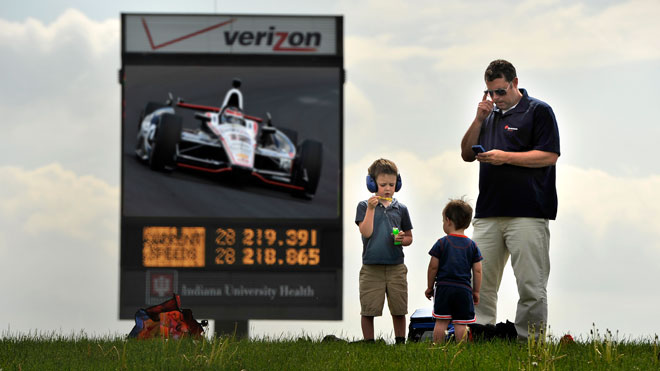
Verizon IndyCar Series CEO Mark Miles wasn't taken by surprise when the telecommunications company confirmed its intentions to depart after its five-year contract runs its course. Set to leave after the 2018 season concludes, a downturn in activation by Verizon throughout the most recent championship run foreshadowed the news that emerged last week.
Ongoing talks between IndyCar and Verizon, while encouraging at times, came to an end last month and with more than a year to conduct a search for a replacement, Miles says the series won't rush to find the next Verizon.
"We have not started looking for a successor to Verizon in earnest," he told RACER. "We're in the marketplace in the normal course of business all the time talking to companies about whether they have an interest in motorsports, and IndyCar racing.
"We have some parties where there's a twinkle in their eye. But we've not really begun to talk about title sponsorship with anybody, while thinking two things. One, we need to be further along in the next licensing of our media rights. And two, we needed to make it known that Verizon wouldn't be coming back as a sponsor after next year."
Miles credited Verizon for the early warning on its plans to let the five-year contract run its course without renewal.
"So, I don't have a queue that I can say these five companies are waiting to talk to us about title sponsorship," he said. "But saying that, Verizon was good enough to give us enough lead time to feel confident that we can get the job done over the next year. And we know they'll continue to be a great partner in the final year of their contract."
With the door open on two major partnership fronts, Miles says bringing IndyCar's next title sponsor and broadcast partner(s) into a consolidated working relationship is what he's seeking.
"That's an ideal scenario, and one that we are talking about in the marketplace related to licensing our media rights," he added. "From a traditional broadcaster perspective, we've said for some time we're more interested in trying to arrange to have one broadcaster with all of the series, if that's possible.
"Typically, it will be meaningful for a prospective sponsor to know what kind of broadcast exposure they will have – and that affects value, and interest, and what kind of creative relationships they could work out with broadcast partners. On the one hand, you'd love to avoid a situation where Coca-Cola is your title sponsor, and Pepsi buys all the ads on your broadcast.
"There's a lot of ways for a company to create a presence on a broadcast from entitling, being involved in graphics and content, in data to sponsoring split screens. All the fans see it all when they watch television. I think it's important to have a better-developed sense of who the broadcast partner will be before concluding the deal and explore whether it's possible to get greater alignment with sponsorship."
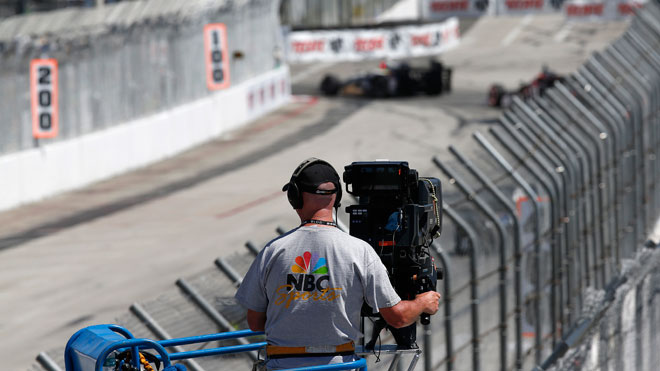
Miles has also kept a keen eye on the changes coming to NBCSN next season when Formula 1 moves over to ESPN. The switch in American broadcasters came when F1's commercial rights holders, Liberty Media Group, declared its intent to sell F1's streaming content separately from the broadcasts, which held little interest for NBCSN. Like Liberty, Miles is exploring similar digital delivery options for IndyCar that may or may not be tied to its television partner.
"What can be done with a traditional broadcaster in terms of what's called over-the-top – digital coverage – remains to be seen. That's part of the complexity in these discussions," he said.
"In the case of Formula 1, NBC was simply not willing to make an arrangement with Formula 1 where NBCSN was their broadcaster on television, and then they're pitted against the rights holder. Formula 1 is going to compete with them by going direct to consumers to make offerings over-the-top, which consumers can get through streaming, on the phone, and whatever other way. A simple way to say it is if we're buying your rights, and putting you on television, we don't want to compete with you for eyeballs.
"And that was NBC's firm view as we understand things in this recent Formula 1 deal. Obviously, ESPN didn't have that concern to that extent. It's a fluid marketplace, as we've found. There's interest in taking all of it by some digital broadcasters, there's interest in groups that have traditional linear platforms, and digital platforms."
Navigating the network and streaming options is where Miles continues to find interesting choices.
"There's just a lot of different ways as we've said to slice and dice it," he continued. "And suffice it to say that our first priority's in exposure for the sport. And we also care about the economics that we can achieve in the marketplace. Those are the top two priorities."
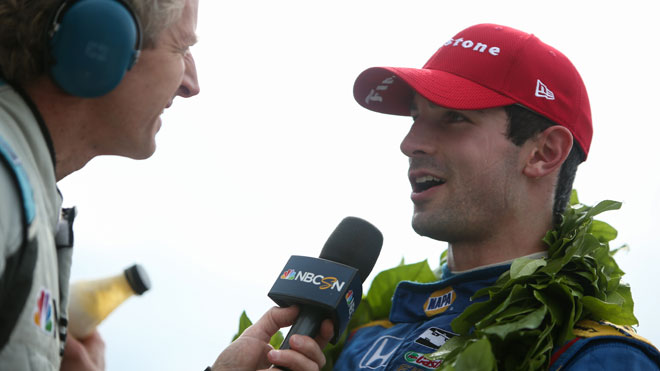
Miles expressed favorable feelings for NBCSN and all it has done to position IndyCar as one of few North American racing series to generate modest growth in viewership, but also cautioned against positioning NBCSN as the only outlet on its radar.
"NBC has been a good partner, and they have grown their audience for IndyCar now for a few years in a row in a meaningful way," he said. "One of the ways that they've achieved that is through careful scheduling with us to try to time our broadcasts with great lead-ins, and to avoid conflicts, that could have the effect of reducing our audience.
"And so that's just been terrific work. They think, and I think it's highly probable that if they had the whole series to air, they could do even more to promote it all then they have been able to do with in a half a loaf. And they've got a pretty good track record of promoting properties, like the Olympics as an example. They're a great partner, and they have a lot of attributes.
"But it's interesting, in light of the recent Formula 1 development, to know that those who were saying ESPN is out of motorsports were wrong. They're alive and just made an agreement to continue, in this case take Formula 1. And there are lots of others out there. So our process is to know who's interested in what and to figure out how to put things together in the most powerful way possible. There's a dozen companies we're talking with."
With the rapid development in over-the-top delivery options and partners, Miles is focused on getting IndyCar's next television and title sponsor deals done first. Digital solutions could take longer.
"I feel really good about where we are, and the amount of time we have to make the next broadcast television agreements, as well as sponsorship," he said.
"Everything is in place through all of next year, and we've been working hard on the media part already. We'd rather get it to the best place possible for IndyCar, rather than get it done the fastest. But I think we'll have a really good handle by the end of the year on the domestic media situation. And that's some good time to be developing sponsor prospects."
Presented by:

Latest News
Comments
Comments are disabled until you accept Social Networking Cookies. Update cookie preferences
If the dialog doesn't appear, ad-blockers are often the cause; try disabling yours or see our Social Features Support.