INSIGHT: How IndyCar is harnessing new media
Attempts to make sense of motor racing's fluctuating television ratings has all the appeal of chasing a spinning wheel nut down pit lane. It bounces, sparks, and meanders, all while having no clear destination in sight.
NASCAR has settled into an unfortunate decline in its Nielsen ratings, but on occasion, blips of encouragement send reminders that stock car racing can still draw decent TV figures. IMSA's best days come when its sports car series is bumped up from cable to the big FOX network channel, but those are the exceptions rather than the norm. And then we have IndyCar.
With two races remaining, the series reports that the 2017 season has produced an overall increase in television viewership on NBCSN. That's great. Amid that growth, ABC slipped somewhat as IndyCar's crown jewel, the Indy 500, delivered its lowest audience since it began airing live in 1986. That's troubling.
It's also emblematic of the world's unpredictable and constantly evolving media consumption habits.
Some of the old-timey delivery devices surprise us with happy numbers, but for the most part, networks and the racing series they deal with have come to accept the days of large audiences sitting at home, tethered to a flatscreen TV, are numbered. The metrics show that other than those age 50 and older, traditional TV use has been spiraling downward since 2014.
It makes the need to grow TV audiences before the eventual changeover to digital delivery – when live streaming and on-demand everything becomes the new standard – rather urgent.
IndyCar, in particular, has ventured down an interesting avenue to try and cure the problem by courting former fans while simultaneously pursuing a newer and younger base. If IndyCar's formula works, and it can build a wider audience to take into the non-tethered future, it could be the new blueprint for increased prosperity.
"When we first started forming our plans to improve the TV ratings, we looked to a lot of prior research and concluded the best and fastest way to see recovery and growth in our fan base was to reconnect with what I refer to as 'lapsed fans,'" IndyCar chief marketing officer CJ O'Donnell told RACER.
"We wanted to reach out to folks who understood IndyCar racing but who had wandered away from the sport in the more difficult times. We looked at people who were fans in the past and just needed a reason to come home, and we gave them that reason. That has been what fueled our success in the last three years."
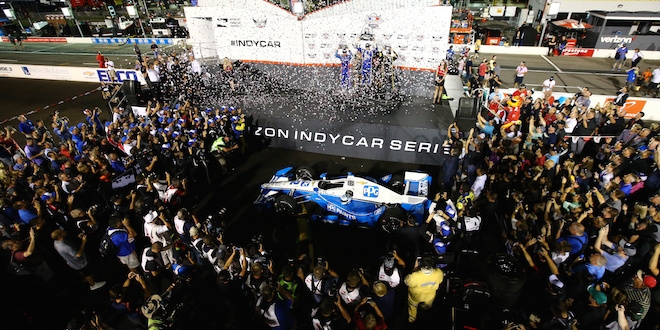
According to O'Donnell, IndyCar's ratings growth from 2013-'16, with both ABC/ESPN and its cable TV partner NBCSN, can be attributed to welcoming its educated (but lapsed) fans back to the family.
"We purposely bought advertising in magazines, newspapers, websites that reached that audience, and chose media outlets throughout our communications plan that reached an older demographic, which has been our core audience," he said.
"That has all been very successful, with viewership growth of 55 percent in the past three seasons. This TV ratings growth, the growth on Facebook, growth really everywhere you look has come from the audience we've been speaking to. It is a baby boomer or older demo that was easy to woo back. We wrote a strategy, and it worked. That has been a path we have been on successfully for some time."
Stoking the passions of fans who once followed IndyCar, or NASCAR, or IMSA – series with long histories and multiple golden eras – was always going to be the painless sell. Building new fans, which can take years, is where O'Donnell and Brian Simpson, IndyCar's digital/social media manager, had to write a new playbook after the 2016 season concluded.
"We conducted some research with millennials in the post-season. That started the second phase of our initiative, which is where we start to reach out to folks under the age of 35, and try to embrace them as part of our world," O'Donnell said.
"They're going to be a little bit harder to win and it's going take a little more time, but we think we're ready now to expand our audience reach and communicate to a wider demographic."
Every series of note has arrived at the same conclusion on how to capture more youthful attention, and most have crafted plans – some bigger than others – to use social media as the bait.
With Twitter, Facebook and Instagram as the new standard distribution outlets for all the snippets of information and entertainment that were once reserved for TV, the push of video content to social media continues to increase, but is has been largely reserved for each series and its broadcast partner.
In most cases, the firmly-held video rights for on-track footage limits the social media reach to however many followers the broadcaster and the series have at their disposal. Looking for something different, O'Donnell and Simpson went in the opposite direction with video distribution and came up with a fresh, additive strategy that was presented to the paddock during the offseason.
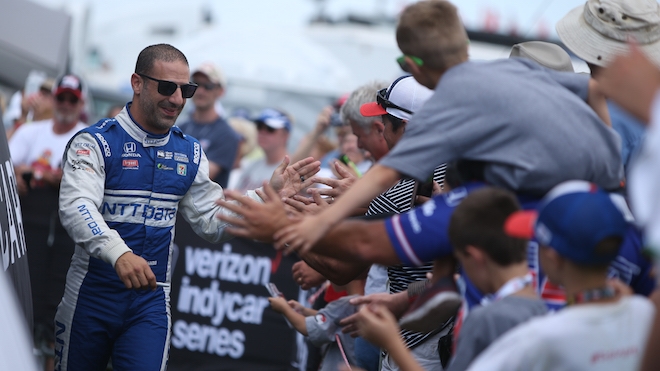
The series floated the idea of turning drivers and colorful team members into instant content creators and distributors of IndyCar media. IndyCar is asking drivers, team owners, or anyone of interest to grab their phone – or hand it to their PR rep – to record a short clip and upload it to a series portal, where it is edited and then posted to social media within minutes of its arrival.
Watch as@JRHildebrandrecaps his first day of open testing in Phoenix as a full time member of@ECRIndypic.twitter.com/4DpQz6IJ7a— IndyCar Series (@IndyCar)February 11, 2017
//platform.twitter.com/widgets.js
Rather than have 20-plus drivers posting independently, IndyCar widens its reach through empowering its participants to grow its social media audience through one central hub.
Teams and drivers have been encouraged to film and send whatever piques their interest. Through the open channel that has been established, IndyCar has built a field of reporters to speak directly to new and existing fans.
The math was the easiest part to pitch. Using the series and one of its most popular drivers as an example, IndyCar's 300,000 Twitter followers, combined with Chip Ganassi Racing's Tony Kanaan and his 675,000, would reach a consistent 975,000 by opening the collaborative door throughout the season.
At present, IndyCar is the only major domestic series with this plan in action, but it won't take long for others to follow.
You're still going to see Driver X post videos urging everyone to rush out and buy their sponsor's products, or to vent about their first-world problems, but the new twist—the integrated IndyCar-grade videos in the middle of a test session—has given the series and its creators an online edge.
//platform.twitter.com/widgets.js
"Video is probably the best way to get our sport in front of new prospects, younger prospects," O'Donnell said. "Having high quality video content is core to what we are doing."
The second part of the new plan – one that ties directly to video rights – is where IndyCar is venturing into uncharted territory. Teams in most professional racing series, including IndyCar, are required to pay stiff fees to gain usage rights for on-track footage. It's the reason why most action clips on social media, whether it's a pass or a crash or something noteworthy, is posted directly by the series or its broadcaster.
O'Donnell and Simpson modified this practice by offering post-session clips to IndyCar's drivers and teams to help with their individual social media efforts. Through requests made to IndyCar, entrants can ask for short highlight video clips to be produced after a practice session or other outing during an event, and once IndyCar's expanded digital video production team processes the request, the clip can be pushed to the web, for free.
"It's been widely accepted by the paddock," Simpson said. "We now have weekly video content coming to our social channels from users ranging from drivers to team managers. It's given fans a unique behind-the-scenes perspective not easily produced in the past."
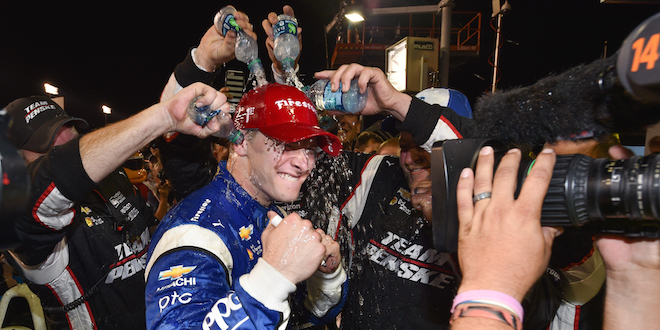
IndyCar can share a 30-second Kanaan clip or one for Josef Newgarden, or a hybrid clip that mashes all four Andretti Autosport drivers into a highlight for the team's use to feed each driver's followers in individualized ways. Beyond buying ads and banners to draw attention to a race, handing custom videos to IndyCar's teams and drivers – its featured attractions – to drive attendance or viewer ratings completes a new promotional loop.
In time, O'Donnell will have hard data to determine whether its efforts to recapture lapsed fans and the two-way video content creation initiatives have met their mark.
"The research says young adults want to find someone in the sport, an athlete or driver, they can associate with, connect to on an emotional level," he said. "We've asked our drivers consistently to have a presence on social media to help create those emotional connections with fans, and I truly believe those efforts will help us to win as we go forward. Those efforts are a differentiator, a strength, an asset that we cannot discount. I don't know how we get it done without them."
free live streaming
of all sessions that aren't shown on ABC or NBCSN, O'Donnell has attached a significant portion of IndyCar's growth strategy to the digital world. And with a new TV contract to negotiate for 2019 and beyond, the current strategy of using the web to boost the almighty Nielsen number should, in theory, eventually pay off."I am convinced that for some kids the very first time they get introduced to IndyCar it will be on Facebook and Twitter or Instagram," O'Donnell added. "The very first media they see will be a highlight or stream that we produced and sent through social media. If those experiences are compelling, we may just have a fan for life, but it will take some time to harvest that audience and see that success."
Presented by:

Latest News
Comments
Comments are disabled until you accept Social Networking Cookies. Update cookie preferences
If the dialog doesn't appear, ad-blockers are often the cause; try disabling yours or see our Social Features Support.