In RACER Magazine: Thunder & Lightning
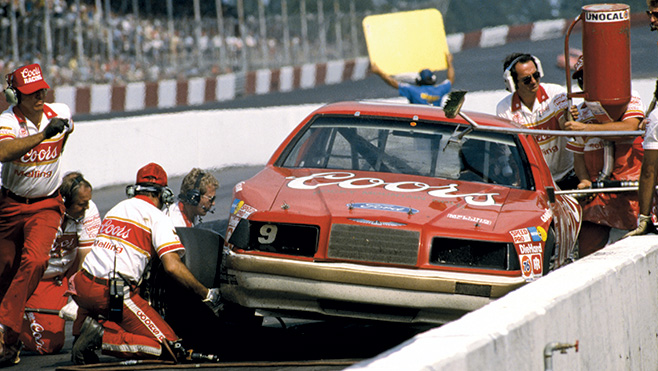
For a time in the mid-'80s, Bill and Ernie Elliott bottled NASCAR lightning with their super-slick and powerful Ford Thunderbirds, the fastest stock cars ever raced.
Bill Elliott was never much for talking. Yes, he was the 16-time NASCAR Most Popular Driver, and someone beloved by his fans. But "Awesome Bill from Dawsonville," as the Georgia driver was known, always preferred to let his racing do the talking for him.
Without question, Elliott's record from 1985-'87 spoke for itself: 19 wins, 40 top fives and 23 poles in those three seasons. Included in the mix were Daytona 500 wins in '85 and '87, and an All-Star Race victory in '86. In '85, Elliott became the first driver to win the Winston Million by capturing three of NASCAR's four major races.
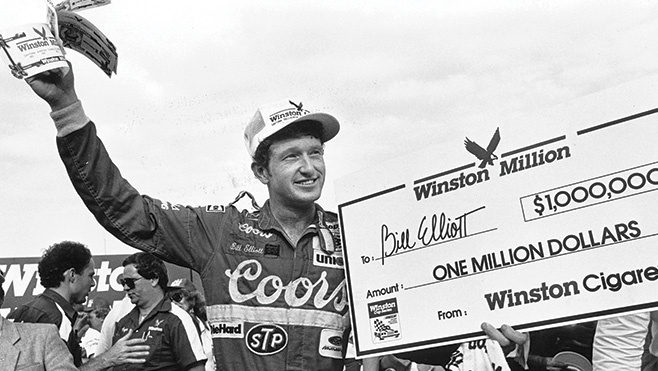
Characteristically, Elliott is very modest when it comes to talking about the phenomenal speed of the No. 9 Melling Racing Ford Thunderbirds he drove during that era. "Well, I often said when Ford came out with the T-bird it was a very aerodynamic car, and I think we kind of understood it very well," he says. "And that helped lead us to the things that we did as far as the car goes."
Uh-huh. Truth be told, there was more to it than that – a lot more. Elliott and his brothers, Ernie (who built the engines and served as crew chief) and Dan (who built the gears), were ahead of the field when it came to aerodynamics. Way ahead.
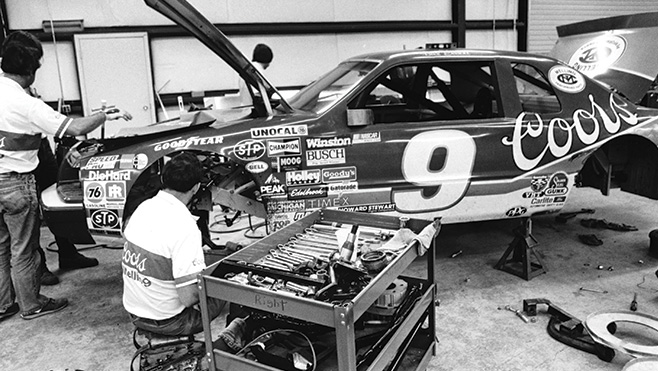
"From the aero standpoint, I can just say that having run all of our major cars through the wind tunnel, theirs was the best by far, as far as drag, drag horsepower," says Hayward. "But it was still aerodynamically balanced well. The thing that they did the best – and let me just say right up front, everything met all the templates, was legal, etc., etc., so no funny stuff went on – was that they were able to build the bodywork very tight around all the components that had to meet the templates. It had just a slightly smaller frontal area than the rest of the cars."
The result was that the No. 9 pushed a lot less air than the other Fords, which made it especially fast. "They were significantly better than other cars," says Hayward. "It wasn't like they had a .301 coefficient of drag and somebody else had a .305. They were like .28, .29, and other guys were like .300. Now that may not sound much, but it is. It's a lot."
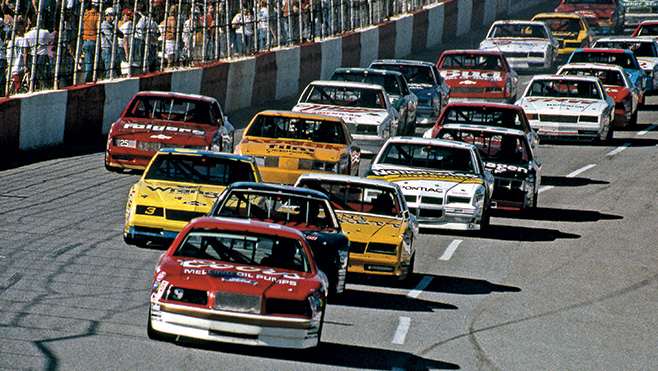
Back in the heyday of the Elliotts, NASCAR's rules were far less restrictive than they are today, which allowed the team to run narrower cars than some of their competition did.
"They had really good, slick bodies," says Wood Brothers Racing co-owner Eddie Wood of the Elliotts' T-birds. "Looking back, some of their cars were narrow. There wasn't a tread-width rule. You could run as narrow as a 56in. tread width – 56in. to 60. They were one of the first ones to pick up on the straight-side cars and things like that. Bill and Ernie were on to that a little earlier than other people."
Get the full version of this story in the 2017 Great Cars Issue of RACER magazine, on sale now. Take a video tour of the issue:
click here
, or to buy The Great Cars Issue online, click here.RACER is also available digitally for Apple and Kindle Fire devices. RACER Digital has the complete content of the magazine's print edition formatted for mobile viewing. With RACER Digital, you'll have access to your RACER content all the time, wherever you are.
The RACER app can be found by searching for "RACER Magazine" in the Apple or Amazon App stores. The app is free and includes issue previews and the RACER.com newsfeed. Individual issues can be purchased for $1.99 and an 8-issue annual subscription is $9.99. Back issues are also available.

Latest News
Comments
Comments are disabled until you accept Social Networking Cookies. Update cookie preferences
If the dialog doesn't appear, ad-blockers are often the cause; try disabling yours or see our Social Features Support.