200 mph IndyCars possible on road courses in 2018
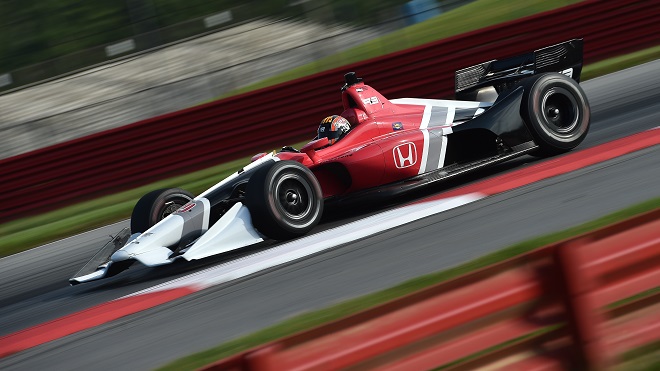
The intentional reduction of aerodynamic downforce and drag with IndyCar's new 2018 road course/short oval bodywork has produced an added benefit many fans will welcome.
As found at the most recent tests at Mid-Ohio and Iowa, top speeds have increased by a healthy margin, and it's due to the Verizon IndyCar Series' efforts to cut down on the extreme levels of assistance from Chevy and Honda aero kits that generate cartoonish cornering speeds.
Although the exact figures are still being calculated, IndyCar aero director Tino Belli expects the design changes to the 2018 bodywork to cut the maximum downforce available in road/street/short oval configuration by 15 percent or more compared to what's available today, and it's already showing on the radar guns. The appreciable jump in straightline speed has also had an effect on the new 2018 braking system made by the Performance Friction Corporation.
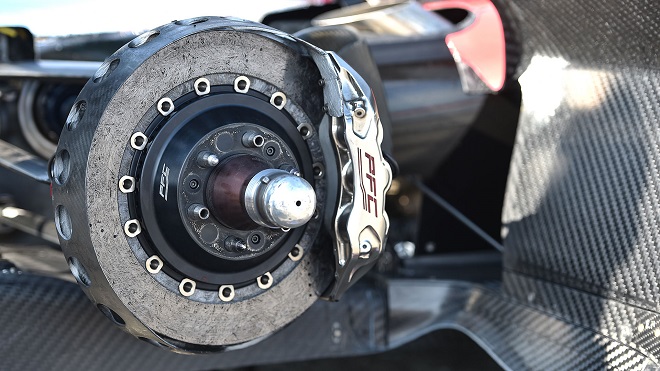
To ensure the 2018 road/street/short oval package has sufficient front brake cooling, IndyCar will use its final test next month on the Sebring short course to validate modifications to Chevy's front brake ducts, which are carried over from its aero kit as standard for all cars next year.
going into production
, but the only thing we have a little bit of work to do is on the front road course brake ducts," Belli told RACER. "The real reason for wanting to do the Sebring test is because on the maximum-downforce circuits, which is a lot of our circuits, the 2018 bodywork doesn't produce the same amount of downforce and therefore the same amount of drag as the current car has."It means top speed will be seven to nine miles an hour higher, which puts a lot of work into the brakes, which also means a lot of additional temperature goes into the brakes."
As RACER chronicled at the beginning of the season, the required use of Brembo brake calipers, which came as standard equipment on the Dallara DW12 in 2012, and new friction material from PFC led to immediate cooling issues. Through collaborative work between the series, its teams, and vendors, increased road/street course cooling capacity was allowed, which eventually mitigated the problem.
With the plan to move away from Brembo entirely for 2018 in favor of PFC, portions of each 2018 bodywork test conducted by IndyCar with Team Penske and Schmidt Peterson Motorsports have been dedicated to tuning PFC's complete caliper/disc/pad package, including last week at Iowa.
"There weren't any surprises," Belli said. "The PFC calipers are working very well and the drivers are happy with them. We were checking the boxes on making sure the pads don't drag and any of the reliability issues that could emerge."
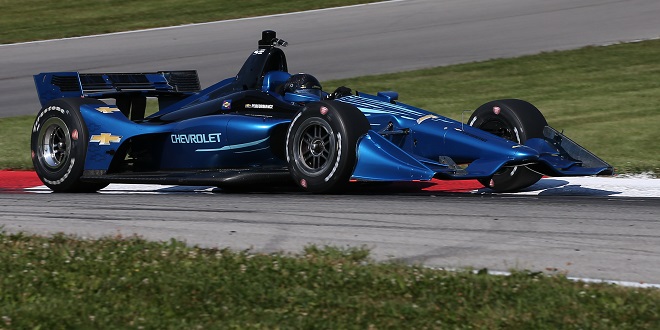
"Sebring was always the check-off on brakes, and we saw some of the higher temperatures at Mid-Ohio, so we'll go to Sebring to make sure everything is good for the street circuits and the other high-use circuits for brakes," he added.
Using Belli's top speed increase figures, the faster Indy cars could crack 200 mph at tracks with long straights like Watkins Glen and Road America.
IndyCar's trap speeds captured Sebastien Bourdais at a peak of 191.8 mph in the race at Watkins Glen in 2016, and during the recent visit to Road America, Esteban Gutierrez hit a nearly identical 191.7 mph.
Presented by:

Latest News
Comments
Comments are disabled until you accept Social Networking Cookies. Update cookie preferences
If the dialog doesn't appear, ad-blockers are often the cause; try disabling yours or see our Social Features Support.