ANALYSIS: IndyCar's 2018 side impact concepts
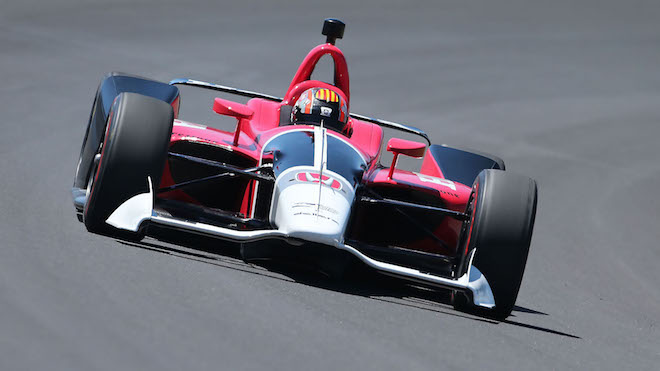
The largest physical change to IndyCar's new 2018 bodywork is found with reprofiled and reimagined sidepods. The concept employed for 2018 runs counter to everything that has been used on the Dallara DW12 from its introduction in 2012 through the current installation of custom aero kits manufactured by Chevy and Honda.
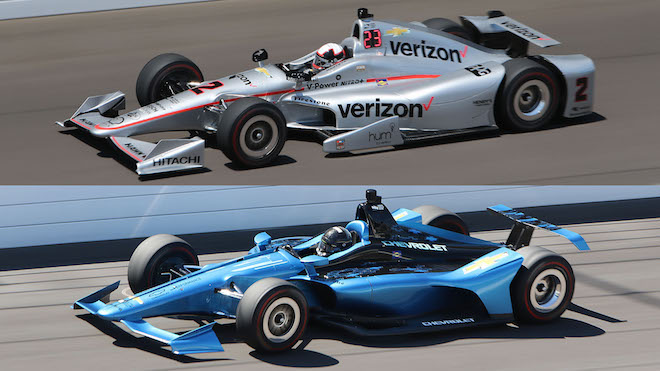
With the 2012-17 sidepod designs, a reverse "Coke bottle" shape has been in effect that starts with narrow, tapered radiator inlets that hug the cockpit and flare outward as they reach the back of the car.
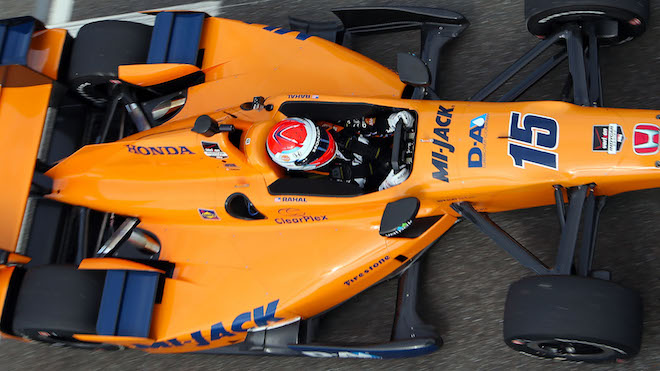
For 2018, Dallara and IndyCar have created a more traditional sidepod with wide radiator openings next to the cockpit that taper inwards to form a shape similar to the top of a coke bottle at the back of the DW12.
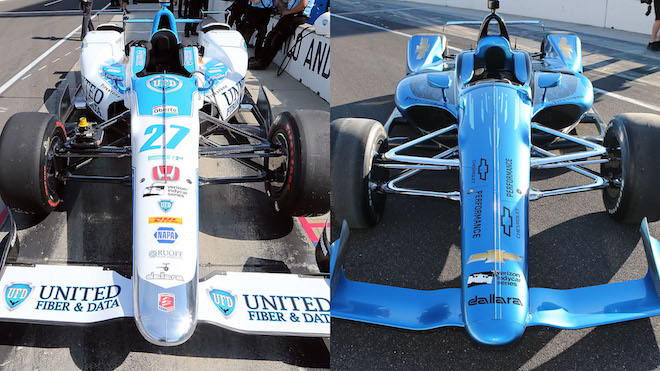
The fundamental alteration carries strong styling improvements, but at its core, the sidepod rethink was done in the name of increasing side impact protection.
Looking at the current side impact solution for the DW12, IndyCar added crushable structures on both sides of the cockpit (in red) that are identical to the purpose served by the rear attenuator.
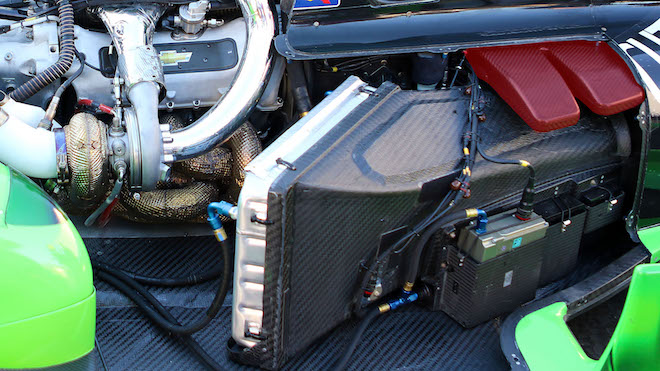
The placement of the "teeth" above the radiator ducts provides better energy dissipation in a side impact due to the relative lack of dense objects alongside the cockpit to absorb a hard hit. The radiator ducting and bodywork is thin and lightweight, and with the aluminum radiator positioned behind the driver (red) – in a spot where it wouldn't help much in a crash, installing the teeth became a necessity.
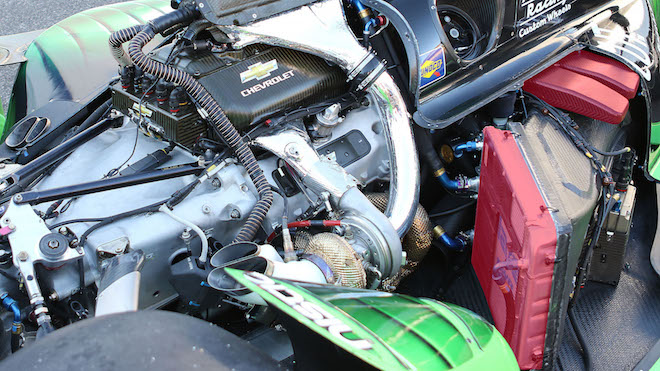
To address the situation with an all-new approach for 2018 and beyond, the series committed to widening the front of the sidepods in order to move the radiators forward next to the cockpit where they would provide value as crushable structures.
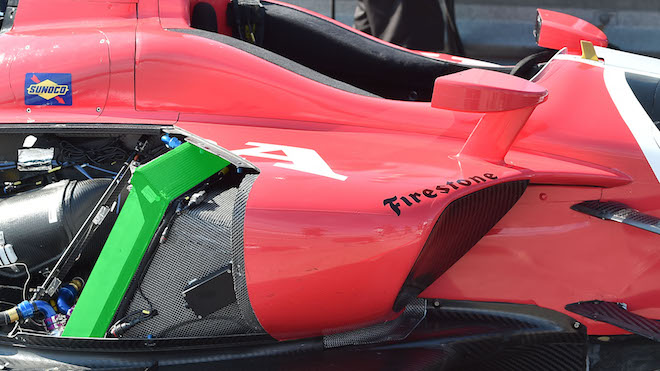
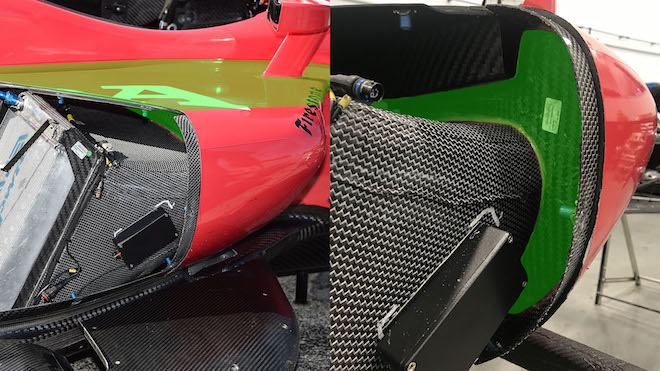
More importantly, in front of the radiators, IndyCar and Dallara added two large, thick structural frames that extend out from the cockpit sides to serve as the primary crushable pieces. The U-shape units (in green, right) hold the radiator ducting in place, and farther forward, hidden from sight, the second piece is incorporated into the front of the sidepod opening.
The top of the sidepods next to the cockpit (left, in green) are also fortified to a much higher level.
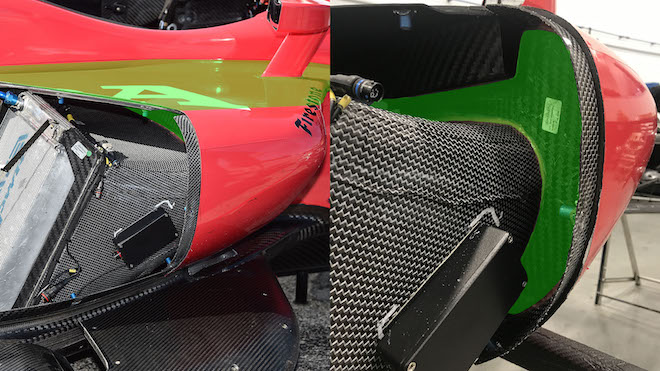
Inside the new sidepods, a wall (in green) has been added to separate the radiator from resting directly against the cockpit sides. The inner channel shown to the the right of the wall acts as an air passage to feed the 2.2-liter twin-turbo Chevy and Honda engines.
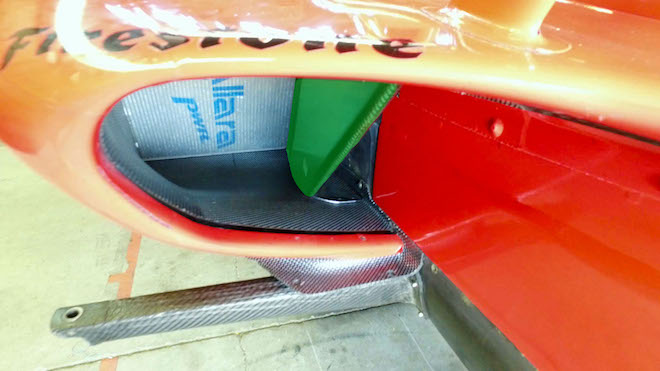
With the wider, taller sidepods creating more distance and between the driver and solid objects (below), IndyCar and Dallara have been able to incorporate much-needed safety upgrades in a manner that blends seamlessly with an improvement in aesthetic appeal.
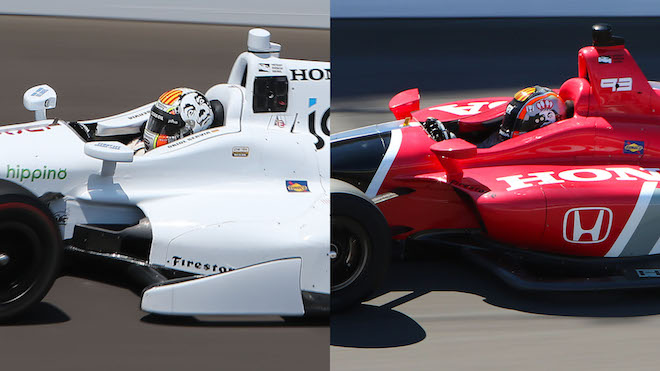
Although the stronger side impact changes within the sidepods have added weight, losses elsewhere, namely at the back with the removal of the rear wheel guards, has mitigated the issue.
"The sidepods, sidepod leading edges, and side impact structure are heavier – we're talking in the 10 to 12 pound range," IndyCar aerodynamic director Tino Belli told RACER. "Moving the radiators forwards slightly changed weight distribution, but it really wasn't that significant."
With the front of the 2018 sidepods reconfigured to act as driver protection devices, Belli says the structures have been produced to meet the latest side impact resistance standards.
"[They're] designed to withstand current FIA side impact loads," he added. "It is wider than the teeth we have on the current tub. This is connected to the inlet duct with two bulkheads. These make the impact structure, inlet duct and outer cover unitary, so the top impact structure cannot 'snap off' if the impact is not perfectly aligned to the structure."
Considering the brittle nature of carbon fiber in an impact, the 2018 sidepod structures have had a somewhat new material added into the manufacturing process.
"The inlet duct and outer cover are made from carbon-Dyneema hybrid material," Belli said. "The Dyneema adds toughness and will help with penetration from the side. The whole structure is strong and stiff, so the radiators should remain more perpendicular to the tub in a pure side impact and will therefore add crushability in a pure side impact, rather than just being pushed out of the way."
The last item of note with the 2018 sidepods and safety comes from the loss of the "sponsor blocker" affixed to the floor.
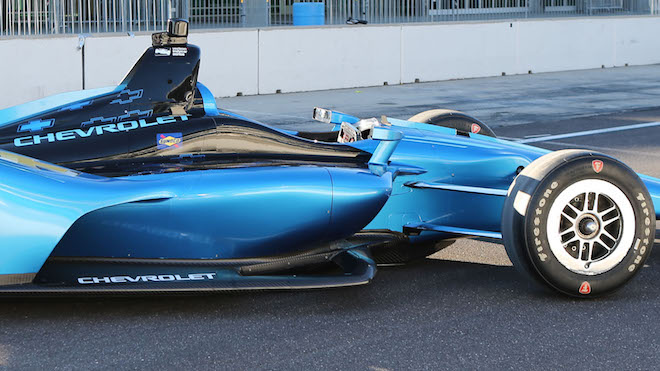
Thanks to the Coke bottle sidepods, the empty space found behind the front wheels on the current car has been filled, and with that void gone, deleting the sponsor blocker, which was intended to prevent interlocking wheels, became a welcome option.
"We did that because the sidepods are a lot wider," Belli confirmed. "The chance of a wheel getting up on the underwing ledge is a lot less. And the sponsor-blocker never really worked as intended. It used to fracture off very, very easily. It just used to end up being a piece of flying debris, so we removed it for that reason, plus, its removal improves sponsor visibility."
Click on the thumbnails below for larger images.
{igallery id=2567|cid=673|pid=9|type=category|children=0|addlinks=0|tags=|limit=0}
Presented by:


Latest News
Comments
Comments are disabled until you accept Social Networking Cookies. Update cookie preferences
If the dialog doesn't appear, ad-blockers are often the cause; try disabling yours or see our Social Features Support.