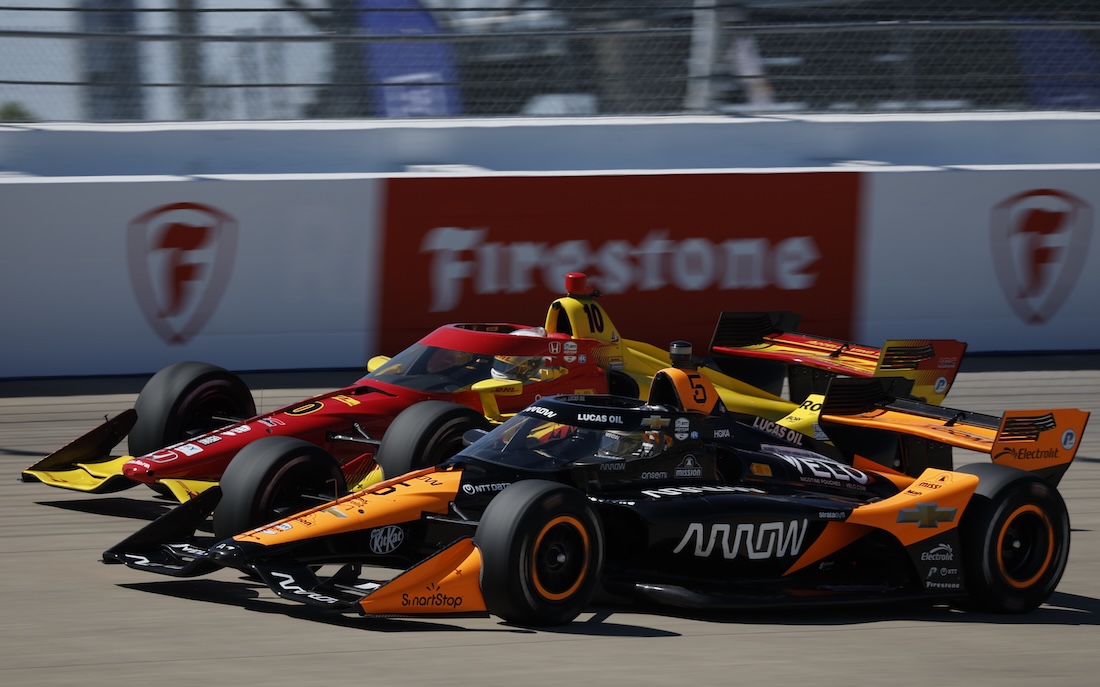
INSIGHT: Nissan DPi win links two IMSA eras
The last time a factory-supported Nissan prototype scored an overall IMSA win, it had a Taylor chasing it home in a factory-built prototype commissioned by General Motors.
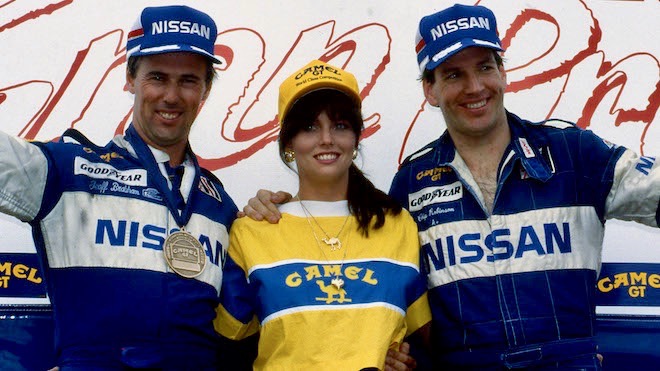
IMSA's 1992 race on the streets of Miami saw Geoff Brabham take the final GTP victory for Nissan in his No. 83 NPT 91A chassis, and behind the four-time GTP champ, Wayne Taylor pushed his Tom Milner Racing Chevy Intrepid RM-1 hard to take second. Completing the podium was Brabham's teammate Chip Robinson (at right, below, with Brabham) in the second Nissan.
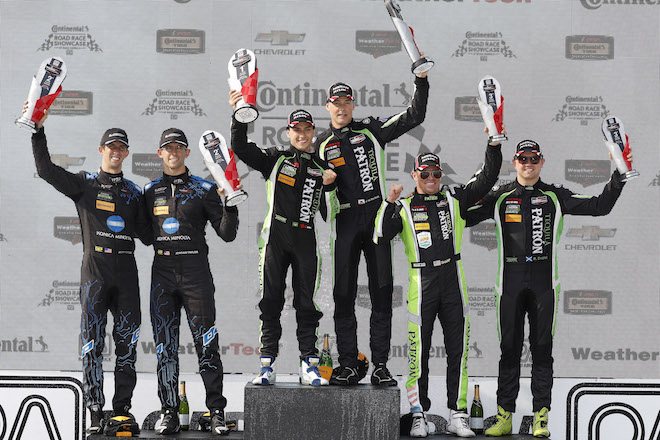
Then trade Taylor for his sons Ricky and Jordan, Milner's team for Wayne Taylor Racing, the naturally-aspirated V8-powered Intrepid RM-1 for a naturally-aspirated V8-powered Cadillac DPi-V.R. And for uncanny historical accuracy, trade Robinson in the sister Nissan GTP for the second Nissan Onroak DPi driven by Scott Sharp and Ryan Dalziel which rounded out the podium (below, Michael Levitt/LAT photo).
"The best part was Geoff Brabham was there last weekend to see it," ESM co-owner/driver Sharp told RACER. "It feels good to see all of the hard work everyone's put in over the last nine months to be rewarded."
With the decision by Sharp and fellow co-owner Ed Brown to assemble ESM's own DPi program in concert with Ligier and Nissan late in 2016, the same kind of cycle for broken parts and lost opportunities was pared down to months rather than years. The impressively short gestation period for the Nissan DPi is where the real value in Sunday's win is found.
"We did start the season late, and it's been a lot of little problems to get to where we are," Sharp said. "It took four or five months to get through the majority of the issues, and since we reached that point, it's been a lot of little refinements to cover the rest. And there still could be more we need to handle – who knows – but it's good to know we've made up a lot of ground after being so far behind in the beginning. It's only one win, but that's what we're here to do. Like Ed always says, what makes the sponsorship work is wins and podiums."
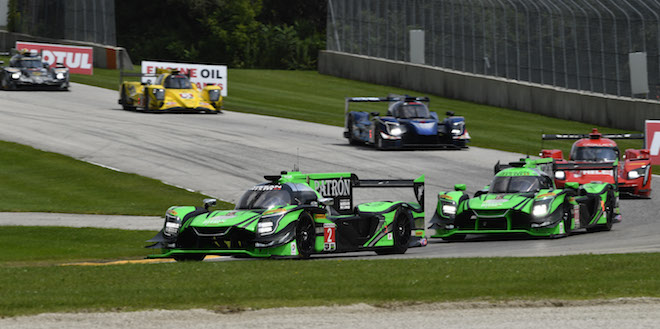
"Really, we've been learning as we're doing," he said. "The races have been largely test sessions for us because we haven't done a lot of proper testing. The base package is good and it's been trying to get all the pieces to work well with each other. We saw as early as Long Beach the possibilities were there."
Compared to Cadillac and its factory DPi-V.Rs that completed thousands of testing miles before 2017 arrived, the ESM gang have been on the receiving end of a different reality. Cadillac's teams knew its cars were unbridled monsters when they turned up for the Rolex 24 At Daytona; between blown motors and electronic nightmares, the Nissan DPi squad wasn't exactly sure what it had for outright potential when the season started in January.
With more laps and improving reliability as the season has progressed, a growing sense of promise emerged within the ESM ranks.
"The team, collectively, has a huge reservoir of knowledge," van Overbeek continued. "We could see this package had the potential, but we had to figure out how to unlock it. As things have come together, winning didn't feel out of reach."
Taking all the exhaustive work by ESM and its partners and distilling it into the first Nissan DPi win produced a strong impression of accomplishment within the program. A key tactical decision during the race also made a difference in the outcome that fostered the joyful erupotion seen in the ESM pits.
"What's really nice about the result was before I made the pass on Taylor for the lead, when Johannes was in the car, we were doing big fuel saving," Derani said. "I don't think this part of the victory was appreciated as much as it should [be]. We managed to save two extra laps compared to our teammate Ryan, and this was a massive part in how we won.
"When we all pitted together in one of the last yellows, our other Nissan pitted right in front of me and because our tank was more full, we were able to refuel less and get out faster. I was able to get ahead of Ryan when we left pit lane and that put me in the position to go after Taylor on the restart. If Johannes wasn't saving that fuel early like he did, and I wasn't doing my best to save it, I don't think there's any way we would have been in front of Ryan."
For van Overbeek, the team-wide involvement in Nissan's first win was immensely rewarding.
"Our engineer Matthieu [Leroy] came over the radio to tell me, 'Hey, you've got to really conserve fuel,'" he said. "It's a tough situation to be in when you're trying to race to the front. I'm not super-accustomed to it, so we did a lot of coasting into the brake zones and using a fuel map that was essentially a yellow [flag] map.
"It was frustrating because we were falling back but he assured us we were on the right strategy. In the end, it paid off heavily and we were all proud to get this win as a group."
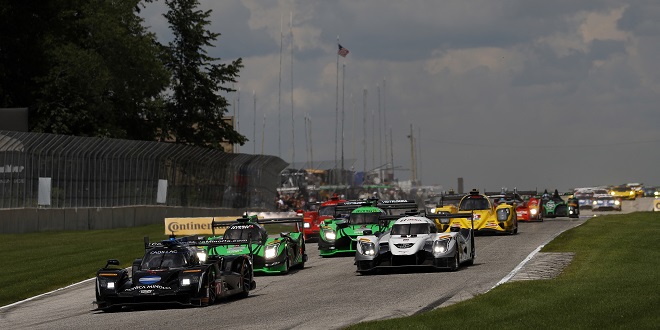
Without the unprecedented Balance of Performance penalties applied to the Cadillac, the rest of the DPi manufacturers wouldn't stand a chance, and with the Nissans demonstrating a new capability to match and exceed their archrivals – at least at Road America – IMSA is facing another BoP question.
The Nissans have been largely untouched by IMSA this year, and as they continue to improve, will the series return some of what it has taken from Cadillac to even the playing field? And what about the Mazdas when they return with all of the redevelopment work completed by Joest Racing and Multimatic? Is there a tipping point where the Nissans and Mazdas could out-perform the Cadillacs in unrestricted form? And who knows what the Team Penske Acura ARX-05s will bring to the category next year.
Those are questions for the offseason, obviously, but it's fascinating to consider how much untapped potential resides within the DPi field. If we're lucky, IMSA will have four models in 2018 that won't require one or more to be drastically slowed to compensate for whatever the others are lacking.
Considering the great continuation of Nissan's IMSA prototype heritage, future wins for Acura that connect back to multiple GTP-Lights championships earned by Comptech Racing, and wins for Mazda, which set the original GTP-Lights standard with titles taken by Downing Racing, await the modern version of IMSA.
"It is important because it speaks a lot to our racing history," NISMO global motorsports director Michael Carcamo said of the Nissan DPi's first WeatherTech Championship victory. "We spent some time away from the prototype class, so to be back in the U.S. in endurance racing with a prototype is special.
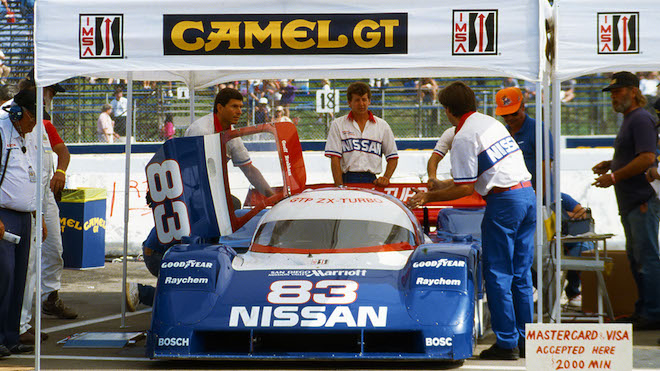
"IMSA has a great program with the DPis. With Penske coming in and the Joest news, it adds meaning to any success you achieve. I think people remember the GTP cars very well, and the No. 83 Nissan, so to be back in IMSA again and winning with ESM is significantly important."

Latest News
Comments
Comments are disabled until you accept Social Networking Cookies. Update cookie preferences
If the dialog doesn't appear, ad-blockers are often the cause; try disabling yours or see our Social Features Support.