CRANDALL: How NASCAR fixed Indy's Xfinity show
If NASCAR officials were into showboating, they most likely would have emerged after the Xfinity Series race at Indianapolis Motor Speedway with two words:
You're welcome.
In hopes of making the Lilly Diabetes 250 a better race than the disaster it had been the last few seasons, NASCAR started working on a new race package late last year – a package only run at Indianapolis.
Included was the 2016 splitter and spoiler (with the ear flaps on each side), a 7/8th restrictor plate, and aero ducts attached behind the front bumper to move the air away from the cars, thus creating a bigger wake in the air. And to ensure teams couldn't tweak and perfect the package, NASCAR didn't hand out the aero ducts until they arrived at the track.
The result was a tremendously better race than last year, when Kyle Busch led all but one lap.
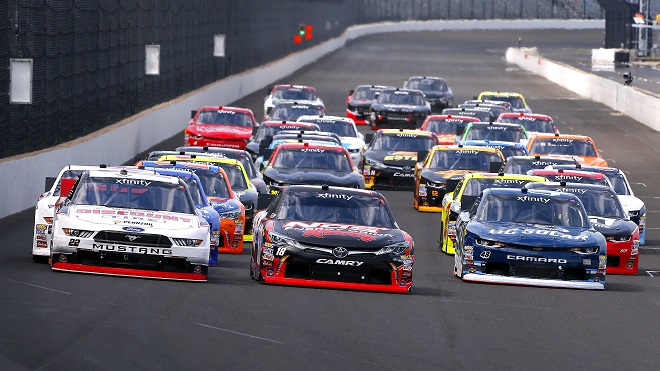
The result was drivers and teams having to figure out how to use the draft to pass as if they were at a restrictor plate track.
The result, folks, was a race that kept you watching and most of the drivers enjoyed participating.
"I ran my own race, but I felt like we were passing a lot more," Ryan Reed said. "It felt like you could suck up, get runs, play a lot more strategy rather than just ride around single-file once the race got settled out. I don't know what happened up front for the win, but it seemed like a decent race, at least better than the ones we've had."
Race winner William Byron was one of the most aggressive drivers Saturday. But his aggressiveness fit the package as Byron was able to charge through the field when in traffic, make passes on the outside, and even go three-wide into the corners.
"I think overall this new package really produced some great racing and presented everyone with challenges they weren't expecting," said Blake Koch. "I applaud NASCAR for making changes to make the racing better and hope the fans feel the same way I do about how (Saturday) played out."
The ability to pass was the biggest difference in this year's race. Kyle Busch started 11th and was sitting second at the Lap 15 competition caution. Even with a fast racecar, there was no way Busch would have been able to make that charge under the previous conditions.
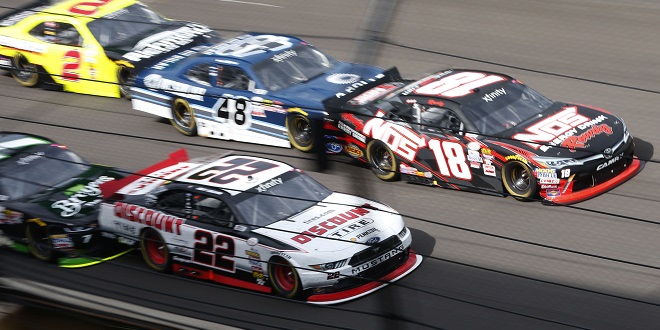
Throughout the field, there were other battles going on, as drivers snaked back and forth down the long Indianapolis straightaways trying to pass or block their positions.
"It was a pretty fun race," rookie Cole Custer said. "A lot of the time we were kind of strung out there, but when you could get a push it was awesome to get locked up going down the straightaways and everything."
Not surprisingly, the 100-lap race broke its previous records for lead changes (16) and different leaders (eight). The previous record for lead changes was nine. The previous record for leaders was six.
The margin of victory was also a new record, as Byron crossed the finish line 0.108 seconds ahead of Paul Menard. The previous record, set in 2016, was 0.411 seconds. And to put a period on the discussion of passing, there was 1,492 green-flag passes Saturday afternoon. In 2016 there were 937.
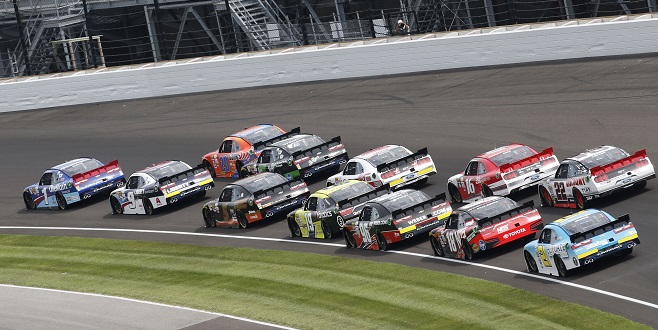
"You still had to get through the corner, set up your pass, get a run on guys; you had to protect a lot. Especially on restarts," Byron said of the package. "When you got into a buffer of about five or six guys, it seemed like they all came together for four or five laps.
"Honestly, from my vantage point, I thought it was a really good package for us. It allows us to pass on the straightaway, but you also have to drive it. You can't just cost around there. ... I think it's a good combination."
If NASCAR were into showboating, it certainly would have warranted at Indianapolis. Instead, Steve O'Donnell, NASCAR executive vice president and chief racing development officer, is keeping things in perspective.
"Overall, certainly pleased with what we saw on the racetrack. From an eye test, definitely passed," he said. "When you look at the metrics, it's the most leaders we've had, most lead changes, closest finish. So, certainly on the quick recap, some really great metrics.
"But, as we said before, there's a lot for us to digest, to go back, talk to the teams. You guys [media] are just getting quotes from the drivers, too. We've got to do the same thing with drivers, crew chiefs, and see where we're at and kind of evaluate and go from there."

Latest News
Comments
Comments are disabled until you accept Social Networking Cookies. Update cookie preferences
If the dialog doesn't appear, ad-blockers are often the cause; try disabling yours or see our Social Features Support.