BUXTON: Halo, goodbye
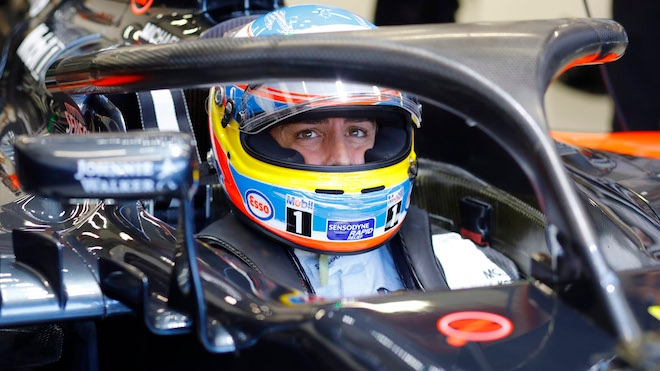
The introduction of Halo to Formula 1 in 2018 is beyond a disappointment to me. Yes it looks awful, but my aversion to the device has no basis in aesthetics. Halo has no place on a Formula 1 car for far more pertinent reasons than the simple fact it looks like someone's tatty old sandal.
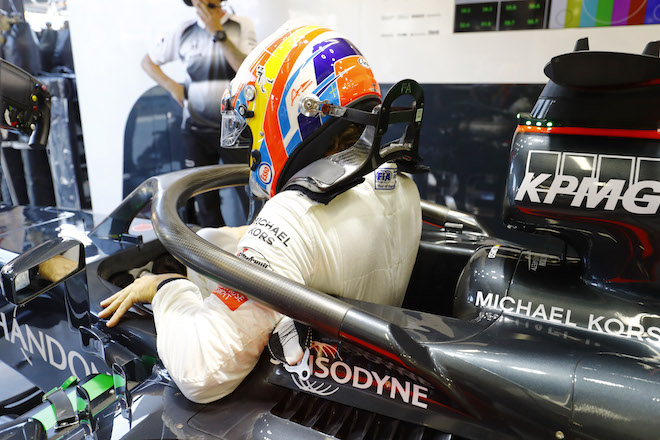
Shall we start at the simplest place? What does it actually do? In theory, it should deflect large pieces of debris from contacting a Formula 1 driver in the cockpit. With a driver's head being the only part of his body still subject to the elements in modern Formula 1, the push to protect this most susceptible and critical of body parts is, of course, noble. Yet at the FIA's own best estimates, the Halo would only be effective in 17 percent of potential incidents. Quite how it has reached this number I am unsure, and yet this is the best guess.
It would be useful in helping to deflect a tire, for example, yet not so useful with a small component or piece of debris. That is to say that Halo might not have protected Felipe Massa from the spring that knocked him unconscious at Hungary in 2009, nor Helmut Marko from the stone that cost him an eye, nor Alan Stacey from the bird that took his life. It might have saved Tom Pryce. It might have saved Ayrton Senna, although if it was the suspension component rather than the brunt force of the wheel itself that cost the Brazilian his life, it again seems unclear just how effective Halo might have been. There has never been any suggestion that it would have saved Jules Bianchi.
If we are to look further afield it is debatable whether Halo would have helped Justin Wilson and Dan Wheldon, although it seems likely that it might potentially have gone some way to saving Henry Surtees. But for now, I am trying to only use examples in Formula 1, as at present it seems that only Formula 1 will see Halo fitted.
Risk mitigation is a cause celebre in the modern world, and of course in a sport such as Formula 1 we must never be blasé about the potential harm that can befall the drivers plying their trade. But in this case, one wonders whether Halo is being forced on the sport out of the necessity for the governing body to be seen to be acting, rather than action being taken advisedly and considerately.
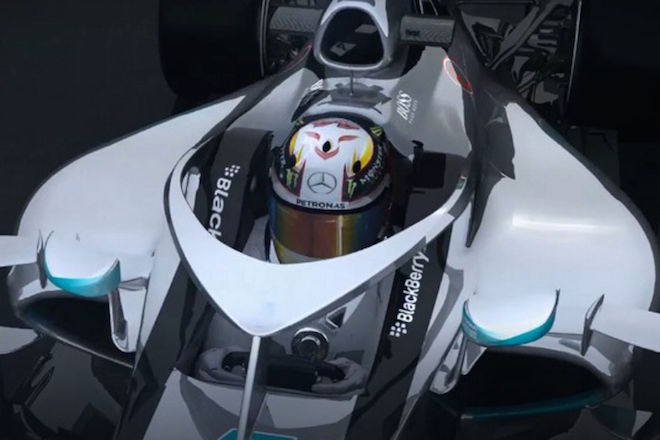
If we look back, the FIA has been proactive in its driver safety program for the past five years. Its initial trials involved canopies, but switched to what we now know as Halo when an internal concept was released from the Mercedes design offices. Unfortunately, the sleek Mercedes idea (BOTTOM) was bastardized by the governing body; the rudimentary construct that eventually saw its way to being tested in the real world falling in line with the FIA's basic parameters for roll cages. Thus the lumpy hoop we now know as Halo, rather than the intelligently considered, aero efficient concept first released to the world in renders two years ago, is what we have to put up with.
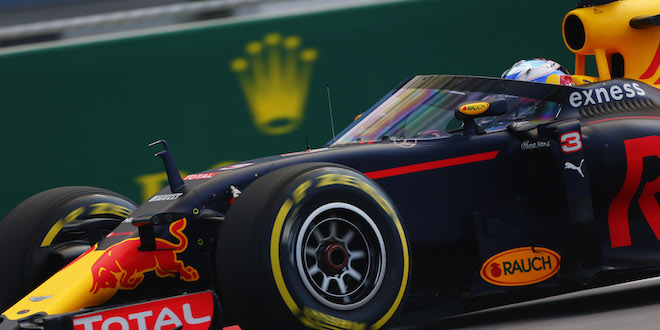
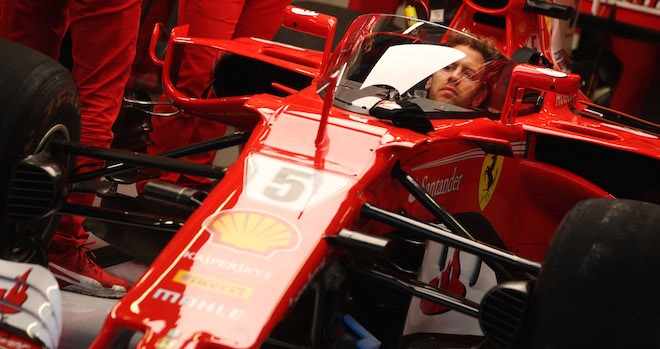
We've had other concepts since then, of course. Red Bull's "Aeroscreen" was one option, but the angle and size of the screen was so extreme as to cause tremendous aero headaches that might have necessitated the return of high airboxes not witnessed since the 70s. The most recent was the "Shield," which saw its real world debut just last week at Silverstone. It was this concept, not Halo, that was determined to be the future direction for the sport just three months ago. And yet after one single trial run, the supposed dizziness experienced by one driver for a token lap has been deemed reason enough to ditch the entire concept.
"If at first you don't succeed, give up." Or something like that.
I have three major issues with Halo and that is my first., because ever since the FIA first latched onto the concept, no other has genuinely been given a chance to prove itself. The governing body pinned its colors to the mast in the very earliest iterations of Halo, and since then no other idea has had a look in. Up until April this year, when the Strategy Group told the FIA in no uncertain terms that it believed Halo was wrong for the sport, Halo was the only option. All other notions had been taken off the table by the FIA. It didn't matter that the concept provided only a nominal improvement in safety, nor that full screens might have been possible with time, resource and research. As far as the FIA was concerned, Halo was the only option.
Other concepts were introduced so late in the calendar year as to become impossible for consideration for the following season. Only Halo could conceivably be retrofitted or introduced late into a design schedule. Any type of screen would need to be an integral part of the design process from day one. With F1 teams already switching attention to 2018, July was far too late for a first run of the "Shield' if the FIA ever truly wished for it to be a genuine consideration for next season.
It was this time last year, of course, that Halo's 2017 debut was put on hold. At the time, the FIA released the following statement: "While the Halo is currently the preferred option, as it provides the broadest solution to date, the consensus among the Strategy Group was that another year of development could result in an even more complete solution."
Yet one year on from the teams agreeing that driver protection was to have a future in F1, Halo remains relatively unchanged from the construct witnessed in 2016. The FIA, while stating yesterday that Halo was not yet in its final iteration, seems to have progressed little with the project.
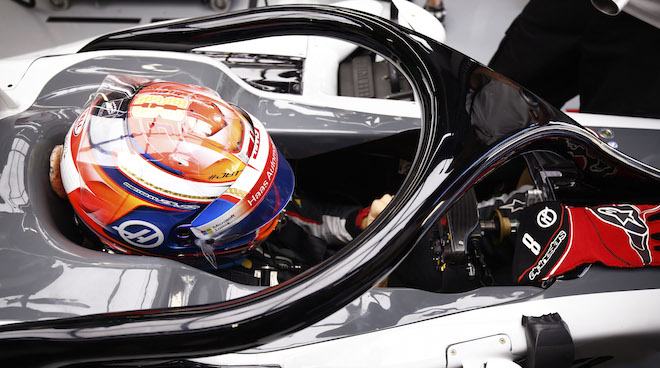
And herein lies my second major issue with the concept. Formula 1 has at its disposal some of the greatest minds in automotive design. Where is their input? Where is the consultation process amongst them? If you want to find the best solution to a problem in this sport, you open it to the teams as part of the regulations. In a very short space of time you will find the brain trusts converge on a similar line of thought, and your problem is solved. And yet here, on an issue as critical as driver safety, the decisions and the abilities of the greatest minds in the sport have been neutered. And for what?
"With the support of the teams, certain features of its design will be further enhanced," Wednesday's vague statement read. "Having developed and evaluated a large number of devices over the past five years, it had become clear that the Halo presents the best overall safety performance."
It is unclear from this whether the Halo will benefit from a roundtable of ideas in preparation of a spec part, or whether the teams themselves will be able to design their own Halos under FIA parameters and regulation. The FIA was asked by this column to provide clarification on this point, but at the time of writing no answer had been forthcoming.
The FIA has also not answered a request to learn whether other protection devices would continue to be developed and evaluated while Halo is run on Formula 1 cars in 2018. Nor have they answered whether Halo would be run out in the FIA's other open-wheel championships, notably in Formulas 2, 3 and 4.
Perhaps this silence comes with good reason. For when the Formula 1 teams unanimously agreed that driver head protection was a priority moving forward, the requirement fell in line with every concept of the future for this sport that I have ever seen. Be it Renault's RS 2027, Red Bull's X2010 or McLaren's MP4-X, every future vision of this sport includes an enclosed cockpit. Yes that annoys the purists, but I've always referred to Formula 1 as open-wheel, not open-cockpit. I see nothing wrong with a screen, a canopy, or whatever the future may hold from that perspective.
And so my third major problem with Halo should automatically be clear. How does this take us towards the future that almost everyone has conceived of this sport? How does Halo lead to screens or canopies? The simple answer is that it doesn't.
In my college and university days I owned a MiniDisc player. As someone who spent all his time making mix tapes, I loved that you could move tracks around and play with the order. It was the coolest piece of kit I'd ever owned. And then someone showed me their iPod. MiniDisc was supposed to be the future. Except it wasn't.
Remember Digital Compact Cassettes? No? That's because CDs came out at the same time. How about HD DVDs? Nope, BluRay got in there. The Sega Dreamcast? LaserDiscs? Microsoft Zune?
Which of you bought yourself a PC Notebook? And how many of them now lie unused, covered in dust? The iPad and the tablet cast the Notebook into the trashcan of history.
Halo, like the MiniDisc, the Zune and the Notebook finds itself obsolete before it's even been launched. It doesn't represent a leap towards the future. It is a sidestep at best, and an irrelevance at worst. It has no place in the natural evolution of this sport and the direction in which we all know it is heading.
So why is it being forced through? Why, when nine out of the 10 Formula 1 teams voted against its introduction, did the FIA use the only trump card it has and force it through on the grounds of safety? Why has the FIA decided that only it shall determine what head protection shall be, how it shall be designed and when it shall be implemented?
Of course, 2017 is election year. Jean Todt, a President who has based his entire leadership on road and race safety, seeks re-election for a third term in an office he pledged to only occupy for a single term. Formula 1, the crown jewel in the FIA's sporting roster, has at its helm new owners with some very new ideas on how the sport should be run and the direction in which it should be taken.
It would be awful to think that either of these factors would have had any bearing on the FIA's sudden and quite extraordinary show of power at the Strategy Group on Wednesday, in forcing something through against the will of those alongside whom it was sat on what was intended to be an advisory body.
If word out of the meeting is to be believed, it was Ferrari alone that voted in favor of Halo. The same Ferrari whose driver Sebastian Vettel was the only one tasked with testing the "Shield," and whose unfavorable reaction led to it being dropped immediately and completely. Given the German's recent private meeting with the FIA President in Paris, conspiracy theorists will likely have a field day with that one.
Yet it is not just conspiratorial minds who will view the drivers as pawns in this sorry affair. The drivers themselves are only too aware that they have been played. They, through the GPDA, are advocates of safety. Yet they do not wish to become politicized, and in this case it is impossible for them not to be, should they weigh in on a topic that is becoming less about safety and increasingly about political posturing and positioning.
They, through the GPDA, will and have backed the move towards a safer sport even though many of their own personal reservations mean that they do not believe, as a unit, that Halo is the right direction for the sport.
As one driver who wished to remain anonymous told me this week: "It is a sad day for Formula 1."
Quite.
Presented by:


Latest News
Comments
Comments are disabled until you accept Social Networking Cookies. Update cookie preferences
If the dialog doesn't appear, ad-blockers are often the cause; try disabling yours or see our Social Features Support.