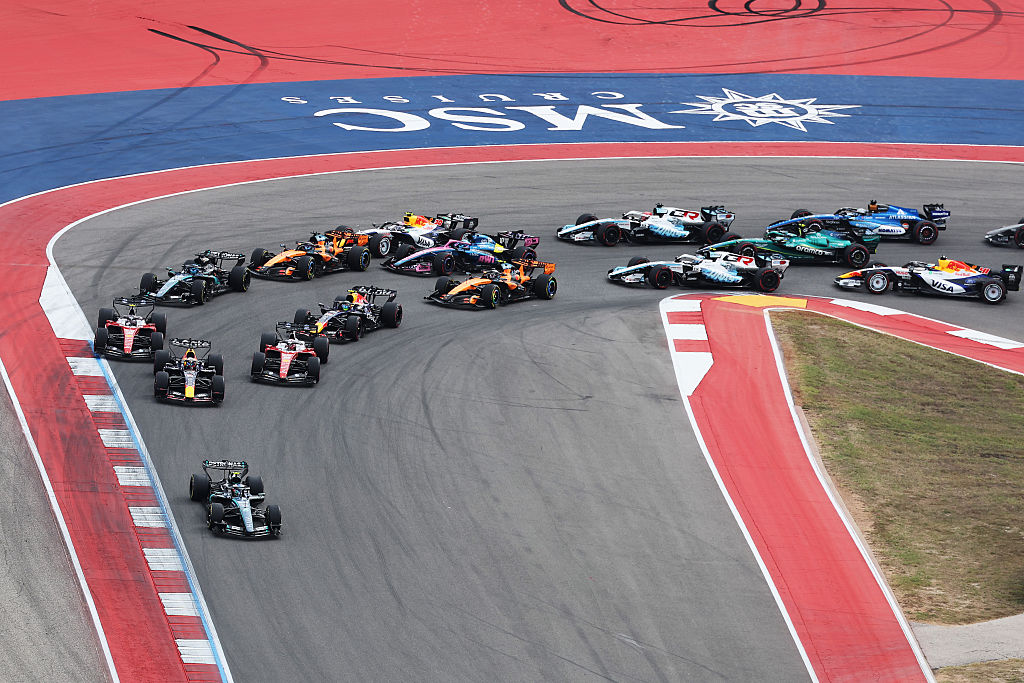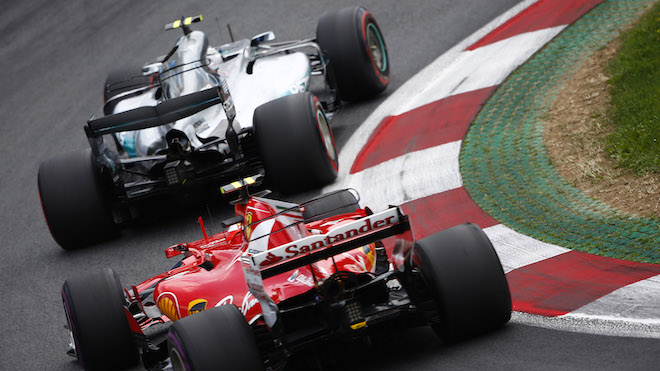
Brawn: Next F1 engine won't be 'soft middle ground'
Ross Brawn says the next generation of Formula 1 engine will not be about "soft middle ground", but nor will they revert to being naturally-aspirated.
The current V6 turbo hybrid power units will remain in place until 2020, but discussions are already ongoing with regards to where the sport goes next. Brawn doesn't want an overly complex formula, but says the hybrid aspect needs to be retained and utilized in a better way to improve racing.
"We're in debate with the engine manufacturers and car manufacturers and some of the engineering companies like Cosworth and Ilmor – people that are pure racing engine manufacturers – so there is a big discussion going on," Brawn said at F1 London Live, the sport's major promotional event ahead of this wekend's British Grand Prix.
Related Stories
"It's not a question of finding a sort of soft middle ground where you don't offend anyone, because I don't think that will be the best solution. Hybrid technology is probably going to be retained because it offers some relevance, it offers the engagement of manufacturers. But can we turn it around a little bit and make it a tactical quality, so in a race you've got much more capacity to use the battery power and the hybrid nature of the cars to try and get an advantage?
"This is not widely known, but [Valtteri] Bottas got past [Lance] Stroll in Baku because he saved his battery up and used it on that last section. He used it tactically. Well, we should have all known that on the TV – it should have been something we demonstrated. So the hybrid side for sure could provide some interest in that respect."
And Brawn says the next generation of engine needs to take into account the desire of F1 fans, as well as the ability to deliver close fights on track.
"We have a lot of fans who say we want to go back to normally-aspirated engines, and what you've got to do is ask the next question of, 'Why is that?' And it's because it creates more emotion with the noise and the revs.
"So can we create a hybrid engine which has that noise and has the revs and has the appeal? I think the manufacturers involved in Formula 1 know that that's a key element, because they need to have a successful Formula 1. It's no good having an engineering exercise that demonstrates your technology if nobody is watching it.
"The manufacturers realize it's got to be a balance of relevance, but still able to engage the passion of the fans. So I think the new engine won't be going back to a normally-aspirated V12, whatever the heart might say, but it will be a more exciting and more accessible than we have now.
"And, one which is probably not such a major performance differentiator, because the last few years the engine was pretty dominant. Mercedes have done a fabulous job, and it's only really been this year that Ferrari have got on terms with them and we're seeing a great competition. So we need to see a level of technical challenge with the engine that is not beyond three or four teams able to achieve a good standard. So, a lot of lessons learned from the current engine."
Presented by:


Latest News
Comments
Comments are disabled until you accept Social Networking Cookies. Update cookie preferences
If the dialog doesn't appear, ad-blockers are often the cause; try disabling yours or see our Social Features Support.